
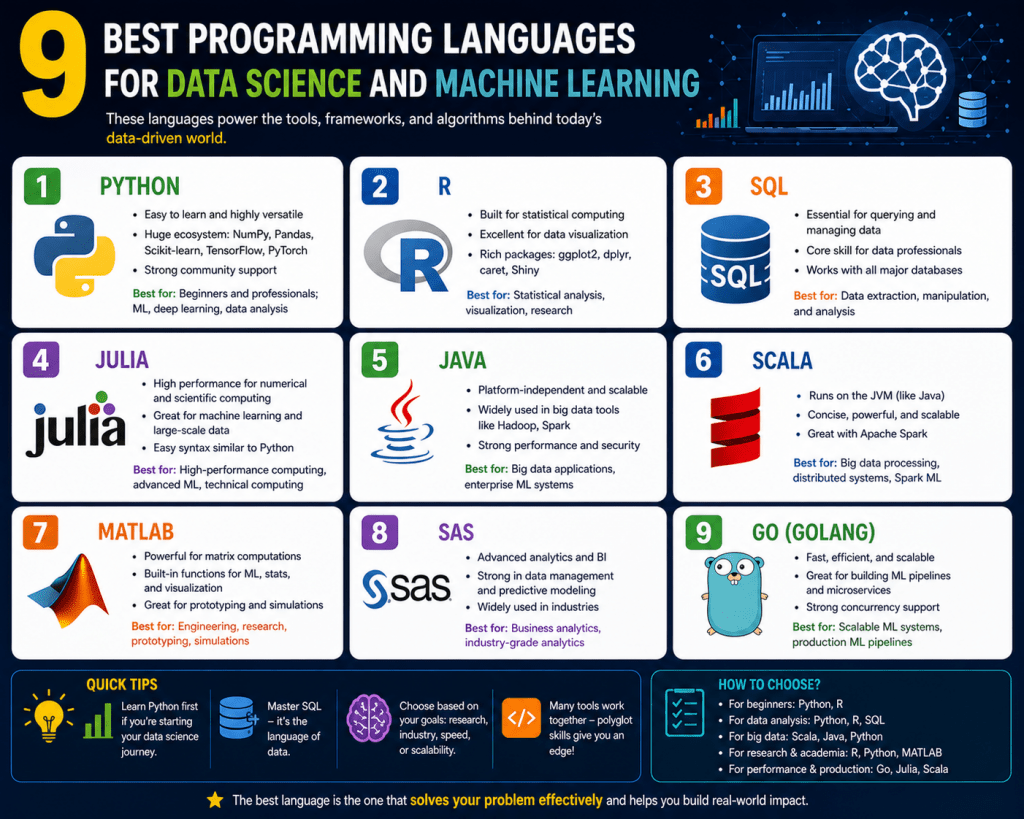
In today’s modern environment, data plays a central role in shaping decisions across every industry. Businesses, governments, and organizations rely on data to understand trends, improve efficiency, and plan for the future. The rapid growth of digital systems has led to an explosion in the amount of data generated every second. From online interactions to system logs, the world is producing more data than ever before.
This growing dependence on data has created a strong demand for professionals who can interpret and manage it effectively. Among these professionals, data analysts and data scientists have become highly valued. Their work helps organizations make better decisions, reduce risks, and discover new opportunities.
Although both roles focus on working with data, they differ in several important ways. These differences are mainly based on the type of data they handle and the level of technical skills required to process that data.
Understanding the Roles of Data Analysts and Data Scientists
Data analysts are responsible for examining existing data to find useful patterns and insights. They typically work with organized datasets that are easy to access and understand. Their main goal is to answer specific questions and present clear results that help guide decision-making.
Data scientists, in contrast, deal with more complex tasks. Their work involves collecting raw data, preparing it for analysis, and building models that can predict future outcomes. They often handle data that is not organized and requires significant effort before it can be used.
The difference between these roles is not about one being better than the other. Instead, it is about the scope of work. Data analysts focus on interpreting data, while data scientists focus on both preparing and analyzing it, often using advanced methods.
What Is Structured Data and Why Does It Matter
Structured data is information that is organized in a clear and predictable format. It is usually stored in systems where each piece of data has a defined place. Examples include customer records, financial data, and product inventories.
This type of data is easy to work with because it follows a consistent structure. Data analysts can quickly access it and use tools to create charts, reports, and summaries. Since the data is already clean and organized, there is little need for preparation before analysis begins.
Structured data is important because it allows for fast and reliable insights. However, it only represents a portion of the data available in the real world. Much of the valuable information today exists in a less organized form.
Understanding Unstructured Data and Its Complexity
Unstructured data does not follow a fixed format. It includes a wide range of information such as text documents, images, videos, social media content, and audio recordings. This type of data is more difficult to process because it lacks consistency.
Working with unstructured data requires additional steps before analysis can begin. The data must first be collected from various sources, then cleaned and transformed into a usable format. This process can be time-consuming and technically challenging.
Despite these challenges, unstructured data holds a great deal of value. It often contains deeper insights that cannot be found in structured datasets. This is why data scientists spend significant effort working with this type of data.
The Process of Turning Raw Data into Useful Information
Before data can be analyzed, it must go through several stages of preparation. The first step is data collection, where information is gathered from different sources. This may include files, systems, or external platforms.
The next step is cleaning the data. This involves removing errors, fixing inconsistencies, and handling missing values. Clean data is essential for accurate analysis, as poor-quality data can lead to incorrect results.
After cleaning, the data is transformed into a structured format. This makes it easier to analyze and ensures that all data points are consistent. Once the data is prepared, it can be used for further analysis and modeling.
This entire process is often referred to as data preparation, and it is one of the most important parts of data science.
Why Programming Skills Are Important in Data Science
Programming is a key skill that allows data scientists to handle complex data tasks efficiently. While basic analysis can sometimes be done without coding, advanced work requires the ability to write and understand programs.
One major advantage of programming is automation. Tasks such as data cleaning and processing can be repeated many times. Writing code allows these tasks to be completed quickly and consistently without manual effort.
Programming also allows data scientists to work with large datasets. As data grows in size, manual methods become impractical. Code makes it possible to process and analyze large amounts of data in a short time.
In addition, programming provides flexibility. Data scientists can create custom solutions tailored to specific problems, rather than relying only on existing tools.
The Benefit of Working Independently with Data
Having programming skills allows data professionals to work more independently. They do not need to rely heavily on other teams to access or process data. This independence leads to faster results and more efficient workflows.
When a data scientist can directly handle data tasks, they can quickly test ideas and adjust their approach as needed. This improves the overall quality of their work and allows them to respond more effectively to changing requirements.
Independence also encourages creativity. Data scientists can explore new methods and develop unique solutions without being limited by predefined systems.
The Role of Logical Thinking in Data Work
Working with data requires strong logical thinking skills. Data professionals must be able to break down complex problems into smaller parts and solve them step by step. This approach helps ensure that the analysis is accurate and meaningful.
Logical thinking is especially important when dealing with messy data. Identifying errors, understanding patterns, and making decisions about how to process data all require careful reasoning.
Programming supports logical thinking by providing a structured way to approach problems. Writing code forces data scientists to think clearly about each step of the process, which leads to better results.
How Data Science Supports Decision Making
The ultimate goal of data science is to support better decision-making. By analyzing data, organizations can understand what is happening, why it is happening, and what might happen in the future.
Data scientists create models and tools that help predict outcomes and identify trends. These insights can be used to improve products, optimize operations, and reduce risks.
Effective communication is also an important part of this process. Data professionals must present their findings in a way that is easy to understand. Clear explanations help decision-makers use the information effectively.
The Growing Need for Data Skills
As data continues to grow in importance, the demand for skilled professionals is increasing. Organizations are looking for individuals who can not only analyze data but also understand its context and significance.
This demand has made data-related careers attractive to many people. However, success in this field requires continuous learning. New tools and techniques are constantly being developed, and professionals must stay updated to remain competitive.
Developing strong data skills opens up many opportunities. It allows individuals to work in different industries and contribute to a wide range of projects.
Building a Strong Foundation in Data Science
Understanding the basics of data types, roles, and processes is essential for anyone interested in data science. These fundamentals provide the foundation for more advanced topics such as predictive modeling and advanced analysis.
Programming plays a central role in building this foundation. It connects theory with practice and allows data scientists to apply their knowledge to real-world problems.
A strong foundation makes it easier to learn new skills and adapt to changes in the field. It also helps professionals approach challenges with confidence and clarity.
Understanding the Role of Programming Languages in Data Science
Programming languages are essential tools in data science. They allow professionals to collect, process, analyze, and present data in meaningful ways. Without programming, handling large and complex datasets would be extremely difficult and time-consuming.
Each programming language has its own strengths and weaknesses. Some are designed for ease of use, while others focus on speed or advanced calculations. Because of this, data scientists often choose a language based on the type of task they need to complete.
Instead of relying on a single language, many professionals use a combination of tools. This approach allows them to take advantage of different features and complete their work more efficiently.
Python as the Most Widely Used Language
Python is one of the most popular programming languages in data science. It is known for its simplicity and readability, which makes it easy for beginners to learn. At the same time, it is powerful enough to handle complex data tasks.
One of the main reasons for Python’s popularity is its large collection of libraries. These libraries help users perform tasks such as data cleaning, analysis, visualization, and building models. This reduces the need to write code from the beginning, saving time and effort.
Python is also flexible. It can be used for small projects as well as large systems. Although it may not be the fastest language, its ease of use and strong support make it a top choice for many data scientists.
R as a Strong Tool for Data Analysis
R is a programming language designed specifically for working with data. It is widely used for statistical analysis and is especially popular in research and academic work.
One of the biggest strengths of R is its ability to handle detailed and complex analysis. It offers many built-in functions that make it easier to perform calculations and study data patterns. This makes it useful for tasks that require a deep understanding of data.
R is also known for its strong visualization capabilities. It allows users to create detailed and clear charts that help explain results. While it may be harder to learn than some other languages, it is very powerful for those who need advanced analysis tools.
Julia as a Fast and Modern Option
Julia is a newer programming language that is gaining attention in the data science field. It was designed to combine ease of use with high performance.
One of the key advantages of Julia is its speed. It can handle large and complex calculations much faster than many other languages. This makes it useful for tasks that require heavy data processing.
Julia also offers a simple and clean structure, making it easier to read and write. However, it is still growing, and its community is smaller compared to more established languages. Even so, it is becoming a strong option for technical work.
SQL as a Foundation for Data Access
SQL is used to manage and retrieve data from databases. It is an important tool for working with structured data, which is stored in organized systems.
Data scientists use SQL to select, filter, and organize data before analysis. It allows them to quickly access the information they need without handling unnecessary data.
Even though SQL is not used for building models or advanced analysis, it is a basic skill that every data professional should have. It plays a key role in preparing data for further work.
Java for Large and Reliable Systems
Java is a well-known programming language used in many large systems. It is valued for its stability and ability to handle complex tasks.
In data science, Java is often used in systems that process large amounts of data. It is known for being reliable and scalable, which makes it suitable for big projects.
Java also supports structured programming, which helps in building clear and organized code. While it may not be as simple as Python, it is useful for situations where performance and reliability are important.
C and C++ for High Performance Needs
C and C++ are powerful programming languages known for their speed. They are often used in situations where performance is critical.
These languages allow developers to control how a system uses memory and resources. This makes them very efficient for tasks that require fast processing.
In data science, they are not commonly used for everyday analysis. However, they are useful for building systems or improving performance in specific parts of a project. Their complexity makes them harder to learn, but their speed can be very valuable.
Swift for Application Development
Swift is a modern programming language designed for building applications. It is known for being easy to use and efficient.
In data science, Swift is sometimes used for creating applications that include data features. It offers good performance and a clean structure, which makes development easier.
Although it is not a primary language for data analysis, it can be useful in certain environments where application development is required.
Go for Handling Large-Scale Systems
Go is a programming language created to handle large and complex systems. It is designed to be simple, fast, and efficient.
One of its main strengths is its ability to manage multiple tasks at the same time. This makes it useful for systems that process large amounts of data quickly.
Go is often used in systems related to data storage and processing. While it is not commonly used for analysis, it plays an important role in supporting data science operations.
MATLAB for Technical and Mathematical Work
MATLAB is a programming environment focused on mathematical and technical tasks. It is commonly used by engineers and researchers.
It provides tools for performing calculations, working with data, and creating visual outputs. This makes it useful for projects that involve detailed mathematical work.
However, MATLAB is less flexible compared to other languages and is not as widely used in general data science. It is usually chosen for specific tasks where its features are needed.
Factors That Influence Language Selection
Choosing the right programming language depends on several important factors. One of the main factors is the type of task. Some tasks require simple analysis, while others need complex calculations or high performance.
Another factor is ease of learning. Beginners often prefer languages that are simple and easy to understand. More advanced users may choose languages that offer greater control and performance.
Community support is also important. A strong community provides learning resources, tools, and help when problems arise. This makes it easier to grow and improve skills.
The availability of libraries and tools also plays a big role. Languages with many ready-to-use features allow data scientists to work faster and more efficiently.
Using Multiple Languages Together
In many projects, data scientists use more than one programming language. Each language is selected for a specific part of the work.
For example, one language may be used to collect and prepare data, while another is used for analysis or performance tasks. This approach allows professionals to use the best tool for each job.
Learning multiple languages can take time, but it provides more flexibility. It allows data scientists to handle different types of problems and work on a wider range of projects.
The Balance Between Simplicity and Performance
There is often a trade-off between simplicity and performance. Some languages are easy to learn but may not be very fast. Others are faster but require more effort to understand and use.
Data scientists must choose the right balance based on their needs. For quick analysis and development, simpler languages are often preferred. For tasks that require speed and efficiency, more complex languages may be used.
This balance is an important part of selecting the right tools for a project.
The Changing Nature of Data Science Tools
The field of data science is always changing. New tools and languages are introduced to solve emerging problems. At the same time, existing languages continue to improve.
As data becomes more complex, the need for better tools increases. Programming languages play a key role in meeting these needs.
Keeping up with changes is important for anyone working in data science. Learning new tools and improving skills helps professionals stay relevant and effective.
The Importance of Building Strong Programming Skills
Programming is a core skill in data science. It allows professionals to handle data more effectively and solve complex problems.
Strong programming skills make it easier to work with large datasets, build models, and create useful solutions. They also improve efficiency by reducing the need for manual work.
As the demand for data professionals continues to grow, programming will remain an essential part of the field. Developing these skills is important for long-term success.
Understanding How to Choose the Right Programming Language
Choosing the right programming language in data science is not a simple decision. It depends on multiple factors, including the type of data, the goals of the project, and the level of experience of the person working with the data. There is no single language that fits all situations, which is why understanding the purpose of each tool is important.
A beginner may prefer a language that is easy to learn and has a clear structure. This helps in building confidence and understanding basic concepts without feeling overwhelmed. On the other hand, experienced professionals may focus more on performance, flexibility, and the ability to handle complex tasks.
The nature of the project also plays a major role. If the task involves simple data analysis, a straightforward and easy-to-use language is often enough. However, if the project requires handling large datasets or building advanced models, a more powerful and efficient language may be necessary.
The Importance of the Learning Curve in Language Selection
The learning curve of a programming language refers to how easy or difficult it is to understand and use. This is an important factor, especially for those who are new to data science. A language with a gentle learning curve allows beginners to focus on concepts rather than struggling with syntax and structure.
Languages that are simple and readable help users write code quickly and with fewer errors. This makes the learning process smoother and more enjoyable. As confidence grows, individuals can gradually move on to more advanced topics and tools.
A steep learning curve, while challenging, can offer greater control and performance. However, it may require more time and effort to master. For this reason, many professionals start with easier options and then expand their skills over time.
Community Support and Its Impact on Growth
Community support is another key factor when choosing a programming language. A strong community provides access to learning materials, tutorials, and solutions to common problems. This makes it easier to overcome challenges and continue learning.
When many people use a language, it becomes easier to find help when needed. Questions are more likely to have answers, and resources are widely available. This creates a supportive environment for both beginners and experienced users.
A smaller community may offer fewer resources, which can make learning more difficult. However, it can also provide opportunities to explore new ideas and contribute to growing technologies. The choice depends on personal preference and the level of support required.
The Role of Libraries and Tools in Productivity
Libraries and tools are essential in data science because they simplify complex tasks. Instead of writing code from the beginning, data scientists can use existing functions to perform operations such as data cleaning, analysis, and visualization.
A language with a wide range of libraries allows users to work more efficiently. It reduces development time and helps maintain accuracy by using tested and reliable components. This is especially important in projects where time and precision are critical.
The availability of tools also affects how easily a language can be used in real-world applications. Tools that support data handling, model building, and visualization make the workflow smoother and more effective.
Performance and Speed Considerations
Performance is an important factor in data science, especially when dealing with large datasets or complex calculations. Some programming languages are designed to run faster and use system resources more efficiently.
Faster languages are useful for tasks that require real-time processing or heavy computations. They allow data scientists to handle large volumes of data without delays. This can be critical in applications where speed is essential.
However, high performance often comes with increased complexity. Languages that offer better speed may require more effort to learn and use. Data scientists must balance performance needs with ease of use when making their choices.
Flexibility and Adaptability in Data Science Projects
Flexibility is another important aspect of programming languages. A flexible language allows data scientists to work on different types of tasks without needing to switch tools frequently.
Adaptability is especially useful in projects that evolve. As requirements change, the ability to adjust code and methods becomes important. A language that supports multiple types of operations makes this process easier.
Flexible languages also allow integration with other tools and systems. This is important in real-world environments where data science is part of a larger workflow. The ability to connect with different systems improves efficiency and collaboration.
Real-World Applications of Data Science Programming
Data science is used in many real-world applications. Organizations use data to improve customer experiences, optimize operations, and make better decisions. Programming languages play a key role in enabling these applications.
In business environments, data is used to analyze customer behavior and predict future trends. This helps companies create better products and services. In healthcare, data science is used to study patient data and improve treatment methods.
In technology, data science supports the development of intelligent systems. These systems can process information, recognize patterns, and make decisions based on data. Programming makes it possible to build and maintain these systems effectively.
The Role of Automation in Data Science
Automation is a major benefit of programming in data science. It allows repetitive tasks to be completed quickly and accurately without manual effort. This includes tasks such as data cleaning, processing, and analysis.
Automated systems reduce the chances of human error and improve consistency. They also free up time for data scientists to focus on more complex and creative work. This leads to better results and increased productivity.
Automation is especially important when working with large datasets. Manual methods are not practical in such cases, making programming an essential tool for efficient data handling.
Handling Large and Complex Data Systems
Modern data systems are often large and complex. They involve multiple sources, formats, and processes. Managing such systems requires strong technical skills and the ability to work with different tools.
Programming languages help data scientists handle these challenges by providing structured methods for processing data. They allow users to break down complex tasks into smaller steps and manage them effectively.
Working with large systems also requires careful planning and organization. Efficient code and clear structure make it easier to maintain and update systems over time.
The Importance of Continuous Learning
The field of data science is constantly evolving. New tools, techniques, and methods are introduced regularly. This makes continuous learning an essential part of a data science career.
Professionals must stay updated with the latest developments to remain effective. This includes learning new programming languages, improving existing skills, and understanding emerging trends.
Continuous learning not only improves technical abilities but also helps in adapting to new challenges. It ensures that data scientists remain relevant in a rapidly changing environment.
Challenges Faced by Data Science Professionals
Working in data science comes with its own set of challenges. One of the main challenges is dealing with messy and incomplete data. Cleaning and preparing data can be time-consuming and requires attention to detail.
Another challenge is selecting the right tools and methods for a project. With so many options available, making the right choice can be difficult. This requires experience and a clear understanding of the problem.
Communication is also a challenge. Data scientists must explain their findings in a way that others can understand. This requires strong communication skills in addition to technical knowledge.
The Growing Demand for Data Science Skills
The demand for data science skills continues to increase as organizations rely more on data. This has created many opportunities for professionals in this field.
Companies are looking for individuals who can not only analyze data but also understand its impact on business decisions. This requires a combination of technical and analytical skills.
As demand grows, competition also increases. Developing strong skills and staying updated with new trends is important for success in this field.
Future Trends in Data Science and Programming
The future of data science is closely tied to advancements in technology. As data continues to grow, the need for efficient tools and methods will increase.
Programming languages will continue to evolve to meet these demands. New languages may emerge, and existing ones will improve with better features and performance.
Automation and intelligent systems are expected to play a larger role in data science. These systems will handle more tasks, allowing professionals to focus on higher-level analysis and decision-making.
The Integration of Data Science into Everyday Systems
Data science is becoming a part of everyday systems. From online services to smart devices, data is used to improve user experiences and provide better services.
Programming makes it possible to integrate data science into these systems. It allows developers to build applications that can process data and respond to user needs in real time.
This integration is expected to grow, making data science an even more important field in the future.
Building a Long-Term Career in Data Science
Building a career in data science requires a strong foundation in both technical and analytical skills. Programming is a key part of this foundation, allowing professionals to handle complex data tasks effectively.
Gaining experience through practice and real-world projects helps in developing these skills. Over time, professionals can expand their knowledge and take on more advanced roles.
A successful career in data science also requires adaptability. As the field changes, the ability to learn and adjust becomes important. This ensures long-term growth and success.
The Value of Combining Technical and Analytical Thinking
Data science is not just about writing code. It also involves understanding problems, analyzing data, and making decisions based on insights. Combining technical and analytical thinking leads to better results.
Programming provides the tools needed to work with data, while analytical thinking helps in interpreting results. Together, they create a balanced approach to solving problems.
This combination is what makes data science a powerful field. It allows professionals to turn raw data into meaningful information that can drive change and improvement.
Conclusion
Data science has established itself as a vital field in the modern digital era, driven by the constant growth of data and the need to transform that data into meaningful insights. Throughout, the relationship between data science and programming has been explored in depth, showing how both elements work together to support analysis, decision-making, and innovation. Understanding this relationship is essential for anyone aiming to build a strong presence in the data field.
At its core, data science is about making sense of information. It involves collecting data, preparing it for use, analyzing it to discover patterns, and presenting the results in a clear and useful way. Programming acts as the tool that makes all of this possible. Without programming, handling large volumes of data or performing complex analysis would not be practical. It provides the structure, speed, and flexibility needed to work efficiently in real-world environments.
One of the most important ideas to take away is that there is no single path in data science. Different roles, such as data analysts and data scientists, approach data from different angles. Analysts focus more on interpreting structured data and delivering insights, while data scientists work with both structured and unstructured data, often building systems and models to process it. Programming plays a larger role as the complexity of the work increases, making it a key skill for those who want to go deeper into the field.
The discussion of programming languages highlights the diversity of tools available. Each language offers its own strengths, whether it is simplicity, speed, or the ability to handle specific types of tasks. Some are better suited for beginners, while others are designed for advanced performance and large-scale systems. The choice of language depends on the problem being solved, the data being used, and the goals of the project. This flexibility allows data professionals to adapt their approach based on real needs rather than following a fixed method.
Another important point is the value of combining multiple tools. In real-world projects, it is common to use different languages for different stages of the workflow. One tool may be used for accessing and organizing data, while another handles analysis or performance-heavy tasks. This combination allows for greater efficiency and better results. It also shows that learning more than one tool can be a strong advantage in building a successful career.
Beyond technical skills, data science also requires clear thinking and problem-solving ability. Working with data often involves dealing with incomplete or messy information. Cleaning and preparing data takes time and careful attention, and even small mistakes can affect the outcome. Programming helps manage this process, but logical thinking is what ensures that the right steps are taken and the results are accurate.
Communication is another key part of data science. The ability to explain findings in simple terms is just as important as performing the analysis itself. Decision-makers rely on clear and understandable insights to take action. This means data professionals must be able to present their work in a way that others can easily follow, even if they do not have a technical background.
As the field continues to grow, the importance of continuous learning becomes clear. New tools, methods, and challenges appear regularly, and staying updated is necessary to remain effective. Learning does not stop after mastering one language or skill. Instead, it is an ongoing process that helps professionals adapt to changes and improve over time. This mindset is essential for long-term success in data science.
The future of data science is closely connected to the growth of technology. As more systems generate data, the need for efficient processing and analysis will increase. Programming will remain at the center of this process, enabling professionals to handle larger datasets and build more advanced solutions. Automation and intelligent systems will also become more common, allowing routine tasks to be handled more efficiently while humans focus on higher-level thinking.
At the same time, the integration of data science into everyday systems will continue to expand. From business operations to digital services, data-driven approaches are becoming the standard. This creates more opportunities for those with the right skills and knowledge. It also highlights the importance of building a strong foundation that combines technical ability with practical understanding.
In the end, success in data science depends on balance. Technical skills, including programming, provide the tools needed to work with data, while analytical thinking helps in understanding and interpreting that data. Communication ensures that insights are shared effectively, and continuous learning keeps skills relevant in a changing environment. Together, these elements form the foundation of a strong and effective data science career.
By developing these abilities and understanding how they connect, individuals can move beyond simply working with data to truly make an impact with it.