Cybersecurity has shifted from being a secondary technical concern to a central pillar of business strategy. Organizations across industries now operate in an environment where data is one of their most valuable assets, and protecting that data has become essential for survival. Increasing reliance on cloud platforms, remote work environments, and digital services has expanded the attack surface, making businesses more vulnerable to cyber threats than ever before. As a result, cybersecurity is no longer limited to IT departments; it is now a boardroom-level priority that influences decision-making at the highest levels.
Governments and regulatory bodies around the world are also tightening their stance on data protection. Organizations that fail to secure sensitive information face severe penalties, legal consequences, and reputational damage. Compliance requirements are becoming stricter, forcing businesses to adopt comprehensive security frameworks that cover everything from infrastructure to user behavior. This shift has created a strong demand for professionals who can design and implement robust security architectures that align with both technical and regulatory requirements.
The evolving threat landscape has also changed the nature of cyberattacks. Attackers are no longer relying solely on simple techniques but are employing sophisticated methods such as advanced persistent threats, ransomware campaigns, and social engineering tactics. These threats require equally advanced defensive strategies, which can only be achieved through a combination of technical expertise and strategic planning. This is where specialized certifications play a crucial role in preparing professionals to meet these challenges.
Understanding the Role of Cybersecurity Architects
As cybersecurity becomes more complex, the role of cybersecurity architects has gained significant importance. These professionals are responsible for designing the overall security structure of an organization. Instead of focusing solely on individual tools or technologies, they take a holistic approach that considers the entire ecosystem, including networks, applications, data, and user interactions.
Cybersecurity architects are expected to anticipate potential threats and design systems that can withstand them. This involves creating security policies, defining access controls, and ensuring that all components of the infrastructure work together seamlessly to provide protection. Their responsibilities extend beyond technical implementation to include collaboration with business leaders, compliance teams, and other stakeholders.
One of the key aspects of this role is the ability to align security strategies with business objectives. Organizations cannot afford to implement security measures that hinder productivity or disrupt operations. Therefore, cybersecurity architects must strike a balance between protection and usability. This requires strong communication skills and the ability to translate complex technical concepts into terms that non-technical stakeholders can understand.
The demand for cybersecurity architects is growing rapidly as organizations recognize the need for strategic leadership in security. Professionals who can demonstrate expertise in this area are highly valued, making advanced certifications an attractive option for those looking to advance their careers.
Introduction to the SC-100 Cybersecurity Architect Certification
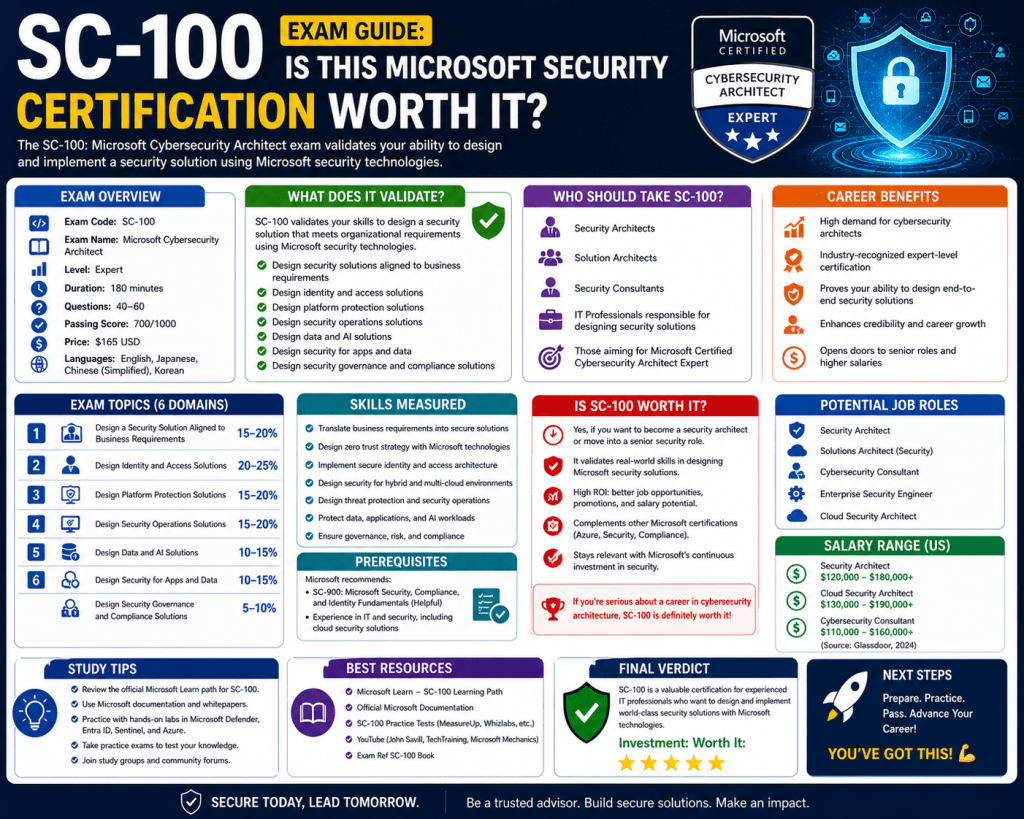
The SC-100 certification is designed to validate the skills required to perform the role of a cybersecurity architect. It focuses on the ability to design and implement security solutions that follow modern principles, particularly the concept of zero trust. This certification goes beyond basic security knowledge and emphasizes strategic thinking, architectural design, and the integration of various security components.
Unlike entry-level certifications that focus on specific tools or technologies, the SC-100 certification covers a broad range of topics. It requires candidates to understand how different security elements interact and how they can be combined to create a comprehensive defense strategy. This makes it particularly relevant for professionals who are involved in decision-making and system design.
The certification also highlights the importance of soft skills, which are often overlooked in technical roles. Cybersecurity architects must be able to communicate effectively, manage projects, and collaborate with diverse teams. These skills are essential for implementing security strategies that are both effective and practical.
Another important aspect of the SC-100 certification is its focus on real-world scenarios. Candidates are expected to apply their knowledge to solve complex problems, rather than simply memorizing theoretical concepts. This approach ensures that certified professionals are well-prepared to להתמודד the challenges they will face in their roles.
The Core Principles of Zero Trust Architecture
Zero trust is a fundamental concept in modern cybersecurity, and it plays a central role in the SC-100 certification. Traditional security models relied on the assumption that everything inside the network could be trusted. However, this approach is no longer effective in today’s environment, where threats can originate from both inside and outside the organization.
The zero-trust model is based on the principle of never trusting any entity by default. Instead, every access request must be verified, regardless of its origin. This involves implementing strict authentication and authorization mechanisms, as well as continuous monitoring of user activity. By adopting this approach, organizations can significantly reduce the risk of unauthorized access and data breaches.
One of the key components of zero trust is identity management. Every user, device, and application must have a verified identity before being granted access to resources. This requires the use of advanced authentication methods, such as multi-factor authentication, which adds an extra layer of security.
Another important aspect is the segmentation of networks. Instead of allowing unrestricted access within the network, resources are divided into smaller segments, each with its own access controls. This limits the impact of a potential breach by preventing attackers from moving freely across the network.
Data protection is also a critical element of zero trust. Sensitive information must be encrypted both at rest and in transit to ensure that it cannot be accessed by unauthorized parties. Additionally, organizations must implement policies that govern how data is accessed, shared, and stored.
Key Knowledge Areas Covered in the SC-100 Certification
The SC-100 certification encompasses several key domains that reflect the responsibilities of a cybersecurity architect. One of the primary areas is the design of a zero-trust strategy. This involves understanding how to implement identity verification, access controls, and monitoring systems to create a secure environment.
Another important domain is governance, risk management, and compliance. Organizations must adhere to various regulations and standards, and cybersecurity architects play a crucial role in ensuring compliance. This requires a deep understanding of legal requirements, as well as the ability to implement policies that align with them.
Infrastructure security is another critical area covered by the certification. This includes the design and implementation of secure networks, cloud environments, and on-premises systems. Candidates must be able to evaluate different technologies and determine how they can be used to enhance security.
The certification also emphasizes the importance of security operations. This involves monitoring systems for potential threats, responding to incidents, and continuously improving security measures. Cybersecurity architects must be able to design systems that support these activities and ensure that they are integrated into the overall security strategy.
Finally, the SC-100 certification focuses on the ability to recommend best practices. This requires a comprehensive understanding of the latest trends and developments in cybersecurity, as well as the ability to apply this knowledge in practical scenarios. Professionals must be able to assess different situations and determine the most effective solutions.
The Expanding Role of Cloud Security in Cybersecurity
The adoption of cloud technologies has transformed the way organizations manage their IT infrastructure. While the cloud offers numerous benefits, such as scalability and flexibility, it also introduces new security challenges. Protecting cloud environments requires a different approach compared to traditional on-premises systems.
Cybersecurity architects must understand how to secure cloud resources from the ground up. This includes configuring access controls, implementing encryption, and ensuring that all components are properly integrated. The shared responsibility model in cloud computing means that both the provider and the customer have roles to play in maintaining security.
One of the key challenges in cloud security is visibility. Organizations must be able to monitor their cloud environments in real time to detect potential threats. This requires the use of advanced tools and technologies that can provide insights into user activity, system performance, and security events.
Another important aspect is the integration of cloud and on-premises systems. Many organizations use a hybrid approach, combining both environments to meet their needs. Ensuring secure communication between these systems is essential for maintaining overall security.
The SC-100 certification addresses these challenges by providing professionals with the knowledge and skills needed to design secure cloud architectures. This makes it highly relevant in today’s technology landscape, where cloud adoption continues to grow.
Why Advanced Cybersecurity Skills Are in High Demand
The increasing frequency and complexity of cyberattacks have created a significant demand for skilled cybersecurity professionals. Organizations are investing heavily in security to protect their assets and maintain customer trust. This has led to a shortage of qualified individuals who can meet these requirements.
Advanced certifications like the SC-100 help bridge this gap by providing professionals with the skills needed to take on leadership roles in cybersecurity. These certifications demonstrate a high level of expertise and a commitment to staying updated with the latest developments in the field.
Employers are particularly interested in candidates who can go beyond technical implementation and contribute to strategic planning. Cybersecurity architects play a crucial role in shaping an organization’s security posture, making them highly valuable assets. As a result, professionals with these skills often have access to better career opportunities and higher earning potential.
The demand for cybersecurity expertise is expected to continue growing in the coming years. As technology evolves, new threats will emerge, requiring innovative solutions and skilled professionals to address them. This makes cybersecurity a promising field for those looking to build a long-term career.
The Strategic Value of Cybersecurity Certifications
Certifications serve as a benchmark for assessing an individual’s knowledge and skills in a particular area. In the field of cybersecurity, they play a crucial role in validating expertise and enhancing credibility. For professionals, earning a certification can open doors to new opportunities and help them stand out in a competitive job market.
The SC-100 certification is particularly valuable because it focuses on advanced concepts and real-world applications. It is designed for individuals who already have experience in cybersecurity and are looking to take their careers to the next level. By earning this certification, professionals can demonstrate their ability to design and implement comprehensive security solutions.
For organizations, certifications provide a way to ensure that their employees have the necessary skills to protect their systems and data. This is especially important in industries that are subject to strict regulatory requirements. Having certified professionals on the team can help organizations meet these requirements and reduce the risk of security incidents.
As the importance of cybersecurity continues to grow, certifications will remain a key component of professional development. They provide a structured way to acquire and validate skills, making them an essential tool for both individuals and organizations.
Deep Dive into the SC-100 Certification Structure and Objectives
The SC-100 certification is structured to evaluate a professional’s ability to think strategically about cybersecurity rather than focusing only on implementation details. It is designed for individuals who already possess foundational knowledge of security concepts and want to move into roles that require architectural decision-making. The certification emphasizes designing systems that are resilient, scalable, and aligned with modern security principles.
One of the defining characteristics of this certification is its focus on real-world applicability. Candidates are expected to analyze complex scenarios and determine the most effective solutions based on business requirements and technical constraints. This requires a deep understanding of how different components of a security ecosystem interact with one another. Instead of memorizing isolated concepts, professionals must develop the ability to integrate multiple layers of security into a cohesive strategy.
The objectives of the SC-100 certification are closely aligned with the responsibilities of a cybersecurity architect. These include designing security strategies, evaluating governance frameworks, and ensuring that infrastructure is built with security in mind from the beginning. The certification also tests the ability to recommend improvements based on evolving threats and organizational needs. This forward-thinking approach is essential in a field where change is constant.
Another important aspect of the certification structure is its emphasis on adaptability. Cybersecurity professionals must be able to respond to new challenges and adjust their strategies accordingly. The SC-100 certification prepares candidates for this by encouraging critical thinking and problem-solving skills. This makes it a valuable credential for those who want to stay relevant in a rapidly evolving industry.
Designing a Comprehensive Zero Trust Strategy
A central theme of the SC-100 certification is the design and implementation of a zero-trust strategy. This approach represents a significant shift from traditional security models and requires a complete rethinking of how access to resources is managed. Instead of assuming trust based on location or network boundaries, zero trust requires continuous verification of every request.
Designing a zero-trust strategy begins with identifying the critical assets that need to be protected. This includes data, applications, and infrastructure components. Once these assets are identified, the next step is to define access policies that determine who can access them and under what conditions. These policies must be granular and dynamic, allowing for adjustments based on changing circumstances.
Identity plays a crucial role in zero-trust architecture. Every user and device must be authenticated before being granted access to resources. This often involves the use of multi-factor authentication, which adds a layer of security by requiring multiple forms of verification. Continuous monitoring is also essential, as it allows organizations to detect and respond to suspicious activity in real time.
Another key component of zero trust is the principle of least privilege. Users should only have access to the resources they need to perform their tasks, and nothing more. This minimizes the potential impact of a compromised account. Implementing this principle requires careful planning and ongoing management to ensure that access rights remain appropriate.
Network segmentation is another important element of zero trust. By dividing the network into smaller segments, organizations can limit the spread of potential threats. Each segment can have its own security controls, making it more difficult for attackers to move laterally within the network. This layered approach provides a higher level of protection compared to traditional models.
Governance, Risk Management, and Compliance in Cybersecurity
Governance, risk management, and compliance are critical components of any cybersecurity strategy. These elements ensure that security measures are aligned with organizational goals and regulatory requirements. The SC-100 certification places a strong emphasis on understanding and implementing these concepts effectively.
Governance involves establishing policies and procedures that guide how security is managed within an organization. This includes defining roles and responsibilities, setting standards, and ensuring that all stakeholders are aware of their obligations. Effective governance provides a framework for decision-making and helps maintain consistency across the organization.
Risk management is the process of identifying, assessing, and mitigating potential threats. This requires a thorough understanding of the organization’s assets and the risks associated with them. Cybersecurity architects must be able to evaluate these risks and determine the most appropriate measures to address them. This often involves balancing security requirements with business needs, as overly restrictive measures can hinder productivity.
Compliance refers to adherence to laws, regulations, and industry standards. Organizations must ensure that their security practices meet these requirements to avoid legal and financial consequences. This can be particularly challenging in environments where regulations are constantly changing. Cybersecurity architects must stay informed about these changes and adjust their strategies accordingly.
An important aspect of governance, risk management, and compliance is the ability to measure effectiveness. Organizations need to track key metrics to determine whether their security measures are working as intended. This includes monitoring incidents, assessing vulnerabilities, and evaluating the impact of implemented controls. Continuous improvement is essential for maintaining a strong security posture.
Designing Secure Infrastructure Across Hybrid Environments
Modern organizations often operate in hybrid environments that combine on-premises systems with cloud-based resources. Designing secure infrastructure in such environments is a complex task that requires careful planning and coordination. The SC-100 certification addresses this challenge by guiding how to integrate security across different platforms.
One of the primary considerations in hybrid environments is ensuring secure communication between systems. Data must be protected as it moves between on-premises and cloud environments. This requires the use of encryption and secure protocols to prevent unauthorized access. Additionally, organizations must implement strong authentication mechanisms to verify the identity of users and devices.
Another important aspect is the management of access controls. In a hybrid environment, users may need to access resources across multiple platforms. Cybersecurity architects must design systems that provide seamless access while maintaining strict security standards. This often involves the use of centralized identity management solutions that can enforce consistent policies.
Visibility is also a key challenge in hybrid environments. Organizations must be able to monitor activity across all systems to detect potential threats. This requires the integration of monitoring tools that can provide a unified view of the entire infrastructure. Without proper visibility, it becomes difficult to identify and respond to security incidents.
Scalability is another factor that must be considered. As organizations grow, their infrastructure needs to expand accordingly. Cybersecurity architects must design systems that can accommodate this growth without compromising security. This requires a flexible approach that allows for the addition of new resources while maintaining consistent security controls.
Security Operations and Incident Response Strategies
Security operations play a vital role in maintaining the integrity of an organization’s systems. While designing secure architectures is important, it is equally important to monitor and respond to potential threats. The SC-100 certification emphasizes the need for effective security operations and incident response strategies.
Monitoring is the first line of defense in security operations. Organizations must continuously observe their systems to identify unusual activity. This involves collecting and analyzing data from various sources, such as network logs, user behavior, and system performance. Advanced analytics can help detect patterns that may indicate a potential threat.
Incident response is the process of addressing security breaches when they occur. This requires a well-defined plan that outlines the steps to be taken in the event of an incident. Cybersecurity architects must ensure that these plans are in place and that all stakeholders are aware of their roles. A quick and effective response is essential for minimizing damage and restoring normal operations.
Another important aspect of security operations is threat intelligence. This involves gathering information about potential threats and using it to improve security measures. By staying informed about the latest attack techniques, organizations can proactively defend against them. Cybersecurity architects play a key role in integrating threat intelligence into the overall security strategy.
Automation is also becoming increasingly important in security operations. With the growing volume of data and the complexity of threats, manual processes are no longer sufficient. Automated tools can help streamline tasks such as monitoring, analysis, and response, allowing security teams to focus on more strategic activities.
The Importance of Soft Skills in Cybersecurity Architecture
While technical expertise is essential for cybersecurity architects, soft skills are equally important. The ability to communicate effectively, collaborate with others, and manage projects is critical for success in this role. The SC-100 certification recognizes this by emphasizing the importance of these skills.
Communication is one of the most important soft skills for cybersecurity architects. They must be able to explain complex technical concepts to non-technical stakeholders, such as executives and business leaders. This requires the ability to translate technical details into clear and understandable language. Effective communication helps ensure that security initiatives are supported and implemented successfully.
Collaboration is another key skill. Cybersecurity architects work with a wide range of teams, including developers, network engineers, and compliance specialists. They must be able to coordinate efforts and ensure that all aspects of security are aligned. This requires strong interpersonal skills and the ability to build relationships.
Project management is also an important aspect of the role. Implementing security solutions often involves multiple مراحل and requires careful planning and execution. Cybersecurity architects must be able to manage timelines, allocate resources, and ensure that projects are completed successfully. This requires a combination of organizational skills and attention to detail.
Adaptability is another crucial soft skill. The cybersecurity landscape is constantly changing, and professionals must be able to adjust their strategies accordingly. This requires a willingness to learn and the ability to stay updated with the latest developments. Cybersecurity architects must be proactive in seeking out new knowledge and applying it to their work.
Career Opportunities and Professional Growth with SC-100
Earning the SC-100 certification can open up a wide range of career opportunities. As organizations continue to prioritize cybersecurity, the demand for skilled professionals is increasing. This certification demonstrates a high level of expertise and can help individuals stand out in a competitive job market.
Cybersecurity architects are among the most sought-after professionals in the industry. They play a critical role in shaping an organization’s security strategy and ensuring that systems are protected against threats. This makes them valuable assets and often leads to higher compensation and career advancement opportunities.
In addition to traditional roles, the SC-100 certification can also lead to opportunities in specialized areas. These may include cloud security, risk management, and compliance. Professionals with this certification have the flexibility to explore different career paths based on their interests and expertise.
Continuous learning is essential for professional growth in cybersecurity. The SC-100 certification provides a strong foundation, but professionals need to keep updating their skills. This may involve pursuing additional certifications, attending industry events, or gaining hands-on experience. Staying current with the latest trends and technologies is key to long-term success.
Networking is another important aspect of career development. Building connections with other professionals can provide valuable insights and opportunities. Cybersecurity architects can benefit from engaging with the community, sharing knowledge, and learning from others. This helps them stay informed and expand their professional horizons.
Conclusion
The decision to pursue an advanced cybersecurity certification often begins with a careful evaluation of financial and professional trade-offs. While the direct cost of the SC-100 exam may appear manageable, the broader investment includes time, effort, and the opportunity cost of dedicating hours to study instead of other productive activities. For many professionals, this preparation phase requires balancing work responsibilities with consistent learning, which can be demanding. However, when viewed from a long-term perspective, the value derived from such a certification can outweigh the initial investment. The potential for career advancement, improved compensation, and access to strategic roles make it an appealing option for those committed to growing in cybersecurity.
One of the most significant advantages associated with advanced certifications is the potential increase in earning capacity. Cybersecurity architects are positioned at a high level within organizations, often contributing to decision-making processes that directly affect business continuity and risk management. Because of this strategic importance, employers are willing to offer competitive salaries to individuals who can demonstrate expertise in designing secure systems. In addition to salary increases, certified professionals may also gain access to leadership roles, specialized projects, and consulting opportunities that further enhance their professional standing.
Beyond financial rewards, job stability is another compelling factor. The cybersecurity field continues to expand as digital transformation accelerates across industries. Unlike many roles that face the risk of automation, cybersecurity requires human judgment, adaptability, and critical thinking. These qualities are difficult to replicate through automated systems, ensuring that skilled professionals remain essential. As organizations continue to prioritize security, individuals with advanced certifications often experience greater job security and resilience during economic fluctuations.
Another important benefit is the flexibility that comes with possessing advanced cybersecurity knowledge. The principles covered in the SC-100 certification are not limited to a single industry or environment. Whether working in finance, healthcare, technology, or government sectors, the ability to design and manage secure systems is universally valuable. This versatility allows professionals to transition between industries more easily, broadening their career opportunities and reducing dependency on a single market.
When evaluating the SC-100 certification, it is also important to consider how it compares to other advanced credentials in cybersecurity. Each certification is designed with a specific focus, and understanding these distinctions can help professionals choose the path that aligns best with their career goals. The SC-100 certification emphasizes architectural thinking and strategic planning, setting it apart from certifications that focus primarily on technical execution or specialized skills. This broader perspective is particularly beneficial for individuals aiming to move into leadership or advisory roles.
Some certifications concentrate on niche areas such as ethical hacking, incident response, or network defense. While these are valuable for developing deep technical expertise, they may not provide the same level of exposure to organizational strategy and system design. The SC-100 certification, on the other hand, integrates multiple domains of cybersecurity, encouraging a holistic understanding of how different elements interact within an enterprise environment. This makes it especially relevant for professionals who are responsible for designing comprehensive security frameworks.
Another distinguishing feature of the SC-100 certification is its integration of cloud security concepts. As organizations increasingly adopt cloud-based solutions, the need for professionals who can secure these environments has grown significantly. The certification addresses this demand by incorporating modern security practices that apply to both cloud and hybrid infrastructures. This alignment with industry trends ensures that certified professionals remain relevant and capable of addressing contemporary challenges.
The practical applications of the knowledge gained through the SC-100 certification are extensive. Cybersecurity architects use this expertise to design systems that protect organizations from a wide range of threats. This includes developing secure network architectures that incorporate multiple layers of defense, such as firewalls, intrusion detection systems, and access control mechanisms. By implementing these measures, organizations can reduce the risk of unauthorized access and safeguard their digital assets.
Data protection is another critical area where this knowledge is applied. Cybersecurity architects must ensure that sensitive information is handled securely at all stages, from storage to transmission. This involves implementing encryption techniques, defining access policies, and monitoring data usage to prevent unauthorized exposure. Given the potential consequences of data breaches, including financial losses and reputational damage, this aspect of cybersecurity is particularly important.
Incident response is also a key responsibility for professionals in this field. When security breaches occur, organizations must act quickly to contain the threat and minimize damage. Cybersecurity architects contribute by developing response strategies, coordinating with teams, and ensuring that recovery processes are efficient. Their ability to anticipate potential scenarios and prepare accordingly plays a vital role in maintaining operational continuity.
Another practical application involves evaluating and improving existing security measures. Organizations must continuously assess their systems to identify vulnerabilities and address them proactively. This requires a thorough understanding of current threats and the ability to adapt security strategies accordingly. Cybersecurity architects are responsible for conducting these assessments and recommending improvements that enhance overall protection.
Despite its benefits, preparing for the SC-100 certification can present several challenges. The scope of the exam is broad, covering a wide range of topics that require both theoretical understanding and practical application. Candidates must be prepared to engage deeply with complex concepts, which can be demanding, especially for those who are new to advanced cybersecurity topics. The level of detail required often necessitates a disciplined and structured approach to studying.
Keeping up with the rapidly changing nature of cybersecurity adds another layer of difficulty. New threats, technologies, and methodologies emerge regularly, requiring candidates to stay informed and continuously update their knowledge. This dynamic environment can make it challenging to focus on a fixed set of study materials, as additional research is often needed to fully grasp the subject matter.
Time management is another significant consideration. Many candidates pursue certification while maintaining full-time employment, which can limit the amount of time available for study. Balancing professional responsibilities with exam preparation requires careful planning and commitment. Developing a consistent study routine and setting achievable goals can help candidates navigate this challenge more effectively.
Practical experience is equally important in the preparation process. While theoretical knowledge provides a foundation, the ability to apply concepts in real-world scenarios is crucial for success. Candidates may benefit from engaging in hands-on activities, such as working on projects or exploring simulated environments. This practical exposure can enhance understanding and improve confidence when tackling exam questions.
The importance of continuous learning in cybersecurity cannot be overstated. Earning a certification like SC-100 is a significant achievement, but it represents only one step in an ongoing journey. The field is characterized by constant change, and professionals must remain proactive in updating their skills and knowledge. This commitment to learning ensures that they can effectively address emerging challenges and remain valuable to their organizations.
Technological advancements are a major driver of this need for continuous education. As new tools and platforms are introduced, cybersecurity professionals must understand how to secure them and integrate them into existing systems. This requires a willingness to explore new concepts and adapt to evolving environments. Staying current with technological trends is essential for maintaining a competitive edge.
The evolving threat landscape also necessitates ongoing learning. Cybercriminals are constantly developing new techniques, making it essential for professionals to stay informed about the latest attack methods. By understanding these threats, cybersecurity architects can design more effective defenses and anticipate potential vulnerabilities before they are exploited.
Professional development can take many forms, including participation in industry events, collaboration with peers, and engagement with professional communities. These activities provide opportunities to exchange ideas, learn from others, and gain insights into best practices. Building a network of professionals can also lead to new opportunities and enhance career growth.
Self-directed learning is another valuable approach. By taking initiative and exploring topics independently, professionals can deepen their understanding and stay ahead of industry trends. This may involve experimenting with new technologies, reading technical materials, or working on personal projects. Such efforts contribute to long-term success and adaptability.
The demand for cybersecurity architects continues to grow as organizations recognize the importance of robust security strategies. Digital transformation initiatives are expanding the scope of technology within businesses, creating new challenges that require specialized expertise. Cybersecurity architects play a central role in addressing these challenges by designing systems that are secure, scalable, and aligned with organizational goals.
Regulatory requirements further contribute to this demand. Governments and industry bodies are implementing stricter standards to protect sensitive information, and organizations must comply with these regulations. This often involves complex security measures that require careful planning and execution. Professionals with the skills validated by the SC-100 certification are well-equipped to meet these requirements.
The shift toward remote work has also increased the need for advanced security solutions. With employees accessing systems from various locations and devices, traditional security models are no longer sufficient. Organizations must adopt comprehensive approaches that include identity verification, access management, and continuous monitoring. Cybersecurity architects are essential in designing and implementing these solutions.
Ultimately, the value of the SC-100 certification depends on individual goals and career aspirations. For professionals seeking to move into strategic or leadership roles, it offers a pathway to developing the necessary skills and knowledge. It bridges the gap between technical expertise and architectural thinking, enabling individuals to contribute at a higher level within their organizations.
For those already experienced in cybersecurity, the certification serves as a validation of their capabilities and a demonstration of their commitment to professional growth. It enhances credibility and can open doors to new opportunities, both within and outside their current organizations. As cybersecurity continues to evolve, professionals who invest in advanced certifications and continuous learning will be better positioned to succeed in this dynamic field.