
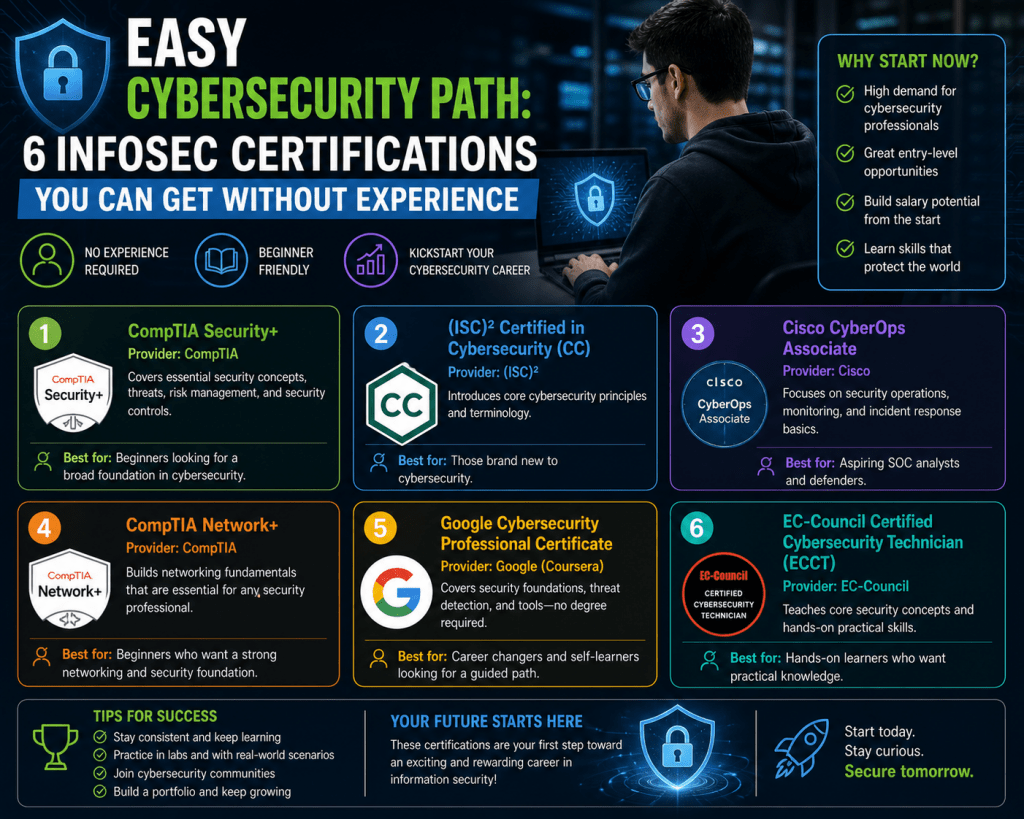
Information security has become one of the most heavily scrutinized and rapidly evolving areas within the broader information technology landscape. Organizations across industries now operate in an environment where cyber threats are persistent, adaptive, and increasingly sophisticated. Every week, incidents involving unauthorized access, data leaks, ransomware, or system disruptions are reported across global networks, reinforcing the critical importance of strong security practices.
This growing exposure to digital risk has created a continuous demand for skilled professionals who understand how to protect systems, networks, and data assets. As organizations digitize operations, migrate infrastructure to cloud environments, and expand remote access capabilities, the attack surface expands as well. This makes information security not only a technical requirement but also a strategic business priority.
At the same time, the cybersecurity workforce gap continues to widen. Many organizations struggle to find qualified professionals who possess both foundational knowledge and applied skills in security operations. This shortage has opened significant opportunities for individuals entering the field, especially those who begin with structured entry-level certifications designed to build core competencies. These early learning paths are critical because they establish the baseline understanding required to progress into more advanced security roles.
Why Entry-Level Security Certifications Matter for Career Entry
For individuals entering the cybersecurity field, entry-level certifications serve as structured gateways into a complex and highly technical domain. Unlike informal learning or unstructured experience, certifications provide a guided curriculum that introduces essential concepts in a logical progression.
These programs typically focus on core areas such as network fundamentals, system security principles, authentication mechanisms, threat identification, and basic risk management practices. By covering these foundational topics, they help learners build a strong conceptual framework that can later support advanced technical specialization.
Another important function of entry-level certifications is skill validation. In competitive job markets, employers often look for evidence that candidates have undergone structured training. Entry-level credentials provide this assurance by demonstrating that an individual understands fundamental cybersecurity concepts and is capable of applying them in real-world contexts.
These certifications also help reduce the barrier to entry for individuals transitioning from non-technical backgrounds. Since many programs are designed with minimal prerequisites, they allow learners from administrative, business, or general IT roles to begin developing cybersecurity expertise without requiring prior specialized experience.
Overall, entry-level certifications serve as both educational tools and career enablers, helping individuals move from theoretical awareness to practical readiness.
Fundamental Cybersecurity Knowledge Areas Covered in Entry-Level Learning
Entry-level information security certifications are structured around a set of foundational knowledge domains that form the basis of all cybersecurity disciplines. These domains are designed to introduce learners to the core principles that govern secure computing environments.
One of the primary areas of focus is network security fundamentals. This includes understanding how data moves across networks, how devices communicate, and how vulnerabilities can be exploited during transmission. Learners are introduced to concepts such as firewalls, segmentation, secure protocols, and network monitoring techniques.
Another essential area is system security, which covers the protection of operating systems, applications, and endpoints. This includes topics such as patch management, malware behavior, system hardening, and user access control. Understanding how systems can be compromised and defended is a critical component of cybersecurity readiness.
Identity and access management is also a key domain. This area focuses on authentication methods, authorization processes, and user privilege control. It ensures that only authorized individuals can access sensitive resources and that access levels are properly managed within organizational systems.
In addition, entry-level programs often introduce risk management principles. This includes identifying potential threats, assessing vulnerabilities, and understanding the impact of security incidents. Learners gain insight into how organizations evaluate risk and implement controls to mitigate exposure.
Finally, basic cryptography concepts are often included. These cover data encryption, hashing, and secure communication techniques used to protect information confidentiality and integrity.
Microsoft-Focused Security Foundations for Entry-Level Learners
One common entry point into cybersecurity education involves foundational learning aligned with widely used enterprise technologies. These programs are designed to introduce learners to security concepts within familiar operating environments, particularly those used in corporate settings.
This type of certification typically covers essential security topics such as operating system protection, basic network security, and software vulnerability awareness. The goal is to help learners understand how security principles are applied within commonly used digital infrastructures.
A key advantage of this pathway is accessibility. It is generally designed for beginners and does not require extensive prior technical experience. This makes it suitable for individuals who are new to cybersecurity or transitioning from general IT roles.
The structure of these programs often includes multiple-choice assessments that evaluate understanding of core concepts. Rather than focusing on deep technical implementation, the emphasis is placed on conceptual clarity and practical awareness.
Another important feature is the longevity of foundational certifications. Some entry-level credentials do not require frequent renewal, allowing learners to retain their foundational qualification while progressing to more advanced certifications over time.
This type of learning path is particularly valuable for individuals seeking to build confidence in cybersecurity fundamentals before moving into more specialized areas such as network defense, cloud security, or threat analysis.
CompTIA Security+ as a Widely Recognized Entry-Level Benchmark
One of the most widely recognized entry points into the cybersecurity profession is a vendor-neutral certification that focuses on core security principles across multiple domains. This credential is often considered a foundational benchmark for individuals pursuing careers in information security.
The program covers a broad range of topics, including threat identification, vulnerability assessment, network security, identity management, and risk mitigation strategies. It is structured to provide a balanced understanding of both technical and operational aspects of cybersecurity.
A defining feature of this certification is its emphasis on practical security knowledge. Learners are expected to understand how security incidents occur, how vulnerabilities are exploited, and how defensive measures are implemented in real-world environments.
The certification also includes scenario-based evaluation, which tests the ability to apply knowledge in simulated security situations. This approach helps bridge the gap between theoretical understanding and practical application, which is essential for entry-level professionals.
Another important aspect is its recognition across industries. Because it is vendor-neutral, the knowledge gained is applicable in a wide variety of IT environments, including enterprise networks, cloud platforms, and hybrid systems.
This makes it a strong foundational credential for individuals seeking roles such as security analyst, systems administrator, or network support technician.
Cybersecurity Fundamentals Through Structured Learning Frameworks
In addition to traditional certification pathways, there are structured learning frameworks designed to introduce cybersecurity concepts in a progressive and accessible manner. These programs often focus on building awareness of modern cyber threats and defensive strategies.
The curriculum typically includes introductory topics such as network architecture, application security, and data protection principles. It also explores emerging technologies that influence cybersecurity, including cloud computing environments and digital transformation systems.
One of the key benefits of this approach is its emphasis on practical awareness. Learners are introduced to real-world security challenges and are guided through the process of identifying and responding to potential threats.
These frameworks also help individuals develop analytical thinking skills, which are essential for cybersecurity roles. Understanding how attackers exploit vulnerabilities and how systems respond to threats is a critical part of security training.
Additionally, these programs are often suitable for both technical and non-technical professionals. Managers, auditors, and business professionals can benefit from understanding cybersecurity fundamentals, even if they are not directly involved in technical implementation.
By providing a broad introduction to cybersecurity principles, these frameworks serve as an effective entry point for individuals seeking to build foundational knowledge before pursuing advanced specialization.
Vendor-Specific Entry Paths for Technology-Aligned Security Skills
Another category of entry-level cybersecurity education focuses on vendor-specific systems and technologies. These learning paths are particularly useful for individuals working in environments where a specific technology ecosystem is widely deployed.
These programs typically cover topics such as security configuration, system monitoring, firewall management, and policy implementation within a defined platform. The focus is on practical application within real operational environments.
A key advantage of vendor-specific learning is its direct relevance to workplace tasks. Learners gain hands-on experience with tools and systems they are likely to encounter in professional roles. This makes the transition from training to employment more seamless.
These certifications also emphasize operational security management, including how to configure secure systems, monitor network activity, and respond to security incidents within a controlled environment.
While narrower in scope than general cybersecurity certifications, vendor-specific training provides depth in specialized areas. This can be particularly beneficial for individuals aiming to work in system administration, network engineering, or infrastructure security roles.
By combining foundational security knowledge with platform-specific expertise, learners can build a more targeted skill set aligned with specific career paths in information security operations.
Transitioning From Foundational Knowledge to Applied Cybersecurity Skills
Once foundational knowledge in information security has been established, the next stage of professional development focuses on applied cybersecurity skills. This phase is where theoretical understanding begins to merge with practical implementation, allowing learners to engage more directly with real-world security scenarios.
At this level, the emphasis shifts from basic awareness to structured problem-solving within security environments. Individuals begin to understand how organizations detect threats, respond to incidents, and maintain secure operations across complex IT infrastructures. This transition is essential because cybersecurity is not only about understanding concepts but also about applying them under operational constraints.
Entry-level learners moving into this stage typically start working with more advanced security domains such as intrusion detection, access control management, vulnerability assessment, and incident response planning. These areas require a deeper understanding of how systems interact and how attackers exploit weaknesses within those systems.
This phase also introduces learners to the operational side of cybersecurity teams, where monitoring, analysis, and response activities are performed continuously. As a result, individuals begin to develop analytical thinking patterns that are essential for identifying anomalies and mitigating risks in dynamic environments.
Core Cybersecurity Domains in Applied Learning Environments
Applied cybersecurity education is structured around several core domains that reflect real-world security operations. These domains expand upon foundational knowledge and introduce more complex technical and procedural concepts.
One of the most important domains is threat detection and response. This area focuses on identifying suspicious activity within networks and systems, analyzing potential security incidents, and executing appropriate response strategies. Learners are introduced to monitoring tools, alert systems, and incident classification methods.
Another critical domain is vulnerability management. This involves identifying weaknesses in systems, assessing their potential impact, and prioritizing remediation efforts. Vulnerability management requires a combination of technical scanning techniques and risk-based decision-making processes.
Identity and access governance is also a major focus at this stage. Learners explore how organizations manage user permissions, enforce authentication policies, and ensure that access rights align with job responsibilities. This includes advanced authentication mechanisms and privilege management strategies.
Security architecture principles are also introduced, covering how secure systems are designed and maintained. This includes understanding layered security models, network segmentation strategies, and secure communication frameworks.
Finally, learners begin exploring compliance and regulatory alignment, which ensures that security practices meet industry standards and legal requirements. This domain connects technical security practices with organizational governance structures.
Vendor-Neutral Security Certifications for Broad Professional Development
As learners progress beyond foundational knowledge, vendor-neutral certifications become increasingly important. These credentials focus on universally applicable cybersecurity principles rather than platform-specific technologies.
Vendor-neutral certifications typically cover a wide range of topics, including network defense, risk assessment, cryptographic systems, secure infrastructure design, and security policy implementation. This broad coverage ensures that learners develop a well-rounded understanding of cybersecurity practices across different environments.
One of the key strengths of vendor-neutral programs is their adaptability. Because they are not tied to a specific technology stack, the knowledge gained can be applied in multiple contexts, including cloud environments, enterprise networks, and hybrid infrastructures.
These certifications often include scenario-based assessments that simulate real-world security challenges. This helps learners develop decision-making skills under conditions that mirror operational environments.
Another important aspect is industry recognition. Vendor-neutral credentials are widely accepted across organizations, making them valuable for individuals seeking roles in security analysis, system protection, and IT risk management.
By focusing on universal principles, these certifications help bridge the gap between entry-level understanding and professional-level cybersecurity expertise.
Security Governance, Risk Management, and Organizational Controls
An important component of intermediate cybersecurity education involves governance and risk management frameworks. These areas focus on how organizations structure their security policies, manage risks, and enforce compliance requirements.
Governance frameworks define how security decisions are made within an organization. This includes roles and responsibilities, policy enforcement mechanisms, and strategic alignment between security and business objectives.
Risk management is another essential area that focuses on identifying potential threats, evaluating their impact, and implementing mitigation strategies. This process involves both technical assessment and business-oriented decision-making.
Organizational controls are also a key focus, covering the implementation of security policies and procedures that ensure consistent protection across systems and users. These controls may include access restrictions, monitoring systems, and audit mechanisms.
Learners in this domain gain insight into how cybersecurity functions at a structural level within organizations. Rather than focusing solely on technical implementation, they begin to understand how security integrates with operational workflows and corporate governance.
This knowledge is particularly valuable for individuals working in roles that require coordination between technical teams and business stakeholders.
Structured Cybersecurity Frameworks and Industry Standards
Cybersecurity frameworks provide structured methodologies for implementing and managing security programs within organizations. These frameworks are widely used to ensure consistency, accountability, and regulatory compliance.
At the intermediate level, learners are introduced to how these frameworks organize security practices into defined categories such as identification, protection, detection, response, and recovery.
Each category represents a critical phase of the cybersecurity lifecycle. Identification involves understanding assets and risks, protection focuses on implementing safeguards, detection emphasizes monitoring systems, response addresses incident handling, and recovery ensures continuity after disruptions.
Industry standards also play a significant role in this domain. These standards define best practices for securing information systems and ensuring compliance with legal and regulatory requirements.
Understanding these frameworks helps learners see how individual security tasks contribute to broader organizational goals. It also provides a structured approach to managing cybersecurity programs in complex environments.
This level of understanding is essential for individuals preparing for roles that involve security planning, audit preparation, and policy development.
Intermediate Network Security and System Defense Concepts
Network security becomes significantly more complex at the intermediate level, focusing on advanced defensive strategies and infrastructure protection mechanisms.
Learners begin exploring how network segmentation is used to isolate sensitive systems and reduce the spread of potential attacks. They also study advanced firewall configurations, intrusion prevention systems, and secure routing practices.
System defense concepts expand to include endpoint protection strategies, secure configuration management, and system hardening techniques. These practices are designed to reduce vulnerabilities across operating systems and applications.
Monitoring and detection systems also become more advanced, incorporating behavioral analysis and anomaly detection techniques. These tools help identify unusual patterns that may indicate security threats.
In addition, learners gain exposure to secure communication protocols that protect data during transmission across networks. This includes encryption methods and secure channel establishment techniques.
These concepts are essential for individuals working in roles such as security operations, network defense, and infrastructure protection.
Incident Response and Security Operations Fundamentals
Incident response is a critical area of cybersecurity that focuses on identifying, analyzing, and mitigating security breaches. At the intermediate level, learners are introduced to structured response methodologies used by professional security teams.
This includes understanding how incidents are categorized based on severity, how response teams are organized, and how communication flows during security events.
The process typically involves detection, containment, eradication, and recovery phases. Each phase plays a specific role in minimizing damage and restoring normal operations.
Security operations centers often serve as the central hub for monitoring and responding to threats. Learners gain insight into how these environments function, including the tools and processes used to manage large volumes of security data.
Log analysis and event correlation are also key skills at this level. These techniques help security professionals identify patterns that indicate potential attacks or system vulnerabilities.
Incident response training also emphasizes documentation and reporting, which are essential for compliance and post-incident analysis.
Ethical Hacking Foundations and Defensive Security Thinking
An important intermediate pathway in cybersecurity involves understanding offensive security techniques from a defensive perspective. This area is often referred to as ethical hacking or penetration testing fundamentals.
The goal of this discipline is to understand how attackers think and operate to strengthen defensive mechanisms. Learners are introduced to techniques used to identify system vulnerabilities and test security controls.
This includes understanding network scanning methods, vulnerability analysis techniques, and exploitation concepts. However, the focus remains on improving security rather than causing harm.
Ethical hacking education also emphasizes responsible disclosure practices and legal boundaries. Professionals in this field must operate within strict ethical and regulatory guidelines.
By studying offensive techniques, learners develop a deeper understanding of system weaknesses and how they can be mitigated. This perspective is highly valuable in designing more resilient security systems.
This area of study often serves as a bridge between foundational cybersecurity knowledge and advanced penetration testing or red team roles.
Role of Intermediate Certifications in Career Progression
Intermediate cybersecurity certifications play a critical role in bridging the gap between entry-level knowledge and professional expertise. These credentials validate a learner’s ability to apply security principles in practical environments.
They often serve as prerequisites for advanced certifications and specialized career paths. By completing intermediate-level training, individuals demonstrate readiness for roles that require both technical skill and analytical thinking.
Employers often use these certifications as indicators of job readiness for positions such as security analyst, network defender, and IT risk specialist.
In addition to technical knowledge, these certifications also emphasize critical thinking, problem-solving, and situational awareness. These skills are essential for navigating complex security environments.
Overall, intermediate-level certifications and frameworks provide the necessary structure for transitioning into more advanced cybersecurity roles and responsibilities.
Evolving From Intermediate Skills to Advanced Cybersecurity Specialization
As professionals progress beyond foundational and intermediate cybersecurity knowledge, the focus shifts toward advanced specialization. This stage is characterized by deeper technical expertise, strategic security thinking, and the ability to operate in high-responsibility environments where decisions directly impact organizational resilience.
At this level, cybersecurity is no longer limited to identifying or responding to threats. Instead, professionals are expected to anticipate attack vectors, design defensive architectures, and contribute to long-term security strategy development. This requires a strong understanding of both technical systems and adversarial behavior patterns.
Advanced cybersecurity roles often involve working with complex infrastructures such as cloud-native environments, distributed systems, and hybrid enterprise networks. These environments demand expertise in scalability, automation, identity federation, and continuous monitoring.
Professionals at this stage also engage heavily with security governance at a strategic level. This includes aligning cybersecurity initiatives with business objectives, managing enterprise-wide risk exposure, and ensuring compliance with evolving regulatory standards.
The transition into advanced cybersecurity specialization represents a shift from operational execution to strategic security leadership, where the ability to evaluate risk and design resilient systems becomes essential.
Advanced Cybersecurity Domains and Technical Depth
Advanced cybersecurity encompasses a wide range of specialized domains that require deep technical understanding and practical experience. These domains extend beyond general security principles and focus on highly specific areas of defense, analysis, and offensive simulation.
One of the key advanced domains is threat intelligence analysis. This involves studying attacker behavior, identifying emerging threat patterns, and using intelligence data to anticipate future attacks. Professionals in this area analyze large volumes of security data to extract meaningful insights that guide defensive strategies.
Another critical domain is advanced cryptography and secure communication systems. This includes understanding encryption algorithms, key management systems, and secure protocol design. These concepts are essential for protecting sensitive data in transit and at rest across complex systems.
Cloud security architecture is also a major area of specialization. As organizations migrate infrastructure to cloud environments, securing virtual networks, identity systems, and cloud workloads becomes a top priority. This requires knowledge of cloud access controls, workload isolation, and secure configuration management.
Advanced endpoint protection and behavioral analytics are also key areas. These involve using machine learning and heuristic analysis to detect abnormal system behavior that may indicate advanced persistent threats.
Finally, advanced cybersecurity also includes forensic analysis, where professionals investigate security breaches to determine how attacks occurred, what systems were affected, and how similar incidents can be prevented in the future.
Ethical Hacking and Offensive Security as a Defensive Strategy
Ethical hacking represents one of the most critical advanced pathways in cybersecurity. It focuses on understanding how attackers exploit vulnerabilities to strengthen defensive systems. This discipline is often referred to as offensive security when used in a controlled and legal environment.
Professionals in this field simulate real-world cyberattacks to identify weaknesses in networks, applications, and infrastructure. These simulations include penetration testing, vulnerability exploitation, and system reconnaissance.
The primary objective is not to cause damage but to uncover security gaps before malicious actors can exploit them. This proactive approach allows organizations to strengthen their defenses in advance of actual threats.
Ethical hacking requires a deep understanding of system architecture, network protocols, and application behavior. Professionals must also be familiar with scripting, automation tools, and security testing methodologies.
A key aspect of offensive security is understanding attacker psychology. By analyzing how cybercriminals think and operate, ethical hackers can anticipate attack paths and design more effective defense mechanisms.
This field also emphasizes strict ethical and legal boundaries. All testing activities must be authorized and conducted within defined scopes to ensure compliance with regulations and organizational policies.
Ethical hacking plays a crucial role in modern cybersecurity strategies by continuously validating and improving the strength of security systems.
Security Architecture and Enterprise Defense Design
Security architecture is a foundational component of advanced cybersecurity practice. It focuses on designing systems that are inherently secure by structure rather than relying solely on reactive defense mechanisms.
This domain involves creating layered security models that incorporate multiple defensive controls at different levels of infrastructure. These layers work together to reduce the likelihood of successful attacks and limit potential damage.
Identity and access architecture plays a major role in enterprise security design. This includes defining how users are authenticated, how permissions are assigned, and how access is monitored across systems.
Network architecture design also plays a critical role. Professionals in this area design segmented networks that isolate sensitive systems and restrict lateral movement in case of breaches.
Secure application architecture is another key area, focusing on embedding security controls directly into software development processes. This includes secure coding practices, input validation mechanisms, and secure API design.
Cloud architecture security introduces additional complexity, requiring professionals to design secure environments across distributed infrastructure platforms. This includes managing identity federation, workload isolation, and secure data storage systems.
Security architecture professionals are responsible for ensuring that all components of an organization’s IT ecosystem work together to maintain a strong and resilient security posture.
Advanced Incident Response and Digital Forensics
Incident response at an advanced level involves highly coordinated efforts to detect, contain, and recover from sophisticated cyberattacks. These incidents often involve multiple systems, complex attack chains, and advanced persistent threats.
Advanced incident response teams operate using structured frameworks that define how incidents are identified, escalated, and resolved. These frameworks ensure consistency and efficiency during high-pressure situations.
A key component of advanced response is forensic investigation. This involves analyzing system logs, memory dumps, network traffic, and digital artifacts to reconstruct the sequence of events during an attack.
Digital forensics also requires specialized tools and techniques to preserve evidence while maintaining its integrity for legal or compliance purposes. This is critical in cases involving regulatory investigations or legal disputes.
Threat containment strategies at this level often involve isolating affected systems, deploying emergency patches, and implementing temporary access restrictions to prevent further damage.
Post-incident analysis is another essential activity. This involves reviewing the incident to identify root causes, evaluate response effectiveness, and implement improvements to prevent recurrence.
Advanced incident response professionals must be able to operate under high pressure while maintaining accuracy, coordination, and clear communication across multiple teams.
Cybersecurity Governance, Risk, and Strategic Leadership Roles
At advanced levels, cybersecurity extends beyond technical execution into governance and strategic leadership. Professionals in these roles are responsible for aligning security programs with organizational objectives and regulatory requirements.
Cybersecurity governance involves establishing policies, frameworks, and accountability structures that define how security is managed across an organization. This includes defining roles, responsibilities, and decision-making authority.
Risk management becomes more strategic, focusing on enterprise-wide risk exposure rather than individual system vulnerabilities. Professionals assess how risks impact business operations, financial stability, and regulatory compliance.
Compliance management is another critical responsibility, ensuring that organizations adhere to industry standards and legal requirements. This includes maintaining audit readiness and implementing continuous compliance monitoring systems.
Strategic cybersecurity leadership also involves budget planning, resource allocation, and long-term security program development. Leaders in this space must balance technical requirements with business priorities.
Communication plays a vital role in these roles, as cybersecurity leaders must translate complex technical risks into business language that stakeholders can understand and act upon.
This combination of technical understanding and strategic oversight makes cybersecurity leadership one of the most important roles in modern organizations.
Emerging Technologies and the Future of Cybersecurity Specialization
The cybersecurity landscape continues to evolve rapidly due to the emergence of new technologies and attack methods. Advanced professionals must continuously adapt to these changes to remain effective.
Artificial intelligence and machine learning are increasingly being used in both offensive and defensive cybersecurity operations. These technologies help automate threat detection, analyze large datasets, and identify behavioral anomalies.
Cloud-native security continues to grow in importance as organizations migrate more services to distributed environments. This requires new approaches to identity management, workload protection, and data security.
Zero trust architecture is becoming a standard security model, emphasizing continuous verification of users and devices rather than relying on traditional perimeter-based security approaches.
Automation and orchestration are also transforming security operations by reducing manual workloads and enabling faster incident response times.
At the same time, attackers are also leveraging advanced technologies, making cybersecurity a continuously evolving field that requires constant learning and adaptation.
Professionals who specialize in advanced cybersecurity domains must remain engaged with emerging trends and continuously refine their skills to stay ahead of evolving threats.
Long-Term Career Progression in Information Security
Career progression in cybersecurity typically follows a structured pathway from foundational knowledge to specialized expertise and eventually strategic leadership.
Entry-level roles focus on basic security monitoring, system administration, and foundational threat awareness. Intermediate roles involve deeper technical analysis, incident response, and risk assessment responsibilities.
Advanced roles expand into areas such as security architecture, penetration testing, forensic analysis, and governance leadership. Each stage builds upon the knowledge and experience gained in previous stages.
Long-term career development in cybersecurity is highly dynamic, with opportunities to specialize in multiple directions depending on individual interests and organizational needs.
Some professionals choose to focus on technical mastery, while others move into strategic leadership or consulting roles. Others may specialize in offensive security, cloud protection, or compliance management.
The diversity of career paths within cybersecurity ensures that professionals can continuously evolve their skills while contributing to the protection of digital systems at scale.
Conclusion
Information security has evolved into one of the most critical domains within modern technology ecosystems, driven by the increasing complexity of digital infrastructure and the persistent rise in cyber threats. Across industries, organizations now depend on secure systems not only to protect sensitive data but also to ensure operational continuity, maintain customer trust, and comply with regulatory requirements. This shift has transformed cybersecurity from a specialized technical discipline into a foundational requirement for nearly every digital business function. As a result, the demand for skilled professionals continues to grow, creating a sustained opportunity for individuals seeking to enter the field.
For those beginning their journey, entry-level cybersecurity certifications serve as structured gateways into a highly technical and rapidly evolving profession. These certifications are designed to provide clarity in an otherwise complex landscape by introducing core principles such as network security, system protection, identity management, and risk awareness. Instead of requiring immediate deep specialization, they allow learners to build a strong conceptual foundation that can later support advanced technical development. This staged approach is particularly important in cybersecurity, where understanding the relationships between systems, threats, and defenses is essential for effective decision-making.
One of the most valuable aspects of these foundational pathways is their accessibility. Many entry-level programs are designed to accommodate individuals from diverse backgrounds, including those transitioning from non-technical roles. This inclusivity reflects the reality that cybersecurity is no longer confined to traditional IT departments. Business professionals, analysts, managers, and administrators all interact with systems that require security awareness. By lowering the barrier to entry, these certifications help expand the talent pipeline and address the growing global skills shortage in information security.
As learners progress beyond foundational knowledge, they encounter more structured and applied forms of cybersecurity education. At this stage, the focus shifts from basic awareness to practical implementation. Individuals begin to engage with real-world security scenarios involving threat detection, incident response, vulnerability management, and system hardening. This transition is essential because cybersecurity is inherently operational. It requires not only theoretical understanding but also the ability to apply knowledge in dynamic and often high-pressure environments.
Intermediate-level learning also introduces governance and risk management concepts, which connect technical security practices to organizational strategy. Understanding how security frameworks operate within businesses allows professionals to see the broader impact of their work. Security is no longer viewed in isolation but as part of a larger system that includes compliance, regulatory obligations, and business continuity requirements. This perspective is essential for building effective security programs that align with organizational goals.
Another important dimension of cybersecurity development is the introduction of vendor-neutral and vendor-specific learning paths. Vendor-neutral certifications provide broad applicability across multiple systems and environments, making them highly valuable for individuals seeking flexibility in their career paths. These programs emphasize universal security principles that can be applied across cloud platforms, enterprise networks, and hybrid infrastructures. On the other hand, vendor-specific learning provides depth in particular technologies, allowing professionals to specialize in tools and systems commonly used in real-world organizations. Together, these approaches create a balanced skill set that combines adaptability with technical depth.
As professionals move further into advanced cybersecurity domains, the field becomes increasingly specialized and strategic. Advanced roles require deep technical expertise in areas such as cloud security architecture, threat intelligence, digital forensics, and offensive security techniques. At this level, cybersecurity is not only about responding to threats but also about anticipating them. Professionals must analyze attacker behavior, design resilient systems, and develop long-term security strategies that reduce organizational risk exposure.
Ethical hacking and offensive security play a particularly important role in this advanced landscape. By simulating real-world attack scenarios, professionals gain insight into how vulnerabilities are exploited and how systems can be strengthened against those attacks. This proactive approach is essential for building resilient infrastructures, as it allows organizations to identify weaknesses before malicious actors can exploit them. Ethical hacking also reinforces the importance of understanding both sides of cybersecurity: defense and offense. This dual perspective enhances overall security effectiveness and contributes to a more robust system design.
Security architecture further expands this strategic dimension by focusing on how systems are designed from the ground up to resist attacks. Instead of relying solely on reactive measures, security architecture emphasizes proactive design principles such as layered defenses, segmentation, identity control, and secure development practices. This approach ensures that security is embedded into systems rather than added as an afterthought. As organizations scale and adopt increasingly complex technologies, the importance of strong security architecture continues to grow.
Incident response and digital forensics represent another critical area of advanced cybersecurity practice. When security breaches occur, professionals must act quickly and methodically to contain damage, analyze the cause, and restore normal operations. This requires not only technical expertise but also coordination, communication, and the ability to operate under pressure. Digital forensics adds an investigative dimension, allowing professionals to reconstruct attack events and preserve evidence for compliance or legal purposes. These capabilities are essential for minimizing the impact of security incidents and improving future defenses.
At the highest level, cybersecurity becomes deeply integrated with governance, risk management, and strategic leadership. Professionals in these roles are responsible for aligning security initiatives with business objectives, managing enterprise-wide risk, and ensuring compliance with regulatory standards. This requires a combination of technical understanding and business awareness. Security leaders must be able to translate complex technical issues into actionable insights for decision-makers, ensuring that cybersecurity is properly integrated into organizational strategy.
The long-term evolution of cybersecurity is also shaped by emerging technologies. Artificial intelligence, machine learning, cloud-native architectures, and automation are transforming how security is implemented and managed. These technologies enable faster threat detection, improved analysis of large data sets, and more efficient response mechanisms. At the same time, they introduce new challenges and vulnerabilities that require continuous adaptation. Cybersecurity professionals must therefore remain engaged in ongoing learning to keep pace with technological change.
Ultimately, the pathway into information security is not linear but progressive. It begins with foundational awareness, advances through structured skill development, and culminates in specialized expertise and strategic leadership. Each stage builds upon the previous one, creating a layered understanding of both technical and organizational aspects of security. Entry-level certifications play a crucial role in this journey by providing the initial structure and clarity needed to navigate a complex field.
As digital systems continue to expand and cyber threats become more sophisticated, the importance of skilled cybersecurity professionals will only increase. Individuals who invest in structured learning pathways position themselves to contribute meaningfully to this evolving landscape. Whether through foundational certifications, applied technical training, or advanced specialization, each step in the journey adds value not only to individual careers but also to the broader goal of securing digital ecosystems worldwide.