
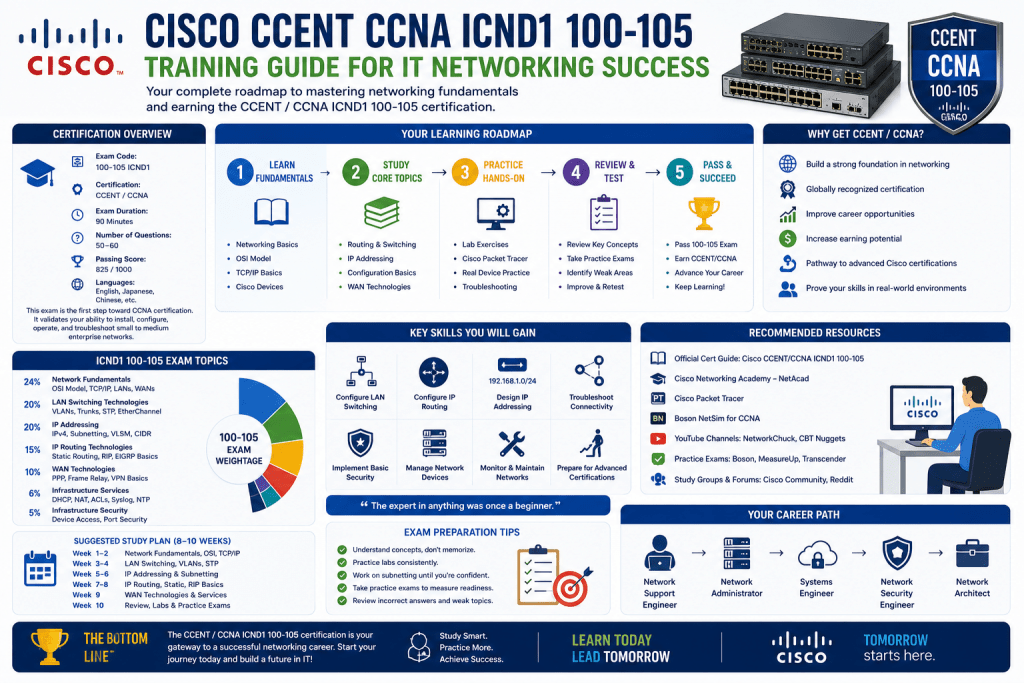
Modern digital environments are built on continuous communication between devices, services, and applications. Every action in an IT system, whether accessing a file, loading a webpage, or authenticating into a cloud platform, depends on underlying network processes. Networking is, therefore, not a separate specialization but a foundational layer that supports all areas of information technology. Professionals in software development, system administration, cybersecurity, and cloud engineering all rely on network behavior to perform their roles effectively. When network fundamentals are not clearly understood, it becomes difficult to diagnose system issues accurately or design efficient solutions. A strong grasp of networking provides clarity into how systems interact, how data flows across infrastructures, and how performance is maintained across distributed environments.
The Significance of Structured Learning in Network Fundamentals
Structured learning in networking progressively introduces concepts, allowing learners to build understanding step by step. Instead of treating networking as isolated topics, structured learning connects ideas such as device communication, addressing, switching, and routing into a unified system. This approach ensures that learners develop both conceptual clarity and practical awareness. Networking concepts are interdependent, meaning that understanding one area often depends on knowledge of another. For example, routing decisions rely on addressing schemes, while switching behavior depends on device identification within local networks. Structured learning helps bridge these dependencies, ensuring that learners develop a complete mental model of how networks operate as a whole system rather than disconnected components.
Core Principles of Network Communication Systems
At the heart of networking lies the principle of communication between endpoints. Devices must be able to send, receive, and interpret data accurately for any system to function properly. This communication is governed by standardized rules that ensure consistency across different hardware and software platforms. These rules define how data is formatted, transmitted, and verified. Without such standards, communication between devices would become unreliable and fragmented. Network communication also depends on a layered architecture, where each layer performs specific functions such as addressing, routing, error handling, and data delivery. This layered structure simplifies complex processes by dividing responsibilities into manageable components, allowing systems to scale efficiently while maintaining reliability.
Physical and Logical Components of Network Infrastructure
Network infrastructure consists of both physical and logical components that work together to enable communication. Physical components include devices such as switches, routers, cables, and access points, which form the tangible structure of the network. These devices are responsible for transmitting electrical or wireless signals that carry data between endpoints. Logical components, on the other hand, define how data is organized and directed across the network. This includes addressing schemes, routing tables, and segmentation strategies. Understanding both aspects is essential because physical connectivity alone is not sufficient for effective communication. Logical design ensures that data reaches the correct destination efficiently and securely. Together, these components form the complete architecture of any network system.
Introduction to Switching Behavior in Local Networks
Switching is a fundamental process that enables communication within local networks. It operates by directing data packets to specific devices based on unique identifiers. This reduces unnecessary traffic and improves overall network efficiency. Switches maintain tables that map device addresses to physical ports, allowing them to forward data intelligently. When a device sends information, the switch determines the correct destination and ensures that only the intended recipient receives the data. This process minimizes congestion and enhances performance in environments with multiple connected devices. Switching is especially important in enterprise networks where large numbers of devices must communicate simultaneously without interference or delay.
Routing Mechanisms for Inter-Network Communication
Routing extends communication beyond local networks by enabling data transfer between different network segments. Routers analyze destination information and determine the most efficient path for data to travel across interconnected systems. This process involves evaluating network topology, selecting optimal routes, and forwarding packets accordingly. Routing is essential for connecting internal networks to external systems such as the internet or remote branch locations. It also allows organizations to segment their networks for improved performance and security. By controlling how data moves between networks, routing ensures that communication remains structured, efficient, and reliable even across large and complex infrastructures.
Understanding IP Addressing and Network Segmentation
IP addressing provides a unique identification system for devices within a network. Each device is assigned an address that allows it to send and receive data accurately. Network segmentation, often achieved through subnetting, divides larger networks into smaller sections. This improves organization, reduces traffic congestion, and enhances security. Segmentation also allows administrators to control how data flows between different parts of a network. Proper IP addressing design is essential for scalability, ensuring that networks can expand without causing conflicts or inefficiencies. It also supports structured communication by ensuring that every device has a clearly defined location within the network hierarchy.
The Role of Subnetting in Efficient Network Design
Subnetting is a technique used to divide a large network into smaller, more manageable segments. This improves both performance and security by reducing broadcast traffic and isolating network sections. Each subnet operates as an independent segment while still being part of the larger network structure. This allows organizations to organize their infrastructure based on departments, locations, or functional requirements. Subnetting also improves resource allocation by ensuring that IP addresses are used efficiently. Without subnetting, large networks would become difficult to manage and prone to performance issues. Proper subnet design is, therefore, a critical skill in network planning and implementation.
Network Protocols and Standardized Communication Rules
Protocols define the rules that govern how data is transmitted and received across networks. These rules ensure that devices from different manufacturers and systems can communicate effectively. Protocols handle tasks such as data formatting, error detection, session management, and transmission control. They provide structure and predictability to network communication, ensuring that information is delivered accurately and reliably. Without protocols, data exchange would be inconsistent and prone to errors. Understanding how protocols function allows professionals to troubleshoot communication issues and optimize network performance. Protocols form the foundation of interoperability in modern digital systems.
Layered Network Models and Their Functional Importance
Layered network models divide communication processes into distinct levels, each responsible for specific functions. This approach simplifies complex networking operations by separating tasks such as physical transmission, addressing, routing, and application interaction. Each layer interacts with the layers above and below it, creating a structured communication pathway. This modular design allows networks to evolve without disrupting overall functionality. It also makes troubleshooting more efficient by isolating issues to specific layers. Understanding layered models is essential for analyzing how data moves through a network and how different components contribute to successful communication.
Practical Exposure and Real-World Network Interaction
Practical exposure plays a critical role in understanding networking concepts. Working with real or simulated environments allows learners to observe how theoretical principles operate in practice. This includes configuring devices, establishing connections, and analyzing data flow. Practical experience helps bridge the gap between abstract concepts and real-world applications. It also builds confidence in handling network systems and resolving issues under real conditions. Exposure to hands-on scenarios enhances problem-solving abilities and reinforces theoretical knowledge through repetition and application. This combination of theory and practice is essential for developing strong technical competence in networking.
Developing Analytical Skills for Network Problem Solving
Network troubleshooting requires structured analytical thinking. Identifying problems involves examining symptoms, isolating potential causes, and testing possible solutions. This process depends heavily on understanding how networks function at both physical and logical levels. Analytical skills allow professionals to break down complex issues into manageable components and systematically resolve them. Effective troubleshooting reduces downtime and ensures system stability. It also improves overall network reliability by enabling proactive identification of potential issues. Developing these skills is essential for maintaining efficient and resilient network environments.
Building a Long-Term Understanding of Network Systems
Long-term understanding of networking involves continuous learning and practical application. As technology evolves, network systems become more complex and interconnected. Professionals must adapt by strengthening their foundational knowledge and expanding their technical skills. A strong foundation in networking principles allows individuals to understand new technologies more easily and apply them effectively in different environments. This adaptability is essential in modern IT landscapes where systems are constantly changing. Building a deep understanding of network fundamentals ensures long-term success in technical roles and supports career growth across multiple IT domains.
Transition from Foundational Knowledge to Applied Networking Skills
As learners move beyond introductory networking concepts, the focus shifts from understanding individual components to applying them in integrated environments. This transition is critical because real-world networks do not operate in isolated segments; instead, they function as interconnected systems where switching, routing, addressing, and protocol behavior must work together seamlessly. At this stage, learners begin to interpret how theoretical principles translate into operational networks. The ability to connect foundational knowledge with practical implementation marks a significant milestone in networking education. It enables professionals to move from passive understanding to active problem-solving, which is essential in managing modern IT infrastructures.
Expanding Understanding of Network Topologies and Design Models
Network topology refers to the structural layout of how devices are connected and how data flows between them. Different topology models, such as star, mesh, hybrid, and hierarchical designs, influence performance, scalability, and fault tolerance. A star topology, for example, centralizes communication through a single switching point, making it easier to manage but dependent on central device reliability. Mesh topologies offer multiple communication paths, increasing redundancy but also adding complexity. Hierarchical models are commonly used in enterprise environments because they allow networks to scale efficiently while maintaining logical structure. Understanding these design models is essential for building networks that meet organizational requirements for performance, resilience, and manageability.
Deeper Insight into Switching Mechanisms and Data Forwarding
Switching plays a more complex role in larger networks where multiple devices communicate simultaneously. Switches use MAC address tables to learn device locations and make intelligent forwarding decisions. This learning process allows switches to reduce unnecessary traffic and optimize bandwidth usage. Advanced switching concepts include VLAN segmentation, trunking, and spanning tree protocols, which help manage large-scale environments. VLANs allow logical separation of networks within the same physical infrastructure, improving security and traffic control. Trunking enables multiple VLANs to communicate across shared links, while spanning tree protocols prevent network loops that can disrupt communication. These mechanisms ensure stability and efficiency in complex network environments.
Routing Protocols and Dynamic Path Selection
Routing becomes significantly more advanced when networks scale beyond simple static configurations. Dynamic routing protocols allow routers to automatically exchange information and determine optimal paths for data transmission. These protocols evaluate metrics such as distance, speed, and reliability to select the best route. Common routing behaviors include convergence, where routers update their knowledge of network topology, and route redistribution, where information is shared between different routing systems. Dynamic routing enhances flexibility and reduces manual configuration effort, making it essential for large and evolving networks. Understanding how routing protocols interact provides insight into how global networks maintain connectivity despite constant changes in topology and traffic conditions.
IP Address Planning and Structured Network Design
Effective IP address planning is a critical component of scalable network design. It involves organizing address ranges in a logical manner to support growth, segmentation, and efficient resource utilization. Poor IP design can lead to conflicts, inefficiencies, and management difficulties. Structured addressing schemes ensure that devices are grouped logically based on function, location, or department. This organization simplifies troubleshooting and enhances network visibility. It also supports future expansion by reserving address space for additional devices and services. Proper planning is essential for maintaining order in complex environments where multiple systems must communicate without conflict or duplication.
Subnetting Strategies for Enterprise-Level Networks
Subnetting becomes more strategic in larger networks where efficient address allocation is necessary. It allows network administrators to divide address spaces into smaller segments that align with organizational needs. These segments can be assigned based on geographic locations, departments, or operational functions. Subnet masks define the boundary between network and host portions of an address, enabling precise control over communication boundaries. Advanced subnetting strategies also involve variable-length subnet masking, which provides flexibility in allocating address space based on specific requirements. This ensures optimal use of available addresses while maintaining structured segmentation across the network.
Introduction to Network Security Principles in Early Learning Stages
Security is an integral part of network design and becomes increasingly important as networks expand. Basic security principles include access control, authentication, and traffic filtering. These mechanisms ensure that only authorized users and devices can access network resources. Firewalls and access control lists are commonly used to enforce security policies and monitor traffic behavior. Understanding security fundamentals at an early stage helps learners recognize potential vulnerabilities and design networks that minimize risk exposure. Security is not an isolated layer but an integrated aspect of all network operations, influencing routing, switching, and communication protocols.
The Role of Hands-On Labs in Skill Reinforcement
Hands-on labs provide essential reinforcement of theoretical knowledge by allowing learners to interact directly with network configurations. These environments simulate real-world scenarios where learners can configure devices, establish connections, and test network behavior. Practical exercises help bridge the gap between conceptual understanding and operational competence. By working through structured lab scenarios, learners gain experience in troubleshooting, configuration management, and performance analysis. Repetition of these exercises strengthens retention and builds confidence in handling real network systems. Hands-on practice is essential for developing the intuition required to diagnose and resolve complex network issues effectively.
Simulated vs Physical Network Environments in Skill Development
Network learning environments can be categorized into simulated and physical setups. Simulated environments provide virtual platforms where learners can experiment with configurations without requiring physical hardware. These environments are useful for practicing concepts and testing scenarios in a controlled setting. Physical environments, on the other hand, involve real devices such as switches, routers, and cables. Working with physical equipment provides a deeper understanding of hardware behavior, connectivity issues, and real-world constraints. Both approaches offer valuable learning experiences, and combining them allows learners to develop comprehensive technical skills that are applicable in professional environments.
Troubleshooting Methodologies for Network Stability
Troubleshooting is a structured process that involves identifying, analyzing, and resolving network issues. Effective troubleshooting begins with problem identification, followed by isolation of potential causes and systematic testing of solutions. This approach requires an understanding of how different network components interact. Common troubleshooting scenarios include connectivity failures, configuration errors, performance degradation, and protocol mismatches. Analytical thinking and logical reasoning are essential for diagnosing these issues efficiently. Developing a structured troubleshooting methodology improves response time and enhances network reliability. It also supports proactive maintenance by identifying potential issues before they escalate into critical failures.
Network Performance Optimization Techniques
Optimizing network performance involves analyzing traffic patterns, identifying bottlenecks, and implementing improvements to enhance efficiency. Techniques such as load balancing, traffic prioritization, and bandwidth management help ensure that critical applications receive adequate resources. Performance optimization also involves monitoring network behavior to detect anomalies and inefficiencies. Tools and metrics such as latency, throughput, and packet loss provide insights into network health. By continuously evaluating performance, administrators can make informed decisions that improve system reliability and user experience. Optimization is an ongoing process that adapts to changing network demands and usage patterns.
Understanding Address Resolution and Communication Mapping
Address resolution processes translate logical addresses into physical identifiers that devices can understand. This mapping is essential for enabling communication within local networks. When a device attempts to communicate with another device, it must first determine the physical address associated with the target logical address. This process ensures that data is delivered accurately within the local network segment. Understanding address resolution mechanisms helps learners diagnose communication issues and optimize network performance. It also provides insight into how devices maintain awareness of their local environment and communicate efficiently within shared infrastructures.
Role of Network Devices in Traffic Management
Network devices such as switches, routers, and access points play a critical role in managing data traffic. Each device has specific responsibilities that contribute to overall network functionality. Switches manage local traffic, routers handle inter-network communication, and access points enable wireless connectivity. These devices work together to ensure that data flows efficiently across the network. Proper configuration and management of these devices are essential for maintaining performance and reliability. Understanding their roles allows professionals to design networks that balance load, reduce congestion, and optimize communication paths.
Developing Operational Thinking in Network Management
Operational thinking involves understanding how networks function in real-time environments. It requires the ability to anticipate how changes in configuration or traffic patterns will affect system behavior. This type of thinking is developed through experience and practical exposure to network systems. Operational awareness allows professionals to make informed decisions that improve system stability and performance. It also supports proactive management by identifying potential issues before they impact operations. Developing this mindset is essential for managing complex network environments effectively.
Integration of Networking Concepts into Real-World Scenarios
Real-world networking scenarios require the integration of multiple concepts, including addressing, routing, switching, and security. These elements must work together to support communication across diverse environments. In practical situations, network behavior is influenced by multiple variables such as traffic load, device configuration, and environmental conditions. Understanding how these factors interact is essential for designing and maintaining reliable systems. Integration of concepts allows professionals to move beyond isolated knowledge and develop a comprehensive understanding of network operations. This holistic perspective is critical for managing modern IT infrastructures effectively.
Bridging Certification Knowledge with Enterprise Network Environments
At this stage of networking learning, the focus shifts from controlled learning environments into the realities of enterprise-scale infrastructure. Real-world networks are rarely clean, predictable, or static. Instead, they are dynamic systems shaped by user behavior, organizational growth, security constraints, and evolving application demands. The ability to apply certification-level knowledge to these environments is what separates theoretical understanding from professional competence. Enterprise networks require a layered understanding of routing, switching, addressing, and operational policies working together under real constraints such as uptime requirements, bandwidth limitations, and security enforcement. This transition is essential because it aligns technical learning with the operational expectations of modern IT departments.
Understanding Enterprise Network Architecture at Scale
Enterprise network architecture is typically structured in hierarchical layers to ensure scalability and maintainability. These layers often include access, distribution, and core segments, each serving a distinct function. The access layer connects end devices such as computers, printers, and wireless access points. The distribution layer aggregates traffic and enforces policies, while the core layer provides high-speed transport between different network segments. This structure allows large organizations to manage traffic efficiently while maintaining performance and redundancy. Each layer is designed to reduce complexity and isolate failures, ensuring that issues in one segment do not cascade throughout the entire system. Understanding this architecture is critical for designing and maintaining large-scale networks.
Advanced Switching Operations in Complex Network Environments
In enterprise environments, switching evolves beyond simple frame forwarding into more sophisticated operations involving segmentation, redundancy control, and traffic optimization. VLAN design becomes essential for separating departments, isolating sensitive systems, and controlling broadcast domains. Trunking allows multiple VLANs to traverse shared physical links, enabling efficient use of infrastructure. Spanning Tree Protocol mechanisms prevent switching loops that could otherwise destabilize the network. Additionally, advanced switching includes features such as port security, link aggregation, and quality of service enforcement. These mechanisms ensure that networks remain stable, secure, and optimized even under heavy traffic conditions. Proper switching design directly impacts performance and operational reliability in enterprise systems.
Dynamic Routing Behavior in Large-Scale Networks
Routing in enterprise environments relies heavily on dynamic protocols that automatically adjust to changes in network topology. These protocols continuously exchange information between routers, ensuring that each device has an updated view of the network. This dynamic behavior allows networks to adapt to failures, congestion, and configuration changes without manual intervention. Routing decisions are based on metrics such as hop count, bandwidth, delay, and reliability. As networks grow, routing complexity increases, requiring careful design and policy control to prevent inefficiencies. Route summarization and redistribution techniques help manage large routing tables and improve performance. Understanding dynamic routing behavior is essential for maintaining connectivity in large, distributed systems.
IP Address Governance and Organizational Scalability
IP address governance becomes increasingly important as organizations expand their network footprint. Without proper planning, address conflicts, inefficient utilization, and administrative complexity can arise. Structured IP allocation ensures that each department or location has a defined address range, simplifying management and troubleshooting. Governance also involves maintaining documentation and alignment with organizational growth strategies. As networks scale, private and public addressing schemes must be carefully managed to ensure compatibility with external systems. This structured approach allows organizations to maintain order and predictability in environments where thousands or even millions of devices may be connected.
Advanced Subnetting for Resource Optimization
Subnetting at an advanced level involves more than simply dividing networks into smaller segments. It requires strategic planning to optimize address utilization while aligning with operational requirements. Variable-length subnetting allows different segments of a network to be sized according to their specific needs. For example, departments with high device density may require larger subnets, while smaller teams may operate within compact address ranges. This flexibility ensures efficient use of IP space and reduces waste. Advanced subnetting also supports security by isolating network segments and controlling traffic flow between them. This segmentation is critical for maintaining both performance and security in enterprise environments.
Network Security Integration in Operational Design
Security is deeply integrated into every layer of network design in modern environments. Rather than being an external layer, security is embedded into routing policies, switching configurations, and access control mechanisms. This includes authentication systems that verify device identity, encryption protocols that protect data in transit, and segmentation strategies that isolate sensitive systems. Firewalls enforce traffic rules between network zones, while intrusion detection systems monitor for suspicious behavior. Security design also involves continuous monitoring and policy updates to respond to evolving threats. Integrating security into network design ensures that systems remain resilient against unauthorized access and operational disruptions.
Real-Time Network Monitoring and Performance Visibility
Monitoring is essential for maintaining visibility into network behavior. Real-time monitoring tools track metrics such as latency, packet loss, throughput, and device availability. These metrics provide insight into system health and help identify performance degradation before it impacts users. Monitoring also supports capacity planning by analyzing usage trends over time. In enterprise environments, centralized monitoring systems aggregate data from multiple devices to provide a unified view of network performance. This visibility enables proactive decision-making and reduces downtime by allowing administrators to respond quickly to emerging issues. Effective monitoring is a cornerstone of stable and reliable network operations.
Structured Troubleshooting in Enterprise Networks
Troubleshooting in large-scale environments requires a systematic and layered approach. Instead of focusing on individual symptoms, professionals analyze network behavior across multiple layers of the architecture. This includes examining physical connectivity, logical addressing, routing paths, and application behavior. Structured troubleshooting often begins with identifying the scope of the issue, followed by isolating affected segments and testing specific components. Tools such as diagnostic commands, traffic analyzers, and monitoring dashboards assist in this process. The goal is not only to resolve issues quickly but also to understand their root cause to prevent recurrence. This methodical approach ensures long-term network stability.
Operational Impact of Network Design Decisions
Every design decision in a network has operational consequences. Choices related to topology, addressing, routing protocols, and segmentation directly influence performance, scalability, and maintainability. Poor design decisions can lead to congestion, security vulnerabilities, and administrative complexity. Conversely, well-structured designs enhance efficiency, reduce troubleshooting time, and improve user experience. Understanding the operational impact of design choices allows professionals to build networks that align with organizational goals. This includes balancing cost, performance, and scalability while ensuring that systems remain adaptable to future requirements.
Wireless Networking Integration in Modern Infrastructure
Wireless networking has become an essential component of modern infrastructure, enabling mobility and flexible connectivity. Wireless systems must be carefully designed to ensure coverage, performance, and security. This includes access point placement, channel planning, and interference management. Wireless networks also introduce additional considerations such as authentication methods and roaming behavior. Integration of wireless systems with wired infrastructure requires careful coordination to maintain consistent performance. As organizations adopt mobile-first strategies, wireless networking plays an increasingly important role in supporting productivity and operational flexibility.
Network Convergence and Unified Communication Systems
Network convergence refers to the integration of multiple communication services, such as data, voice, and video, over a single infrastructure. This approach simplifies management and reduces operational costs while enabling more efficient use of resources. Unified communication systems rely on network reliability and quality of service mechanisms to ensure that real-time applications perform effectively. Convergence also introduces challenges related to bandwidth allocation and latency management. Understanding how different communication types interact within a unified network is essential for maintaining performance and user satisfaction in modern digital environments.
Career Development Pathways in Networking Roles
Networking skills open pathways to a wide range of IT careers, including network administration, systems engineering, security analysis, and cloud infrastructure management. Entry-level knowledge serves as the foundation for more advanced certifications and specialized roles. As professionals gain experience, they develop expertise in areas such as network design, automation, and security architecture. Career progression often involves moving from operational roles to design and strategic planning positions. Continuous learning is essential in this field due to the rapid evolution of technologies and methodologies. Strong networking fundamentals provide a stable base for long-term career growth.
Automation and Emerging Trends in Network Management
Modern networks increasingly rely on automation to manage complexity and improve efficiency. Automation tools handle repetitive tasks such as configuration deployment, monitoring, and policy enforcement. This reduces manual effort and minimizes the risk of human error. Emerging trends also include software-defined networking, which separates control and data functions to enable centralized management. These advancements allow networks to become more flexible, scalable, and responsive to changing demands. Understanding automation concepts is becoming increasingly important as organizations adopt more dynamic and cloud-integrated infrastructures.
Developing Strategic Thinking in Network Operations
Strategic thinking in networking involves understanding how technical decisions align with organizational objectives. This includes evaluating how network performance impacts business operations, how security policies protect assets, and how infrastructure supports future growth. Strategic professionals consider long-term scalability, cost efficiency, and risk management when designing and maintaining networks. This perspective goes beyond technical execution and focuses on aligning technology with broader operational goals. Developing strategic thinking enhances decision-making capabilities and positions professionals for leadership roles in IT environments.
Long-Term Value of Foundational Networking Knowledge
Foundational networking knowledge remains relevant regardless of technological advancements. While tools, platforms, and architectures evolve, core principles such as addressing, routing, switching, and communication models remain consistent. This stability makes networking fundamentals a critical asset for long-term career development. Professionals who understand these principles can adapt more easily to new technologies and environments. As networks continue to expand in complexity and scale, foundational knowledge provides the framework needed to understand and manage these systems effectively.
Conclusion
Networking fundamentals form one of the most enduring pillars of modern information technology, and their importance only increases as digital systems become more interconnected, distributed, and dependent on continuous communication. The core idea remains consistent: every IT discipline ultimately relies on the ability of systems to exchange data reliably and efficiently. Whether working in cloud computing, cybersecurity, software engineering, or systems administration, professionals constantly interact with network behavior even when it is not immediately visible. This makes foundational networking knowledge not just a certification requirement but a practical necessity for long-term technical competence.
The transition from basic concepts to more advanced implementations reflects how real-world networks operate. At the foundational level, learners are introduced to essential components such as devices, addressing schemes, and communication rules. These elements establish the vocabulary of networking, allowing individuals to understand how devices identify each other and exchange information. As understanding deepens, these basic elements evolve into structured systems involving switching behavior, routing logic, and subnet design. Each of these components contributes to a larger ecosystem where data moves across both local and global environments with precision and coordination.
One of the most significant takeaways from structured networking education is the interconnected nature of all network functions. Switching does not operate in isolation; it depends on addressing. Routing cannot function without a clear understanding of network segmentation. Security mechanisms rely on both logical structure and physical architecture. Even troubleshooting requires awareness of how multiple layers interact simultaneously. This interdependence highlights why networking cannot be approached as a collection of unrelated topics. Instead, it must be understood as a unified system where each concept supports and reinforces others.
As learners progress, hands-on experience becomes increasingly important. Theoretical knowledge provides the foundation, but practical exposure transforms that knowledge into usable skill. Working with network configurations, simulating real environments, and analyzing system behavior allows learners to see how abstract concepts behave under real conditions. This experiential learning process builds intuition, which is essential for diagnosing issues and designing efficient systems. In real-world environments, problems rarely present themselves in isolation or with clear explanations. Instead, they emerge as combinations of symptoms that require structured thinking and methodical investigation. Hands-on practice prepares individuals for this complexity by exposing them to realistic scenarios where multiple factors must be evaluated simultaneously.
Another important outcome of networking education is the development of analytical and problem-solving skills. Troubleshooting is not simply about fixing errors; it is about understanding why those errors occur and how different components contribute to system behavior. This requires a logical approach that begins with observation, moves through analysis, and concludes with targeted intervention. Over time, this process becomes more intuitive, allowing professionals to quickly identify patterns and resolve issues efficiently. These skills are not limited to networking alone but extend to broader IT domains, making them highly transferable across different roles and technologies.
The role of networking in enterprise environments further emphasizes its importance. Large-scale systems depend on carefully designed architectures that balance performance, scalability, and reliability. Hierarchical structures ensure that networks remain manageable even as they grow in size and complexity. Routing systems maintain connectivity across distributed locations, while switching systems ensure efficient local communication. Security mechanisms operate continuously to protect data integrity and control access. These layers must work together seamlessly, and even small misconfigurations can have widespread effects. Understanding how these systems interact is essential for maintaining stability in enterprise environments.
Security integration within networking has also become increasingly critical. Modern networks are exposed to a wide range of threats, making it essential to embed security principles into every layer of design. Access control, authentication, segmentation, and encryption all play roles in protecting network resources. Rather than being treated as an afterthought, security is now a core design consideration that influences how networks are structured and operated. This shift reflects the growing complexity of digital environments and the increasing importance of protecting data as it moves across interconnected systems.
Performance optimization and monitoring further contribute to network reliability. As networks expand, maintaining consistent performance becomes more challenging. Monitoring tools provide visibility into traffic patterns, system health, and potential bottlenecks. These insights allow administrators to make informed decisions about resource allocation and infrastructure adjustments. Optimization strategies such as load balancing and traffic prioritization help ensure that critical applications receive adequate resources. Together, monitoring and optimization create a feedback loop that supports continuous improvement in network performance.
Career development in networking builds directly on these foundational and advanced concepts. Entry-level knowledge serves as the starting point for a wide range of specialized roles. As professionals gain experience, they may move into areas such as network design, security engineering, cloud architecture, or infrastructure management. Each of these roles builds on the same core principles but applies them in different contexts. Continuous learning is essential because networking technologies evolve rapidly, introducing new tools, methodologies, and architectural models. However, the underlying principles remain stable, providing a consistent foundation for adapting to new environments.
Ultimately, networking education is about developing a way of thinking rather than simply acquiring technical knowledge. It teaches individuals to understand systems holistically, to recognize patterns in complex environments, and to approach problems systematically. These cognitive skills are valuable not only in technical roles but in any situation that requires structured analysis and decision-making. As technology continues to evolve and networks become even more central to everyday operations, the importance of these skills will continue to grow. A strong foundation in networking, therefore, represents both an immediate practical advantage and a long-term investment in professional capability.