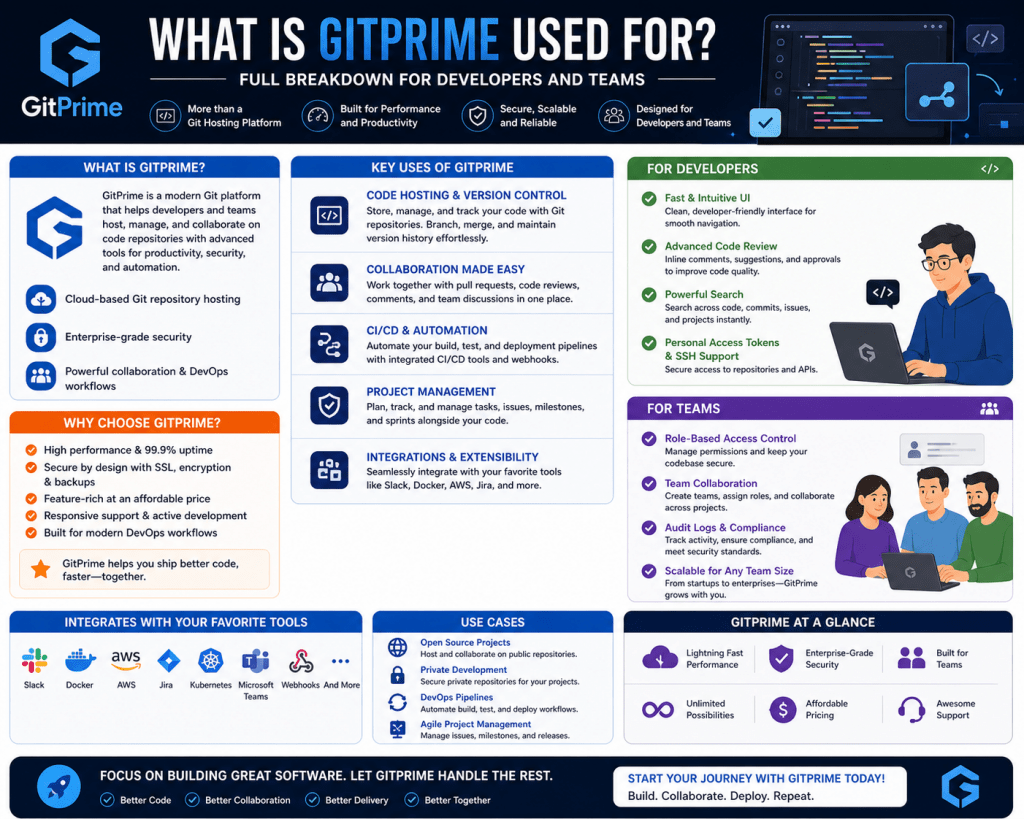
Software development has transformed significantly over the past decade, evolving from isolated coding practices into highly collaborative and data-driven ecosystems. Development teams today rely on distributed version control systems, shared repositories, and continuous integration workflows to manage increasingly complex applications. In this environment, tools that provide visibility into development processes have become essential. GitPrime emerged as one such solution, designed to bridge the gap between raw development activity and meaningful insights.
GitPrime was introduced as a cloud-based analytics platform focused on interpreting data generated by Git repositories. While version control systems are excellent at tracking code changes and maintaining history, they do not inherently provide a clear understanding of how teams are performing or how efficiently projects are progressing. GitPrime addressed this limitation by analyzing repository data and transforming it into actionable intelligence that both technical and non-technical stakeholders could understand.
The importance of such a tool becomes evident when considering the scale and complexity of modern software projects. Teams often consist of developers working across different locations, contributing to various parts of a system simultaneously. Without a centralized way to interpret this activity, it becomes difficult to identify bottlenecks, measure productivity, or ensure alignment with project goals. GitPrime introduced a structured approach to solving these challenges, helping organizations move toward more transparent and efficient development practices.
The Role of Version Control Systems in Software Development
To understand the value of GitPrime, it is important to first consider the role of version control systems in development. Git-based platforms serve as the backbone of collaborative coding, enabling developers to track changes, manage branches, and merge contributions from multiple team members. These systems provide a reliable history of code evolution, making it easier to debug issues, revert changes, and maintain consistency across projects.
Despite their strengths, version control systems primarily focus on code management rather than performance analysis. They store vast amounts of data related to commits, pull requests, and merges, but this data is not always presented in a way that supports decision-making. Developers and managers often need to manually interpret repository activity, which can be time-consuming and prone to misinterpretation.
GitPrime enhances the capabilities of version control systems by extracting relevant data and presenting it in a structured format. Instead of navigating through raw commit logs or repository histories, users can access dashboards that summarize key aspects of development activity. This shift from raw data to organized insights represents a significant step forward in how teams manage and understand their workflows.
The Emergence of Engineering Intelligence
Engineering intelligence is a concept that extends the principles of data analysis into the realm of software development. It focuses on measuring and improving the processes involved in building software, using data to guide decisions and optimize performance. GitPrime played a pivotal role in popularizing this approach, demonstrating that development data could be leveraged to achieve better outcomes.
The idea behind engineering intelligence is similar to business intelligence, which analyzes operational data to improve organizational performance. In the context of software development, the focus shifts to metrics that reflect coding activity, collaboration, and delivery timelines. By applying analytical techniques to repository data, tools like GitPrime provide a deeper understanding of how teams work and where improvements can be made.
This approach is particularly valuable in environments where efficiency and predictability are critical. Software projects often involve tight deadlines, complex dependencies, and high expectations for quality. Engineering intelligence helps teams navigate these challenges by offering insights that enable proactive decision-making. Instead of reacting to issues after they occur, teams can identify potential problems early and take corrective action.
Core Functionality of GitPrime
GitPrime operates by integrating with Git-based repositories and collecting data related to development activities. This includes information about commits, pull requests, code reviews, and merge operations. Once the data is collected, it is processed and presented through visual dashboards that highlight key metrics and trends.
One of the defining features of GitPrime is its ability to provide a comprehensive view of development workflows. Users can see how work progresses from initial coding to final deployment, gaining insight into each stage of the process. This visibility is essential for identifying inefficiencies and ensuring that projects remain on track.
The platform also emphasizes ease of use, allowing teams to quickly set up integrations and begin analyzing their data. By simplifying the process of data collection and visualization, GitPrime makes it accessible to a wide range of users, from developers to project managers. This accessibility contributes to its effectiveness as a tool for improving collaboration and communication within teams.
Key Metrics Used in GitPrime
A central aspect of GitPrime’s functionality is its use of metrics to quantify development activity. These metrics provide a standardized way to evaluate performance and track progress over time. By focusing on specific indicators, GitPrime helps teams gain a clearer understanding of their workflows and identify areas for improvement.
Lead time is one of the most important metrics in GitPrime. It measures the duration between the start of a task and its completion, providing insight into how quickly work is delivered. Shorter lead times generally indicate more efficient processes, while longer lead times may suggest bottlenecks or delays that need to be addressed.
Churn is another critical metric, representing the amount of code that is modified within a project. High levels of churn can indicate frequent revisions or instability in the codebase, while lower levels may suggest more stable and well-planned development. By tracking churn, teams can assess the quality of their code and identify areas that require additional attention.
Impact measures the effect of code changes on a project, offering a perspective on how individual contributions influence overall progress. This metric helps teams understand the distribution of work and identify key contributors. It also provides insight into how changes in one part of the codebase affect other areas.
Active days track the frequency of contributions made by developers, highlighting patterns in engagement and productivity. This metric provides a simple yet effective way to understand how consistently team members are involved in the development process. It also helps identify periods of reduced activity, which may require further investigation.
Efficiency focuses on the quality and effectiveness of contributions, rather than just the quantity. By evaluating how code changes perform over time, this metric provides a more nuanced view of productivity. It encourages teams to prioritize sustainable development practices and long-term value.
Benefits of Data-Driven Development Insights
The use of metrics and analytics in software development offers several advantages. One of the most significant benefits is improved visibility into project progress. By providing a clear overview of development activity, GitPrime enables teams to track their performance and ensure that they are meeting their objectives.
Another advantage is the ability to identify inefficiencies and address them proactively. Data-driven insights allow teams to pinpoint areas where workflows can be optimized, reducing delays and improving overall productivity. This leads to more predictable development cycles and better outcomes for projects.
Collaboration is also enhanced through the use of analytics. By making development activity visible to all team members, GitPrime fosters a sense of shared responsibility and accountability. Team members can see how their contributions fit into the larger picture, encouraging better communication and coordination.
In addition, data-driven insights support more informed decision-making. Managers and stakeholders can use the information provided by GitPrime to allocate resources, set priorities, and evaluate performance. This reduces reliance on subjective assessments and ensures that decisions are based on concrete evidence.
Challenges and Considerations in Using GitPrime
While GitPrime offers many benefits, it is important to consider the challenges associated with its use. One potential issue is the risk of over-reliance on metrics. While data provides valuable insights, it does not capture the full context of development activities. Factors such as team dynamics, complexity of tasks, and external influences must also be taken into account.
Another consideration is the adoption of the tool within teams. Developers may be hesitant to embrace additional analytics platforms, particularly if they perceive them as adding to their workload. Ensuring that GitPrime is used effectively requires clear communication about its purpose and benefits, as well as integration into existing workflows.
Cost can also be a factor, particularly for smaller teams or organizations with limited budgets. While the insights provided by GitPrime can be valuable, it is important to evaluate whether the benefits justify the investment. Organizations must consider their specific needs and resources when deciding whether to adopt such a tool.
Customization is another area where challenges may arise. While GitPrime provides a range of predefined metrics and reports, some teams may require more flexibility in how data is presented and analyzed. Limited customization options can make it difficult to tailor the platform to specific use cases.
The Impact of GitPrime on Development Practices
The introduction of GitPrime has had a notable impact on how software development is approached. By emphasizing data-driven insights, it has encouraged teams to adopt more structured and transparent workflows. This shift has contributed to a broader trend toward continuous improvement and optimization in development practices.
Teams that use GitPrime often become more aware of their processes and performance. This awareness leads to more deliberate decision-making and a greater focus on efficiency. Over time, these changes can result in significant improvements in productivity and quality.
The influence of GitPrime extends beyond individual teams, shaping how organizations think about development as a whole. By providing a framework for analyzing and improving workflows, it supports a culture of accountability and continuous learning. This cultural shift is essential for adapting to the demands of modern software development.
Integration with Development Ecosystems
GitPrime’s ability to integrate with multiple repositories makes it a valuable addition to existing development ecosystems. Connecting with various tools and platforms, it provides a unified view of development activity. This integration simplifies the process of data analysis and ensures that insights are based on comprehensive information.
For organizations managing multiple projects, this capability is particularly important. It allows teams to compare performance across different projects and identify best practices that can be applied more broadly. This cross-project visibility enhances overall efficiency and consistency.
Integration also supports scalability, enabling organizations to expand their use of GitPrime as their development needs grow. Whether working on a single project or managing a large portfolio of applications, teams can rely on GitPrime to provide the insights they need to succeed.
The Growing Importance of Development Analytics
As software continues to play a central role in business operations, the importance of development analytics is likely to increase. Organizations are placing greater emphasis on efficiency, quality, and speed, all of which can be enhanced through data-driven insights. GitPrime represents an early and influential example of how analytics can be applied to development, setting the stage for future innovations in this field.
The ability to measure and optimize development processes is becoming a key factor in achieving competitive advantage. Teams that leverage analytics effectively are better positioned to deliver high-quality software on time and within budget. This makes tools like GitPrime an essential component of modern development strategies.
In summary, GitPrime has contributed to a significant shift in how software development is understood and managed. By transforming raw repository data into actionable insights, it enables teams to work more efficiently, collaborate more effectively, and achieve better outcomes. Its role in advancing engineering intelligence highlights the growing importance of data-driven approaches in the technology industry.
Deep Dive into GitPrime Metrics and Their Practical Impact
Understanding how GitPrime functions at a deeper level requires close attention to the metrics it uses to evaluate development activity. These metrics are not numbers collected from repositories; they are carefully designed indicators that reflect patterns, behaviors, and outcomes within software teams. When interpreted correctly, they provide a powerful lens through which organizations can examine both productivity and efficiency.
Lead time is one of the most influential metrics in this system. It measures how long it takes for work to move from initial development to final delivery. This includes coding, reviewing, testing, and deployment stages. A shorter lead time often suggests a well-optimized workflow with minimal delays, while a longer lead time can indicate bottlenecks or inefficiencies. By tracking this metric over time, teams can identify trends and implement changes that improve delivery speed without compromising quality.
Churn provides insight into how frequently code is modified after it has been written. High churn may signal instability, unclear requirements, or the need for better planning. On the other hand, moderate churn can be a natural part of iterative development, especially in agile environments. The key lies in understanding the context behind the changes rather than focusing solely on the numbers. GitPrime allows teams to observe churn patterns and correlate them with other metrics, creating a more comprehensive understanding of development behavior.
Impact focuses on the influence of code changes within a project. It highlights how contributions affect the overall system, helping teams recognize which changes drive progress and which may introduce complications. This metric also sheds light on workload distribution, revealing whether tasks are evenly shared or concentrated among a few individuals. Such insights can guide decisions about resource allocation and team structure.
Active days measure how frequently developers contribute to a project. While this may seem straightforward, it offers valuable information about engagement and consistency. Patterns in active days can reveal periods of high productivity as well as times when activity slows down. These fluctuations may be linked to external factors such as meetings, planning sessions, or organizational priorities. Understanding these patterns helps teams balance their schedules and maintain steady progress.
Efficiency is a more nuanced metric that evaluates the quality and sustainability of contributions. It goes beyond counting lines of code or commits, focusing instead on how effectively changes support long-term project goals. Efficient contributions are those that require minimal rework and integrate smoothly into the codebase. By emphasizing quality over quantity, this metric encourages practices that lead to more stable and maintainable software.
Workflow Visibility and Development Transparency
One of the most significant advantages of GitPrime is its ability to provide visibility into development workflows. In many organizations, the process of building software involves multiple stages and participants, making it difficult to track progress in real time. GitPrime addresses this challenge by consolidating data into a single, coherent view that reflects the entire development lifecycle.
This visibility extends to various aspects of the workflow, including coding, reviewing, and merging. Teams can see how tasks move through these stages and identify where delays occur. For example, if pull requests consistently take longer than expected to be reviewed, it may indicate a need for better coordination or clearer guidelines. By highlighting such issues, GitPrime enables teams to take targeted actions that improve efficiency.
Transparency also plays a crucial role in fostering trust and collaboration. When team members have access to the same data, it reduces ambiguity and ensures that everyone is aligned with project objectives. This shared understanding promotes accountability and encourages open communication, both of which are essential for successful development.
In addition to internal transparency, GitPrime provides insights that can be shared with stakeholders outside the development team. Managers, executives, and other decision-makers can use these insights to understand progress and make informed decisions. This bridges the gap between technical and non-technical perspectives, ensuring that development efforts are aligned with broader organizational goals.
Enhancing Collaboration Across Distributed Teams
Modern software development often involves distributed teams working across different locations and time zones. While this approach offers flexibility and access to a diverse talent pool, it also introduces challenges related to coordination and communication. GitPrime helps address these challenges by providing a unified view of team activity.
By analyzing repository data, GitPrime reveals patterns in how team members collaborate. It highlights interactions such as code reviews, shared contributions, and coordinated efforts on specific features. These insights help teams understand how effectively they are working together and identify opportunities for improvement.
For distributed teams, visibility into activity is particularly important. Without face-to-face interactions, it can be difficult to gauge progress or identify issues. GitPrime provides a level of clarity that compensates for this lack of physical proximity, enabling teams to stay connected and aligned.
The platform also supports asynchronous collaboration by making information readily accessible. Team members can review data at any time, allowing them to stay informed without needing constant meetings or updates. This reduces communication overhead and allows developers to focus more on their work.
Identifying Bottlenecks and Improving Workflow Efficiency
Bottlenecks are a common challenge in software development, often leading to delays and reduced productivity. These bottlenecks can occur at various stages of the workflow, such as during code reviews, testing, or deployment. Identifying and addressing them is essential for maintaining a smooth and efficient process.
GitPrime plays a key role in this area by highlighting where delays occur and providing data to support analysis. For example, if lead time increases significantly, teams can examine the underlying metrics to determine the cause. This might involve analyzing review times, commit frequency, or other factors that contribute to the delay.
Once bottlenecks are identified, teams can implement targeted solutions. This may include redistributing workloads, improving communication, or refining processes. Over time, these adjustments lead to more efficient workflows and better overall performance.
The ability to continuously monitor and improve workflows is one of the defining features of engineering intelligence. GitPrime enables this by providing ongoing insights that reflect real-time activity. This allows teams to adapt quickly to changing conditions and maintain a high level of efficiency.
Balancing Quantitative Data with Contextual Understanding
While metrics provide valuable insights, they must be interpreted within the context of each project. Software development is influenced by a wide range of factors, including complexity, team dynamics, and external constraints. Relying solely on quantitative data can lead to incomplete or misleading conclusions.
GitPrime encourages a balanced approach by offering multiple metrics that capture different aspects of development. By considering these metrics together, teams can gain a more comprehensive understanding of their workflows. For example, a decrease in active days may not necessarily indicate reduced productivity; it could reflect a shift toward planning or design activities.
Contextual understanding also involves recognizing the limitations of metrics. Not all aspects of development can be measured, and some contributions may not be fully captured by data. Creative problem-solving, innovation, and collaboration are essential elements of development that extend beyond numerical indicators.
By combining data-driven insights with human judgment, teams can make more informed decisions. GitPrime serves as a tool to support this process, providing a foundation for analysis while allowing flexibility in interpretation.
Adoption Challenges and Developer Perspectives
The introduction of analytics tools like GitPrime can present challenges, particularly in terms of adoption. Developers may have concerns about how their work is measured and evaluated, especially if metrics are used without proper context. Addressing these concerns is essential for ensuring that the tool is used effectively and positively.
One common challenge is the perception that metrics may be used to monitor individual performance in a way that feels intrusive. To mitigate this, organizations must emphasize that the purpose of GitPrime is to improve processes rather than judge individuals. Clear communication about the goals and benefits of the tool can help build trust and encourage acceptance.
Another challenge is the additional effort required to integrate and learn the platform. While GitPrime is designed to be user-friendly, it still requires time and resources to implement. Providing adequate training and support can help teams overcome this barrier and maximize the value of the tool.
Developer engagement is a critical factor in the success of any analytics platform. When developers understand how GitPrime can benefit their work, they are more likely to embrace it. This involves demonstrating how insights can lead to improved workflows, reduced frustration, and better outcomes.
Customization and Reporting Limitations
While GitPrime offers a range of predefined metrics and visualizations, some teams may require more flexibility in how data is presented. Customization is an important consideration, particularly for organizations with unique workflows or specific analytical needs.
Limited customization options can make it challenging to tailor the platform to certain use cases. For example, teams may want to create custom reports that focus on specific aspects of their workflow or combine metrics in unique ways. Without this capability, they may need to rely on external tools or manual analysis.
Despite these limitations, GitPrime provides a strong foundation for understanding development activity. Its standardized metrics offer consistency and reliability, making it easier to compare performance over time. For many teams, this level of functionality is sufficient to achieve their goals.
As the field of engineering intelligence continues to evolve, the demand for more flexible and customizable solutions is likely to grow. Future developments may address these needs, building on the foundation established by tools like GitPrime.
Cost Considerations and Value Assessment
The cost of implementing an analytics platform is an important factor for any organization. GitPrime is positioned as a premium solution, offering advanced features and comprehensive insights. While these capabilities can provide significant value, they may not be accessible to all teams.
Smaller organizations or projects with limited budgets may find it difficult to justify the expense. In such cases, it is important to evaluate whether the benefits of improved visibility and efficiency outweigh the costs. This involves considering factors such as project complexity, team size, and organizational priorities.
For larger organizations, the investment in GitPrime can be more easily justified. The ability to optimize workflows, reduce delays, and improve productivity can lead to substantial long-term benefits. In these environments, the platform serves as a strategic tool that supports continuous improvement and operational excellence.
Value assessment also involves considering the impact of insights on decision-making. The more effectively teams use the data provided by GitPrime, the greater the return on investment. This highlights the importance of not only adopting the tool but also integrating it into daily workflows and decision-making processes.
Evolving Role of Analytics in Software Development
The role of analytics in software development is continuing to expand, driven by the increasing complexity of projects and the need for efficiency. GitPrime represents an early step in this evolution, demonstrating the potential of data-driven approaches to improve development practices.
As organizations continue to embrace digital transformation, the demand for insights into development processes will grow. Tools that provide visibility, measurement, and optimization will become essential components of modern development environments. GitPrime’s approach to engineering intelligence has set a precedent for this trend, influencing the design and functionality of future solutions.
The integration of analytics into development workflows also reflects a broader shift toward continuous improvement. By regularly analyzing performance and identifying areas for enhancement, teams can adapt to changing requirements and maintain a competitive edge. This iterative approach aligns with the principles of agile development and supports long-term success.
In this context, GitPrime serves as both a tool and a concept, illustrating how data can be used to transform software development. Its impact extends beyond its specific features, shaping how teams think about performance, collaboration, and efficiency.
Strategic Use of GitPrime in Large-Scale Development Environments
As software development expands across enterprise-level environments, the complexity of managing multiple teams, repositories, and delivery pipelines increases significantly. In such settings, GitPrime becomes more than just an analytics tool; it serves as a strategic asset that helps organizations align engineering efforts with broader business objectives. Large-scale environments often involve dozens or even hundreds of developers working across interconnected systems, making it difficult to maintain clarity without structured insights.
GitPrime enables organizations to centralize their understanding of development activity. Aggregating data from multiple repositories into a single platform, it allows leaders to evaluate performance across teams and projects simultaneously. This consolidated view is particularly valuable for identifying patterns that may not be visible at an individual project level. For example, recurring delays in certain types of tasks or consistent inefficiencies in specific workflows can be detected and addressed at an organizational level.
Another strategic advantage lies in the ability to standardize performance evaluation. In large organizations, different teams may follow varying practices, making it challenging to compare outcomes. GitPrime introduces a consistent set of metrics that can be applied across all teams, enabling fair and objective assessments. This consistency supports better decision-making and helps ensure that resources are allocated effectively.
Aligning Engineering Metrics with Business Outcomes
One of the most important aspects of using GitPrime effectively is aligning technical metrics with business goals. Software development does not occur in isolation; it is closely tied to organizational objectives such as delivering features, improving customer experience, and maintaining competitive advantage. GitPrime helps bridge this gap by translating development activity into measurable indicators that can be linked to these goals.
Lead time, for instance, can be directly related to delivery speed, which in turn affects customer satisfaction and market responsiveness. By reducing lead time, organizations can release updates more frequently and respond more quickly to user needs. Similarly, metrics related to efficiency and churn can influence product quality, reducing the likelihood of defects and improving overall reliability.
This alignment requires careful interpretation of data. Metrics should not be viewed in isolation but rather in the context of broader objectives. For example, a temporary increase in churn may be acceptable if it is associated with a major redesign or improvement. Understanding the relationship between metrics and outcomes ensures that decisions are informed by both data and context.
GitPrime also supports strategic planning by providing historical data that can be used to forecast future performance. Organizations can analyze past trends to estimate timelines, allocate resources, and set realistic expectations. This predictive capability enhances planning accuracy and reduces uncertainty.
Improving Developer Experience Through Insights
While GitPrime is often associated with management and analytics, it also has a significant impact on the developer experience. By providing visibility into workflows and identifying areas of friction, it helps create a more efficient and less stressful working environment. Developers benefit from clearer expectations, better coordination, and reduced delays.
One way GitPrime improves the developer experience is by highlighting inefficiencies that may otherwise go unnoticed. For example, if code reviews consistently take longer than expected, it can lead to frustration and interruptions in workflow. By identifying this issue, teams can implement changes such as setting review guidelines or redistributing responsibilities, resulting in smoother processes.
Another benefit is the ability to recognize contributions more effectively. Development work is often complex and not always visible, especially in large teams. GitPrime provides a way to quantify and visualize contributions, ensuring that efforts are acknowledged and understood. This recognition can improve morale and encourage continued engagement.
The platform also supports a better work-life balance by revealing patterns in activity. For instance, excessive active days or prolonged periods of high intensity may indicate the risk of burnout. By monitoring these patterns, organizations can take steps to ensure sustainable workloads and maintain the well-being of their teams.
Risk Management and Early Problem Detection
Risk management is a critical aspect of software development, particularly in projects with tight deadlines and high stakes. GitPrime contributes to this area by enabling early detection of potential issues. Continuous monitoring of metrics, it provides signals that indicate when something may be going wrong.
For example, a sudden increase in lead time or a decline in efficiency may suggest emerging problems in the workflow. Similarly, unusual patterns in churn could indicate instability in the codebase or unclear requirements. By identifying these signals early, teams can investigate the underlying causes and take corrective action before the issues escalate.
This proactive approach to risk management reduces the likelihood of major disruptions and helps maintain project stability. It also supports a culture of continuous improvement, where teams regularly evaluate their performance and make adjustments as needed.
GitPrime’s ability to provide real-time insights further enhances its effectiveness in risk management. Instead of relying on periodic reports, teams can access up-to-date information that reflects current conditions. This immediacy allows for faster response times and more agile decision-making.
Scaling Engineering Practices with Data
As organizations grow, scaling engineering practices becomes a significant challenge. Processes that work well for small teams may not be effective in larger environments. GitPrime helps address this challenge by providing data-driven insights that guide the scaling process.
By analyzing performance across different teams, organizations can identify best practices that contribute to success. These practices can then be standardized and implemented across the organization, ensuring consistency and efficiency. For example, if certain teams consistently achieve shorter lead times, their workflows can be studied and replicated.
GitPrime also supports scalability by enabling continuous monitoring and adjustment. As new teams are added or projects expand, the platform provides ongoing insights that help maintain performance standards. This adaptability is essential for sustaining growth without compromising quality.
In addition, the platform facilitates knowledge sharing by making data accessible to all stakeholders. Teams can learn from each other’s experiences and apply insights to their own workflows. This collaborative approach enhances overall efficiency and fosters a culture of learning.
Limitations and Responsible Use of Metrics
Despite its many advantages, GitPrime is not without limitations. One of the most important considerations is the responsible use of metrics. While data provides valuable insights, it can also be misinterpreted or misused if not handled carefully.
A common risk is the tendency to focus too heavily on quantitative measures at the expense of qualitative factors. Software development involves creativity, problem-solving, and collaboration, which are not always easily captured by metrics. Overemphasis on numbers can lead to unintended consequences, such as prioritizing output over quality.
Another limitation is the potential for metrics to create pressure or competition among team members. If not managed properly, this can negatively impact morale and collaboration. Organizations must ensure that metrics are used as tools for improvement rather than as mechanisms for evaluation or comparison.
GitPrime addresses some of these concerns by providing a range of metrics that offer a balanced view of performance. However, it ultimately relies on users to interpret the data responsibly. Clear guidelines and a focus on continuous improvement can help mitigate these risks.
Comparing GitPrime to Traditional Management Approaches
Traditional approaches to managing software development often rely on manual reporting, status meetings, and subjective assessments. While these methods can provide valuable insights, they are often limited by inconsistencies and a lack of real-time data. GitPrime represents a shift toward a more systematic and data-driven approach.
One key difference is the level of objectivity provided by GitPrime. By relying on data collected directly from repositories, it reduces the influence of personal bias and ensures that assessments are based on actual activity. This objectivity enhances the reliability of insights and supports more informed decision-making.
Another advantage is the efficiency of data collection and analysis. Traditional methods often require significant effort to gather and interpret information, whereas GitPrime automates these processes. This allows teams to focus more on development and less on administrative tasks.
However, it is important to recognize that GitPrime does not replace traditional methods entirely. Human judgment, communication, and collaboration remain essential components of effective management. The platform complements these elements by providing additional insights that enhance understanding.
The Evolution from GitPrime to Modern Platforms
The transformation of GitPrime into a broader platform reflects the ongoing evolution of engineering intelligence. As the needs of development teams have grown, so too have the capabilities of analytics tools. Modern platforms build on the foundation established by GitPrime, offering more advanced features and integrations.
This evolution highlights the increasing importance of data in software development. Organizations are seeking more comprehensive insights that cover not only coding activity but also collaboration, deployment, and user feedback. The principles introduced by GitPrime continue to influence these developments, shaping the direction of the industry.
At the same time, the core concepts of visibility, measurement, and optimization remain central. Regardless of the specific tools used, the goal is to create a clearer understanding of development processes and improve outcomes. GitPrime’s legacy lies in its role as a pioneer in this field, demonstrating the value of engineering intelligence.
Future Trends in Engineering Intelligence
Looking ahead, the role of engineering intelligence is likely to expand further as technology continues to advance. Emerging trends such as automation, artificial intelligence, and advanced analytics are expected to enhance the capabilities of platforms like GitPrime. These developments will enable even deeper insights and more sophisticated analysis.
One potential trend is the integration of predictive analytics, which can forecast outcomes based on historical data. This would allow teams to anticipate challenges and plan more effectively. Another trend is the use of machine learning to identify patterns and improvements automatically, reducing the need for manual analysis.
Increased integration with other development tools is also expected, creating a more seamless and interconnected ecosystem. This will enable organizations to gather insights from multiple sources and gain a more comprehensive understanding of their workflows.
As these trends continue to evolve, the importance of data-driven decision-making will only grow. Organizations that embrace engineering intelligence will be better equipped to navigate the complexities of modern development and achieve their goals.
Sustaining Long-Term Value from GitPrime
To fully realize the benefits of GitPrime, organizations must focus on sustaining its value over time. This involves not only adopting the platform but also integrating it into daily workflows and decision-making processes. Consistent use and continuous evaluation are key to maximizing its impact.
Training and education play an important role in this process. Teams must understand how to interpret metrics and apply insights effectively. This requires ongoing learning and adaptation, as well as a willingness to refine practices based on new information.
Another important factor is maintaining alignment between metrics and organizational goals. As priorities change, the way metrics are used may also need to evolve. Regular review of performance indicators ensures that they remain relevant and meaningful.
Ultimately, the value of GitPrime lies in its ability to support continuous improvement. By providing a clear and consistent view of development activity, it enables organizations to refine their processes, enhance collaboration, and achieve better outcomes over time.
Conclusion
GitPrime represents a meaningful shift in how software development is observed, measured, and improved in modern engineering environments. Rather than relying on assumptions, fragmented reports, or subjective evaluations, it introduces a structured approach to understanding development activity through data. By transforming repository actions into measurable insights, it enables organizations to gain clarity over processes that were once difficult to interpret. This clarity is particularly important in an era where software systems are becoming more complex, and development teams are increasingly distributed.
The value of GitPrime lies not only in its ability to collect data but in how it translates that data into meaningful narratives about team performance and workflow efficiency. Development activity generates a large volume of information, but without proper analysis, much of it remains underutilized. GitPrime bridges this gap by organizing data into metrics that reflect real-world processes such as coding, reviewing, and delivering software. These metrics provide a lens through which teams can evaluate their progress, identify inefficiencies, and make informed decisions.
One of the most important contributions of GitPrime is its role in promoting transparency within development teams. By making activity visible and measurable, it ensures that all stakeholders have a shared understanding of what is happening within a project. This transparency fosters accountability and encourages better communication, as team members can see how their contributions align with overall objectives. It also helps managers and decision-makers understand technical workflows without requiring deep involvement in the coding process, allowing them to support teams more effectively.
Another significant aspect is the emphasis on continuous improvement. GitPrime does not present data as a static snapshot but as an evolving reflection of ongoing work. Teams can track trends over time, compare performance across different periods, and adjust their processes accordingly. This iterative approach aligns closely with modern development practices that prioritize adaptability and responsiveness. By regularly analyzing data and implementing changes, organizations can refine their workflows and achieve more consistent results.
The use of metrics such as lead time, churn, impact, active days, and efficiency highlights the multifaceted nature of software development. Each metric provides a different perspective, and together they create a comprehensive view of how work is being carried out. However, the true strength of these metrics lies in their interpretation. Numbers alone do not tell the full story; they must be understood within the context of specific projects, team dynamics, and external factors. When used thoughtfully, these metrics become powerful tools for guiding decisions and improving outcomes.
At the same time, it is essential to recognize that GitPrime is not a replacement for human judgment or collaboration. Software development is inherently complex and involves creativity, problem-solving, and communication that cannot be fully captured by data alone. Metrics should be seen as a complement to these elements rather than a substitute. Successful use of GitPrime depends on balancing quantitative insights with qualitative understanding, ensuring that decisions are both informed and contextual.
The impact of GitPrime extends beyond individual teams to influence organizational culture. By introducing a data-driven approach to development, it encourages a mindset focused on measurement, accountability, and improvement. This cultural shift can lead to more disciplined processes, better alignment with business goals, and increased confidence in decision-making. Over time, organizations that embrace this approach are better positioned to handle the challenges of large-scale and complex projects.
Cost and accessibility remain important considerations when evaluating the use of GitPrime. While the platform offers valuable insights, its adoption may not be feasible for all teams, particularly those with limited resources. Organizations must carefully assess their needs and determine whether the benefits justify the investment. For larger teams and enterprises, the ability to optimize workflows and improve efficiency can provide significant returns, making the investment worthwhile. For smaller teams, alternative approaches or simpler tools may be more appropriate.
The evolution of GitPrime into a broader engineering intelligence platform reflects the growing importance of analytics in software development. As technology continues to advance, the demand for deeper insights and more sophisticated analysis will increase. GitPrime has laid the groundwork for this evolution, demonstrating how data can be used to enhance development practices and drive better results. Its influence can be seen in the growing number of tools that adopt similar principles, further emphasizing the value of engineering intelligence.
Looking ahead, the role of data in development is likely to expand even further. Advances in automation and analytics will enable more precise measurements and more accurate predictions, allowing teams to anticipate challenges and respond proactively. In this context, the principles established by GitPrime will remain relevant, guiding the development of new solutions that build on its foundation. The focus will continue to be on visibility, efficiency, and continuous improvement, ensuring that teams can navigate the complexities of modern software development.
Ultimately, GitPrime highlights the importance of understanding not just what is being built, but how it is being built. By providing insights into the processes behind software development, it enables organizations to refine their workflows, enhance collaboration, and achieve more consistent outcomes. Its contribution lies in making development more transparent, measurable, and manageable, helping teams move from reactive problem-solving to proactive optimization.
The adoption of tools like GitPrime reflects a broader recognition that data is a valuable asset in software engineering. When used effectively, it can reveal patterns, uncover inefficiencies, and guide improvements that might otherwise go unnoticed. This approach empowers teams to make better decisions, allocate resources more effectively, and deliver higher-quality software. It also reinforces the idea that continuous learning and adaptation are essential for success in a rapidly changing technological landscape.
In the end, GitPrime serves as both a practical tool and a conceptual framework for understanding modern development. It demonstrates how analytics can transform the way teams work, providing a clearer view of once opaque processes. By embracing this approach, organizations can achieve greater efficiency, stronger collaboration, and improved performance, ensuring that they are well-equipped to meet the demands of today’s software-driven world.