
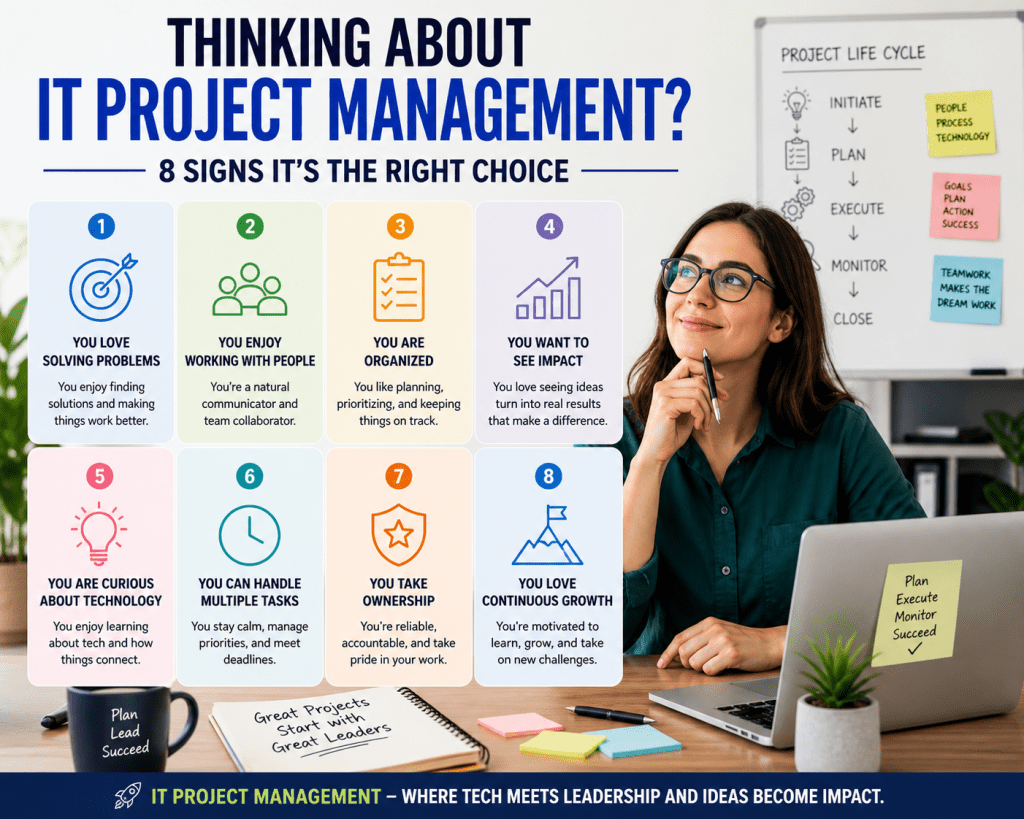
IT project management is a structured professional discipline centered on planning, coordinating, and delivering technology-based initiatives that support organizational objectives. It exists at the intersection of business strategy and technical execution, requiring individuals to translate high-level goals into actionable workflows that technical teams can implement. In modern digital environments, nearly every business function depends on technology in some form, which has elevated the importance of managing IT initiatives with precision and consistency. This role is not limited to software development projects alone but extends to infrastructure upgrades, system integrations, cybersecurity initiatives, cloud migrations, data management projects, and enterprise-wide digital transformation efforts. The core value of IT project management lies in its ability to bring order to complexity. Technology projects often involve multiple teams, shifting requirements, dependencies between tasks, and strict delivery expectations. Without structured oversight, these elements can quickly become fragmented, leading to inefficiencies and misalignment with business goals. IT project managers serve as the central coordinating function, ensuring that communication flows effectively between stakeholders, timelines remain realistic, and resources are allocated efficiently. The role also requires continuous balancing between scope, cost, and time, commonly known as the project constraints triangle. Adjusting one element often impacts the others, which requires careful decision-making and prioritization. As organizations increasingly rely on digital systems to operate competitively, IT project management has evolved into a critical function that directly influences business performance, operational efficiency, and innovation capability. Individuals drawn to structured environments, problem-solving, and coordination often find this career path naturally aligned with their strengths.
Core Responsibilities That Define the Role
The responsibilities of an IT project manager extend across the entire lifecycle of a project, beginning with initiation and continuing through planning, execution, monitoring, and closure. At the initiation stage, project managers help define objectives, identify stakeholders, and establish a clear understanding of what success looks like. During planning, they break down high-level goals into detailed tasks, assign responsibilities, and develop timelines that reflect realistic expectations based on available resources. Execution involves coordinating teams to ensure tasks are completed according to plan while maintaining alignment with overall objectives. Monitoring and controlling require continuous tracking of progress, identifying deviations from the plan, and implementing corrective actions when necessary. Closure involves ensuring that deliverables are completed, documentation is finalized, and outcomes are evaluated against initial objectives. Beyond these lifecycle stages, IT project managers also act as communication hubs. They facilitate discussions between technical teams and business stakeholders, ensuring that expectations are clearly understood on both sides. They also manage risks by identifying potential issues early and developing strategies to mitigate them before they escalate. Resource management is another key responsibility, involving the allocation of personnel, tools, and time in a way that maximizes efficiency. Budget oversight is also critical, as projects must remain financially viable while still meeting quality standards. In addition, IT project managers are responsible for maintaining documentation that provides transparency and traceability throughout the project. This includes schedules, progress reports, risk logs, and change requests. The ability to manage all of these responsibilities simultaneously requires strong analytical thinking, structured organization, and the ability to maintain focus under pressure.
Sign One – Natural Organizational Thinking
One of the strongest indicators of potential success in IT project management is a natural inclination toward organization. This trait goes beyond simply keeping things tidy; it reflects a cognitive preference for structure, order, and systematic thinking. Individuals who exhibit this characteristic tend to approach complex problems by breaking them down into smaller, more manageable components. In the context of IT projects, this ability is essential because large-scale initiatives often involve hundreds of interconnected tasks, each with its own dependencies and deadlines. Organizational thinkers are typically comfortable creating frameworks that help track progress, prioritize tasks, and ensure that nothing is overlooked. They often rely on structured methods such as task lists, schedules, and workflow systems to maintain clarity. This helps reduce uncertainty and ensures that progress remains measurable at every stage of the project. Another important aspect of organizational thinking is the ability to anticipate sequencing. This means understanding which tasks must be completed before others can begin and ensuring that workflows are designed accordingly. Without this foresight, projects can quickly encounter bottlenecks and delays. Individuals with strong organizational tendencies also tend to maintain a high level of situational awareness, meaning they are consistently aware of what is happening across multiple workstreams simultaneously. This allows them to identify potential issues early and take corrective action before problems escalate. In IT project environments, where complexity is the norm rather than the exception, this skill provides a strong foundation for maintaining control and ensuring consistent progress toward objectives.
Sign Two – Strong Communication Across Multiple Stakeholders
Effective communication is one of the most critical skills in IT project management because it ensures alignment between diverse groups of people who often have very different perspectives and areas of expertise. Technical teams typically focus on implementation details, while business stakeholders are more concerned with outcomes, timelines, and strategic impact. IT project managers must bridge this gap by translating technical concepts into clear business language and vice versa. This requires not only clarity of expression but also the ability to adjust communication style depending on the audience. Strong communicators in this field are able to present complex information in a structured and digestible way, ensuring that all stakeholders understand project status, risks, and priorities. They are also skilled in active listening, which allows them to accurately interpret concerns and expectations before responding. Written communication is equally important, as project documentation, progress updates, and reports must be clear, concise, and free of ambiguity. In addition, verbal communication plays a major role during meetings, planning sessions, and conflict resolution discussions. Miscommunication can lead to misaligned expectations, wasted resources, and delays, making precision in messaging essential. Effective communication also involves setting expectations early and reinforcing them consistently throughout the project lifecycle. This helps prevent misunderstandings and ensures that all participants remain aligned with project goals. Individuals who naturally enjoy explaining ideas, facilitating discussions, and ensuring mutual understanding often find that this aspect of IT project management aligns well with their strengths.
Sign Three – Comfort in Collaborative and Team-Based Environments
Collaboration is a fundamental component of IT project management because projects are rarely completed by a single individual or department. Instead, they require coordinated effort from multiple teams with different skill sets and responsibilities. Individuals who thrive in collaborative environments tend to perform well in this field because they understand how to work effectively with others toward a shared objective. Collaboration in IT projects involves more than just working together; it requires active coordination, alignment of priorities, and continuous communication. Project managers must ensure that each team member understands their role and how it contributes to the overall goal. They also help resolve disagreements that may arise between teams with differing viewpoints or priorities. Successful collaboration depends heavily on trust, respect, and clarity, all of which must be actively maintained throughout the project lifecycle. Individuals who are comfortable in group settings often excel at building relationships that facilitate smoother workflows and faster decision-making. They also tend to recognize the importance of inclusivity, ensuring that all voices are heard during discussions and planning sessions. This helps create a more balanced and effective approach to problem-solving. In addition, collaborative environments often require adaptability, as team dynamics and project requirements can shift over time. Those who are flexible and open to different perspectives are better equipped to navigate these changes without disruption. In IT project management, the ability to foster collaboration directly influences project efficiency, quality of output, and overall team performance.
Sign Four – Composure and Stability Under Pressure
IT project environments are often fast-paced and subject to constant change, making the ability to remain composed under pressure an essential trait. Projects may encounter unexpected technical challenges, shifting business requirements, or resource limitations that require immediate attention and adjustment. Individuals who can maintain clarity of thought in such situations are better equipped to make effective decisions without being overwhelmed by urgency or complexity. Composure under pressure involves more than emotional control; it includes structured thinking, prioritization, and the ability to remain solution-focused even when circumstances are difficult. Project managers who excel in this area are able to assess situations objectively, identify the most critical issues, and allocate resources accordingly. They also play a key role in stabilizing team morale, as their calm approach helps reduce stress and uncertainty among team members. In high-pressure environments, panic or disorganization can quickly spread, leading to decreased productivity and increased errors. A composed project manager helps counteract this by maintaining clear communication and reinforcing priorities. This stability also allows for more effective risk management, as potential issues can be addressed logically rather than reactively. Naturally resilient individuals often view challenges as opportunities to adjust and improve rather than as setbacks. This mindset is particularly valuable in IT project management, where change is constant, and adaptability is essential for success.
Sign Five – Strong Problem-Solving and Analytical Thinking Ability
One of the most defining qualities of a successful IT project manager is the ability to solve problems in a structured and analytical way. IT projects rarely proceed exactly as planned, and unexpected issues are a normal part of the environment. These issues can range from technical failures and system incompatibilities to resource shortages, shifting business requirements, or miscommunication between teams. Individuals who naturally approach problems with a calm, methodical mindset tend to perform well in this role because they focus on identifying root causes rather than reacting to surface-level symptoms. Analytical thinking in IT project management involves breaking down complex challenges into smaller components, evaluating possible solutions, and selecting the most efficient and realistic course of action. This process requires logical reasoning, attention to detail, and the ability to remain objective even under pressure. Problem-solving also involves anticipating potential risks before they occur and designing contingency plans that reduce the impact of disruptions. Effective IT project managers do not simply respond to issues as they arise; they actively look for patterns and early warning signs that indicate where problems might develop. This proactive mindset helps reduce delays and improve overall project stability. Another important aspect of problem-solving is adaptability. Technology environments evolve rapidly, and solutions that worked in one context may not apply in another. Being able to adjust strategies while maintaining focus on the end goal is a valuable skill. Individuals who enjoy troubleshooting, investigating issues, and finding practical solutions often find IT project management intellectually engaging and rewarding because it continuously challenges their ability to think critically and creatively.
Sign Six – Ability to Balance Detail Orientation With Big-Picture Thinking
IT project management requires a unique balance between focusing on detailed tasks and maintaining awareness of overall objectives. This dual perspective is essential because successful project execution depends on both precision and strategic alignment. Individuals who excel in this area are able to shift between micro-level and macro-level thinking depending on the situation. On a detailed level, they ensure that individual tasks are completed accurately, dependencies are managed correctly, and timelines are followed closely. This involves careful monitoring of progress, reviewing documentation, and ensuring that no critical steps are overlooked. At the same time, they must maintain a broader perspective that keeps the project aligned with business goals, stakeholder expectations, and long-term outcomes. Without this big-picture awareness, teams may complete tasks efficiently but fail to deliver meaningful value to the organization. Conversely, without attention to detail, even well-planned projects can fail due to small errors or overlooked dependencies. Effective IT project managers constantly move between these two modes of thinking, ensuring that day-to-day activities contribute directly to strategic objectives. This ability also involves prioritization, as not all tasks carry equal importance. Understanding which activities have the greatest impact on project success allows managers to allocate resources more effectively. Individuals who naturally enjoy organizing details while also understanding broader systems and outcomes often find this balance intuitive. They are able to maintain control over complex workflows while ensuring that every component contributes to a unified goal.
Sign Seven – Interest in Technology Without Necessarily Being a Developer
A strong interest in technology is often a key indicator of suitability for IT project management, even if the individual does not have a background in software development or engineering. IT project managers are not required to write code or build systems, but they must understand how technology works at a conceptual level and communicate effectively with technical teams. This includes familiarity with basic IT concepts such as system architecture, software development processes, cloud environments, cybersecurity principles, and data flow structures. Individuals who are naturally curious about how technology functions tend to adapt well to this requirement because they are motivated to learn and understand new systems. This curiosity enables them to ask meaningful questions, interpret technical discussions, and make informed decisions during project planning and execution. It also helps them bridge the gap between technical experts and business stakeholders, ensuring that both sides remain aligned. In addition, interest in technology allows project managers to stay updated with evolving trends, tools, and methodologies that may impact project delivery. While deep technical expertise is not required, a working understanding of IT environments is essential for effective communication and decision-making. Individuals who enjoy learning about new technologies, experimenting with digital tools, or exploring how systems interact often find IT project management a natural extension of their interests. This curiosity-driven mindset supports continuous learning, which is important in a field that evolves as quickly as technology itself.
Sign Eight – Leadership and the Ability to Guide and Motivate Teams
Leadership is a central component of IT project management, and individuals who naturally take initiative in group settings often excel in this role. Leadership in this context does not necessarily mean authority over others, but rather the ability to guide teams toward shared objectives while maintaining motivation and alignment. IT project managers are responsible for ensuring that teams remain focused, productive, and engaged throughout the lifecycle of a project. This involves setting clear expectations, providing direction, and supporting team members as they work through challenges. Effective leadership also requires emotional intelligence, which includes the ability to understand team dynamics, recognize individual strengths, and respond appropriately to different situations. Motivating a team in an IT environment can be complex, especially when deadlines are tight or technical challenges arise. Strong leaders help maintain morale by encouraging progress, acknowledging contributions, and reinforcing the value of each team member’s role in the project. They also help resolve conflicts by facilitating constructive discussions and ensuring that disagreements do not hinder progress. Leadership in IT project management is closely tied to communication and trust. Teams are more likely to perform effectively when they feel supported and understood. Individuals who naturally enjoy guiding others, offering support, and helping groups achieve success often find leadership responsibilities within project management to be highly fulfilling.
Essential Technical and Methodological Knowledge for IT Project Management
While IT project management is not a deeply technical role in terms of hands-on development, it does require a solid understanding of technical environments and structured project methodologies. One of the most important areas of knowledge involves project management frameworks that provide structure for planning and execution. These frameworks help define how tasks are organized, how progress is tracked, and how teams collaborate throughout the project lifecycle. Understanding structured approaches allows project managers to select methods that best suit the nature of the project and the team involved. In addition to methodologies, familiarity with common project management tools is essential. These tools support task tracking, scheduling, communication, and reporting, enabling teams to stay organized and aligned. Another important area of knowledge is IT systems and infrastructure. While deep technical expertise is not required, project managers must understand how different systems interact, how data flows between components, and how technical constraints can impact project outcomes. This understanding helps in making realistic plans and identifying potential risks early. Business knowledge is also critical, as IT projects must ultimately deliver value to the organization. This includes understanding business goals, stakeholder expectations, and performance metrics. By combining technical awareness with business insight, IT project managers can make informed decisions that balance feasibility with strategic value. Individuals who actively seek to build knowledge across these areas tend to become more effective over time as they develop a well-rounded perspective on both technical and organizational requirements.
Soft Skills That Strengthen Long-Term Success in IT Project Management
Beyond technical knowledge and structured methodologies, soft skills play a crucial role in determining long-term success in IT project management. These skills influence how effectively a project manager interacts with teams, handles challenges, and maintains project momentum. One of the most important soft skills is time management, which involves prioritizing tasks, managing deadlines, and ensuring that work progresses efficiently. Strong time management skills help prevent delays and ensure that resources are used effectively. Another key skill is emotional intelligence, which enables project managers to understand and respond to the emotions and motivations of team members. This helps in building stronger relationships, resolving conflicts, and maintaining a positive working environment. Adaptability is also essential, as IT projects often change due to evolving requirements or unexpected challenges. Being able to adjust plans without losing focus on objectives is a valuable capability. Decision-making is another critical skill, as project managers must frequently evaluate options and choose the best course of action under time constraints. Strong decision-making involves analyzing available information, considering potential risks, and selecting solutions that align with project goals. Communication, leadership, and problem-solving all fall within this broader category of soft skills, reinforcing their importance in daily project management activities. Individuals who continuously develop these interpersonal and cognitive abilities are better equipped to handle the complexities of IT project environments and sustain performance across multiple projects.
Building a Sustainable Career in IT Project Management
A long-term career in IT project management is built on continuous development, adaptability, and the ability to remain relevant in a constantly evolving technological environment. Unlike roles that rely on a fixed set of technical skills, project management demands ongoing learning because both business priorities and technology stacks change rapidly. Sustainability in this field depends on how well an individual can expand their capabilities beyond foundational coordination and move toward strategic thinking and leadership. Early in a career, professionals often focus on understanding project structure, learning how teams operate, and developing discipline in managing tasks and timelines. As experience grows, the role expands into higher-level responsibilities such as managing larger projects, handling multiple teams simultaneously, and contributing to organizational strategy. Over time, IT project managers are expected to think not only about how projects are executed but also why they are being executed and how they contribute to long-term business value. This shift from tactical execution to strategic oversight is what defines career progression in this field. Professionals who invest in improving communication, leadership, and analytical decision-making tend to move into more senior roles where they influence broader organizational outcomes. Career sustainability also depends on flexibility, as industries increasingly adopt new technologies such as cloud systems, automation tools, and data-driven decision frameworks. Those who remain open to learning and evolving alongside these changes are more likely to maintain long-term relevance and career stability.
How IT Project Managers Evolve From Entry Level to Advanced Roles
The career path in IT project management typically follows a gradual progression from support-based roles to leadership positions with greater responsibility and strategic influence. Entry-level positions often involve assisting with documentation, tracking progress, updating schedules, and supporting senior project managers in coordination tasks. These roles provide exposure to real project environments and help individuals understand how workflows are structured and executed. As experience develops, professionals often move into roles where they manage smaller projects independently or take ownership of specific project components. At this stage, decision-making responsibilities increase, and individuals are expected to coordinate directly with teams and stakeholders. Mid-level roles require stronger communication skills, better risk management capabilities, and the ability to handle multiple priorities simultaneously. With further experience, IT project managers transition into senior roles where they oversee large-scale projects, manage cross-functional teams, and contribute to strategic planning discussions. At this level, the focus shifts from task execution to ensuring that projects align with organizational objectives and deliver measurable business value. Senior professionals are also responsible for mentoring junior team members and establishing best practices that improve overall project efficiency. Advancement in this field is not solely dependent on years of experience but also on demonstrated capability in leadership, problem-solving, and decision-making. Individuals who consistently show initiative, adaptability, and strategic thinking tend to progress more quickly through these stages.
The Importance of Adaptability in a Changing Technology Landscape
Adaptability is one of the most critical traits for long-term success in IT project management because technology environments are constantly evolving. New tools, frameworks, and methodologies emerge regularly, and organizations frequently update their systems to remain competitive. This means that project managers must be willing to learn continuously and adjust their approaches based on new developments. Adaptability involves more than just learning new tools; it also includes the ability to adjust plans when project conditions change unexpectedly. Requirements may shift due to business priorities, technical limitations may arise during implementation, or external factors may impact timelines and resources. In such situations, rigid adherence to initial plans can lead to inefficiencies or project failure. Instead, adaptable project managers reassess situations, revise strategies, and guide teams through transitions without losing focus on final objectives. This flexibility also extends to working styles, as different teams may operate using different methodologies or tools. Being open to diverse approaches allows project managers to integrate teams more effectively and maintain productivity across varying environments. Adaptability also supports innovation, as individuals who are open to change are more likely to explore improved processes and more efficient solutions. In a field where change is constant, adaptability becomes a core competency rather than an optional skill.
Communication Mastery as a Long-Term Career Advantage
Communication remains one of the most powerful and enduring skills in IT project management, influencing nearly every aspect of the role. Over time, as professionals progress in their careers, communication becomes even more critical because they interact with larger teams, senior executives, and cross-organizational stakeholders. Mastery of communication involves more than clarity; it includes precision, timing, and audience awareness. Effective project managers understand that different stakeholders require different levels of detail and adjust their communication accordingly. Technical teams may require detailed specifications and structured task breakdowns, while executives may focus more on outcomes, risks, and business impact. The ability to switch between these communication styles ensures alignment across all levels of the organization. Strong communication also plays a key role in conflict resolution, as disagreements between teams or stakeholders are common in complex IT projects. In such situations, project managers must facilitate discussions that encourage understanding and collaboration rather than division. Written communication also becomes increasingly important in senior roles, as documentation, reports, and status updates form the basis for decision-making and accountability. Over time, project managers who refine their communication skills are better able to influence outcomes, build trust, and lead larger initiatives with greater complexity.
Leadership Development and Organizational Influence
Leadership in IT project management evolves significantly as professionals gain experience and take on more responsibility. Early-stage leadership often focuses on managing small teams and ensuring that tasks are completed on time. As careers progress, leadership expands into influencing multiple teams, aligning departments, and contributing to organizational strategy. Effective leadership in this field is not based on authority alone but on the ability to inspire collaboration, maintain clarity, and support teams through challenges. Strong leaders understand how to balance task management with people management, ensuring that both project goals and team well-being are addressed. Leadership also involves decision-making under uncertainty, where project managers must evaluate risks, consider trade-offs, and choose the best possible direction for the project. As professionals advance, they are often expected to mentor others, share knowledge, and help build organizational capability. This mentoring role contributes to the development of future project managers and strengthens the overall project management culture within an organization. Leadership also involves creating an environment where teams feel empowered to contribute ideas and take ownership of their work. This fosters engagement, improves productivity, and enhances overall project outcomes. Over time, leadership becomes less about direct task management and more about guiding organizational direction and influencing strategic outcomes.
Risk Management and Decision-Making in Complex Projects
Risk management is a fundamental aspect of IT project management that becomes increasingly important as projects grow in size and complexity. Every project carries uncertainty, whether related to technical challenges, resource availability, timeline constraints, or external dependencies. Effective project managers proactively identify potential risks before they become critical issues and develop strategies to mitigate them. This requires analytical thinking, experience, and the ability to anticipate how different variables may impact project outcomes. Decision-making is closely linked to risk management, as project managers must evaluate multiple options and choose the most appropriate course of action under time constraints. Good decision-making involves balancing short-term needs with long-term objectives while considering the potential impact on stakeholders and resources. In complex projects, decisions often need to be made with incomplete information, which requires confidence and structured reasoning. Over time, experienced project managers develop intuition that helps them recognize patterns and make faster, more effective decisions. Risk management also involves continuous monitoring throughout the project lifecycle, as new risks can emerge at any stage. By maintaining awareness and adjusting plans as needed, project managers ensure that projects remain stable and on track even in uncertain environments.
Final Career Outlook and Professional Growth Pathways
The long-term outlook for IT project management remains strong due to the increasing reliance on technology across all industries. Organizations continue to invest in digital transformation, system modernization, and data-driven operations, all of which require structured project oversight. This creates ongoing demand for professionals who can manage complexity, coordinate teams, and ensure the successful delivery of technology initiatives. Career growth in this field is influenced by both technical understanding and interpersonal capability, making it a balanced profession that rewards continuous development. Professionals who remain committed to learning, improving leadership skills, and adapting to technological change are likely to find sustained opportunities for advancement. The field also offers flexibility in terms of industry, as IT project managers are needed in sectors such as finance, healthcare, education, government, and technology services. This versatility allows professionals to explore different domains while applying a consistent core skill set. Over time, experienced project managers may transition into program management, portfolio management, or strategic leadership roles where they oversee multiple projects or entire organizational initiatives. The progression is shaped not only by technical knowledge but also by the ability to influence outcomes, manage people effectively, and align projects with business goals.
Conclusion
IT project management stands as one of the most strategically important roles in modern technology-driven organizations because it connects business intent with technical execution in a structured and measurable way. Across industries, organizations rely on digital systems, software solutions, and integrated platforms to operate efficiently, serve customers, and remain competitive. However, the success of these initiatives depends not only on technical capability but on how well they are planned, coordinated, and delivered. This is where IT project management becomes essential. It provides the structure that ensures complex work is broken down into manageable components, assigned to the right people, tracked effectively, and completed within defined constraints of time, scope, and budget.
One of the clearest takeaways from understanding this career path is that it is not limited to a single type of personality or background. While technical awareness is helpful, the role is fundamentally built on coordination, communication, leadership, and structured thinking. Individuals who naturally enjoy organizing tasks, guiding teams, and solving problems often find themselves aligned with the demands of this profession. At the same time, those who are curious about technology but not necessarily developers can still thrive, provided they are willing to build a foundational understanding and continuously learn how systems and processes interact. This combination of business awareness, technical literacy, and interpersonal skills makes IT project management uniquely accessible and versatile.
Another important insight is the central role of communication in determining success. Projects rarely fail due to a single technical issue alone; more often, challenges arise from misalignment between stakeholders, unclear expectations, or a lack of timely information. Effective IT project managers reduce these risks by ensuring that communication flows clearly between all parties involved. They translate technical language into a business context and vice versa, making sure that everyone shares the same understanding of objectives and progress. This ability to bridge gaps between teams is one of the most valuable aspects of the role, and it becomes even more important as project complexity increases.
The importance of structure and organization cannot be overstated. IT projects involve multiple moving parts, often running simultaneously across different teams and timelines. Without strong organizational systems, it becomes difficult to maintain visibility and control. Successful project managers develop the ability to break down large initiatives into structured phases, assign responsibilities clearly, and monitor progress consistently. This structured approach helps reduce uncertainty and ensures that work remains aligned with broader goals. It also allows for early identification of risks, which is critical in preventing small issues from becoming major disruptions.
Equally significant is the ability to remain calm and effective under pressure. IT environments are dynamic, and unexpected changes are a normal part of project execution. Requirements shift, technical challenges emerge, and timelines may need adjustment. In these situations, emotional stability and logical thinking become essential. Project managers who can remain composed are better able to assess situations objectively, prioritize effectively, and guide teams through uncertainty without causing confusion or stress. This stability often influences the overall performance of the team, as clear and calm leadership helps maintain focus and productivity even in challenging conditions.
Problem-solving also plays a central role in defining success in this field. Every project presents unique challenges that require analysis, creativity, and structured reasoning. Rather than reacting impulsively, effective IT project managers evaluate the root causes of issues and develop solutions that address both immediate concerns and long-term stability. This proactive mindset reduces repetition of problems and improves overall project efficiency. Over time, experienced professionals begin to recognize patterns, allowing them to anticipate risks and implement preventive strategies before issues escalate.
As careers progress in IT project management, the role expands from task coordination to strategic influence. Early-stage responsibilities are often focused on execution, such as tracking tasks, updating progress, and supporting senior managers. However, as experience grows, professionals begin managing entire projects independently and eventually overseeing multiple initiatives simultaneously. At higher levels, the focus shifts toward aligning projects with organizational strategy, managing large teams, and contributing to decision-making at a leadership level. This progression reflects not just increased responsibility but also deeper involvement in shaping business outcomes.
Leadership becomes increasingly important as professionals move forward in this career path. Effective leaders in IT project management are not simply task supervisors; they are facilitators of collaboration, motivators of teams, and enablers of performance. They understand how to support individuals, resolve conflicts, and create environments where teams can perform at their best. Leadership in this context is closely tied to emotional intelligence, as understanding team dynamics and individual motivations directly impacts productivity and engagement. Over time, strong leadership skills allow project managers to influence outcomes beyond individual projects and contribute to broader organizational success.
Another defining aspect of long-term success in this field is adaptability. Technology evolves rapidly, and methodologies, tools, and frameworks continue to change. Project managers who remain open to learning and adjusting their approaches are better positioned to stay relevant and effective. Adaptability also applies to project conditions, where shifting requirements and unexpected challenges require flexible thinking. The ability to adjust plans while maintaining focus on objectives ensures that projects remain on track even when conditions change significantly.
Technical awareness, while not requiring deep specialization, still plays an important role. Understanding how systems interact, how software is developed, and how infrastructure supports applications allows project managers to communicate effectively with technical teams. This knowledge also helps in making realistic plans and identifying potential constraints early in the project lifecycle. Combined with business understanding, it enables better decision-making that aligns technical feasibility with organizational goals.
Soft skills such as emotional intelligence, time management, and decision-making further enhance effectiveness in this role. Emotional intelligence supports better communication and team management, while time management ensures that priorities are handled efficiently. Decision-making allows project managers to evaluate multiple options and choose the most appropriate direction under pressure. These skills collectively contribute to smoother project execution and stronger team performance.
Looking at the broader picture, IT project management remains a highly relevant and future-oriented career path. As organizations continue to invest in digital transformation, the need for structured project oversight will only increase. Technology will continue to evolve, but the need for coordination, clarity, and leadership will remain constant. This makes IT project management not just a technical role but a strategic function that directly impacts organizational success.
Ultimately, individuals who are drawn to structured thinking, collaboration, problem-solving, and leadership will find this field both challenging and rewarding. It offers continuous learning opportunities, diverse career pathways, and the ability to contribute meaningfully to technological progress within organizations.