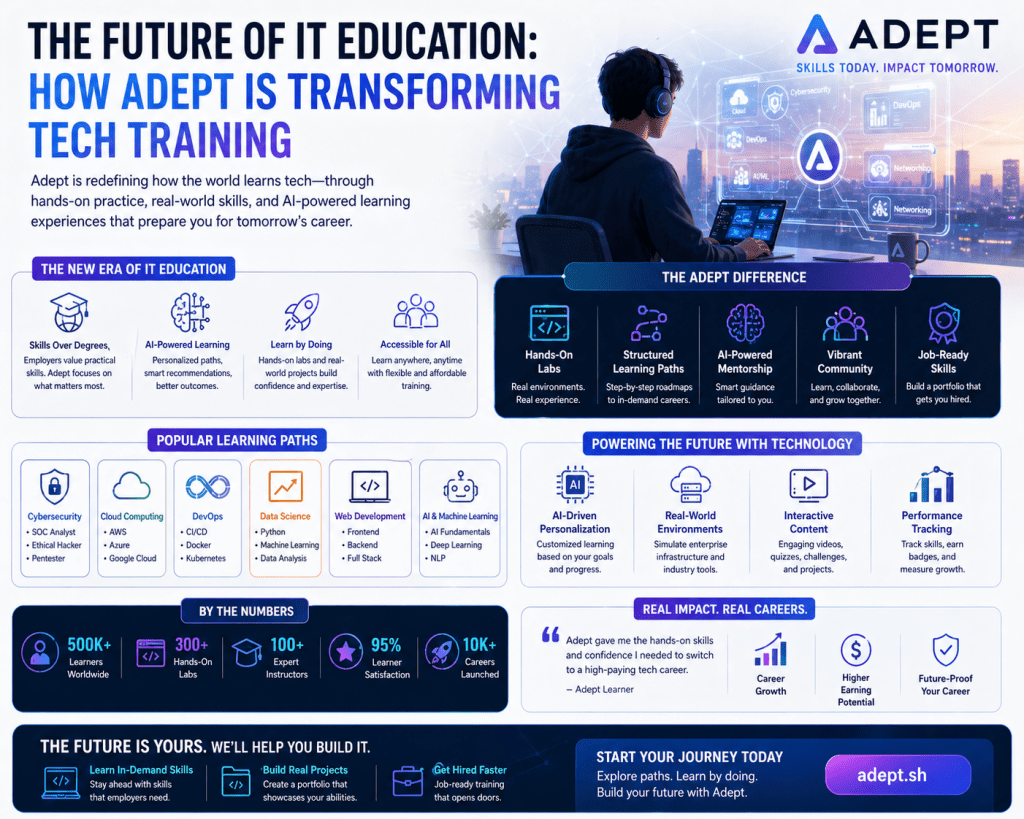
Information technology education has entered a phase where traditional learning boundaries are no longer sufficient to support modern technical demands. The industry has shifted toward cloud-native systems, distributed architectures, cybersecurity automation, and hybrid infrastructures that require continuous adaptation from professionals. In this environment, learning is no longer a one-time activity but an ongoing process of skill refinement. Earlier educational models relied heavily on static instruction, where learners consumed pre-recorded content and were expected to independently translate theory into practice. While this approach worked in simpler computing environments, it fails to address the complexity of today’s IT ecosystems.
Modern IT professionals are expected to understand interconnected systems rather than isolated technologies. A single operational environment may include network routing, cloud orchestration, virtualization layers, identity management, and security enforcement working simultaneously. This complexity demands a training model that mirrors real operational conditions. As a result, education systems are evolving into integrated environments where learning, practice, and evaluation occur in a unified structure. The goal is not just knowledge acquisition but the development of applied technical capability that can be directly transferred into enterprise environments.
Another important shift is the move toward continuous competency development. Instead of completing a course and moving on, learners now engage in iterative skill-building cycles. These cycles reinforce concepts through repeated exposure, scenario-based application, and adaptive feedback mechanisms. This approach ensures that knowledge is not only understood but also retained and operationalized in real-world contexts. The transformation of IT skill development is therefore not just technological but also methodological, reshaping how professionals grow and adapt throughout their careers.
Limitations of Traditional IT Learning Approaches
Conventional IT training models were designed during a period when technological systems were more static and predictable. These models typically followed a structured curriculum where learners progressed through predefined modules in a linear fashion. While this ensured consistency, it failed to account for variations in learner experience, background knowledge, and pace of understanding. As a result, many learners either repeated content they already understood or struggled to keep up with material that assumed prior expertise.
One of the most significant limitations of traditional learning was the lack of contextual application. Learners were often exposed to theoretical explanations without sufficient opportunities to apply those concepts in realistic environments. This created a gap between understanding and execution, which became especially problematic in technical fields where hands-on proficiency is essential. Without practical reinforcement, knowledge retention remained weak and often required additional training in real job settings.
Another issue was the absence of continuous feedback mechanisms. Traditional systems relied on periodic assessments such as quizzes or final exams, which only measured knowledge at specific points in time. This delayed feedback loop made it difficult for learners to identify and correct misunderstandings early in the learning process. Consequently, errors could persist throughout the training period, reducing overall effectiveness. Additionally, these systems lacked adaptability, meaning they could not dynamically adjust content based on individual performance. This rigidity limited their ability to support diverse learning needs in a scalable way.
Emergence of Adaptive Learning Systems in Technical Education
Adaptive learning systems represent a major advancement in educational design, particularly in technical domains where skill precision is critical. These systems utilize data-driven algorithms to continuously analyze learner behavior, performance trends, and interaction patterns. Based on this analysis, the system dynamically adjusts the learning path to suit individual needs. This means that no two learners necessarily follow the same progression, even if they are studying the same subject.
At the core of adaptive learning is personalization. When a learner demonstrates difficulty with a specific concept, the system provides additional explanations, supplementary resources, or targeted exercises. Conversely, when a learner shows strong comprehension, the system accelerates progression to more advanced topics. This ensures that time is used efficiently and that learners remain engaged without being overwhelmed or under-challenged.
Adaptive systems also introduce predictive modeling capabilities. By analyzing historical performance data, they can identify potential areas of difficulty before they fully manifest. This allows for proactive intervention, where additional support is provided in advance rather than as a corrective measure. The result is a smoother learning experience that reduces frustration and improves overall retention.
Another key advantage of adaptive systems is scalability. They can support large numbers of learners simultaneously while still maintaining individualized learning paths. This makes them particularly valuable in global training environments where users have diverse backgrounds and skill levels. The shift toward adaptive learning represents a fundamental change in how technical education is structured and delivered.
Integration of Immersive Simulation-Based Learning Environments
Simulation-based learning environments have become a cornerstone of modern IT education due to their ability to replicate real-world systems in a controlled setting. These environments allow learners to interact with virtualized infrastructure that mirrors enterprise-grade networks, servers, and applications. Instead of passively observing concepts, learners actively engage with systems, configure settings, and troubleshoot issues as they would in professional roles.
The primary advantage of simulation environments is risk-free experimentation. In real-world IT systems, configuration errors can lead to downtime, security vulnerabilities, or data loss. Simulation environments eliminate this risk by providing isolated virtual spaces where learners can safely explore different scenarios. This encourages experimentation, which is essential for developing deep technical understanding.
These environments also support iterative learning. Learners can repeatedly perform tasks, refine their approach, and observe different outcomes based on variations in configuration. This repetition builds muscle memory and strengthens problem-solving abilities. Additionally, simulation environments often include layered complexity, allowing users to start with basic tasks and gradually progress to advanced system configurations.
Another important aspect is realism. Modern simulation systems are designed to closely mimic actual enterprise environments, including network behavior, system responses, and application interactions. This realism ensures that skills developed in training environments are directly transferable to professional settings. As a result, simulation-based learning has become an essential component of technical education frameworks.
Continuous Assessment and Real-Time Feedback Mechanisms
The traditional model of evaluating learners through end-of-course examinations has been replaced by continuous assessment frameworks embedded within the learning process. This shift is driven by the need for immediate feedback and more accurate measurement of skill development. Continuous assessment involves evaluating learners at multiple points during the learning journey, rather than relying on a single final evaluation.
These assessments are often integrated directly into instructional content. For example, learners may encounter scenario-based questions, interactive problem-solving tasks, or configuration exercises while engaging with learning material. This integration ensures that assessment is not separate from learning but part of the learning process itself.
Immediate feedback is a critical component of this approach. When learners make errors, they receive instant explanations and guidance, allowing them to correct misunderstandings in real time. This significantly improves knowledge retention, as concepts are reinforced at the moment of application rather than after a delay.
Adaptive difficulty is another important feature of continuous assessment systems. As learners demonstrate proficiency, the complexity of tasks increases automatically. This ensures that learners are consistently challenged at an appropriate level, promoting steady skill development without causing cognitive overload.
Data-Driven Personalization and Learning Analytics
Data analytics plays a central role in modern IT education systems by enabling detailed insights into learner behavior and performance. Every interaction within the learning environment generates data points that contribute to a comprehensive understanding of individual progress. These data points include time spent on tasks, accuracy in assessments, interaction frequency, and progression speed.
By analyzing this data, learning systems can create personalized recommendations tailored to each learner’s needs. This may include suggesting additional practice in specific areas, recommending alternative learning paths, or adjusting content difficulty levels. Personalization ensures that learners focus their efforts where they are most needed, improving efficiency and effectiveness.
Learning analytics also support long-term progress tracking. Learners can observe their development over time, identify patterns in performance, and set measurable goals. This visibility enhances motivation and provides a clear sense of direction throughout the learning process.
At an organizational level, aggregated data insights can be used to evaluate overall training effectiveness, identify skill gaps across teams, and optimize educational strategies. This makes data-driven learning not only beneficial for individuals but also valuable for workforce development planning.
Evolution of User Experience in Technical Learning Platforms
User experience design has become a critical factor in the effectiveness of modern IT training systems. Early platforms often suffered from complex navigation structures and fragmented interfaces, which disrupted the learning flow. Modern systems prioritize simplicity, clarity, and integration to create a seamless learning experience.
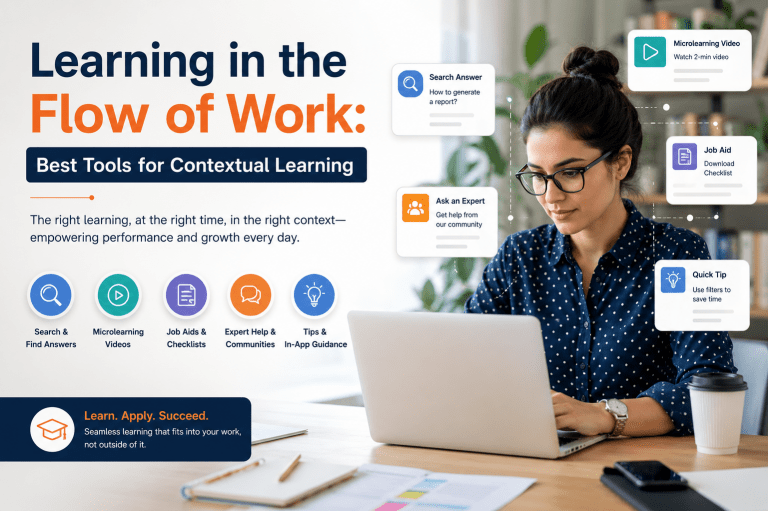
Content is organized in a way that minimizes cognitive load and allows learners to focus entirely on understanding concepts. Interactive elements such as quizzes, simulations, and notes are embedded directly within the learning environment, eliminating the need to switch between multiple tools. This unified structure enhances engagement and reduces distractions.
Visual hierarchy is used strategically to guide learner attention toward key concepts and actions. Supporting information is made available contextually, ensuring that learners receive help when needed without overwhelming the primary content. This design philosophy ensures that the learning process remains intuitive and efficient.
The evolution of user experience design reflects a broader trend toward learner-centric systems that prioritize usability, accessibility, and engagement. This shift has significantly improved the effectiveness of digital IT education platforms.
Expansion of Modern IT Learning Ecosystems and Platform Architecture
Modern IT learning environments have evolved into highly structured digital ecosystems designed to replicate the complexity of real-world enterprise systems. Unlike earlier training models that focused on isolated course delivery, current architectures integrate content, practice, evaluation, and analytics into a single continuous framework. This integration allows learners to move seamlessly between theory and application without losing contextual continuity. The design philosophy behind these ecosystems is centered on reducing fragmentation in learning, ensuring that every interaction contributes meaningfully to skill development.
At the architectural level, these systems are built using modular frameworks that support scalability and continuous updates. Each learning component functions as part of a larger interconnected structure, allowing new technologies, tools, and methodologies to be introduced without disrupting existing content. This modularity is essential in IT education, where technological evolution occurs rapidly and continuously. The system must remain flexible enough to incorporate emerging topics such as cloud-native security, container orchestration, and automated infrastructure management.
Another defining characteristic of modern learning ecosystems is their emphasis on interoperability. Different components within the system, such as simulations, assessments, and content libraries, are designed to communicate with each other. This ensures that learner progress in one area directly influences their experience in another. For example, performance in a simulation environment may determine the difficulty level of subsequent learning modules. This interconnectedness creates a dynamic learning environment that adapts continuously to user behavior.
Deep Integration of Real-Time Learning Feedback Systems
Real-time feedback has become a core pillar of effective IT training systems. Unlike traditional models where feedback was delayed until the end of a module or course, modern systems provide immediate responses to learner actions. This instant feedback loop allows learners to correct mistakes as they occur, reinforcing accurate understanding while minimizing the reinforcement of incorrect assumptions.
These feedback systems are powered by continuous monitoring of user interactions within the learning environment. Every action, from answering a question to configuring a virtual system, is analyzed in real time. When an error is detected, the system provides targeted guidance explaining the correct approach. This may include conceptual explanations, step-by-step breakdowns, or visual demonstrations depending on the nature of the mistake.
The psychological impact of immediate feedback is significant. It reduces frustration by preventing learners from progressing with unresolved misunderstandings. It also enhances motivation by creating a sense of continuous improvement. Learners are able to see their progress in real time, which reinforces engagement and encourages consistent participation.
In advanced systems, feedback is not limited to correctness. It also includes efficiency analysis, suggesting more optimal approaches to solving technical problems. This level of feedback helps learners develop not only accuracy but also professional-level efficiency in their technical execution.
Advanced Simulation Frameworks for Enterprise-Level Skill Development
Simulation environments in modern IT education are no longer simple virtual labs; they have evolved into complex, enterprise-grade frameworks that replicate entire infrastructure ecosystems. These environments include networking layers, server configurations, security protocols, and application services that mirror real-world deployments.
The primary objective of these simulation frameworks is to provide experiential learning that closely resembles professional IT operations. Learners can build networks, deploy applications, configure security policies, and troubleshoot system failures in a controlled virtual environment. This hands-on experience is essential for developing practical competence, as it allows learners to apply theoretical knowledge in realistic scenarios.
One of the key advantages of advanced simulation frameworks is their ability to replicate failure conditions. In real-world IT environments, system failures are inevitable, and professionals must be prepared to diagnose and resolve issues quickly. Simulations can introduce controlled failures such as network outages, configuration errors, or security breaches, allowing learners to practice troubleshooting in a safe environment.
These systems also support multi-layered complexity. Beginners can work with simplified environments, while advanced learners can engage with fully integrated enterprise architectures involving multiple interconnected systems. This scalability ensures that simulation-based learning remains relevant across all stages of professional development.
Adaptive Learning Pathways and Dynamic Content Structuring
Adaptive learning pathways represent a shift from static curriculum models to dynamic, personalized educational journeys. Instead of following a fixed sequence of topics, learners progress through content based on their performance, comprehension level, and engagement patterns. This ensures that each learner experiences a customized learning path that aligns with their individual needs.
Dynamic content structuring is achieved through continuous analysis of learner data. The system evaluates how quickly a learner understands a concept, how accurately they apply it, and how consistently they retain information over time. Based on this analysis, the system adjusts the order, difficulty, and depth of future content.
This adaptive structure prevents both under-challenging and overloading learners. When a learner demonstrates mastery of a topic, the system accelerates progression to more advanced material. When difficulties are detected, additional reinforcement content is introduced automatically. This ensures that learning remains efficient and appropriately challenging.
Adaptive pathways also improve long-term retention by reinforcing weak areas through spaced repetition and contextual re-exposure. Concepts are revisited in different formats and scenarios, strengthening cognitive connections and improving recall under practical conditions.
Role of Continuous Skill Validation in Professional Development
Continuous skill validation has become a critical component of modern IT training frameworks. Instead of relying solely on final assessments or certification exams, learners are evaluated continuously throughout their learning journey. This approach provides a more accurate representation of real-world competence.
Skill validation occurs through multiple mechanisms, including interactive assessments, practical simulations, and scenario-based evaluations. Each of these methods measures different aspects of technical ability, such as conceptual understanding, practical execution, and problem-solving efficiency.
One of the key advantages of continuous validation is its ability to identify skill gaps early in the learning process. This allows learners to address weaknesses before they become significant barriers to progress. It also ensures that learners are consistently building on a solid foundation of verified knowledge.
In professional environments, continuous validation mirrors real-world expectations where skills are constantly assessed through performance outcomes. This makes learners better prepared for actual job roles, where adaptability and ongoing competence are essential.
Data Intelligence and Predictive Learning Optimization
Data intelligence has become a foundational element in optimizing modern IT education systems. By collecting and analyzing large volumes of learner interaction data, platforms can generate predictive insights that enhance learning efficiency and effectiveness.
These insights are used to identify patterns in behavior, such as common areas of difficulty, optimal learning speeds, and preferred content formats. Based on these patterns, systems can predict future learning challenges and proactively adjust content delivery.
Predictive optimization allows learning platforms to anticipate learner needs before they are explicitly expressed. For example, if data indicates that a learner struggles with a particular concept type, the system can introduce additional support material before the learner encounters more advanced related topics.
This proactive approach improves learning outcomes by reducing cognitive friction and ensuring smoother progression through complex material. It also enhances engagement by providing a more responsive and intuitive learning experience.
Integration of Multi-Modal Learning Experiences
Modern IT training systems increasingly incorporate multi-modal learning experiences that combine visual, textual, interactive, and practical elements. This approach recognizes that different learners absorb information in different ways and that combining multiple formats enhances understanding.
Visual learning components include diagrams, system simulations, and interface walkthroughs that help illustrate complex technical structures. Textual explanations provide conceptual clarity and detailed breakdowns of processes. Interactive elements allow learners to actively engage with content through problem-solving and decision-making tasks.
Practical components, such as virtual labs and simulation environments, provide hands-on experience that reinforces theoretical knowledge. The integration of these modalities creates a comprehensive learning experience that engages multiple cognitive pathways simultaneously.
This multi-modal approach improves retention by reinforcing concepts through repetition in different formats. It also accommodates diverse learning preferences, making technical education more accessible and effective for a wider range of learners.
Evolution of Learning Navigation and Content Accessibility
Navigation within modern IT learning platforms has undergone significant improvement to support faster and more intuitive access to content. Earlier systems often required users to navigate complex hierarchical menus, which slowed down the learning process and increased cognitive load.
Modern navigation systems are designed around skill-based categorization rather than rigid course structures. This allows learners to access content based on specific competencies or objectives rather than predefined sequences. Search functionality is also enhanced with intelligent filtering and predictive suggestions.
Content accessibility is further improved through contextual linking, where related topics are automatically suggested based on current learning activities. This creates a fluid learning experience where learners can explore interconnected concepts without losing focus or direction.
The overall goal of improved navigation is to reduce friction and allow learners to concentrate fully on skill development rather than system interaction.
Scalability and Global Accessibility of Digital Learning Platforms
Modern IT education systems are designed to support global accessibility, enabling learners from diverse geographical and professional backgrounds to participate in structured training programs. Scalability is achieved through cloud-based infrastructure that supports simultaneous access for large numbers of users.
This global accessibility ensures that learners can engage with content regardless of location or device. It also allows organizations to standardize training across distributed teams, ensuring consistency in skill development.
Scalability also extends to content delivery, where systems can dynamically adjust performance based on user demand. This ensures smooth operation even during peak usage periods.
The combination of scalability and accessibility makes modern learning systems highly effective for both individual learners and enterprise-level training programs.
Evolution of Advanced Skill Mastery in Modern IT Learning Systems
Modern IT education has reached a stage where the focus is no longer limited to basic knowledge transfer but extends into deep skill mastery across complex, interconnected technologies. As enterprise environments become increasingly distributed, hybrid, and automated, the expectation placed on IT professionals has expanded significantly. They are required to understand not only individual systems but also how those systems interact within large-scale infrastructures. This has driven the development of learning ecosystems that prioritize mastery over memorization and applied capability over theoretical familiarity.
Skill mastery in this context refers to the ability to consistently apply knowledge in dynamic environments where conditions are not predictable. Unlike earlier educational models that measured success through static examinations, modern systems evaluate learners based on their ability to solve problems in simulated operational scenarios. This includes troubleshooting network failures, configuring cloud environments, managing identity systems, and responding to security incidents. The emphasis is on performance under realistic constraints, which better reflects actual industry requirements.
This shift toward mastery-based learning has also influenced how content is structured. Instead of linear progression, learners are guided through layered competency frameworks. Each layer builds upon the previous one, ensuring that foundational understanding is fully established before advancing to more complex topics. This prevents knowledge fragmentation and ensures long-term retention. The result is a more resilient learning experience where skills are deeply embedded rather than superficially acquired.
Deepening Real-World Simulation and Enterprise Replication Models
Simulation environments in modern IT training have evolved far beyond simple virtual labs. They now replicate entire enterprise ecosystems, including multi-tier architectures, hybrid cloud environments, and integrated security frameworks. These advanced simulations are designed to reflect the complexity and unpredictability of real-world IT operations.
Learners are placed in scenarios that mimic actual workplace challenges. For example, they may be tasked with diagnosing a network latency issue across distributed systems or resolving configuration conflicts in a multi-cloud environment. These scenarios require critical thinking, analytical reasoning, and technical execution under pressure. By engaging in such simulations, learners develop not only technical knowledge but also operational intuition.
Another key aspect of advanced simulation models is environmental variability. Unlike static lab setups, modern systems introduce dynamic conditions that change based on user actions. This includes system failures, traffic fluctuations, and security incidents that evolve in real time. This variability ensures that learners cannot rely on memorized steps but must instead understand underlying principles to succeed.
The realism of these environments is further enhanced through integration with actual industry tools and frameworks. This ensures that the skills developed within simulations are directly transferable to professional environments, reducing the gap between training and job readiness.
Advanced Personalization Through Behavioral Learning Analytics
Behavioral learning analytics plays a central role in shaping personalized educational experiences within modern IT training systems. Every interaction a learner has within the platform generates behavioral data that is continuously analyzed to understand learning patterns, strengths, and weaknesses.
This data includes time spent on tasks, accuracy rates, retry frequency, navigation behavior, and engagement levels. By analyzing these patterns, systems can construct detailed learner profiles that evolve over time. These profiles are then used to dynamically adjust content delivery, ensuring that each learner receives a tailored experience.
Personalization is not limited to difficulty adjustment but extends to content format, pacing, and learning pathways. Some learners may benefit from more visual explanations, while others may perform better with hands-on simulations. Behavioral analytics allows systems to identify these preferences and adapt accordingly.
In addition, predictive modeling enables systems to anticipate future learning challenges. If a learner shows difficulty with foundational networking concepts, the system may proactively introduce reinforcement material before more advanced topics are presented. This reduces learning friction and improves overall comprehension.
Continuous Competency Tracking and Performance Evolution
Continuous competency tracking has become an essential component of modern IT education systems. Unlike traditional models that evaluate learners at fixed intervals, continuous tracking monitors performance throughout the entire learning journey. This provides a more accurate and holistic view of skill development.
Competency tracking systems evaluate multiple dimensions of learning, including conceptual understanding, practical application, problem-solving efficiency, and adaptability. These metrics are collected across different learning activities such as simulations, assessments, and interactive exercises.
One of the most important benefits of continuous tracking is early identification of skill gaps. When deficiencies are detected, targeted interventions can be introduced immediately. This prevents the accumulation of unresolved misunderstandings and ensures steady progression.
Over time, competency data is used to map learning trajectories, showing how skills evolve from foundational understanding to advanced mastery. This longitudinal view helps learners understand their progress and provides motivation for continued development.
Integration of Cognitive Reinforcement and Retention Mechanisms
Cognitive reinforcement is a critical element in ensuring long-term knowledge retention in technical education. Modern learning systems incorporate reinforcement mechanisms that repeatedly expose learners to key concepts in varied contexts. This repetition strengthens neural connections and improves recall accuracy.
Reinforcement techniques include spaced repetition, contextual reapplication, and scenario variation. Spaced repetition ensures that concepts are revisited at optimal intervals, preventing forgetting over time. Contextual reapplication presents the same concept in different operational scenarios, reinforcing adaptability. Scenario variation introduces slight changes in conditions to challenge understanding and deepen comprehension.
These mechanisms work together to create durable learning outcomes. Instead of short-term memorization, learners develop long-lasting cognitive frameworks that support real-world application. This is particularly important in IT environments where professionals must recall and apply knowledge under dynamic conditions.
Cognitive reinforcement also enhances problem-solving ability by encouraging learners to think beyond procedural steps and focus on underlying principles. This leads to more flexible and adaptable technical thinking.
Advanced Integration of Automation in Learning Pathways
Automation has become a key enabler in modern IT learning systems, particularly in managing adaptive learning pathways and personalized content delivery. Automated systems analyze learner behavior in real time and adjust educational content without manual intervention.
This includes automatically adjusting difficulty levels, recommending learning modules, and triggering reinforcement activities. Automation ensures that learning remains continuous and responsive, eliminating delays in content adjustment.
In addition, automated systems manage progression tracking and competency evaluation. This reduces administrative overhead and allows learners to focus entirely on skill development. Automation also ensures consistency in evaluation standards across large learner populations.
The integration of automation into learning pathways reflects the broader trend of intelligent systems in IT education, where decision-making processes are increasingly data-driven and algorithmically managed.
Expansion of Multi-Layered Knowledge Architectures
Modern IT training systems are built on multi-layered knowledge architectures that organize content into interconnected domains. These layers typically include foundational knowledge, applied skills, advanced concepts, and specialized expertise.
Each layer builds upon the previous one, ensuring structured progression and eliminating gaps in understanding. Foundational layers focus on core principles, while advanced layers introduce complex scenarios and enterprise-level applications.
This hierarchical structure ensures that learners develop a strong conceptual base before engaging with advanced material. It also allows for flexible learning paths, where individuals can focus on specific layers based on their career goals or skill requirements.
Multi-layered architectures also support cross-domain learning, where concepts from different technical areas are interconnected. For example, networking principles may be linked with security practices and cloud infrastructure design. This integration reflects real-world IT environments where systems do not operate in isolation.
Enhanced Accessibility Through Intelligent Content Delivery Systems
Content accessibility has been significantly improved through intelligent delivery systems that optimize how and when information is presented to learners. These systems analyze user behavior and environmental factors to determine the most effective delivery format.
For example, content may be presented in shorter segments for learners with limited time or expanded into detailed modules for deeper study sessions. Delivery systems also adjust based on device type, ensuring optimal viewing and interaction experiences across platforms.
Intelligent delivery also includes contextual recommendations, where related topics are suggested based on current learning activity. This creates a continuous flow of knowledge exploration, reducing the need for manual navigation.
The goal of intelligent delivery systems is to ensure that learners receive the right content at the right time in the most effective format.
Future-Oriented Development of IT Learning Ecosystems
The future of IT learning ecosystems is centered around increasing intelligence, adaptability, and immersion. As technology continues to evolve, learning systems are expected to become even more responsive to individual needs and industry demands.
Future systems will likely incorporate deeper levels of automation, enhanced simulation realism, and more sophisticated predictive analytics. These advancements will further reduce the gap between training environments and real-world IT operations.
Additionally, learning ecosystems will continue to integrate emerging technologies such as artificial intelligence, edge computing, and advanced cybersecurity frameworks. This ensures that learners remain aligned with current and future industry requirements.
The evolution of these systems reflects a long-term shift toward continuous, integrated, and intelligent learning environments that support lifelong professional development in IT fields.
Conclusion
The evolution of IT training systems reflects a broader shift in how technical skills are developed, validated, and maintained in a rapidly changing digital environment. What was once a linear, content-driven model of education has transformed into an interconnected ecosystem where learning is continuous, adaptive, and deeply integrated with real-world practice. This transition is not simply a matter of improved technology but a fundamental redesign of how knowledge is acquired and applied in professional contexts.
One of the most important outcomes of this transformation is the shift from passive learning to active engagement. Traditional approaches often relied on learners consuming information in a fixed sequence, with limited interaction beyond reading, watching, or occasional testing. Modern systems replace this passive structure with environments that require constant participation. Learners are no longer observers; they are active participants in simulated systems, decision-making scenarios, and problem-solving tasks. This shift significantly improves retention because knowledge is reinforced through application rather than repetition alone.
Another defining change is the integration of real-world complexity into learning environments. Instead of simplified examples that isolate concepts, modern training systems replicate the interconnected nature of enterprise IT infrastructure. Networking, security, cloud computing, identity management, and system administration are no longer treated as separate subjects but as interdependent components of a larger ecosystem. This interconnected approach prepares learners for the reality of IT work, where problems rarely exist in isolation and solutions often require cross-domain understanding.
The role of adaptability in learning has also become central. In earlier systems, every learner followed the same path regardless of their background or skill level. This often led to inefficiencies, where advanced learners were slowed down and beginners were overwhelmed. Adaptive systems resolve this issue by dynamically adjusting content based on performance and engagement. Learners who struggle with certain concepts receive additional reinforcement, while those who demonstrate mastery progress more quickly. This creates a more efficient and personalized learning experience that aligns with individual needs.
Equally important is the rise of simulation-based learning as a core component of technical education. Virtual environments now allow learners to engage with realistic IT infrastructure without the risks associated with live systems. These environments provide opportunities to experiment, fail, and retry without consequence, which is essential for developing deep technical understanding. By replicating real-world scenarios such as network failures, system misconfigurations, or security incidents, simulation environments bridge the gap between theoretical knowledge and practical application.
Continuous feedback mechanisms further enhance this learning model. Instead of waiting for end-of-course evaluations, learners receive immediate responses to their actions. This instant feedback helps correct misunderstandings at the moment they occur, preventing the reinforcement of incorrect assumptions. Over time, this leads to stronger cognitive alignment between theory and practice. It also improves confidence, as learners can clearly see their progress and understand exactly where improvements are needed.
Data-driven personalization is another major advancement shaping modern IT education. Every interaction within a learning system generates data that can be analyzed to understand learner behavior. This includes performance metrics, engagement patterns, and progression rates. By interpreting this data, systems can tailor content delivery, recommend learning paths, and adjust difficulty levels. This ensures that learning is not generic but highly targeted to individual strengths and weaknesses.
The impact of this personalization extends beyond efficiency. It also improves motivation and engagement by creating a sense of progress that is visible and measurable. Learners are able to track their development over time, which reinforces commitment and encourages continuous improvement. In professional environments, this ability to self-assess and adapt becomes a critical skill in itself.
Another key development is the evolution of user experience design within learning platforms. Modern systems prioritize simplicity, clarity, and integration. Instead of forcing learners to navigate multiple tools or disconnected interfaces, everything is unified within a single environment. Content, assessments, simulations, and feedback mechanisms are seamlessly integrated, reducing cognitive load and allowing learners to focus entirely on skill development.
This design philosophy reflects a deeper understanding of how people learn. Cognitive overload can significantly reduce retention and engagement, especially in technical fields where complexity is already high. By streamlining interfaces and embedding learning tools directly into the content flow, modern systems reduce unnecessary friction and create a smoother learning experience.
The importance of practical skill reinforcement cannot be overstated in this context. Technical knowledge alone is not sufficient in IT roles, where real-world problem-solving requires experience, intuition, and adaptability. Modern learning systems emphasize hands-on practice through repeated exposure to realistic scenarios. This ensures that learners not only understand concepts but can also apply them effectively under varying conditions.
Repetition in different contexts plays a crucial role in strengthening long-term retention. When learners encounter the same concept across multiple scenarios, they develop a deeper understanding of its underlying principles. This helps them adapt their knowledge to new and unfamiliar situations, which is essential in dynamic IT environments.
Scalability and accessibility also define the modern learning landscape. Digital learning systems are now designed to support global audiences, enabling individuals from diverse backgrounds to access the same quality of education. Cloud-based infrastructure ensures that these systems can operate at scale without compromising performance or reliability. This global accessibility helps standardize skill development across industries and regions, contributing to a more uniformly skilled workforce.
At the same time, learning ecosystems continue to evolve through continuous updates and improvements. Unlike static educational materials, modern systems are constantly refined to reflect changes in technology and industry practices. This ensures that learners are always working with current and relevant information, which is critical in fast-moving fields such as cybersecurity, cloud computing, and network engineering.
Ultimately, the transformation of IT education represents a shift toward lifelong learning. Skills are no longer acquired once and retained indefinitely; they must be continuously updated, reinforced, and expanded. Modern learning systems are designed to support this ongoing process by providing adaptive, interactive, and data-driven environments that evolve alongside the learner.
This approach creates a more resilient and capable workforce, better prepared to handle the complexities of modern technology landscapes. It also redefines education as a continuous journey rather than a finite process, where growth is measured not just by completion but by sustained capability and real-world performance.