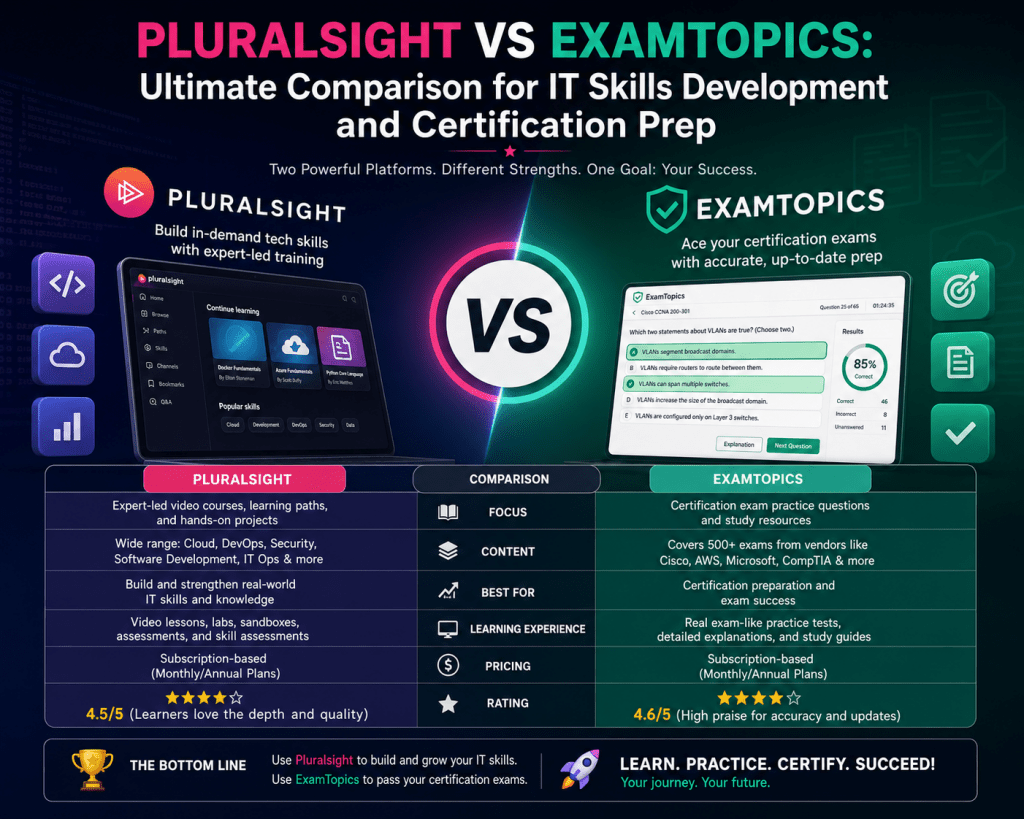
The modern IT industry is defined by constant technological evolution, where systems, tools, and frameworks undergo rapid transformation in relatively short cycles. What is considered advanced today may become outdated within a few years, and in some cases even sooner in highly dynamic areas such as cloud computing, cybersecurity, and software-defined networking. This environment creates a continuous demand for professionals who can adapt quickly and maintain up-to-date technical knowledge. As a result, continuous learning is no longer optional for IT professionals; it is an essential requirement for career sustainability and growth. Organizations increasingly expect their technical workforce to demonstrate verified competencies, often through certifications that validate expertise in specific domains.
This shift has changed how professionals approach skill development. Instead of relying solely on experience gained through job roles, many now actively engage in structured learning programs that provide guided instruction and measurable progress. These programs are designed to bridge the gap between theoretical knowledge and practical application, ensuring that learners can apply concepts in real operational environments. The growing complexity of IT infrastructure, combined with the expansion of hybrid and multi-cloud ecosystems, has made structured learning platforms a core component of professional development strategies across the industry.
Role of Certification in Career Advancement and Technical Validation
Certifications play a critical role in the IT profession because they serve as standardized benchmarks of knowledge and skill proficiency. Employers often use certifications as a filtering mechanism during hiring processes, especially for roles involving network engineering, system administration, cybersecurity operations, and cloud infrastructure management. A certification demonstrates that a professional has not only studied a subject but has also achieved a defined level of competency recognized across the industry.
However, obtaining certifications requires more than passive reading or informal learning. It demands structured preparation that covers both conceptual understanding and applied problem-solving. Exam objectives are often detailed and cover a wide range of technical domains, including configuration procedures, troubleshooting methodologies, system architecture understanding, and security principles. Without a structured learning approach, candidates may struggle to align their knowledge with exam requirements, even if they have practical experience in the field.
This is where digital learning ecosystems become highly relevant. They provide organized learning paths that map directly to certification objectives, helping learners progress systematically through required topics. These platforms also often include practice assessments and scenario-based learning modules that simulate real-world technical challenges. This combination of structured learning and practical reinforcement significantly improves the likelihood of certification success and strengthens overall professional capability.
The Rise of Digital IT Learning Platforms in Modern Education
Traditional education models in IT, such as classroom-based training or textbook-driven learning, have limitations in terms of flexibility, scalability, and real-time relevance. As technology evolves at an accelerated pace, static learning materials quickly become outdated. Digital learning platforms address this challenge by offering continuously updated content that reflects current industry practices and emerging technologies.
These platforms allow learners to access content on demand, enabling flexible study schedules that accommodate professional and personal responsibilities. This flexibility is particularly important for working professionals who cannot commit to fixed training schedules. Additionally, digital platforms often structure content in modular formats, allowing learners to focus on specific topics without needing to follow a rigid sequence unless required by certification pathways.
Another important advantage of digital learning environments is accessibility. Professionals across different geographic regions can access the same quality of training without being limited by physical infrastructure or institutional availability. This democratization of technical education has significantly expanded opportunities for individuals seeking to enter or advance within the IT field.
Understanding Broad-Spectrum IT Learning Platforms
Broad-spectrum learning platforms are designed to provide exposure across multiple areas of technology rather than focusing exclusively on one domain. These platforms typically cover a wide range of subjects, including software development, cloud architecture, cybersecurity fundamentals, data analytics, DevOps practices, and even emerging fields such as artificial intelligence and machine learning.
The primary value of this approach lies in its ability to create well-rounded technical professionals who understand how different systems and technologies interact within an enterprise environment. Instead of focusing narrowly on a single certification or job role, learners gain a broader perspective of how IT ecosystems function as interconnected systems. This is particularly useful for individuals in exploratory phases of their careers or those transitioning between different technical domains.
Such platforms often emphasize conceptual understanding and strategic thinking rather than exam-specific preparation. Learners are encouraged to understand why technologies work the way they do, how systems integrate, and what architectural decisions influence performance and scalability. This broader perspective can be valuable for roles involving system design, solution architecture, or technical leadership.
Certification-Focused Learning Models and Their Structured Approach
In contrast to broad-spectrum platforms, certification-focused learning environments are designed with a specific objective in mind: helping learners pass industry-recognized certification exams. These platforms structure their content around official exam objectives, ensuring that every topic covered aligns directly with what is required for certification success.
This structured approach typically begins with foundational concepts and gradually progresses toward advanced implementation scenarios. Each learning module builds upon the previous one, creating a logical progression that mirrors the structure of certification exams. This reduces ambiguity in learning and helps learners focus only on relevant material without unnecessary deviation into unrelated topics.
Another key characteristic of certification-focused platforms is their emphasis on applied learning. Instead of only explaining theoretical concepts, these environments often include demonstrations, scenario-based walkthroughs, and practice simulations that replicate real-world technical environments. This ensures that learners not only understand concepts intellectually but also know how to apply them in practical situations.
The structured nature of these platforms makes them particularly effective for individuals who have clear career goals tied to specific certifications. Whether pursuing entry-level certifications or advanced credentials in networking, cloud computing, or cybersecurity, learners benefit from a focused roadmap that eliminates guesswork and streamlines preparation.
Differences in Learning Philosophy and Educational Design
The underlying difference between broad learning platforms and certification-focused platforms lies in their educational philosophy. Broad platforms prioritize exploration, flexibility, and interdisciplinary knowledge acquisition. They are designed to help learners discover new areas of interest, build general technical awareness, and develop a wide-ranging skill set.
Certification-focused platforms, on the other hand, prioritize precision, structure, and outcome-based learning. Their primary goal is to ensure that learners achieve specific competencies required for professional validation. This difference in philosophy affects every aspect of content design, from how topics are organized to how progress is measured.
In broad learning environments, learners often have the freedom to choose their own learning paths, which encourages autonomy but may require self-discipline and planning. In structured environments, the learning path is predefined, reducing decision-making complexity and ensuring alignment with certification requirements. Both approaches have value, but they serve different types of learners with different objectives.
Content Depth, Granularity, and Technical Focus
Content depth is another important factor that differentiates learning platforms. Broad-spectrum platforms often provide high-level explanations that cover a wide range of topics without necessarily diving deeply into implementation details. This allows learners to gain conceptual clarity across multiple domains but may not always provide the depth required for complex technical execution.
Certification-focused platforms tend to go deeper into specific subject areas, especially those directly related to exam objectives. This includes detailed breakdowns of system configurations, troubleshooting steps, protocol behaviors, security mechanisms, and infrastructure design principles. The goal is to ensure that learners are fully prepared to handle both exam questions and real-world technical scenarios.
This difference in depth is important because IT roles often require both types of knowledge. Conceptual understanding helps professionals make strategic decisions, while technical depth ensures they can execute those decisions effectively. A balanced learning strategy often involves exposure to both broad and deep content, depending on career stage and objectives.
Learning Structure and Progression Models in IT Education Platforms
The structure of learning content significantly influences how effectively knowledge is absorbed. Broad learning platforms typically organize content into topic-based libraries, allowing learners to explore subjects independently. This flexible structure supports curiosity-driven learning but may require additional effort to create a coherent learning path.
Certification-focused platforms use linear progression models where each topic is carefully sequenced to build toward a specific outcome. This ensures that learners develop foundational knowledge before moving into more advanced concepts. The structured progression reduces cognitive overload and helps maintain focus on relevant material.
Additionally, structured platforms often incorporate checkpoints such as quizzes, practice exercises, and performance assessments. These checkpoints help reinforce learning and provide feedback on progress, allowing learners to adjust their study approach as needed. This feedback loop is essential for mastering complex technical subjects that require both understanding and application.
Relevance to IT Career Pathways and Professional Growth
Different learning approaches align with different career pathways in IT. Professionals seeking general technical exposure or exploring new areas of interest may benefit from broader learning environments. These platforms help build foundational awareness that can inform future specialization decisions.
In contrast, professionals with clearly defined career goals often require focused training aligned with specific roles. For example, individuals pursuing network engineering, cybersecurity analysis, or cloud administration roles need targeted knowledge that directly supports job responsibilities and certification requirements.
Over time, many IT professionals transition between these approaches, starting with broad exploration and gradually moving toward specialization as their careers progress. This evolution reflects the dynamic nature of the IT industry, where adaptability and continuous learning remain essential for long-term success.
Deepening the Understanding of IT Learning Ecosystems in a Competitive Industry
The IT industry continues to expand in complexity as organizations adopt hybrid infrastructures, multi-cloud environments, zero-trust security models, and increasingly automated operational frameworks. This evolution has created a strong dependency on structured learning ecosystems that can keep professionals aligned with current technical demands. Unlike traditional educational models, modern IT learning ecosystems are designed to reflect real-world systems rather than abstract academic theory. They aim to bridge the gap between conceptual understanding and operational execution, ensuring that learners are prepared not only for certification exams but also for production environments where systems must function reliably under pressure.
Within this context, learning platforms play a critical role in shaping how professionals acquire, retain, and apply technical knowledge. The effectiveness of these platforms is no longer measured only by the quantity of content they provide, but by how well they translate complex technical domains into actionable skills. This includes how well they simulate enterprise environments, how accurately they reflect industry practices, and how efficiently they prepare learners for role-based responsibilities.
The Structural Nature of Certification-Oriented IT Learning
Certification-oriented learning systems are built around a structured methodology that prioritizes alignment with exam objectives and job role competencies. This structure is not arbitrary; it reflects the standardized nature of IT certifications, which are designed to validate specific skill sets across networking, cybersecurity, cloud computing, and systems administration.
In these structured systems, learning is typically divided into clearly defined domains. Each domain represents a specific area of knowledge, such as network infrastructure, identity management, virtualization, or security fundamentals. Within each domain, topics are further broken down into smaller conceptual units that build progressively toward mastery. This layered structure ensures that learners are not exposed to advanced topics before they have mastered foundational principles.
This approach is particularly effective in IT because many technical concepts are interdependent. For example, understanding cloud architecture requires familiarity with networking principles, virtualization technologies, and security controls. Without a structured progression, learners may struggle to connect these concepts in a meaningful way. Certification-oriented platforms address this challenge by ensuring that each topic builds logically on the previous one, creating a cohesive learning journey.
The Role of Cognitive Load Management in Technical Learning
One of the most important but often overlooked aspects of IT education is cognitive load management. Technical subjects are inherently dense, often involving abstract concepts, layered system architectures, and interrelated technologies. Without proper structuring, learners can quickly become overwhelmed, leading to reduced retention and incomplete understanding.
Effective learning platforms manage cognitive load by breaking complex subjects into smaller, digestible segments. This allows learners to focus on one concept at a time without being overwhelmed by unnecessary information. Microlearning structures, where content is divided into short, focused lessons, are particularly effective in this regard. They allow repeated exposure to key concepts, reinforcing understanding through repetition and incremental complexity.
In addition to segmentation, repetition and reinforcement techniques play a key role in cognitive retention. Learners benefit from revisiting concepts in different contexts, such as theoretical explanations, practical demonstrations, and scenario-based applications. This multi-layered exposure strengthens memory formation and improves long-term retention of technical knowledge.
Applied Learning Versus Passive Knowledge Consumption
A major distinction in IT education lies between applied learning and passive knowledge consumption. Passive learning occurs when individuals consume information without actively engaging in problem-solving or implementation. While this method can provide foundational understanding, it is often insufficient for technical mastery in real-world environments.
Applied learning, on the other hand, requires active engagement with technical concepts. This may include configuring systems, troubleshooting simulated environments, analyzing network behavior, or solving scenario-based challenges. Applied learning is critical in IT because most professional roles require hands-on execution rather than theoretical understanding alone.
Certification-focused learning environments typically emphasize applied learning by incorporating labs, simulations, and scenario-driven exercises. These tools allow learners to interact with systems in a controlled environment, replicating real-world conditions without the risks associated with production systems. This type of engagement strengthens problem-solving skills and builds confidence in handling technical challenges.
The Importance of Scenario-Based Technical Training
Scenario-based training has become an essential component of modern IT education because it mirrors the complexity of real-world environments. Instead of learning isolated concepts, learners are presented with integrated scenarios that require them to apply multiple skills simultaneously.
For example, a scenario might involve diagnosing a network connectivity issue that spans DNS configuration, firewall rules, routing tables, and authentication systems. Solving such a problem requires not only knowledge of each individual component but also the ability to understand how they interact within a larger system.
This type of training develops critical thinking and analytical skills, which are essential for IT professionals working in dynamic environments. It also prepares learners for certification exams that increasingly include scenario-based questions designed to test practical understanding rather than memorized knowledge.
Learning Path Design and Its Impact on Skill Acquisition
The design of a learning path significantly influences how effectively learners acquire and retain technical skills. Structured learning paths provide a predefined sequence of topics that guide learners from foundational concepts to advanced applications. This ensures that no critical knowledge gaps are left unaddressed.
In contrast, unstructured learning environments allow learners to explore topics freely, which can be beneficial for curiosity-driven exploration but may result in fragmented understanding. Without a clear progression model, learners may skip foundational concepts or struggle to connect advanced topics with basic principles.
Well-designed learning paths incorporate milestones that mark progress through different stages of competency. These milestones help learners track their development and maintain motivation throughout the learning process. They also provide a sense of achievement, which reinforces continued engagement.
Depth of Technical Coverage in Specialized Learning Environments
Specialized IT learning environments often provide deep technical coverage of specific domains such as networking, cloud infrastructure, cybersecurity operations, and systems administration. This depth is essential for professionals who need to perform detailed technical tasks in real-world environments.
For example, networking-focused training may include detailed analysis of routing protocols, subnetting strategies, VLAN segmentation, and network troubleshooting methodologies. Similarly, cybersecurity-focused content may explore threat detection techniques, encryption methods, identity and access management systems, and incident response procedures.
This level of detail ensures that learners are not only familiar with concepts but also capable of implementing and troubleshooting systems under real-world conditions. Deep technical coverage is particularly important for certification exams that test both theoretical understanding and practical application.
Balancing Conceptual Knowledge with Technical Execution
A successful IT professional must balance conceptual understanding with technical execution. Conceptual knowledge provides the foundation for understanding how systems work, while technical execution ensures the ability to apply that knowledge in practical scenarios.
Conceptual learning includes understanding system architecture, protocol behavior, and infrastructure design principles. Technical execution involves configuring devices, deploying systems, diagnosing issues, and optimizing performance. Both aspects are essential, and effective learning environments must integrate them seamlessly.
Platforms that focus solely on conceptual knowledge may leave learners unprepared for real-world challenges, while those that focus only on execution may limit long-term adaptability. A balanced approach ensures that professionals can both understand and implement complex systems effectively.
The Role of Feedback Loops in Learning Progression
Feedback loops are essential in technical education because they allow learners to evaluate their understanding and adjust their learning strategies accordingly. Feedback can come in many forms, including quiz results, simulation outcomes, performance metrics, and instructor guidance.
Effective feedback mechanisms help identify areas of weakness and provide targeted recommendations for improvement. This iterative process ensures continuous development and prevents learners from progressing with incomplete understanding.
In structured learning environments, feedback loops are often integrated into each stage of the learning path. This ensures that learners are consistently aware of their progress and can make necessary adjustments before moving on to more advanced topics.
Industry Alignment and Real-World Skill Relevance
One of the most important factors in evaluating IT learning platforms is how well they align with real-world industry requirements. Technology roles in enterprise environments require practical knowledge that can be applied directly to operational systems.
Industry-aligned learning content reflects current technologies, tools, and best practices used in professional environments. This includes modern cloud platforms, virtualization technologies, network automation tools, and security frameworks. Without this alignment, learners may acquire outdated knowledge that does not apply to current job roles.
Learning environments that prioritize industry relevance ensure that professionals are prepared to meet current and future demands in the IT workforce. This alignment is critical for career advancement and long-term employability.
Time Efficiency and Structured Learning Optimization
Time efficiency is a key consideration for IT professionals who must balance learning with work responsibilities. Structured learning environments optimize time by eliminating unnecessary content and focusing only on relevant topics.
This targeted approach reduces study time while increasing learning effectiveness. Instead of exploring unrelated subjects, learners follow a direct path aligned with their objectives. This is particularly important for certification preparation, where efficiency can significantly impact exam readiness.
Structured learning also reduces cognitive fatigue by organizing content into manageable segments. This allows learners to maintain focus and retain information more effectively over extended study periods.
Evolution of Skill Requirements in Modern IT Roles
IT roles have evolved significantly over the past decade, shifting from isolated technical responsibilities to integrated, multi-domain expertise. Modern professionals are expected to understand networking, security, cloud computing, automation, and system architecture simultaneously.
This shift has increased the importance of comprehensive learning platforms that can support multi-disciplinary skill development. Professionals must now be able to operate across different technological layers, making structured and adaptive learning environments essential for career success.
As IT continues to evolve, learning platforms will need to adapt by incorporating emerging technologies and continuously updating content to reflect industry changes.
The Strategic Role of IT Learning Platforms in Long-Term Career Progression
In modern information technology careers, long-term progression is no longer determined solely by job experience or tenure. Instead, it is increasingly influenced by continuous skill validation, structured learning, and the ability to adapt to rapidly evolving technological ecosystems. IT professionals operate in environments where infrastructure, security frameworks, and application architectures evolve at a pace that demands ongoing education. This reality has elevated the importance of structured digital learning systems that provide both depth and direction in skill development.
Learning platforms now function as strategic tools rather than supplementary resources. They help professionals transition from entry-level knowledge to advanced specialization by providing structured pathways aligned with industry expectations. These pathways often reflect real-world job roles, ensuring that learners develop skills that are directly applicable to enterprise environments. Over time, this structured approach contributes not only to certification success but also to broader career mobility across multiple IT domains.
The Shift from Traditional Learning Models to Adaptive Digital Ecosystems
Traditional IT education models were largely static, relying on textbooks, classroom lectures, and periodic training sessions. These models were effective in stable technological environments but struggled to keep pace with the dynamic nature of modern IT systems. As technologies evolve faster than traditional curricula can be updated, digital learning ecosystems have emerged as the primary method of technical education.
These ecosystems are adaptive by design. They continuously update content to reflect current technologies, integrate real-world scenarios, and align with evolving certification standards. Unlike traditional models, they allow learners to engage with content at their own pace, revisit complex topics, and adjust learning paths based on career goals. This adaptability ensures that professionals remain relevant in environments where outdated knowledge can quickly become a liability.
Another defining feature of these ecosystems is accessibility. Learners can engage with technical content across devices and time zones, eliminating barriers associated with physical classrooms. This flexibility is particularly important for working professionals who must balance career responsibilities with skill development.
Specialization Versus Generalization in IT Skill Development
A critical decision point in IT career development is the balance between specialization and generalization. Specialization involves focusing deeply on a specific domain such as network engineering, cybersecurity operations, cloud infrastructure, or systems administration. This approach allows professionals to develop expert-level knowledge and become highly effective in defined roles.
Generalization, on the other hand, involves developing a broad understanding of multiple IT domains. Generalists are often capable of working across different systems and technologies, making them valuable in roles that require cross-functional knowledge, such as IT consulting, solution architecture, or technical leadership.
Learning platforms support both approaches in different ways. Broad learning environments encourage exploration across multiple domains, helping learners identify areas of interest. Structured certification-focused environments guide learners toward deep specialization in specific areas. Over time, many professionals transition between these approaches as their careers evolve, beginning with general exposure and gradually narrowing into specialized expertise.
The Increasing Importance of Practical Skill Validation
In modern IT environments, theoretical knowledge alone is insufficient to ensure professional competence. Organizations increasingly require evidence of practical skill validation, particularly in roles involving critical infrastructure, security systems, and cloud-based services. This shift has elevated the importance of hands-on learning experiences within digital education platforms.
Practical validation involves demonstrating the ability to configure systems, troubleshoot issues, and implement solutions in realistic scenarios. This type of learning is essential because IT environments are inherently operational. Systems must function continuously, and professionals are expected to respond quickly and accurately to technical issues.
Learning platforms address this need by incorporating simulation-based environments and scenario-driven exercises. These tools replicate real-world conditions, allowing learners to apply theoretical knowledge in controlled environments. This approach reduces the gap between learning and professional execution, ensuring that learners are prepared for operational responsibilities.
Cognitive Development in Technical Learning Environments
Cognitive development plays a central role in IT education, particularly when dealing with complex systems and abstract technical concepts. Effective learning platforms are designed to support cognitive processes such as comprehension, retention, analysis, and application.
Complex technical topics often involve multiple layers of abstraction, including system architecture, data flow, protocol behavior, and security enforcement mechanisms. Without structured learning, these layers can become overwhelming. To address this, effective platforms use segmentation techniques that break complex topics into smaller, more manageable components.
Reinforcement is another critical factor in cognitive development. Repeated exposure to key concepts in different contexts strengthens memory retention and improves understanding. For example, a concept introduced in a theoretical lesson may later be reinforced through a practical simulation or scenario-based exercise. This multi-context reinforcement enhances long-term retention and improves the ability to apply knowledge in real-world situations.
The Role of Simulation and Virtual Environments in IT Training
Simulation-based learning environments have become an essential component of modern IT education. These environments replicate real-world systems, allowing learners to interact with virtual networks, servers, and applications without risk to production systems.
Simulations provide a safe space for experimentation, enabling learners to explore system behavior, test configurations, and observe outcomes in real time. This experiential learning approach is particularly valuable in fields such as networking and cybersecurity, where system behavior can be complex and interdependent.
Virtual environments also support scenario-based training, where learners are presented with realistic technical challenges. These scenarios require analytical thinking, problem-solving, and the application of multiple technical skills simultaneously. This approach helps bridge the gap between theoretical knowledge and operational competence.
Structured Progression and Skill Mastery Frameworks
Structured progression models are essential for achieving skill mastery in technical domains. These models organize learning content into sequential stages that guide learners from foundational concepts to advanced applications. Each stage builds upon the previous one, ensuring a logical and cohesive learning experience.
Skill mastery frameworks often include checkpoints that assess understanding before allowing progression to more advanced topics. This ensures that learners have a solid foundation before moving into complex subject areas. It also reduces the likelihood of knowledge gaps that could impact performance in real-world environments.
Structured progression is particularly effective in certification preparation, where exam objectives are clearly defined and require a comprehensive understanding across multiple domains. By aligning learning paths with these objectives, platforms ensure that learners are adequately prepared for assessment.
Industry Relevance and Alignment with Modern IT Practices
One of the most important aspects of any IT learning system is its alignment with current industry practices. Technology evolves rapidly, and outdated knowledge can quickly become irrelevant in professional environments. Effective learning platforms continuously update their content to reflect changes in industry standards, tools, and methodologies.
Industry relevance ensures that learners are exposed to technologies currently used in enterprise environments, including cloud-native architectures, automation frameworks, containerization technologies, and modern security models. This alignment is critical for ensuring that skills acquired through learning platforms translate directly into workplace effectiveness.
In addition to technical content, industry alignment also includes exposure to real-world workflows and operational best practices. This includes incident response procedures, system monitoring techniques, and infrastructure management strategies.
Learning Efficiency and Optimization of Study Time
Time efficiency is a major consideration for IT professionals who often balance learning with full-time employment. Structured learning systems optimize study time by focusing only on relevant content and eliminating unnecessary material.
This targeted approach reduces cognitive overload and allows learners to focus on critical topics that directly contribute to their objectives. It also improves retention by ensuring that learners are not distracted by unrelated information.
Efficient learning systems often incorporate progress tracking and adaptive recommendations, allowing learners to adjust their study plans based on performance. This ensures that time is used effectively and that weak areas are addressed promptly.
The Impact of Learning Style Preferences on Platform Effectiveness
Learning effectiveness is influenced by individual learning preferences. Some learners prefer structured, guided instruction with clearly defined objectives and progression paths. Others prefer exploratory learning environments that allow them to navigate topics freely.
Structured learners benefit from predictable progression models and clear milestones, while exploratory learners benefit from flexibility and exposure to a wide range of topics. Effective learning platforms often incorporate elements of both approaches, allowing users to customize their learning experience based on preference.
Understanding these preferences is important because mismatched learning styles can reduce engagement and retention. Platforms that offer adaptability in learning structure tend to be more effective across diverse user groups.
Long-Term Value of Continuous Technical Development
Continuous technical development is essential for maintaining long-term relevance in IT careers. As technologies evolve, professionals must continuously update their skills to remain competitive in the job market.
Learning platforms support this ongoing development by providing updated content, new learning paths, and emerging technology coverage. This ensures that professionals remain aligned with industry trends and are prepared for future technological shifts.
Over time, continuous learning contributes to career advancement, role expansion, and increased technical responsibility. It also enhances adaptability, allowing professionals to transition between different areas of IT as industry demands evolve.
Final Analytical Perspective on IT Learning Platform Selection Dynamics
The selection of an IT learning platform is ultimately influenced by a combination of career goals, learning preferences, and technical objectives. Structured platforms that focus on certification readiness provide clarity, direction, and measurable outcomes. Broader learning environments offer flexibility, exploration, and exposure to diverse technologies.
Both approaches contribute to professional development in different ways, and their effectiveness depends on how they are integrated into a broader learning strategy. In many cases, professionals benefit from a combination of structured certification preparation and exploratory learning to build both depth and breadth of expertise in the IT field.
Conclusion
The comparison between different IT learning platforms ultimately reflects a broader reality of how technical education has evolved in response to the demands of modern digital infrastructure. The IT industry is no longer a static field defined by fixed technologies or predictable career paths. Instead, it is a continuously shifting ecosystem where tools, methodologies, and architectural frameworks evolve at a rapid pace. This constant transformation has redefined what it means to be professionally competent in technology-driven roles, placing ongoing learning at the center of long-term career sustainability.
In this environment, structured learning platforms serve as critical enablers of professional growth. They are not simply repositories of technical content but carefully designed ecosystems that guide learners through complex knowledge domains in a structured and measurable way. The importance of such platforms lies in their ability to translate abstract technical concepts into applied knowledge that can be used in real operational environments. Whether dealing with cloud infrastructure, cybersecurity defense mechanisms, networking protocols, or system administration tasks, professionals must be able to move beyond theoretical understanding and demonstrate practical execution.
One of the most important insights derived from evaluating different IT learning approaches is the distinction between breadth and depth of knowledge acquisition. Broad learning environments expose professionals to a wide spectrum of technologies, encouraging exploration and interdisciplinary awareness. This type of exposure is valuable in the early stages of a career or during periods of transition when professionals are still identifying their areas of specialization. It helps build a foundational understanding of how different technologies interact within enterprise systems and provides a contextual framework for future specialization.
On the other hand, structured certification-focused learning systems emphasize depth, precision, and outcome-oriented progression. These systems are designed to align directly with industry certification standards, ensuring that learners acquire the specific knowledge and skills required to pass examinations and perform job-specific tasks. The structured nature of these environments reduces ambiguity in learning, providing clear pathways from foundational concepts to advanced technical applications. This approach is particularly effective for professionals who have already identified their career direction and need targeted preparation to achieve specific credentials or job roles.
Another key factor that emerges from this comparison is the importance of applied learning in technical education. Theoretical knowledge alone is insufficient in IT environments where systems must be configured, maintained, and secured in real time. Applied learning ensures that professionals can translate conceptual understanding into operational competence. This is achieved through scenario-based exercises, simulated environments, and hands-on practice that replicate real-world challenges. Such experiences are essential for developing problem-solving skills, as they require learners to integrate multiple concepts simultaneously rather than relying on isolated knowledge fragments.
Cognitive load management also plays a crucial role in determining the effectiveness of any learning system. Technical subjects often involve multiple layers of abstraction, including system architecture, data flow, protocol behavior, and security mechanisms. Without proper structuring, this complexity can overwhelm learners and hinder retention. Effective learning platforms address this challenge by breaking content into smaller, manageable segments and reinforcing concepts through repetition and contextual variation. This approach enhances long-term memory retention and improves the ability to apply knowledge under pressure.
From a career development perspective, continuous learning is no longer optional. It has become a fundamental requirement for maintaining relevance in a highly competitive and rapidly evolving industry. Employers increasingly expect professionals to demonstrate not only existing expertise but also the ability to adapt and grow alongside technological change. Certifications play an important role in this process by providing standardized validation of skills, but they are most effective when supported by ongoing skill development and practical experience.
The evolution of IT learning platforms also reflects a broader shift toward flexibility and accessibility in education. Professionals are no longer constrained by traditional classroom structures or fixed training schedules. Instead, they can engage with learning materials on demand, at their own pace, and across multiple devices. This flexibility allows for more personalized learning experiences that can be tailored to individual goals, schedules, and learning preferences. As a result, professionals are better able to integrate skill development into their daily routines without disrupting their work responsibilities.
Another important dimension is industry alignment. Modern IT roles require knowledge that is directly applicable to current technologies and operational practices. This includes cloud-native architectures, virtualization technologies, automation frameworks, cybersecurity protocols, and infrastructure management systems. Learning platforms that maintain alignment with these industry standards ensure that professionals are not only learning relevant content but also preparing for real-world job responsibilities. This alignment increases employability and ensures that acquired skills remain valuable in professional contexts.
Learning efficiency is also a critical consideration, particularly for working professionals who must balance education with career obligations. Structured learning systems optimize time by focusing only on relevant content and eliminating unnecessary complexity. This targeted approach allows learners to achieve objectives more efficiently while maintaining high levels of comprehension and retention. Adaptive learning mechanisms further enhance efficiency by identifying weak areas and adjusting content delivery accordingly.
Ultimately, the effectiveness of any IT learning platform depends on how well it aligns with the learner’s objectives, experience level, and career trajectory. Broad learning environments are most beneficial for exploration and foundational understanding, while structured certification-focused systems are ideal for targeted skill acquisition and professional validation. In many cases, the most effective approach involves a combination of both strategies, allowing professionals to build both breadth and depth of expertise over time.
In a broader sense, the evolution of IT learning reflects the transformation of the technology industry itself. As systems become more complex and interconnected, the demand for highly skilled professionals continues to grow. Continuous learning, practical application, and structured skill validation are no longer optional components of career development; they are essential requirements for long-term success. Professionals who embrace this model of ongoing education are better positioned to adapt to change, leverage new technologies, and advance within an increasingly competitive global IT landscape.