
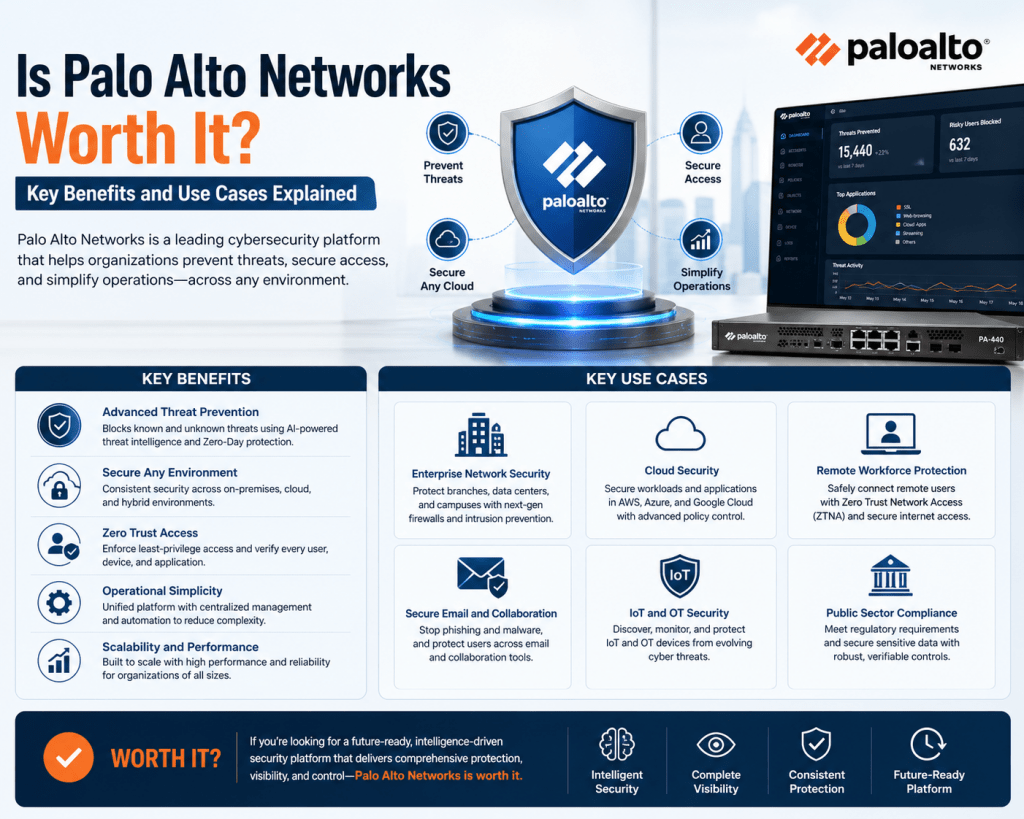
Network security has become one of the most critical operational pillars for modern enterprises as digital infrastructure continues to expand across cloud platforms, remote environments, and globally distributed systems. Organizations now depend heavily on interconnected applications, data-driven services, and real-time communication channels, all of which increase exposure to cyber threats. This dependency has elevated security from a technical concern to a core business requirement that directly impacts continuity, reputation, and financial stability.
Cybersecurity threats have evolved into highly coordinated operations driven by financial gain, political motives, and strategic disruption. Attackers no longer rely on isolated techniques but instead use multi-stage attack chains that combine phishing, credential theft, lateral movement, privilege escalation, and data exfiltration. These operations are designed to remain undetected for extended periods, often referred to as advanced persistent threats. The persistence and sophistication of such attacks make traditional defensive strategies insufficient, requiring more intelligent and adaptive security frameworks.
Transformation of the Traditional Network Perimeter Concept
Historically, network security relied heavily on the concept of a defined perimeter. Organizations built defenses around the assumption that internal networks were inherently trustworthy while external networks were untrusted. Firewalls served as the primary enforcement point, filtering traffic based on static rules such as IP addresses, ports, and protocols. This model was effective in simpler network environments where applications were centralized, and user access was limited to physical office locations.
However, the rise of mobile computing, cloud services, and remote work has significantly weakened the relevance of a fixed perimeter. Users now access corporate resources from multiple devices and locations, often bypassing traditional network boundaries entirely. Applications are hosted across hybrid infrastructures that span on-premises data centers and multiple cloud providers. In this environment, trust cannot be determined based on network location alone. This shift has rendered traditional perimeter-based security models increasingly obsolete.
Limitations of Early Firewall Architectures
Early firewall systems were primarily designed to inspect network traffic at a basic level, focusing on packet headers and predefined rule sets. These systems were typically deployed as standalone hardware appliances positioned at network gateways. While they provided a foundational level of protection, their capabilities were limited in scope and adaptability.
One of the major limitations of early firewall architectures was their inability to understand application context. They could not differentiate between legitimate and malicious use of the same port or protocol. As a result, attackers were able to bypass defenses by disguising malicious traffic as legitimate application activity. Additionally, these systems lacked visibility into encrypted traffic, which has become the dominant form of communication across modern networks.
Another significant limitation was scalability. As network traffic volumes increased, traditional firewalls struggled to maintain performance while applying complex rule sets. This often led to organizations disabling advanced security features in order to preserve throughput, thereby reducing overall protection effectiveness.
Rise of Integrated Security and Intelligent Inspection Models
As enterprise networks became more complex, firewall functionality began to evolve from isolated devices into integrated security systems embedded within broader network architectures. This transition introduced deeper inspection capabilities and more advanced traffic analysis techniques.
Modern security systems are designed to analyze traffic across multiple dimensions simultaneously. Instead of relying solely on packet-level information, they evaluate application behavior, user identity, and content characteristics. This multi-layered approach provides significantly greater visibility into network activity and enables more precise enforcement of security policies.
Integrated security models also support real-time analysis of encrypted traffic without requiring decryption at external points. This allows organizations to maintain visibility even as encryption becomes standard across most communication channels.
Impact of Cloud Computing on Security Architecture
The widespread adoption of cloud computing has fundamentally reshaped enterprise security architecture. Applications and workloads are no longer confined to centralized infrastructure but are distributed across multiple cloud environments. This introduces new challenges related to visibility, control, and policy enforcement.
In cloud environments, traditional perimeter-based defenses are ineffective because there is no single boundary to protect. Instead, security must be embedded directly into cloud workloads and service layers. This requires dynamic security systems capable of scaling alongside cloud resources and adapting to rapidly changing infrastructure.
Cloud adoption also introduces shared responsibility models, where security obligations are distributed between cloud providers and enterprise organizations. This complexity requires clear policy definitions and consistent enforcement mechanisms across all environments.
Emergence of Software-Defined Networking and Security Convergence
Software-defined networking has played a major role in transforming how enterprise networks are managed and secured. By decoupling control planes from data planes, organizations gain greater flexibility in configuring and managing network behavior.
This architectural shift has also led to the convergence of networking and security functions. Instead of treating security as a separate layer, it is now integrated directly into network infrastructure. This allows for more consistent policy enforcement and improved visibility across all traffic flows.
Security policies can now be defined centrally and applied dynamically across distributed environments. This reduces complexity and ensures that security controls remain consistent regardless of underlying infrastructure changes.
Adoption of Zero Trust Security Principles
The limitations of traditional trust models have led to the adoption of Zero Trust security principles, which fundamentally change how access decisions are made within enterprise environments. Zero Trust assumes that no user, device, or system should be inherently trusted, regardless of location.
Under this model, every access request must be continuously verified based on identity, context, and behavior. Authentication is not a one-time event but an ongoing process that evaluates risk in real time. This approach significantly reduces the risk of unauthorized access and lateral movement within networks.
Zero Trust also introduces the concept of micro-segmentation, where networks are divided into smaller security zones. Each zone is independently secured, limiting the ability of attackers to move freely within the environment if a breach occurs.
Protection of Critical Digital Assets and Data-Centric Security
Modern security strategies prioritize the protection of critical digital assets rather than attempting to secure entire networks uniformly. This data-centric approach focuses on identifying high-value assets such as sensitive information, mission-critical applications, and essential services.
Security controls are then concentrated around these assets to ensure maximum protection. This includes access restrictions, continuous monitoring, and enhanced threat detection capabilities. By focusing on what matters most to the organization, security resources are used more efficiently and effectively.
Data-centric security also aligns closely with regulatory compliance requirements, which often mandate strict protection for sensitive information such as financial data, personal records, and intellectual property.
Evolution of Threat Landscape and Attack Sophistication
Cyber threats have evolved significantly in both complexity and scale. Attackers now use advanced techniques that combine automation, artificial intelligence, and social engineering to bypass traditional defenses. Ransomware attacks, for example, often involve multiple stages,s including infiltration, encryption, and extortion.
Advanced persistent threats are particularly challenging because they operate quietly over long periods, often avoiding detection while gradually expanding access within target environments. These attacks are typically carried out by well-resourced groups that continuously adapt their methods.
The increasing sophistication of threats has made it necessary for security systems to move beyond reactive models and adopt proactive detection strategies.
Importance of Visibility and Continuous Monitoring
Visibility is a critical component of modern network security. Without comprehensive insight into network activity, organizations cannot effectively detect or respond to threats. Continuous monitoring enables real-time analysis of traffic patterns, user behavior, and system activity.
Modern security systems provide deep visibility into application usage, data flows, and access patterns. This information is used to identify anomalies and potential security incidents before they escalate.
Continuous monitoring also supports incident response and forensic analysis, allowing organizations to reconstruct attack timelines and understand the scope of security breaches.
Integration of Security into Business Operations
Security is no longer treated as an isolated technical function but as an integrated component of business operations. Organizations increasingly align security strategies with business objectives to ensure that protection mechanisms support operational efficiency.
This integration requires collaboration between security teams, IT departments, and business units. Security policies must be designed in a way that balances protection with usability, ensuring that security measures do not hinder productivity.
Foundation for Modern Security Architectures
The evolution of enterprise network security has established the foundation for modern intelligent security architectures. These systems combine visibility, automation, machine learning, and policy-driven enforcement to create adaptive security environments.
As organizations continue to expand their digital presence, the need for scalable, intelligent, and context-aware security systems will continue to grow. The transition from static perimeter defenses to dynamic, identity-driven security models represents a fundamental shift in how enterprises approach cybersecurity.
Evolution from Traditional Firewalls to Intelligent Security Platforms
Enterprise network security has undergone a significant architectural transformation, shifting from static rule-based firewalls to highly intelligent, context-aware security platforms. Traditional firewalls were primarily designed to enforce access control using basic parameters such as IP addresses, port numbers, and protocols. While effective in early network environments, this model lacks the flexibility and depth required to handle modern cyber threats.
Next-generation firewall systems represent a major advancement in this evolution. These platforms are designed to analyze traffic at multiple layers simultaneously, including application behavior, user identity, and content-level data. Instead of treating network packets as isolated units, they interpret traffic as part of broader communication contexts. This enables far more accurate decision-making and significantly improves threat detection capabilities.
The shift toward intelligent inspection reflects the growing complexity of enterprise environments, where applications are distributed across cloud platforms, users connect from multiple locations, and encrypted traffic dominates network communication. In such environments, static rule sets are insufficient to provide meaningful protection.
Single-Pass Processing Architecture and Performance Efficiency
One of the most important architectural innovations in modern firewall systems is single-pass processing. This design ensures that each network packet is analyzed only once, with all security functions applied in a unified processing pipeline.
In traditional multi-pass systems, traffic is processed separately for different security functions such as application identification, intrusion detection, and content filtering. This leads to increased latency and higher resource consumption. In contrast, single-pass architecture consolidates all inspection processes into a single workflow, improving efficiency and reducing performance overhead.
This approach is particularly important in high-throughput environments where large volumes of traffic must be processed in real time. By eliminating redundant inspection cycles, single-pass systems maintain consistent performance even when advanced security features are enabled.
Another advantage of this architecture is scalability. Organizations can add new security capabilities without requiring major infrastructure changes or performance trade-offs. This allows security systems to evolve alongside emerging threats without compromising operational efficiency.
Application-Centric Security and Traffic Classification
Modern firewall systems rely heavily on application-centric classification mechanisms to gain deeper visibility into network traffic. Unlike traditional systems that rely on port and protocol analysis, application-aware systems inspect packet behavior to identify the actual application generating the traffic.
This capability is essential in environments where applications frequently share common ports or use encrypted communication channels. Application identification enables organizations to distinguish between legitimate and potentially harmful use of the same underlying transport mechanisms.
Once applications are identified, security policies can be applied at a granular level. This allows organizations to permit, restrict, or monitor specific applications based on business requirements. For example, collaboration tools may be allowed while peer-to-peer file-sharing applications are restricted.
Application-level visibility also supports more accurate threat detection. Malicious activity can be identified even when it is embedded within legitimate application traffic, improving overall detection accuracy.
User Identity Integration and Context-Aware Security Enforcement
In addition to application awareness, modern firewall systems incorporate user identity as a core component of traffic analysis. By integrating with identity management systems, firewalls can map network activity directly to individual users or groups.
This enables identity-based security policies that go beyond traditional network-level controls. Instead of applying rules based on device or location, policies can be tailored to specific users or roles within the organization.
User identity integration is particularly important in environments with remote and mobile workforces. As users connect from multiple devices and locations, identity-based policies ensure consistent enforcement regardless of access point.
Context-aware enforcement also improves security visibility. By linking network activity to user identities, organizations can more easily detect suspicious behavior and investigate security incidents.
Content Inspection and Data Protection Mechanisms
Content-level inspection adds another layer of intelligence to modern firewall systems by analyzing the actual data being transmitted across the network. This includes detection of sensitive information, malicious payloads, and unauthorized data transfers.
Content inspection systems can identify patterns associated with data exfiltration attempts, malware delivery, and policy violations. This allows organizations to enforce data protection policies that extend beyond simple access control.
For example, sensitive documents can be automatically blocked from leaving the network or flagged for review if they are transmitted through unauthorized channels. This helps prevent data leakage and ensures compliance with regulatory requirements.
Content inspection is also critical for detecting embedded threats that may be hidden within seemingly legitimate files or communications.
Machine Learning Integration in Security Systems
Machine learning has become a foundational component of modern firewall architecture, enabling systems to detect and respond to threats in real time without relying solely on predefined signatures.
Instead of depending exclusively on known threat patterns, machine learning models analyze behavioral data to identify anomalies. This allows systems to detect previously unknown threats and adapt to evolving attack techniques.
Inline machine learning enables real-time inspection and decision-making within the traffic flow. Suspicious files or behaviors can be blocked immediately during processing, reducing exposure time and preventing malicious activity from reaching its target.
Predictive modeling techniques are also used to establish baseline behavior profiles for users, applications, and devices. Deviations from these baselines can trigger alerts or automated enforcement actions.
Automated Threat Intelligence and Signature Distribution
Modern firewall systems are connected to global threat intelligence networks that continuously collect data on emerging cyber threats. When new threats are identified, updated signatures and detection rules are distributed across all connected systems.
This automated distribution process ensures that security environments remain up to date with the latest threat information. Unlike traditional systems that require manual updates, modern architectures support near real-time propagation of security intelligence.
This capability is essential for defending against fast-moving threats such as ransomware outbreaks, botnet attacks, and zero-day exploits.
Automated updates significantly reduce the time between threat discovery and enforcement, minimizing exposure windows and improving overall resilience.
Behavioral Analytics and Anomaly Detection
Behavioral analytics play a critical role in identifying subtle indicators of compromise that may not be detected through traditional methods. By analyzing long-term patterns in network activity, security systems can establish what constitutes normal behavior.
Once baseline behavior is defined, deviations can be detected and investigated. These deviations may include unusual data transfers, unexpected application usage, or abnormal access patterns.
Behavioral analytics are particularly effective in detecting insider threats and compromised accounts. Since these threats often originate from legitimate credentials, traditional perimeter defenses are insufficient.
By focusing on behavior rather than static indicators, security systems gain the ability to detect sophisticated attacks that operate below conventional detection thresholds.
Policy-Based Security Enforcement Models
Modern firewall systems enforce policies based on multiple dimensions, including application type, user identity, content classification, and device behavior. This multi-dimensional approach allows for highly granular security control.
Policies are defined centrally and applied consistently across distributed environments. This ensures uniform enforcement regardless of where users or applications are located.
Policy-based enforcement reduces complexity by replacing static rule sets with dynamic, context-aware controls. This improves both security effectiveness and operational efficiency.
Centralized policy management also reduces the risk of configuration inconsistencies that can lead to security gaps.
Scalability and High-Performance Network Security
As enterprise networks continue to grow, scalability becomes a critical requirement for security systems. Modern firewall architectures are designed to handle large volumes of traffic without performance degradation.
This is achieved through optimized processing pipelines, hardware acceleration, and distributed system design. These techniques ensure that security enforcement remains efficient even under heavy load.
Scalability is particularly important in cloud and hybrid environments where traffic patterns can fluctuate rapidly. Security systems must be able to adjust dynamically to changing demands.
Load balancing mechanisms distribute traffic across multiple security nodes to prevent bottlenecks and ensure consistent performance.
Integration with Cloud and Hybrid Infrastructure
Modern enterprises operate across multiple infrastructure environments, including on-premises systems, private cloud deployments, and public cloud platforms. Firewall systems must therefore be capable of operating consistently across all these environments.
Virtual and cloud-native firewall deployments enable security policies to be extended into cloud workloads without requiring physical hardware. This ensures consistent enforcement across distributed environments.
Hybrid integration allows organizations to maintain unified security visibility while leveraging the scalability and flexibility of cloud platforms.
This seamless integration is essential for maintaining security posture in complex enterprise ecosystems.
Centralized Visibility and Security Monitoring
Comprehensive visibility into network activity is essential for effective security operations. Modern firewall systems provide centralized monitoring capabilities that aggregate data from across the enterprise.
This visibility enables security teams to detect anomalies, analyze traffic patterns, and investigate incidents in real time.
Centralized dashboards provide a unified view of security posture across all environments, improving situational awareness and decision-making.
Advanced analytics tools allow for correlation of events across multiple systems, helping identify complex attack patterns.
Adaptive Security and Continuous Improvement
Modern security systems are designed to adapt continuously to changing network conditions and evolving threat landscapes. This adaptability is achieved through machine learning, behavioral analysis, and automated policy updates.
Adaptive systems can modify detection models and enforcement rules based on observed behavior. This ensures that security remains effective even as environments change.
Continuous improvement mechanisms reduce reliance on manual configuration and allow systems to evolve alongside emerging threats.
Foundation of Intelligent Enterprise Security Systems
Next-generation firewall systems form the foundation of modern intelligent security architectures. By combining application awareness, user identity, content inspection, and machine learning, these systems provide comprehensive protection across complex environments.
Their ability to operate at scale, across hybrid infrastructures, and under dynamic conditions makes them essential components of enterprise cybersecurity strategies.
Expansion of Security Beyond Traditional Network Boundaries
Modern enterprise security has moved far beyond the confines of traditional network perimeters. In earlier architectures, security was concentrated at fixed entry and exit points, typically enforced through hardware-based firewalls positioned at the edge of corporate networks. However, the modern enterprise operates in a fundamentally different environment where applications, users, and data are distributed across cloud platforms, remote endpoints, and hybrid infrastructures.
This shift has transformed security into a distributed function that must operate consistently across multiple environments simultaneously. Instead of protecting a single boundary, organizations now protect a constantly shifting digital ecosystem where workloads can move between data centers, cloud providers, and edge locations. Security systems must therefore be dynamic, scalable, and capable of enforcing consistent policies regardless of where assets reside.
The result is a transition from perimeter-centric defense models to identity-driven, cloud-extended security architectures that prioritize visibility, adaptability, and continuous enforcement.
Role of Physical Firewall Systems in High-Performance Environments
Despite the rapid adoption of cloud-based security models, physical firewall appliances continue to play a critical role in enterprise infrastructure. These systems are typically deployed in environments where performance, latency control, and deterministic processing are essential.
Large data centers, financial transaction systems, and core enterprise networks often rely on physical security appliances to handle extremely high traffic volumes. These systems are optimized for deep packet inspection, high-speed threat prevention, and encrypted traffic analysis without compromising throughput.
Physical deployments are also important in environments where regulatory requirements demand strict control over infrastructure location and data handling. In such cases, dedicated hardware ensures that security processing remains fully under organizational control.
These systems act as foundational enforcement points, ensuring that all traffic entering or leaving critical infrastructure segments is inspected and validated before reaching internal systems.
Virtual Firewall Systems and Software-Defined Security Models
As enterprises increasingly adopt virtualization and cloud computing, security systems have evolved into software-based constructs that operate independently of physical hardware. Virtual firewalls are deployed within hypervisors, cloud instances, and software-defined environments, enabling flexible and scalable security enforcement.
This approach allows organizations to dynamically allocate security resources based on workload demand. Instead of relying on fixed-capacity hardware, virtual systems can scale up or down as traffic patterns change.
Virtual firewall deployment is particularly effective in environments where applications are frequently provisioned and decommissioned. Security policies can be automatically applied to new workloads without manual configuration, ensuring consistent protection across rapidly changing infrastructures.
Software-defined security models also enable tighter integration between networking and security layers. Policies can be centrally managed and distributed across multiple environments, reducing administrative complexity and improving operational efficiency.
Container Security and Microservices Protection
Modern application architectures increasingly rely on containerization and microservices frameworks to achieve scalability and agility. These environments introduce new security challenges due to their highly dynamic and distributed nature.
Container-based security systems are designed to operate at the level of individual application components rather than entire systems. This allows security policies to be applied directly to containers, pods, and microservices.
In Kubernetes-based environments, for example, security systems integrate directly with orchestration platforms to enforce policies automatically as workloads are created or scaled. This ensures that even transient workloads are protected throughout their lifecycle.
Container security also plays a critical role in preventing lateral movement within microservices architectures. By isolating workloads and enforcing strict communication policies, organizations can reduce the risk of compromise spreading across application components.
Cloud-Native Firewall Architectures and Distributed Enforcement
Cloud-native firewall systems extend security capabilities directly into cloud environments without requiring traditional hardware or virtual appliance deployment. These systems operate as distributed enforcement layers embedded within cloud infrastructure.
This architecture enables security policies to be applied consistently across globally distributed cloud workloads. Whether applications are hosted in one region or across multiple geographic locations, security enforcement remains uniform.
Cloud-native models also improve performance by processing traffic closer to the workload itself. This reduces latency and ensures that security inspection does not become a bottleneck for application performance.
In multi-cloud environments, cloud-native firewalls provide a unified security layer that spans multiple providers. This ensures consistent protection across diverse infrastructure ecosystems.
Identity-Centric Security and Access Governance
Identity has become a central pillar of modern enterprise security architecture. Instead of relying solely on network location or device characteristics, security systems now evaluate access requests based on verified user identity and contextual attributes.
Identity-centric security enables organizations to enforce policies based on roles, responsibilities, and behavioral patterns. This ensures that access decisions are aligned with organizational structure and operational requirements.
Integration with identity management systems allows firewall platforms to map network activity directly to users and groups. This improves visibility and accountability while enabling more precise access control.
In distributed environments, identity-based enforcement ensures consistent security regardless of how or where users connect. This is particularly important in remote and hybrid work scenarios.
Advanced Threat Intelligence Integration
Modern firewall systems are deeply integrated with global threat intelligence networks that continuously collect and analyze cybersecurity data. These networks aggregate information from multiple sources, including research labs, incident reports, and automated detection systems.
Threat intelligence is used to update detection models, refine security policies, and enhance behavioral analysis capabilities. When new threats are identified, updated rules are distributed rapidly across all connected systems.
This continuous intelligence loop ensures that security systems remain aligned with the latest threat landscape. It also reduces the time between threat discovery and mitigation, improving overall defense effectiveness.
In addition to reactive updates, threat intelligence systems also support predictive analysis, enabling organizations to anticipate emerging attack trends.
Security Automation and Orchestration at Enterprise Scale
As enterprise environments become more complex, manual security management becomes increasingly inefficient. Security automation and orchestration systems address this challenge by coordinating detection, analysis, and response activities across multiple layers of infrastructure.
When a threat is detected, automated systems can execute predefined response actions such as blocking traffic, isolating endpoints, or terminating sessions. These actions occur in real time, significantly reducing response latency.
Orchestration systems also integrate with external security tools, enabling coordinated responses across network security, endpoint protection, and cloud security platforms. This unified approach improves operational efficiency and reduces the workload on security teams.
Automation also extends to policy management, where security configurations can be dynamically updated based on changing conditions or detected risks.
Centralized Security Analytics and Visibility Platforms
Centralized analytics platforms play a critical role in providing enterprise-wide visibility into security operations. These systems aggregate data from multiple sources, including firewall logs, cloud environments, and network sensors.
By consolidating this information, security teams can analyze traffic patterns, detect anomalies, and investigate incidents across the entire infrastructure. This holistic view is essential for identifying complex attack chains that span multiple systems.
Advanced correlation capabilities allow security events to be linked together, revealing patterns that may not be visible when analyzing individual data points.
Centralized visibility also supports compliance reporting, audit preparation, and long-term security trend analysis.
Performance Optimization in Large-Scale Security Deployments
Enterprise-scale security systems must be capable of processing extremely high volumes of traffic without degrading performance. This requires careful optimization of processing pipelines, memory usage, and hardware utilization.
Modern firewall architectures use techniques such as parallel processing, hardware acceleration, and distributed load balancing to achieve high performance. These optimizations ensure that security inspection does not interfere with application responsiveness.
Scalability is also achieved through modular system design, allowing organizations to expand capacity incrementally as demand increases.
Performance optimization is particularly important in cloud environments where traffic volumes can fluctuate rapidly.
Policy Lifecycle Management and Security Governance
Managing security policies across large enterprises requires structured lifecycle management processes. These processes govern the creation, modification, deployment, and retirement of security rules.
Automated policy management systems help ensure consistency across distributed environments by synchronizing configurations across all enforcement points.
Version control and change tracking mechanisms provide visibility into policy evolution over time, supporting audit and compliance requirements.
Governance frameworks ensure that security policies remain aligned with organizational objectives and regulatory standards.
Adaptive Security Systems and Continuous Learning Models
Modern security architectures are increasingly adaptive, meaning they can adjust behavior based on observed conditions. These systems use machine learning and behavioral analytics to continuously refine detection models.
Adaptive systems can identify new patterns of malicious activity and update enforcement rules automatically. This reduces reliance on manual intervention and improves response speed.
Continuous learning models also help reduce false positives by refining detection accuracy over time.
This adaptability ensures that security systems remain effective in rapidly changing threat environments.
Resilience and Continuity in Security Infrastructure
Enterprise security systems must be designed for resilience, ensuring continuous operation even under adverse conditions. This includes redundancy, failover mechanisms, and distributed architecture models.
If one security node fails, traffic is automatically redirected to backup systems without interruption. This ensures that protection remains active even during system outages or maintenance events.
Disaster recovery mechanisms also ensure that security configurations and policies can be restored quickly in the event of system failure.
Resilience is a critical requirement for maintaining business continuity in mission-critical environments.
Long-Term Direction of Enterprise Security Systems
The future of enterprise security is moving toward fully integrated, intelligent systems capable of autonomous operation. These systems will rely heavily on artificial intelligence, machine learning, and real-time analytics to make security decisions without human intervention.
Security will increasingly become embedded into every layer of infrastructure, from application code to network transport layers. This deep integration will enable more precise and responsive protection mechanisms.
Over time, security systems will evolve from reactive defense tools into proactive intelligence platforms capable of predicting and preventing threats before they occur.
Enterprise security architecture is, therefore, transitioning into a continuously evolving ecosystem where adaptability, intelligence, and automation define long-term effectiveness.
Conclusion
Enterprise network security has reached a point where it can no longer be treated as a supporting technical function. It has become a foundational layer of digital business operations, shaping how organizations design infrastructure, manage risk, and ensure continuity in highly distributed environments. The evolution from traditional perimeter-based defenses to intelligent, adaptive, and cloud-integrated security systems reflects a broader shift in how enterprises understand trust, access, and resilience in modern computing environments.
One of the most important outcomes of this evolution is the disappearance of the fixed network perimeter. In earlier computing models, security was built around clearly defined boundaries where internal systems were considered trusted and external networks were considered hostile. Firewalls acted as gatekeepers at these boundaries, filtering traffic based on static rules. However, this model no longer aligns with reality. Today’s enterprise environments extend across multiple cloud platforms, remote work environments, mobile devices, and third-party integrations. Data flows continuously between these environments, making it impossible to rely on a single perimeter for protection. As a result, security has become distributed, identity-driven, and continuously enforced.
This transformation has placed identity at the center of modern security design. Instead of relying on location or network position, access decisions are now based on verified user identity, contextual information, and behavioral patterns. This shift allows organizations to enforce more precise control over who can access specific applications, data, and systems. Identity-based enforcement also improves accountability, since every action within the network can be traced back to a specific user or entity. In environments where users operate from multiple devices and locations, this model ensures consistent security enforcement regardless of access point.
Another major development is the integration of intelligence directly into security systems. Modern firewalls and network security platforms are no longer simple filtering tools. They function as analytical engines capable of understanding application behavior, detecting anomalies, and identifying malicious activity in real time. By analyzing traffic at multiple layers simultaneously, these systems provide deep visibility into how applications are used, how users interact with resources, and how data flows across the network. This level of insight enables more accurate security decisions and reduces reliance on static rule sets that cannot adapt to changing conditions.
Machine learning and behavioral analytics have further strengthened this intelligence-driven approach. Instead of relying solely on known threat signatures, modern systems learn from patterns of normal activity and identify deviations that may indicate potential threats. This is particularly important in detecting advanced attacks that are designed to evade traditional detection methods. By focusing on behavior rather than predefined indicators, security systems can identify previously unknown threats and respond in real time. This capability significantly enhances detection accuracy and reduces the time required to identify and mitigate attacks.
The rise of cloud computing has also played a major role in reshaping enterprise security. As organizations migrate workloads to public and private cloud environments, security systems must adapt to highly dynamic and distributed infrastructures. Traditional hardware-based security models are no longer sufficient in environments where applications can be deployed, scaled, and decommissioned within minutes. Cloud-native security models address this challenge by embedding security controls directly into cloud environments, ensuring consistent protection regardless of where workloads reside. This approach enables organizations to maintain visibility and control across multi-cloud architectures without introducing operational complexity.
At the same time, virtualization and containerization have introduced new layers of abstraction within enterprise systems. Applications are no longer monolithic but are instead built using microservices and containerized components that operate independently. This architectural shift requires security systems to operate at a much more granular level. Instead of protecting entire networks or systems, security must now be enforced at the level of individual workloads and application components. This has led to the development of container-aware security models that integrate directly with orchestration platforms, ensuring that security policies are automatically applied as applications scale and evolve.
Automation has become another essential element of modern security operations. As enterprise environments grow in complexity, manual management of security policies and incident response processes becomes increasingly inefficient. Automated systems now handle tasks such as threat detection, policy enforcement, and incident response with minimal human intervention. When a threat is detected, automated responses can be triggered instantly, reducing response time and limiting potential damage. This level of automation not only improves efficiency but also reduces the likelihood of human error in security operations.
Visibility remains a critical requirement in all modern security architectures. Without comprehensive insight into network activity, applications, and user behavior, it becomes impossible to detect or respond to threats effectively. Modern security systems provide centralized visibility across distributed environments, allowing security teams to monitor activity in real time and analyze historical trends. This visibility is essential for identifying complex attack patterns that span multiple systems and stages. It also supports forensic analysis, enabling organizations to reconstruct incidents and understand their impact.
Scalability and performance optimization are equally important in enterprise security design. As data volumes and network traffic continue to grow, security systems must be capable of handling large-scale operations without introducing latency or bottlenecks. Modern architectures achieve this through optimized processing models, distributed system design, and hardware acceleration. These improvements ensure that security enforcement remains efficient even under high traffic conditions, allowing organizations to maintain both performance and protection simultaneously.
Another important aspect of modern security is resilience. Enterprise systems must remain operational even in the event of failures, attacks, or infrastructure disruptions. Redundant architectures, failover mechanisms, and distributed deployment models ensure that security systems can continue functioning under adverse conditions. This resilience is critical for maintaining business continuity in environments where downtime can have significant financial and operational consequences.
Over time, security has also become more closely integrated with overall business strategy. It is no longer treated as a separate technical domain but as an essential part of digital transformation initiatives. Organizations now design security systems in alignment with business objectives, ensuring that protection mechanisms support operational efficiency rather than hinder it. This integration allows security to become an enabler of innovation rather than a barrier to it.
Looking forward, enterprise security is expected to continue evolving toward more autonomous and intelligent systems. Artificial intelligence, machine learning, and real-time analytics will play increasingly important roles in enabling systems to make independent security decisions. Over time, security platforms will transition from reactive tools into proactive intelligence systems capable of predicting and preventing threats before they occur.
Ultimately, the future of enterprise network security lies in continuous adaptation. As digital environments become more complex and interconnected, security systems must evolve in parallel. The combination of identity-driven access control, intelligent threat detection, cloud-native architectures, and automated response mechanisms represents a comprehensive approach to modern cybersecurity. This integrated model ensures that organizations can operate securely in highly dynamic environments while maintaining the flexibility and scalability required for long-term growth.