Help desk managers play a central role in maintaining the operational stability of modern organizations that rely heavily on digital infrastructure. They are responsible for coordinating technical support teams, ensuring the timely resolution of IT issues, and maintaining service continuity across hardware, software, and network systems. In environments where downtime directly impacts productivity and revenue, this position becomes a critical layer of organizational resilience. The role has evolved significantly from basic supervisory oversight into a strategic function that aligns IT support operations with broader business objectives. Many professionals in this field begin their careers in technical support roles and gradually transition into leadership positions as they gain experience handling complex troubleshooting scenarios, user escalation processes, and service workflow optimization.
Core Responsibilities and Operational Scope of Help Desk Leadership
The responsibilities of a help desk manager extend far beyond simple task delegation. At the operational level, they are responsible for structuring workflows that ensure incoming support requests are categorized, prioritized, and resolved within defined service expectations. This involves designing escalation paths that allow complex issues to be handled by appropriately skilled personnel without disrupting overall service efficiency. A significant portion of the role is focused on team coordination, where managers must balance workload distribution, monitor response times, and ensure consistent service quality across all support channels. They also act as the primary communication bridge between technical teams and upper management, translating technical challenges into business-impact language. In many organizations, help desk managers also oversee documentation standards, ensuring that incident records, resolution steps, and knowledge bases remain accurate and accessible for future reference.
Career Progression Pathways Toward Help Desk Management
The pathway to becoming a help desk manager is typically built on progressive experience within IT support environments. Most professionals start as support technicians or service desk analysts, where they develop foundational skills in diagnosing and resolving technical issues. Over time, exposure to more complex incidents such as network disruptions, system failures, and enterprise application errors contributes to a deeper technical understanding. As individuals gain experience, they often take on informal leadership responsibilities such as mentoring junior staff or coordinating shift operations. These experiences gradually build the management capabilities required for formal leadership roles. In some cases, professionals transition into help desk management after exploring specialized IT roles such as systems administration or network support, bringing broader technical insight into leadership positions.
Expanding Role of Leadership and Decision-Making in IT Support Structures
Modern help desk managers are increasingly expected to function as decision-makers rather than just supervisors. This shift is driven by the growing complexity of IT ecosystems, where multiple interconnected systems require coordinated oversight. Managers must evaluate performance metrics, identify recurring technical issues, and implement process improvements that enhance overall efficiency. Decision-making often involves selecting support methodologies, refining escalation procedures, and adjusting staffing strategies based on workload patterns. In addition, help desk managers are frequently involved in incident response planning, ensuring that organizations are prepared to handle major disruptions with minimal impact. Their leadership directly influences user satisfaction levels, system uptime, and the overall perception of IT service quality within the organization.
Compensation Overview and Market Expectations for Help Desk Managers
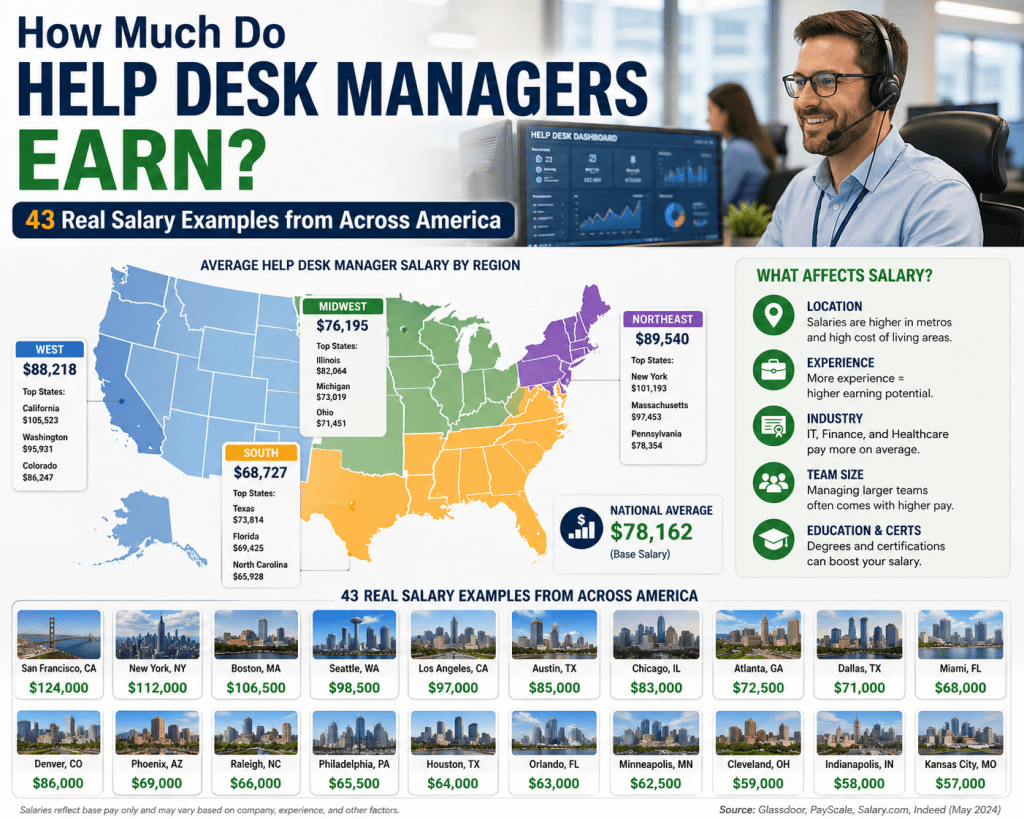
Compensation for help desk managers varies significantly based on factors such as geographic location, organizational size, industry type, and professional experience. In general, salaries tend to reflect the level of responsibility associated with managing both technical operations and human resources within IT support teams. Entry-level management positions typically start at moderate salary levels, but experienced professionals with strong leadership backgrounds and technical expertise can achieve substantially higher compensation. Across different markets, earnings often reflect the complexity of IT environments, with organizations that rely heavily on digital infrastructure offering higher compensation to attract skilled managers.
Key Factors Influencing Salary Levels in Help Desk Management
Several factors influence earning potential in help desk management roles. Experience remains one of the most significant contributors, as professionals with years of hands-on technical and supervisory experience are better equipped to handle complex operational challenges. Education also plays a role, particularly when combined with practical IT experience, as many organizations prefer candidates with formal academic backgrounds in technology or information systems. Industry specialization can further impact compensation, as sectors such as enterprise services, software development, and large-scale infrastructure operations often require advanced technical coordination and offer higher pay structures.
Evolution of Help Desk Functions in Digital Infrastructure Ecosystems
The role of help desk management has evolved alongside advancements in digital infrastructure. Traditional help desk environments primarily focused on resolving basic technical issues such as hardware malfunctions or software installation problems. However, modern IT environments require support teams to manage complex cloud systems, distributed networks, and integrated enterprise platforms. This evolution has expanded the responsibilities of help desk managers, requiring them to understand a wider range of technologies and coordinate support across multiple systems simultaneously.
Importance of Organizational Structure in Help Desk Operations
The effectiveness of a help desk team is heavily influenced by its organizational structure. Help desk managers are responsible for designing team hierarchies that ensure efficient task allocation and clear reporting lines. In well-structured environments, support teams are often divided into tiers based on technical complexity, allowing simpler issues to be resolved quickly while more advanced problems are escalated appropriately. This structure reduces bottlenecks and improves overall response efficiency.
Technical Understanding Required for Effective Leadership
Although help desk managers are not always required to perform hands-on technical troubleshooting, a strong understanding of IT systems is essential for effective leadership. This includes familiarity with operating systems, network configurations, enterprise applications, and system monitoring tools. Technical awareness allows managers to make informed decisions when assigning tasks or evaluating incident severity. It also enables them to communicate effectively with both technical staff and non-technical stakeholders.
Growing Importance of Strategic IT Support Management
As organizations become increasingly dependent on digital systems, help desk management has transitioned into a strategic function rather than a purely operational one. Managers are now expected to contribute to long-term planning, including resource allocation, technology adoption strategies, and process optimization initiatives. Their insights into system performance and user experience make them valuable contributors to organizational decision-making.
Real-World Salary Distribution Patterns Across Help Desk Management Roles
Help desk manager salaries in the real world do not follow a single uniform structure. Instead, they are shaped by a combination of geography, organizational maturity, IT infrastructure complexity, and internal workforce demands. When analyzing compensation trends across different regions, a clear pattern emerges: metropolitan areas with dense enterprise ecosystems tend to offer significantly higher pay bands compared to smaller cities or regions with limited technological infrastructure. This is not simply a matter of cost-of-living adjustments, but also reflects the operational demands placed on IT support teams in high-scale environments. Organizations operating large digital ecosystems require managers capable of handling high ticket volumes, complex escalation hierarchies, and multi-layered system dependencies, which naturally increases compensation levels.
In contrast, smaller organizations or those with simpler IT infrastructures often operate with leaner support teams, resulting in more modest salary structures. However, even within lower-cost regions, experienced help desk managers with strong technical and leadership capabilities can still command competitive salaries. The spread between entry-level managerial roles and senior help desk leadership positions can be substantial, reflecting the increasing responsibility placed on experienced professionals who are expected to not only manage teams but also optimize entire support ecosystems.
Impact of Geographic Location on Compensation Variability
Geographic location remains one of the strongest determinants of salary variation in help desk management. Urban technology hubs tend to offer significantly higher compensation due to both demand for skilled IT leadership and the complexity of enterprise systems operating within those regions. Cities with strong concentrations of financial institutions, technology firms, healthcare networks, and global enterprises typically require highly responsive IT support structures. As a result, help desk managers in these environments are often responsible for coordinating larger teams and managing more advanced infrastructure, including cloud-based systems, hybrid environments, and real-time service platforms.
In contrast, regions with fewer enterprise-level organizations may not require the same level of operational complexity. This does not mean that the role is less important, but rather that the scale of responsibility is different. Even within the same country, salary differences can be significant depending on whether the organization operates at a local, national, or global level. The disparity in compensation reflects the difference in expectations placed on help desk managers, particularly in terms of system uptime requirements, service-level agreements, and cross-departmental coordination responsibilities.
Experience-Based Salary Progression and Career Growth Patterns
Experience plays a critical role in determining salary growth for help desk managers. Early-stage managers typically transition from technical support roles where their primary focus was on troubleshooting and resolving user issues. At this stage, managerial responsibilities are often limited to supervising small teams or specific shifts. As experience accumulates, these professionals begin to handle larger teams, more complex workflows, and higher-stakes operational decisions.
Mid-level help desk managers generally take ownership of performance monitoring, escalation management, and process optimization. At this stage, salary increases are often tied to measurable improvements in team efficiency, reduction in ticket resolution times, and improved user satisfaction metrics. Senior-level managers, on the other hand, are frequently involved in strategic planning, budget allocation, and organizational IT alignment. Their compensation reflects not only technical expertise but also their ability to influence business outcomes through effective IT service management.
The progression is rarely linear, as career advancement often depends on a combination of leadership ability, technical depth, and organizational opportunity. In some cases, professionals may plateau if they do not develop additional skills beyond technical troubleshooting, while others accelerate their career trajectory by gaining expertise in IT governance, process frameworks, or enterprise system management.
Influence of Industry Sector on Salary Structures
Industry type plays a significant role in determining compensation levels for help desk managers. Certain industries rely heavily on uninterrupted IT services, making support leadership a critical operational function. For example, organizations in financial services require highly reliable IT systems due to the sensitivity and time-critical nature of transactions. Similarly, healthcare organizations depend on stable digital systems to manage patient data, diagnostics, and communication systems. In such environments, help desk managers often operate under strict performance expectations and must ensure near-continuous system availability.
Technology-focused companies also tend to offer higher compensation due to the complexity of the systems they manage. These organizations often operate large-scale cloud environments, distributed applications, and global user bases, requiring help desk managers to coordinate support across multiple time zones and technical environments. On the other hand, industries with less dependence on digital infrastructure may offer more moderate compensation, although the role remains essential for day-to-day operational continuity.
Skill Development and Its Direct Impact on Earning Potential
Skill development is one of the most important factors influencing long-term earning potential in help desk management. Technical knowledge alone is no longer sufficient to maximize salary growth in this field. Modern help desk managers are expected to combine technical expertise with strong organizational, analytical, and communication skills.
One of the most valuable skill areas is workflow optimization, which involves analyzing support processes and identifying inefficiencies that slow down issue resolution. Managers who can streamline operations often contribute directly to improved service delivery and reduced operational costs. Another important skill area is performance analytics, where managers use data to monitor team effectiveness, identify bottlenecks, and implement corrective strategies.
Communication skills are equally important, particularly in environments where help desk managers must interact with both technical teams and senior leadership. The ability to translate technical issues into business-relevant insights enhances decision-making and increases a manager’s perceived value within the organization. Over time, professionals who develop a balanced skill set across technical, managerial, and analytical domains tend to experience faster salary growth compared to those who specialize narrowly in one area.
Operational Challenges That Influence Compensation Structures
Help desk managers often operate in high-pressure environments where system reliability and user satisfaction are closely monitored. One of the key challenges is managing fluctuating ticket volumes, which can vary significantly depending on system changes, outages, or organizational growth. During peak periods, managers must ensure that support teams remain responsive while maintaining quality standards.
Another challenge involves handling escalation scenarios where complex technical issues require coordination across multiple departments. These situations demand strong decision-making abilities and a deep understanding of system architecture. Additionally, help desk managers must deal with evolving technology landscapes, where new tools, platforms, and security requirements are constantly introduced. The ability to adapt quickly to these changes directly impacts operational effectiveness and, in many cases, salary progression.
Role of Performance Metrics in Salary Evaluation
Performance metrics are widely used to evaluate the effectiveness of help desk managers. Common indicators include response time, resolution time, ticket backlog size, and user satisfaction ratings. These metrics provide measurable insights into how well a support team is functioning under managerial supervision.
In many organizations, compensation reviews are closely tied to these performance indicators. Managers who consistently maintain high service levels and improve operational efficiency are more likely to receive salary increases and advancement opportunities. Conversely, persistent inefficiencies or failure to meet service expectations can limit career progression. This performance-driven structure ensures that compensation is closely aligned with organizational outcomes rather than tenure alone.
Importance of Leadership Style in IT Support Environments
Leadership style plays a significant role in determining both team performance and managerial success. Help desk managers who adopt a structured yet flexible leadership approach tend to achieve better results compared to those who rely solely on rigid operational control. Effective leaders understand the importance of balancing task delegation with team empowerment, allowing support staff to develop their own problem-solving capabilities while maintaining accountability.
A strong leadership approach also contributes to employee retention, which is a critical factor in maintaining operational stability. High turnover rates in IT support teams can lead to knowledge gaps and reduced efficiency, both of which negatively impact service quality. Managers who foster a positive and supportive work environment often see improvements in both team performance and career advancement opportunities.
Technological Evolution and Its Influence on Managerial Expectations
The rapid evolution of technology continues to reshape the expectations placed on help desk managers. With the increasing adoption of cloud computing, virtualization, and remote support systems, the scope of IT support has expanded significantly. Help desk managers are now expected to oversee hybrid environments that integrate on-premises infrastructure with cloud-based services.
This shift requires continuous learning and adaptation, as traditional support models are no longer sufficient for modern IT ecosystems. Managers must stay updated on emerging technologies and ensure that their teams are equipped to handle new types of technical issues. This ongoing evolution contributes to higher compensation expectations for professionals who can successfully navigate complex and changing environments.
Advanced Career Mobility and Long-Term Growth Trajectories in Help Desk Management
Help desk management roles increasingly serve as a gateway into broader IT leadership pathways. While the position itself is centered on operational oversight of support teams, the exposure it provides to enterprise systems, service management frameworks, and cross-departmental coordination creates strong foundations for advancement into higher-level roles. Over time, many professionals move into positions such as IT operations management, service delivery leadership, infrastructure management, or even broader information systems governance roles.
This upward mobility is not accidental but rather a result of the strategic nature of modern help desk environments. Managers are routinely exposed to business-critical systems, incident escalation workflows, and service-level governance structures. These experiences gradually shift their perspective from reactive problem-solving to proactive system optimization. As a result, professionals who excel in help desk leadership often develop the capability to oversee entire IT service ecosystems rather than just frontline support teams.
The speed of career progression depends heavily on how quickly individuals expand their responsibilities beyond traditional support functions. Those who remain focused solely on ticket resolution and basic team supervision may experience slower advancement. In contrast, professionals who actively engage in process redesign, service automation initiatives, and cross-functional IT planning tend to move into higher compensation brackets more rapidly.
Strategic Value of Help Desk Leadership in Enterprise Environments
In large-scale enterprise environments, help desk managers are not simply operational supervisors but key contributors to organizational stability. Their work directly impacts employee productivity, customer satisfaction, and system reliability. Because of this, their role increasingly intersects with strategic IT planning and digital transformation initiatives.
Enterprises rely on help desk leadership to identify recurring system inefficiencies, highlight infrastructure weaknesses, and provide feedback on user experience challenges. This information is often used to guide technology investment decisions and system upgrades. In this sense, help desk managers act as a bridge between end users and technical architecture teams, translating real-world operational issues into actionable improvement strategies.
Their influence extends into risk management as well. By monitoring incident patterns and service disruptions, help desk managers can contribute to identifying potential system vulnerabilities before they escalate into critical failures. This proactive contribution significantly increases their organizational value, particularly in industries where downtime has financial or regulatory consequences.
Workforce Management Complexity and Organizational Scaling Challenges
As organizations grow, the complexity of managing help desk teams increases significantly. What begins as a small support unit often evolves into a multi-tiered service structure that spans multiple regions, time zones, and technical domains. Help desk managers must adapt their leadership approach to accommodate this scaling complexity.
One of the primary challenges is maintaining consistency in service delivery across distributed teams. This requires standardized procedures, clearly defined escalation paths, and unified communication systems. Managers must also ensure that all team members, regardless of location or experience level, adhere to the same operational standards.
Another layer of complexity arises from workforce diversity in terms of technical skill levels. In larger teams, help desk managers must coordinate between entry-level technicians, experienced specialists, and senior engineers. Balancing workload distribution across these varying skill sets requires careful planning and continuous performance monitoring.
Additionally, scheduling becomes increasingly complex in global environments where support coverage must be maintained around the clock. Help desk managers often design shift rotations and coverage models that ensure continuous availability without overburdening individual team members. This operational balancing act is a key component of advanced managerial competence.
Impact of Digital Transformation on Help Desk Management Roles
Digital transformation has significantly reshaped the responsibilities of help desk managers. As organizations migrate toward cloud-based infrastructure, remote work models, and automated service systems, traditional support structures are being replaced with more dynamic and scalable frameworks.
Help desk managers are now required to oversee environments where automation plays a growing role in incident detection and resolution. Routine tasks that were once handled manually are increasingly managed through automated workflows and intelligent monitoring systems. This shift does not reduce the importance of managerial roles; instead, it changes their focus toward oversight, optimization, and exception management.
In this evolving landscape, help desk managers must understand how automation integrates with human support functions. They are responsible for ensuring that automated systems are properly configured, monitored, and adjusted based on performance outcomes. Additionally, they must manage the transition of team roles as automation reduces manual workload in certain areas while increasing demand for analytical and supervisory capabilities.
Financial Growth Patterns and Compensation Acceleration Factors
Salary growth in help desk management is influenced by both vertical and lateral development factors. Vertical growth refers to promotions into higher leadership roles, while lateral growth involves expanding expertise across multiple technical and operational domains. Professionals who combine both forms of growth typically experience the highest compensation increases over time.
One of the key acceleration factors is specialization in high-demand technical environments. Help desk managers who develop expertise in cloud infrastructure, enterprise networking, cybersecurity operations, or large-scale system monitoring often command higher salaries due to their ability to manage complex environments.
Another important factor is the demonstrated impact on organizational efficiency. Managers who successfully reduce resolution times, improve user satisfaction scores, or optimize resource allocation are often recognized with salary adjustments or performance-based incentives. These measurable outcomes provide tangible evidence of leadership effectiveness.
Additionally, professionals who take initiative in implementing process improvements or introducing new support methodologies tend to experience faster financial progression. Organizations place high value on individuals who not only maintain operations but also actively enhance them.
Evolving Technical Expectations in Modern Support Leadership
The technical expectations placed on help desk managers have expanded significantly in recent years. While deep technical troubleshooting may no longer be a primary responsibility, a strong understanding of system architecture, network dependencies, and application environments remains essential.
Modern support ecosystems often involve hybrid infrastructure models combining on-premises systems with cloud-based platforms. Help desk managers must understand how these components interact to effectively coordinate incident response and service continuity. They must also be familiar with monitoring systems that provide real-time insights into system performance and availability.
In addition, security considerations have become increasingly important. Help desk managers are often involved in enforcing access control policies, managing authentication issues, and ensuring compliance with organizational security standards. This adds another layer of responsibility that directly impacts operational decision-making.
Human Resource Dynamics and Team Development Strategies
Beyond technical oversight, help desk managers are deeply involved in human resource management within IT support teams. This includes recruitment input, onboarding processes, training programs, and performance evaluations. Effective managers recognize that team capability directly influences service quality and operational efficiency.
Training is particularly important in help desk environments due to the constant evolution of technology. Managers must ensure that team members remain updated on new systems, tools, and troubleshooting methodologies. This often involves structured training programs, peer mentoring systems, and continuous learning initiatives.
Performance management is another critical area. Help desk managers must evaluate individual and team performance using both quantitative metrics and qualitative assessments. This includes analyzing response times, resolution accuracy, communication effectiveness, and customer satisfaction levels. Balanced evaluation systems help ensure fairness while maintaining high operational standards.
Employee motivation and retention also play a significant role in long-term team stability. High turnover rates can disrupt service continuity and increase operational costs. As a result, effective help desk managers focus on creating supportive work environments that encourage professional growth and job satisfaction.
Operational Efficiency Optimization in High-Volume Support Environments
In high-volume IT support environments, operational efficiency becomes a central concern for help desk managers. The ability to manage large numbers of incoming support requests while maintaining quality standards requires carefully designed workflows and prioritization systems.
One of the key strategies involves categorizing incidents based on severity and impact. This ensures that critical issues affecting system availability or business operations are addressed immediately, while lower-priority requests are handled within standard timeframes. Effective prioritization helps prevent system overload and reduces the risk of service disruption.
Another important efficiency factor is knowledge management. Help desk managers are responsible for ensuring that teams have access to accurate and up-to-date documentation. Well-maintained knowledge bases allow technicians to resolve issues more quickly and reduce dependency on escalation paths.
Automation also plays a growing role in improving efficiency. Automated ticket routing, system alerts, and diagnostic tools help reduce manual workload and improve response times. Help desk managers must oversee the integration of these tools to ensure they align with operational objectives.
Future Outlook for Help Desk Management Careers in Evolving IT Landscapes
The future of help desk management is closely tied to the continued evolution of digital infrastructure. As organizations adopt more advanced technologies, the role of support leadership will continue to shift toward strategic oversight and system optimization.
Artificial intelligence, machine learning, and predictive analytics are expected to play a larger role in IT support environments. These technologies will enable more proactive incident detection and resolution, reducing the volume of routine support tasks. As a result, help desk managers will increasingly focus on analyzing system behavior, improving service design, and managing complex hybrid environments.
Despite increased automation, the need for human leadership in IT support will remain strong. Complex decision-making, team coordination, and strategic planning cannot be fully automated. Help desk managers will continue to play a critical role in ensuring that technology systems operate efficiently while aligning with organizational goals.
The long-term trajectory of the profession suggests continued upward mobility for skilled professionals who adapt to changing technological environments and expand their expertise beyond traditional support boundaries.
Conclusion
Help desk management sits at the intersection of technical operations and organizational leadership, which makes it one of the more multidimensional roles in modern IT environments. While it is often introduced as an extension of technical support, the reality is that the position carries far broader responsibilities. It influences how efficiently an organization responds to internal and external technical issues, how effectively teams collaborate under pressure, and how consistently technology services support business operations. Because of this, understanding the full scope of the role provides a clearer picture of why compensation levels vary so widely and why career progression in this field can be both stable and highly rewarding for those who develop the right combination of skills.
One of the most important takeaways from analyzing help desk management is that salary is not determined by a single factor. Instead, it is shaped by a layered combination of experience, leadership capability, technical understanding, and environmental complexity. A help desk manager working in a small organization with a limited IT footprint will naturally operate under different expectations compared to someone managing a large enterprise environment with distributed systems, cloud infrastructure, and high-volume support demands. The difference in operational pressure directly translates into differences in compensation structures.
Experience remains one of the strongest drivers of salary growth, but it is not just about time spent in IT support. It is about exposure to increasingly complex scenarios and the ability to handle escalation-heavy environments. Professionals who have progressed through technical roles before stepping into management tend to perform better because they understand both the technical and human aspects of IT service delivery. This dual understanding allows them to make more informed decisions when prioritizing incidents, allocating resources, or redesigning workflows. Over time, this capability becomes a key differentiator between average managers and high-performing ones.
Leadership capability also plays a central role in determining long-term success. Help desk managers are responsible for guiding teams that often operate under pressure, particularly during system outages or high-volume incident periods. In these situations, technical knowledge alone is not enough. The ability to maintain structure, manage stress, and ensure clear communication becomes essential. Strong leaders are able to stabilize team performance even in chaotic conditions, which directly impacts service quality and organizational reliability. This type of leadership is highly valued because it reduces downtime, improves user satisfaction, and strengthens overall IT resilience.
Technical understanding continues to be important even after transitioning into management. While hands-on troubleshooting may decrease over time, the ability to interpret technical issues and understand system dependencies remains essential. Help desk managers are often required to make decisions that affect network stability, application performance, and infrastructure reliability. Without a strong technical foundation, it becomes difficult to evaluate risk accurately or prioritize incidents effectively. This is especially true in environments where multiple systems are interconnected, and a single failure can cascade into broader operational disruption.
Another key factor influencing career development is the increasing complexity of modern IT environments. Organizations today rely heavily on cloud-based systems, remote access infrastructure, integrated communication platforms, and automated service tools. This shift has expanded the scope of help desk management significantly. Managers are no longer focused solely on internal support desks but are now responsible for coordinating across hybrid environments that span multiple technologies and platforms. This requires continuous learning and adaptability, as tools and systems evolve rapidly. Professionals who stay current with these changes are better positioned to move into higher-paying roles.
Industry context also plays a major role in shaping compensation and career opportunities. Sectors that rely heavily on uninterrupted digital operations tend to place greater value on help desk leadership. In such environments, even minor disruptions can have financial or operational consequences. As a result, organizations are more willing to invest in experienced managers who can ensure stability and efficiency. Conversely, industries with less dependency on real-time systems may offer more moderate compensation, even though the core responsibilities remain similar in structure.
Another important dimension is the shift from reactive support to proactive service management. Modern help desk leaders are increasingly expected to identify patterns in incidents, implement preventative measures, and contribute to long-term system improvements. This requires a more analytical mindset, where performance data is used to guide decision-making. Managers who can reduce recurring issues and improve first-contact resolution rates often demonstrate higher value within their organizations. This directly contributes to career advancement and salary growth over time.
Communication skills also have a significant impact on effectiveness in this role. Help desk managers act as intermediaries between technical teams and business stakeholders. They must translate technical issues into business implications and ensure that expectations are clearly understood on both sides. Poor communication can lead to misaligned priorities, inefficient workflows, and reduced trust in IT services. Strong communicators, on the other hand, help create smoother collaboration across departments, which enhances overall organizational performance.
Team development is another area that influences long-term success. A well-trained and well-supported help desk team operates more efficiently and requires fewer escalations. Managers who invest in training, mentoring, and skill development tend to build stronger teams that can handle higher workloads with greater accuracy. This not only improves operational performance but also contributes to employee retention, which is a critical factor in maintaining service continuity.
Over time, the role of help desk management continues to evolve alongside technological advancements. Automation, artificial intelligence, and predictive analytics are reshaping how support services operate. While these technologies reduce manual workload in some areas, they also increase the need for oversight, configuration management, and exception handling. Help desk managers are increasingly responsible for ensuring that automated systems function correctly and integrate smoothly with human support processes. This adds a new layer of responsibility that further elevates the strategic importance of the role.
Ultimately, help desk management is a profession defined by adaptability, coordination, and continuous improvement. It requires balancing technical knowledge with leadership ability, operational discipline with strategic thinking, and reactive support with proactive planning. For those who develop across all these dimensions, the role offers strong long-term career stability and meaningful opportunities for advancement.