
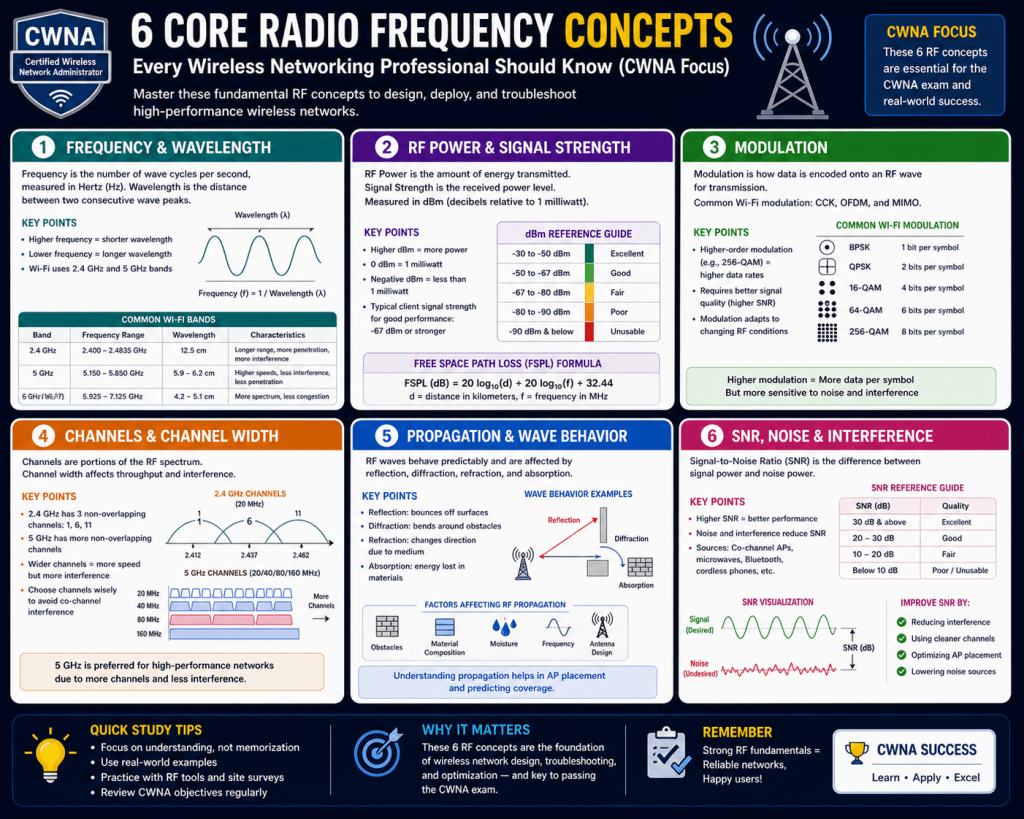
The increasing integration of information technology systems with operational environments has reshaped how modern networks are designed, deployed, and maintained. In earlier industrial models, operational systems were largely isolated from traditional enterprise IT infrastructure. Machines, sensors, and control systems operated within closed environments where communication was predictable, static, and often proprietary. Wireless communication, when used, was limited in scope and typically handled by specialized engineering teams.
As digital transformation has progressed, this separation has diminished significantly. Industrial environments now rely heavily on interconnected systems that exchange data in real time. Sensors continuously monitor environmental conditions, machines report operational status, and centralized platforms analyze data to optimize performance. This shift has made wireless communication a core component of operational reliability.
The introduction of IoT-driven architectures has accelerated this dependency. Devices are now expected to communicate without physical cabling, often in environments that are electrically noisy, physically obstructed, or dynamically changing. This creates new challenges in signal reliability and network design. As a result, professionals working in operational technologies must now understand the behavior of wireless signals at a fundamental level.
Radio frequency knowledge has become a critical skill because it directly impacts how well these systems perform in real-world conditions. Without an understanding of how signals propagate, degrade, and interact, it becomes difficult to design reliable networks in industrial environments. This convergence of IT and operational domains has effectively elevated RF literacy from a specialized skill to a core competency.
Radio Frequency as an Electromagnetic Phenomenon
Radio frequency communication is based on the transmission of electromagnetic waves through space or various physical media. These waves are generated when alternating electrical currents create oscillating electric and magnetic fields. These fields propagate outward from the source, carrying energy that can be interpreted as information at a receiving endpoint.
Unlike wired communication, where signals are confined within physical conductors, radio frequency communication operates in an open environment. This introduces variability in how signals behave. Factors such as distance, atmospheric conditions, obstacles, and interference from other signals all influence the quality of transmission.
Radio frequency energy is classified as non-ionizing radiation, meaning it does not possess sufficient energy to alter atomic structures. This makes it suitable for widespread communication applications, including industrial automation, wireless networking, and sensor-based monitoring systems. Despite being safe for general use, RF energy still interacts with physical matter in ways that affect its propagation.
Understanding RF behavior requires moving beyond electrical signal theory and considering spatial dynamics. Signals do not simply travel in straight lines under ideal conditions; they reflect, refract, absorb, and scatter depending on the environment. These interactions create complex propagation patterns that must be accounted for in system design.
In operational environments such as factories or large facilities, RF signals often encounter metallic surfaces, machinery, and dense infrastructure. Each of these elements can alter signal behavior, making predictive modeling essential for reliable communication.
Frequency as the Primary Identifier of Wireless Communication
Frequency is one of the most important characteristics of any radio wave, defining how many oscillations occur within a second. It determines how rapidly the wave cycles between its positive and negative states. This measurement is expressed in Hertz, with common wireless systems operating in megahertz and gigahertz ranges.
Frequency plays a central role in defining how wireless systems are structured. Communication standards divide the electromagnetic spectrum into specific ranges, each allocated for different types of communication. These ranges are further subdivided into channels, which allow multiple systems to operate simultaneously without direct interference.
However, channel designations alone are not sufficient for accurate technical understanding. Different communication protocols may use identical channel numbers that correspond to entirely different frequency ranges. This makes it essential to focus on absolute frequency values when analyzing or troubleshooting wireless systems.
The choice of frequency has a direct impact on network behavior. Lower frequency signals generally exhibit better propagation characteristics, allowing them to travel longer distances and penetrate physical obstacles more effectively. This makes them suitable for environments with structural complexity or wide coverage requirements.
Higher frequency signals, while more limited in range, offer significantly greater data capacity. This makes them ideal for applications requiring high-speed data transfer or dense device connectivity. However, they are more sensitive to environmental interference and attenuation, which can reduce their effective range.
In IoT environments, frequency selection is particularly important because devices often operate under strict power constraints. Efficient frequency planning ensures that devices can maintain communication without excessive energy consumption or signal degradation.
Wavelength and Its Inverse Relationship with Frequency
Wavelength represents the physical distance between repeating points in a radio wave cycle. It can be measured from peak to peak or trough to trough, providing a spatial representation of the wave’s structure as it moves through space.
One of the fundamental principles of wave behavior is the inverse relationship between frequency and wavelength. As frequency increases, wavelength decreases. As frequency decreases, wavelength increases. This relationship is consistent across all electromagnetic waveforms and has important implications for communication system design.
Longer wavelengths are generally more effective at traveling through complex environments. They can bend around obstacles more easily and penetrate materials such as walls, floors, and industrial structures. This makes them highly suitable for wide-area coverage and industrial monitoring systems.
Shorter wavelengths, while less capable of penetrating obstacles, provide higher data transmission capabilities. This is because higher frequency signals can support more rapid oscillations, allowing more information to be encoded within a given time frame.
The relationship between wavelength and physical antenna design is also significant. Antennas are typically designed to correspond to specific wavelengths in order to maximize efficiency. If an antenna is not properly aligned with the wavelength of the signal it is transmitting or receiving, performance degradation occurs.
In industrial and IoT environments, this becomes especially important due to the diversity of devices and communication protocols. Ensuring compatibility between wavelength characteristics and hardware design is essential for maintaining stable communication.
Amplitude as a Measure of Signal Strength
Amplitude describes the magnitude or strength of a radio wave. It reflects the amount of energy carried by the signal and is typically represented as the distance between the wave’s midpoint and its peak value.
In practical terms, amplitude determines how strong a signal appears at the receiving end. A higher amplitude generally results in a clearer and more reliable signal, as it is better able to overcome background noise and interference. However, increasing amplitude is not always a simple solution to improving communication quality.
Regulatory limitations often restrict transmission power levels to prevent interference between systems. Additionally, excessively high amplitude can introduce signal distortion, which negatively affects data integrity. Maintaining optimal amplitude levels requires careful balancing of power output and environmental considerations.
Amplitude is also used as a method of encoding information in certain modulation schemes. Variations in amplitude can represent different data values, allowing information to be transmitted efficiently over wireless channels. This makes stability in amplitude particularly important for accurate signal interpretation.
In environments with multiple overlapping signals, amplitude can fluctuate due to interference effects. These fluctuations can either strengthen or weaken the overall signal depending on how waves interact with each other.
Phase and Its Role in Signal Alignment
Phase describes the position of a wave within its cycle at a given point in time. It is measured in degrees, with a full cycle consisting of 360 degrees. Key reference points include 0 degrees, 90 degrees, 180 degrees, and 270 degrees, each representing a distinct stage in the wave’s progression.
Phase becomes especially important when multiple signals interact within the same environment. When signals align in phase, their amplitudes combine constructively, resulting in a stronger overall signal. When signals are out of phase, they may partially or completely cancel each other out, leading to reduced signal strength or complete loss of communication.
This behavior is not merely theoretical but has practical implications in wireless system performance. In environments with multiple transmitting devices, phase alignment can significantly influence network stability and reliability.
Modern wireless communication systems often use phase manipulation as a method of encoding data. By shifting the phase of a signal in controlled increments, information can be transmitted efficiently across communication channels. This technique allows for higher data density without increasing frequency usage.
Phase behavior also plays a critical role in advanced wireless technologies that rely on coordinated signal transmission. In these systems, multiple antennas work together to shape signal direction and improve coverage. Precise control of phase enables these systems to focus energy in specific directions, enhancing performance in complex environments.
The understanding phase requires recognizing that signals do not exist in isolation. They continuously interact with other signals, environmental structures, and transmission sources. These interactions create dynamic conditions that must be carefully managed in any wireless deployment.
Understanding Signal Amplification in Wireless Communication Systems
Signal amplification refers to the process of increasing the amplitude of a radio frequency signal so that it can travel farther or maintain integrity over longer distances. In practical wireless systems, amplification is used to compensate for energy loss that occurs during propagation. As signals move through space, they naturally lose strength due to dispersion and environmental interaction, making amplification a key mechanism in maintaining communication reliability.
In engineered systems, amplification is typically achieved using dedicated electronic components designed to boost signal power. These components increase the energy of the transmitted waveform without altering its fundamental properties such as frequency or wavelength. This distinction is important because frequency stability ensures that the signal remains within its assigned communication band, while amplitude adjustment affects only signal strength.
Amplification is widely used in industrial IoT deployments where devices may be located across large physical spaces such as warehouses, manufacturing plants, or outdoor facilities. In such environments, direct line-of-sight communication is often not possible, requiring signals to maintain sufficient strength after passing through multiple obstacles.
However, amplification introduces challenges when not properly controlled. Excessive amplification can lead to signal distortion, where the waveform becomes clipped or flattened. This distortion can interfere with modulation schemes that rely on precise variations in amplitude or phase to encode information. When signal integrity is compromised, data transmission errors become more likely.
Another important consideration is that amplification does not eliminate environmental loss. It compensates for it. This means that while the signal may start stronger, it is still subject to attenuation effects as it travels. As a result, amplification must be carefully balanced with environmental analysis to ensure that signal quality is maintained without introducing instability.
Natural Signal Amplification Through Constructive Interference
In addition to engineered amplification, radio frequency signals can also experience natural increases in strength due to constructive interference. This occurs when two or more waves align in such a way that their amplitudes reinforce each other.
Constructive interference happens when signals share the same frequency and align in phase. When this alignment occurs, the peaks and troughs of the waves coincide, resulting in a combined waveform with greater amplitude than the original signals. This phenomenon can significantly enhance signal strength in certain environments.
In wireless networks, constructive interference can be both beneficial and unpredictable. In some cases, it improves coverage by strengthening weak signals in overlapping transmission areas. In other cases, it can create uneven signal distribution, leading to areas of unexpectedly strong or weak reception.
Industrial environments often contain multiple reflective surfaces, such as metal walls, machinery, and structural frameworks. These surfaces can reflect radio waves, creating multiple signal paths that interact with one another. When these reflected signals converge in phase, constructive interference occurs.
While this effect can improve signal strength, it is not always stable. Small changes in the environment, such as moving machinery or shifting physical structures, can alter the interference pattern. This makes constructive interference a dynamic phenomenon that must be considered during network planning and site analysis.
Attenuation as a Natural Reduction of Signal Strength
Attenuation refers to the gradual loss of signal strength as a radio wave travels through space or encounters physical materials. Unlike amplification, which increases signal amplitude, attenuation reduces it, often in predictable but environment-dependent ways.
Every wireless signal experiences some degree of attenuation. As a signal moves away from its source, its energy spreads over a larger area, reducing its intensity. This natural spreading effect is one of the primary contributors to signal weakening in free space environments.
In real-world conditions, attenuation is significantly influenced by the physical environment. Materials such as concrete, metal, water, and even air can absorb or scatter radio waves, reducing their strength. The degree of attenuation depends on both the material properties and the frequency of the signal.
Higher frequency signals generally experience greater attenuation when passing through obstacles. This is because shorter wavelengths interact more strongly with small physical structures, causing energy to be absorbed or reflected. Lower frequency signals, with longer wavelengths, are more capable of penetrating obstacles with less energy loss.
In IoT environments, attenuation plays a critical role in determining device placement and network design. Sensors placed in complex industrial environments must be positioned carefully to ensure that their signals can reach receivers without excessive degradation.
Attenuation can also vary over time due to environmental changes. Moving objects, changing humidity levels, and temperature fluctuations can all influence how radio waves propagate. This variability makes real-time network performance less predictable in dynamic environments.
Destructive Interference and Signal Cancellation
While constructive interference enhances signal strength, destructive interference reduces it. This occurs when two signals interact in opposite phase alignment, causing their waveforms to partially or completely cancel each other out.
When destructive interference occurs, the peaks of one wave align with the troughs of another. This results in a reduction of overall amplitude. In extreme cases, complete cancellation can occur, leading to a loss of detectable signal at the receiver.
Destructive interference is a common phenomenon in environments with multiple reflective surfaces. Signals can take different paths to reach the same destination, arriving at slightly different times and phases. When these signals overlap, they can interfere destructively.
This effect is particularly important in wireless networking environments where multiple devices operate on similar frequencies. Without proper planning, overlapping transmissions can create zones of weak or unstable connectivity.
Unlike attenuation caused by material absorption, destructive interference is a result of wave interaction rather than environmental loss. This makes it more difficult to predict, as it depends on the relative timing and phase of multiple signals rather than fixed physical properties.
Engineers often use modeling and simulation tools to anticipate interference patterns in complex environments. However, real-world conditions can still produce unexpected variations, making ongoing monitoring essential for maintaining network reliability.
Free Space Path Loss and Distance-Based Signal Degradation
Free space path loss describes the reduction in signal strength that occurs as a radio wave travels through an unobstructed environment. Even in ideal conditions, where no obstacles or reflective surfaces are present, signals naturally weaken over distance.
This weakening occurs because the energy of the wave spreads outward as it propagates. As distance increases, the same amount of energy is distributed over a larger area, resulting in lower intensity at any given point. This phenomenon follows an inverse relationship with distance.
In practical terms, this means that doubling the distance between a transmitter and receiver results in a significant reduction in signal strength. This effect becomes increasingly important in large-scale IoT deployments where devices may be distributed across wide geographical areas.
Free space path loss is influenced by both frequency and distance. Higher frequency signals experience greater loss over the same distance compared to lower frequency signals. This makes frequency selection a critical factor in system design.
In addition to distance and frequency, environmental conditions can further influence signal degradation. While free space models assume ideal conditions, real-world environments introduce additional variables such as reflections, absorption, and scattering.
Understanding free space path loss is essential for predicting network coverage and ensuring that communication links remain stable across intended operating distances.
Environmental Factors Affecting RF Propagation
Radio frequency signals do not travel through a vacuum in most real-world applications. Instead, they interact with complex environments that significantly influence their behavior. These environments may include buildings, machinery, vegetation, and atmospheric conditions.
Each material encountered by a radio wave affects its propagation differently. Dense materials such as metal can reflect or block signals entirely, while materials like wood or drywall may partially absorb or attenuate them. Even air itself can introduce small levels of signal loss depending on humidity and temperature.
In industrial environments, signal propagation is particularly complex due to the presence of large metallic structures and moving machinery. These elements create unpredictable reflection and scattering patterns that can alter signal strength and quality.
Weather conditions also play a role in RF propagation. Rain, fog, and humidity can increase signal absorption, especially at higher frequencies. This is particularly relevant in outdoor IoT deployments where environmental conditions vary significantly.
Human activity can also affect signal propagation. The movement of people and objects can create temporary changes in signal paths, leading to fluctuations in connectivity. This is especially important in environments such as warehouses or public facilities.
Understanding these environmental factors is essential for designing robust wireless systems. Engineers must consider not only ideal propagation models but also real-world variability when planning network deployments.
Interaction of Multiple Signals in Shared Frequency Environments
In modern wireless systems, multiple devices often operate within the same frequency range. This creates an environment where signals must coexist and share limited spectral resources. When multiple signals occupy the same space, their interactions can significantly influence network performance.
These interactions may result in constructive or destructive interference, depending on the phase and timing of the signals involved. In dense IoT deployments, where large numbers of devices communicate simultaneously, managing these interactions becomes critical.
Collisions between signals can lead to data loss or corruption. To mitigate this, communication protocols often implement mechanisms to coordinate transmission timing and reduce overlap. However, in high-density environments, some level of interference is often unavoidable.
Signal interaction is further complicated by reflections and multipath propagation. In these cases, a single transmitted signal may arrive at the receiver through multiple paths, each with different delays and phases. This creates a complex waveform that must be interpreted correctly by the receiving system.
Advanced modulation techniques are designed to handle these complexities by encoding information in ways that are resilient to interference. These techniques allow modern wireless systems to maintain reliable communication even in challenging environments.
Free Space Path Loss as a Core RF Planning Concept
Free space path loss represents one of the most fundamental principles in radio frequency system design. It describes how signal strength decreases as a function of distance, even when there are no physical obstructions between transmitter and receiver. This phenomenon is unavoidable and must be accounted for in every wireless system, especially in large-scale IoT deployments.
As a radio wave propagates outward from its source, its energy spreads across an increasingly larger surface area. Because the same total energy is distributed over a wider space, the intensity of the signal at any single point decreases. This reduction is not caused by interference or material absorption but by geometric dispersion of energy.
In practical terms, this means that increasing the distance between devices directly reduces the strength of communication. Even in ideal open-air conditions, signal degradation occurs continuously as distance increases. This behavior follows a predictable mathematical relationship, which is essential for planning reliable wireless coverage.
Free space path loss becomes more significant at higher frequencies. This is because higher frequency signals inherently carry less ability to maintain strength over long distances. As a result, system designers must carefully balance frequency selection with coverage requirements.
In industrial environments, this concept becomes even more critical. Facilities such as factories, warehouses, and processing plants often require communication over extended distances while also dealing with physical obstacles. Understanding how signal strength decreases over space allows engineers to determine appropriate device placement and transmission power levels.
Mathematical Relationship Behind Distance-Based Signal Reduction
The reduction of signal strength over distance is governed by an inverse relationship between power and the square of distance. As distance doubles, signal intensity does not simply halve; instead, it decreases much more significantly due to the expansion of the wavefront.
This behavior can be understood by considering how electromagnetic waves propagate in three-dimensional space. The energy emitted by a transmitter spreads outward in all directions, forming a spherical wavefront. As the radius of this sphere increases, the surface area grows proportionally to the square of the distance.
Because the total transmitted energy remains constant, the energy density at any point on the surface decreases as the area expands. This is why even small increases in distance can lead to noticeable reductions in signal strength.
In wireless system design, this principle is used to estimate coverage zones and determine maximum effective communication distances. Engineers rely on predictive models that incorporate both frequency and distance to estimate signal behavior under ideal conditions.
While these models provide a baseline, real-world environments introduce additional variables such as reflection, diffraction, and absorption. These factors often increase the effective path loss beyond what is predicted in ideal conditions.
Understanding this mathematical relationship is essential for designing robust IoT networks that maintain stable communication across distributed environments.
Frequency Influence on Path Loss Behavior
Frequency plays a significant role in determining how quickly a signal degrades over distance. Higher frequency signals experience greater path loss compared to lower frequency signals when transmitted over the same distance.
This occurs because higher frequency waves have shorter wavelengths, which makes them more susceptible to environmental interactions and energy dispersion. As a result, they lose effective strength more rapidly as they propagate through space.
Lower frequency signals, with longer wavelengths, tend to maintain their integrity over greater distances. They are also better able to penetrate obstacles, making them more suitable for environments with structural complexity or variable terrain.
In IoT systems, frequency selection is often a trade-off between coverage and data capacity. Lower frequencies provide better range but limited bandwidth, while higher frequencies support higher data rates but require more careful planning to maintain coverage.
Engineers must evaluate the operational environment when selecting frequencies. For example, industrial facilities with heavy machinery and dense infrastructure may benefit from lower frequency communication due to improved penetration capabilities.
Conversely, environments requiring high-speed data transmission between closely located devices may utilize higher frequencies to maximize throughput.
Environmental Absorption and Material-Based Signal Loss
While free space path loss describes ideal conditions, real-world environments introduce additional forms of signal degradation. One of the most significant contributors is material absorption, where radio waves lose energy as they pass through physical objects.
Different materials interact with radio frequency signals in different ways. Dense materials such as concrete, metal, and reinforced structures tend to reflect or block signals, while softer materials like wood or drywall may partially absorb energy.
Water and moisture also have a strong impact on signal propagation, particularly at higher frequencies. Even atmospheric conditions, such as humidity, can influence signal strength by introducing additional absorption.
In industrial environments, these effects are amplified due to the presence of complex structural layouts and heavy equipment. Signals may be forced to pass through multiple layers of material, each contributing incremental loss.
Material absorption is frequency-dependent. Higher frequency signals are more easily absorbed by materials, while lower frequency signals are more capable of passing through obstacles with reduced attenuation.
This behavior makes material analysis a critical component of wireless system design. Engineers often evaluate the composition of environments to predict how signals will behave under operational conditions.
Reflection, Refraction, and Multipath Propagation
When radio frequency signals encounter surfaces, they do not always pass through or get absorbed. Instead, they may reflect or refract, creating multiple propagation paths. This phenomenon is known as multipath propagation.
Reflection occurs when a signal bounces off a surface such as a wall or metallic object. Refraction occurs when a signal changes direction as it passes through different media with varying densities.
These multiple signal paths can converge at a receiver at slightly different times and phases. As a result, the receiver may detect a combination of delayed and altered signals rather than a single direct transmission.
Multipath propagation can either improve or degrade signal quality depending on how the signals combine. In some cases, multiple paths reinforce each other, increasing signal strength. In other cases, they interfere destructively, reducing signal clarity.
Industrial environments are particularly prone to multipath effects due to the abundance of reflective surfaces. Machinery, pipes, structural beams, and storage systems all contribute to complex signal reflection patterns.
Understanding multipath propagation is essential for designing reliable wireless networks. Modern communication systems often incorporate techniques to mitigate their negative effects, allowing receivers to interpret signals more accurately despite environmental complexity.
Signal Stability Challenges in Industrial IoT Deployments
Industrial IoT environments present unique challenges for wireless communication due to their structural and operational complexity. Devices are often distributed across large areas with varying physical conditions, requiring consistent and reliable connectivity.
One of the primary challenges is maintaining signal stability in environments with high levels of interference and physical obstruction. Machines may be moving, environments may change dynamically, and electrical noise may be present from industrial equipment.
These conditions make it difficult to maintain consistent signal paths. As a result, wireless systems must be designed with redundancy and adaptability in mind.
Another challenge is device density. In many IoT deployments, large numbers of sensors and devices operate simultaneously within a limited frequency spectrum. This increases the likelihood of signal collisions and interference.
To address these challenges, systems often rely on adaptive communication techniques that adjust transmission parameters based on environmental feedback. These adjustments may include changes in frequency usage, transmission power, or timing coordination.
Antenna Placement and Its Impact on RF Performance
Antenna placement plays a critical role in determining the effectiveness of wireless communication systems. Even with optimal frequency selection and transmission power, poor antenna positioning can significantly degrade performance.
The goal of antenna placement is to maximize signal coverage while minimizing interference and obstruction. This requires careful consideration of environmental structure, device location, and expected signal paths.
In industrial environments, antennas must often be positioned to avoid direct obstruction by machinery or structural components. Elevation, orientation, and spacing all influence signal propagation behavior.
Incorrect antenna placement can lead to dead zones, where signal strength is insufficient for reliable communication. It can also increase susceptibility to multipath interference, reducing overall network stability.
Proper planning ensures that antennas are positioned to take advantage of natural propagation characteristics while minimizing environmental disruption.
Designing Reliable IoT Networks with RF Awareness
Designing reliable IoT networks requires integrating radio frequency knowledge into every stage of system planning. This includes frequency selection, device placement, environmental analysis, and performance testing.
A well-designed system accounts for both ideal signal behavior and real-world environmental variability. This ensures that communication remains stable even under changing conditions.
RF-aware design also involves continuous monitoring and optimization. As environments evolve, signal behavior may change, requiring adjustments to maintain performance.
In large-scale deployments, predictive modeling tools are often used to simulate signal behavior before installation. These models help identify potential coverage gaps and interference zones.
By combining theoretical understanding with practical environmental analysis, engineers can create wireless systems that are both efficient and resilient.
Conclusion
The convergence of IT and operational technologies has fundamentally reshaped how radio frequency systems are understood, designed, and maintained. What was once a specialized engineering domain is now a practical requirement for anyone involved in modern networked environments, particularly those deploying IoT systems at scale. The shift from wired, isolated infrastructures to distributed, wireless ecosystems has made RF literacy a core competency rather than an advanced specialization.
At the center of all wireless communication is the behavior of electromagnetic waves. Every concept discussed throughout ultimately traces back to how these waves propagate through space, interact with materials, and respond to environmental conditions. Frequency, wavelength, amplitude, and phase are not abstract theoretical constructs; they are the defining parameters that govern whether a system performs reliably or fails under real-world constraints. Understanding these fundamentals provides the foundation for interpreting more complex behaviors such as interference patterns, signal degradation, and multipath propagation.
Frequency determines how a signal behaves in terms of range, penetration, and capacity. Lower frequencies offer broader coverage and improved ability to pass through obstacles, making them suitable for large-scale industrial environments where structural density is high. Higher frequencies, while capable of supporting greater data throughput, require more careful planning due to their increased sensitivity to attenuation and environmental disruption. This trade-off between range and performance is one of the most important design considerations in any wireless system.
Wavelength is intrinsically tied to frequency and further influences how signals interact with physical space. Longer wavelengths tend to be more forgiving in complex environments, bending around obstacles and maintaining continuity over distance. Shorter wavelengths, while efficient for high-speed communication, are more easily disrupted by physical barriers. This relationship directly impacts hardware design, particularly antenna sizing and placement, where alignment with wavelength characteristics is critical for efficient signal transmission and reception.
Amplitude represents the strength of a signal and directly affects its ability to overcome environmental noise and interference. While increasing amplitude can improve signal reach, it is not a limitless solution. Regulatory constraints, energy efficiency considerations, and the risk of distortion all impose boundaries on how much signal strength can be increased. In addition, amplitude is not isolated from other wave properties; it interacts with phase and frequency to determine how information is encoded and interpreted at the receiving end.
Phase adds another layer of complexity by defining the position of a waveform within its cycle. In environments where multiple signals coexist, phase alignment determines whether signals reinforce each other or cancel out. Constructive interference can enhance communication reliability, while destructive interference can degrade or even eliminate signal integrity. This dynamic behavior is especially relevant in modern IoT systems where dense device deployments create overlapping transmission patterns.
Beyond the fundamental wave properties, real-world wireless communication is heavily influenced by signal behavior during propagation. Free space path loss establishes the baseline expectation that signal strength decreases with distance, even in ideal conditions. This natural attenuation is unavoidable and must be factored into every network design. However, real environments introduce additional layers of complexity that extend far beyond simple distance-based loss.
Material absorption plays a significant role in determining how signals behave in operational environments. Concrete, metal, water, and other dense materials can significantly reduce signal strength, while less dense materials may allow partial transmission. These interactions are frequency-dependent, meaning that the same environment can produce drastically different outcomes depending on the operating frequency of the system. This is why frequency planning is not only about performance but also about environmental compatibility.
Reflection and refraction further complicate signal propagation. When signals encounter surfaces, they rarely follow a single, direct path. Instead, they bounce, bend, and scatter, creating multiple overlapping propagation paths. This phenomenon, known as multipath propagation, can either enhance or degrade communication quality depending on how the signals recombine at the receiver. In industrial environments, where reflective surfaces are abundant, multipath behavior is not an exception but the norm.
The interaction of multiple signals within shared frequency environments introduces additional challenges. As device density increases, the likelihood of overlapping transmissions rises. Without proper coordination, this can lead to interference, collisions, and reduced network efficiency. Modern communication protocols address this through timing coordination, adaptive frequency usage, and intelligent retransmission strategies, but these solutions still depend on a solid understanding of underlying RF behavior.
Industrial IoT deployments present some of the most challenging conditions for wireless communication. Unlike controlled office environments, industrial spaces are dynamic, dense, and often unpredictable. Machinery movement, structural complexity, and electrical noise all contribute to a highly variable signal environment. In such conditions, static network designs are insufficient. Instead, systems must be adaptive, resilient, and continuously optimized based on real-time conditions.
Antenna placement becomes a critical design factor in ensuring system reliability. Even minor changes in antenna orientation or position can significantly alter coverage patterns due to the sensitivity of RF propagation. Proper placement requires understanding not only theoretical coverage models but also real environmental constraints, including obstructions, reflective surfaces, and device density.
Signal amplification and attenuation further illustrate the balance required in RF system design. While amplification can extend communication range, it does not eliminate environmental loss and must be carefully controlled to avoid distortion. Attenuation, on the other hand, is an unavoidable reality of wireless communication that must be mitigated through intelligent design rather than brute force signal boosting. Together, these two phenomena highlight the importance of balance rather than maximization in RF engineering.
What emerges from all these principles is a clear understanding that wireless communication is not a static or deterministic system. It is dynamic, adaptive, and deeply influenced by environmental context. Every signal exists within a constantly shifting landscape of competing interactions, physical obstacles, and propagation variables. Success in designing and managing such systems depends on the ability to anticipate these interactions and design around them.
For professionals working in IT and operational technology environments, this means developing a mindset that integrates physics-based understanding with practical system design. It is no longer sufficient to configure networks based solely on logical architecture or software-defined parameters. Physical layer behavior must be considered as an active and influential component of system performance.
As IoT ecosystems continue to expand, the importance of RF fundamentals will only increase. Devices will become more distributed, environments more complex, and performance expectations more demanding. In this context, a strong grasp of radio frequency principles provides not just a technical advantage but an operational necessity. It enables more reliable deployments, more efficient troubleshooting, and more resilient system architectures.
Ultimately, radio frequency knowledge serves as a bridge between theoretical engineering and practical implementation. It connects abstract wave behavior to tangible system outcomes, allowing engineers and technicians to predict, control, and optimize wireless communication in real-world environments.