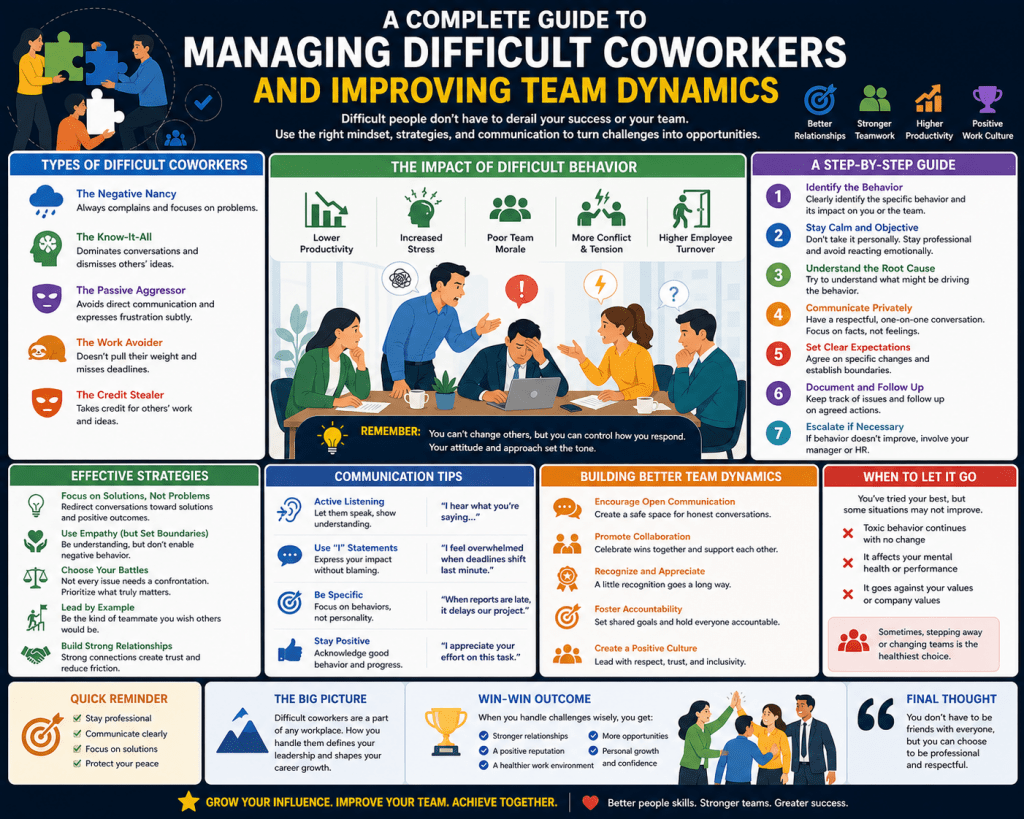
Difficult coworkers are a common reality across all industries, regardless of company size, job role, or level of experience. In modern professional environments, people from diverse backgrounds, communication styles, and personality types are brought together to achieve shared goals. While this diversity can enhance creativity and productivity, it can also create friction when expectations, habits, or behaviors do not align. A difficult coworker is not always someone who is intentionally disruptive. In many cases, the behavior is a result of stress, lack of awareness, poor communication skills, or different approaches to problem-solving. Understanding this distinction is important because it shapes how you interpret actions and decide your response strategy. Instead of immediately labeling someone as problematic, it is more productive to analyze how their behavior impacts workflow, team collaboration, and communication efficiency. This mindset helps reduce emotional reactions and encourages a more structured approach to workplace challenges. Difficult coworkers may appear in many forms, such as individuals who constantly criticize others, those who avoid responsibility, people who dominate conversations, or colleagues who struggle to meet deadlines consistently. Each behavior type requires a different level of understanding and response. The goal is not to change the person but to manage interactions in a way that minimizes disruption and maintains productivity.
Why Workplace Personalities Clash and Create Tension
Workplace conflict often arises due to differences in personality, communication style, and work expectations. In many organizations, employees are selected for their technical skills, but less emphasis is placed on interpersonal compatibility. As a result, individuals who are highly detail-oriented may struggle to work with those who prefer a flexible and fast-paced approach. Similarly, direct communicators may clash with more reserved individuals who prefer indirect expression. These differences can lead to misunderstandings that escalate into frustration if not addressed early. Another factor contributing to workplace tension is pressure. Tight deadlines, high workloads, and performance expectations can amplify emotional responses and reduce patience. Under stress, even minor misunderstandings can feel significant, leading to conflict between coworkers who might otherwise work well together. Hierarchical structures can also influence behavior, especially when authority is involved. Employees may feel hesitant to communicate openly with supervisors or may interpret feedback as criticism rather than guidance. Additionally, competition within the workplace can sometimes create subtle tension, particularly in environments where performance is closely monitored. Understanding these underlying causes helps reframe difficult interactions as situational rather than personal. This perspective is essential for maintaining emotional balance and developing effective coping strategies.
Observing Behavior Patterns and Workplace Dynamics
Before reacting to a difficult coworker, it is essential to observe their behavior and identify patterns over time. Workplace behavior is rarely random; most individuals follow predictable patterns based on workload, stress levels, or interaction triggers. Observing these patterns allows you to anticipate potential challenges and adjust your communication approach accordingly. For example, some coworkers may become less cooperative during high-pressure periods, while others may struggle with communication when working on complex tasks. By identifying these tendencies, you can plan your interactions more strategically. Observation should also extend to how others respond to the same individual. If multiple colleagues experience similar issues, it may indicate a broader behavioral concern rather than a personal conflict. On the other hand, if the behavior appears targeted, it may require a more focused approach. It is also important to separate perception from fact during observation. Emotional reactions can sometimes distort interpretation, making neutral actions seem negative. Keeping a clear and objective mindset helps ensure accurate assessment. Another useful aspect of observation is understanding timing. Certain behaviors may only occur under specific conditions, such as approaching deadlines, meetings, or performance reviews. Recognizing these triggers allows you to prepare and respond more effectively rather than reacting impulsively in the moment.
Emotional Control and Developing a Professional Mindset
Emotional control is one of the most important skills when dealing with difficult coworkers. In professional environments, emotional reactions can escalate conflict quickly and damage working relationships. Maintaining composure allows you to respond thoughtfully rather than impulsively, which often leads to better outcomes. A professional mindset involves focusing on long-term goals rather than short-term frustrations. Instead of reacting to every negative interaction, it is more effective to evaluate how each situation impacts your responsibilities and objectives. This shift in perspective helps reduce stress and improve decision-making. Emotional control does not mean ignoring problems or suppressing feelings. Instead, it involves managing reactions in a way that supports constructive communication. When faced with challenging behavior, taking a moment to pause before responding can prevent unnecessary escalation. This pause allows you to consider the situation more rationally and choose a response that aligns with your professional goals. Another important aspect of emotional control is separating personal feelings from professional interactions. In many cases, difficult behavior is not intended as a personal attack, even if it feels that way. Recognizing this distinction helps reduce emotional intensity and promotes more balanced responses. Over time, consistent emotional control builds a reputation for reliability and professionalism, which can positively influence workplace relationships and career development.
Communication Strategies for Early Workplace Interaction
Effective communication is one of the most powerful tools for managing difficult coworkers. Many workplace conflicts begin with unclear instructions, misunderstood expectations, or incomplete information. Addressing communication gaps early can prevent issues from escalating. One effective strategy is to use clear and direct language when discussing tasks and responsibilities. Avoid assumptions and ensure that both parties have a shared understanding of expectations. Asking clarifying questions is equally important, as it helps uncover potential misunderstandings before they become problems. Active listening plays a major role in improving communication. This involves fully focusing on what the other person is saying without interrupting or forming responses prematurely. Demonstrating attentiveness through verbal acknowledgment and body language encourages more open and productive conversations. Another important technique is maintaining a neutral tone, especially in tense situations. Emotional language can easily be misinterpreted and may increase resistance from the other person. Keeping communication factual and solution-oriented helps maintain professionalism. It is also helpful to confirm agreements in writing when necessary, especially for tasks that involve multiple steps or deadlines. This reduces ambiguity and ensures accountability. Over time, consistent and structured communication reduces the likelihood of repeated misunderstandings and helps establish clearer working relationships.
Setting Boundaries and Managing Workplace Expectations
Boundaries are essential in maintaining a healthy and productive work environment. Without clear boundaries, difficult coworker behavior can begin to affect workload, stress levels, and overall job satisfaction. Setting boundaries involves clearly defining what is acceptable in terms of communication, responsibility, and interaction. This may include limiting interruptions during focused work time, clarifying task ownership, or addressing inappropriate behavior directly but respectfully. Managing expectations is closely linked to boundary setting. Many workplace conflicts arise when expectations are not clearly defined or understood. For example, if one person assumes shared responsibility for a task while the other expects independent completion, confusion and frustration can result. Clarifying expectations at the beginning of any task or collaboration helps prevent these issues. Boundaries should be communicated calmly and consistently. Being firm does not mean being aggressive; it means being clear and consistent in your communication. When boundaries are respected, workplace relationships become more stable and predictable. However, if boundaries are repeatedly ignored, it may be necessary to escalate the issue through appropriate professional channels. Maintaining boundaries also includes protecting your time and energy. This may involve managing how often you engage in non-essential discussions or redirecting conversations that are not relevant to work tasks. Over time, strong boundaries contribute to a more balanced and sustainable work environment.
Building Adaptability and Workplace Awareness
Adaptability is a critical skill when navigating difficult coworker relationships. Workplace environments are constantly evolving, and the ability to adjust your approach based on different personalities and situations can significantly reduce conflict. Adaptability involves recognizing that there is rarely a single correct way to interact with others. Instead, different situations may require different communication styles and responses. Workplace awareness complements adaptability by helping you understand the broader context in which interactions occur. This includes recognizing organizational culture, team dynamics, and external pressures that may influence behavior. For example, during high-stress periods, coworkers may behave differently than during routine operations. Being aware of these shifts allows you to adjust your expectations and responses accordingly. Adaptability also involves being open to feedback and willing to adjust your own behavior when necessary. Sometimes, improving interactions requires changes from both sides. Developing flexibility in communication and problem-solving approaches can reduce friction and improve collaboration. Workplace awareness also includes recognizing when a situation is improving or deteriorating. This helps you decide whether to continue addressing the issue directly, adjust your approach, or seek additional support. Over time, adaptability and awareness strengthen your ability to navigate complex workplace relationships without losing focus on your professional responsibilities.
Evaluating Workplace Conflict Before Taking Action
Before responding to a difficult coworker in a direct or structured way, it is important to evaluate the situation carefully. Not every frustrating interaction requires immediate intervention, and not every behavioral issue is equally serious. Workplace conflict exists on a spectrum, ranging from minor communication misunderstandings to ongoing patterns of disruptive or unprofessional behavior. The first step in evaluation is to determine the severity of the issue. Ask yourself whether the behavior is affecting your ability to complete tasks, collaborate effectively, or maintain a stable work environment. If the impact is minimal or occasional, it may be more efficient to adjust your communication style rather than escalate the issue. However, if the behavior consistently interferes with productivity or creates a negative environment, a more structured response may be necessary. Another important factor is frequency. A one-time incident is very different from repeated behavior over time. Patterns indicate deeper issues and are more likely to require intervention. It is also useful to consider intent versus impact. While intent may not always be harmful, the impact on work performance and team dynamics is what ultimately matters in a professional setting. Evaluating conflict carefully helps prevent overreaction and ensures that any action taken is proportionate, strategic, and aligned with workplace professionalism.
Understanding Personality Types in Difficult Coworkers
Difficult coworkers often fall into recognizable behavioral patterns that can be linked to personality tendencies. Understanding these patterns can help you anticipate behavior and adjust your response accordingly. One common type is the overly critical coworker, who frequently points out mistakes and focuses heavily on flaws. While this behavior can feel discouraging, it may stem from a detail-oriented mindset or high personal standards. Another type is the avoidant coworker, who struggles with responsibility or delays tasks, often causing frustration for others who rely on timely input. There are also dominant communicators, who tend to control conversations and may overlook input from others. Additionally, some coworkers display inconsistent behavior depending on stress levels or workload, making their interactions unpredictable. Recognizing these patterns does not mean labeling people permanently, but rather understanding behavioral tendencies that influence workplace interactions. When you can identify the type of behavior you are dealing with, it becomes easier to choose a communication strategy that reduces friction. For example, with overly critical individuals, focusing on facts and structured responses can help neutralize emotional tension. With avoidant coworkers, clear deadlines and written follow-ups may improve accountability. Understanding personality dynamics helps transform emotional reactions into structured problem-solving approaches.
Developing Strategic Communication in Challenging Situations
Strategic communication is essential when working with difficult coworkers. It involves more than simply exchanging information; it requires careful planning of how messages are delivered, received, and interpreted. One key aspect is clarity. Vague instructions or ambiguous language can easily lead to misunderstandings, which often escalate into conflict. Using direct and specific communication reduces the likelihood of confusion. Another important element is tone management. The way something is said often carries more weight than the words themselves. Maintaining a neutral and respectful tone helps prevent defensive reactions. Timing also plays a critical role in communication strategy. Addressing sensitive issues during high-stress periods or in public settings can increase tension. Choosing appropriate moments for discussion improves the chances of a productive outcome. Strategic communication also includes reframing language to focus on solutions rather than problems. Instead of emphasizing what went wrong, focusing on what can be improved encourages collaboration. Asking open-ended questions is another effective technique, as it encourages dialogue rather than confrontation. Over time, consistent use of strategic communication helps reduce misunderstandings and improve overall workplace interactions, even with challenging individuals.
Managing Conflict Without Escalation
One of the most important skills in dealing with difficult coworkers is the ability to manage conflict without escalating it. Escalation often occurs when emotions override rational thinking, leading to defensive responses, misunderstandings, and further tension. To prevent escalation, it is essential to remain calm and composed, even when faced with frustrating behavior. This does not mean ignoring issues, but rather approaching them in a controlled and thoughtful manner. One effective method is to slow down the conversation when tension rises. Pausing before responding allows you to think clearly and avoid reactive statements. Another approach is to acknowledge the other person’s perspective without necessarily agreeing with it. This helps reduce defensiveness and keeps the conversation open. It is also important to avoid blame-focused language, which can quickly intensify conflict. Instead, focusing on specific behaviors and their impact creates a more objective discussion. If a conversation becomes too heated, it may be necessary to temporarily step away and revisit the discussion later. Managing conflict effectively requires emotional discipline, patience, and a focus on long-term outcomes rather than immediate reactions. When handled correctly, many conflicts can be resolved without formal escalation or long-term damage to professional relationships.
Using Collaboration as a Conflict Reduction Tool
Collaboration can be a powerful way to reduce tension between coworkers. When individuals work together toward shared goals, it often shifts focus away from personal differences and toward collective outcomes. Encouraging collaboration involves identifying areas of mutual responsibility and creating opportunities for joint problem-solving. Even with difficult coworkers, finding common ground can help improve interactions. For example, aligning on project goals or deadlines can create a sense of shared purpose. Collaboration also helps distribute responsibility more evenly, reducing frustration caused by perceived imbalance in workload. However, effective collaboration requires structure. Without clear roles and expectations, collaboration can sometimes increase confusion rather than reduce it. Defining responsibilities at the beginning of a task ensures that everyone understands their contribution. Communication during collaboration should remain consistent and transparent to avoid misunderstandings. In some cases, structured collaboration can also reveal underlying issues in workflow or communication that may not be immediately visible. By working closely with others, you gain insight into how they approach tasks and handle challenges. This understanding can help you adjust your own strategies and improve overall team dynamics. Collaboration is not about avoiding conflict, but about creating an environment where conflict is less likely to occur.
Dealing with Passive, Aggressive, or Avoidant Behaviors
Some of the most challenging workplace behaviors are passive, aggressive, or avoidant in nature. Passive behavior may involve indirect communication, lack of clear responses, or avoidance of responsibility. Aggressive behavior can include confrontational language, dismissive attitudes, or attempts to dominate discussions. Avoidant behavior often manifests as delayed responses, missed deadlines, or reluctance to engage in problem-solving. Each of these behaviors requires a different approach. With passive coworkers, it is important to encourage clarity by asking direct but respectful questions. This helps bring hidden concerns or uncertainties into open discussion. With aggressive individuals, maintaining calm and not reacting emotionally is essential. Responding with structured, fact-based communication can help reduce tension. Avoidant behavior often requires clear expectations and follow-up systems to ensure accountability. Written communication can be particularly effective in these situations, as it reduces ambiguity and provides a record of agreements. It is also important to recognize that these behaviors may not always be intentional. Stress, workload pressure, or lack of confidence can contribute to such patterns. Addressing the behavior rather than the personality helps keep interactions professional and focused on solutions.
Maintaining Productivity Despite Workplace Challenges
One of the biggest risks of dealing with difficult coworkers is the impact on personal productivity. When workplace tension increases, it can become harder to concentrate, complete tasks efficiently, or maintain motivation. To counter this, it is important to establish strong personal work habits. Prioritizing tasks based on importance and deadlines helps maintain focus even in distracting environments. Structuring your workday can also reduce the impact of interruptions or negative interactions. Time-blocking techniques or scheduled focus periods can help create mental space for deep work. Another important strategy is emotional compartmentalization, which involves separating workplace stress from task execution. This allows you to remain productive even when external conditions are not ideal. Maintaining documentation of your work progress can also provide clarity and reduce confusion in collaborative environments. When productivity remains stable despite challenges, it reinforces your professional reliability and reduces the influence of negative workplace dynamics. Over time, strong productivity habits help you maintain control over your performance regardless of interpersonal difficulties.
Recognizing When Workplace Intervention is Necessary
While many workplace conflicts can be managed through communication and behavioral adjustments, there are situations where intervention becomes necessary. Intervention may be required when behavior becomes consistently disruptive, inappropriate, or harmful to the work environment. Signs that intervention may be needed include repeated violations of boundaries, ongoing communication breakdowns, or behavior that significantly impacts team performance. Before escalating, it is important to ensure that you have attempted reasonable steps to address the issue directly. Documentation of specific incidents can provide clarity and support when discussing the situation with supervisors or organizational representatives. When approaching intervention, focus on objective facts rather than personal interpretations. This helps ensure that the issue is understood clearly and addressed appropriately. It is also important to consider organizational structure, as different workplaces may have different processes for handling conflict. Intervention should always aim to improve the work environment rather than punish individuals. The goal is to restore functionality, communication, and respect within the workplace. Recognizing when to escalate is a key part of professional maturity and ensures that issues are addressed before they become more serious.
Building Long-Term Resilience in Workplace Relationships
Long-term resilience is essential for maintaining stability in environments where difficult coworkers are present. Resilience involves the ability to recover from stressful interactions, maintain focus, and continue performing effectively despite challenges. One key aspect of resilience is emotional regulation, which allows you to manage reactions without becoming overwhelmed. Another important component is adaptability, which helps you adjust to changing workplace dynamics and different personality types. Building resilience also involves developing realistic expectations. Not all coworkers will communicate or behave in ideal ways, and accepting this reality reduces frustration. Over time, exposure to challenging interactions can strengthen problem-solving skills and improve emotional intelligence. Resilience is not about ignoring difficulties, but about developing the ability to handle them without long-term negative impact. It allows you to maintain professionalism, protect your well-being, and continue growing in your role even in less-than-ideal environments.
Strengthening Workplace Boundaries for Long-Term Stability
Workplace boundaries are not just about protecting time and energy; they are about creating a stable structure for how you interact with others daily. When dealing with difficult coworkers, weak or unclear boundaries often lead to repeated interruptions, shifting responsibilities, and emotional exhaustion. Strong boundaries help define what behavior is acceptable and what is not, while also giving you a consistent framework for responding to situations. In practical terms, boundaries can involve how often you respond to messages outside working hours, how you handle last-minute requests, or how you allow others to engage with your workload. The key is consistency. If boundaries change frequently depending on mood or pressure, they lose effectiveness and become harder for others to respect. Establishing boundaries also requires communication. Others cannot respect limits they are unaware of, so clarity is essential. However, communication should be calm, professional, and focused on workflow rather than personal preference. For example, instead of framing boundaries as emotional needs, it is more effective to present them as productivity requirements. Over time, well-defined boundaries reduce friction, improve focus, and limit unnecessary stress caused by difficult coworker interactions.
Handling Interruptions and Workplace Disruptions
Interruptions are one of the most common challenges when working with difficult coworkers. These disruptions may come in the form of constant questions, unplanned discussions, or shifting priorities that break concentration. While some level of interaction is necessary in collaborative environments, frequent interruptions can significantly reduce efficiency and increase frustration. Managing interruptions begins with creating structure around your work. This may include setting specific times for communication, using scheduled check-ins, or clearly indicating when you are in focused work mode. When interruptions occur, it is important to respond in a way that acknowledges the other person without fully abandoning your task. A brief acknowledgment followed by a scheduled response time can help maintain balance. Another effective strategy is to redirect conversations toward relevant priorities. Many interruptions occur due to a lack of clarity, so guiding discussions back to current tasks can reduce unnecessary distractions. In some cases, persistent interruptions may require a more direct conversation about expectations. The goal is not to avoid communication, but to ensure it happens in a structured and respectful way. Over time, consistent handling of interruptions helps establish a more predictable and efficient workflow.
Navigating Difficult Supervisors and Authority Conflicts
Difficult coworkers are challenging enough, but when the source of tension is a supervisor, the situation becomes more complex. Authority dynamics can limit how directly you respond, as power imbalance often influences communication. Difficult supervisors may exhibit behaviors such as unclear instructions, inconsistent feedback, micromanagement, or a lack of responsiveness. In these situations, emotional control becomes even more critical. Responding impulsively or confrontationally can negatively impact your position. Instead, the focus should be on clarity, documentation, and professionalism. One effective approach is to confirm instructions and expectations in writing when possible. This reduces ambiguity and creates a reference point for future discussions. Another important strategy is structured communication. Instead of raising concerns emotionally, framing them around workflow impact or project outcomes tends to be more effective. It is also helpful to focus on solutions rather than problems when interacting with authority figures. In cases where behavior becomes consistently disruptive or inappropriate, escalation through formal channels may be necessary. However, this should always be approached carefully, with clear documentation and objective reasoning. Navigating difficult supervisors requires a combination of patience, strategy, and professional restraint.
Managing Workplace Stress Caused by Coworker Conflict
Conflict with coworkers often leads to increased stress, which can affect both performance and well-being. Workplace stress may manifest as difficulty concentrating, reduced motivation, or emotional fatigue. Managing this stress effectively is essential for maintaining productivity. One important approach is separating emotional response from task execution. This means focusing on completing work regardless of interpersonal challenges. Another strategy is structuring your workload in a way that reduces exposure to stressful interactions. Prioritizing independent tasks during high-conflict periods can help maintain stability. It is also useful to identify specific triggers that increase stress. These may include certain types of communication, specific individuals, or particular situations. Once identified, these triggers can be managed more effectively through preparation and response planning. Physical and mental breaks also play a role in stress management. Short pauses during the workday can help reset focus and reduce emotional buildup. In some cases, stress may accumulate over time, making it important to evaluate whether the work environment is sustainable. However, before considering major changes, it is often helpful to explore all available strategies for managing conflict and reducing pressure within the current environment.
Improving Emotional Intelligence in Difficult Interactions
Emotional intelligence is a key factor in successfully managing difficult coworkers. It involves the ability to recognize, understand, and regulate emotions in both yourself and others. High emotional intelligence allows you to respond to challenging situations with awareness rather than reaction. One aspect of emotional intelligence is self-awareness. This involves understanding how your emotions influence your behavior during conflict. For example, recognizing when frustration is building can help you pause before responding. Another aspect is empathy, which involves understanding the emotional state or perspective of the other person. Even in difficult interactions, recognizing that others may be experiencing stress or pressure can help reduce tension. Emotional intelligence also includes self-regulation, which is the ability to control emotional responses in real time. This skill is especially important in workplace disagreements, where emotional reactions can escalate conflict quickly. Social awareness is another component, allowing you to interpret workplace dynamics and adjust your communication accordingly. Developing emotional intelligence does not eliminate conflict, but it significantly improves how conflict is handled. Over time, it leads to more stable relationships, better communication, and improved professional reputation.
Developing Problem-Solving Approaches Instead of Reactive Responses
Reactive responses in workplace conflict often lead to escalation and misunderstanding. A problem-solving approach, on the other hand, focuses on identifying issues and finding practical solutions. This shift in mindset is crucial when dealing with difficult coworkers. Instead of focusing on frustration, the emphasis is placed on outcomes. The first step in problem-solving is identifying the core issue. This may involve communication breakdown, unclear responsibilities, or behavioral patterns. Once the issue is identified, the next step is to evaluate possible solutions. These solutions should be practical, realistic, and focused on improving workflow. For example, if miscommunication is a recurring issue, implementing clearer documentation or scheduled check-ins may help. If responsibility is unclear, defining roles more explicitly can reduce confusion. Problem-solving also involves testing and adjusting strategies over time. Not every solution will work immediately, and flexibility is important. The goal is continuous improvement rather than immediate perfection. By consistently applying problem-solving techniques, workplace interactions become more structured and less emotionally driven.
Maintaining Professional Reputation During Conflict
Professional reputation is one of the most valuable assets in any workplace. How you handle difficult coworkers directly influences how others perceive your reliability, communication skills, and emotional control. Maintaining a strong reputation requires consistency in behavior, even during stressful situations. This means avoiding gossip, refraining from emotional outbursts, and focusing on constructive communication. Others are more likely to respect individuals who remain calm and solution-oriented during conflict. Documentation can also play a role in protecting reputation, especially in situations involving repeated issues. Keeping factual records of interactions ensures clarity if concerns need to be addressed formally. Another important aspect is maintaining fairness in interactions. Treating all coworkers with respect, even those who are difficult, reinforces professionalism. Over time, a strong reputation can provide stability in challenging environments, as colleagues and supervisors are more likely to trust your judgment and perspective. Reputation is built gradually through consistent actions, not isolated moments, making it important to approach every interaction with awareness and professionalism.
Adapting to Organizational Culture and Workplace Norms
Every workplace has its own culture, expectations, and communication style. Understanding these factors is essential when dealing with difficult coworkers. Organizational culture influences how conflict is handled, how communication flows, and how decisions are made. In some environments, direct communication is encouraged, while in others, more formal or indirect approaches are preferred. Adapting to these norms does not mean changing your personality, but rather aligning your behavior with workplace expectations. Observing how others interact can provide valuable insight into acceptable communication patterns. Workplace norms also influence how quickly issues are escalated or resolved. In some organizations, problems are addressed informally, while in others, structured processes are required. Understanding these systems helps you navigate conflict more effectively. Cultural awareness also includes recognizing unwritten rules, such as how feedback is delivered or how meetings are conducted. Adapting to workplace culture improves communication efficiency and reduces misunderstandings with difficult coworkers. Over time, this adaptability contributes to smoother interactions and more stable professional relationships.
Sustaining Performance in High-Pressure Environments
High-pressure environments often intensify difficult coworker behavior, making it harder to maintain focus and productivity. Sustaining performance under these conditions requires strong discipline and structured work habits. One key strategy is prioritization. Focusing on high-impact tasks ensures that essential work is completed even when distractions occur. Another important approach is time management. Organizing tasks into manageable segments helps reduce overwhelm and maintain steady progress. In high-pressure situations, emotional regulation becomes even more important. Allowing stress or frustration to influence performance can lead to errors or decreased efficiency. Maintaining a steady routine helps create stability even when external conditions are unpredictable. It is also helpful to minimize unnecessary interactions during peak workload periods. While collaboration is important, protecting focused work time ensures consistent output. Over time, developing the ability to perform under pressure strengthens resilience and improves confidence in handling difficult coworker situations.
Building Long-Term Career Strength Through Workplace Challenges
Difficult coworker interactions, while uncomfortable, often contribute to long-term professional development. Navigating challenging relationships builds communication skills, emotional intelligence, and problem-solving abilities that are valuable across all career stages. These experiences also improve adaptability, as they require adjusting to different personalities and situations. Over time, individuals who successfully manage workplace conflict tend to develop stronger leadership potential, as they are able to remain composed under pressure and guide others through difficult interactions. Career strength is not only defined by technical ability but also by interpersonal effectiveness. Handling difficult coworkers effectively demonstrates maturity, resilience, and professionalism. These qualities are often recognized by supervisors and can influence future opportunities. While workplace conflict is never ideal, it can serve as a foundation for personal and professional growth when approached with the right mindset.
Conclusion
Workplace environments are rarely perfect, and difficult coworkers are a consistent reality across almost every industry and role. While it is natural to feel frustrated when faced with challenging personalities, the long-term ability to manage these situations effectively often becomes one of the most valuable professional skills a person can develop. The way you respond to conflict, communicate under pressure, and maintain productivity in difficult circumstances has a direct impact on both your career growth and your overall workplace experience.
One of the most important takeaways from dealing with difficult coworkers is that behavior in professional settings is often influenced by a combination of stress, personality differences, communication gaps, and organizational pressure. Very few workplace conflicts exist purely because one person is intentionally trying to create problems. In many cases, misunderstandings and misaligned expectations play a larger role than personal intent. Recognizing this does not mean ignoring harmful behavior or tolerating disrespect, but it does allow for a more measured and rational response. When you shift your mindset from emotional reaction to structured analysis, you gain more control over how situations unfold.
Another key lesson is the importance of self-regulation. Emotional responses are natural, especially when someone is dismissive, uncooperative, or disruptive. However, reacting immediately often escalates tension rather than resolving it. Learning to pause, observe, and respond with intention can completely change the direction of an interaction. This does not mean suppressing emotions, but rather managing them in a way that supports clarity and professionalism. Over time, this ability strengthens confidence and reduces the psychological impact of repeated workplace stress.
Communication also plays a central role in shaping workplace relationships. Many conflicts begin not because of major disagreements, but because of unclear instructions, assumptions, or a lack of follow-through. When communication is structured, direct, and consistent, many of these issues naturally decrease. Clear communication involves not only speaking effectively but also listening with attention and ensuring mutual understanding. In difficult situations, it becomes even more important to confirm expectations, clarify responsibilities, and avoid ambiguous language that can be interpreted in multiple ways. These small adjustments significantly reduce friction over time.
Equally important is the ability to set boundaries. Without boundaries, workplace interactions can easily become overwhelming or unbalanced. Difficult coworkers may unintentionally or repeatedly push limits related to time, workload, or communication. When boundaries are not defined, frustration tends to build silently until it becomes harder to manage. Establishing clear expectations about availability, responsibilities, and appropriate communication helps create structure in otherwise chaotic interactions. Boundaries are not about distancing yourself from others, but about ensuring that interactions remain respectful and sustainable.
Another important aspect of managing difficult coworkers is adaptability. Not every situation requires the same approach, and not every personality responds to the same communication style. Some individuals respond better to direct instructions, while others require more structured clarification. Some situations may benefit from written communication, while others require real-time discussion. Being able to adjust your approach depending on context is a sign of emotional intelligence and professional maturity. Adaptability allows you to maintain effectiveness even when working with individuals who have very different working styles from your own.
It is also essential to recognize the importance of perspective. In many workplace conflicts, the situation feels more personal than it actually is. When someone behaves difficultly, it is easy to interpret their actions as being directed personally. However, in most professional environments, behavior is influenced more by workload pressure, deadlines, or communication habits than personal intent. Separating personal feelings from professional interpretation helps reduce emotional burden and allows for more rational decision-making. This shift in perspective is often what enables individuals to remain effective in challenging environments without becoming emotionally overwhelmed.
At the same time, there are situations where issues cannot be resolved through communication alone. When behavior becomes consistently disruptive, unprofessional, or harmful to productivity, it may be necessary to involve supervisors or organizational support systems. Knowing when to escalate is just as important as knowing how to manage issues independently. Escalation should always be based on clear patterns of behavior and factual documentation rather than emotional frustration. This ensures that concerns are taken seriously and addressed appropriately.
Despite the challenges, difficult coworkers can also serve as unexpected opportunities for growth. Working through interpersonal challenges helps develop resilience, patience, and problem-solving skills that are difficult to build in ideal environments. It forces individuals to refine communication techniques, strengthen emotional control, and improve their ability to work under pressure. These are skills that extend far beyond a single workplace and become valuable in future roles, leadership positions, and team collaborations.
Another long-term benefit of navigating difficult coworker situations is improved self-awareness. Interpersonal challenges often highlight personal communication habits, emotional triggers, and areas for improvement. By reflecting on these experiences, individuals can better understand how they contribute to workplace dynamics and how they can adjust their approach for better outcomes. This level of self-awareness not only improves current interactions but also supports long-term career development.
It is also important to acknowledge that not every workplace environment is ideal or sustainable. While many conflicts can be managed through skill and patience, there are situations where the environment itself may be consistently unhealthy or unproductive. Recognizing this reality is not a sign of failure but an important aspect of career decision-making. Understanding when to persist, when to adjust, and when to consider change is part of maintaining long-term professional well-being.
Ultimately, dealing with difficult coworkers is less about changing other people and more about refining your own approach. You cannot control how others behave, but you can control how you respond, communicate, and protect your own productivity. Over time, this internal control becomes the foundation for professional stability. It allows you to remain focused even in challenging environments, maintain your reputation, and continue progressing in your career regardless of external difficulties.
Workplace relationships will always include some level of complexity, but complexity does not have to lead to conflict. With structured communication, emotional discipline, clear boundaries, and adaptive thinking, it is possible to navigate even the most challenging coworker interactions in a way that preserves both productivity and professionalism.