
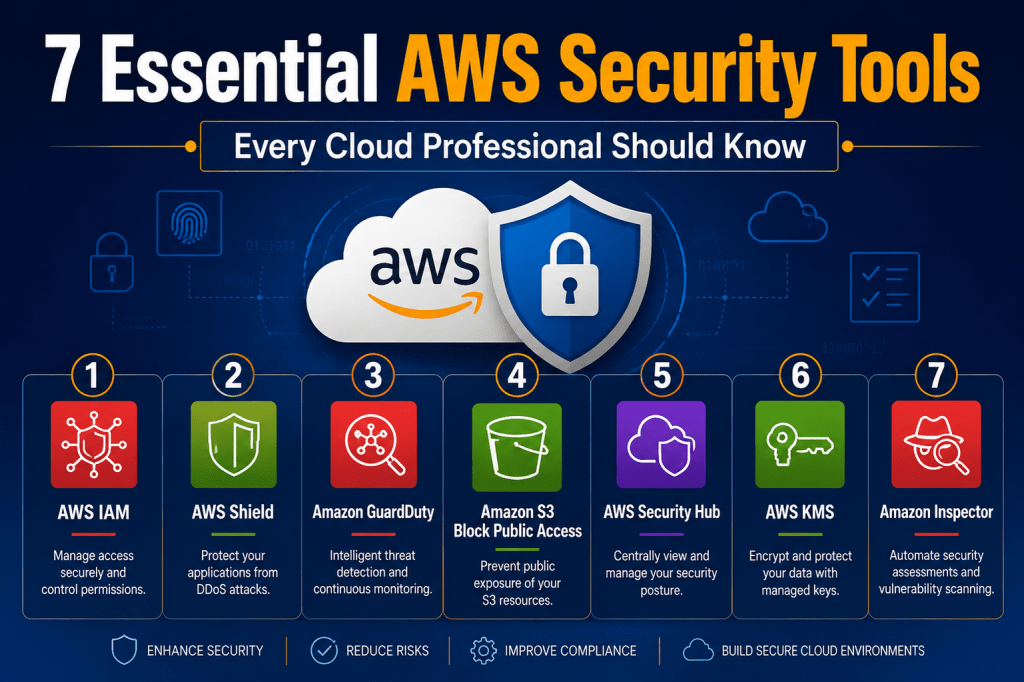
Amazon Web Services has become one of the leading cloud platforms used by businesses around the world. Organizations use AWS to host applications, store data, manage workloads, and run critical business operations. As cloud adoption continues to increase, cybersecurity has become one of the biggest priorities for organizations operating in digital environments. Businesses need powerful protection mechanisms to secure sensitive data, maintain service availability, and prevent unauthorized access to cloud resources.
The Importance of Cloud Security
Cloud environments contain valuable business information such as customer records, financial data, intellectual property, and application infrastructure. Attackers constantly search for vulnerabilities that can provide access to these systems. A single security mistake can expose confidential information, interrupt operations, or create major financial losses. Strong cloud security practices help organizations reduce risks and maintain trust with customers and partners.
AWS Shared Responsibility Model
AWS security operates through a shared responsibility model. AWS is responsible for protecting the underlying cloud infrastructure, including hardware, networking, and physical facilities. Customers are responsible for securing their own applications, operating systems, configurations, permissions, and stored data. This model gives organizations flexibility while requiring them to actively manage their own cloud security settings and monitoring processes.
Growing Cybersecurity Challenges
Modern cyber threats are becoming more advanced every day. Organizations face attacks such as ransomware, phishing campaigns, malware infections, credential theft, insider threats, and distributed denial-of-service attacks. Attackers often use automation and artificial intelligence to identify vulnerabilities quickly. Because cloud environments are highly dynamic, businesses need security solutions that can continuously monitor and respond to threats in real time.
Why AWS Security Tools Matter
AWS provides a wide range of security services designed to help organizations protect their cloud environments. These tools offer monitoring, threat detection, compliance management, vulnerability assessments, and automated remediation capabilities. Instead of relying entirely on external hardware appliances, businesses can use integrated AWS security services that scale automatically with their infrastructure.
Scalability in Cloud Security
One of the biggest advantages of AWS security tools is scalability. Traditional security systems may struggle when infrastructure grows rapidly, but AWS security services automatically adapt to expanding workloads. Organizations can add applications, databases, and compute resources without needing to redesign their entire security architecture. This flexibility allows businesses to grow while maintaining strong protection.
Automation in AWS Security
Automation is essential in modern cybersecurity because cloud environments generate massive amounts of activity data. Manually reviewing logs and monitoring systems would require significant time and resources. AWS security tools use automation and machine learning to identify suspicious behavior, generate alerts, and execute remediation tasks without constant human intervention. This improves efficiency while reducing operational burdens.
Visibility Across Cloud Infrastructure
Security visibility is one of the foundations of effective cloud protection. Organizations need to understand what is happening across their infrastructure at all times. AWS monitoring tools provide centralized visibility into user activity, application performance, network traffic, and resource utilization. This allows administrators to identify unusual behavior quickly and respond before incidents escalate.
The Role of Data Protection
Protecting sensitive data is one of the most important aspects of cloud security. Organizations store confidential customer information, financial records, healthcare data, and proprietary business information in cloud environments. AWS security services help businesses secure this information through encryption, access controls, monitoring, and intelligent threat detection capabilities.
Threat Detection in Modern Environments
Threat detection is critical because attackers often attempt to remain hidden after gaining access to systems. Cybercriminals may move laterally across environments, escalate privileges, or slowly exfiltrate sensitive information. AWS security services use machine learning and behavioral analysis to detect unusual activity that may indicate compromise or malicious intent.
AWS Shield for DDoS Protection
AWS Shield is a managed distributed denial-of-service protection service designed to defend applications and infrastructure against malicious traffic floods. DDoS attacks attempt to overwhelm systems with enormous amounts of traffic, preventing legitimate users from accessing websites or applications. These attacks can damage customer trust and disrupt business operations significantly.
Maintaining Service Availability
Availability is essential for modern organizations that rely on online services. Customers expect applications and websites to remain accessible at all times. Even short periods of downtime can create financial losses and reputational damage. AWS Shield helps organizations maintain uptime by automatically detecting and mitigating malicious traffic before it impacts infrastructure.
Protection Across AWS Services
AWS Shield protects multiple AWS services, including EC2 instances, Elastic Load Balancers, CloudFront distributions, Route 53 resources, and Global Accelerator deployments. Because these services often support critical applications and customer-facing platforms, continuous protection is extremely important for maintaining operational stability.
Automated Attack Mitigation
One of the biggest advantages of AWS Shield is automation. Instead of requiring administrators to manually respond to attacks, the service automatically identifies malicious traffic patterns and applies mitigation strategies. This reduces response times and allows security teams to focus on other critical responsibilities during incidents.
Leveraging AWS Global Infrastructure
AWS Shield benefits from AWS global network infrastructure, which is designed to absorb and filter large-scale attack traffic efficiently. Traditional on-premises systems may struggle against massive traffic floods, but AWS infrastructure provides greater resilience against distributed attacks launched from botnets and compromised devices.
Reducing Operational Burden
Managing DDoS attacks manually can place enormous pressure on security teams. AWS Shield reduces this burden by handling much of the detection and mitigation process automatically. Organizations gain strong protection capabilities without needing extensive in-house DDoS defense infrastructure.
Integration With Monitoring Services
AWS Shield integrates with monitoring and logging services, allowing organizations to analyze attack patterns and improve incident response processes. Security teams can review alerts and metrics to understand attack behavior and strengthen future defenses against similar threats.
Machine Learning Threat Analysis
GuardDuty uses machine learning and behavioral analytics to detect threats more effectively. Instead of relying only on predefined attack signatures, the service identifies anomalies and unusual patterns that differ from normal activity. This improves the ability to detect emerging threats and sophisticated attack techniques.
Detecting Compromised Credentials
Compromised credentials are one of the most common causes of cloud security incidents. Attackers who obtain access keys or passwords may attempt unauthorized API calls, launch cryptocurrency mining operations, or access sensitive resources. GuardDuty helps organizations detect these activities quickly before attackers cause extensive damage.
Monitoring Network Activity
GuardDuty continuously monitors network traffic and account behavior across AWS environments. It can detect reconnaissance attempts, unusual communication patterns, malware activity, and suspicious data transfers. Continuous monitoring helps organizations identify attacks early and improve incident response times.
Simplified Security Deployment
One of the major benefits of GuardDuty is ease of deployment. Organizations can enable the service without installing additional infrastructure or deploying complex software agents. Once activated, GuardDuty immediately begins analyzing AWS activity and generating findings related to potential threats.
Threat Intelligence Integration
GuardDuty incorporates global threat intelligence feeds that contain information about malicious IP addresses, attack techniques, and emerging cyber threats. These intelligence updates help improve detection accuracy and allow organizations to defend against evolving attack methods.
Automated Security Response
GuardDuty findings can integrate with automated remediation workflows using AWS Lambda and other AWS services. Organizations can configure automated actions such as isolating compromised systems, revoking credentials, or blocking suspicious traffic. Automation improves response speed while reducing manual workload.
Centralized Monitoring With CloudWatch
Amazon CloudWatch is a monitoring service that provides visibility into AWS infrastructure, applications, and operational activity. It collects logs, metrics, and events from multiple AWS services, allowing organizations to monitor environments through centralized dashboards and reporting systems.
Importance of Log Aggregation
Cloud environments generate enormous volumes of logs every day. Applications, servers, databases, and networking systems all produce operational and security-related data. CloudWatch centralizes this information, making it easier for administrators to analyze trends, investigate incidents, and troubleshoot problems efficiently.
Real-Time Alerting Capabilities
CloudWatch allows organizations to configure alarms and notifications for unusual activity or abnormal system performance. Real-time alerts help administrators respond quickly to potential security incidents, infrastructure failures, or application disruptions before they escalate into larger problems.
Monitoring API Activity
API calls control most AWS operations, making API monitoring essential for cloud security. Unauthorized API requests may indicate credential theft or malicious automation attempts. CloudWatch helps organizations track API activity and detect unusual behavior that could signal compromise.
Automation Through CloudWatch
CloudWatch integrates with automation services such as AWS Lambda, allowing organizations to create automated workflows that respond to security events. Automated actions can improve response times, reduce operational overhead, and help contain incidents more effectively.
Performance and Resource Monitoring
In addition to security monitoring, CloudWatch provides performance metrics related to CPU utilization, memory usage, network traffic, and application health. Organizations can use this data to optimize infrastructure performance while maintaining stable and reliable operations.
Adapting to Dynamic Environments
Cloud infrastructure changes constantly as applications scale and workloads shift across environments. CloudWatch automatically adapts to these changes, ensuring organizations maintain continuous visibility even in highly dynamic cloud ecosystems.
Protecting Sensitive Data With Macie
Amazon Macie is a security service focused on identifying and protecting sensitive data stored in Amazon S3 buckets. Organizations often store large volumes of confidential information in cloud storage environments, making data protection a top cybersecurity priority.
Automatic Data Discovery
Macie uses machine learning and pattern recognition to discover sensitive information automatically. The service can identify financial records, personal information, credentials, healthcare data, and intellectual property stored within cloud environments.
Monitoring Data Access Patterns
Unauthorized access to sensitive information can lead to severe financial and reputational damage. Macie continuously monitors data access patterns and identifies unusual behavior that may indicate unauthorized access or data exfiltration attempts.
Reducing Risks From Misconfigurations
Misconfigured cloud storage permissions remain one of the most common causes of cloud security incidents. Publicly accessible storage buckets can expose confidential information unintentionally. Macie helps organizations identify risky configurations before attackers exploit them.
Supporting Compliance Requirements
Organizations operating in regulated industries often need to comply with strict privacy and security standards. Macie supports compliance efforts by helping businesses identify sensitive data, monitor access patterns, and maintain visibility into storage environments.
Improving Detection Accuracy
Machine learning improves Macie’s ability to detect sensitive information accurately while reducing false positives. Intelligent analysis allows organizations to focus on genuine risks instead of wasting resources investigating harmless activity.
Continuous Data Security Monitoring
Protecting sensitive information requires continuous monitoring and rapid detection capabilities. Macie strengthens cloud data security by helping organizations identify vulnerabilities, detect unusual activity, and maintain awareness of their most valuable information stored in AWS environments.
Importance of Vulnerability Assessments
Vulnerability assessments play a critical role in cybersecurity because attackers constantly search for outdated software, insecure configurations, and unpatched systems. Even a small vulnerability can provide unauthorized access to sensitive data or critical infrastructure. Organizations that fail to identify and remediate vulnerabilities quickly often become targets for cybercriminals seeking easy entry points into cloud environments.
Automated Security Scanning
One of the biggest advantages of AWS Inspector is automation. Instead of manually reviewing systems and applications for weaknesses, organizations can use automated scanning to continuously evaluate their cloud environments. This reduces human error while ensuring security assessments occur regularly across all monitored resources.
Continuous Security Improvements
AWS Inspector continuously evolves alongside emerging security threats and best practices. AWS regularly updates the service with new vulnerability intelligence, detection capabilities, and security recommendations. Organizations benefit from these improvements automatically without needing to redesign their security assessment processes.
Identifying Software Vulnerabilities
Outdated software remains one of the most common causes of security incidents. Attackers frequently target unpatched operating systems, libraries, and applications because known vulnerabilities often have publicly available exploit techniques. AWS Inspector helps organizations identify vulnerable software components quickly so they can apply patches before systems are compromised.
Scanning Cloud Workloads
Cloud workloads often include virtual machines, applications, containers, and serverless functions operating across multiple environments. AWS Inspector provides visibility into these workloads by analyzing configurations, installed software, and runtime behavior. This helps organizations maintain awareness of their overall security posture.
Reducing Attack Surfaces
Every vulnerability or misconfiguration increases the attack surface available to cybercriminals. AWS Inspector helps reduce these risks by identifying unnecessary exposure points, weak security settings, and outdated components that may create opportunities for attackers.
Integration With AWS Ecosystem
AWS Inspector integrates with other AWS services, allowing organizations to centralize security operations and improve visibility across environments. Security findings can be connected with monitoring systems, automated workflows, and incident response processes to strengthen overall protection strategies.
Prioritizing Security Findings
Large cloud environments can generate numerous vulnerability findings, making prioritization extremely important. AWS Inspector helps organizations focus on high-risk vulnerabilities by providing severity ratings and contextual information related to identified issues. This allows security teams to allocate resources more effectively.
Strengthening Compliance Efforts
Many regulatory frameworks require organizations to perform regular vulnerability assessments and maintain secure system configurations. AWS Inspector supports compliance initiatives by automating assessments and helping businesses identify areas requiring remediation or policy improvements.
The Role of Configuration Auditing
Cloud misconfigurations remain one of the leading causes of data breaches and security incidents. Incorrect permissions, exposed storage resources, and improperly configured networking settings can create serious risks even when organizations use strong security tools. Configuration auditing helps businesses identify these weaknesses before attackers exploit them.
Importance of Security Baselines
Establishing secure configuration baselines is essential for maintaining consistent protection across cloud environments. Organizations need standardized settings for identity management, networking, storage permissions, logging, and encryption. Security auditing tools help ensure these baselines remain intact as infrastructure changes over time.
Understanding Prowler
Prowler is a widely used open-source security auditing and compliance assessment tool designed for AWS environments. The tool helps organizations evaluate their infrastructure against security best practices, compliance standards, and operational recommendations. Prowler has gained popularity because of its extensive coverage and detailed reporting capabilities.
Comprehensive Security Assessments
Prowler performs extensive security checks across AWS accounts and services. It evaluates areas such as identity and access management, logging configurations, storage permissions, networking security, encryption settings, and compliance readiness. These assessments help organizations identify weaknesses that could expose sensitive information or increase operational risks.
Benefits of Open-Source Security Tools
Open-source security tools offer flexibility and transparency that many organizations value. Security teams can review methodologies, customize assessments, and integrate tools into existing workflows without relying entirely on proprietary solutions. Prowler’s open-source nature has contributed to widespread adoption within cloud security communities.
Identity and Access Management Auditing
Improper identity and access management settings can create major security vulnerabilities. Excessive permissions, unused credentials, and weak access controls may allow attackers or insiders to gain unauthorized access to cloud resources. Prowler helps organizations identify risky permission settings and improve access management practices.
Network Security Validation
Cloud networking configurations determine how resources communicate internally and externally. Misconfigured security groups, unrestricted ports, and overly permissive firewall rules can expose workloads to external threats. Prowler evaluates networking configurations to help organizations reduce unnecessary exposure.
Encryption and Data Protection Checks
Encryption is one of the most important security controls for protecting sensitive information. Prowler helps organizations verify whether encryption is enabled for storage services, databases, and communication channels. These checks support stronger data protection strategies and compliance efforts.
Compliance Monitoring Capabilities
Organizations operating in regulated industries often need to demonstrate compliance with security frameworks and standards. Prowler includes checks related to common compliance requirements, helping businesses identify gaps that may affect regulatory readiness or audit performance.
Security Hardening Recommendations
Prowler not only identifies weaknesses but also provides recommendations for improving security configurations. These recommendations help organizations strengthen defenses and align cloud environments with industry best practices.
Importance of Forensics Readiness
Forensics readiness is an important aspect of cybersecurity because organizations need sufficient logging and monitoring capabilities to investigate incidents effectively. Prowler evaluates logging configurations and monitoring settings to ensure organizations can collect the information needed during security investigations.
Understanding ScoutSuite
ScoutSuite is another powerful open-source security auditing tool designed to assess cloud environments and identify security risks. One of its biggest advantages is multi-cloud support, allowing organizations to evaluate security across AWS, Microsoft Azure, and Google Cloud environments using a single platform.
Growing Importance of Multi-Cloud Security
Many organizations operate in multi-cloud environments to improve flexibility, reduce vendor dependency, and support diverse workloads. Managing security across multiple cloud providers can become complex because each platform uses different services and configurations. Tools like ScoutSuite help simplify security assessments in these environments.
Visual Security Reporting
ScoutSuite provides visual reporting features that make it easier for administrators to understand security findings and identify high-risk issues quickly. Clear reporting improves communication between technical teams, management, and compliance personnel.
Detecting Misconfigured Resources
Cloud misconfigurations remain one of the most dangerous security risks in modern infrastructure. Publicly accessible storage buckets, weak permissions, and exposed management interfaces can create serious vulnerabilities. ScoutSuite helps organizations identify these weaknesses before they lead to incidents.
Importance of Secure Storage Configurations
Cloud storage services often contain highly sensitive information, including customer records, application backups, and proprietary business data. Improper storage permissions can expose this information publicly, leading to breaches and compliance violations. Security auditing tools help organizations maintain safe storage configurations consistently.
Lessons From Cloud Security Incidents
Many major cloud-related security incidents have occurred because organizations failed to secure storage resources properly. Publicly exposed storage buckets have leaked millions of sensitive records, including financial information, credentials, and confidential business documents. These incidents demonstrate how small configuration errors can create massive consequences.
The Risk of Public Exposure
When cloud resources are exposed publicly without proper controls, attackers may gain access to valuable information without needing advanced hacking techniques. Automated scanning tools constantly search the internet for exposed resources, making misconfigurations especially dangerous.
Continuous Auditing Requirements
Cloud environments change constantly as organizations deploy new applications, update configurations, and scale infrastructure. Continuous auditing is essential because secure configurations today may become insecure tomorrow due to operational changes or accidental modifications.
Building Strong Security Foundations
Security auditing tools help organizations build strong security foundations by identifying weaknesses early. Preventing security issues before they lead to incidents is far more effective and less expensive than responding after damage occurs.
Security at Scale in AWS Environments
AWS environments are designed for scalability, allowing organizations to expand infrastructure rapidly based on demand. Businesses can deploy applications, databases, storage systems, and networking resources within minutes. While this flexibility provides enormous operational benefits, it also increases the importance of maintaining strong security controls.
Challenges of Rapid Cloud Growth
Rapid infrastructure growth can create security challenges if organizations fail to implement proper governance and monitoring processes. New resources may be deployed with insecure configurations, outdated software, or excessive permissions. Without continuous oversight, security risks can spread quickly across environments.
Balancing Agility and Protection
Organizations often struggle to balance operational agility with strong security practices. Development teams want fast deployments and flexibility, while security teams focus on reducing risks and maintaining compliance. AWS security services help organizations achieve both goals through automation and integrated security controls.
Importance of Security Automation
Manual security processes become increasingly difficult as infrastructure scales. Automation allows organizations to maintain consistent security practices across thousands of cloud resources without requiring excessive administrative effort. Automated monitoring, remediation, and compliance checks improve efficiency while reducing human error.
Monitoring Expanding Infrastructure
Large cloud environments generate enormous amounts of activity data every day. Security teams need centralized visibility into workloads, applications, storage systems, and user activity to identify threats effectively. AWS monitoring tools help organizations maintain awareness across expanding environments.
Reducing Human Error
Human mistakes remain one of the leading causes of security incidents. Misconfigured permissions, forgotten credentials, and improperly secured storage buckets can expose sensitive information unintentionally. Automated security tools reduce the likelihood of these errors by continuously evaluating configurations and generating alerts when risks are detected.
Importance of Layered Security
Effective cybersecurity requires multiple layers of protection working together. Threat detection, vulnerability assessments, encryption, access controls, monitoring, and compliance validation all contribute to stronger security postures. AWS security services provide these capabilities through integrated tools designed to protect dynamic cloud environments.
Protecting Customer Trust
Customers expect organizations to protect their personal information and maintain reliable digital services. Security incidents can damage reputations, reduce customer confidence, and create long-term financial consequences. Strong cloud security practices help businesses maintain trust and demonstrate commitment to protecting sensitive information.
Adapting to Evolving Threats
Cyber threats continue evolving as attackers develop new techniques and target cloud environments more aggressively. Organizations must continuously improve security strategies and adopt tools capable of detecting modern attack methods. AWS security services evolve regularly to address emerging risks and improve protection capabilities.
Importance of Proactive Security
Proactive security focuses on identifying and addressing risks before incidents occur. Vulnerability scanning, configuration auditing, continuous monitoring, and automated remediation help organizations reduce exposure and strengthen defenses before attackers can exploit weaknesses.
Building Long-Term Cloud Resilience
Long-term cloud security requires more than deploying a few monitoring tools. Organizations need comprehensive strategies that combine technology, governance, employee awareness, and operational discipline. AWS security services provide the foundation for building resilient cloud environments capable of supporting business growth securely.
The Evolution of Cloud Security
Cloud security has evolved significantly as organizations continue moving critical workloads and sensitive data into cloud environments. Businesses now depend on cloud infrastructure for daily operations, customer interactions, data storage, analytics, and application development. This rapid digital transformation has increased the need for advanced security controls capable of protecting highly dynamic and distributed environments. AWS security services play a major role in helping organizations secure cloud operations while maintaining scalability and performance.
Increasing Complexity of Cloud Infrastructure
Modern cloud environments are far more complex than traditional data centers. Organizations often manage thousands of resources across multiple regions, applications, storage systems, databases, and networking components. Development teams deploy updates frequently, workloads scale automatically, and employees access systems from various devices and locations. This complexity makes continuous security monitoring essential.
Why Traditional Security Approaches Are Not Enough
Traditional security approaches designed for on-premises environments often struggle in cloud ecosystems. Static firewalls and manual monitoring processes cannot effectively handle rapidly changing cloud infrastructure. Organizations need automated and intelligent security solutions that adapt to dynamic workloads and evolving cyber threats.
The Importance of Centralized Security Management
Centralized security management helps organizations maintain visibility and control across large cloud environments. Without centralized monitoring, security teams may struggle to identify threats, investigate incidents, or enforce consistent security policies. AWS security tools provide unified visibility into cloud operations, helping organizations simplify security management.
Security Visibility Across Multiple Services
AWS environments often contain many interconnected services working together. Applications may communicate with databases, storage systems, analytics platforms, and networking services simultaneously. Security teams need visibility into these interactions to identify abnormal behavior and reduce risks. AWS monitoring services help organizations maintain awareness across interconnected cloud workloads.
The Growing Risk of Insider Threats
Not all cybersecurity risks come from external attackers. Insider threats, whether intentional or accidental, can also expose sensitive information and disrupt operations. Employees with excessive permissions or compromised accounts may unintentionally create security vulnerabilities. AWS security services help organizations monitor account activity and detect unusual access patterns that could indicate insider risks.
Importance of Access Control
Strong access control is one of the foundations of cloud security. Organizations must ensure that users only have access to the resources required for their responsibilities. Excessive permissions increase the likelihood of unauthorized access, accidental changes, and privilege abuse. AWS security services help businesses monitor and improve identity management practices.
Monitoring User Activity
Monitoring user activity helps organizations identify suspicious behavior before major incidents occur. Unusual login attempts, unauthorized API calls, and abnormal access patterns may indicate compromised accounts or malicious intent. Continuous activity monitoring improves detection capabilities and supports faster incident response.
Cloud Logging and Security Investigations
Logs are critical for understanding what happens within cloud environments. Security logs contain valuable information related to user actions, application behavior, system events, and network activity. During investigations, these logs help security teams determine how incidents occurred, what systems were affected, and what remediation steps are required.
Importance of Real-Time Threat Detection
Cyberattacks can spread rapidly across cloud environments if threats remain undetected. Real-time threat detection helps organizations identify malicious behavior immediately and reduce potential damage. AWS security services continuously analyze activity patterns and generate alerts when suspicious events occur.
Reducing Detection and Response Times
Faster detection and response times are essential in cybersecurity. The longer attackers remain active within environments, the more opportunities they have to steal data, disrupt services, or compromise additional systems. AWS security services improve response efficiency through automation, centralized monitoring, and intelligent threat analysis.
Role of Machine Learning in Security
Machine learning has become increasingly important in modern cybersecurity because it helps identify threats that traditional rule-based systems may miss. AWS security services use machine learning to analyze behavioral patterns, detect anomalies, and improve threat detection accuracy across cloud environments.
Behavioral Analysis for Threat Detection
Behavioral analysis focuses on identifying deviations from normal activity. If a user suddenly accesses unfamiliar resources, transfers large volumes of data, or performs unusual administrative actions, security tools can flag the behavior as suspicious. This approach helps detect advanced threats and compromised accounts more effectively.
The Importance of Continuous Monitoring
Cloud environments operate continuously, making ongoing security monitoring essential. Attackers do not follow business hours, and threats can emerge at any time. AWS security tools provide around-the-clock monitoring capabilities that help organizations maintain awareness of security conditions across their infrastructure.
Cloud Compliance Challenges
Organizations operating in regulated industries often face strict compliance requirements related to data protection, privacy, and cybersecurity. Compliance standards may require encryption, logging, vulnerability management, and continuous monitoring. Managing these requirements manually can become difficult in large cloud environments.
Using AWS Services for Compliance Support
AWS security services help organizations support compliance efforts by automating security checks, monitoring configurations, and identifying policy violations. These tools simplify auditing processes while helping businesses maintain secure environments aligned with regulatory expectations.
Importance of Data Encryption
Encryption protects sensitive information by converting data into unreadable formats that require authorized keys for access. Even if attackers gain access to encrypted data, they cannot easily use the information without decryption keys. AWS security services support encryption for storage systems, databases, and network communications.
Securing Data in Transit and at Rest
Organizations must protect data both while it is stored and while it moves across networks. Data in transit may be intercepted during communication, while stored data may be targeted through unauthorized access attempts. AWS security services provide encryption capabilities that strengthen protection across both scenarios.
Preventing Unauthorized Data Exposure
Unauthorized data exposure remains one of the most damaging cloud security risks. Publicly accessible storage resources, weak permissions, and accidental sharing settings can expose sensitive information unintentionally. Continuous monitoring and auditing help organizations reduce these risks significantly.
Cloud Security and Business Continuity
Business continuity depends heavily on reliable and secure cloud operations. Security incidents can interrupt services, prevent customer access, and damage critical business functions. AWS security services help organizations maintain operational stability through proactive monitoring and automated threat mitigation.
The Impact of Service Downtime
Downtime can create severe consequences for organizations that rely on online services. E-commerce platforms, financial applications, healthcare systems, and enterprise software must remain available continuously to support customers and employees. AWS security services help reduce downtime caused by cyberattacks and infrastructure issues.
Importance of Incident Response Planning
Even organizations with strong security controls may eventually face cybersecurity incidents. Effective incident response planning helps businesses react quickly and minimize damage during attacks. AWS security services support incident response through centralized monitoring, logging, and automated remediation capabilities.
Automated Remediation Workflows
Automation improves incident response efficiency by allowing organizations to execute predefined actions immediately after threats are detected. Automated workflows may isolate compromised systems, revoke access credentials, block suspicious traffic, or notify administrators without requiring manual intervention.
Security Monitoring for Cloud Applications
Applications hosted in cloud environments require continuous monitoring to detect vulnerabilities, performance issues, and malicious activity. AWS security services provide visibility into application behavior, helping organizations maintain secure and reliable digital platforms.
The Importance of Secure APIs
Application programming interfaces play a central role in cloud operations because they enable communication between services and applications. However, insecure APIs can create serious security vulnerabilities if not monitored and protected properly. AWS security tools help organizations track API activity and detect suspicious requests.
Managing Security in Hybrid Environments
Many organizations operate hybrid environments that combine cloud infrastructure with on-premises systems. Managing security across these environments can be challenging because different technologies and policies must work together effectively. AWS security services help organizations extend visibility and protection into hybrid infrastructures.
The Role of Security Automation in Large Enterprises
Large enterprises often manage thousands of cloud resources across multiple teams and regions. Manual security management becomes nearly impossible at this scale. Automation helps organizations maintain consistent security practices, monitor infrastructure continuously, and reduce operational complexity.
Importance of Security Governance
Security governance ensures organizations establish clear policies, responsibilities, and procedures related to cloud security. Effective governance helps maintain consistency, improve accountability, and reduce operational risks across cloud environments.
Building a Security-First Culture
Technology alone cannot fully protect organizations from cyber threats. Employees must also understand security responsibilities and follow best practices consistently. Building a security-first culture helps organizations reduce human error and improve overall cybersecurity resilience.
Employee Awareness and Cloud Security
Employees often interact directly with cloud systems, making awareness training extremely important. Weak passwords, phishing attacks, and accidental misconfigurations can all create security risks. Organizations that invest in employee security education reduce the likelihood of preventable incidents.
Importance of Least Privilege Access
The principle of least privilege ensures users only receive the permissions necessary for their specific roles. Limiting permissions reduces the potential damage caused by compromised accounts or insider threats. AWS identity and access management tools help organizations enforce least privilege policies effectively.
Monitoring Privileged Accounts
Privileged accounts have access to critical systems and sensitive information, making them attractive targets for attackers. Continuous monitoring of privileged account activity helps organizations identify suspicious behavior and reduce risks associated with elevated permissions.
Securing Cloud Storage Services
Cloud storage services often contain backups, customer information, application data, and business documents. Improperly secured storage resources can expose sensitive information publicly or allow unauthorized access. AWS security services help organizations maintain secure storage configurations and monitor access activity continuously.
The Importance of Network Segmentation
Network segmentation limits communication between systems and reduces the spread of attacks within cloud environments. Separating workloads based on function and sensitivity improves security by restricting unauthorized movement across infrastructure.
Protecting Against Lateral Movement
After gaining access to one system, attackers often attempt lateral movement to compromise additional resources. Strong network controls, monitoring, and access restrictions help organizations prevent attackers from expanding access across environments.
Cloud Security for Remote Workforces
Remote work has increased reliance on cloud platforms because employees access applications and data from multiple locations and devices. This flexibility improves productivity but also creates additional security challenges related to authentication, device management, and secure connectivity.
Importance of Multi-Factor Authentication
Multi-factor authentication strengthens account security by requiring additional verification beyond passwords. Even if attackers obtain credentials, they may still be unable to access accounts without secondary authentication methods. AWS security services support multi-factor authentication to improve access security.
Monitoring Third-Party Integrations
Organizations often integrate third-party applications and services into cloud environments. These integrations can create additional security risks if not monitored properly. AWS security services help organizations track external connections and identify unusual behavior associated with third-party access.
Managing Cloud Security Costs
Organizations must balance strong security practices with operational efficiency and budget considerations. AWS security services provide scalable solutions that allow businesses to adjust protection levels according to infrastructure size and operational requirements.
The Value of Proactive Security Strategies
Proactive security strategies focus on preventing incidents before they occur rather than responding only after damage happens. Continuous monitoring, vulnerability assessments, automated remediation, and employee awareness all contribute to stronger cloud security postures.
Future of AWS Cloud Security
Cloud security will continue evolving as organizations adopt new technologies and cyber threats become more advanced. Artificial intelligence, automation, behavioral analytics, and integrated monitoring will play increasingly important roles in protecting cloud environments. AWS continues improving security capabilities to help organizations adapt to changing cybersecurity landscapes.
Strengthening Long-Term Cloud Protection
Long-term cloud security requires continuous improvement, strong governance, intelligent monitoring, and proactive risk management. Organizations that invest in comprehensive security strategies can protect sensitive information, maintain customer trust, and support business growth securely within AWS environments.
The Future of AWS Security Management
Cloud computing continues transforming the way organizations operate, develop applications, and deliver services to customers around the world. Businesses increasingly depend on cloud environments to support daily operations, digital transformation initiatives, and global scalability. As this dependence grows, cloud security becomes even more critical. AWS security services provide organizations with the tools needed to protect infrastructure, maintain visibility, detect threats, and support secure business growth in rapidly evolving environments.
Growing Dependence on Cloud Infrastructure
Organizations now host critical workloads entirely within cloud platforms. Applications, databases, storage systems, analytics tools, and communication services often operate across interconnected cloud environments. This shift creates enormous opportunities for scalability and innovation, but it also increases the need for strong security controls capable of protecting valuable digital assets.
The Expanding Cyber Threat Landscape
Cyber threats continue becoming more sophisticated as attackers develop new techniques and tools. Modern attackers use automation, artificial intelligence, ransomware, phishing campaigns, credential theft, and advanced malware to target organizations operating in cloud environments. Businesses must adopt proactive security strategies to defend against these evolving threats effectively.
Importance of Continuous Security Evolution
Cybersecurity is not a one-time implementation. Security strategies must evolve continuously as technology changes and new attack methods emerge. AWS regularly improves its security services to help organizations adapt to changing risks and strengthen protection capabilities without disrupting operations.
Security as a Business Priority
Security is no longer viewed solely as a technical concern. It has become a core business priority because cyber incidents can create operational disruptions, financial losses, reputational damage, and regulatory penalties. Organizations that prioritize cloud security are better positioned to maintain customer trust and support long-term business success.
Protecting Sensitive Business Information
Cloud environments store enormous amounts of valuable information, including customer records, financial transactions, healthcare data, intellectual property, and internal communications. Protecting this information requires strong encryption, monitoring, access controls, and threat detection mechanisms capable of identifying suspicious behavior quickly.
Importance of Security Visibility
Organizations need visibility into every aspect of their cloud infrastructure to maintain strong security. Applications, databases, user accounts, networking systems, and storage resources all generate valuable security-related information. AWS security tools help organizations centralize visibility and analyze activity across complex environments.
Real-Time Threat Monitoring
Real-time monitoring is essential because cyberattacks can spread rapidly within cloud environments. Delayed detection may allow attackers to steal sensitive information, compromise additional systems, or disrupt services extensively. AWS security services continuously analyze activity and generate alerts when threats are detected.
Role of Artificial Intelligence in Cloud Security
Artificial intelligence and machine learning are becoming increasingly important in cybersecurity. AWS security services use intelligent analytics to identify unusual behavior, detect anomalies, and improve threat detection accuracy. These technologies help organizations identify advanced attacks that traditional rule-based systems may overlook.
Behavioral Analysis for Improved Detection
Behavioral analysis focuses on understanding normal system and user activity patterns. When unusual actions occur, such as unexpected logins, abnormal data transfers, or unauthorized configuration changes, AWS security tools can flag the activity for investigation. This approach improves the ability to detect sophisticated threats early.
Reducing Security Response Times
Fast response times are critical during cybersecurity incidents. The longer attackers remain active within environments, the greater the potential damage. AWS security services improve response efficiency through automation, centralized monitoring, and integration with remediation workflows.
Importance of Security Automation
Automation helps organizations maintain strong security across large and rapidly changing cloud environments. Manual monitoring and response processes are often too slow and resource-intensive to manage modern infrastructure effectively. AWS security services automate tasks such as vulnerability scanning, log analysis, alert generation, and incident remediation.
Strengthening Cloud Governance
Cloud governance ensures organizations maintain consistent policies, standards, and operational controls across environments. Effective governance improves accountability, reduces security risks, and supports compliance efforts. AWS security tools help organizations enforce governance practices through continuous monitoring and configuration assessments.
Managing Security Across Multiple Accounts
Large organizations often operate multiple AWS accounts for different departments, applications, or business units. Managing security across these accounts can become challenging without centralized oversight. AWS security services provide visibility and monitoring capabilities that simplify multi-account security management.
Importance of Secure Configurations
Misconfigurations remain one of the most common causes of cloud security incidents. Publicly accessible storage buckets, weak network settings, and excessive permissions can expose sensitive information unintentionally. Continuous configuration monitoring helps organizations identify and correct these weaknesses quickly.
Preventing Data Breaches
Data breaches can create severe financial and reputational consequences for organizations. Attackers may target cloud environments to steal customer records, credentials, payment information, or intellectual property. AWS security services help reduce breach risks through encryption, access controls, monitoring, and automated threat detection.
Securing Cloud Applications
Applications hosted in cloud environments require strong security protections because they often interact directly with customers and business systems. Vulnerable applications may expose sensitive data or provide entry points for attackers. AWS security services help organizations monitor applications and identify suspicious activity affecting workloads.
The Importance of Application Visibility
Application visibility helps organizations understand how applications behave within cloud environments. Monitoring application performance, API activity, and communication patterns allows security teams to identify anomalies that may indicate compromise or malicious behavior.
Protecting APIs and Service Communications
Application programming interfaces enable communication between cloud services, applications, and external systems. However, insecure APIs can become valuable targets for attackers. AWS security services help organizations monitor API activity, identify unusual requests, and reduce risks associated with unauthorized access.
Managing Identity and Access Security
Identity and access management is one of the most important aspects of cloud security. Organizations must ensure users only have access to the resources necessary for their roles. Excessive permissions increase the risk of unauthorized access and accidental security incidents.
Enforcing Least Privilege Principles
The principle of least privilege limits user permissions to the minimum required for specific responsibilities. AWS security tools help organizations identify excessive permissions and improve access management practices to reduce security risks associated with compromised accounts.
Monitoring User Behavior
Continuous monitoring of user activity helps organizations detect suspicious behavior early. Unusual login locations, unexpected administrative actions, or abnormal resource access patterns may indicate compromised credentials or insider threats. AWS security services provide visibility into these activities across cloud environments.
Importance of Multi-Factor Authentication
Passwords alone are no longer sufficient for protecting sensitive cloud environments. Multi-factor authentication adds additional verification requirements, making unauthorized access significantly more difficult even if attackers obtain credentials. AWS security services support multi-factor authentication to strengthen account protection.
Protecting Against Insider Threats
Insider threats can result from malicious actions or accidental mistakes by employees and contractors. Excessive permissions, weak oversight, or poor security awareness may increase these risks. AWS security services help organizations monitor internal activity and identify behaviors that may indicate potential insider threats.
Securing Remote Work Environments
Remote work has increased reliance on cloud services because employees access systems and applications from multiple locations and devices. This flexibility creates additional security challenges related to authentication, device management, and secure connectivity. AWS security services help organizations maintain protection in distributed work environments.
Importance of Secure Cloud Storage
Cloud storage systems often contain highly sensitive information, including backups, customer records, business documents, and operational data. Improperly secured storage resources can expose valuable information publicly or allow unauthorized access. AWS security tools help organizations monitor storage configurations and protect sensitive data continuously.
Using Encryption for Data Protection
Encryption protects information by converting data into unreadable formats that require authorized keys for access. AWS security services support encryption for stored data and network communications, helping organizations strengthen protection against unauthorized access and data theft.
Monitoring Data Access Activity
Continuous monitoring of data access patterns helps organizations identify suspicious behavior such as unauthorized downloads, unusual file transfers, or abnormal access attempts. AWS monitoring tools improve visibility into how sensitive information is accessed and used within cloud environments.
Importance of Incident Response Preparedness
Even organizations with strong security controls may eventually face cybersecurity incidents. Effective incident response planning helps businesses react quickly, minimize damage, and restore operations efficiently. AWS security services support incident response through centralized logging, automated alerts, and integrated remediation workflows.
Role of Centralized Logging
Centralized logging provides valuable information during security investigations. Logs help organizations understand what happened during incidents, identify affected systems, and determine how attackers gained access. AWS logging services improve investigation capabilities and support forensic analysis.
Benefits of Automated Remediation
Automated remediation workflows allow organizations to respond to threats immediately after detection. Actions such as isolating compromised resources, revoking credentials, or blocking suspicious traffic can occur automatically without waiting for manual intervention. This reduces response times and limits potential damage.
Cloud Security and Regulatory Compliance
Organizations operating in regulated industries must comply with strict cybersecurity and privacy requirements. Compliance frameworks often require encryption, vulnerability assessments, access controls, logging, and continuous monitoring. AWS security services help organizations support these requirements efficiently.
Maintaining Customer Trust Through Security
Customers expect organizations to protect their personal information and maintain secure digital services. Security incidents can reduce customer confidence and damage brand reputation significantly. Strong cloud security practices demonstrate commitment to protecting customer data and maintaining operational reliability.
The Financial Impact of Cybersecurity Incidents
Cybersecurity incidents can create major financial consequences, including operational downtime, recovery expenses, legal penalties, and lost business opportunities. Investing in proactive cloud security measures helps organizations reduce long-term financial risks associated with cyberattacks.
Importance of Security Awareness Training
Human error remains one of the leading causes of cybersecurity incidents. Employees who fall victim to phishing attacks or accidentally expose sensitive information can create major security risks. Organizations that invest in security awareness training improve overall cybersecurity resilience.
Building a Security-First Organizational Culture
A security-first culture encourages employees at every level to prioritize cybersecurity in daily operations. Organizations that integrate security into development, operations, and decision-making processes are better prepared to defend against evolving cyber threats.
The Value of Proactive Security Strategies
Proactive security focuses on preventing incidents before they occur. Continuous monitoring, vulnerability assessments, configuration auditing, and automated detection capabilities help organizations identify weaknesses early and strengthen defenses before attackers exploit vulnerabilities.
Future Trends in Cloud Security
Cloud security will continue evolving alongside advances in artificial intelligence, automation, and distributed computing. Organizations will increasingly rely on intelligent security systems capable of adapting to new threats automatically. AWS continues expanding security capabilities to support future cloud protection requirements.
Long-Term Benefits of AWS Security Services
Organizations that implement strong AWS security strategies gain long-term advantages such as improved operational resilience, better compliance management, reduced security risks, and stronger customer trust. AWS security services provide scalable protection capabilities that support business growth while maintaining secure cloud operations.
Building Resilient Cloud Environments
Resilient cloud environments require more than isolated security tools. Organizations need layered protection strategies that combine monitoring, threat detection, encryption, governance, employee awareness, and automated response capabilities. AWS security services provide the foundation for building secure and resilient cloud infrastructures capable of supporting modern business operations.
Conclusion
AWS security tools play a vital role in protecting modern cloud environments from evolving cyber threats. Services like AWS Shield, GuardDuty, CloudWatch, Macie, Inspector, Prowler, and ScoutSuite help organizations strengthen security through threat detection, monitoring, vulnerability assessments, and data protection. These tools provide automation, scalability, and real-time visibility that improve overall cloud security management. Strong security practices such as continuous monitoring, proper access control, encryption, and compliance auditing help organizations reduce risks and maintain operational stability. By using AWS security services effectively, businesses can build secure, reliable, and scalable cloud infrastructures while protecting sensitive information and maintaining customer trust.