
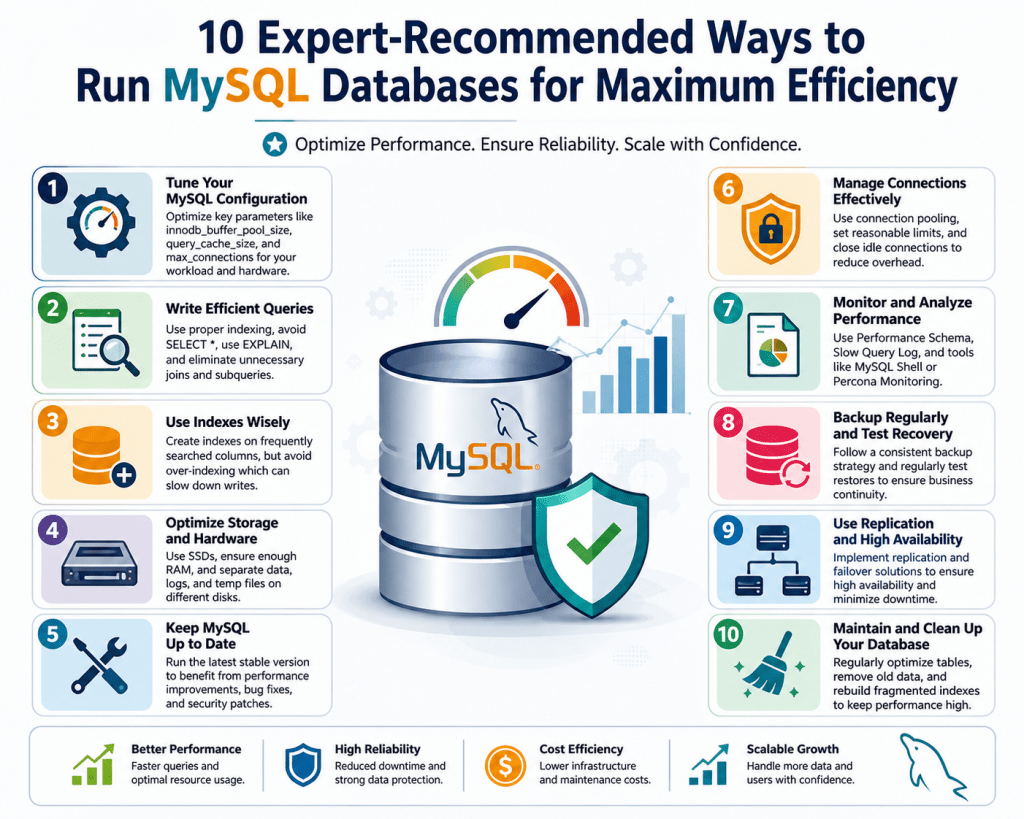
Modern digital systems depend heavily on structured data, yet most users remain unaware of how that data is stored, processed, and delivered. Behind every application interface lies a backend environment where databases handle operations that power everything from simple login forms to complex enterprise workflows. Among the most widely used database systems is MySQL, which has become a standard choice for managing structured data across industries.
Applications rely on databases to store user information, transactions, logs, and content. When a user interacts with a website or software application, the request is processed by backend logic that communicates with the database. The database retrieves or modifies data and sends the result back to the application, creating a seamless user experience. This interaction happens in milliseconds, making performance and reliability essential components of any database system.
The Foundation of Relational Databases
Relational databases revolutionized how data is organized by introducing a structured format based on tables. Each table consists of rows and columns, where rows represent records and columns define attributes. This structure allows data to be stored in an organized and predictable manner, making it easier to query and manage.
A key feature of relational databases is the ability to establish relationships between different tables. These relationships are created using keys, which connect related data across multiple tables. This approach eliminates redundancy and ensures data consistency. Compared to older flat-file systems, relational databases provide greater flexibility and scalability.
The use of SQL enables users to interact with relational databases efficiently. SQL provides commands for creating, retrieving, updating, and deleting data. Its standardized syntax makes it accessible to both beginners and experienced professionals, contributing to its widespread adoption.
What Defines MySQL as a Database System
MySQL is a relational database management system that uses SQL as its primary language for interacting with data. It is designed to handle structured data efficiently while maintaining high performance and reliability. Its open-source nature has made it accessible to a wide range of users, from individual developers to large organizations.
Maintained by Oracle Corporation, MySQL has evolved over the decades to include advanced features such as indexing, transactions, and replication. These features enhance its ability to manage large datasets and support high-traffic applications.
One of the defining characteristics of MySQL is its adaptability. It can run on various operating systems and integrate with multiple programming languages. This versatility allows developers to use MySQL in different environments, whether for small projects or large-scale systems.
How MySQL Operates Behind the Scenes
MySQL functions as a server that processes requests from clients. These clients can be applications, command-line tools, or graphical interfaces. When a query is sent to the MySQL server, it is parsed, optimized, and executed before returning the result.
The database engine plays a critical role in managing how data is stored and accessed. It handles indexing, which improves query performance by allowing faster data retrieval. It also manages caching to reduce the time required to access frequently used data.
Transactions are another important feature of MySQL. They ensure that a series of operations is executed as a single unit, maintaining data integrity even in the event of a failure. This is particularly important for applications that handle financial transactions or sensitive data.
The Difference Between MySQL and SQL
Although the terms MySQL and SQL are often used interchangeably, they represent different concepts. SQL is a language used to interact with relational databases, while MySQL is a system that implements this language to manage data.
SQL provides a standardized way to perform operations on databases, making it a fundamental skill for developers and database administrators. It is used across various database systems, each with its own implementation and extensions.
MySQL, on the other hand, is a specific database management system that uses SQL as its interface. It includes additional features and optimizations that enhance its functionality. Understanding this distinction is essential for anyone working with databases.
The Role of Database Administrators in MySQL Environments
Database administrators are responsible for ensuring that databases operate efficiently and securely. Their tasks include monitoring performance, managing user access, and performing backups. In MySQL environments, administrators use various tools and techniques to maintain optimal performance.
Security is a major concern for database administrators. They must configure access controls to ensure that only authorized users can interact with the database. This involves setting permissions and implementing authentication mechanisms.
Backup and recovery are also critical responsibilities. Administrators must ensure that data can be restored in case of hardware failures, software issues, or other unexpected events. MySQL provides tools that simplify these processes, making it easier to maintain data integrity.
Why MySQL Remains a Popular Choice
MySQL continues to be a preferred database system due to its balance of performance, ease of use, and flexibility. It supports a wide range of applications, from small websites to large enterprise systems. Its ability to handle complex queries and large datasets makes it suitable for modern computing needs.
Another factor contributing to its popularity is its strong community support. Developers and administrators have access to extensive documentation and resources that help them solve problems and improve their skills.
MySQL also benefits from continuous development, with regular updates that enhance performance and security. This ongoing improvement ensures that it remains relevant in a rapidly evolving technological landscape.
Understanding Data Relationships in MySQL
Data relationships are a fundamental aspect of relational databases. MySQL supports various types of relationships, allowing developers to model real-world scenarios effectively. These relationships define how data in different tables is connected.
A one-to-one relationship links a single record in one table to a single record in another. This is useful for separating data while maintaining a direct connection. A one-to-many relationship allows one record to be associated with multiple records in another table, which is common in scenarios such as customers and their orders.
Many-to-many relationships involve multiple records in both tables and require an intermediary table to manage the connections. This type of relationship is often used in complex systems where entities interact in multiple ways.
By supporting these relationships, MySQL enables efficient data organization and retrieval, making it easier to build scalable applications.
The Importance of Performance and Scalability
Performance is a critical factor in database systems, as it directly impacts user experience. MySQL includes features such as indexing and query optimization to improve performance. These features allow the database to handle large volumes of data efficiently.
Scalability is equally important, especially for applications that experience growth over time. MySQL can be scaled vertically by increasing server resources or horizontally by distributing data across multiple servers. This flexibility allows it to adapt to changing demands.
Proper database design and optimization are essential for maintaining performance and scalability. Developers and administrators must consider factors such as indexing strategies and query efficiency when working with MySQL.
Security Features in MySQL
Security is a key consideration in database management. MySQL provides several features to protect data from unauthorized access. These include user authentication, role-based access control, and encryption.
Administrators can define user roles and permissions to restrict access to specific data. This ensures that sensitive information is only accessible to authorized users. Encryption adds a layer of security by protecting data during transmission and storage.
Regular updates and patches also play a role in maintaining security. By keeping the database system up to date, administrators can protect against vulnerabilities and potential threats.
Integration with Modern Technologies
MySQL integrates seamlessly with various technologies, making it a versatile choice for developers. It can be used with different programming languages, frameworks, and platforms, allowing for flexible application development.
In modern environments, MySQL is often used alongside cloud services and containerized applications. This integration enables developers to build scalable and efficient systems that can handle dynamic workloads.
The ability to work with different technologies ensures that MySQL remains a relevant and valuable tool in the ever-evolving world of software development.
The Growing Demand for MySQL Skills
As data continues to play a central role in technology, the demand for database skills has increased. MySQL remains a key component of many systems, making it an important skill for developers and administrators.
Learning MySQL provides a foundation for understanding database concepts and working with structured data. It also opens opportunities in various fields, including web development, data analysis, and system administration.
The widespread use of MySQL ensures that professionals with expertise in this area are in high demand, making it a valuable addition to any technical skill set.
MySQL in Real-World Applications
MySQL is used in a wide range of applications, from content management systems to enterprise software. Its ability to handle structured data efficiently makes it suitable for applications that require reliable data storage and retrieval.
Organizations rely on MySQL to manage user data, transactions, and operational information. Its performance and scalability make it capable of supporting high-traffic applications and large datasets.
As technology continues to evolve, MySQL remains a critical component of modern systems, providing the foundation for data-driven applications and services.
Exploring Practical Ways to Run MySQL Databases
Running a database system effectively requires understanding the different methods available to interact with it. MySQL offers multiple approaches that cater to various skill levels, workflows, and environments. Developers and administrators can choose between command-line tools, graphical interfaces, and integrated environments depending on their needs. Each method provides a unique way to manage data, execute queries, and monitor performance.
The choice of how to run MySQL often depends on factors such as experience level, project complexity, and operational requirements. While some prefer direct control through command-based interaction, others rely on visual tools that simplify database management. Understanding these approaches helps build a more efficient and flexible workflow.
Running MySQL Through the Command-Line Interface
The command-line interface remains one of the most powerful and widely used methods for interacting with MySQL. It provides direct access to the database server and allows users to execute commands with precision. Many developers and database administrators prefer this approach because it offers complete control over database operations.
Using the command line, users can connect to a MySQL server, create databases, manage tables, and execute queries. This method is consistent across different operating systems, although the way it is accessed may vary slightly. Once connected, users can perform operations such as listing databases, creating new ones, and selecting specific databases for use.
The command-line interface is particularly useful for automation and scripting. Tasks such as backups, migrations, and batch processing can be executed efficiently using scripts. This capability makes it an essential tool for managing large-scale systems where repetitive tasks need to be handled quickly.
Another advantage of the command line is its lightweight nature. It does not require additional graphical resources, making it suitable for environments with limited system capacity. This efficiency is especially valuable in server environments where performance and resource optimization are critical.
Understanding Core Command-Line Operations
Working with MySQL through the command line involves a set of standard operations that form the foundation of database management. These operations include creating databases, defining tables, and manipulating data.
Creating a database is typically the first step in setting up a MySQL environment. Once a database is created, users can define tables that store structured data. Tables are designed with specific columns that represent different attributes, and each column has a defined data type.
Data manipulation involves inserting new records, updating existing ones, and deleting unwanted data. These operations are performed using SQL commands, which provide a structured way to interact with the database. Retrieving data is equally important, as it allows users to extract information based on specific conditions.
The command line also supports advanced operations such as indexing and query optimization. These features improve performance by reducing the time required to access data. By mastering these operations, users can manage databases more efficiently and ensure optimal performance.
Advantages and Challenges of Command-Line Usage
The command-line interface offers several advantages, including speed, flexibility, and control. It allows users to execute commands quickly without navigating through graphical menus. This efficiency is particularly beneficial for experienced users who are familiar with SQL syntax.
However, the command line also presents challenges, especially for beginners. The lack of a visual interface can make it difficult to understand complex database structures. Errors in commands can lead to unintended changes, requiring careful attention to detail.
Despite these challenges, learning to use the command line is highly valuable. It provides a deeper understanding of how databases operate and enhances problem-solving skills. Many professionals consider it an essential skill for working with MySQL.
Using MySQL Workbench for Visual Database Management
For users who prefer a graphical approach, MySQL Workbench offers a comprehensive solution. This tool provides a visual interface for designing, developing, and managing databases. It combines the power of SQL with an intuitive layout that simplifies complex tasks.
MySQL Workbench includes features for database modeling, query execution, and performance monitoring. Users can create and modify database structures using visual diagrams, making it easier to understand relationships between tables. This feature is particularly useful for designing complex systems.
The tool also provides a query editor that allows users to write and execute SQL commands. Results are displayed in a structured format, making it easier to analyze data. Additionally, MySQL Workbench includes tools for optimizing queries and improving performance.
Performance Monitoring and Optimization Tools
One of the key features of MySQL Workbench is its ability to monitor database performance. It provides visual dashboards that display metrics such as query execution time, server load, and resource usage. These insights help administrators identify potential issues and optimize performance.
Performance optimization involves analyzing queries and making adjustments to improve efficiency. MySQL Workbench includes tools such as execution plans, which show how queries are processed. By understanding these plans, users can identify bottlenecks and implement improvements.
The ability to monitor and optimize performance is essential for maintaining a reliable database system. It ensures that applications run smoothly and can handle increasing workloads without degradation.
Managing Users and Security with Visual Tools
MySQL Workbench simplifies user management by providing a graphical interface for configuring access controls. Administrators can create user accounts, assign roles, and define permissions without writing complex commands.
This visual approach reduces the risk of errors and makes it easier to manage security settings. It also provides a clear overview of user access, helping administrators maintain a secure environment.
Security management is a critical aspect of database administration. By using tools like MySQL Workbench, administrators can ensure that sensitive data is protected and access is controlled effectively.
Exploring Third-Party GUI Applications
In addition to MySQL Workbench, there are many third-party graphical applications designed to work with MySQL. These tools provide alternative interfaces and additional features that enhance database management.
Applications such as DBeaver offer cross-platform support and compatibility with multiple database systems. This flexibility makes them a popular choice for developers who work with different databases.
Another widely used tool is phpMyAdmin, which provides a browser-based interface for managing databases. It allows users to perform operations such as creating tables, executing queries, and managing users without installing additional software.
These tools cater to different preferences and use cases, providing users with a variety of options for interacting with MySQL.
Benefits of Graphical User Interfaces
Graphical user interfaces simplify database management by providing visual representations of data and structures. They make it easier to understand relationships between tables and navigate complex systems.
GUIs also reduce the learning curve for beginners. Instead of memorizing commands, users can perform tasks through intuitive menus and forms. This accessibility makes it easier for new users to get started with MySQL.
Additionally, GUIs often include built-in tools for debugging and optimization. These features help users identify issues and improve performance without requiring extensive knowledge of SQL.
Limitations of GUI-Based Approaches
While graphical tools offer many advantages, they also have limitations. They may consume more system resources compared to command-line tools, making them less suitable for resource-constrained environments.
GUIs can also abstract certain operations, which may limit the level of control available to advanced users. In some cases, complex tasks may still require direct command-line interaction.
Understanding these limitations helps users choose the right tool for their needs. Many professionals use a combination of command-line and graphical tools to achieve the best results.
Integrating MySQL with Development Environments
Modern development workflows often involve integrating MySQL with integrated development environments. Tools such as Visual Studio Code provide extensions that allow developers to interact with databases directly within the editor.
This integration streamlines the development process by enabling users to write code, execute queries, and manage databases in a single environment. It reduces the need to switch between different tools, improving productivity.
Integrated environments also support version control and collaboration, making it easier for teams to work together on database-driven projects.
Automation and Scripting in MySQL
Automation plays a significant role in managing databases efficiently. By using scripts, users can automate repetitive tasks such as backups, data imports, and maintenance operations.
Scripting is commonly done through the command line, where users can create scripts that execute multiple commands in sequence. This approach saves time and reduces the risk of errors.
Automation is particularly important in large-scale systems where manual management would be impractical. It ensures consistency and reliability in database operations.
Choosing the Right Method for Your Needs
Selecting the best way to run MySQL depends on individual requirements and preferences. Beginners may find graphical tools more accessible, while experienced users often prefer the control offered by the command line.
In many cases, a hybrid approach is the most effective. Using the command line for advanced operations and automation, combined with graphical tools for visualization and management, provides a balanced workflow.
Understanding the strengths and limitations of each method allows users to make informed decisions and optimize their database management practices.
Adapting to Different Environments
MySQL can be deployed in various environments, including local systems, servers, and cloud platforms. Each environment presents unique challenges and requirements.
Local setups are commonly used for development and testing, providing a controlled environment for experimentation. Server deployments are used for production systems, where performance and reliability are critical.
Cloud-based deployments offer scalability and flexibility, allowing systems to handle dynamic workloads. By understanding how to run MySQL in different environments, users can adapt to changing needs and ensure optimal performance.
Advanced MySQL Management and Optimization Techniques
As database systems grow in size and complexity, managing them requires more than basic interaction methods. Advanced MySQL management focuses on performance tuning, efficient data handling, and maintaining reliability under heavy workloads. Developers and administrators must understand how to optimize queries, structure databases effectively, and monitor system health to ensure consistent performance.
One of the most important aspects of advanced management is query optimization. Poorly written queries can slow down an entire system, even if the hardware is powerful. By analyzing query execution and refining logic, users can significantly improve response times. Indexing also plays a crucial role, as it allows the database to locate data faster without scanning entire tables.
Another key factor is efficient schema design. Structuring tables properly and minimizing redundancy ensures that data remains organized and accessible. A well-designed schema not only improves performance but also simplifies maintenance and future development.
Scaling MySQL for Growing Applications
As applications expand, their data requirements increase. Scaling MySQL involves adapting the system to handle higher volumes of data and more concurrent users. There are two primary approaches to scaling: vertical and horizontal scaling.
Vertical scaling involves upgrading hardware resources such as CPU, memory, and storage. This approach is straightforward but has limitations, as there is a maximum capacity that a single machine can handle. Horizontal scaling, on the other hand, distributes data across multiple servers, allowing the system to grow beyond the limits of a single machine.
Replication is a common technique used in horizontal scaling. It involves copying data from one server to others, enabling load distribution and improving availability. This setup allows read operations to be handled by multiple servers, reducing the load on the primary server.
Sharding is another advanced method, where data is divided into smaller segments and distributed across different servers. This approach is particularly useful for very large datasets, as it improves performance and scalability.
Ensuring Data Security and Integrity
Data security is a critical concern in any database system. MySQL provides several features to protect data from unauthorized access and ensure its integrity. These include authentication mechanisms, encryption, and access control.
Administrators can define user roles and permissions to restrict access to specific parts of the database. This ensures that sensitive information is only accessible to authorized individuals. Encryption protects data during transmission and storage, adding an extra layer of security.
Maintaining data integrity involves ensuring that data remains accurate and consistent. Constraints such as primary keys and foreign keys help enforce relationships between tables. Transactions ensure that operations are completed successfully or not at all, preventing partial updates that could lead to inconsistencies.
Regular audits and monitoring are essential for maintaining security. By tracking database activity, administrators can identify potential threats and take corrective action before issues escalate.
Backup and Disaster Recovery Strategies
Data loss can have serious consequences, making backup and recovery strategies essential for any MySQL deployment. Backups ensure that data can be restored in case of hardware failures, software issues, or human errors.
There are different types of backups, including full backups and incremental backups. Full backups capture the entire database, while incremental backups only record changes since the last backup. Combining these methods provides a balance between storage efficiency and recovery speed.
Recovery strategies must be carefully planned to minimize downtime. This involves testing backup procedures regularly to ensure that data can be restored quickly and accurately. Automated backup systems are often used to ensure consistency and reduce the risk of human error.
Disaster recovery plans also include failover mechanisms, where a secondary system takes over if the primary system fails. This ensures continuous availability and reduces the impact of unexpected events.
Monitoring and Performance Analysis
Monitoring is a crucial aspect of database management. It involves tracking system performance, identifying bottlenecks, and ensuring that the database operates efficiently. MySQL provides various tools and metrics that help administrators monitor performance.
Key performance indicators include query execution time, server load, and resource usage. By analyzing these metrics, administrators can identify areas that need improvement. Slow queries can be optimized, and resource allocation can be adjusted to enhance performance.
Logging is another important component of monitoring. Logs provide detailed information about database activity, helping administrators troubleshoot issues and understand system behavior. Regular analysis of logs can reveal patterns and potential problems.
Proactive monitoring allows administrators to address issues before they impact users. This approach ensures a stable and reliable database environment.
Automation and Workflow Optimization
Automation plays a significant role in managing complex database systems. By automating routine tasks, administrators can save time and reduce the risk of errors. Common tasks that can be automated include backups, updates, and performance checks.
Scripts are often used to automate operations. These scripts can execute multiple commands in sequence, ensuring consistency and efficiency. Automation tools can also schedule tasks, ensuring that they are performed at regular intervals.
Workflow optimization involves streamlining processes to improve productivity. This includes integrating database management with development workflows and using tools that simplify complex tasks. Efficient workflows reduce the time required for maintenance and allow teams to focus on more strategic activities.
Working with Cloud-Based MySQL Deployments
Cloud computing has transformed how databases are deployed and managed. MySQL can be hosted in cloud environments, providing scalability, flexibility, and ease of management. Cloud-based deployments allow organizations to scale resources dynamically based on demand.
One of the main advantages of cloud deployments is the ability to handle variable workloads. Resources can be increased during peak usage and reduced during low activity, optimizing costs and performance. Cloud platforms also provide built-in tools for monitoring, backup, and security.
Managed database services simplify administration by handling tasks such as updates, backups, and scaling automatically. This allows developers and administrators to focus on application development rather than infrastructure management.
Despite these advantages, cloud deployments require careful planning. Factors such as data security, latency, and cost management must be considered to ensure optimal performance.
Integrating MySQL with Modern Development Practices
Modern software development emphasizes collaboration, automation, and continuous improvement. MySQL integrates well with these practices, supporting workflows that enhance productivity and efficiency.
Version control systems allow developers to track changes in database schemas and queries. This ensures consistency and facilitates collaboration among team members. Continuous integration and deployment pipelines automate the process of testing and deploying changes, reducing the risk of errors.
Containerization is another important trend in modern development. By running MySQL in containers, developers can create consistent environments across different systems. This approach simplifies deployment and ensures that applications run reliably.
Integration with development tools and frameworks further enhances MySQL’s usability. Developers can interact with the database directly from their development environment, streamlining the development process.
Handling Large-Scale Data and High Traffic
Managing large datasets and high traffic requires advanced strategies to maintain performance and reliability. MySQL provides features that help handle these challenges effectively.
Partitioning is a technique used to divide large tables into smaller segments. This improves query performance by allowing the database to access only relevant portions of data. It also simplifies maintenance tasks such as backups and indexing.
Caching is another important strategy. By storing frequently accessed data in memory, caching reduces the need to query the database repeatedly. This improves response times and reduces server load.
Load balancing distributes traffic across multiple servers, ensuring that no single server becomes overwhelmed. This approach enhances scalability and improves system reliability.
Maintaining Long-Term Database Health
Ensuring the long-term health of a MySQL database requires ongoing maintenance and optimization. Regular updates are essential for keeping the system secure and up to date with the latest features.
Database maintenance tasks include cleaning up unused data, optimizing tables, and rebuilding indexes. These activities improve performance and prevent issues caused by data fragmentation.
Capacity planning is another important aspect of long-term management. By analyzing usage patterns, administrators can anticipate future requirements and plan for growth. This proactive approach helps avoid performance bottlenecks and ensures a smooth user experience.
Documentation is also critical for maintaining database health. Keeping detailed records of configurations, procedures, and changes ensures that knowledge is preserved and can be shared among team members.
The Future of MySQL in Data-Driven Systems
As technology continues to evolve, MySQL remains a key component of data-driven systems. Its adaptability and robust feature set make it suitable for a wide range of applications. Ongoing development ensures that it continues to meet the demands of modern computing.
Emerging trends such as artificial intelligence, big data, and real-time analytics are influencing how databases are used. MySQL is evolving to support these trends, providing features that enable efficient data processing and analysis.
The growing importance of data in decision-making highlights the need for reliable and scalable database systems. MySQL’s ability to handle complex data structures and high workloads ensures its continued relevance in the future.
By understanding advanced management techniques and staying informed about new developments, users can leverage MySQL effectively in an ever-changing technological landscape.
Conclusion
Understanding how databases function is essential in a world where nearly every digital interaction depends on structured data. Throughout, the focus has remained on explaining how MySQL operates, why it is widely used, and how it can be effectively managed using different approaches. From foundational concepts to advanced strategies, MySQL demonstrates its value as a reliable and adaptable relational database system that supports a wide range of applications.
At its core, MySQL represents more than just a storage system. It acts as a central component that connects application logic with persistent data. Every time a user interacts with an application, whether by logging in, submitting data, or retrieving information, the database plays a crucial role in processing and delivering results. This invisible layer of technology ensures that applications function smoothly and consistently.
A major strength of MySQL lies in its structured approach to data management. Organizing information into tables with defined relationships, it allows developers to build systems that reflect real-world scenarios. The use of SQL provides a standardized way to interact with data, making it easier to perform complex operations while maintaining clarity and consistency. This combination of structure and accessibility has contributed to MySQL’s long-standing popularity.
Another important takeaway is the flexibility MySQL offers in terms of how it can be used. Whether through command-line tools, graphical interfaces, or integrated development environments, users have multiple options for interacting with the database. Each method serves a different purpose, allowing individuals to choose the approach that best fits their workflow and level of expertise. This flexibility ensures that MySQL remains accessible to beginners while still meeting the needs of experienced professionals.
The discussion around command-line usage highlights the importance of direct control and efficiency. While it may require a deeper understanding of commands and syntax, it offers unmatched precision and the ability to automate complex tasks. This makes it an essential tool for administrators who need to manage large systems or perform repetitive operations. At the same time, graphical tools provide an alternative that simplifies many aspects of database management, making it easier to visualize data structures and monitor performance.
Performance optimization emerges as a recurring theme in effective database management. As applications grow and handle increasing amounts of data, maintaining speed and efficiency becomes critical. Techniques such as indexing, query optimization, and caching play a significant role in ensuring that MySQL continues to perform well under pressure. These strategies not only improve user experience but also reduce the strain on system resources.
Scalability is another key aspect that reinforces the relevance of MySQL in modern environments. The ability to expand from a small local setup to a large distributed system allows it to adapt to changing demands. Whether through vertical scaling or more advanced methods like replication and sharding, MySQL provides the tools needed to handle growth without compromising performance. This adaptability is particularly important in a landscape where applications must be prepared to scale rapidly.
Security and data integrity are equally important considerations. Protecting sensitive information requires a combination of access controls, encryption, and careful monitoring. MySQL includes features that support these requirements, enabling administrators to create secure environments where data remains protected from unauthorized access. At the same time, mechanisms such as transactions and constraints ensure that data remains consistent and reliable, even in complex systems.
The importance of backup and recovery strategies cannot be overlooked. Data loss can occur due to various reasons, including hardware failures, software issues, or human error. By implementing regular backups and testing recovery procedures, organizations can minimize the impact of such events. This proactive approach ensures that systems remain resilient and capable of recovering quickly from disruptions.
Modern development practices have further expanded the role of MySQL. Integration with cloud environments, containerized applications, and automated workflows has transformed how databases are deployed and managed. These advancements allow for greater efficiency and scalability, enabling teams to focus on innovation rather than infrastructure. MySQL’s compatibility with these practices ensures that it continues to be a valuable tool in contemporary development environments.
Another significant point is the importance of continuous learning and adaptation. As technology evolves, so do the tools and techniques used to manage databases. Staying informed about new features, best practices, and emerging trends is essential for maintaining an effective database system. MySQL’s ongoing development reflects the need to adapt to changing requirements, ensuring that it remains relevant in a rapidly evolving landscape.
The role of database administrators and developers is central to the successful use of MySQL. Their expertise in designing schemas, optimizing queries, and managing systems directly impacts the performance and reliability of applications. By leveraging the features and tools available, they can create systems that are both efficient and scalable. This highlights the importance of developing strong database skills and understanding the underlying principles of data management.
Handling large-scale data and high traffic further emphasizes the need for advanced strategies. Techniques such as partitioning, load balancing, and caching enable MySQL to manage complex workloads effectively. These approaches ensure that systems can handle increasing demands without compromising performance or stability. As data continues to grow in volume and importance, these capabilities become even more critical.
Long-term maintenance is another essential aspect of database management. Regular updates, performance tuning, and capacity planning ensure that systems remain efficient and secure over time. By taking a proactive approach to maintenance, administrators can prevent issues before they arise and ensure that databases continue to meet the needs of their applications.
Ultimately, MySQL’s significance lies in its ability to provide a reliable foundation for data-driven systems. Its combination of performance, flexibility, and ease of use makes it a preferred choice for a wide range of applications. From small projects to large enterprise systems, it offers the tools and features needed to manage data effectively.
As digital systems continue to expand and evolve, the importance of robust database solutions will only increase. MySQL’s proven track record and ongoing development position it as a key player in this space. By understanding its capabilities and applying best practices, users can harness its full potential and build systems that are both efficient and resilient.