
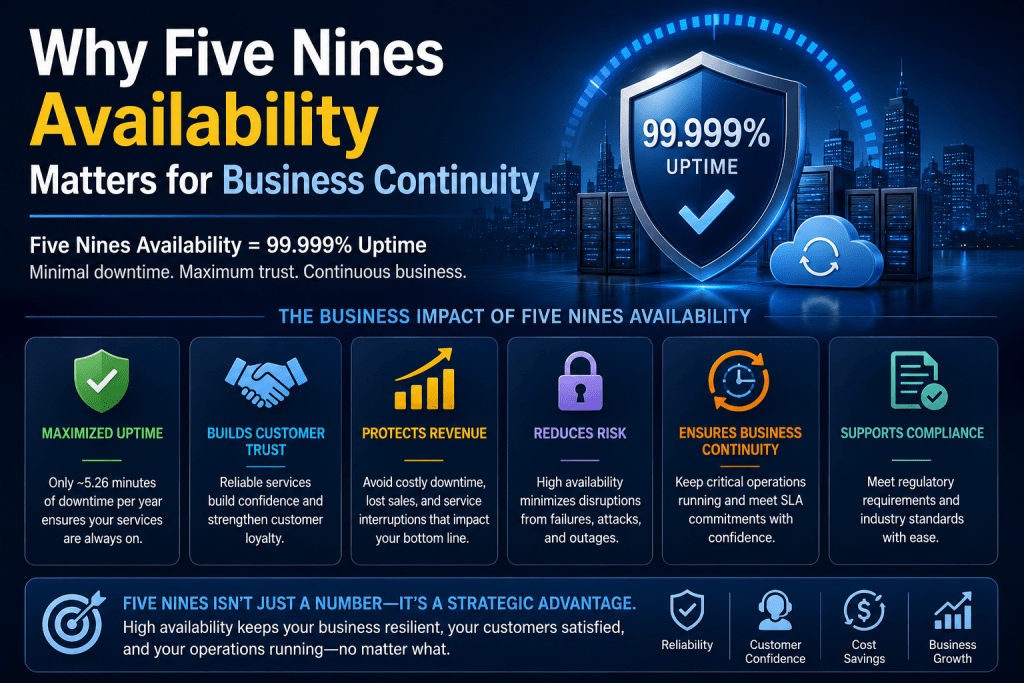
High availability has become one of the most essential goals in modern information technology environments. Businesses depend heavily on digital services, online applications, cloud platforms, and connected systems to support daily operations. Any interruption in service can create major disruptions that affect productivity, customer trust, and revenue generation. Because of this, organizations place enormous emphasis on maintaining stable and reliable systems that remain accessible around the clock. High availability is not simply a technical objective; it is now a critical business requirement that directly influences operational success.
Why Uptime Matters for Businesses
Uptime represents the amount of time a system remains operational and accessible for use. Companies track uptime percentages because they provide insight into system reliability and performance consistency. Even short periods of downtime can have significant financial consequences, especially for organizations that depend on online transactions or real-time communication. Customers expect digital services to function continuously, and repeated outages can damage a company’s reputation very quickly. As organizations become increasingly dependent on technology, uptime measurements become more important for evaluating service quality and infrastructure effectiveness.
The Growing Dependence on Digital Services
Modern businesses rely on technology more than ever before. Cloud computing, remote work, online collaboration, and digital communication platforms have transformed the way organizations operate. Employees often work from multiple locations while customers access services from around the world at all hours of the day. This constant demand means systems must remain available regardless of time zones, traffic surges, or unexpected failures. Organizations that cannot provide reliable access risk losing customers to competitors with more stable infrastructure.
The Relationship Between Reliability and Customer Trust
Customers rarely think about infrastructure until something stops working. When websites become unavailable or applications fail unexpectedly, frustration grows immediately. Repeated downtime creates the impression that a company is unreliable or unprepared. Businesses that consistently maintain strong uptime records build customer confidence because users know services will remain available when needed. Reliability becomes a competitive advantage in industries where customers depend on uninterrupted access to systems and data.
The Hidden Costs of Downtime
Downtime impacts organizations in many ways beyond direct financial loss. Employees may be unable to complete tasks, support teams become overwhelmed with complaints, and operational delays begin affecting multiple departments simultaneously. Businesses may also face penalties for failing to meet contractual obligations or service guarantees. In some industries, downtime can create legal or compliance problems that lead to additional expenses. The longer systems remain unavailable, the greater the impact becomes across the organization.
The Importance of Measuring Availability Correctly
Many organizations misunderstand how availability measurements work. A high uptime percentage may sound impressive, but even small differences between percentages can represent substantial amounts of downtime over an entire year. Companies sometimes focus only on broad statistics without understanding how those numbers affect real users. Accurate measurement requires analyzing not only whether systems are online but also whether they are performing properly under normal workloads.
The Problem with Surface-Level Metrics
Some systems appear healthy according to monitoring dashboards while users continue experiencing problems. This situation occurs when organizations rely too heavily on simplified metrics instead of evaluating actual performance quality. A service may technically remain operational while still suffering from delays, connectivity issues, or intermittent failures that frustrate users. Focusing only on visible statistics can create a false sense of confidence and prevent teams from identifying deeper operational problems.
The Watermelon Effect in IT Operations
The “watermelon effect” describes systems that appear healthy externally but contain serious internal issues. Monitoring tools may display green indicators showing systems are online while customers experience poor service quality. This mismatch between reported metrics and user experience can damage trust between service providers and clients. Organizations must ensure their monitoring strategies reflect actual customer experiences rather than only basic operational status indicators.
Understanding the Difference Between Uptime and Availability
Although people often use uptime and availability interchangeably, they describe different concepts. Uptime measures the amount of time a system has remained operational during a specific period. Availability refers to the likelihood that a system will function properly whenever users need access. Uptime focuses on historical performance, while availability emphasizes readiness and accessibility under real operating conditions. Understanding this distinction is essential when evaluating infrastructure reliability.
Why Historical Performance Is Not a Guarantee
A system with excellent uptime records may still experience future failures. Historical reliability provides useful information, but it cannot guarantee future availability. Hardware ages, software vulnerabilities emerge, and unexpected incidents occur without warning. Organizations must prepare for failures even when systems appear stable. Relying solely on past performance can create dangerous assumptions that leave businesses unprepared for outages or operational disruptions.
How Operational Availability Is Evaluated
Operational availability measures how effectively systems remain ready for use over time. This calculation considers active operating time, standby readiness, maintenance activities, and delays caused by logistics or staffing issues. The goal is to determine how much time systems are actually available to support business operations. Lower maintenance delays and faster corrective actions improve operational availability and reduce the likelihood of prolonged outages.
The Role of Operating Time in Availability
Operating time represents periods when systems actively perform business functions. During this time, applications process requests, servers handle workloads, and users interact with services normally. High operating time contributes directly to strong availability metrics because systems remain productive and accessible. Organizations work to maximize operating time through stable infrastructure design and proactive maintenance practices.
Why Standby Readiness Is Important
Standby systems play a major role in high availability environments. These systems may not actively process workloads but remain prepared to take over if failures occur. Standby infrastructure reduces downtime because backup resources can activate immediately during emergencies. Without standby systems, organizations may need significant time to restore services after failures, increasing operational disruption and financial losses.
How Maintenance Impacts Availability
Preventive and corrective maintenance are necessary for keeping systems reliable, but maintenance activities can also reduce availability if not managed carefully. Preventive maintenance helps organizations identify potential problems before failures occur, while corrective maintenance addresses existing issues. Efficient maintenance planning minimizes disruptions and keeps downtime as short as possible. Poorly coordinated maintenance schedules, however, can create unnecessary service interruptions.
The Impact of Administrative Delays
Availability calculations also consider delays caused by staffing shortages, replacement part availability, transportation issues, or approval processes. Even when technical solutions exist, organizations may experience extended downtime if teams cannot respond quickly. Administrative inefficiencies often become hidden contributors to poor availability performance. Streamlined processes and effective coordination reduce delays and improve recovery times significantly.
Why High Availability Requires Strategic Planning
Achieving high availability does not happen automatically. Organizations must design systems intentionally to eliminate single points of failure and maintain operational continuity during disruptions. This planning includes hardware redundancy, network resilience, failover systems, monitoring platforms, and disaster recovery procedures. High availability strategies require coordination across technical teams, management, and external service providers.
The Importance of Redundancy in Infrastructure
Redundancy ensures backup components are available when primary systems fail. Organizations often duplicate servers, storage systems, network connections, and power supplies to maintain service continuity. If one component stops functioning, another immediately takes over without significant interruption. Redundancy is one of the most effective methods for reducing downtime and improving overall reliability.
How Failover Systems Protect Availability
Failover mechanisms automatically transfer workloads to backup systems during failures. These systems detect disruptions and reroute operations without requiring manual intervention. Fast failover processes minimize downtime and reduce the impact of outages on users. Businesses that depend on continuous operations often invest heavily in advanced failover technologies to maintain stable service delivery.
Why Monitoring Tools Are Essential
Monitoring platforms help organizations identify issues before they become major outages. These tools track server health, network performance, application behavior, and infrastructure stability in real time. Effective monitoring allows teams to respond quickly to abnormal conditions and prevent small problems from escalating. Continuous visibility into system performance is essential for maintaining strong availability standards.
The Role of Automation in High Availability
Automation improves response speed and reduces the risk of human error. Automated systems can restart services, shift workloads, trigger alerts, and execute recovery actions immediately after detecting failures. Without automation, organizations may lose valuable time waiting for personnel to diagnose and respond to incidents manually. Automation strengthens operational resilience and supports faster recovery processes.
Why Incident Response Planning Matters
Even highly reliable systems eventually experience failures. Organizations must prepare detailed incident response plans that define responsibilities, communication procedures, and recovery steps. Teams should know exactly who handles specific situations and how escalation processes work during emergencies. Clear planning reduces confusion during outages and accelerates recovery efforts significantly.
The Importance of Rapid Communication During Outages
Communication becomes critical during operational incidents. Technical teams, management, vendors, and customers may all require updates during outages. Delayed or unclear communication often increases frustration and complicates recovery efforts. Organizations with structured communication procedures can coordinate responses more effectively and maintain better control during high-pressure situations.
How Staffing Influences Availability Performance
Technology alone cannot guarantee high availability. Skilled personnel are equally important for maintaining reliable operations. Experienced engineers monitor systems, manage maintenance activities, respond to alerts, and troubleshoot failures quickly. Organizations that lack properly trained staff may struggle to maintain stable infrastructure even when using advanced technology solutions.
The Need for Around-the-Clock Support
Many businesses operate continuously, requiring support teams to remain available outside normal working hours. Failures can occur during nights, weekends, or holidays when fewer personnel are present. Organizations seeking very high availability levels often maintain on-call teams or dedicated support staff to ensure rapid response times regardless of when incidents occur.
Understanding the Five Nines Standard
The phrase “Five Nines” refers to a system availability target of 99.999 percent uptime. This standard is widely recognized as one of the highest levels of operational reliability in enterprise infrastructure. Businesses that achieve Five Nines availability experience only a few minutes of downtime over an entire year. While this percentage may appear only slightly higher than other uptime figures, the difference in real-world reliability is enormous. Every additional digit after the decimal point significantly reduces allowable downtime and increases the expectations placed on infrastructure teams.
Why Small Percentage Differences Matter
Many people underestimate how important decimal points are in availability calculations. A system with 99 percent uptime may sound reliable, but it can still experience several days of downtime annually. In contrast, a Five Nines environment allows only a few minutes of interruption throughout the entire year. These small numerical differences represent massive operational improvements that directly affect customer experience, productivity, and financial performance. Organizations handling sensitive transactions or critical services cannot afford the risks associated with lower availability levels.
The Real Meaning of 99 Percent Uptime
A system operating at 99 percent uptime still experiences substantial downtime over time. When calculated across a full year, even a single percentage point of unavailability translates into many hours of service interruption. For organizations that depend heavily on digital services, this level of downtime can create serious operational challenges. Although 99 percent may seem acceptable for smaller businesses or noncritical systems, larger enterprises often require much higher reliability standards.
How Four Nines Changes Availability Expectations
A Four Nines availability target, which equals 99.99 percent uptime, dramatically reduces acceptable downtime. Systems operating at this level must remain highly resilient and recover quickly from failures. Achieving Four Nines often requires advanced infrastructure design, redundancy planning, and proactive monitoring. Many enterprise service providers aim for this level because it balances reliability with manageable operational costs.
Why Five Nines Is Considered Elite Reliability
Five Nines availability represents a level of reliability that very few organizations consistently achieve. Maintaining this standard requires exceptional infrastructure resilience, rapid incident response, and continuous operational oversight. Systems must withstand hardware failures, software issues, maintenance activities, and unexpected disruptions without causing noticeable outages for users. Because the tolerance for downtime is extremely small, organizations pursuing Five Nines invest heavily in redundancy and automation.
The Relationship Between Downtime and Revenue Loss
Every minute of downtime can impact business revenue. Online retailers may lose transactions, financial institutions may interrupt customer services, and communication providers may affect thousands of users simultaneously. In highly competitive industries, prolonged outages often push customers toward alternative providers. The financial impact of downtime extends beyond immediate losses because damaged reputation and reduced customer confidence can create long-term consequences.
How Downtime Affects Employee Productivity
System outages disrupt internal operations as well as customer-facing services. Employees may lose access to applications, databases, communication tools, or workflow systems needed to complete tasks. Even short interruptions can delay projects, reduce efficiency, and create frustration among staff members. When outages occur frequently, productivity losses accumulate rapidly and affect overall organizational performance.
Why Availability Targets Depend on Business Needs
Not every organization requires Five Nines availability. Businesses must evaluate how downtime affects operations before selecting availability targets. A small internal application used occasionally may tolerate brief interruptions without major consequences. However, healthcare systems, banking platforms, telecommunications networks, and emergency services often require extremely high uptime because interruptions can affect safety, compliance, or essential business operations.
The Cost of Achieving Higher Availability Levels
Each improvement in availability requires additional investments in infrastructure, staffing, monitoring, and support processes. Moving from 99 percent uptime to Five Nines involves far more than simple hardware upgrades. Organizations often need duplicate systems, geographically distributed data centers, advanced failover mechanisms, and dedicated support teams. These improvements increase operational costs significantly, which is why businesses must balance reliability goals against financial realities.
Why Redundancy Is Essential for Five Nines
Redundancy forms the foundation of high availability systems. Critical infrastructure components such as servers, storage devices, network paths, and power supplies must have backups ready to take over immediately if failures occur. Without redundancy, a single hardware issue can cause complete service outages. Multiple layers of redundancy reduce the risk of downtime and improve overall system resilience.
How Load Balancing Improves Availability
Load balancing distributes workloads across multiple systems instead of relying on a single resource. When traffic is shared among several servers, the failure of one component does not overwhelm the environment. Remaining systems continue handling requests while failed components are repaired or replaced. Load balancing also improves performance by preventing individual systems from becoming overloaded during periods of high demand.
Why Capacity Planning Supports Reliability
Organizations must ensure infrastructure has enough capacity to handle workload spikes and component failures simultaneously. Systems running near maximum utilization cannot absorb additional traffic effectively when failures occur. Proper capacity planning ensures backup systems can handle increased workloads without degrading performance. This approach helps organizations maintain stable operations even during unexpected disruptions.
The Importance of Fault Tolerance
Fault tolerance allows systems to continue functioning despite failures. Instead of shutting down completely when problems occur, fault-tolerant systems isolate failed components and maintain service continuity. This capability is essential for organizations pursuing high availability because it minimizes user impact during incidents. Fault tolerance requires careful design, advanced hardware configurations, and intelligent software management.
How Network Design Influences Uptime
Reliable network architecture plays a major role in maintaining high availability. Network failures can disconnect users from applications even when servers remain operational. Organizations often deploy multiple internet connections, redundant switches, and backup communication paths to reduce connectivity risks. Proper network design ensures traffic can reroute automatically if primary connections fail.
Why Power Protection Is Critical
Power interruptions are among the most common causes of downtime. High availability environments use uninterruptible power supplies, backup generators, and redundant electrical systems to maintain operations during outages. These protections prevent sudden shutdowns that could damage hardware or corrupt data. Reliable power infrastructure is essential for maintaining continuous service availability.
The Role of Data Replication in Availability
Data replication ensures copies of important information remain accessible even if primary storage systems fail. Replicated data may exist across multiple servers, storage arrays, or geographic locations. This strategy reduces the risk of permanent data loss and allows organizations to restore operations quickly after incidents. Real-time replication is especially important for critical applications requiring continuous access to current information.
Why Geographic Redundancy Matters
Natural disasters, regional outages, and large-scale disruptions can affect entire facilities. Geographic redundancy protects organizations by distributing infrastructure across multiple locations. If one data center becomes unavailable, services can continue operating from another site. Businesses seeking extremely high availability often maintain infrastructure in separate cities or regions to reduce environmental and operational risks.
How Cloud Computing Supports High Availability
Cloud platforms provide organizations with scalable infrastructure and built-in redundancy options. Many cloud providers operate multiple data centers and offer automated failover capabilities. Businesses can use these services to improve availability without building all infrastructure internally. However, cloud environments still require careful planning because poor configuration or inadequate monitoring can create vulnerabilities despite the provider’s reliability features.
Why Monitoring Must Be Continuous
Continuous monitoring allows organizations to detect problems before they become major outages. Monitoring systems track hardware health, application performance, network traffic, and service response times around the clock. Early detection enables teams to resolve issues quickly and minimize downtime. Without comprehensive monitoring, failures may go unnoticed until customers begin reporting problems.
The Importance of Real-Time Alerts
Monitoring tools become far more effective when combined with automated alerts. Notifications sent through phone calls, text messages, emails, or collaboration platforms ensure response teams learn about incidents immediately. Rapid awareness shortens response times and reduces operational impact. Delayed detection often turns minor issues into large-scale outages that require much longer recovery periods.
Why Incident Response Speed Matters
The speed of incident response directly affects availability outcomes. Even well-designed systems can experience failures, but organizations that respond quickly often prevent major disruptions. Response plans should define clear responsibilities, escalation procedures, and communication methods. Teams that practice response scenarios regularly can resolve incidents more efficiently under pressure.
How Human Error Impacts Availability
Many outages result from configuration mistakes, accidental deletions, or procedural errors rather than hardware failures. Human error remains one of the largest threats to uptime. Organizations reduce these risks through automation, change management processes, staff training, and peer review procedures. Minimizing manual intervention helps improve consistency and reduces operational mistakes.
Why Change Management Is Essential
Infrastructure changes can unintentionally create instability if not managed carefully. Software updates, hardware replacements, and configuration modifications should follow structured approval and testing processes. Change management ensures teams evaluate risks before implementing adjustments in production environments. Careful planning reduces the likelihood of outages caused by unexpected compatibility or performance problems.
The Role of Preventive Maintenance
Preventive maintenance helps organizations identify issues before failures occur. Regular inspections, software updates, hardware testing, and performance evaluations improve long-term reliability. Although maintenance activities may require temporary interruptions, they often prevent much larger outages later. Well-planned maintenance schedules minimize disruption while strengthening overall system stability.
Why Documentation Supports Availability Goals
Accurate documentation helps teams respond quickly during incidents. Infrastructure diagrams, recovery procedures, contact lists, and troubleshooting guides provide valuable information when systems fail unexpectedly. Poor documentation increases confusion and delays recovery efforts. Organizations pursuing high availability must maintain clear and updated operational records.
How Disaster Recovery Complements High Availability
High availability focuses on minimizing interruptions, while disaster recovery emphasizes restoring operations after major failures. Organizations need both strategies to maintain business continuity effectively. Disaster recovery plans define how systems, data, and services will be restored following catastrophic events such as cyberattacks, hardware destruction, or natural disasters. Strong recovery planning reduces downtime and limits operational damage.
Why Testing Is Necessary for Reliability
Availability strategies must be tested regularly to ensure they function correctly under real conditions. Organizations often conduct failover simulations, backup recovery tests, and incident response exercises to identify weaknesses. Testing reveals hidden vulnerabilities that might otherwise remain unnoticed until actual emergencies occur. Continuous evaluation improves readiness and strengthens operational resilience.
The Importance of Building a Reliability Culture
Achieving high availability requires more than technology alone. Organizations must create a culture where reliability becomes a shared responsibility across departments. Engineers, managers, support staff, and leadership teams all contribute to maintaining stable operations. When reliability becomes part of organizational culture, teams prioritize proactive planning, careful decision-making, and continuous improvement.
Understanding Service Level Agreements and Availability Guarantees
Service Level Agreements, commonly called SLAs, define the level of service a provider promises to deliver. These agreements establish expectations regarding uptime, response times, maintenance responsibilities, and operational support. Businesses rely on SLAs when choosing vendors because they provide measurable performance commitments. However, many organizations misunderstand what these agreements actually guarantee. An SLA may promise high availability percentages, but the fine details often contain important limitations that significantly affect real-world service reliability.
Why SLA Terminology Can Be Misleading
Many providers advertise impressive uptime percentages that appear reassuring at first glance. Businesses may assume these guarantees mean services will remain fully operational at all times. In reality, SLA language is often carefully written to protect providers from liability during certain types of outages. Customers who fail to examine contract details closely may discover that many disruptions are excluded from guaranteed uptime calculations. Understanding the exact wording within an SLA is essential before relying on those commitments.
The Difference Between Response Time and Resolution Time
One of the most misunderstood aspects of SLAs involves response time guarantees. A provider may promise a four-hour response window, but this does not mean the problem will be resolved within four hours. Response time simply refers to how quickly the provider acknowledges the issue and begins investigating it. Actual resolution may take much longer depending on the complexity of the problem. Businesses that misunderstand this distinction may expect much faster recovery than the agreement actually provides.
Why Outage Definitions Matter
Not all service interruptions qualify as downtime under an SLA. Providers often define outages according to specific technical criteria. For example, brief interruptions, degraded performance, or localized connectivity problems may not count toward downtime calculations. Customers might experience serious disruptions while providers continue reporting that systems remain operational according to contractual definitions. Businesses must carefully evaluate how outages are measured and categorized within agreements.
How Planned Maintenance Affects Availability Guarantees
Many SLAs exclude planned maintenance periods from uptime calculations. Providers may schedule maintenance windows during off-peak hours and classify those interruptions as acceptable downtime. Although maintenance is necessary for infrastructure stability, it still affects users who depend on continuous access. Organizations operating around the clock must understand how planned maintenance impacts overall service availability and whether maintenance schedules align with operational requirements.
Why Human Error Is Often Excluded
Service guarantees frequently apply only to hardware or infrastructure failures. Downtime caused by human mistakes, incorrect configurations, accidental deletions, or administrative errors may fall outside SLA coverage. Since human error remains one of the most common causes of outages, these exclusions can create major gaps between expected and actual reliability. Businesses should evaluate whether providers have strong operational processes to minimize these risks.
The Challenge of Shared Responsibility in Cloud Services
Cloud computing environments introduce additional complexity into availability management. Cloud providers maintain infrastructure reliability, but customers often remain responsible for application configuration, security management, and workload optimization. Misconfigured services or poorly designed architectures can cause outages even when the cloud platform itself remains operational. Understanding shared responsibility models is critical for maintaining stable cloud environments.
Why Infrastructure Dependencies Matter
Modern systems depend on multiple interconnected components including networks, databases, storage systems, APIs, and external providers. A failure in one area can affect overall service availability even if other systems continue functioning properly. For example, a storage network issue may prevent applications from accessing critical data despite servers remaining online. Businesses must evaluate the reliability of every dependency rather than focusing only on primary infrastructure components.
How Third-Party Vendors Influence Availability
Organizations often rely on multiple vendors simultaneously. Internet providers, cloud platforms, software vendors, and managed service providers all contribute to operational performance. A single weak link within this chain can create major outages. Coordinating availability expectations across different providers becomes challenging because each vendor may define uptime differently. Businesses must ensure external partnerships align with their operational reliability goals.
Why Financial Compensation Rarely Covers Actual Losses
SLAs commonly include financial penalties or service credits if providers fail to meet uptime guarantees. However, these reimbursements are usually far smaller than the actual financial damage caused by outages. Lost sales, reduced productivity, customer dissatisfaction, and reputational harm often exceed the compensation provided under agreements. Businesses should view SLA penalties as limited protection rather than complete financial coverage for downtime losses.
The Importance of Internal Backup Planning
Relying entirely on provider guarantees creates significant risk. Organizations should maintain internal backup and disaster recovery strategies regardless of SLA promises. Backup systems, replicated data, and alternative communication methods reduce dependency on external providers during outages. Companies with strong internal continuity plans recover more quickly and experience less operational disruption when failures occur.
Why Disaster Recovery Is Essential for Business Continuity
Disaster recovery focuses on restoring operations after major incidents such as cyberattacks, hardware failures, natural disasters, or regional outages. While high availability minimizes interruptions, disaster recovery addresses worst-case scenarios where systems become completely unavailable. Organizations must establish clear recovery procedures, backup policies, and restoration priorities to protect critical operations during emergencies.
How Recovery Objectives Shape Planning
Businesses often define recovery objectives to guide continuity planning. Recovery Time Objectives determine how quickly systems must return online after outages, while Recovery Point Objectives define acceptable levels of data loss. Critical applications may require immediate restoration with minimal data loss, while less important systems can tolerate longer recovery periods. These objectives help organizations allocate resources effectively based on operational priorities.
The Role of Incident Response Teams
Incident response teams manage operational disruptions and coordinate recovery efforts during outages. These teams typically include engineers, security specialists, managers, and communication personnel. Clear role assignments ensure rapid action during emergencies. Without structured response teams, organizations may waste valuable time determining responsibilities while outages continue affecting operations.
Why Communication During Incidents Is Critical
Outages create uncertainty for employees, customers, and business partners. Effective communication reduces confusion and maintains trust during operational disruptions. Organizations should establish procedures for delivering status updates through email, messaging systems, phone notifications, or public announcements. Transparent communication demonstrates professionalism and helps manage expectations during recovery efforts.
How Escalation Procedures Improve Response Efficiency
Escalation procedures define when and how incidents should move to higher support levels. Minor issues may be resolved by frontline staff, while complex outages require senior engineers or specialized experts. Structured escalation prevents delays by ensuring the right personnel become involved quickly. Effective escalation management significantly reduces recovery times during critical incidents.
Why Around-the-Clock Monitoring Is Necessary
System failures can occur at any time, including nights, weekends, and holidays. Continuous monitoring ensures organizations detect issues immediately regardless of when they occur. Businesses seeking high availability often maintain dedicated operations centers staffed around the clock. Constant visibility into infrastructure performance allows teams to respond rapidly before problems escalate into major outages.
The Importance of Automated Detection Systems
Automated monitoring tools identify abnormal conditions faster than manual observation alone. These systems analyze performance metrics, application behavior, and infrastructure health continuously. Automated alerts notify support teams immediately when predefined thresholds are exceeded. Early detection allows organizations to resolve issues before customers experience significant service degradation.
Why Proactive Maintenance Reduces Downtime
Waiting for failures to occur before taking action increases operational risk. Proactive maintenance strategies identify potential issues early through regular inspections, updates, hardware testing, and capacity evaluations. Preventive maintenance reduces unexpected outages and extends the lifespan of infrastructure components. Organizations that prioritize proactive maintenance generally achieve stronger availability performance over time.
How Capacity Management Prevents Performance Problems
Insufficient infrastructure capacity can create slow performance, instability, or service outages during periods of high demand. Capacity management involves monitoring resource utilization and planning upgrades before systems become overloaded. Businesses must anticipate growth trends, traffic spikes, and changing operational requirements to maintain stable performance under increasing workloads.
Why Reducing Single Points of Failure Matters
A single point of failure exists when one component can disrupt an entire system if it stops functioning. Examples include standalone servers, single network connections, or isolated power sources. High availability environments eliminate these vulnerabilities through redundancy and failover design. Removing single points of failure greatly improves operational resilience and reduces outage risks.
The Role of Clustering in High Availability Systems
Clustering connects multiple servers or systems so they operate together as a unified environment. If one server fails, others continue handling workloads without significant interruption. Clustering improves reliability, balances workloads efficiently, and supports rapid failover during incidents. Many enterprise applications depend on clustered infrastructure to maintain continuous availability.
Why Data Protection Is Part of Availability Planning
Availability is not only about keeping systems online. Organizations must also protect the integrity and accessibility of data. Corrupted or inaccessible data can disrupt operations even when infrastructure remains functional. Backup strategies, replication technologies, and secure storage practices ensure businesses can recover critical information quickly during emergencies.
How Cybersecurity Threats Affect Availability
Cyberattacks increasingly target system availability. Ransomware, distributed denial-of-service attacks, and infrastructure compromises can disrupt operations for extended periods. Strong cybersecurity practices are essential for maintaining uptime because security breaches often lead to significant outages. Organizations must integrate security planning into overall availability strategies.
Why Employee Training Supports Reliability
Technology alone cannot guarantee stable operations. Employees responsible for managing infrastructure must understand systems, procedures, and recovery processes thoroughly. Training improves decision-making during incidents and reduces the likelihood of operational mistakes. Organizations that invest in continuous staff development often respond more effectively to unexpected disruptions.
The Importance of Documentation During Emergencies
Accurate documentation becomes extremely valuable during outages. Network diagrams, recovery procedures, contact lists, and troubleshooting guides help teams resolve incidents faster. Poor documentation creates confusion and delays, especially during high-pressure situations. Organizations pursuing strong availability standards should maintain detailed and regularly updated operational records.
How Testing Strengthens Disaster Preparedness
Disaster recovery plans must be tested regularly to ensure they function properly under real conditions. Organizations often conduct failover exercises, backup restoration tests, and incident simulations to identify weaknesses. Testing reveals hidden problems that might otherwise remain unnoticed until actual emergencies occur. Regular practice improves confidence and strengthens operational readiness.
Why Continuous Improvement Is Necessary
Availability management is an ongoing process rather than a one-time achievement. Infrastructure evolves, workloads change, and new risks emerge constantly. Organizations must review incidents, analyze failures, and refine operational strategies continuously. Businesses that embrace continuous improvement maintain stronger resilience and adapt more effectively to changing technology environments.
The Relationship Between Availability and Competitive Advantage
Reliable systems create significant business advantages. Customers prefer organizations they can trust to deliver uninterrupted service consistently. Strong availability records improve reputation, strengthen customer loyalty, and support long-term growth. In highly competitive industries, reliability often becomes a deciding factor when customers choose between providers.
How Organizations Achieve Five Nines Availability
Achieving Five Nines availability requires a combination of advanced technology, strong operational discipline, skilled personnel, and continuous monitoring. High availability cannot be achieved through a single tool or hardware upgrade alone. Instead, it depends on building an entire ecosystem designed to prevent failures, minimize downtime, and recover quickly when disruptions occur. Organizations that successfully maintain extremely high uptime levels focus equally on infrastructure design, operational procedures, and long-term planning.
Why Infrastructure Design Is the Foundation of Reliability
Infrastructure architecture determines how well systems can tolerate failures. Poorly designed environments often contain weaknesses that create unnecessary downtime risks. Organizations pursuing high availability carefully plan server distribution, storage redundancy, network connectivity, and power management to eliminate vulnerabilities. Every component within the environment must support operational continuity even if individual systems fail unexpectedly.
The Importance of Load Balancing
Load balancing is one of the most effective techniques for improving availability. Instead of directing all traffic to a single server, load balancers distribute workloads across multiple systems. If one server becomes unavailable, traffic automatically shifts to the remaining systems without interrupting service. This approach not only improves uptime but also enhances performance by preventing overload conditions during periods of high demand.
How Redundant Servers Reduce Downtime
Redundant servers ensure backup systems are always available when failures occur. In highly available environments, multiple servers perform the same tasks simultaneously. If one machine experiences hardware problems or software crashes, another immediately takes over operations. Users often remain unaware that a failure occurred because services continue functioning without interruption.
Why Storage Redundancy Matters
Data availability is just as important as system availability. Organizations use redundant storage systems to prevent data loss and maintain access during hardware failures. Techniques such as RAID configurations, storage replication, and distributed storage clusters help protect critical information. Reliable storage infrastructure ensures applications can continue operating even if individual disks or storage arrays fail.
The Role of Network Redundancy
Networks represent another major point of failure in IT environments. A damaged cable, failed router, or disconnected internet link can disrupt services completely. High availability networks use multiple switches, backup internet providers, and redundant communication paths to maintain connectivity. Traffic automatically reroutes through alternative paths when primary connections become unavailable.
Why Geographic Distribution Improves Resilience
Organizations seeking extremely high availability often distribute infrastructure across multiple physical locations. Natural disasters, regional power outages, and large-scale network failures can affect entire facilities simultaneously. Geographic redundancy protects businesses by ensuring services remain operational from alternate locations if one site experiences major disruption.
How Cloud Infrastructure Supports Availability Goals
Cloud computing platforms provide powerful tools for improving uptime. Many cloud providers offer built-in redundancy, automated failover, and scalable infrastructure that helps organizations maintain reliable services. Businesses can distribute workloads across multiple data centers and regions to reduce outage risks. However, cloud services still require proper planning and management because poor configuration can undermine reliability.
Why Automation Is Critical for High Availability
Automation plays a major role in reducing downtime and improving operational consistency. Automated systems can restart failed applications, shift workloads, generate alerts, and initiate recovery procedures without waiting for human intervention. This rapid response capability minimizes service interruptions and reduces the impact of failures. Automation also lowers the risk of mistakes caused by manual processes.
The Value of Continuous Monitoring
Organizations cannot maintain strong availability without real-time visibility into system performance. Monitoring tools track servers, applications, databases, network devices, and cloud services continuously. These tools identify abnormal behavior before it escalates into serious outages. Early detection allows support teams to address problems proactively instead of reacting after customers are already affected.
How Alerting Systems Accelerate Response Times
Monitoring systems become far more effective when paired with automated alerting mechanisms. Notifications delivered through text messages, phone calls, emails, or collaboration platforms ensure support personnel learn about incidents immediately. Rapid awareness allows engineers to begin troubleshooting quickly and reduce downtime significantly.
Why Incident Response Planning Is Essential
Even the best-designed systems eventually encounter failures. Organizations must prepare detailed incident response plans outlining responsibilities, escalation procedures, communication methods, and recovery actions. Clear planning reduces confusion during emergencies and helps teams work efficiently under pressure. Without structured response plans, organizations may waste valuable time coordinating basic tasks during critical outages.
The Importance of Clearly Defined Responsibilities
Every member of an incident response team should understand their specific role before emergencies occur. Some individuals may handle technical troubleshooting while others coordinate communication or vendor escalation. Clearly assigned responsibilities prevent duplication of effort and improve coordination during stressful situations. Strong teamwork is essential for restoring services quickly.
Why Communication Procedures Matter During Outages
Outages affect employees, customers, management teams, and external partners. Organizations must communicate effectively during incidents to maintain trust and reduce uncertainty. Timely updates reassure stakeholders that recovery efforts are underway. Poor communication often increases frustration and damages confidence even when technical recovery proceeds successfully.
How Change Management Prevents Unnecessary Downtime
Many outages result from poorly managed changes rather than hardware failures. Software updates, configuration adjustments, and infrastructure modifications can introduce instability if implemented incorrectly. Change management processes require testing, approvals, and risk evaluation before changes are deployed into production environments. Careful planning reduces the likelihood of disruptions caused by operational mistakes.
Why Testing Is a Key Part of Availability Management
Availability strategies should never rely solely on assumptions. Organizations must regularly test failover systems, backup procedures, and disaster recovery plans to confirm they work under real conditions. Testing identifies hidden weaknesses and gives teams practical experience responding to failures. Businesses that test their systems consistently are usually better prepared for real-world emergencies.
The Role of Disaster Recovery Planning
Disaster recovery planning focuses on restoring operations after severe disruptions. These events may include cyberattacks, natural disasters, equipment destruction, or widespread infrastructure failures. Recovery plans define how systems will be rebuilt, where backups are stored, and how services will be restored. Strong recovery planning helps organizations minimize operational disruption and protect critical business functions.
Why Backup Systems Are Necessary
Backups protect organizations from data loss and support rapid recovery after incidents. Businesses typically maintain multiple copies of critical information in different locations to reduce risk. Backup systems should be tested regularly because corrupted or incomplete backups may fail during emergencies. Reliable backups form a core component of every high availability strategy.
How Cybersecurity Influences Availability
Security threats increasingly target system availability. Ransomware attacks, denial-of-service campaigns, and unauthorized access attempts can disrupt operations for extended periods. Organizations must integrate cybersecurity into availability planning by using firewalls, intrusion detection systems, access controls, and regular security updates. Strong security practices reduce the likelihood of outages caused by malicious activity.
Why Skilled Personnel Remain Essential
Technology alone cannot maintain Five Nines availability. Skilled engineers, network administrators, security analysts, and support teams are necessary for monitoring systems and responding to incidents effectively. Experienced personnel understand how infrastructure behaves under pressure and can make informed decisions during emergencies. Organizations that invest in training and staff development generally achieve better reliability outcomes.
The Importance of Operational Discipline
Consistent operational processes help organizations avoid preventable failures. Documentation standards, maintenance procedures, approval workflows, and monitoring practices all contribute to operational stability. Teams that follow structured procedures carefully are less likely to introduce configuration errors or overlook critical warning signs. Operational discipline becomes increasingly important as infrastructure complexity grows.
Why Capacity Planning Supports Long-Term Reliability
Systems operating near maximum capacity become more vulnerable to outages and performance degradation. Capacity planning ensures infrastructure can handle current workloads as well as future growth. Organizations must monitor resource usage trends and expand infrastructure before systems become overloaded. Proper planning helps maintain stable performance even during traffic spikes or unexpected demand increases.
How Preventive Maintenance Reduces Failure Risks
Preventive maintenance allows organizations to identify and resolve issues before failures occur. Hardware inspections, software updates, performance testing, and environmental monitoring all contribute to system stability. Although maintenance activities require careful scheduling, they significantly reduce the likelihood of unexpected outages and equipment failures over time.
Why Documentation Improves Incident Recovery
Accurate documentation helps teams troubleshoot problems and restore services more efficiently. Network diagrams, system inventories, escalation contacts, and recovery instructions provide valuable guidance during emergencies. Organizations with poor documentation often experience longer outages because engineers spend unnecessary time gathering information during incidents.
The Role of Vendor Relationships in High Availability
External vendors frequently play important roles in maintaining infrastructure reliability. Hardware suppliers, internet providers, cloud platforms, and software companies all contribute to operational performance. Strong vendor relationships improve communication during incidents and accelerate problem resolution. Businesses should evaluate vendor reliability carefully when building high availability environments.
Why Continuous Improvement Is Necessary
Technology environments constantly evolve, and new risks emerge regularly. Organizations must continuously evaluate infrastructure performance, review incidents, and improve operational processes. Every outage provides valuable lessons that can strengthen future reliability strategies. Businesses that embrace continuous improvement adapt more effectively to changing operational demands.
How Reliability Creates Business Value
High availability delivers more than technical benefits. Reliable systems improve customer satisfaction, strengthen brand reputation, and support long-term business growth. Customers are more likely to trust organizations that provide stable and dependable services consistently. In competitive industries, reliability often becomes a major factor influencing purchasing decisions.
Why Availability Is a Long-Term Commitment
Maintaining Five Nines availability is not a one-time achievement. It requires ongoing investment, constant monitoring, operational discipline, and strategic planning. Organizations must continuously adapt to changing technologies, evolving threats, and growing customer expectations. Businesses that commit to long-term reliability planning position themselves for stronger operational performance and greater customer confidence.
Conclusion
Understanding uptime and availability is essential for every modern organization that depends on technology. The concept of Five Nines highlights how even small improvements in reliability can dramatically reduce downtime and improve operational stability. Achieving extremely high availability requires careful infrastructure design, strong monitoring practices, rapid incident response, effective disaster recovery planning, and skilled personnel working together toward a common goal.
Organizations must look beyond marketing claims and carefully evaluate how uptime guarantees are measured, supported, and maintained. High availability is not simply about preventing failures; it is about building resilient systems capable of continuing operations under difficult conditions. Businesses that invest in redundancy, automation, proactive maintenance, and operational discipline are better prepared to handle disruptions while maintaining customer trust and business continuity.
As digital services continue becoming more critical to everyday operations, availability will remain one of the most important measurements of technical and business success. Companies that prioritize reliability gain stronger reputations, improved customer satisfaction, and greater long-term resilience in an increasingly connected world.