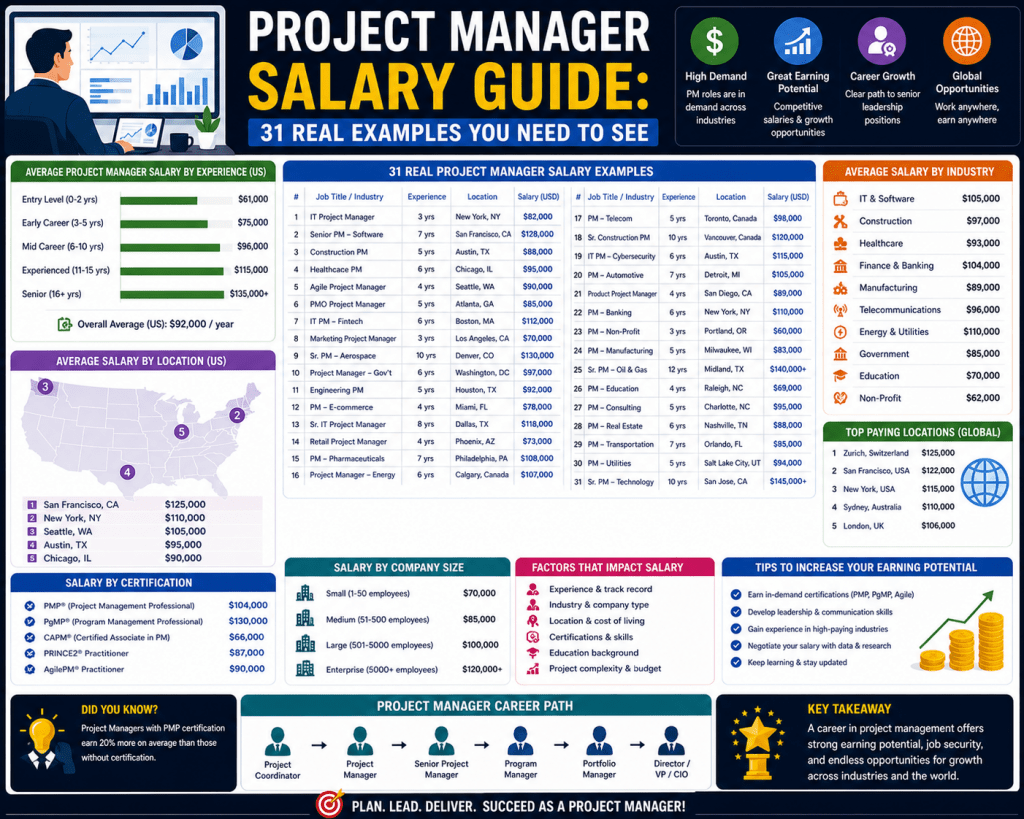
Project management has transformed significantly over the past decade, evolving from a largely administrative function into a strategic discipline that directly impacts organizational success. In modern environments, a project manager is not just responsible for tracking timelines or coordinating meetings; they are accountable for ensuring that projects deliver measurable business value. This shift has elevated the importance of the role and, consequently, influenced how organizations structure compensation.
At its core, project management involves guiding a project from concept to completion while balancing three primary constraints: time, cost, and scope. However, the reality is far more complex. Project managers must navigate shifting priorities, resource limitations, and stakeholder expectations, all while maintaining a clear focus on outcomes. They operate at the intersection of strategy and execution, translating high-level goals into actionable plans.
One of the defining characteristics of modern project management is adaptability. Organizations no longer rely exclusively on a single methodology. Instead, project managers are expected to work within hybrid environments that combine elements of traditional planning with iterative approaches. This requires a deep understanding of different frameworks and the ability to apply them effectively based on project requirements.
The role also demands strong interpersonal skills. Project managers interact with individuals across all levels of an organization, from entry-level team members to senior executives. Effective communication, conflict resolution, and leadership are essential for maintaining alignment and ensuring that projects stay on track. Without these skills, even the most technically sound plans can fail.
As businesses continue to prioritize efficiency and innovation, the demand for skilled project managers remains high. Organizations recognize that successful project delivery can significantly impact revenue, customer satisfaction, and competitive advantage. This recognition is reflected in the compensation offered to professionals who can consistently deliver results.
Breaking Down Project Manager Salary Ranges Across the Market
Understanding project manager salaries requires examining a range of data points rather than relying on a single figure. Compensation varies widely depending on multiple factors, including experience, location, and industry. However, establishing a general benchmark provides a useful starting point for evaluating earning potential.
At a national level, project manager salaries typically fall within a broad spectrum. Entry-level roles often begin in the lower range, reflecting limited experience and responsibility. As professionals gain experience and take on more complex projects, their earning potential increases significantly. Mid-level project managers, who are capable of independently leading projects, often fall within a more stable and competitive salary band.
Senior project managers, particularly those overseeing large-scale or high-impact initiatives, command the highest salaries. These professionals are responsible for managing multiple projects, coordinating cross-functional teams, and ensuring alignment with organizational goals. Their compensation reflects the level of responsibility and the potential impact of their decisions.
Geographic location plays a critical role in determining salary levels. Major metropolitan areas with high costs of living and strong demand for skilled professionals tend to offer higher compensation. These regions often include technology hubs and financial centers where project complexity and competition for talent are elevated. However, the gap between these high-cost areas and smaller markets has begun to narrow due to the rise of remote work and more standardized compensation structures.
Another important consideration is the variability within salary ranges. Even within the same city or organization, project manager salaries can differ significantly. This variation is often influenced by individual qualifications, such as certifications, technical expertise, and leadership experience. As a result, professionals with similar job titles may receive different compensation based on their specific skill sets.
The increasing transparency of salary data has made it easier for professionals to understand market trends and negotiate effectively. By analyzing multiple sources and comparing data across regions, project managers can gain a clearer picture of their earning potential and identify growth opportunities.
How Location Influences Project Manager Compensation
Location remains one of the most influential factors in determining project manager salaries. While the rise of remote work has introduced more flexibility, geographic differences continue to shape compensation in significant ways. Understanding these variations is essential for evaluating job offers and making informed career decisions.
In high-cost metropolitan areas, salaries tend to be higher to offset living expenses. Cities with strong technology sectors, financial industries, or large corporate headquarters often offer premium compensation for project managers. These environments typically involve complex projects and intense competition for skilled professionals, which drives up salaries.
However, higher salaries in these regions do not always translate to greater purchasing power. The cost of housing, transportation, and other living expenses can significantly reduce the real value of income. As a result, some professionals choose to work in lower-cost regions where their salaries can stretch further.
Mid-tier cities and emerging markets offer an interesting balance between compensation and cost of living. While salaries may be slightly lower than those in major metropolitan areas, the reduced cost of living can result in a comparable or even higher standard of living. These regions are increasingly attracting professionals who prioritize work-life balance and financial stability.
Remote work has further influenced salary dynamics by allowing organizations to access talent from a broader geographic pool. Some companies have adopted location-based pay models, adjusting salaries based on where employees live. Others have moved toward more standardized compensation structures, offering similar salaries regardless of location. This shift has created new opportunities for project managers to access higher-paying roles without relocating.
Despite these changes, location continues to play a significant role in shaping compensation. Professionals should consider both salary and cost of living when evaluating opportunities, as well as the potential for career growth within a specific region.
Experience Levels and Their Impact on Salary Growth
Experience is one of the most significant factors influencing project manager salaries. As professionals progress through their careers, their responsibilities expand, and their earning potential increases accordingly. Understanding how experience levels correlate with salary can help individuals plan their career paths more effectively.
At the entry level, project managers typically focus on building foundational skills. They may assist with scheduling, documentation, and coordination tasks while learning from more experienced team members. Salaries at this stage are generally lower, reflecting the limited scope of responsibility and the emphasis on skill development.
As project managers gain experience, they transition into roles with greater autonomy. Mid-level professionals are expected to lead projects independently, manage budgets, and communicate directly with stakeholders. They are responsible for ensuring that projects meet objectives while addressing challenges that arise במהלך execution. This increased responsibility is reflected in higher salaries and greater career stability.
Senior project managers operate at a strategic level, overseeing multiple projects or entire programs. They are responsible for aligning project outcomes with organizational goals and often play a key role in decision-making processes. Their expertise in risk management, resource allocation, and stakeholder engagement enables them to handle complex initiatives with confidence. Compensation at this level is significantly higher, reflecting both the impact of their work and the level of accountability involved.
Career progression in project management is not solely based on years of experience. The complexity and scale of the projects managed play a crucial role in determining advancement. Professionals who demonstrate the ability to deliver high-value outcomes, manage large teams, and navigate challenging environments are more likely to experience rapid salary growth.
Additionally, continuous learning and skill development are essential for maintaining competitiveness in the field. Project managers who invest in expanding their knowledge and staying current with industry trends are better positioned to advance their careers and achieve higher salaries.
The Influence of Certifications on Project Manager Earnings
Certifications are an important factor in determining project manager salaries, as they provide a standardized way to validate skills and knowledge. While not always required, certifications can significantly enhance a professional’s credibility and increase their earning potential.
One of the primary benefits of certifications is that they demonstrate a commitment to professional development. Employers often view certified project managers as more capable of handling complex projects and applying best practices. This perception can lead to higher salary offers and greater opportunities for advancement.
Certifications also provide a structured understanding of project management methodologies. This knowledge enables professionals to apply consistent processes, manage risks effectively, and deliver projects more efficiently. As a result, certified project managers are often more valuable to organizations, particularly those operating in highly regulated or complex industries.
In addition to technical knowledge, certifications can enhance a project manager’s ability to communicate and collaborate with stakeholders. By understanding industry-standard terminology and practices, certified professionals can align more effectively with team members and executives. This improved communication contributes to better project outcomes and, ultimately, higher compensation.
The impact of certifications on salary is not uniform across all roles or industries. However, in competitive markets or large organizations, certifications can serve as a differentiating factor that sets candidates apart. Professionals who combine certifications with practical experience and strong leadership skills are often able to command the highest salaries.
Industry Demand and Its Effect on Compensation
The industry in which a project manager works has a significant impact on salary levels. Different sectors have varying levels of complexity, regulatory requirements, and financial resources, all of which influence compensation.
Technology is one of the highest-paying industries for project managers, driven by rapid innovation and the need for efficient product development. Projects in this sector often involve complex systems, tight deadlines, and high stakes, which require skilled professionals to manage effectively.
Finance and healthcare are also known for offering competitive salaries. In these industries, project managers must navigate strict regulations and ensure compliance with industry standards. The complexity of these requirements increases the value of experienced professionals, leading to higher compensation.
Construction and engineering projects often involve large budgets and long timelines, making effective project management essential. Professionals in these fields are responsible for coordinating multiple stakeholders, managing resources, and ensuring that projects meet safety and quality standards. This level of responsibility is reflected in competitive salaries.
On the other hand, industries with limited budgets or less complex projects may offer lower salaries. However, these roles can still provide valuable experience and opportunities for career growth. Professionals who gain experience in these sectors may later transition to higher-paying industries.
Understanding industry demand is crucial for project managers seeking to maximize their earning potential. By identifying sectors with strong growth and high demand for skilled professionals, individuals can make strategic career decisions that align with their financial goals.
Salary Progression Pathways for Project Managers Across Career Stages
Project management careers do not follow a flat trajectory. Instead, they evolve through clearly defined stages where responsibility, decision-making authority, and compensation expand together. Understanding how salary progression works in real-world environments helps clarify why two professionals with similar job titles may earn drastically different incomes. The difference is not just time spent in the role but depth of responsibility, complexity of work, and demonstrated business impact.
At the earliest stage, project managers are often in learning-intensive positions where their focus is on understanding workflows, tools, and organizational structure. They typically operate under supervision and contribute to smaller components of larger projects. While their responsibilities may appear limited, this stage is critical because it builds the foundation for future advancement. Compensation reflects this developmental phase, usually remaining at the lower end of the salary spectrum.
As professionals transition into mid-level roles, their responsibilities increase significantly. They begin managing full projects independently, coordinating teams, and ensuring deliverables align with business objectives. At this stage, project managers are expected to balance competing priorities, resolve conflicts, and maintain accountability for both timelines and budgets. This shift in responsibility is reflected in a noticeable salary increase, often marking the transition into six-figure earning potential in stronger markets.
Senior-level project managers operate in a completely different capacity. Their focus extends beyond individual projects to broader program oversight, strategic alignment, and organizational impact. They are responsible for ensuring that multiple projects work together cohesively to support long-term business goals. At this level, compensation reflects not only technical execution ability but also leadership, strategic thinking, and risk management expertise.
Beyond senior roles, some project managers progress into executive or portfolio-level positions. These roles involve oversight of entire project ecosystems and often require collaboration with senior leadership teams. Compensation at this stage is driven by business impact rather than task execution, with salaries reflecting the value delivered to the organization at scale.
Experience Depth Versus Salary Acceleration in Project Management
Experience in project management is not measured simply by years in the profession. Instead, it is defined by the depth, complexity, and impact of projects managed. Two professionals with equal years of experience may have vastly different earning potential depending on the scale of their responsibilities and the environments in which they operate.
Early-career project managers typically focus on structured tasks with limited ambiguity. Their responsibilities are often clearly defined, and they rely heavily on guidance from senior team members. While this stage is essential for skill development, salary growth remains gradual because decision-making authority is limited.
As professionals gain confidence and technical competence, they move into environments where they are responsible for managing uncertainty. Mid-level project managers often deal with shifting requirements, resource constraints, and stakeholder disagreements. The ability to navigate these challenges successfully is a key factor in salary progression. Employers reward individuals who can maintain control in dynamic environments while still delivering consistent results.
At advanced stages, experience becomes less about task execution and more about strategic influence. Senior project managers are expected to anticipate risks before they emerge, optimize resource allocation across multiple initiatives, and ensure alignment with organizational priorities. Their experience allows them to operate with minimal supervision while making decisions that directly impact business performance. This level of autonomy is one of the primary drivers of higher compensation.
Another important dimension of experience is industry exposure. Project managers who have worked across multiple sectors often command higher salaries because they bring transferable knowledge and adaptable frameworks. Exposure to different organizational structures, methodologies, and business models enhances their ability to lead complex initiatives effectively.
Ultimately, experience influences salary not through time alone but through demonstrated capability. The more a project manager can prove their ability to deliver successful outcomes in complex environments, the higher their earning potential becomes.
Geographic Salary Variations and Regional Market Dynamics
Geography remains one of the most influential factors in determining project manager compensation, even in an increasingly remote-friendly work environment. Regional differences in cost of living, industry concentration, and talent demand all contribute to significant variations in salary structures.
Major metropolitan areas with strong economic activity tend to offer higher salaries for project managers. These regions often host large corporations, technology firms, and financial institutions that manage complex, high-value projects. The demand for skilled professionals in these environments drives up compensation levels, particularly for individuals with specialized expertise.
However, higher salaries in these regions must be understood in the context of living expenses. Housing costs, transportation, and general lifestyle expenses can significantly reduce the real purchasing power of income. As a result, professionals in these areas often evaluate compensation not just in absolute terms but in relation to overall quality of life.
Mid-tier cities present a different dynamic. These regions often offer a more balanced relationship between salary levels and cost of living. While base compensation may be slightly lower than in major hubs, reduced expenses can result in comparable or even greater financial stability. This balance makes such locations attractive for mid-career professionals seeking long-term sustainability.
Smaller cities and emerging markets introduce another layer of complexity. While entry-level salaries may be lower, experienced project managers can still achieve competitive compensation, especially in industries experiencing growth or transformation. In some cases, these regions offer opportunities for faster career progression due to lower competition for senior roles.
Remote work has further reshaped geographic salary dynamics. Some organizations now adopt location-based compensation models, adjusting salaries based on employee residence. Others have shifted toward standardized pay structures that reduce geographic disparities. This evolution has created new flexibility for project managers, allowing them to access opportunities beyond traditional geographic constraints.
Despite these changes, location continues to play a critical role in salary determination. Professionals must evaluate not only the nominal salary offered but also how geographic factors influence long-term earning potential, career growth opportunities, and cost-of-living balance.
Industry-Specific Salary Differentiation in Project Management Roles
The industry in which a project manager operates has a profound impact on compensation levels. Different sectors vary significantly in terms of complexity, regulatory requirements, project scale, and financial investment, all of which influence salary structures.
Technology remains one of the highest-paying industries for project managers. Projects in this sector often involve rapid innovation cycles, complex software systems, and tight delivery timelines. The need for continuous adaptation and technical understanding increases the value of skilled project managers, resulting in higher compensation.
Financial services also offer strong salary potential due to the high-stakes nature of projects and strict regulatory environments. Project managers in this sector must ensure compliance while managing large-scale systems, data infrastructure, and client-facing applications. The complexity and risk associated with these projects justify elevated salary levels.
Healthcare is another industry where project managers are highly valued. Projects often involve system implementations, regulatory compliance, and process optimization that directly affect patient care and operational efficiency. The critical nature of these outcomes contributes to competitive compensation structures.
The construction and engineering industries also offer strong earning potential. Projects in these fields are typically large in scale, involve multiple stakeholders, and require strict adherence to safety and quality standards. Project managers in these sectors are responsible for coordinating physical infrastructure projects that often span long timelines and significant budgets.
In contrast, industries such as education, non-profits, or smaller creative sectors may offer lower salary ranges. However, these roles often provide other forms of value, including flexibility, mission-driven work, or opportunities for broader responsibility.
Industry selection is, therefore, a strategic decision for project managers aiming to maximize earning potential. Transitioning between sectors can often lead to significant salary increases, especially when moving into high-demand or high-complexity industries.
Organizational Structure and Its Impact on Compensation Levels
The size and structure of an organization play a significant role in determining project manager salaries. Larger organizations typically operate with more formalized compensation systems, while smaller companies may offer more flexible but less structured pay models.
Large enterprises often provide higher base salaries due to greater financial resources and more complex project portfolios. These organizations typically manage multiple large-scale initiatives simultaneously, requiring experienced professionals capable of handling significant responsibility. Compensation packages in such environments often include additional benefits beyond base salary, reflecting the importance of the role.
Mid-sized organizations offer a different balance. While salaries may be slightly lower than those in large enterprises, these companies often provide opportunities for faster career progression and broader responsibility. Project managers in these environments may gain exposure to multiple functions, enhancing their skill sets and long-term earning potential.
Smaller organizations and startups present a unique compensation structure. Base salaries may be lower, but potential upside can come from equity, performance-based incentives, or accelerated career growth. Project managers in these environments often take on broader responsibilities earlier in their careers, which can lead to rapid skill development.
Organizational maturity also influences compensation. Companies with well-established project management offices tend to have clearly defined salary bands and structured career paths. In contrast, less mature organizations may offer more variability in compensation depending on negotiation and individual contribution.
The internal importance of project management within an organization also affects salary levels. In companies where project execution directly influences revenue or product delivery, project managers are often highly valued and compensated accordingly. In organizations where project management is viewed as a support function, salaries may be comparatively lower.
Methodologies, Technical Expertise, and Their Role in Salary Growth
Modern project managers are expected to operate across multiple methodologies, including structured, agile, and hybrid frameworks. Mastery of these approaches significantly influences earning potential, as organizations increasingly seek professionals who can adapt to diverse project environments.
Traditional methodologies emphasize structured planning, detailed documentation, and sequential execution. Project managers experienced in these environments are often valued in industries such as construction or government, where predictability and compliance are critical.
Agile methodologies focus on flexibility, iterative progress, and continuous improvement. Project managers who can effectively lead agile teams are highly sought after in technology and product development environments. Their ability to manage rapid change and deliver incremental value contributes to higher compensation.
Hybrid methodologies combine elements of both structured and agile approaches. This flexibility is increasingly important in modern organizations where projects require both predictability and adaptability. Project managers who can navigate hybrid environments are often positioned for higher salary brackets due to their versatility.
Technical expertise also plays a critical role in salary determination. While project managers are not required to be developers or engineers, understanding technical systems, workflows, and tools enhances their effectiveness. This knowledge allows them to communicate more effectively with technical teams and make informed decisions.
Familiarity with project management tools further strengthens a candidate’s profile. Proficiency in scheduling, collaboration, and reporting tools demonstrates operational capability and readiness to manage real-world projects. Employers value individuals who can integrate seamlessly into existing systems without extensive onboarding.
As organizations continue to adopt digital transformation initiatives, the demand for technically proficient project managers is expected to increase. Those who invest in developing both methodological and technical expertise are more likely to experience accelerated salary growth and expanded career opportunities.
Advanced Career Paths and Long-Term Earning Potential in Project Management
Project management is not a static profession. Over time, it evolves into multiple advanced career pathways that extend beyond traditional project execution roles. These pathways significantly influence long-term earning potential, often allowing experienced professionals to move into higher-paying strategic or leadership positions. Understanding these trajectories is essential for anyone aiming to maximize income and career growth within the field.
One of the most common advancement routes is transitioning from project management into program management. While project managers focus on individual initiatives, program managers oversee a group of related projects that collectively contribute to broader organizational objectives. This shift increases responsibility significantly, as decisions must consider interdependencies between multiple projects rather than isolated outcomes.
Another progression route is portfolio management, where professionals oversee a collection of programs and projects aligned with strategic business goals. At this level, the focus shifts from execution to alignment, prioritization, and resource distribution across the organization. Compensation increases accordingly, as portfolio managers directly influence business direction and investment decisions.
Some project managers move into PMO (Project Management Office) leadership roles. These positions involve establishing standards, governance frameworks, and methodologies for project execution across an entire organization. PMO leaders ensure consistency, efficiency, and accountability in project delivery. Because of their strategic importance, these roles are typically compensated at a higher level than operational project management positions.
Another high-value transition is into product management. While project management focuses on delivery, product management emphasizes lifecycle ownership, market alignment, and customer value. Professionals who successfully transition into product roles often experience substantial salary increases due to the direct connection between product performance and business revenue.
Operations leadership is another pathway. Project managers with strong organizational and execution skills often move into roles overseeing business operations, where they apply their ability to manage systems, processes, and teams at scale. These positions typically involve broader responsibility and higher compensation structures.
Over the long term, some project managers transition into executive roles such as director of operations, chief operating officer, or transformation leader. These positions require extensive experience and a deep understanding of organizational dynamics, but they also represent the highest earning potential within the discipline.
Strategic Skill Development for Maximizing Salary Growth
Salary growth in project management is closely tied to continuous skill development. Unlike some professions where compensation is primarily experience-based, project management rewards professionals who actively expand their capabilities and adapt to evolving industry demands.
One of the most important areas of skill development is strategic thinking. As project managers progress in their careers, they must shift from task-oriented execution to high-level decision-making. This involves understanding how projects align with business objectives and how individual decisions impact broader organizational outcomes.
Financial literacy is another critical skill. Project managers who understand budgeting, forecasting, and cost optimization are significantly more valuable to organizations. They are able to manage resources efficiently, reduce waste, and improve project profitability. This capability often leads to direct salary increases or eligibility for higher-level roles.
Risk management expertise also plays a key role in career advancement. Projects rarely proceed exactly as planned, and the ability to anticipate, evaluate, and mitigate risks is essential. Experienced project managers who can proactively manage uncertainty are trusted with more complex initiatives and higher budgets.
Communication skills remain fundamental at every stage of a project management career. However, at advanced levels, communication shifts from task coordination to executive reporting and stakeholder influence. The ability to present complex information clearly and persuasively becomes a critical factor in career progression.
Negotiation skills are equally important. Project managers frequently negotiate timelines, resources, and budgets across multiple stakeholders. Those who excel in negotiation can secure better outcomes for their projects and demonstrate leadership capabilities that justify higher compensation.
Time management and prioritization skills also contribute to salary growth. As responsibilities increase, project managers must manage multiple competing demands simultaneously. The ability to prioritize effectively ensures that critical objectives are met without compromising quality or efficiency.
Finally, adaptability is one of the most valuable long-term skills. The project management landscape continues to evolve with new technologies, methodologies, and business models. Professionals who remain flexible and open to change are better positioned for sustained salary growth and career advancement.
The Impact of Leadership Capability on Project Management Salaries
Leadership is one of the most influential factors in determining long-term compensation in project management. While technical knowledge and methodology expertise are important, leadership capability ultimately defines how far a project manager can progress in their career.
In the early stages, leadership is often limited to managing small teams or coordinating tasks. However, as professionals advance, they are expected to lead larger, more diverse teams with varying levels of expertise. This requires not only organizational ability but also emotional intelligence and interpersonal awareness.
Effective leadership in project management involves creating alignment among stakeholders who may have conflicting priorities. Project managers must ensure that everyone involved understands the project goals and works toward a common outcome. This requires clarity, consistency, and strong communication skills.
Motivating teams is another essential aspect of leadership. Project managers often work with cross-functional teams that may not report directly to them. The ability to inspire collaboration and maintain engagement is critical for maintaining productivity and achieving project success.
Conflict resolution is also a key leadership responsibility. Disagreements over priorities, resources, or direction are common in complex projects. Skilled project managers are able to resolve these conflicts efficiently without disrupting progress or damaging team dynamics.
At senior levels, leadership extends beyond individual teams to organizational influence. Senior project managers and program leaders often shape decision-making processes, influence strategic direction, and contribute to long-term planning. Their leadership directly impacts organizational performance, which is reflected in higher compensation levels.
Executives value project managers who can demonstrate leadership under pressure. The ability to maintain control during high-risk or high-visibility projects significantly enhances earning potential. Organizations are willing to invest more in professionals who can ensure successful outcomes in challenging environments.
The Role of Certifications and Continuous Learning in Salary Advancement
Certifications and ongoing education continue to play a significant role in shaping project management salaries, especially as professionals move into higher levels of responsibility. While experience is essential, formal recognition of skills often accelerates career progression.
Advanced certifications demonstrate mastery of project management principles and methodologies. They signal to employers that a professional has met industry standards and is capable of handling complex responsibilities. This often translates into higher starting salaries or faster promotions.
Certifications also provide structured frameworks that improve consistency in project execution. Professionals who apply standardized methodologies are often more efficient in managing scope, timelines, and risks. This efficiency increases their value within organizations.
Continuous learning is equally important. The project management field evolves rapidly, with new tools, frameworks, and best practices emerging regularly. Professionals who stay updated are better equipped to handle modern challenges and remain competitive in the job market.
Learning new tools and technologies also enhances salary potential. Project managers who understand data analytics, automation tools, or advanced reporting systems are increasingly valuable in data-driven organizations. These skills allow for better decision-making and improved project visibility.
In addition to technical learning, leadership development programs and communication training also contribute to career advancement. These soft skills are often what differentiate mid-level professionals from senior leaders.
Organizations value professionals who invest in their own development. This commitment signals long-term potential and often results in higher compensation, increased responsibilities, and leadership opportunities.
Market Trends Shaping Future Project Manager Salaries
The project management profession is being reshaped by several key market trends that are expected to influence salaries in the coming years. Understanding these trends is essential for anticipating future earning potential.
One of the most significant trends is the increasing adoption of digital transformation initiatives. Organizations are investing heavily in technology-driven projects, which require skilled project managers to oversee implementation. This demand is expected to continue driving salaries upward, particularly in technology-focused industries.
Remote and hybrid work models have also changed compensation structures. Organizations are reevaluating how they define salary bands based on location and productivity. This shift has created more flexibility for project managers to access higher-paying roles without relocating.
Another emerging trend is the integration of artificial intelligence and automation into project management processes. While these technologies enhance efficiency, they also increase the need for project managers who can oversee complex, technology-driven environments. Professionals who understand these tools are likely to command higher salaries.
Globalization of project teams is another factor influencing compensation. Project managers are increasingly required to coordinate teams across multiple regions and time zones. This complexity requires advanced communication and coordination skills, which are reflected in higher pay.
There is also a growing emphasis on data-driven decision-making. Organizations expect project managers to use analytics to track performance, forecast risks, and optimize outcomes. This shift is increasing the demand for professionals with strong analytical capabilities.
As competition for skilled project managers continues to grow, organizations are likely to offer more competitive compensation packages. This includes not only higher salaries but also performance-based incentives and long-term career development opportunities.
Building a Long-Term High-Income Career in Project Management
Building a high-income career in project management requires a combination of strategic planning, skill development, and continuous adaptation. It is not a linear process but rather a progression shaped by experience, performance, and professional growth.
The foundation of a successful career lies in consistently delivering high-quality results. Project managers who demonstrate reliability and effectiveness in executing projects build strong professional reputations, which directly influence future opportunities and compensation.
Expanding responsibility over time is essential for salary growth. Taking on larger, more complex projects demonstrates capability and builds trust within organizations. This progression naturally leads to higher-paying roles and leadership opportunities.
Networking and professional visibility also play a role in career advancement. While technical skills are critical, relationships and reputation within the industry can open doors to new opportunities and higher compensation packages.
Diversifying experience across industries, methodologies, and project types increases long-term earning potential. Professionals who are adaptable and versatile are more valuable to employers, especially in dynamic business environments.
Ultimately, long-term success in project management is defined by the ability to combine technical expertise, leadership capability, and strategic thinking. Those who develop across all three dimensions are best positioned to achieve sustained salary growth and career advancement over time.
Conclusion
Project management has evolved into one of the most strategically important roles in modern organizations, largely because nearly every business initiative today is structured as a project. Whether it is software development, infrastructure expansion, digital transformation, or organizational change, success depends on coordinated execution. This dependency places project managers at the center of operational and strategic delivery, which directly explains the consistent demand and competitive salary structures associated with the profession.
Across the discussion, one theme remains consistent: project manager salaries are not fixed or uniform. Instead, they are shaped by a combination of experience, industry, geography, certifications, leadership ability, and technical fluency. Each of these factors interacts in complex ways, meaning two professionals with the same job title can have significantly different earning outcomes depending on how they position themselves within the market.
Experience remains the most visible driver of salary progression, but it is important to understand that experience alone is not sufficient. Employers value the quality and complexity of projects managed more than the simple time spent in the role. A project manager who has successfully led high-budget, cross-functional, or high-risk initiatives will always command more value than someone with longer tenure but limited scope exposure. This distinction is critical for understanding real salary growth patterns.
Industry selection is another powerful determinant of compensation. Sectors such as technology, finance, healthcare, and engineering consistently offer higher salary ceilings due to the complexity, compliance requirements, and financial stakes involved. These environments demand precision, adaptability, and strong decision-making under pressure. On the other hand, industries with lower operational complexity or tighter budget constraints may offer more modest compensation, even for experienced professionals. This creates a strategic choice for project managers who want to maximize long-term earnings: either specialize deeply in a high-paying sector or transition strategically across industries to unlock better opportunities.
Geographic location has traditionally played a major role in salary differences, although its influence is gradually evolving. High-cost metropolitan regions still tend to offer higher base salaries, but remote work has introduced new flexibility into the market. In many cases, organizations are now reevaluating compensation structures, balancing location-based pay with role-based value. This shift has allowed skilled project managers to access higher-paying roles without being physically tied to expensive urban centers. However, cost-of-living adjustments still matter, and professionals must evaluate compensation in both nominal and real terms.
Certifications and continuous learning also significantly influence earning potential. Credentials such as PMP, Agile-related certifications, and entry-level qualifications like CAPM or vendor-neutral certifications demonstrate structured knowledge and professional commitment. However, certifications alone do not guarantee higher salaries; their real value comes from how effectively they are combined with practical experience. Employers are increasingly looking for professionals who can bridge theoretical frameworks with real-world execution, particularly in complex or rapidly changing environments.
Leadership capability is another defining factor in long-term salary growth. As project managers advance in their careers, their success becomes less about task management and more about influence, alignment, and decision-making. The ability to lead diverse teams, resolve conflicts, communicate effectively with executives, and maintain clarity under pressure directly impacts career progression. At senior levels, leadership becomes the primary differentiator between mid-range compensation and executive-level earnings.
Technical awareness and familiarity with modern project management tools also contribute to salary advancement. While project managers are not expected to be technical specialists in most cases, understanding how systems, software, and data workflows operate improves their ability to manage complex projects. In today’s environment, where digital transformation is central to business strategy, this technical fluency has become increasingly valuable.
Beyond these factors, adaptability is perhaps the most important long-term trait. The field of project management is continuously evolving due to new methodologies, emerging technologies, and changing organizational structures. Professionals who remain flexible, open to learning, and capable of adjusting to new frameworks are more likely to maintain long-term career growth. This adaptability ensures relevance in a market that increasingly values hybrid skills over rigid specialization.
Ultimately, the earning potential in project management is not capped by job title alone, but by the scope of influence a professional develops over time. Entry-level roles focus on execution support, mid-level roles emphasize independent delivery, and senior roles shift toward strategic leadership. Each stage represents a step toward higher responsibility and, correspondingly, higher compensation.
What makes project management particularly attractive as a career path is its scalability. Unlike many professions that require a complete role change to increase income, project management allows for gradual and continuous advancement within the same discipline. By consistently expanding skills, taking on more complex responsibilities, and aligning with high-value industries, professionals can significantly increase their earning potential without leaving the field.
In the long run, successful project managers are those who view their career not as a series of isolated jobs but as a structured progression of capability, influence, and impact. Compensation follows naturally when value creation becomes consistent and measurable. The profession rewards those who combine execution excellence with strategic thinking, making it one of the most sustainable and financially rewarding career paths in modern business environments.