The Project Management Institute certification ecosystem represents one of the most structured and globally recognized systems for validating professional competence in project-related roles. It is designed to assess, standardize, and enhance the skills required to manage projects, programs, and portfolios across a wide range of industries. This ecosystem is built on the principle that effective project management is not incidental but a disciplined practice that requires formal knowledge, applied experience, and continuous professional development.
At its core, the PMI certification framework establishes a universal language for project management. It defines processes, terminologies, performance expectations, and competency standards that can be applied consistently regardless of geographic region or industry sector. This standardization is particularly important in modern business environments where organizations frequently operate across borders and rely on distributed teams to deliver complex initiatives.
The PMI structure is not static; it evolves in response to changes in technology, business needs, and management methodologies. As industries adopt agile practices, digital transformation strategies, and data-driven decision-making models, PMI updates its frameworks to remain relevant. This adaptability is one of the reasons PMI certifications maintain strong global recognition and long-term professional value.
Purpose and Strategic Role of PMI in Professional Development
The primary purpose of the Project Management Institute is to advance the practice, science, and profession of project management. It achieves this by developing globally accepted standards, offering structured certification pathways, and promoting continuous learning among professionals. These efforts ensure that project management is treated as a formal discipline rather than an informal organizational function.
From a strategic perspective, PMI plays a critical role in bridging the gap between theoretical knowledge and practical execution. Many professionals understand project management concepts conceptually, but PMI certifications validate the ability to apply those concepts in real-world scenarios. This includes managing constraints such as time, budget, scope, quality, and stakeholder expectations.
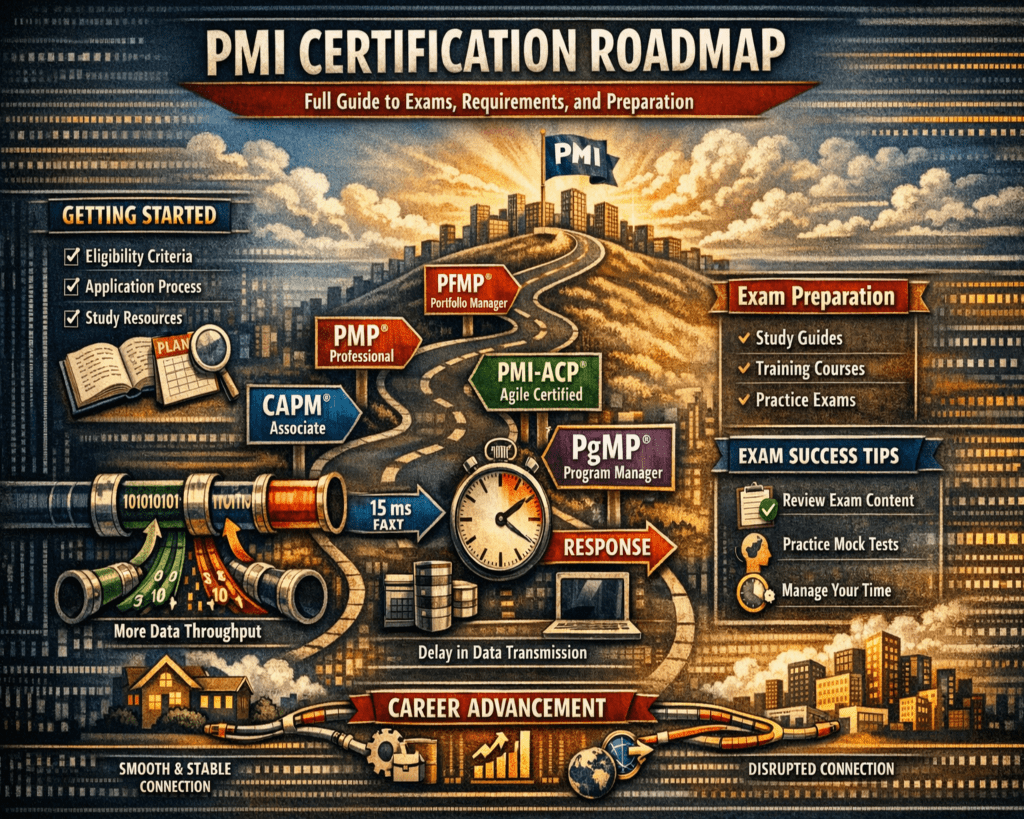
PMI also contributes significantly to workforce development by providing a structured roadmap for career progression. Individuals can begin with entry-level certifications and gradually advance toward specialized or executive-level credentials. This structured pathway supports long-term career planning and enables professionals to align their skills with organizational demands.
Another key strategic function of PMI is its contribution to organizational efficiency. Companies that employ PMI-certified professionals often experience improved project success rates, better resource utilization, and more predictable delivery outcomes. This is because PMI-certified individuals are trained to follow standardized methodologies that reduce uncertainty and improve decision-making.
Structure of PMI Certification Hierarchy
The PMI certification hierarchy is organized into multiple levels, each designed to reflect increasing complexity, responsibility, and expertise. This hierarchical system allows professionals to progress systematically as they gain experience and expand their skill sets.
At the foundational level, certifications focus on basic project management concepts, terminology, and processes. These certifications are intended for individuals who are either new to the field or transitioning from other roles. The goal at this stage is to establish a strong conceptual understanding of project lifecycle phases and fundamental management principles.
The intermediate level introduces more advanced responsibilities such as project coordination, scheduling, resource allocation, and risk identification. Professionals at this stage are expected to apply their knowledge in practical environments, often managing smaller projects or supporting larger project teams.
At the advanced level, certifications focus on strategic leadership, program governance, and portfolio management. These roles require professionals to oversee multiple projects simultaneously, align initiatives with organizational objectives, and ensure long-term value delivery. This level emphasizes decision-making, leadership, and organizational alignment rather than task-level execution.
This structured hierarchy ensures that each certification builds upon previous knowledge, creating a continuous learning pathway that supports professional growth and career advancement.
Core Philosophy Behind PMI Certification Standards
The PMI certification system is built on several foundational principles that guide its structure and implementation. One of the most important principles is standardization. By defining consistent methodologies and processes, PMI ensures that project management practices remain uniform across industries and geographic regions.
Another key principle is competency validation. PMI certifications are not based solely on theoretical examinations but also require documented professional experience. This ensures that certified individuals possess both knowledge and practical application skills. The combination of experience and examination creates a more reliable measure of professional capability.
Continuous improvement is another central philosophy. PMI encourages professionals to engage in ongoing learning activities throughout their careers. This is reflected in certification renewal requirements, which mandate the accumulation of professional development credits over time. This ensures that certified individuals remain current with evolving industry practices.
Adaptability is also a core principle of PMI frameworks. Project environments vary significantly across industries, and PMI methodologies are designed to be flexible enough to accommodate these variations. Whether applied in construction, IT, healthcare, or finance, PMI principles can be adapted to suit specific project requirements.
Entry-Level Certification and Its Importance in Career Foundations
Entry-level PMI certification serves as the starting point for individuals entering the project management profession. It is designed to introduce fundamental concepts such as project initiation, planning, execution, monitoring, and closure. These concepts form the basis of all project management activities, regardless of industry or project size.
At this stage, professionals are introduced to structured methodologies that replace informal task management approaches. They learn how to define project scope, develop timelines, allocate resources, and communicate effectively with stakeholders. This foundational knowledge is essential for building confidence and competence in project environments.
Entry-level certification also plays a significant role in career transition. Many individuals move into project management from unrelated fields, and this certification provides a structured pathway for acquiring necessary skills. It helps bridge the gap between general professional experience and specialized project management roles.
Additionally, this level of certification establishes credibility in the job market. Employers often view entry-level certification as evidence of commitment to the profession and willingness to adhere to structured management practices. This can enhance employability and open opportunities for career advancement.
Intermediate Certification and Skill Application
Intermediate-level PMI certifications focus on applying theoretical knowledge in practical scenarios. Professionals at this stage are expected to take on more responsibility within project environments, including managing specific project components or leading smaller initiatives.
This level emphasizes skill application in areas such as scheduling, budgeting, risk management, and quality control. Professionals are required to make decisions based on project constraints while maintaining alignment with organizational objectives.
Communication and stakeholder management also become increasingly important at this stage. Professionals must coordinate with team members, clients, and executives to ensure that project expectations are clearly understood and met. This requires both technical knowledge and interpersonal skills.
Intermediate certification represents a critical transition from learning to execution. It prepares professionals for leadership roles by developing their ability to manage complexity and adapt to changing project conditions.
Advanced Certification and Organizational Leadership Roles
Advanced PMI certifications are designed for senior professionals responsible for overseeing programs, portfolios, or enterprise-wide initiatives. These roles require a strategic mindset, where decisions are made based on long-term organizational goals rather than individual project outcomes.
At this level, professionals are expected to manage interrelated projects and ensure that they collectively contribute to business objectives. This involves prioritizing initiatives, allocating resources efficiently, and managing dependencies across multiple projects.
Risk management becomes more complex at this stage, as professionals must evaluate risks at both project and organizational levels. They must also ensure that governance frameworks are followed and that performance metrics are consistently monitored.
Leadership is a central component of advanced certification. Professionals are required to influence decision-making, guide teams, and align stakeholders with strategic objectives. This level of responsibility requires strong analytical, communication, and leadership skills.
Global Recognition and Industry Demand for PMI Certification
PMI certifications are widely recognized across global industries due to their standardized approach to project management. Organizations value these certifications because they represent a verified level of professional competence and practical experience.
In multinational environments, PMI certification provides a common framework that enables consistent project execution across different regions. This is particularly important for organizations managing distributed teams or global projects.
The demand for PMI-certified professionals continues to grow as organizations increasingly rely on structured project management practices. Industries such as information technology, construction, finance, healthcare, and engineering frequently require certified professionals to ensure project success.
Global recognition also enhances career mobility. Professionals with PMI certification can pursue opportunities in different countries and industries without needing to revalidate their skills from scratch. This portability adds significant long-term value to the certification.
Standardization of Project Management Practices
Standardization is one of the most important contributions of PMI certification. Without standardized practices, project management would vary widely between organizations, leading to inconsistent outcomes and inefficiencies.
PMI addresses this challenge by defining structured processes that guide every phase of a project. These processes ensure that projects are initiated, planned, executed, monitored, and closed in a consistent manner.
Standardization also improves communication within project teams. When all team members follow the same framework, misunderstandings are reduced, and collaboration becomes more efficient. This leads to better alignment and improved project performance.
Furthermore, standardized practices enable organizations to measure performance more accurately. By using consistent metrics and evaluation methods, organizations can identify areas for improvement and implement corrective actions more effectively.
Evolution of Project Management as a Professional Discipline
Project management has evolved significantly over the past few decades. It has transitioned from an informal coordination activity into a structured professional discipline with defined methodologies and certification pathways.
This evolution has been driven by increasing project complexity, technological advancements, and the need for predictable business outcomes. Organizations now rely heavily on projects to drive innovation, implement change, and achieve strategic goals.
PMI has played a central role in this transformation by formalizing project management knowledge and establishing global standards. This has elevated project management into a recognized profession with clear career pathways and competency requirements.
Modern project management now integrates traditional methodologies with agile practices, data analytics, and digital tools. This integration reflects the changing nature of work and the need for more flexible and adaptive management approaches.
Foundational Knowledge Areas in Project Management
The PMI framework is built on several foundational knowledge areas that define the scope of project management activities. These include integration, scope, schedule, cost, quality, resource, communication, risk, procurement, and stakeholder management.
Each knowledge area represents a specific aspect of project execution. Together, they form a comprehensive system that ensures all elements of a project are properly managed and aligned.
Understanding these knowledge areas is essential for anyone pursuing PMI certification. They form the basis of both examination content and practical application in real-world projects.
These knowledge areas also provide a structured approach to problem-solving. By categorizing project challenges into defined areas, professionals can apply targeted solutions more effectively.
Importance of Continuous Professional Development
Continuous professional development is a key requirement within the PMI certification framework. It ensures that certified professionals remain current with industry developments and emerging best practices.
This ongoing learning process may involve training programs, practical experience, or knowledge-sharing activities. It encourages professionals to expand their skills and stay adaptable in changing work environments.
Continuous development also reinforces the value of PMI certification. By requiring regular renewal, PMI ensures that certification holders maintain a high standard of professional competence throughout their careers.
Expansion of PMI Certification Pathways and Career Progression Model
The PMI certification system is designed as a structured career progression model that allows professionals to evolve from foundational knowledge to advanced strategic leadership roles. Unlike fragmented certification systems that focus on isolated skill validation, PMI builds an interconnected pathway where each credential represents a distinct level of responsibility, technical complexity, and managerial authority.
This progression model reflects the reality of modern project-driven organizations. Entry-level professionals typically begin with basic exposure to structured project environments, where they learn terminology, lifecycle stages, and essential coordination principles. As experience grows, individuals transition into roles that require direct project ownership, followed by positions involving multi-project coordination, and eventually enterprise-level governance.
The certification pathway is intentionally hierarchical to ensure skill accumulation over time. Each stage reinforces prior knowledge while introducing new dimensions of project management such as strategic alignment, benefits realization, and portfolio optimization. This structure ensures that professionals do not simply memorize concepts but progressively develop the ability to apply them in increasingly complex environments.
This layered approach also supports workforce scalability. Organizations benefit from a standardized pipeline of talent development, where employees can be trained, certified, and promoted based on clearly defined competencies rather than subjective assessments.
Foundational Certification and Entry-Level Competency Development
At the foundational level, PMI certification focuses on introducing structured project management thinking to individuals with limited or no prior experience. This stage is critical because it establishes the conceptual framework that underpins all advanced project management practices.
Entry-level professionals are introduced to core principles such as project lifecycle phases, scope definition, time management, cost estimation, and stakeholder identification. These concepts form the backbone of project execution and are essential for understanding how projects move from initiation to closure.
A significant focus at this stage is the development of structured thinking. Many professionals entering project environments come from operational or technical backgrounds where work is task-oriented rather than process-driven. Entry-level certification helps shift this mindset toward systematic planning and controlled execution.
This stage also introduces professionals to documentation practices, including project charters, requirement gathering, and communication planning. These elements are essential for ensuring clarity and alignment among stakeholders.
The foundational certification level acts as a gateway into the profession, validating that individuals possess the minimum knowledge required to participate effectively in structured project environments.
Intermediate Certification and Practical Application of Project Management Skills
Intermediate PMI certification represents the transition from theoretical understanding to applied project management practice. At this level, professionals are expected to take on active roles in managing project components or leading small to medium-sized projects independently.
The emphasis shifts toward execution-oriented responsibilities such as task sequencing, schedule optimization, cost control, and resource allocation. Professionals must demonstrate the ability to translate project plans into actionable workflows while maintaining alignment with predefined objectives.
Risk identification and mitigation become increasingly important at this stage. Professionals are required to anticipate potential project disruptions and develop contingency strategies to minimize impact. This involves both analytical thinking and practical decision-making under constraints.
Communication also becomes more complex at this level. Professionals must interact with diverse stakeholder groups, including technical teams, business leaders, and external vendors. Effective communication ensures that expectations are aligned and project deliverables remain consistent with requirements.
Another important aspect of intermediate certification is performance monitoring. Professionals are trained to track project progress using structured metrics and key performance indicators. This enables early detection of deviations and supports timely corrective actions.
Advanced Certification and Strategic Project Leadership
Advanced PMI certification is designed for professionals operating at the highest levels of project governance. These individuals are responsible for overseeing programs, portfolios, or large-scale strategic initiatives that span multiple departments or business units.
At this level, project management evolves into strategic management. Professionals are no longer focused solely on individual project outcomes but on how multiple projects collectively contribute to organizational goals. This requires a deep understanding of business strategy, resource optimization, and long-term value creation.
Program management involves coordinating multiple interrelated projects to ensure alignment and synergy. Professionals must manage dependencies, resolve conflicts, and ensure that program-level objectives are achieved efficiently.
Portfolio management operates at an even higher level, focusing on selecting and prioritizing projects based on strategic value. This requires decision-making capabilities that balance risk, return, resource availability, and organizational priorities.
Advanced certification also emphasizes governance frameworks. Professionals must ensure compliance with organizational policies, regulatory requirements, and performance standards. This includes establishing oversight mechanisms and reporting structures that maintain transparency and accountability.
Leadership is a defining characteristic of this level. Professionals must influence organizational direction, guide cross-functional teams, and ensure that all stakeholders remain aligned with strategic objectives.
Core PMI Certification Domains and Knowledge Structure
PMI certifications are built around clearly defined performance domains that represent essential areas of project management practice. These domains serve as evaluation criteria for certification exams and as practical guidelines for real-world application.
One of the most important domains is project initiation, which involves defining project objectives, identifying stakeholders, and establishing feasibility. This stage sets the foundation for all subsequent project activities.
Planning is another critical domain that involves developing detailed project roadmaps. This includes scope definition, scheduling, budgeting, risk planning, and resource allocation. Effective planning ensures that projects are executed in a controlled and predictable manner.
Execution focuses on implementing project plans while coordinating teams and managing deliverables. This domain requires strong leadership and operational management skills to ensure that work is completed according to specifications.
Monitoring and controlling is a continuous domain that ensures project performance is tracked and adjusted as needed. This involves comparing actual progress against planned objectives and implementing corrective actions when necessary.
Project closure is the final domain, which involves formal completion, documentation, and evaluation of project outcomes. This stage ensures that lessons learned are captured and organizational knowledge is preserved.
Specialized PMI Certification Tracks and Their Professional Focus
Beyond the general project management pathway, PMI offers specialized certifications that focus on distinct areas of expertise. These certifications allow professionals to develop niche skills aligned with specific organizational needs.
Program management certification focuses on managing multiple related projects that collectively contribute to strategic outcomes. Professionals in this domain must coordinate complex interdependencies and ensure alignment with long-term objectives.
Portfolio management certification is designed for executives responsible for selecting and prioritizing projects based on strategic value. This requires strong analytical capabilities and a deep understanding of organizational strategy.
Agile-focused certification emphasizes adaptive project management approaches. Professionals in this domain work in dynamic environments where requirements evolve rapidly, requiring iterative planning and continuous feedback cycles.
Risk management certification focuses on identifying, analyzing, and mitigating project risks. This specialization is critical in environments where uncertainty can significantly impact project outcomes.
Scheduling-focused certification emphasizes the development and maintenance of detailed project timelines. Professionals in this area ensure that project activities are logically sequenced and completed within defined time constraints.
Business analysis certification bridges the gap between business needs and project execution. Professionals in this domain focus on requirements gathering, solution evaluation, and stakeholder alignment.
Each specialization reflects the increasing complexity of modern project environments and the need for targeted expertise.
Examination Structure and Evaluation Methodology
PMI certification exams are designed to evaluate both theoretical knowledge and practical application. Unlike traditional assessments that focus solely on memorization, PMI exams emphasize situational judgment and problem-solving ability.
Exams typically include scenario-based questions that simulate real-world project challenges. Candidates are required to analyze situations, evaluate constraints, and select the most appropriate course of action based on PMI principles.
The evaluation methodology is aligned with performance domains, ensuring that candidates are assessed across all critical areas of project management. This includes technical knowledge, leadership ability, and strategic thinking.
Exams are structured to test not only what candidates know but how effectively they can apply that knowledge in practical situations. This ensures that certification holders are capable of performing effectively in real project environments.
Experience Requirements and Professional Validation
A key feature of PMI certification is the requirement for documented professional experience. This ensures that candidates have practical exposure to project environments before obtaining certification.
Experience requirements vary depending on certification level. Entry-level certifications may require minimal or no prior experience, while advanced certifications require extensive documented involvement in project or program management roles.
This experience validation process ensures that certification is not purely academic. It confirms that professionals have actively participated in real projects and understand the challenges associated with project execution.
Experience documentation typically includes details such as project roles, responsibilities, duration, and outcomes. This information is reviewed as part of the certification eligibility process.
Role of Continuous Learning in PMI Certification Framework
Continuous learning is an integral component of the PMI certification system. Professionals are expected to maintain and update their knowledge throughout their careers to remain certified.
This requirement reflects the evolving nature of project management practices. As methodologies, tools, and technologies change, professionals must adapt to remain effective in their roles.
Continuous learning may involve formal training, practical experience, or participation in professional development activities. This ensures that certified individuals remain aligned with current industry standards.
The emphasis on lifelong learning reinforces the value of PMI certification as a dynamic credential rather than a static qualification.
Industry Application of PMI Certification Framework
PMI certification is widely applied across multiple industries, each with unique project management requirements. In technology sectors, it supports software development, infrastructure deployment, and digital transformation initiatives.
In construction and engineering, PMI frameworks are used to manage large-scale infrastructure projects, ensuring coordination between multiple contractors and stakeholders.
In healthcare, project management principles support system implementation, regulatory compliance, and operational improvements.
In finance and business services, PMI certification supports process optimization, risk management, and strategic planning initiatives.
This cross-industry applicability demonstrates the versatility of PMI frameworks and their relevance in diverse professional environments.
Importance of Standardized Methodologies in Project Execution
Standardized methodologies are essential for ensuring consistency and predictability in project execution. Without standardized approaches, project outcomes would vary significantly, leading to inefficiencies and increased risk.
PMI frameworks provide structured methodologies that guide every stage of project development. These methodologies reduce ambiguity and ensure that all stakeholders operate under a common understanding of processes and expectations.
Standardization also improves scalability. Organizations can apply the same methodologies across multiple projects, ensuring uniformity in execution and reporting.
This consistency enhances organizational learning and enables continuous improvement based on historical project data.
Integration of Leadership and Technical Competence
One of the defining characteristics of PMI certification is its integration of leadership and technical competencies. Project management is not solely a technical discipline; it also requires strong leadership and interpersonal skills.
Professionals must be able to lead teams, manage conflicts, and influence decision-making processes. At the same time, they must possess technical knowledge related to scheduling, budgeting, and risk management.
This dual competency model ensures that certified professionals are capable of managing both operational and strategic aspects of projects.
The integration of these skill sets reflects the complexity of modern project environments, where success depends on both technical execution and effective leadership.
Evolving Nature of Project Management Practices
Project management continues to evolve in response to technological advancements and changing business environments. Agile methodologies, digital transformation initiatives, and data-driven decision-making are increasingly influencing project execution.
PMI certification frameworks are continuously updated to reflect these changes. This ensures that certified professionals remain relevant in dynamic and competitive industries.
The evolving nature of project management highlights the importance of adaptability and continuous learning as core professional attributes.
Financial Structure and Cost Components of PMI Certification
The cost structure of PMI certification is not limited to a single exam fee but represents a multi-layered investment that includes membership fees, examination charges, preparation materials, training time, and long-term renewal requirements. Understanding this financial structure is essential for professionals planning to pursue certification because the total cost reflects both short-term and long-term commitments.
At the base level, certification costs vary depending on the specific credential being pursued. Entry-level certifications generally have lower examination fees, while advanced certifications such as program or portfolio management credentials require higher financial investment due to increased complexity and evaluation rigor. This tiered pricing structure reflects the depth of knowledge and experience required at each level.
In addition to examination fees, candidates often invest in structured preparation resources. These may include self-study materials, structured learning programs, and practice assessments. While not mandatory, these resources significantly improve exam readiness by aligning candidate knowledge with PMI-defined performance domains.
Another important cost factor is time investment. Preparation for certification exams often requires several months of dedicated study and practical review. This indirect cost is often overlooked but represents a significant component of the overall certification process.
Membership Influence on Certification Economics
Professional membership within PMI provides financial advantages that reduce examination costs and offer access to additional professional resources. Membership is typically structured as an annual subscription that provides discounted exam fees and access to industry publications, research materials, and networking opportunities.
From a financial perspective, membership can significantly reduce the overall cost of certification, particularly for candidates pursuing multiple credentials or advanced certifications. Over time, these savings can offset membership fees and provide additional value through continuous learning resources.
Beyond financial benefits, membership also enhances professional engagement. It connects candidates to a global network of practitioners, enabling knowledge exchange and exposure to evolving project management practices. This indirect benefit contributes to better exam preparation and improved career readiness.
Cost Variation Across Certification Levels
Certification costs vary significantly across different levels of PMI credentials. Entry-level certifications typically require lower financial investment, making them accessible to individuals entering the profession. These certifications are designed to encourage participation and build foundational skills without imposing high financial barriers.
Intermediate certifications require moderate investment, reflecting the increased complexity of exam content and experience requirements. At this level, candidates are expected to demonstrate applied knowledge, which increases the value and cost of certification.
Advanced certifications require the highest investment due to extensive evaluation processes, including experience verification and panel assessments in some cases. These certifications are designed for senior professionals, and the cost structure reflects the strategic importance of these roles within organizations.
The cost hierarchy ensures that certification value aligns with professional responsibility and market demand.
Indirect Investment: Training and Preparation Resources
A significant portion of PMI certification investment is indirect and relates to preparation activities. Candidates often engage in structured learning programs to ensure alignment with exam content and performance expectations.
These preparation activities typically focus on key knowledge areas such as project integration, scope management, scheduling, risk analysis, and stakeholder communication. The objective is to ensure that candidates can apply theoretical concepts in practical scenarios.
In addition to structured learning, candidates may also use practice assessments to evaluate readiness. These assessments simulate real exam conditions and help identify areas requiring further study.
The indirect investment in preparation is critical because PMI exams are designed to test application rather than memorization. As a result, candidates who invest time in structured preparation are more likely to achieve successful outcomes.
Certification Renewal and Continuing Professional Development System
PMI certification is not a one-time achievement but a continuous professional commitment. Certified professionals are required to maintain their credentials through a structured renewal system based on professional development units.
This system ensures that professionals remain current with evolving industry practices, methodologies, and tools. It reflects the dynamic nature of project management, where new approaches and technologies frequently reshape best practices.
Renewal requirements are typically based on a defined cycle, during which professionals must accumulate a specific number of development units. These units are earned through various professional activities, including training, practical application, and knowledge-sharing contributions.
The renewal system reinforces the principle that professional competence must be maintained over time rather than assumed after initial certification.
Professional Development Units and Learning Activities
Professional development units represent structured measurements of ongoing learning and professional engagement. These units are earned through activities that contribute to skill enhancement and knowledge expansion.
Learning activities may include participation in structured training programs, workshops, seminars, or practical project experience. Each activity is evaluated based on its relevance to project management competencies.
In addition to formal learning, professionals can also earn development units through knowledge-sharing activities. This may include mentoring, presenting at professional events, or contributing to organizational training initiatives.
The diversity of eligible activities ensures that professionals can maintain certification through a combination of structured learning and practical experience.
This flexible system supports continuous professional growth while accommodating different learning styles and career paths.
Certification Lifecycle and Validity Period
PMI certifications operate within a defined lifecycle that includes issuance, maintenance, and renewal stages. Once certification is obtained, it remains valid for a specific period, during which professionals must fulfill renewal requirements to maintain active status.
The lifecycle structure ensures that certification remains relevant and reflects current professional standards. It prevents stagnation by requiring ongoing engagement with evolving project management practices.
If renewal requirements are not met within the designated timeframe, certification may become inactive. This status change emphasizes the importance of continuous professional development.
The lifecycle model reinforces the idea that certification is part of an ongoing professional journey rather than a static achievement.
Impact of Certification on Salary and Compensation Trends
PMI certification has a measurable impact on professional compensation across industries. Certified professionals generally earn higher salaries compared to non-certified counterparts due to validated skills, structured knowledge, and demonstrated experience.
The salary impact varies depending on certification level, industry sector, geographic location, and professional experience. Entry-level certifications typically provide moderate salary increases, while advanced certifications are associated with significantly higher compensation levels.
This salary differential reflects the value organizations place on standardized project management skills. Certified professionals are often trusted with higher responsibility roles, which naturally correspond to higher compensation structures.
In addition to base salary increases, certification can also influence career advancement opportunities, leading to leadership positions with greater financial rewards.
Career Progression and Professional Mobility
PMI certification enhances career mobility by providing a globally recognized credential that is applicable across industries and regions. This mobility allows professionals to transition between roles, sectors, and geographic locations with greater ease.
Career progression typically follows a structured pathway, beginning with foundational roles and advancing toward senior leadership positions. Certification serves as a benchmark that supports promotion decisions and role transitions.
In many organizations, PMI certification is considered a prerequisite for project management roles, particularly at intermediate and advanced levels. This requirement reflects the importance of standardized skills in ensuring project success.
Professional mobility is further enhanced by the transferable nature of PMI competencies. Skills such as risk management, stakeholder communication, and resource planning are applicable across multiple industries.
Organizational Benefits of PMI-Certified Professionals
Organizations benefit significantly from employing PMI-certified professionals. These benefits include improved project success rates, better resource utilization, and increased predictability in project outcomes.
Certified professionals are trained to follow structured methodologies, which reduces variability in project execution. This leads to more consistent delivery and improved alignment with organizational objectives.
Another key benefit is risk reduction. Certified professionals are equipped to identify potential risks early and implement mitigation strategies, reducing the likelihood of project failure.
Organizations also benefit from improved communication and stakeholder alignment. PMI frameworks emphasize structured communication processes that ensure all stakeholders remain informed and engaged throughout the project lifecycle.
Strategic Value of Certification in Organizational Planning
PMI certification contributes to strategic organizational planning by ensuring that project management capabilities are aligned with business objectives. Certified professionals are trained to evaluate projects not only based on operational feasibility but also on strategic value.
This alignment ensures that organizational resources are allocated to initiatives that deliver maximum value. It also supports long-term planning by enabling organizations to prioritize projects based on strategic importance.
In addition, certification contributes to governance structures by establishing standardized decision-making frameworks. This improves transparency and accountability in project execution.
The strategic value of certification extends beyond individual projects and influences overall organizational performance.
Risk Management and Decision-Making Improvements
One of the key advantages of PMI certification is improved risk management capability. Certified professionals are trained to identify, analyze, and respond to risks in a structured manner.
This includes both qualitative and quantitative risk assessment techniques that help evaluate potential project impacts. By applying these methods, professionals can make informed decisions that reduce uncertainty.
Improved risk management leads to more stable project outcomes and reduces the likelihood of cost overruns or schedule delays. It also enhances organizational resilience by preparing teams to respond effectively to unexpected challenges.
Decision-making is also improved through structured frameworks that guide evaluation and selection of alternatives. This ensures that decisions are based on data, analysis, and strategic alignment rather than intuition alone.
Agile Integration and Modern Project Environments
Modern project environments increasingly incorporate agile methodologies alongside traditional project management approaches. PMI certification frameworks have evolved to reflect this integration.
Agile practices emphasize flexibility, iterative development, and continuous feedback. PMI-certified professionals are trained to adapt these principles within structured project environments.
This hybrid approach allows organizations to balance structure with adaptability, ensuring both control and responsiveness in dynamic environments.
Agile integration also enhances collaboration between teams, improving communication and delivery speed.
Long-Term Career Sustainability and Skill Relevance
PMI certification contributes to long-term career sustainability by ensuring that professionals maintain relevant skills throughout their careers. The requirement for continuous learning ensures that certified individuals remain aligned with industry changes.
This ongoing relevance is critical in fast-changing industries where outdated skills can quickly reduce employability. PMI certification mitigates this risk by enforcing continuous development standards.
Sustainability also comes from the versatility of PMI competencies. Skills acquired through certification are applicable across industries, roles, and organizational levels.
This adaptability ensures that professionals can remain competitive even as job roles evolve.
Conclusion
PMI certification represents far more than a professional credential; it functions as a structured development system that shapes how individuals think, plan, execute, and evaluate work in project-driven environments. Across industries where complexity, deadlines, and resource constraints define daily operations, this certification framework provides a disciplined approach to managing uncertainty and delivering consistent outcomes. Its value does not come from a single exam or designation but from the broader system of knowledge, experience validation, and continuous learning that surrounds it.
One of the most important takeaways from the PMI ecosystem is that project management is not an informal or intuitive skill set. It is a structured discipline built on repeatable processes and globally recognized standards. These standards ensure that professionals are not reinventing methods for every new initiative but are instead applying tested frameworks that reduce risk and improve efficiency. This consistency is especially important in modern organizations where projects are often interconnected, distributed across teams, and aligned with long-term strategic objectives.
The certification structure itself reflects a carefully designed progression model. It begins with foundational knowledge and gradually advances toward complex leadership responsibilities. This progression is intentional, as it mirrors real-world career development in project environments. Individuals are first required to understand basic concepts such as scope, time, cost, and communication before they can effectively manage larger systems involving multiple stakeholders and competing priorities. Over time, professionals move from task-oriented roles into positions where they influence organizational direction and strategic planning.
A critical strength of PMI certification is its emphasis on practical application rather than theoretical memorization. The inclusion of real-world scenarios in assessments ensures that certified professionals are capable of making informed decisions under pressure. This approach reflects the reality of project environments, where challenges rarely follow predictable patterns. Instead, professionals must evaluate incomplete information, balance competing constraints, and select the most effective course of action based on structured reasoning.
Experience requirements further reinforce the practical nature of PMI certification. By requiring documented involvement in project activities, the system ensures that candidates are not only knowledgeable but also experienced in applying that knowledge. This dual validation of theory and practice increases the reliability of certification as an indicator of professional capability. It also ensures that certified individuals have encountered real project challenges such as delays, budget adjustments, stakeholder conflicts, and resource limitations.
Another significant dimension of PMI certification is its role in shaping professional behavior. Certified individuals are trained to follow structured methodologies that emphasize planning, documentation, and accountability. This reduces ambiguity in project execution and improves communication across teams. When all stakeholders operate within the same framework, misunderstandings decrease and collaboration becomes more efficient. This shared understanding is particularly valuable in large organizations where multiple teams must coordinate across different functions and time zones.
The financial investment associated with PMI certification is often viewed as a barrier, but it is more accurately understood as a long-term professional investment. Costs include examination fees, preparation resources, and ongoing renewal requirements. However, these costs are balanced by potential career benefits such as higher earning potential, improved job opportunities, and increased professional mobility. In many cases, certified professionals experience measurable salary growth and access to more senior roles that were previously out of reach.
Beyond direct financial returns, certification also contributes to long-term career stability. In an evolving job market where roles are increasingly defined by skills rather than job titles, PMI certification provides a portable and transferable skill framework. This means that professionals are not restricted to a single industry or geographic location. Instead, they can apply their knowledge in diverse environments ranging from information technology and engineering to healthcare and finance.
The renewal system built into PMI certification reinforces the importance of continuous learning. By requiring professionals to maintain their credentials through ongoing development activities, PMI ensures that knowledge does not become outdated. This is particularly important in fields where methodologies and tools evolve rapidly. Continuous learning encourages professionals to remain engaged with emerging trends, refine their skills, and adapt to new challenges.
This requirement also reflects a broader shift in professional development philosophy. Rather than treating education as a one-time event, PMI promotes the idea that learning is a lifelong process. Professionals are expected to evolve alongside their industry, continuously improving their capabilities to remain effective in changing environments. This approach not only benefits individuals but also strengthens organizations by ensuring that their workforce remains current and competitive.
From an organizational perspective, the presence of PMI-certified professionals often leads to improved project outcomes. Standardized methodologies reduce variability in execution, making it easier to predict timelines, manage budgets, and control risks. Organizations benefit from increased efficiency, better resource utilization, and higher success rates in project delivery. These improvements contribute directly to overall business performance and strategic goal achievement.
Risk management is another area where PMI certification demonstrates significant value. Certified professionals are trained to identify potential risks early in the project lifecycle and develop structured mitigation strategies. This proactive approach reduces the likelihood of unexpected disruptions and improves overall project stability. It also enables organizations to respond more effectively to changing conditions, whether those changes are internal or external.
Communication and stakeholder management are additional strengths developed through PMI frameworks. Projects often fail not due to technical issues but due to miscommunication or misaligned expectations. PMI-certified professionals are trained to establish clear communication channels, document requirements accurately, and ensure that all stakeholders remain informed throughout the project lifecycle. This reduces friction and enhances collaboration across teams.
In modern project environments, adaptability is equally important. Many organizations now operate using hybrid methodologies that combine traditional project management approaches with agile practices. PMI certification frameworks have evolved to accommodate this shift, ensuring that professionals can operate effectively in both structured and flexible environments. This adaptability is essential in industries where requirements change rapidly and iterative development is common.
Ultimately, PMI certification represents a comprehensive system for developing professional competence in project management. It integrates technical knowledge, practical experience, leadership development, and continuous learning into a unified framework. Its value lies not only in the credential itself but in the structured thinking and disciplined approach it instills in professionals.
For individuals, it provides a clear pathway for career growth, skill development, and professional recognition. For organizations, it offers a reliable standard for ensuring project success and operational efficiency. In both cases, the underlying benefit is the same: improved capability to manage complexity and deliver results in structured, predictable, and efficient ways.