
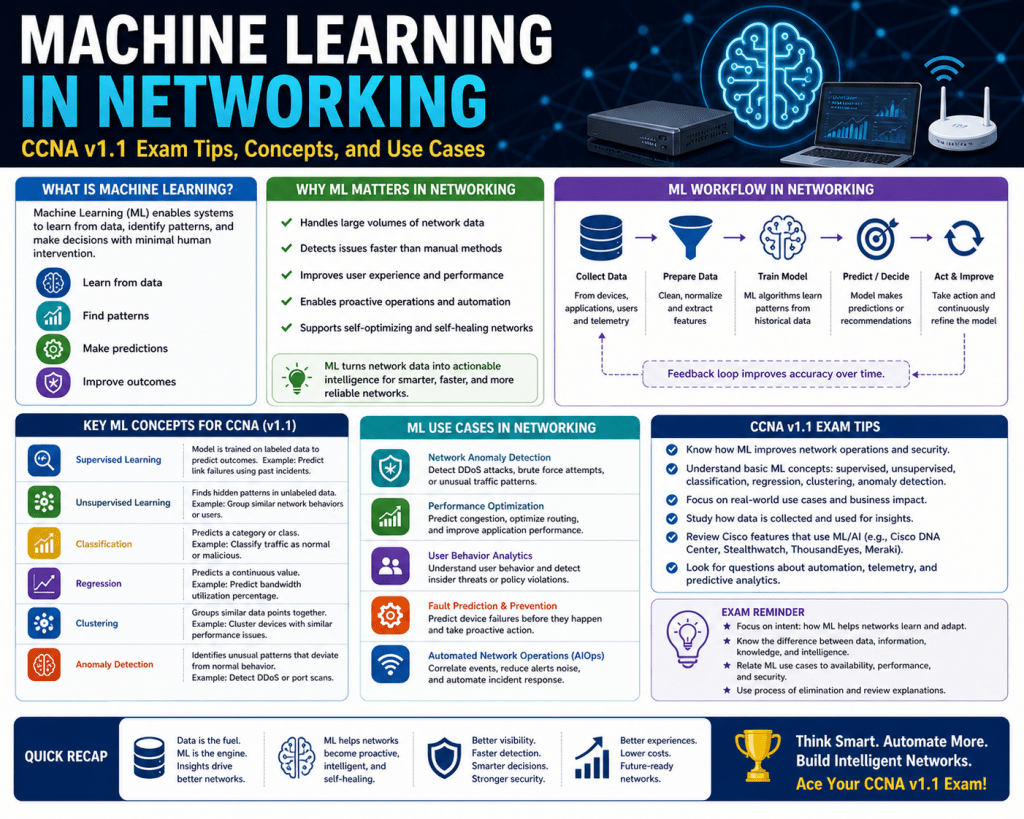
Machine learning has become a defining force in the transformation of modern network operations. Networks are no longer static infrastructures that rely only on manual configurations and predefined rules. Instead, they are evolving into intelligent systems capable of learning from data, adapting to changes, and making decisions in real time. This shift is particularly important for individuals preparing for networking certifications, as it reflects how real-world networks are designed and managed today.
The growing complexity of networks is one of the main reasons machine learning has gained importance. With the rise of cloud computing, virtualization, mobile devices, and distributed systems, networks generate vast amounts of data every second. Managing this scale manually is not only inefficient but also prone to errors. Machine learning introduces automation and intelligence, enabling networks to operate more efficiently and respond to challenges proactively.
Understanding how machine learning fits into network operations provides a strong foundation for mastering modern networking concepts. It bridges the gap between traditional networking practices and the future of autonomous, data-driven infrastructures.
What Machine Learning Really Means
Machine learning is a branch of artificial intelligence that focuses on enabling systems to learn from data and improve their performance over time without being explicitly programmed for every scenario. Instead of relying on rigid instructions, machine learning models identify patterns within data and use those patterns to make predictions or decisions.
In simple terms, machine learning allows computers to learn from experience. When applied to networking, this means systems can analyze past and present network behavior to anticipate future conditions. For example, a network can learn typical traffic patterns during peak hours and adjust resources accordingly without human intervention.
Machine learning operates through algorithms that process data and refine themselves over time. These algorithms become more accurate as they are exposed to more data, making them increasingly effective in handling complex tasks. This ability to continuously improve is one of the key reasons machine learning is so valuable in network operations.
Types of Machine Learning Used in Networking
Different types of machine learning are used depending on the specific problem being addressed. Each type has its own approach to learning and is suited for particular applications within network operations.
Supervised learning is one of the most commonly used methods. It involves training a model using labeled data, where the correct output is already known. This approach is useful for tasks such as classifying network traffic or identifying known security threats. By learning from examples, the model can accurately categorize new data.
Unsupervised learning works with unlabeled data and focuses on discovering hidden patterns or structures. This method is particularly useful for identifying unusual behavior in a network. For instance, it can detect anomalies that may indicate a malfunction or a potential security issue.
Reinforcement learning takes a different approach by allowing systems to learn through interaction with their environment. The model receives feedback in the form of rewards or penalties based on its actions. Over time, it learns to make decisions that maximize positive outcomes. In networking, this can be used to optimize routing decisions or resource allocation.
Each of these methods contributes to making networks smarter and more adaptive. By combining different techniques, machine learning systems can address a wide range of challenges in network management.
The Role of Data in Machine Learning
Data is the foundation of machine learning. Without data, machine learning models cannot function. In network operations, data is generated continuously through user activity, device communication, and system processes. This data includes information about traffic patterns, latency, packet loss, and other performance metrics.
The effectiveness of machine learning depends heavily on the quality of this data. Accurate and well-structured data leads to better predictions and more reliable outcomes. On the other hand, poor-quality data can result in incorrect decisions and reduced performance.
The process of using data in machine learning involves several stages. First, data is collected from various sources within the network. This is followed by data preprocessing, where irrelevant or inconsistent information is removed. The next step is feature extraction, which identifies the most important variables that influence the model’s behavior. Finally, the data is used to train the machine learning model.
As networks continue to grow, the volume of data increases significantly. Machine learning provides the tools needed to analyze this data efficiently, turning raw information into actionable insights.
Why Machine Learning is Important in Network Operations
The importance of machine learning in network operations lies in its ability to handle complexity and improve efficiency. Traditional network management relies on manual processes and static configurations, which can be time-consuming and difficult to scale. Machine learning introduces automation, reducing the need for constant human intervention.
One of the key benefits is the ability to make real-time decisions. Machine learning models can analyze data as it is generated and respond immediately to changes in network conditions. This capability is essential for maintaining performance and reliability in dynamic environments.
Another important aspect is predictive analysis. Machine learning allows networks to anticipate issues before they occur. By analyzing historical data, models can identify trends and predict future behavior. This proactive approach helps prevent problems and ensures smooth operation.
Machine learning also enhances accuracy. Human operators may overlook subtle patterns or make errors due to fatigue. Machine learning models, on the other hand, can process large amounts of data consistently and without bias. This leads to more precise decision-making and improved network performance.
Automation Through Machine Learning
Automation is one of the most significant advantages of machine learning in network operations. By automating repetitive tasks, organizations can improve efficiency and reduce the risk of human error. Tasks such as monitoring, configuration, and troubleshooting can be handled by machine learning systems, allowing network professionals to focus on more strategic activities.
In an automated network, machine learning models continuously analyze data and make adjustments as needed. For example, if a network experiences increased traffic, the system can allocate additional resources to maintain performance. Similarly, if a potential issue is detected, corrective actions can be taken automatically.
This level of automation creates a more responsive and resilient network environment. It also enables networks to scale more effectively, as additional devices and data can be managed without a corresponding increase in manual effort.
The concept of self-optimization is central to this process. Machine learning systems learn from past experiences and improve their performance over time. This continuous improvement ensures that networks remain efficient even as conditions change.
Real-Time Decision Making in Networks
One of the defining features of machine learning is its ability to support real-time decision-making. In modern networks, conditions can change rapidly, and delays in response can lead to performance issues or security risks. Machine learning enables networks to react instantly to these changes.
Real-time decision making involves analyzing data as it is generated and applying algorithms to determine the best course of action. This process happens continuously, ensuring that the network remains optimized at all times. For example, if a sudden surge in traffic is detected, the system can reroute data or adjust bandwidth allocation to prevent congestion.
This capability is particularly important in environments where reliability and speed are critical. By reducing response times and improving efficiency, machine learning helps maintain a high level of service quality.
Machine Learning and Network Intelligence
Network intelligence refers to the ability of a network to understand its own behavior and make informed decisions. Machine learning plays a key role in achieving this level of intelligence. By analyzing data and identifying patterns, machine learning models provide insights that would be difficult to obtain through traditional methods.
These insights can be used to improve various aspects of network operations. For example, understanding traffic patterns can help optimize resource allocation, while identifying anomalies can enhance security. Machine learning also enables networks to adapt to changing conditions, ensuring consistent performance.
The integration of machine learning into network operations represents a shift toward more intelligent and autonomous systems. This evolution is driven by the need for greater efficiency, scalability, and reliability in modern networks.
Challenges in Implementing Machine Learning
Despite its benefits, implementing machine learning in network operations comes with challenges. One of the main challenges is the complexity of integrating machine learning systems with existing infrastructure. This process requires careful planning and a deep understanding of both networking and machine learning concepts.
Another challenge is the need for large amounts of data. Machine learning models require extensive datasets to function effectively. Collecting and managing this data can be difficult, especially in large and distributed networks.
Maintaining and updating machine learning models is also a significant task. As network conditions change, models must be retrained to ensure accuracy. This requires ongoing effort and resources.
There are also concerns related to privacy and security. Using data for machine learning raises questions about how that data is stored and protected. Ensuring that sensitive information is handled responsibly is an important consideration.
Preparing for Machine Learning Topics in Networking Exams
As machine learning becomes more integrated into networking, it is increasingly important for learners to understand its applications. Exam preparation involves not only learning theoretical concepts but also understanding how these concepts are applied in real-world scenarios.
Key areas of focus include understanding different types of machine learning, recognizing how data is used, and identifying common applications in network operations. It is also important to understand the benefits and limitations of machine learning.
Practical experience can enhance learning by providing a deeper understanding of how machine learning works in practice. Experimenting with network simulations and analyzing data can help reinforce theoretical knowledge.
Developing a strong foundation in these areas prepares learners to handle questions related to machine learning and network operations effectively.
The Future of Machine Learning in Networking
The role of machine learning in networking is expected to grow as technology continues to evolve. Networks are becoming more complex, and the demand for efficient and reliable systems is increasing. Machine learning provides the tools needed to meet these demands.
One of the key trends is the development of autonomous networks that can manage themselves with minimal human intervention. These networks use machine learning to make decisions, optimize performance, and respond to challenges in real time.
Another trend is the increasing use of real-time analytics. As networks generate more data, the ability to analyze this data quickly becomes essential. Machine learning enables this analysis, providing insights that can be used to improve performance and prevent issues.
As machine learning continues to advance, it will play an even greater role in shaping the future of network operations. Understanding its principles and applications is essential for anyone looking to succeed in the field of networking.
Traffic Prediction and Intelligent Network Management
Traffic prediction is one of the most impactful applications of machine learning in network operations. Modern networks experience constant fluctuations in traffic due to user behavior, application demands, and external factors. Without intelligent systems, managing these variations becomes difficult and often reactive. Machine learning introduces a proactive approach by analyzing historical and real-time data to forecast future traffic patterns.
By studying trends over time, machine learning models can identify peak usage periods, recurring spikes, and unusual patterns. This allows network administrators to prepare in advance rather than reacting after congestion occurs. For example, if a network consistently experiences heavy usage during specific hours, resources can be allocated beforehand to ensure smooth performance.
This predictive capability significantly improves network reliability. Instead of dealing with unexpected slowdowns or outages, networks can maintain consistent performance even during high-demand periods. The ability to anticipate changes transforms network management from a reactive process into a strategic and efficient operation.
Machine Learning Techniques for Traffic Analysis
Several machine learning techniques are used to analyze and predict network traffic. Each method offers unique advantages depending on the type of data and the desired outcome. Time series analysis is commonly used to examine data points collected over time. This technique identifies trends and seasonal patterns, making it ideal for forecasting network usage.
Regression models are another important tool. They help establish relationships between variables, such as the correlation between user activity and bandwidth consumption. By understanding these relationships, networks can make informed decisions about resource allocation.
Neural networks bring an advanced level of analysis by mimicking the way the human brain processes information. These models are capable of handling complex and non-linear data, making them highly effective for predicting traffic in dynamic environments. They can adapt to new patterns and improve their accuracy over time.
Clustering techniques, often used in unsupervised learning, group similar data points together. This helps identify common traffic behaviors and detect deviations from normal patterns. Combining these techniques creates a comprehensive approach to traffic management, enabling networks to operate more efficiently.
Preventing Network Congestion Through Prediction
Network congestion occurs when the demand for resources exceeds the available capacity. This can lead to slow performance, packet loss, and reduced quality of service. Machine learning helps prevent congestion by forecasting demand and adjusting resources accordingly.
Predictive models analyze historical traffic data to determine when congestion is likely to occur. Based on these predictions, networks can redistribute workloads, adjust routing paths, or allocate additional bandwidth. This proactive approach ensures that traffic flows smoothly even during peak periods.
Another advantage of machine learning is its ability to adapt to changing conditions. As new data becomes available, models update their predictions, allowing networks to respond to unexpected changes. This flexibility is essential in environments where traffic patterns are constantly evolving.
By reducing congestion, machine learning improves user experience and increases the overall efficiency of network operations. It ensures that resources are used effectively and that performance remains consistent under varying conditions.
Anomaly Detection in Network Environments
Anomaly detection is a critical application of machine learning in network operations. It involves identifying patterns or behaviors that deviate from the norm. These anomalies can indicate a wide range of issues, including hardware failures, configuration errors, or security threats.
Traditional methods of detecting anomalies often rely on predefined rules and thresholds. While effective to some extent, these methods can miss subtle or previously unknown issues. Machine learning enhances anomaly detection by learning what constitutes normal behavior and identifying deviations automatically.
Unsupervised learning techniques are particularly useful for this purpose. They analyze data without predefined labels, allowing them to detect unusual patterns that may not have been anticipated. This capability is essential for identifying new and evolving threats.
Anomaly detection systems continuously monitor network activity, analyzing data in real time. When an anomaly is detected, alerts can be generated, or automated actions can be taken to mitigate the issue. This reduces response time and minimizes the impact of potential problems.
Improving Network Security with Machine Learning
Security is one of the most important aspects of network operations, and machine learning plays a vital role in enhancing it. Cyber threats are becoming more sophisticated, making it difficult for traditional security measures to keep up. Machine learning provides a dynamic and adaptive approach to security.
Machine learning models analyze network traffic to identify patterns associated with malicious activity. These patterns may include unusual login attempts, abnormal data transfers, or unexpected communication between devices. By recognizing these indicators, the system can detect threats in real time.
One of the key advantages of machine learning in security is its ability to identify previously unknown threats. Traditional systems rely on known signatures, which limits their effectiveness against new attacks. Machine learning, on the other hand, can detect anomalies that may indicate a new type of threat.
In addition to detection, machine learning can also assist in prevention. By analyzing past incidents, models can predict potential vulnerabilities and recommend actions to address them. This proactive approach reduces the risk of security breaches and enhances overall network resilience.
Adaptive Security Systems and Real-Time Protection
Machine learning enables the development of adaptive security systems that evolve alongside emerging threats. These systems continuously learn from new data, improving their ability to detect and respond to attacks. This adaptability is essential in a constantly changing threat landscape.
Real-time protection is another significant benefit. Machine learning models can analyze data as it is generated, allowing them to identify and respond to threats. This reduces the time between detection and response, minimizing the potential damage caused by an attack.
Adaptive systems can also prioritize threats based on their severity. This ensures that critical issues are addressed immediately, while less significant concerns are handled appropriately. By focusing resources where they are needed most, networks can maintain a high level of security.
The integration of machine learning into security operations creates a more robust and responsive defense mechanism. It enhances the ability to detect, prevent, and respond to threats, ensuring that networks remain protected.
Performance Optimization Using Machine Learning
Performance optimization is another area where machine learning has a significant impact. Networks must deliver consistent performance despite varying conditions and demands. Machine learning helps achieve this by analyzing data and making adjustments in real time.
One of the key aspects of performance optimization is resource allocation. Machine learning models determine how resources such as bandwidth and processing power should be distributed. This ensures that critical applications receive the necessary resources while minimizing waste.
Load balancing is another important function. By distributing traffic evenly across available resources, machine learning helps prevent bottlenecks and ensures efficient utilization. This improves overall network performance and reduces latency.
Machine learning also enables dynamic adjustments. As conditions change, models update their decisions to maintain optimal performance. This continuous adaptation ensures that networks remain efficient even under challenging conditions.
Real-World Applications of Performance Optimization
Machine learning is widely used in various real-world scenarios to optimize network performance. In large-scale networks, it helps manage traffic across multiple locations, ensuring consistent performance for users. By analyzing data from different sources, models can identify the most efficient paths for data transmission.
In high-demand environments, machine learning ensures that resources are allocated effectively. For example, during periods of increased usage, additional resources can be deployed to maintain performance. This prevents slowdowns and ensures a seamless user experience.
Machine learning also improves reliability by identifying potential issues before they impact performance. By analyzing trends and patterns, models can predict when components are likely to fail and take preventive measures. This reduces downtime and enhances overall network stability.
The ability to optimize performance in real time makes machine learning an essential tool for modern network operations. It ensures that networks can meet the demands of users while maintaining efficiency and reliability.
Predictive Maintenance in Network Infrastructure
Predictive maintenance is a proactive approach to managing network infrastructure. Instead of waiting for components to fail, machine learning models analyze data to predict when failures are likely to occur. This allows organizations to take preventive action, reducing downtime and maintenance costs.
Machine learning models examine various factors, such as device performance, error rates, and environmental conditions. By identifying patterns associated with failures, they can predict potential issues with high accuracy. This enables timely maintenance and prevents unexpected disruptions.
Predictive maintenance also improves resource planning. By knowing when components are likely to require maintenance, organizations can allocate resources more effectively. This reduces unnecessary repairs and ensures that maintenance activities are carried out efficiently.
The use of machine learning in predictive maintenance enhances the reliability of network infrastructure. It ensures that systems remain operational and minimizes the impact of failures on network performance.
Reducing Downtime and Enhancing Reliability
Downtime can have significant consequences for network operations, affecting productivity and user experience. Machine learning helps reduce downtime by identifying potential issues before they escalate. This proactive approach ensures that problems are addressed early, minimizing their impact.
By continuously monitoring network performance, machine learning models can detect subtle changes that may indicate an impending failure. These insights allow administrators to take corrective action before the issue becomes critical. This not only reduces downtime but also improves overall reliability.
Machine learning also enables faster recovery when issues do occur. By analyzing past incidents, models can recommend the most effective solutions, reducing the time required to restore normal operations. This improves resilience and ensures that networks can recover quickly from disruptions.
Enhancing reliability is one of the key benefits of machine learning in network operations. It ensures that networks remain stable and perform consistently, even in challenging conditions.
Machine Learning in Network Automation
Automation is a central theme in modern network management, and machine learning plays a crucial role in enabling it. By automating routine tasks, machine learning reduces the workload on network administrators and improves efficiency.
Automated systems can handle tasks such as configuration management, monitoring, and troubleshooting. These systems analyze data and make decisions based on predefined goals and learned patterns. This reduces the need for manual intervention and minimizes the risk of errors.
Machine learning also enables self-optimization. Networks can adjust their configurations based on current conditions, ensuring optimal performance at all times. This dynamic approach allows networks to adapt to changes and maintain efficiency.
The integration of machine learning into automation creates intelligent systems that can manage themselves. This represents a significant advancement in network operations, enabling more efficient and scalable management.
Efficiency Gains from Intelligent Automation
The efficiency gains from machine learning-driven automation are substantial. By handling repetitive tasks, machine learning frees up time for network professionals to focus on more complex and strategic activities. This improves productivity and allows organizations to make better use of their resources.
Automation also reduces the likelihood of human error. Manual processes are prone to mistakes, especially in complex environments. Machine learning systems perform tasks consistently and accurately, ensuring reliable outcomes.
Machine learning-driven automation also supports scalability. As networks grow, the ability to manage additional devices and data becomes increasingly important. Automation ensures that networks can expand without a corresponding increase in manual effort.
Integration Challenges and Practical Considerations
While the benefits of machine learning are significant, integrating it into network operations presents challenges. One of the main challenges is the complexity of implementation. Machine learning systems must be carefully designed and integrated with existing infrastructure.
Data management is another important consideration. Machine learning models require large amounts of data, which must be collected, stored, and processed effectively. Ensuring data quality is essential for accurate predictions and reliable outcomes.
There are also technical challenges related to model training and maintenance. Machine learning models must be regularly updated to reflect changing conditions. This requires ongoing effort and expertise.
Despite these challenges, the advantages of machine learning make it a valuable addition to network operations. By addressing these considerations, organizations can successfully implement machine learning and benefit from its capabilities.
Expanding Knowledge for Networking Professionals
As machine learning becomes more prevalent in network operations, professionals need to expand their knowledge in this area. Understanding how machine learning works and how it is applied in networking provides a competitive advantage.
Key areas of focus include data analysis, algorithm selection, and practical applications. Developing these skills enables professionals to effectively implement and manage machine learning systems.
Hands-on experience is particularly valuable. Experimenting with network simulations and analyzing real-world data helps reinforce theoretical concepts. This practical approach provides a deeper understanding of how machine learning impacts network operations.
By building expertise in machine learning, networking professionals can stay ahead in a rapidly evolving field and contribute to the development of intelligent network systems.
Machine Learning and Network Automation at Scale
Machine learning is redefining how network automation is implemented, especially in large and complex environments. Traditional automation relies on predefined scripts and rules that execute specific actions when certain conditions are met. While effective, this approach lacks flexibility because it cannot adapt to unexpected changes without manual updates. Machine learning enhances automation by introducing adaptability, allowing systems to learn from past behavior and adjust actions dynamically.
At scale, networks consist of thousands of devices, applications, and endpoints generating continuous streams of data. Managing such an environment manually is impractical. Machine learning enables intelligent orchestration by analyzing patterns across the entire network and making coordinated decisions. This ensures that automation is not only reactive but also predictive and self-improving.
One of the defining features of machine learning-driven automation is its ability to evolve. As new data becomes available, models update their understanding of network behavior. This allows automation processes to become more accurate over time, reducing inefficiencies and improving overall performance. The result is a network that continuously refines itself without requiring constant human intervention.
Dynamic Configuration and Self-Optimizing Networks
Dynamic configuration is a key capability enabled by machine learning. In traditional networks, configurations are often static and require manual adjustments to accommodate changes in traffic or infrastructure. Machine learning eliminates this limitation by allowing networks to modify their configurations automatically based on real-time conditions.
For example, routing decisions can be optimized dynamically by analyzing current network load and latency. Instead of relying on fixed paths, machine learning models determine the most efficient routes for data transmission. This reduces congestion and improves overall performance.
Self-optimization extends beyond routing. Machine learning can adjust parameters such as bandwidth allocation, quality of service settings, and load balancing strategies. These adjustments are made continuously, ensuring that the network operates at peak efficiency under varying conditions.
The concept of a self-optimizing network represents a significant advancement in network management. It shifts the focus from manual control to intelligent systems that can manage themselves. This not only improves performance but also reduces the complexity associated with managing large-scale networks.
The Role of Machine Learning in Software-Defined Networking
Software-defined networking has introduced a new level of flexibility by separating the control plane from the data plane. This architecture allows network administrators to manage the network centrally through software. Machine learning enhances this model by adding intelligence to the decision-making process.
In a software-defined environment, machine learning can analyze data from multiple sources and provide insights that guide network policies. For instance, it can determine how traffic should be prioritized or how resources should be allocated. These decisions are based on real-time analysis rather than static rules.
Machine learning also improves the responsiveness of software-defined networks. By continuously monitoring conditions, it can detect changes and adjust policies accordingly. This ensures that the network remains efficient and adaptable.
The integration of machine learning into software-defined networking creates a powerful combination. It combines centralized control with intelligent decision-making, enabling networks to operate more efficiently and effectively.
Enhancing Cloud and Virtualized Network Environments
Cloud computing and virtualization have transformed how networks are deployed and managed. These environments are highly dynamic, with resources being created and removed frequently. Machine learning plays a crucial role in managing this complexity.
In cloud environments, machine learning helps optimize resource utilization. By analyzing usage patterns, it can determine how resources should be allocated to meet demand. This ensures that applications perform efficiently while minimizing costs.
Virtualized networks benefit from machine learning through improved scalability and performance. Machine learning models can predict when additional resources are needed and allocate them automatically. This prevents performance bottlenecks and ensures a smooth user experience.
Another important application is workload optimization. Machine learning can analyze the behavior of different applications and distribute workloads in a way that maximizes efficiency. This reduces latency and improves overall system performance.
The ability to manage dynamic environments effectively makes machine learning an essential component of modern network operations.
Ethical and Privacy Considerations in Machine Learning
As machine learning becomes more integrated into network operations, ethical and privacy considerations become increasingly important. Machine learning models rely on large amounts of data, which may include sensitive information. Ensuring that this data is handled responsibly is a critical aspect of implementation.
Privacy concerns arise when data is collected and analyzed without proper safeguards. It is important to ensure that data is anonymized and protected from unauthorized access. This helps maintain user trust and prevents misuse of information.
Ethical considerations also involve the decision-making process of machine learning models. These models can influence critical aspects of network operations, including security and resource allocation. Ensuring that decisions are fair and unbiased is essential.
Transparency is another key factor. Understanding how machine learning models make decisions helps build confidence in their use. This requires clear documentation and the ability to explain the reasoning behind decisions.
Addressing these considerations is essential for the responsible use of machine learning in network operations. It ensures that the benefits of machine learning are realized without compromising ethical standards.
Challenges in Scaling Machine Learning Solutions
Scaling machine learning solutions in network operations presents several challenges. One of the main challenges is the computational resources required to process large amounts of data. Training and deploying machine learning models at scale requires significant processing power and storage capacity.
Another challenge is data management. As networks grow, the volume of data increases exponentially. Managing this data efficiently is essential for maintaining the performance of machine learning systems. This includes data collection, storage, and processing.
Model accuracy is also a concern. As networks evolve, machine learning models must be updated to reflect new conditions. This requires continuous monitoring and retraining, which can be resource-intensive.
Integration with existing systems is another challenge. Machine learning solutions must work seamlessly with the current network infrastructure. This requires careful planning and a deep understanding of both networking and machine learning concepts.
Despite these challenges, advancements in technology are making it easier to scale machine learning solutions. Improved hardware, distributed computing, and advanced algorithms are helping overcome these obstacles.
Best Practices for Implementing Machine Learning in Networks
Successful implementation of machine learning in network operations requires a strategic approach. One of the first steps is defining clear objectives. Understanding what problems need to be solved helps guide the selection of appropriate machine learning techniques.
Data quality is another critical factor. Ensuring that data is accurate, relevant, and up to date improves the effectiveness of machine learning models. This requires proper data management practices and continuous monitoring.
Collaboration is also important. Implementing machine learning often involves multiple teams, including network engineers, data scientists, and security specialists. Working together ensures that all aspects of the system are considered.
Regular evaluation and updating of models is essential. Machine learning models must adapt to changing conditions to remain effective. This requires ongoing maintenance and refinement.
Finally, it is important to start small and scale gradually. Implementing machine learning in a controlled environment allows for testing and optimization before expanding to larger systems. This reduces risks and ensures a smoother transition.
Conclusion
Machine learning has firmly established itself as a transformative force in network operations, reshaping how networks are designed, managed, and secured. What was once a domain driven primarily by manual configurations and reactive troubleshooting has evolved into a dynamic environment where intelligent systems continuously analyze data, learn from patterns, and make informed decisions. This shift represents more than just a technological upgrade; it marks a fundamental change in how networking professionals approach their roles and responsibilities.
At the heart of this transformation is the ability of machine learning to convert vast amounts of network data into actionable insights. Every interaction within a network generates information, and machine learning provides the tools to interpret that information effectively. By leveraging this capability, networks can move beyond simple monitoring to achieve a deeper level of awareness. This awareness allows systems to anticipate issues, optimize performance, and maintain stability even under challenging conditions.
Automation is another critical benefit that machine learning brings to network operations. By handling repetitive and time-consuming tasks, machine learning allows network professionals to focus on more strategic and complex challenges. Automation reduces the likelihood of human error and ensures consistency in operations. It also enables networks to scale more effectively, as the addition of new devices and services does not require a proportional increase in manual effort. This scalability is essential in modern environments where growth and change are constant.
Security has also been significantly enhanced through the integration of machine learning. As cyber threats become more sophisticated, traditional security measures struggle to keep pace. Machine learning introduces a more adaptive approach, capable of identifying unusual patterns and detecting threats in real time. This ability to recognize both known and unknown threats provides a stronger defense against attacks. By continuously learning from new data, machine learning systems improve their accuracy and effectiveness, creating a more resilient network environment.
Performance optimization is another area where machine learning has a profound impact. Networks must deliver consistent performance despite varying levels of demand and complexity. Machine learning achieves this by analyzing traffic patterns, optimizing resource allocation, and dynamically adjusting configurations. These capabilities ensure that networks operate efficiently, even during peak usage periods. The result is improved reliability, reduced latency, and a better overall experience for users.
Predictive maintenance further highlights the value of machine learning in network operations. Instead of waiting for components to fail, machine learning models analyze data to identify early signs of potential issues. This allows for timely intervention, reducing downtime and maintenance costs. By preventing failures before they occur, networks become more reliable and efficient. This proactive approach to maintenance is particularly valuable in large-scale environments where even minor disruptions can have significant consequences.
Despite its many advantages, the adoption of machine learning in network operations is not without challenges. Implementing these systems requires careful planning, access to high-quality data, and ongoing maintenance. Integrating machine learning with existing infrastructure can be complex, and ensuring data privacy and ethical use is essential. Addressing these challenges requires a combination of technical expertise and strategic thinking. However, the benefits far outweigh the difficulties, making machine learning a worthwhile investment for modern networks.
The growing importance of machine learning also highlights the need for continuous learning and skill development. Networking professionals must expand their knowledge to include data analysis, algorithmic thinking, and an understanding of machine learning principles. This does not mean abandoning traditional networking skills but rather enhancing them with new capabilities. By embracing this evolution, professionals can remain relevant and effective in an increasingly data-driven industry.
Looking ahead, the role of machine learning in network operations is expected to expand even further. Advances in technology will continue to introduce new possibilities, from fully autonomous networks to more advanced predictive systems. These developments will further reduce the need for manual intervention and increase the efficiency of network management. As networks become more intelligent, the focus will shift toward designing systems that can operate independently while maintaining transparency and accountability.
The integration of machine learning also encourages a more holistic approach to network management. Instead of addressing individual issues in isolation, machine learning considers the network as a whole. This comprehensive perspective enables more effective decision-making and ensures that all aspects of the network work together harmoniously. It also supports the development of more resilient and adaptable systems capable of handling future challenges.
In the context of professional development and certification preparation, understanding machine learning is no longer optional. It has become an essential component of modern networking knowledge. By mastering the concepts and applications of machine learning, individuals can gain a deeper understanding of how networks operate and how they can be optimized. This knowledge not only supports exam success but also prepares professionals for real-world scenarios where machine learning plays a critical role.
Ultimately, machine learning represents a powerful tool for enhancing network operations. Its ability to analyze data, automate processes, and adapt to changing conditions makes it an invaluable asset in today’s complex and fast-paced environments. As networks continue to evolve, the integration of machine learning will play a central role in shaping their future. Embracing this technology is key to building efficient, secure, and reliable networks that can meet the demands of an increasingly connected world.