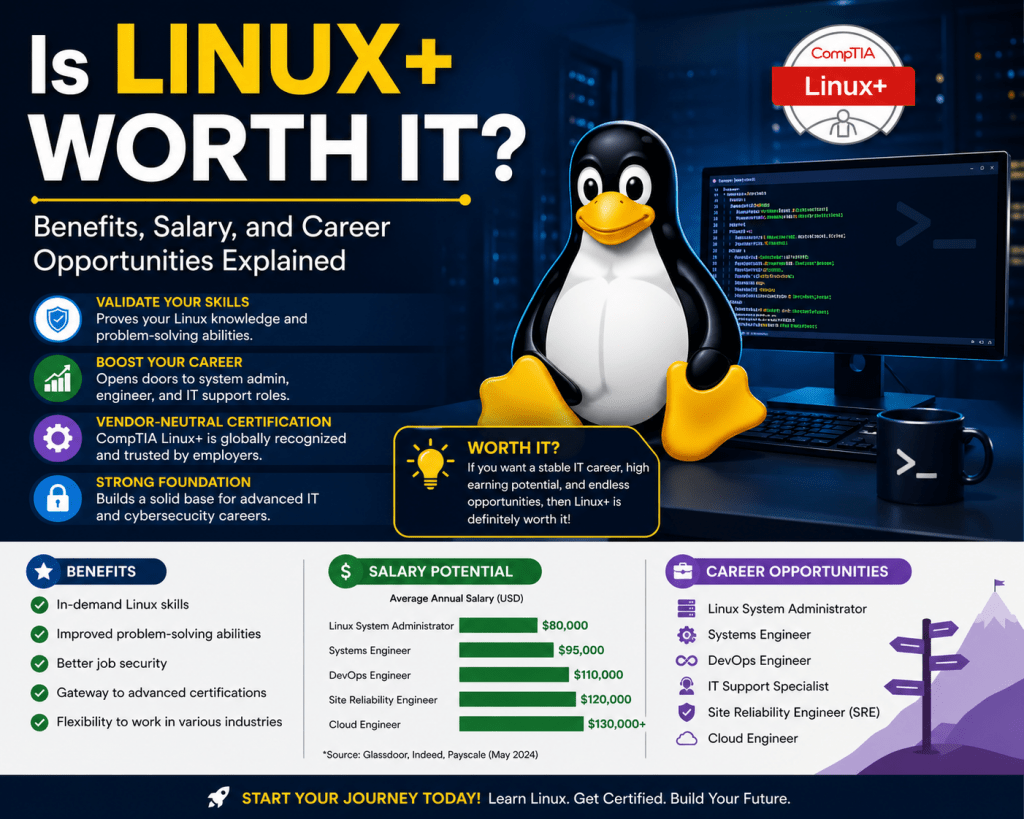
Linux has become one of the most dominant operating systems in the global technology landscape. It powers a wide range of environments, from embedded systems and enterprise servers to cloud infrastructure and high-performance computing platforms. Its open-source architecture allows organizations to customize and scale systems according to their needs, which has made Linux a foundational component in modern IT ecosystems. As businesses continue to shift toward cloud-native and distributed architectures, Linux remains at the center of innovation and infrastructure management.
The widespread adoption of Linux has created a strong demand for professionals who can manage, configure, and troubleshoot Linux-based systems. However, assessing Linux skills has historically been a challenge, particularly for hiring managers without deep technical expertise. While vendor-specific certifications have existed for years, they often focus on particular distributions and may not reflect a broader understanding of Linux as a whole. This gap led to the need for a vendor-neutral certification that validates foundational Linux administration skills across environments.
The Emergence of a Vendor-Neutral Linux Certification
A vendor-neutral certification provides a standardized way to evaluate technical competency without tying the candidate to a specific platform. Linux+ fills this role by offering a certification path that focuses on universal Linux concepts rather than distribution-specific tools. This approach ensures that certified professionals can adapt to various environments, whether they are working with enterprise servers, cloud instances, or hybrid infrastructures.
The introduction of this certification addressed a long-standing issue in technical hiring. Non-technical stakeholders often struggled to differentiate between theoretical knowledge and practical ability when evaluating candidates. A recognized certification simplifies this process by acting as a benchmark for core competencies. It communicates that the individual has demonstrated both conceptual understanding and hands-on capability in managing Linux systems.
Core Objectives and Certification Scope
Linux+ is designed to validate the skill set required for early-career professionals working with Linux systems. The certification focuses on practical administration tasks that are essential for maintaining operational environments. It is structured to ensure that candidates not only understand Linux concepts but can also apply them in real-world scenarios.
The certification covers several core domains that reflect the responsibilities of a Linux administrator. These domains include system configuration, command-line operations, process management, and basic networking. Additionally, it emphasizes security practices, automation techniques, and troubleshooting methodologies. By combining these areas, the certification creates a comprehensive framework that aligns with modern job roles.
The emphasis on hands-on skills is particularly significant. Rather than relying solely on theoretical questions, the exam incorporates performance-based elements that simulate real administrative tasks. This approach ensures that candidates are evaluated on their ability to execute commands, resolve issues, and manage system components effectively.
Understanding the Structure of the Certification Exam
The certification exam is designed to assess both knowledge and application. Candidates encounter a mix of question formats that test different aspects of their expertise. These include multiple-choice questions, scenario-based problems, and performance-based tasks that require practical execution.
The time constraints and scoring system are structured to maintain a high standard of competency. Candidates must demonstrate a strong understanding of Linux fundamentals while also working efficiently under pressure. This combination of technical depth and time management reflects real-world conditions where administrators must diagnose and resolve issues quickly.
The transition to a single-exam format simplified the certification process while maintaining its rigor. This change made the certification more accessible without compromising its value. It also aligned the certification with industry expectations, where streamlined credentialing processes are increasingly preferred.
Key Knowledge Areas Covered in Linux+
The certification encompasses a broad range of topics that reflect the day-to-day responsibilities of Linux professionals. One of the central areas is system configuration, which involves setting up and managing Linux environments. This includes tasks such as installing operating systems, configuring storage, and managing system services.
Another critical area is command-line proficiency. The Linux command line is a powerful interface that enables administrators to perform complex tasks efficiently. Mastery of command-line tools is essential for managing files, processes, and system resources. The certification ensures that candidates are comfortable navigating and operating within this environment.
Automation and scripting are also key components of the certification. Modern IT environments rely heavily on automation to improve efficiency and reduce human error. Candidates are expected to understand basic scripting techniques and be able to implement automated solutions for routine tasks.
Security is another fundamental domain. Linux systems are often deployed in environments where data protection and access control are critical. The certification covers essential security practices, including user management, permissions, and system hardening. This ensures that certified professionals can contribute to maintaining secure infrastructures.
Troubleshooting and diagnostics round out the core knowledge areas. Administrators must be able to identify and resolve issues quickly to minimize downtime. The certification evaluates the candidate’s ability to analyze system behavior, interpret logs, and apply corrective actions.
The Role of Experience in Certification Success
While the certification is accessible to early-career professionals, practical experience plays a crucial role in achieving success. Working with Linux systems in real-world scenarios provides the context needed to understand how different components interact. This experience enhances the ability to respond to performance-based questions and apply theoretical knowledge effectively.
Hands-on experience also helps candidates develop problem-solving skills. In real environments, issues rarely present themselves in a straightforward manner. Administrators must analyze symptoms, identify root causes, and implement solutions. This type of thinking is central to the certification and is best developed through practical exposure.
Although prior certifications can provide a useful foundation, they are not mandatory. The focus remains on the individual’s ability to demonstrate Linux administration skills. This flexibility allows candidates from diverse backgrounds to pursue the certification and build their expertise.
Why Linux Skills Are Increasingly Valuable
The growing reliance on Linux across industries has made Linux skills highly valuable. Organizations depend on Linux for critical operations, including web hosting, database management, and cloud computing. As a result, professionals who can manage Linux systems are in high demand.
The rise of cloud technologies has further amplified this demand. Many cloud platforms are built on Linux-based infrastructure, making Linux knowledge essential for roles in cloud engineering and DevOps. Understanding Linux provides a strong foundation for working with containers, orchestration tools, and automation frameworks.
In addition to technical roles, Linux knowledge is beneficial in cybersecurity. Many security tools and platforms are designed to run on Linux systems. Professionals in this field must be comfortable navigating Linux environments to perform tasks such as vulnerability assessment and incident response.
Bridging the Gap Between Knowledge and Validation
One of the primary purposes of certification is to bridge the gap between knowledge and validation. While experience demonstrates capability, certification provides a formal acknowledgment of that capability. This is particularly important in competitive job markets where candidates must differentiate themselves.
For hiring managers, certification simplifies the evaluation process. It provides a standardized measure of competency that can be used to compare candidates. This is especially valuable in situations where technical expertise is required but not easily assessed through interviews alone.
For professionals, certification serves as a milestone in their career development. It reflects a commitment to learning and a willingness to invest in skill enhancement. This can have a positive impact on career progression and job opportunities.
The Strategic Importance of Foundational Certifications
Foundational certifications play a critical role in building a strong career in IT. They provide a structured learning path that covers essential concepts and skills. This foundation is necessary for progressing to more advanced roles and certifications.
Linux+ is positioned as a foundational certification that prepares individuals for a variety of career paths. It equips candidates with the knowledge needed to work in system administration, networking, and cybersecurity. By establishing a solid base, it enables professionals to specialize in areas that align with their interests and career goals.
The certification also encourages continuous learning. As technology evolves, professionals must update their skills to remain relevant. Foundational certifications serve as a starting point for this ongoing process, providing the knowledge needed to adapt to new tools and technologies.
How Linux+ Aligns with Industry Trends
The IT industry is constantly evolving, with new technologies and methodologies shaping the way systems are managed. Linux+ aligns with these trends by focusing on practical skills that are relevant in modern environments. Its emphasis on automation, security, and troubleshooting reflects the current demands of the industry.
The certification also supports the shift toward DevOps practices. By covering scripting and automation, it prepares candidates to work in environments where collaboration and efficiency are key. This alignment with industry practices enhances the relevance of the certification.
As organizations continue to adopt cloud and hybrid infrastructures, the need for Linux expertise will only increase. Certifications that validate these skills will play an important role in shaping the workforce. Linux+ is positioned to meet this need by providing a comprehensive and accessible certification path.
Setting the Stage for Career Development
Pursuing a Linux certification is not just about passing an exam. It is about building a skill set that can support long-term career growth. Linux+ provides a structured approach to learning that helps candidates develop both technical knowledge and practical ability.
The certification acts as a stepping stone for more advanced roles. It prepares individuals to take on responsibilities in system administration, network management, and cybersecurity. By establishing a strong foundation, it enables professionals to pursue specialized certifications and career paths.
In a competitive job market, having a recognized certification can make a significant difference. It demonstrates a level of expertise that goes beyond basic knowledge and shows that the individual is capable of handling real-world challenges.
The Practical Nature of Linux+ in Real IT Environments
Linux+ is structured around real-world system administration tasks rather than purely theoretical knowledge. This makes it especially relevant for environments where Linux is actively used in production systems. Modern IT infrastructures rely heavily on Linux-based servers, cloud instances, and containerized applications, which means professionals are expected to interact with Linux at a functional level rather than just a conceptual one.
The certification focuses on preparing individuals to handle operational responsibilities that occur daily in enterprise environments. These include managing user accounts, configuring services, monitoring system performance, and resolving technical issues. The intent is to simulate the kinds of tasks that system administrators and support engineers regularly encounter.
Unlike general IT certifications that focus broadly on concepts, Linux+ places emphasis on execution. This means candidates must demonstrate that they can apply commands, interpret system outputs, and perform configuration changes effectively. This practical orientation makes the certification particularly valuable for early-career professionals entering technical roles.
System Administration Tasks in Linux Environments
System administration forms the backbone of Linux operations. Administrators are responsible for ensuring that systems remain stable, secure, and efficient. This includes installing and updating software, managing system resources, and configuring services that support applications and users.
A key responsibility in Linux environments is user and permission management. Linux systems are designed with a multi-user architecture, which requires careful control of access rights. Administrators must configure user accounts, assign permissions, and ensure that sensitive data is protected from unauthorized access. This involves working with file permissions, group policies, and authentication mechanisms.
Another critical area is service management. Linux systems rely on background services to perform essential functions such as networking, logging, and process scheduling. Administrators must know how to start, stop, and configure these services to ensure system stability. Misconfigured services can lead to performance issues or system downtime, making this an essential skill.
Storage management is also a core component of system administration. Linux systems use a variety of storage configurations, including local disks, partitions, and network-based storage solutions. Administrators must be able to allocate storage, monitor usage, and troubleshoot disk-related issues. This ensures that systems continue to operate efficiently even as data demands increase.
Command-Line Proficiency and Its Importance
The Linux command line is one of the most powerful tools available to system administrators. Unlike graphical interfaces, the command line allows for precise control over system operations and enables automation of repetitive tasks. Mastery of command-line tools is essential for anyone working in a Linux environment.
Command-line proficiency includes the ability to navigate file systems, manipulate files, and execute system commands efficiently. It also involves understanding command syntax, options, and output interpretation. Many administrative tasks that would take multiple steps in a graphical interface can be completed with a single command in Linux.
Scripting is closely tied to command-line usage. Shell scripting allows administrators to automate tasks such as backups, system updates, and log analysis. This not only improves efficiency but also reduces the likelihood of human error. In enterprise environments, automation is a key component of system reliability and scalability.
The certification evaluates a candidate’s ability to use the command line effectively under real-world conditions. This includes interpreting outputs, chaining commands, and using built-in utilities to solve problems. These skills are essential for working in environments where speed and accuracy are critical.
Automation and Scripting in Modern Linux Systems
Automation has become a cornerstone of modern IT operations. As systems grow in complexity, manual management becomes inefficient and error-prone. Linux environments, in particular, benefit significantly from automation due to their flexibility and command-line capabilities.
Scripting allows administrators to automate repetitive tasks and streamline system management. This includes tasks such as user provisioning, system monitoring, and log rotation. By automating these processes, organizations can reduce operational overhead and improve consistency across systems.
Linux+ introduces candidates to the fundamentals of scripting, including basic shell scripting concepts and automation workflows. While it does not require advanced programming skills, it emphasizes the importance of understanding how scripts can be used to improve system efficiency.
Automation also plays a role in configuration management. Tools and scripts can be used to ensure that systems maintain consistent configurations across multiple environments. This is particularly important in large-scale deployments where manual configuration would be impractical.
Security Fundamentals in Linux Administration
Security is a critical aspect of Linux system administration. Linux systems are widely used in enterprise and cloud environments, making them a target for potential security threats. Administrators must implement measures to protect systems from unauthorized access and malicious activity.
One of the foundational security concepts in Linux is user authentication. Administrators must ensure that only authorized users can access system resources. This involves managing passwords, configuring authentication mechanisms, and enforcing security policies.
File permissions are another key security feature. Linux uses a permission-based model to control access to files and directories. Administrators must understand how to assign and modify permissions to ensure that sensitive data is protected.
System hardening is also an important part of Linux security. This involves configuring systems to minimize vulnerabilities by disabling unnecessary services, applying security patches, and implementing firewall rules. Hardening reduces the attack surface and improves overall system resilience.
Logging and monitoring are essential for detecting and responding to security incidents. Linux systems generate detailed logs that record system activity. Administrators must be able to analyze these logs to identify suspicious behavior and respond accordingly.
Troubleshooting and Diagnostic Skills
Troubleshooting is one of the most important skills for any Linux administrator. Systems can encounter a wide range of issues, from performance degradation to service failures. The ability to diagnose and resolve these issues quickly is critical for maintaining system availability.
Effective troubleshooting requires a systematic approach. Administrators must be able to identify symptoms, isolate potential causes, and test solutions. This often involves analyzing system logs, checking resource usage, and verifying configuration settings.
Performance issues are common in Linux environments. These can be caused by high CPU usage, memory constraints, or disk bottlenecks. Administrators must be able to identify the root cause of performance problems and implement appropriate solutions.
Network-related issues are also frequent in Linux systems. These may involve connectivity problems, misconfigured interfaces, or firewall restrictions. Troubleshooting network issues requires a solid understanding of networking concepts and Linux networking tools.
The certification evaluates a candidate’s ability to apply troubleshooting techniques in real-world scenarios. This ensures that certified professionals are capable of maintaining system stability under pressure.
Linux in Cloud and Virtualized Environments
The rise of cloud computing has significantly increased the importance of Linux skills. Many cloud platforms are built on Linux-based infrastructure, and virtual machines running Linux are widely used in enterprise environments.
In cloud environments, administrators must manage virtual instances rather than physical hardware. This requires an understanding of virtualization concepts, resource allocation, and cloud-specific tools. Linux+ provides a foundation for working in these environments by covering essential system administration skills.
Containerization has also become a major trend in modern IT infrastructure. Containers allow applications to run in isolated environments, improving scalability and portability. Linux plays a central role in container technology, making Linux knowledge essential for working with container platforms.
Cloud and virtualization environments require a different approach to system management. Administrators must be comfortable working with distributed systems and managing resources across multiple instances. Linux+ helps build the foundational knowledge needed to operate in these environments.
Enterprise Use Cases for Linux Professionals
Linux is widely used in enterprise environments for a variety of applications. These include web hosting, database management, application deployment, and network services. Each of these use cases requires specialized knowledge of Linux systems.
In web hosting environments, Linux servers are commonly used to host websites and web applications. Administrators must configure web servers, manage databases, and ensure system security. Performance and uptime are critical in these environments.
Database management is another common use case. Many databases run on Linux systems due to their stability and performance. Administrators must ensure that database servers are properly configured and optimized for performance.
Enterprise applications often rely on Linux-based infrastructure. This includes business applications, communication platforms, and internal tools. Administrators must ensure that these applications run smoothly and are properly integrated with underlying systems.
Career Impact of Linux Knowledge
Linux skills have a direct impact on career opportunities in IT. Professionals with Linux knowledge are eligible for a wide range of roles, including system administrator, network engineer, cloud engineer, and cybersecurity analyst.
Employers value Linux skills because they are applicable across multiple domains. Whether working in infrastructure, security, or development, Linux knowledge provides a strong technical foundation. This versatility makes Linux professionals highly adaptable in the job market.
Entry-level professionals benefit from Linux certification by gaining a structured path into IT careers. It provides a clear demonstration of skills that can be presented to employers. For more experienced professionals, it serves as validation of existing knowledge and can support career advancement.
Industry Demand and Long-Term Relevance
The demand for Linux professionals continues to grow as organizations expand their use of cloud and open-source technologies. Linux is expected to remain a core component of IT infrastructure for the foreseeable future.
As technology evolves, Linux continues to adapt. Its flexibility and open-source nature make it suitable for emerging technologies such as artificial intelligence, edge computing, and microservices architectures. This ensures its long-term relevance in the IT industry.
Certifications that focus on Linux skills are likely to remain valuable as long as Linux continues to play a central role in enterprise systems. The combination of practical skills and industry relevance makes Linux+ a significant credential for IT professionals.
Building a Strong Technical Foundation Through Linux
Learning Linux provides a strong foundation for understanding broader IT concepts. Many advanced technologies are built on or interact with Linux systems. By mastering Linux fundamentals, professionals gain insight into how systems operate at a deeper level.
This foundational knowledge supports further specialization in areas such as cybersecurity, cloud computing, and DevOps. It enables professionals to understand system behavior, troubleshoot issues effectively, and design efficient solutions.
Linux+ serves as a structured pathway for building this foundation. It ensures that candidates develop a well-rounded skill set that can be applied across different roles and technologies.
Linux+ as a Gateway to Advanced IT Career Paths
Linux+ functions as a foundational certification that opens the door to multiple advanced IT career paths. It is not designed to be the final step in professional development, but rather a structured entry point into more specialized domains such as system engineering, cloud architecture, cybersecurity, and DevOps operations.
In many IT career trajectories, Linux knowledge serves as a core technical layer that supports everything else. Once professionals understand how Linux systems operate, they can transition more effectively into roles that require infrastructure management or security analysis. This is because Linux systems form the backbone of many enterprise environments, especially in cloud-based architectures.
The certification helps professionals establish credibility early in their careers. Employers often look for demonstrable skills when hiring for junior roles, and Linux+ provides a standardized way to validate those skills. This is especially useful in competitive job markets where multiple candidates may have similar educational backgrounds but different levels of practical exposure.
How Linux+ Supports System Administration Careers
System administration remains one of the most direct career paths supported by Linux+ certification. System administrators are responsible for ensuring that servers, networks, and applications run smoothly in production environments. Linux systems are widely used in this role due to their stability, security, and flexibility.
A Linux system administrator typically handles tasks such as installing operating systems, managing user accounts, configuring system services, and monitoring performance. These responsibilities require a deep understanding of system behavior and command-line operations. Linux+ helps build this foundational knowledge by focusing on practical system management skills.
In enterprise environments, system administrators are also responsible for maintaining uptime and ensuring system reliability. This means they must be able to quickly diagnose and resolve issues when systems fail or performance degrades. The troubleshooting skills covered in Linux+ directly support this requirement, making the certification highly relevant for this career path.
As organizations scale their infrastructure, the complexity of system administration increases. Linux administrators often work with distributed systems, virtual machines, and cloud-based servers. The certification provides a starting point for understanding these environments and prepares professionals for more advanced responsibilities.
Linux+ in Network Engineering and Infrastructure Roles
Network engineering is another major career path where Linux skills are highly valuable. Many network devices and servers run on Linux-based systems, making familiarity with the operating system essential for managing infrastructure.
Network engineers are responsible for designing, implementing, and maintaining communication systems within organizations. This includes configuring routers, switches, firewalls, and servers. Linux systems often play a key role in these environments, especially in managing network services and monitoring traffic.
Linux+ supports network engineering careers by providing foundational knowledge of networking concepts within a Linux environment. This includes understanding how network interfaces are configured, how data flows between systems, and how services communicate across networks.
In modern IT infrastructures, networking is closely integrated with cloud computing and virtualization. Network engineers must understand how Linux systems interact with virtual networks and cloud-based services. This requires a combination of networking knowledge and system administration skills, both of which are reinforced through Linux+ training.
The Role of Linux+ in Cloud Computing Careers
Cloud computing has become one of the most important areas in modern IT, and Linux plays a central role in this ecosystem. Most cloud platforms rely heavily on Linux-based infrastructure, making Linux skills essential for cloud professionals.
Cloud engineers are responsible for deploying and managing applications in cloud environments. This includes provisioning virtual machines, configuring storage, and managing network resources. Linux+ provides a strong foundation for understanding how these systems operate at a technical level.
One of the key aspects of cloud computing is scalability. Systems must be able to handle varying workloads without manual intervention. Linux systems support this through automation, scripting, and configuration management tools. Linux+ introduces candidates to these concepts, helping them understand how automation is used in cloud environments.
Containerization is another critical component of cloud computing. Containers allow applications to run consistently across different environments. Linux is the primary operating system used for container platforms, making Linux knowledge essential for working with technologies such as container orchestration and microservices architectures.
Cloud environments also require strong troubleshooting skills. When issues arise, engineers must quickly identify whether the problem is related to the operating system, network configuration, or application layer. Linux+ helps develop the analytical skills needed to approach these problems systematically.
Cybersecurity and Ethical Hacking Applications of Linux
Cybersecurity is one of the fastest-growing fields in IT, and Linux plays a major role in this domain. Many security tools and frameworks are designed to run on Linux systems, making it a critical platform for security professionals.
Security analysts and penetration testers often use Linux-based distributions to conduct vulnerability assessments and security testing. These environments provide powerful tools for scanning networks, analyzing traffic, and identifying weaknesses in systems.
Linux+ provides foundational knowledge that supports entry into cybersecurity roles. This includes understanding system permissions, user authentication, and security configurations. These concepts are essential for protecting systems against unauthorized access and malicious activity.
In cybersecurity environments, administrators must also understand how to secure Linux systems themselves. This includes applying patches, configuring firewalls, and monitoring system logs for suspicious activity. Linux+ introduces these concepts at a foundational level, making it easier to transition into more advanced security certifications.
Ethical hacking also relies heavily on Linux knowledge. Professionals in this field must be comfortable navigating command-line environments and using specialized tools. While Linux+ is not an advanced cybersecurity certification, it provides the technical base required for further specialization.
Automation, DevOps, and Modern IT Workflows
Modern IT environments rely heavily on automation to improve efficiency and reduce manual workload. DevOps practices emphasize collaboration between development and operations teams, with a strong focus on automation, continuous integration, and continuous delivery.
Linux systems are central to DevOps workflows because they provide the flexibility needed for automation tools and scripting languages. Many DevOps tools are designed to run on Linux environments, making Linux proficiency essential for professionals in this field.
Linux+ introduces candidates to basic automation concepts, including scripting and system automation. These skills are important for managing repetitive tasks such as deployments, updates, and system monitoring.
In DevOps environments, infrastructure is often treated as code. This means systems are configured and managed through scripts rather than manual processes. Linux provides the foundation for this approach, and Linux+ helps professionals understand how these systems operate.
Automation also improves system reliability. By reducing manual intervention, organizations can minimize errors and ensure consistent configurations across environments. Linux+ supports this mindset by emphasizing the importance of automation in system administration.
The Evolving Role of Linux in Enterprise Infrastructure
Enterprise IT environments have undergone significant transformation over the past decade. Traditional on-premises systems have increasingly been replaced or supplemented by cloud-based and hybrid infrastructures. Despite these changes, Linux has remained a constant presence.
Linux is widely used in enterprise servers due to its stability, security, and scalability. It supports a wide range of applications, from databases to web services, making it a versatile choice for organizations of all sizes.
As enterprises adopt more distributed architectures, Linux systems are often deployed across multiple environments. This includes data centers, cloud platforms, and edge computing devices. Managing these distributed systems requires a strong understanding of Linux fundamentals.
Linux+ helps professionals adapt to these evolving environments by providing a structured foundation in system administration. It ensures that candidates understand how Linux systems operate in both traditional and modern infrastructures.
Job Market Value of Linux Skills
Linux skills are highly valued in the job market due to their broad applicability. Many job roles in IT require at least a basic understanding of Linux systems, even if they are not directly focused on system administration.
Employers often prefer candidates who can work across different environments and technologies. Linux provides a common platform that connects various IT domains, including networking, security, and cloud computing.
Entry-level professionals with Linux knowledge have access to a wide range of job opportunities. These include roles such as junior system administrator, technical support engineer, and cloud support associate. As experience increases, professionals can transition into more specialized roles.
Linux+ certification helps candidates stand out in the job market by demonstrating verified technical skills. It provides a competitive advantage in situations where employers need to differentiate between candidates with similar experience levels.
Long-Term Career Progression with Linux Foundations
Building a career in IT often involves continuous learning and skill development. Linux+ serves as a starting point for this journey by providing a structured foundation in system administration.
As professionals gain experience, they can pursue more advanced certifications in areas such as cloud computing, cybersecurity, and network engineering. These advanced roles often require a deep understanding of Linux systems.
The skills learned through Linux+ remain relevant throughout a professional’s career. Even as technology evolves, the core concepts of system administration, networking, and security continue to apply.
This long-term relevance makes Linux+ a valuable investment in career development. It provides not only immediate job readiness but also a foundation for future growth.
Industry Recognition and Practical Skill Validation
One of the key benefits of Linux+ is its role in validating practical skills. In IT hiring processes, certifications are often used as a way to confirm that candidates possess the necessary technical abilities.
While experience remains important, certification provides an additional layer of credibility. It demonstrates that the candidate has been evaluated against a standardized set of competencies.
Linux+ is particularly useful for early-career professionals who may not yet have extensive work experience. It provides a way to showcase technical knowledge in a structured and recognized format.
In technical interviews, candidates with Linux certification often perform better because they have been exposed to real-world scenarios during their preparation. This improves their ability to think critically and solve problems effectively.
Sustained Relevance of Linux in Future Technologies
Linux is expected to remain a core component of IT infrastructure for the foreseeable future. Its open-source nature and adaptability make it suitable for emerging technologies such as artificial intelligence, machine learning, and edge computing.
As new technologies continue to evolve, Linux will likely remain at the foundation of many systems. This ensures that Linux skills will continue to be relevant in future IT landscapes.
Professionals who build strong Linux foundations early in their careers are better positioned to adapt to these changes. They can apply their knowledge across different technologies and environments, making them more versatile and valuable in the workforce.
Linux+ plays an important role in establishing this foundation. It ensures that candidates develop a strong understanding of core Linux concepts that will remain applicable even as technology evolves.
Conclusion
Linux+ certification plays a significant role in the modern IT ecosystem as a structured entry point into Linux system administration and related technical fields. Linux itself has become one of the most widely used operating systems across industries, powering cloud platforms, enterprise servers, embedded systems, and high-performance computing environments. Because of this widespread adoption, professionals who understand Linux are increasingly valuable in the job market. Linux+ helps formalize that knowledge by providing a standardized way to validate foundational Linux skills.
One of the key strengths of Linux+ is its focus on practical, real-world application rather than purely theoretical concepts. Modern IT environments require professionals who can actively configure systems, troubleshoot issues, manage services, and maintain infrastructure stability. Linux+ aligns with these expectations by emphasizing hands-on competencies that mirror actual job responsibilities. This makes it especially relevant for individuals entering system administration, cloud support, or technical support roles where Linux is frequently used.
Linux skills are not limited to a single career path. Instead, they form a foundational layer that supports multiple IT domains. System administrators rely on Linux to manage servers and infrastructure. Network engineers interact with Linux-based systems when configuring services and monitoring traffic. Cybersecurity professionals use Linux environments for analysis, penetration testing, and system hardening. Cloud engineers depend heavily on Linux because most cloud platforms are built on Linux-based infrastructure. This cross-domain relevance makes Linux knowledge highly transferable and valuable across the entire IT industry.
A major focus of Linux+ is system administration, which involves managing users, configuring services, maintaining storage, and ensuring system stability. Administrators must understand how Linux systems operate at a deep level, including file structures, permissions, and process management. These responsibilities are essential in production environments where system uptime and reliability are critical. Linux+ helps develop the skills required to perform these tasks efficiently and accurately.
Command-line proficiency is another essential component of Linux expertise. Unlike graphical interfaces, the Linux command line provides direct access to system functions and allows for faster, more precise control. Administrators use command-line tools to navigate file systems, manage processes, configure networks, and automate tasks. Linux+ reinforces these skills by requiring candidates to demonstrate command-line usage in practical scenarios. This builds confidence in handling real system environments where efficiency and accuracy are important.
Automation and scripting are also important aspects of modern Linux administration. As systems become more complex, manual management becomes inefficient and prone to errors. Automation helps streamline repetitive tasks such as system updates, backups, and monitoring. Linux+ introduces foundational scripting concepts that support automation workflows. This is particularly relevant in DevOps environments, where infrastructure is often managed through code and automated pipelines.
Security is another critical area covered in Linux environments. Linux systems are widely used in enterprise and cloud infrastructures, making them important targets for potential threats. Administrators must ensure proper authentication, manage user permissions, and implement system hardening practices. They must also monitor logs and system activity to detect unusual behavior. Linux+ introduces these security fundamentals, helping professionals understand how to protect systems from unauthorized access and vulnerabilities.
Troubleshooting is a core skill for any Linux professional. Systems can experience performance issues, configuration errors, or service failures. Administrators must be able to identify the root cause of problems and apply appropriate solutions. This requires a structured approach that includes analyzing logs, monitoring system resources, and testing configurations. Linux+ develops this analytical mindset by exposing candidates to scenario-based challenges that reflect real operational issues.
Linux also plays a central role in cloud computing environments. Most cloud platforms rely heavily on Linux-based virtual machines and services. Professionals working in cloud roles must understand how to deploy, configure, and manage Linux systems in virtualized environments. This includes resource allocation, scaling, and system optimization. Linux+ provides a foundation for understanding these concepts, making it easier to transition into cloud-focused roles.
Containerization is another important technology closely tied to Linux. Containers allow applications to run in isolated environments, improving portability and scalability. Linux is the primary operating system used for container technologies, making Linux knowledge essential for working with modern application deployment systems. Understanding how Linux interacts with containers and orchestration platforms is increasingly important in modern IT infrastructures.
In cybersecurity, Linux is widely used for both defensive and offensive security practices. Security analysts use Linux systems to monitor networks, analyze logs, and investigate incidents. Penetration testers rely on Linux-based tools to assess system vulnerabilities. Understanding Linux internals, permissions, and system behavior is crucial for identifying security weaknesses and implementing protections. Linux+ provides a starting point for developing these skills, even though more advanced certifications are required for specialized security roles.
From a career perspective, Linux+ serves as a valuable entry point for individuals beginning their IT journey. Many entry-level roles require at least a basic understanding of Linux systems. Certification helps candidates demonstrate that they have acquired structured knowledge and practical skills, even if they have limited work experience. This can improve employability and provide a competitive advantage in the job market.
As professionals gain experience, Linux knowledge continues to support career growth. System administrators may advance into senior infrastructure roles. Network engineers may transition into cloud architecture positions. Cybersecurity analysts may move into advanced threat detection or penetration testing roles. In all these cases, Linux remains a foundational skill that supports continued development.
The demand for Linux professionals continues to grow due to the expansion of cloud computing, open-source technologies, and enterprise IT systems. Organizations rely on Linux for its stability, flexibility, and cost efficiency. As a result, professionals with Linux expertise are consistently in demand across industries. This demand is expected to continue as technology environments become more complex and distributed.