CompTIA certification retirement is often misunderstood as the end of a credential’s value, but in reality, it simply marks the end of a specific exam version. Certifications are designed to reflect current industry standards, so when technology evolves, exam objectives must also change. Retirement ensures that outdated material is replaced with content that aligns with modern IT environments. This process keeps certifications meaningful and respected across the industry.
When an exam is retired, it is no longer available for new candidates to take. However, any certification earned from that exam remains valid until its official expiration date. This distinction is important because it reassures professionals that their efforts are not wasted. The credential continues to hold value in the job market, even if the exam itself is no longer active.
The Difference Between Expiration and Retirement
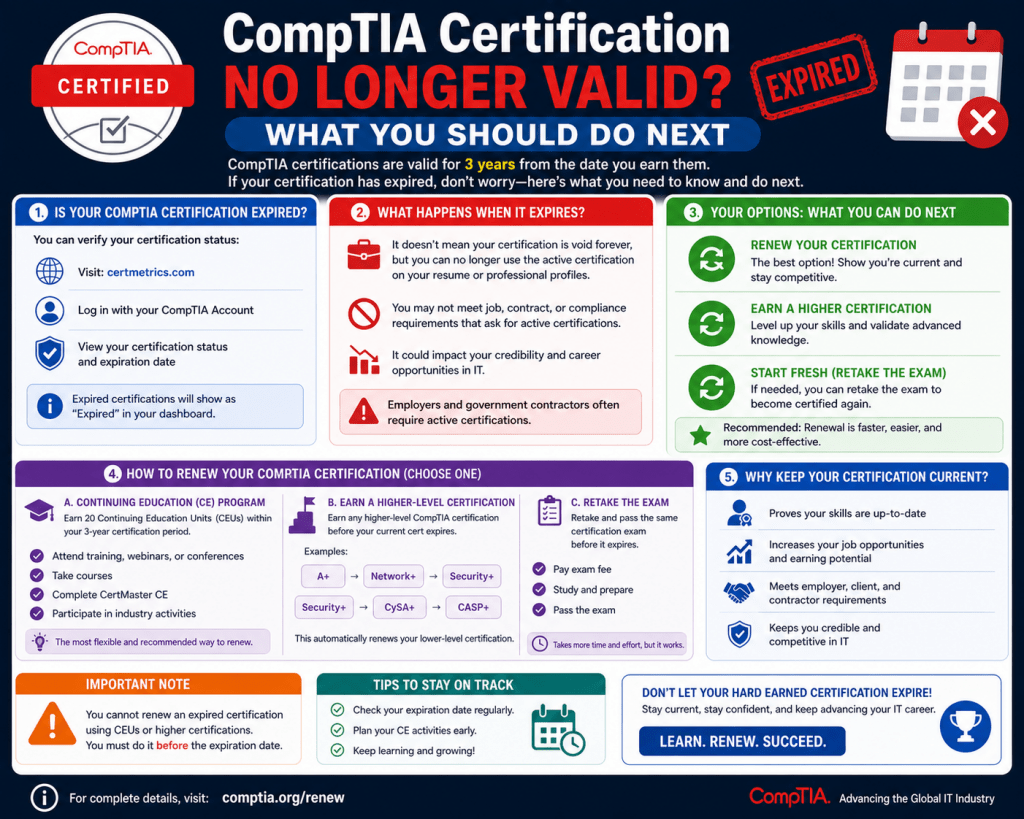
Certification expiration and exam retirement are two separate concepts that often confuse. Exam retirement refers to the discontinuation of a specific test version, while certification expiration relates to how long the credential remains valid. Most CompTIA certifications are valid for three years from the date they are earned.
Even if an exam version is retired, the certification does not immediately expire. It remains active until the end of its validity period. This means professionals have time to plan their next steps without feeling pressured to act immediately. Understanding this difference helps in making better decisions about recertification and career planning.
Why CompTIA Updates Its Exams Regularly
Technology changes rapidly, and certifications must keep pace with these changes to remain relevant. CompTIA updates its exams to include new topics such as cloud computing, cybersecurity advancements, and modern networking practices. These updates ensure that certified professionals have the skills required in current job roles.
Another reason for updates is industry feedback. As professionals and employers provide input, exam content is refined to better reflect real-world tasks. Outdated topics are removed, and new ones are introduced to match evolving demands. This continuous improvement process maintains the credibility of certifications.
How the Transition Period Works
When a new exam version is released, there is usually a transition period during which both the old and new exams are available. This overlap allows candidates who have already started preparing for the older version to complete it without disruption. It also provides flexibility for those who want to switch to the newer version.
During this time, professionals must decide which exam to take. Those who are close to being ready may choose the older version, while those just starting their preparation might benefit from focusing on the updated exam. This choice depends on individual circumstances and career goals.
Impact on Your Existing Certification
If you already hold a certification, exam retirement does not take it away. Your credential remains valid until it reaches its expiration date. Employers generally recognize certifications regardless of the exam version, as long as they are still active.
However, as the expiration date approaches, you will need to decide whether to renew your certification or move on to a more advanced one. This decision often depends on your career path and the skills you want to develop. Keeping certifications current demonstrates commitment to professional growth.
The Role of Continuing Education
Continuing education offers an alternative to retaking exams for certification renewal. Instead of sitting for another test, professionals can earn continuing education units through various activities such as training, work experience, or participation in industry events. This approach provides flexibility and allows individuals to maintain their certifications while expanding their knowledge.
This model encourages ongoing learning rather than one-time exam preparation. It reflects the reality that skills are developed over time through practical experience and continuous study. For many professionals, this method is more convenient and aligns better with their work schedules.
Choosing Between Old and New Exam Versions
Deciding whether to take an older or newer exam version can be challenging. The older version may feel easier if you have already studied its content, while the newer version offers updated knowledge that reflects current industry trends. Both options have advantages, and the choice depends on your level of preparation and career objectives.
If your goal is to stay as current as possible, the newer exam is usually the better option. However, if you are close to completing your preparation for the older version, it may make sense to finish what you started. Timing plays a crucial role in this decision.
Employer Expectations and Industry Standards
Employers often use certifications as a way to assess a candidate’s skills and knowledge. While many organizations accept any valid certification, some may prefer the latest version, especially in fields like cybersecurity, where standards change frequently. Understanding employer expectations can help you decide which path to take.
Keeping your certification up to date can give you a competitive edge in the job market. It shows that you are committed to learning and adapting to new technologies. This can be particularly important when applying for roles that require current knowledge.
Planning Your Certification Path
Effective planning is essential for managing certification lifecycles. Tracking exam retirement dates and certification expiration timelines helps you avoid last-minute stress. It also allows you to align your certification efforts with your long-term career goals.
Many professionals use certifications as stepping stones, starting with foundational credentials and progressing to more advanced ones. Exam retirement can serve as a reminder to evaluate your progress and consider taking the next step in your career.
Entry-Level Certifications and Career Growth
Entry-level certifications are often the starting point for a career in IT. They provide foundational knowledge and help individuals understand basic concepts. As professionals gain experience, they typically move on to more specialized or advanced certifications.
This progression is a natural part of career development. Certification retirement encourages this growth by prompting individuals to update their skills and explore new opportunities. It ensures that professionals do not remain stagnant in their knowledge.
The Value of Skills Beyond Certification
While certifications are important, the skills gained during preparation are even more valuable. These skills can be applied in real-world scenarios and contribute to job performance. Even if a certification eventually expires, the knowledge acquired remains useful.
This perspective helps professionals focus on learning rather than just earning credentials. It emphasizes the importance of continuous development and practical application of skills.
Time Management During Exam Transitions
Managing time effectively is crucial when dealing with exam preparation. Well-prepared candidates may choose to take the older exam before it retires, while those who need more time might focus on the newer version. Making the right choice can save effort and reduce stress.
Planning ensures that you are not caught off guard by retirement dates. It allows you to complete your certification journey smoothly and without unnecessary pressure.
Adapting to Industry Changes
The IT industry is constantly evolving, and professionals must adapt to stay relevant. Certification retirement highlights the need for continuous learning and skill development. It encourages individuals to keep up with new technologies and practices.
Adaptability is a key factor in career success. Those who embrace change and actively update their skills are more likely to succeed in a competitive environment. Certifications play a significant role in supporting this adaptability.
Maintaining Certification Credibility
Regular updates and retirements help maintain the credibility of certifications. By ensuring that exam content reflects current industry standards, CompTIA preserves the trust that employers place in its credentials. This trust is essential for professionals seeking job opportunities and career advancement.
A current certification signals that your knowledge is up to date and relevant. It reinforces your expertise and enhances your professional reputation.
Using Retirement as an Opportunity
Instead of viewing certification retirement as a setback, it can be seen as an opportunity for growth. It provides a chance to learn new skills, explore advanced certifications, and stay aligned with industry trends. This mindset transforms a potentially stressful situation into a positive experience.
Professionals who take advantage of these opportunities are better positioned to advance in their careers. They remain competitive and continue to develop their expertise over time.
Understanding the Evolution of Core IT Certifications
CompTIA certifications such as A+, Network+, and Security+ represent foundational milestones in an IT professional’s journey. Each certification targets a specific layer of technical expertise, beginning with basic hardware and software knowledge and advancing toward networking and cybersecurity skills. As the IT industry evolves, these certifications are regularly updated to reflect current technologies and workplace requirements. This evolution is not random but follows a structured cycle that ensures professionals remain aligned with real-world demands.
The update cycle typically introduces a new exam version every few years, followed by a transition period where both the old and new versions coexist. Eventually, the older version is retired, making way for the updated content. This process ensures that certification holders are equipped with relevant and practical skills. Understanding how these updates affect each certification individually helps professionals make better decisions about their learning paths and career progression.
Security+ Certification and Its Changing Landscape
Security+ is widely regarded as a baseline certification for cybersecurity roles. It validates essential knowledge in areas such as threat management, risk mitigation, cryptography, and secure network design. Because cybersecurity threats evolve rapidly, updates to this certification are particularly significant. Each new version introduces topics that address current risks and modern defense strategies.
When a new version of the Security+ exam is released, candidates often face a choice between taking the updated exam or completing the older one before it retires. The newer version typically includes more recent security practices, making it more aligned with current job requirements. However, the older version may feel more manageable for those who have already prepared extensively for it.
The transition period between exam versions allows candidates to choose based on their readiness. Those who are well-prepared may opt to take the older version quickly, while others may decide to invest time in learning the updated material. This decision can influence how well a professional adapts to current cybersecurity challenges in the workplace.
How Security+ Retirement Affects Career Opportunities
The retirement of a Security+ exam version does not invalidate the certification itself. As long as the certification remains active, it continues to be recognized by employers. However, staying updated with the latest version can enhance credibility, especially in roles that require knowledge of current security frameworks and compliance standards.
Many organizations rely on cybersecurity certifications to meet regulatory requirements. In such cases, having an up-to-date certification may be more important than holding an older version. Professionals working in security-sensitive environments should consider these factors when deciding whether to upgrade their certification.
Continuing education provides a flexible way to maintain Security+ certification. By earning the required units through training or professional activities, individuals can renew their credentials without retaking the exam. This approach supports continuous learning and helps professionals stay informed about emerging threats and technologies.
A+ Certification as a Starting Point
A+ certification is often the first step for individuals entering the IT field. It covers fundamental concepts such as hardware components, operating systems, troubleshooting techniques, and basic networking. Because of its introductory nature, A+ serves as a foundation for more advanced certifications.
The retirement of A+ exam versions follows the same pattern as other certifications. New versions are introduced to reflect changes in technology, including updates in operating systems, hardware standards, and support practices. Candidates preparing for A+ must decide whether to complete the current version or wait for the updated one.
For many professionals, an A+ is not a long-term certification but a stepping stone. Once they gain experience, they often move on to certifications like Network+ or Security+. This progression reduces the need to repeatedly renew A+, as higher-level certifications can automatically renew it.
The Unique Renewal Path of A+ Certification
One of the distinguishing features of A+ is its relationship with other certifications. Earning a higher-level certification can renew an A+, eliminating the need for separate recertification. This interconnected structure encourages professionals to advance their skills rather than remain at the same level.
Continuing education is another option for renewing A+. By earning the required units within three years, professionals can maintain their certification without retaking the exam. This flexibility makes it easier to balance certification requirements with work responsibilities.
The decision to renew or move forward depends on career goals. Those who plan to specialize in a particular area may choose to pursue advanced certifications instead of renewing A+. This approach aligns with long-term growth and helps build expertise in specific domains.
Network+ Certification and Modern Networking Skills
Network+ focuses on networking concepts and is often pursued after A+. It validates the ability to design, manage, and troubleshoot network infrastructures. As networking technologies evolve, updates to this certification incorporate new topics such as cloud networking, virtualization, and network security.
The retirement of Network+ exam versions reflects the growing complexity of networking environments. Modern networks are no longer limited to physical infrastructure but include virtual systems and cloud-based solutions. Updated exams ensure that professionals understand these changes and can apply their knowledge in real-world scenarios.
Candidates preparing for Network+ must consider whether to take the older version before it retires or focus on the updated exam. The newer version typically provides a broader understanding of current networking practices, making it more relevant for today’s job market.
Career Impact of Network+ Certification Updates
Network+ is often seen as a bridge between entry-level and intermediate certifications. It helps professionals build the skills needed for roles such as network administrator or support specialist. As the certification evolves, it continues to reflect the demands of these roles.
The retirement of an exam version does not reduce the value of the certification, but staying updated can provide a competitive advantage. Employers may prefer candidates who are familiar with the latest networking technologies and practices. This preference can influence hiring decisions and career advancement opportunities.
Renewal options for Network+ include continuing education or earning higher-level certifications. This flexibility allows professionals to choose the path that best suits their career goals and learning preferences.
Comparing Certification Paths and Progression
A+, Network+, and Security+ form a natural progression in the IT certification pathway. A+ introduces basic concepts, Network+ builds on networking skills, and Security+ focuses on cybersecurity. Understanding this progression helps professionals plan their careers effectively.
As certifications are updated and older versions are retired, this progression remains consistent. Professionals can move from one certification to the next while keeping their skills aligned with industry standards. This structured approach simplifies career planning and ensures continuous development.
The decision to renew or advance depends on individual goals. Some professionals may choose to maintain their current certifications, while others may pursue higher-level credentials. Both approaches are valid and depend on career aspirations.
Balancing Recertification and Advancement
One of the key decisions professionals face is whether to recertify an existing credential or pursue a new one. Recertification helps maintain current roles, while advancement opens up new opportunities. Balancing these options requires careful consideration of career goals and industry trends.
For entry-level certifications like A+, advancement is often the preferred option. For more specialized certifications like Security+, renewal may be necessary to maintain relevance in the field. Understanding the purpose of each certification helps in making informed decisions.
Continuing education plays a crucial role in this process. It allows professionals to maintain their certifications while exploring new areas of knowledge. This dual benefit makes it an effective strategy for long-term career growth.
The Role of Industry Trends in Certification Updates
Certification updates are closely tied to industry trends. As new technologies emerge, they are incorporated into exam content. This ensures that certifications remain relevant and valuable in the job market.
For example, the increasing importance of cloud computing and cybersecurity has influenced the content of many certifications. Professionals who stay updated with these trends are better prepared to meet the demands of modern IT roles.
Understanding these trends helps professionals anticipate changes in certification requirements. This proactive approach allows them to stay ahead of the curve and make strategic decisions about their learning paths.
Employer Expectations and Certification Relevance
Employers often rely on certifications to assess a candidate’s skills and knowledge. While most organizations accept any valid certification, some may prefer the latest version. This preference is particularly common in fields where technology changes rapidly.
Keeping certifications current demonstrates a commitment to professional development. It shows that a candidate is willing to adapt to new technologies and maintain their skills. This can enhance credibility and improve job prospects.
Understanding employer expectations is essential for making informed decisions about certification updates. It helps professionals align their efforts with market demands and maximize the value of their credentials.
Preparing for Certification Transitions
Preparation is key when dealing with certification updates and retirements. Professionals should stay informed about upcoming changes and plan their study schedules accordingly. This proactive approach reduces stress and ensures a smooth transition between exam versions.
Choosing the right exam version depends on preparation level and career goals. Those who are ready may choose to take the older version before it retires, while others may focus on the updated exam. Making this decision early helps avoid last-minute pressure.
Effective preparation also involves understanding the differences between exam versions. Reviewing updated objectives and identifying new topics can help candidates adjust their study plans and improve their chances of success.
Long-Term Benefits of Staying Updated
Staying updated with certification changes offers several long-term benefits. It ensures that professionals remain competitive in the job market and are equipped with relevant skills. It also supports career advancement by opening up new opportunities.
Continuous learning is a key aspect of success in the IT industry. Certifications provide a structured way to achieve this, but they must be maintained and updated regularly. Professionals who embrace this process are more likely to succeed in their careers.
The evolution of certifications reflects the dynamic nature of the IT field. By staying informed and adapting to changes, professionals can navigate their certification journeys effectively and continue to grow in their chosen paths.
Building a Long-Term Strategy for Certification Success
Creating a long-term strategy for managing certifications is essential for sustained growth in the information technology field. Certifications are not one-time achievements but part of a continuous cycle of learning, validation, and improvement. Professionals who approach certifications with a clear plan are better equipped to handle exam updates, retirement cycles, and evolving industry demands.
A strong strategy begins with setting clear career goals. Instead of pursuing certifications randomly, individuals should identify the roles they want to achieve and select certifications that align with those goals. This targeted approach ensures that every certification contributes to professional development rather than simply adding credentials without purpose.
Planning also involves understanding certification timelines. Keeping track of expiration dates and upcoming exam updates allows professionals to act proactively rather than reactively. This reduces stress and ensures that certifications remain active without interruption. A well-organized schedule can make a significant difference in maintaining consistency and focus.
Adopting Continuous Learning as a Core Habit
Continuous learning is one of the most important factors in staying relevant in the technology industry. Certification retirement highlights the need for ongoing education, as skills that were valuable a few years ago may no longer be sufficient. Professionals must adopt a mindset that prioritizes learning as a daily habit rather than an occasional activity.
This habit can be developed through regular study, hands-on practice, and engagement with new technologies. Instead of waiting for a certification to expire, individuals can update their knowledge continuously. This approach not only makes recertification easier but also improves performance in real-world tasks.
Learning should not be limited to exam objectives. Exploring related topics, experimenting with tools, and understanding practical applications can deepen knowledge and enhance problem-solving abilities. This broader perspective helps professionals adapt to different situations and challenges in their careers.
Using Continuing Education to Maintain Certifications
Continuing education provides a flexible and practical way to maintain certifications. Instead of retaking exams, professionals can earn the required units through various learning activities. This approach allows individuals to focus on skill development while keeping their credentials active.
Activities that contribute to continuing education can include training sessions, workshops, and practical work experience. These activities reinforce knowledge and provide opportunities to apply skills in real-world scenarios. This makes the learning process more meaningful and effective.
The flexibility of continuing education is particularly beneficial for working professionals. It allows them to balance job responsibilities with certification requirements. By integrating learning into their daily routines, individuals can maintain their certifications without significant disruption to their work schedules.
Advancing Beyond Entry-Level Certifications
Entry-level certifications serve as a foundation, but long-term success often requires moving beyond them. As professionals gain experience, they should consider pursuing more advanced certifications that reflect their growing expertise. This progression is a natural part of career development and helps individuals stay competitive.
Advancing to higher-level certifications can open doors to specialized roles and increased responsibilities. It also demonstrates a commitment to professional growth, which is valued by employers. Rather than repeatedly renewing basic certifications, focusing on advancement can provide greater long-term benefits.
This progression should be planned carefully. Professionals should evaluate their strengths, interests, and career goals before choosing advanced certifications. A thoughtful approach ensures that each step contributes to overall development and aligns with future aspirations.
Balancing Work Responsibilities and Certification Goals
Managing certifications while maintaining job performance can be challenging. Professionals must find a balance between their work responsibilities and their learning goals. Effective time management is essential in achieving this balance.
Creating a structured schedule can help allocate time for study and practice without interfering with work commitments. Breaking down learning objectives into smaller tasks makes them more manageable and reduces the risk of burnout. Consistency is more important than intensity when it comes to long-term learning.
Employers often support certification efforts by providing resources or incentives. Taking advantage of these opportunities can make the process easier and more efficient. It also demonstrates initiative and dedication, which can positively impact career growth.
Developing Practical Skills Alongside Certifications
While certifications validate knowledge, practical skills are equally important. Employers value individuals who can apply their knowledge effectively in real-world situations. Therefore, professionals should focus on gaining hands-on experience alongside their certification efforts.
Practical experience can be gained through projects, simulations, or workplace tasks. Applying theoretical knowledge in practical scenarios helps reinforce learning and build confidence. It also prepares individuals for the challenges they may face in their roles.
Developing practical skills also enhances problem-solving abilities. It allows professionals to approach complex situations with confidence and creativity. This combination of knowledge and experience is essential for success in the technology field.
Staying Informed About Industry Trends
The technology industry evolves rapidly, and staying informed about trends is crucial for maintaining relevance. Certification updates often reflect these trends, making it important for professionals to understand the direction in which the industry is moving.
Emerging technologies such as cloud computing, automation, and advanced security practices are shaping the future of IT. Professionals who stay updated with these developments are better prepared to adapt to changes and take advantage of new opportunities.
Keeping up with industry trends also helps in selecting the right certifications. It ensures that learning efforts are aligned with market demands and future growth areas. This strategic approach enhances the value of certifications and supports long-term career success.
Building a Professional Network for Growth
Networking plays a significant role in career development. Connecting with other professionals provides opportunities to share knowledge, learn from experiences, and stay informed about industry changes. A strong network can also offer guidance and support during certification journeys.
Engaging with peers can provide insights into effective study methods, certification strategies, and career paths. It also creates opportunities for collaboration and knowledge exchange. These interactions can enhance learning and contribute to overall professional growth.
Building a network requires active participation in professional communities and discussions. Consistent engagement helps establish connections and build relationships that can support career advancement.
Leveraging Certification Updates for Career Advancement
Certification updates should be viewed as opportunities rather than challenges. Each new version introduces updated content that reflects current industry practices. By embracing these updates, professionals can enhance their skills and improve their career prospects.
Taking updated exams or participating in continuing education activities allows individuals to stay aligned with modern requirements. This alignment increases confidence and credibility in the workplace. It also demonstrates a proactive approach to professional development.
Using certification updates strategically can help professionals position themselves for advancement. It allows them to showcase their commitment to learning and their ability to adapt to change. These qualities are highly valued in the technology industry.
Managing Certification Lifecycles Effectively
Effective management of certification lifecycles involves understanding timelines, requirements, and available options. Professionals should regularly review their certifications to ensure they remain active and relevant. This proactive approach prevents lapses and maintains credibility.
Tracking expiration dates and planning renewal activities can simplify the process. It also provides time to explore different options, such as continuing education or pursuing advanced certifications. This flexibility allows individuals to choose the path that best suits their needs.
Managing lifecycles also involves evaluating the relevance of certifications. As careers progress, some certifications may become less important, while others gain significance. Regular assessment helps professionals focus on the most valuable credentials.
Adapting to Change in the Technology Field
Adaptability is a key skill in the technology industry. Certification retirement and updates highlight the need to embrace change and continuously improve. Professionals who are open to learning new skills and exploring new areas are more likely to succeed.
Adapting to change requires a willingness to step out of comfort zones. It involves learning new tools, understanding new concepts, and applying them effectively. This process can be challenging, but it is essential for growth.
Developing adaptability also enhances resilience. It prepares professionals to handle challenges and uncertainties in their careers. This ability to adjust and evolve is a valuable asset in a dynamic industry.
Creating a Personalized Learning Path
Every professional has unique goals, strengths, and interests. Creating a personalized learning path ensures that certification efforts are aligned with individual needs. This approach makes learning more meaningful and effective.
A personalized path involves selecting certifications that match career objectives and focusing on areas that require improvement. It also includes setting realistic goals and tracking progress over time. This structured approach helps maintain motivation and direction.
Flexibility is an important aspect of a personalized path. As goals and circumstances change, learning plans should be adjusted accordingly. This adaptability ensures that efforts remain relevant and productive.
Enhancing Career Opportunities Through Certifications
Certifications play a significant role in opening up career opportunities. They validate skills, demonstrate expertise, and enhance credibility. Keeping certifications current ensures that professionals remain competitive in the job market.
Employers often look for candidates who show a commitment to learning and development. Active certifications indicate that an individual is dedicated to maintaining their skills. This can lead to better job prospects and career advancement.
In addition to technical roles, certifications can also support transitions into new areas. They provide a structured way to acquire knowledge and demonstrate competence in different domains. This versatility expands career options and opportunities.
Maintaining Motivation Throughout the Certification Journey
Staying motivated is essential for long-term success in certification efforts. The process of studying, practicing, and renewing certifications can be demanding, but maintaining a positive mindset helps overcome challenges.
Setting achievable goals and celebrating progress can boost motivation. Breaking down tasks into smaller steps makes them more manageable and less overwhelming. Consistent effort, even in small amounts, leads to significant results over time.
Support from peers and mentors can also enhance motivation. Sharing experiences and learning from others creates a sense of community and encouragement. This support system can make the certification journey more enjoyable and rewarding.
Aligning Certifications With Long-Term Career Growth
Certifications should be aligned with long-term career growth rather than short-term goals. This alignment ensures that efforts contribute to overall development and success. Professionals should regularly evaluate their career paths and adjust their certification strategies accordingly.
Long-term planning involves identifying future roles and the skills required for those roles. Certifications can then be selected to support this progression. This strategic approach maximizes the value of certifications and ensures continuous improvement.
Regular evaluation helps identify gaps in knowledge and areas for development. Addressing these gaps through targeted learning enhances competence and prepares professionals for future challenges.
Strengthening Professional Credibility and Confidence
Maintaining certifications not only validates skills but also strengthens professional credibility. It demonstrates a commitment to excellence and a willingness to stay updated with industry standards. This credibility is important for building trust with employers and colleagues.
Certifications also contribute to confidence. Knowing that skills are validated by recognized standards can boost self-assurance. This confidence translates into better performance and decision-making in the workplace.
Combining knowledge, experience, and certification creates a strong professional profile. This combination enhances reputation and supports career advancement.
Maximizing the Value of Certification Investments
Earning and maintaining certifications requires time, effort, and resources. Maximizing the value of these investments involves using certifications effectively in career development. This includes applying knowledge in practical situations and leveraging credentials for opportunities.
Professionals should actively use their certifications to demonstrate expertise. This can include taking on new responsibilities, contributing to projects, or seeking advanced roles. Using certifications in this way ensures that they provide tangible benefits.
Evaluating the return on investment helps in making informed decisions about future certifications. It ensures that efforts are focused on areas that offer the greatest value and impact.
Continuing Growth in a Dynamic Industry
The technology industry is constantly changing, and professionals must continue to grow to remain relevant. Certification retirement and updates are part of this dynamic environment. They encourage individuals to learn, adapt, and improve continuously.
Growth requires dedication, planning, and a willingness to embrace change. By adopting effective strategies and maintaining a commitment to learning, professionals can navigate their certification journeys successfully.
This ongoing process of development ensures that skills remain current and valuable. It supports career advancement and prepares individuals for the challenges and opportunities of the future.
Conclusion
The lifecycle of certifications reflects the dynamic nature of the technology industry, where change is constant, and adaptation is essential. Understanding how certification retirement and renewal processes work allows professionals to approach their careers with clarity and confidence. Rather than seeing exam retirement as a disruption, it becomes part of a structured system designed to ensure that skills remain relevant and aligned with real-world demands. This perspective shifts the focus from short-term concerns to long-term growth and sustainability in an evolving field.
Certifications serve as more than just credentials; they represent a commitment to learning and professional development. When an exam is retired, it does not erase the knowledge gained or the value of the certification earned. Instead, it highlights the importance of keeping that knowledge current. The requirement to renew certifications every few years reinforces the idea that learning in the technology field is continuous. Professionals who embrace this cycle are better equipped to handle changes and remain competitive in their roles.
One of the most important takeaways is the distinction between exam retirement and certification expiration. Recognizing that a certification remains valid even after the associated exam is retired helps reduce unnecessary stress. This understanding allows individuals to plan their next steps thoughtfully rather than reacting impulsively. With proper planning, professionals can decide whether to renew their certification, pursue a newer version, or move on to more advanced credentials that align with their career goals.
The role of continuous learning cannot be overstated. In an industry driven by innovation, staying updated is not optional but necessary. Certification updates are designed to reflect new technologies, practices, and challenges. By engaging in ongoing education, professionals ensure that their skills remain applicable and valuable. This approach not only supports certification renewal but also enhances performance in real-world scenarios, where the ability to adapt quickly is crucial.
Strategic planning plays a key role in navigating certification lifecycles. Keeping track of expiration dates, understanding update timelines, and aligning certifications with career objectives all contribute to a more organized and effective approach. Professionals who take the time to plan are less likely to face last-minute pressure and more likely to make decisions that support their long-term success. This proactive mindset transforms certification management from a reactive task into a deliberate and purposeful process.
Advancement is another important aspect to consider. While maintaining existing certifications is valuable, progressing to higher-level credentials often provides greater benefits. As individuals gain experience, their focus naturally shifts toward more specialized or advanced areas. Certification retirement can act as a catalyst for this progression, encouraging professionals to expand their expertise and explore new opportunities. This forward movement keeps careers dynamic and prevents stagnation.
Practical experience remains just as important as certification itself. While certifications validate knowledge, the ability to apply that knowledge in real-world situations is what truly defines professional competence. Combining theoretical understanding with hands-on experience creates a strong foundation for success. Professionals who actively seek opportunities to practice their skills are better prepared to handle challenges and deliver effective solutions.
Employer expectations also play a significant role in the value of certifications. Many organizations rely on certifications as indicators of skill and commitment. Keeping certifications current demonstrates dedication to professional growth and a willingness to stay aligned with industry standards. This can enhance credibility, improve job prospects, and open doors to new opportunities. Understanding what employers value helps professionals make informed decisions about which certifications to pursue and maintain.
Adaptability emerges as a central theme throughout the certification journey. The ability to adjust to new technologies, update skills, and embrace change is essential for long-term success. Certification retirement reinforces this need by prompting individuals to reassess their knowledge and stay current. Those who approach change with a positive mindset are more likely to thrive in a rapidly evolving environment.
Motivation and consistency are key factors in sustaining progress. The process of earning and maintaining certifications requires effort and discipline. Setting clear goals, tracking progress, and maintaining a steady pace can make this process more manageable. Support from peers, mentors, and professional networks can also provide encouragement and valuable insights. Staying engaged with the broader community helps reinforce learning and keeps motivation strong.
The investment in certifications extends beyond the immediate goal of earning a credential. It contributes to overall career development by building knowledge, confidence, and credibility. Professionals who maximize the value of their certifications by applying their skills and seeking growth opportunities gain the most benefit. This approach ensures that certifications are not just achievements but tools for ongoing advancement.
In a field where change is constant, the ability to learn and adapt becomes the defining factor of success. Certification retirement is not an obstacle but a reflection of this reality. It ensures that professionals remain equipped with the skills needed to meet current and future challenges. By understanding and embracing this process, individuals can navigate their certification journeys with confidence and purpose.
Ultimately, the focus should remain on growth rather than maintenance alone. Certifications provide a structured pathway for learning, but true success comes from continuously expanding knowledge and applying it effectively. Professionals who adopt this mindset are better positioned to achieve their goals and build lasting careers in the technology industry.