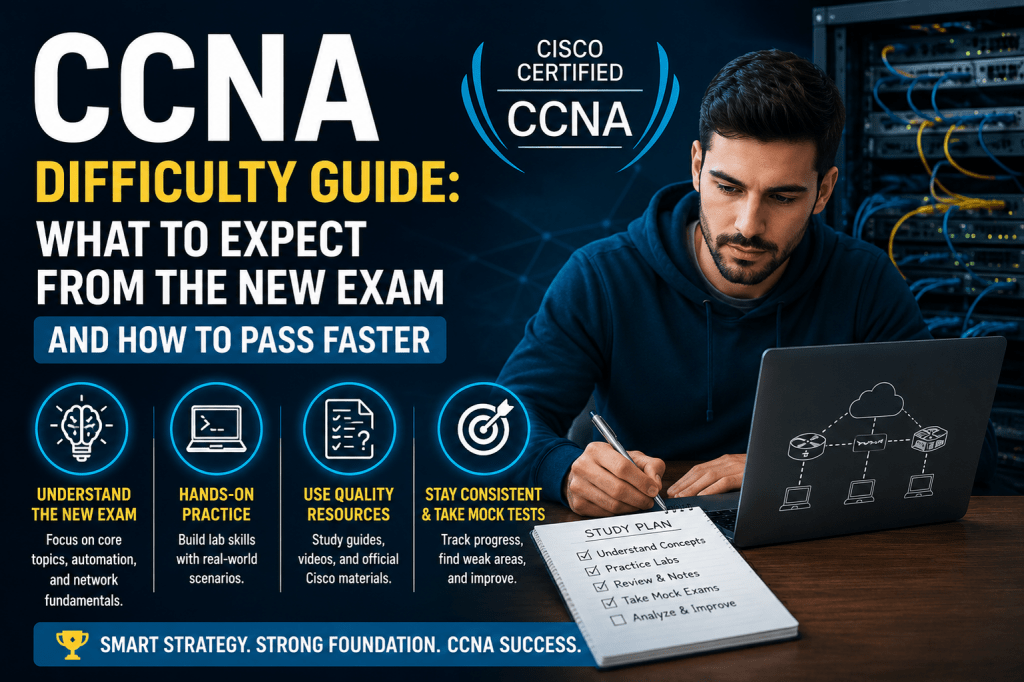
The landscape of entry-level networking certification has undergone a significant transformation in recent years, particularly with the restructuring of Cisco’s associate-level program. One of the most notable changes is the replacement of multiple specialized CCNA tracks with a unified certification model. This shift has altered both the preparation approach and the expectations placed on candidates. Instead of choosing a narrowly focused path early in the learning journey, candidates are now required to develop a broader understanding of networking concepts before moving into specialization. As a result, many learners and professionals have questioned whether this updated version of the certification is more demanding than its predecessor. The answer lies in how the content has been reorganized, expanded, and aligned with modern networking requirements, which now include areas such as automation, security fundamentals, and network programmability alongside traditional networking principles.
Understanding the Shift in CCNA Certification Structure
Previously, the certification framework was divided into multiple distinct pathways, each focusing on a specific domain such as routing and switching, security, wireless networking, collaboration systems, cloud environments, industrial networks, and data center technologies. Each track was designed to build expertise in a particular area and often required more than one exam or a step-by-step progression through foundational and advanced levels. This structure allowed learners to specialize early, but it also created complexity in decision-making and progression. The updated structure replaced these multiple entry points with a single consolidated certification. This means that all candidates now follow a unified learning path that introduces a wide range of networking fundamentals before branching into deeper specialization at later stages of their careers. This consolidation reflects a shift toward building a more standardized baseline of networking knowledge applicable across modern IT environments.
How the Exam Consolidation Changed the Learning Path
With the introduction of a single certification exam, the preparation journey has become more centralized but also broader in scope. In earlier models, learners could start with introductory certifications that gradually introduced them to networking concepts in smaller, more manageable segments. This step-by-step approach helped ease candidates into more complex topics over time. The current model removes this gradual entry point, requiring candidates to engage with a wider set of topics from the beginning. While this may seem more challenging initially, it also streamlines the certification process by eliminating multiple intermediate steps. Learners are now expected to build a comprehensive understanding of networking fundamentals, including IP connectivity, device configuration, security principles, and automation concepts, all within a single exam framework. This change encourages a more holistic understanding of networking systems rather than segmented expertise.
Evaluating the Difficulty Level of the Updated CCNA
The difficulty of the updated certification is generally considered to be higher compared to earlier versions, primarily due to the increased breadth of knowledge required. Instead of focusing heavily on a single domain, candidates must now demonstrate competence across multiple networking disciplines. This broader scope demands not only memorization of concepts but also the ability to understand how different technologies interact within a network environment. Additionally, the inclusion of newer topics such as automation and programmability introduces challenges for candidates who may have limited exposure to scripting or software-driven networking. While traditional networking fundamentals remain central, the integration of modern technologies expands the cognitive load required to succeed. This combination of legacy and emerging concepts contributes to the perception of increased difficulty.
Key Factors That Influence Exam Complexity
Several elements contribute to the overall complexity of the certification exam. One major factor is the expanded subject coverage, which requires familiarity with both foundational and contemporary networking topics. Another factor is the expectation of practical understanding rather than theoretical recall. Candidates are often required to interpret scenarios, troubleshoot configurations, and understand system behavior rather than simply memorizing definitions. The inclusion of security fundamentals adds another layer of complexity, as candidates must understand basic protective measures, network threats, and mitigation strategies. Automation and programmability further increase difficulty by introducing logic-based thinking into what was traditionally a hardware-focused discipline. Additionally, the absence of a preliminary certification tier means that learners encounter advanced concepts earlier in their preparation journey, which can be challenging for those new to networking.
Scope of the 200-301 Exam and Knowledge Expectations
The current certification exam is structured to evaluate a wide range of networking competencies within a single assessment. It covers foundational networking concepts such as addressing, routing, switching, and network access. It also extends into IP services, which include essential functions that support communication across networks. Security fundamentals form an important component, ensuring that candidates understand how to protect and secure network environments at a basic level. Another key area is automation and programmability, which reflects the growing role of software-driven network management. Candidates are expected to understand how networks can be configured and managed through automated processes, even if they are not deeply involved in programming. The exam is designed to measure not only knowledge but also the ability to apply that knowledge in practical and evolving network scenarios.
Role of Modern Networking Concepts in the Exam
One of the defining features of the updated certification is the inclusion of modern networking practices. Traditional networking knowledge remains essential, but it is now supplemented with concepts that reflect current industry trends. Automation plays a significant role in reducing manual configuration and improving efficiency in large-scale environments. Network programmability introduces the idea that networks can be controlled and managed through software interfaces rather than purely hardware-based configurations. Security fundamentals are also more integrated, reflecting the increasing importance of protecting network infrastructure from evolving threats. These modern elements require candidates to think beyond static configurations and consider how networks operate dynamically in real-world environments. This shift aligns the certification with contemporary IT practices and prepares learners for more advanced roles in the future.
How the Updated Certification Path Supports Career Growth
The unified certification structure provides a more flexible foundation for long-term career development. By covering a broad range of topics at the associate level, it allows individuals to gain exposure to multiple networking domains before choosing a specialization. This approach supports better-informed career decisions, as learners can identify areas of interest based on a solid understanding of different technologies. Once the foundational certification is achieved, professionals can pursue more focused areas of expertise, aligning their skills with specific industry roles. This structure also supports adaptability, as professionals can shift focus over time without needing to restart their certification journey. In this way, the updated model creates a more fluid progression path that aligns with the evolving nature of IT careers.
Progression Beyond the Core Certification Level
After completing the foundational certification, individuals typically move toward more specialized or advanced certifications that build on their initial knowledge. These advanced pathways allow professionals to deepen their expertise in specific areas such as enterprise networking, security, service provider technologies, or automation. Each specialization focuses on more complex concepts and real-world applications, preparing candidates for higher-level responsibilities. The foundational certification serves as a stepping stone, ensuring that all candidates share a common understanding of core networking principles before advancing. This layered approach creates a structured learning ecosystem where each level builds upon the previous one, supporting continuous professional development and skill enhancement over time.
Conclusion
The updated certification framework represents a significant shift in how entry-level networking knowledge is structured and assessed. By consolidating multiple specialized tracks into a single comprehensive exam, it has broadened the scope of required knowledge while simplifying the overall certification path. This change has introduced both advantages and challenges. On one hand, it creates a more unified and modern learning experience that reflects current industry demands. On the other hand, it increases the initial difficulty by requiring candidates to master a wider range of topics simultaneously. The inclusion of automation, security fundamentals, and programmability ensures that the certification remains relevant in today’s evolving technological landscape. While the journey may be more demanding, it ultimately provides a stronger foundation for long-term career growth and adaptability in the networking field.