DevOps & Automation
CNCF KCSA: Secrets Management for Kubernetes
Kubernetes Secrets provide a native way to pass confidential configuration such as passwords, tokens, keys, and certificates to workloads, but…

DevOps, infrastructure automation, CI/CD, containers, Kubernetes and deployment practices.
62 published articles in this category.
Kubernetes Secrets provide a native way to pass confidential configuration such as passwords, tokens, keys, and certificates to workloads, but…
Kubernetes troubleshooting is fastest when administrators identify which layer owns the symptom before changing anything. A failing application might be…
Kubernetes scheduling matches unscheduled Pods to nodes that can run them. Most workloads can rely on the default scheduler, which…
Kubernetes Role-Based Access Control, or RBAC, governs what authenticated identities are allowed to do through the Kubernetes API. It is…
Kubernetes runs application containers inside Pods, but administrators rarely manage production Pods one by one. Higher-level workload controllers create, replace,…
Kubernetes architecture is built around a control plane that stores desired state and a set of worker nodes that run…
Applications running in Kubernetes often need traffic from outside the cluster. The challenge is not simply opening a port. Operators…
Container images should be reusable across environments. A production database hostname, a feature flag, or an API credential should not…
Kubernetes manages clusters through a control plane that stores desired state, exposes the API, schedules workloads, and runs controllers that…
GitOps is an operating model for managing declarative systems through version-controlled desired state and automated reconciliation. For Kubernetes teams, that…
Containers are a foundational cloud native packaging and runtime model. They let teams bundle an application with the libraries and…
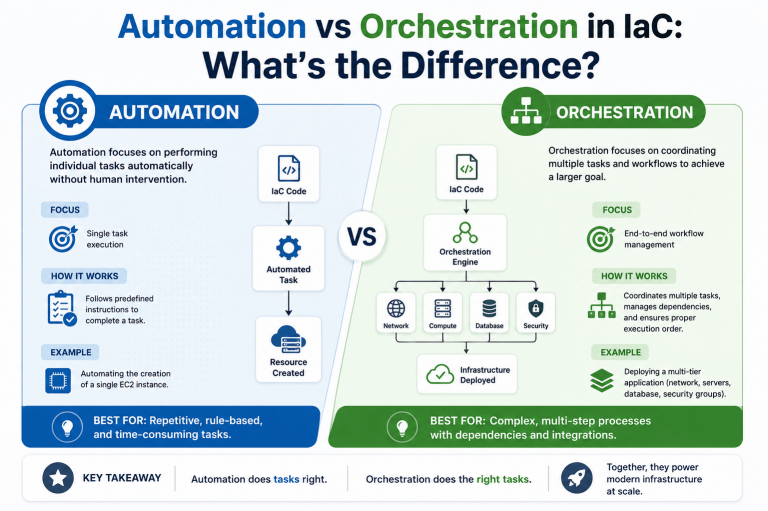
Infrastructure as Code, commonly known as IaC, has transformed the way organizations manage infrastructure in modern IT environments. Instead of…
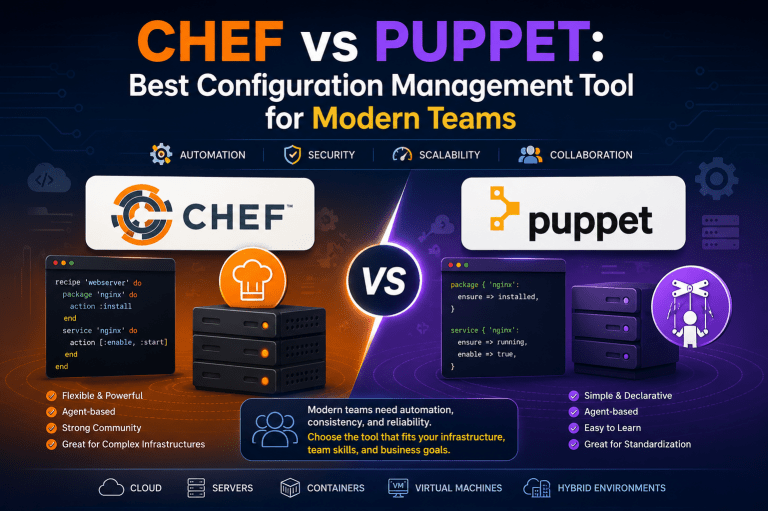
Managing servers and infrastructure manually becomes difficult as businesses grow. Configuration management tools help automate system setup, software installation, updates,…
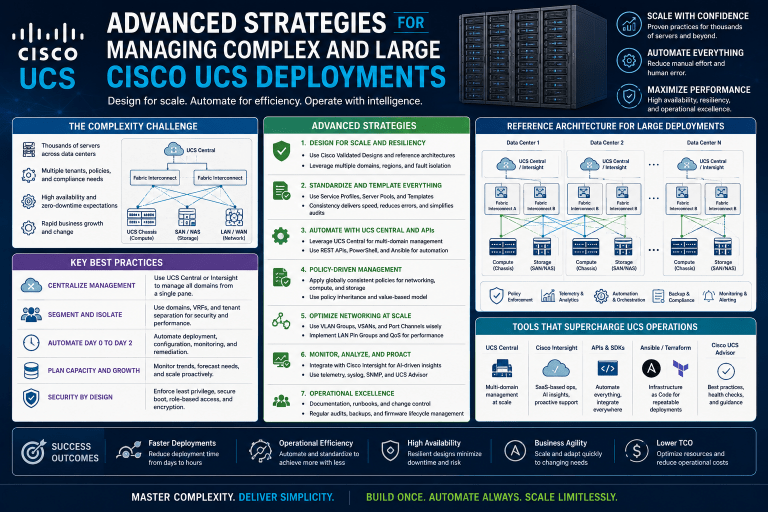
Managing a large Cisco Unified Computing System environment requires a structured approach, especially when dealing with hundreds of blade and…
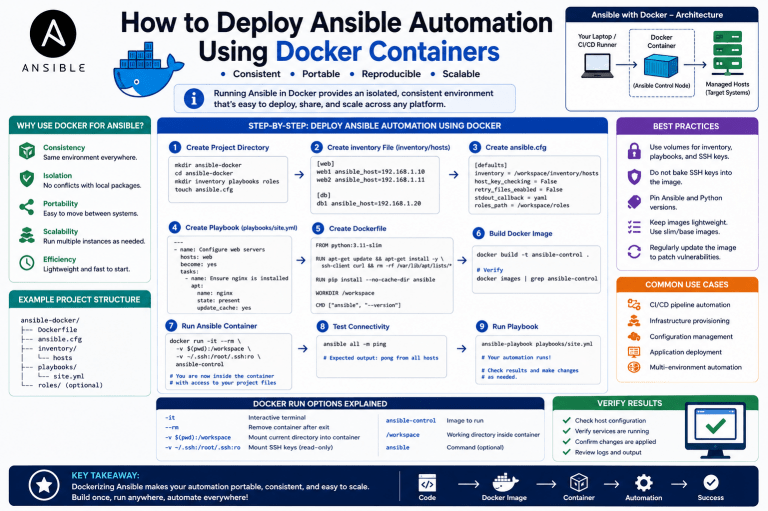
Container-based automation has become a practical way to standardize how infrastructure automation is executed across different environments. By combining a…