A learning management system has become a central component in how modern IT training is designed, delivered, and managed across organizations of all sizes. As digital transformation continues to reshape industries, the need for structured and scalable learning environments has grown significantly. IT training, in particular, requires consistent updates, organized content delivery, and measurable learning outcomes, all of which can be supported through a unified digital platform. Instead of relying on fragmented resources or manual coordination, organizations now focus on centralized systems that streamline the entire learning process from content creation to performance evaluation.
In IT-focused environments, learning is not a one-time activity but an ongoing requirement. Technologies evolve rapidly, and professionals are expected to continuously upgrade their skills to remain relevant. A learning management system provides the infrastructure needed to support this continuous development. It allows administrators to build structured learning paths that guide learners through foundational concepts toward advanced technical skills. This structured approach ensures that learners are not overwhelmed and can progress at a manageable pace while still achieving measurable outcomes.
Core Functions of Modern Learning Platforms
The primary purpose of a learning management system is to organize and deliver educational content in a structured and accessible way. However, its capabilities extend far beyond simple content distribution. These systems typically include features that allow administrators to design courses, assign learning modules, track completion status, and evaluate performance. This creates a complete learning ecosystem where every stage of the training process is monitored and optimized.
Another essential function is learner tracking. In IT training, understanding how individuals interact with content is crucial. A learning management system records detailed data on course engagement, assessment scores, and completion rates. This information helps organizations identify strengths and weaknesses in their training programs. It also allows managers to intervene when learners are struggling, ensuring that no one falls behind in critical skill areas.
Communication tools are also integrated into many learning platforms. These tools enable interaction between instructors and learners, as well as peer-to-peer collaboration. Discussion spaces, messaging systems, and group activities encourage engagement and knowledge sharing. In technical fields like IT, collaboration often enhances understanding, especially when dealing with complex systems or troubleshooting scenarios.
Importance of Structured Learning in IT Environments
IT training requires a highly structured approach because of the complexity and technical depth of the subject matter. Unlike general learning programs, IT education often involves layered concepts where each topic builds upon the previous one. A learning management system helps organize this progression in a logical sequence, ensuring that learners develop a strong foundation before moving on to advanced topics.
Without structured learning, learners may struggle to connect concepts or miss critical foundational knowledge. This can lead to gaps in understanding that affect their ability to apply skills in real-world scenarios. A well-designed learning system eliminates this risk by enforcing structured pathways that guide learners through each stage of development. This ensures consistency across training programs and improves overall learning outcomes.
Structured learning also plays a key role in certification preparation. Many IT professionals pursue certifications to validate their skills and advance their careers. A learning management system can align training materials with certification requirements, providing a clear roadmap for learners. This alignment helps ensure that learners are not only gaining knowledge but also preparing effectively for industry-recognized qualifications.
Categories of Learning Management Systems in IT Training
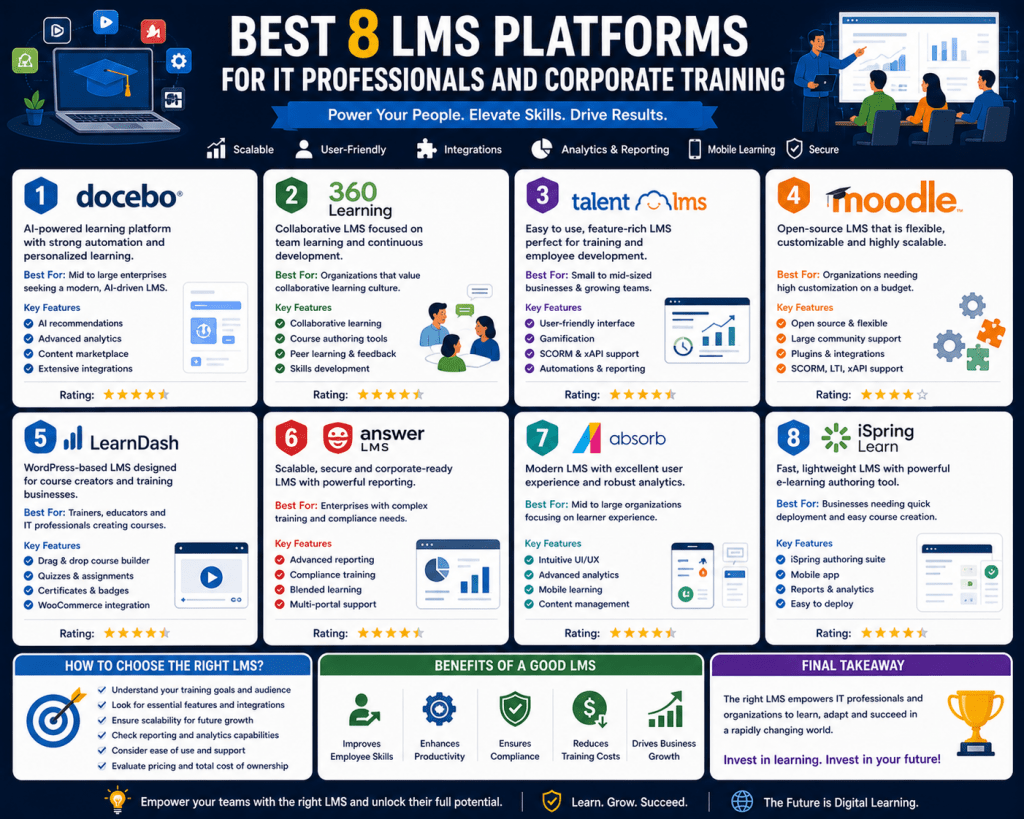
Learning management systems can generally be categorized based on their deployment model and intended use. Some systems are designed for maximum flexibility and customization, often used by organizations that require full control over their training infrastructure. These systems allow extensive modifications but may require technical expertise to configure and maintain.
Other systems are designed for ease of use and rapid deployment. These platforms are typically cloud-based and offer pre-configured environments that can be launched quickly without extensive setup. They are often preferred by organizations that want to focus on training delivery rather than system maintenance. While they may offer fewer customization options, they provide convenience and scalability.
There are also enterprise-focused systems designed for large organizations with complex training needs. These platforms often include advanced features such as automation, integration with business systems, and detailed reporting capabilities. They are built to handle large numbers of users and complex organizational structures, making them suitable for global enterprises.
Role of Learning Systems in Employee Onboarding
Employee onboarding is one of the most critical stages in workforce development, especially in IT-driven organizations. New employees must quickly understand systems, processes, and technical environments to become productive. A learning management system plays a key role in streamlining this process by providing structured onboarding programs that ensure consistency and efficiency.
Instead of relying on manual training sessions or scattered documentation, organizations can create standardized onboarding modules within a learning platform. These modules can include introductory materials, technical overviews, and role-specific training content. New employees can progress through these modules at their own pace while ensuring they cover all necessary information.
This structured onboarding approach reduces the burden on training teams and ensures that every new employee receives the same level of instruction. It also allows organizations to track onboarding progress and identify any delays or challenges early in the process. As a result, employees become productive more quickly and with greater confidence in their roles.
Supporting Continuous Skill Development in IT Teams
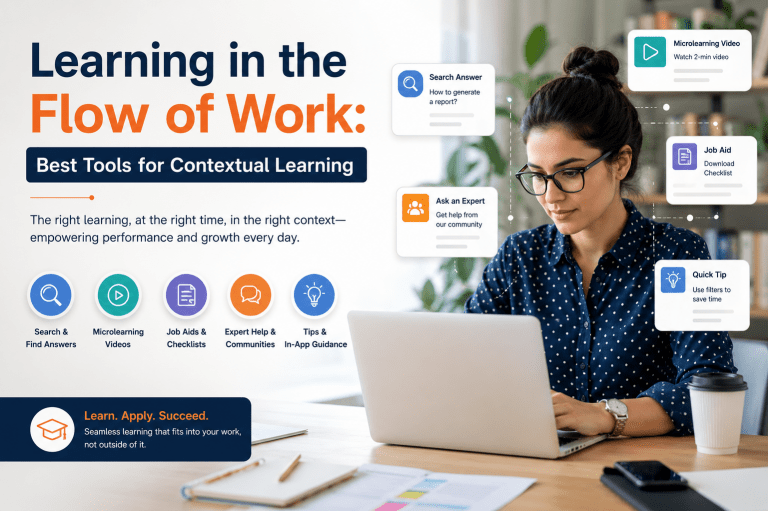
Continuous learning is essential in IT environments where technologies and tools evolve rapidly. A learning management system supports ongoing skill development by providing access to updated training materials and learning paths. This ensures that employees can continuously upgrade their skills without disrupting their daily responsibilities.
Organizations often use learning systems to deliver short training modules that focus on specific skills or technologies. These modules can be completed incrementally, allowing employees to learn at their own pace. This approach is particularly effective in IT training, where professionals may need to balance learning with operational responsibilities.
Continuous learning also helps organizations remain competitive. By ensuring that employees are up to date with the latest technologies and best practices, businesses can adapt more quickly to industry changes. This adaptability is crucial in fields such as cybersecurity, cloud computing, and software development, where innovation occurs at a rapid pace.
Data Tracking and Performance Measurement in Training Systems
One of the most valuable features of a learning management system is its ability to collect and analyze data related to learner performance. This data provides insights into how effectively training programs are working and where improvements are needed. Metrics such as completion rates, assessment scores, and engagement levels help organizations evaluate the success of their training initiatives.
In IT training, performance tracking is especially important because of the technical complexity involved. If learners are struggling with specific topics, this can be quickly identified through data analysis. Training programs can then be adjusted to address these gaps, ensuring better learning outcomes over time.
Performance measurement also helps organizations make informed decisions about future training investments. By analyzing which courses or modules deliver the best results, organizations can allocate resources more effectively. This data-driven approach ensures that training programs remain efficient and aligned with business goals.
Integration Capabilities with IT Ecosystems
Modern learning management systems are designed to integrate seamlessly with other digital tools and platforms used within organizations. This includes communication systems, human resource platforms, and project management tools. These integrations create a unified digital ecosystem where data flows smoothly between different systems.
In IT training environments, integration is particularly valuable because it reduces manual effort and improves efficiency. For example, employee data can be automatically synchronized with training systems, ensuring that learners are enrolled in relevant courses without manual intervention. Similarly, progress data can be shared with performance management systems to provide a holistic view of employee development.
Integration also enhances collaboration by connecting learning platforms with communication tools. This allows learners to participate in discussions, attend virtual sessions, and collaborate on projects without leaving the training environment. The result is a more connected and efficient learning experience.
Scalability and Flexibility in Learning Platforms
Scalability is a critical factor when choosing a learning management system, especially for organizations that anticipate growth. As the number of users increases, the system must be able to handle additional load without compromising performance. Scalable systems allow organizations to expand their training programs without needing to replace or redesign their infrastructure.
Flexibility is equally important. Different organizations have different training requirements, and a learning system must be adaptable to these needs. This includes the ability to customize learning paths, modify content structures, and adjust workflows. Flexible systems ensure that organizations can tailor their training programs to meet specific goals and requirements.
Scalability and flexibility together ensure that a learning management system remains effective over time. As organizations evolve, their training needs change, and the system must be able to adapt accordingly without significant disruption.
Evolution of Learning Management Systems in IT Training
The development of learning management systems has been closely tied to the broader evolution of digital learning and enterprise technology. Early systems were primarily designed as simple repositories for course materials, offering limited interactivity and basic tracking capabilities. Over time, as organizations began to recognize the importance of structured digital training, these systems evolved into comprehensive platforms capable of managing entire learning ecosystems.
In modern IT training environments, learning systems are no longer just storage tools. They have become intelligent platforms that support course design, learner engagement, performance tracking, and data-driven decision-making. This evolution has been driven by the increasing complexity of IT roles, where professionals must master a wide range of tools, frameworks, and technologies. As a result, training systems have had to become more dynamic, adaptive, and integrated with broader organizational processes.
Importance of User Experience in IT Learning Platforms
User experience plays a critical role in the effectiveness of any learning management system, especially in technical training environments. If a platform is difficult to navigate or poorly designed, learners may disengage regardless of the quality of the content. In IT training, where learners often deal with complex material, simplicity in navigation and clarity in design become even more important.
A well-designed learning interface ensures that users can easily access courses, track progress, and complete assignments without unnecessary friction. Clear menus, logical course structures, and intuitive dashboards contribute to a smoother learning experience. When learners can focus on the content rather than the platform itself, overall engagement and retention improve significantly.
Mobile accessibility has also become a key aspect of user experience. As remote work and flexible schedules become more common, learners expect to access training materials from multiple devices. Learning systems that are optimized for mobile use allow professionals to continue their education on the go, ensuring that learning is not restricted to a fixed location or device.
Personalization and Adaptive Learning in IT Training
Personalization has emerged as one of the most important advancements in modern learning management systems. Instead of offering the same content to all learners, advanced platforms can now tailor learning experiences based on individual performance, preferences, and skill levels. This approach is particularly valuable in IT training, where learners may have vastly different levels of prior knowledge.
Adaptive learning systems analyze user behavior and adjust content delivery accordingly. For example, if a learner struggles with a particular topic, the system may provide additional resources or suggest supplementary modules. Conversely, learners who demonstrate strong understanding may be guided toward more advanced material. This dynamic approach ensures that each learner receives a customized learning path that aligns with their needs.
Personalization also enhances motivation. When learners feel that the content is relevant to their goals and skill level, they are more likely to stay engaged. In IT training, where concepts can be highly technical, this personalized approach helps reduce frustration and improve overall learning outcomes.
Role of Automation in Learning Management Systems
Automation has significantly transformed how learning management systems operate. Many administrative tasks that were once performed manually can now be automated, reducing workload and improving efficiency. In IT training environments, automation is used for tasks such as enrollment, scheduling, progress tracking, and reporting.
Automated enrollment ensures that learners are assigned to appropriate courses based on predefined criteria such as job role, skill level, or certification path. This eliminates the need for manual assignment and ensures consistency across the organization. Similarly, automated reminders help keep learners on track by notifying them of upcoming deadlines or incomplete modules.
Reporting is another area where automation adds significant value. Instead of manually compiling data, learning systems can automatically generate reports on learner performance, course completion rates, and engagement metrics. These reports provide valuable insights for training managers, allowing them to make informed decisions quickly and efficiently.
Content Delivery Methods in IT Training Systems
Learning management systems support a wide variety of content delivery methods, making them highly versatile for IT training programs. Traditional text-based materials are often supplemented with videos, interactive simulations, and practical exercises. This multi-format approach helps cater to different learning styles and improves knowledge retention.
Video-based learning is particularly effective for demonstrating technical processes. Complex IT concepts such as network configuration, coding practices, or system architecture can be explained visually, making them easier to understand. Interactive simulations further enhance this experience by allowing learners to practice skills in a controlled environment.
Assessments are another critical component of content delivery. Quizzes, assignments, and practical tests help evaluate learner understanding and ensure that knowledge is being applied correctly. In IT training, hands-on assessments are especially important, as they simulate real-world scenarios and test practical skills.
Collaboration Features in Modern Learning Environments
Collaboration has become an essential element of modern IT training systems. Learning is no longer viewed as an isolated activity but as a shared experience where learners can interact, discuss, and solve problems together. Learning management systems facilitate this through built-in collaboration tools.
Discussion forums allow learners to ask questions, share insights, and engage in technical discussions. These forums often become valuable knowledge-sharing spaces where participants can learn from each other’s experiences. In IT training, this collaborative environment helps reinforce learning by exposing learners to different perspectives and problem-solving approaches.
Group projects and peer reviews are also commonly used in learning systems. These activities encourage teamwork and help learners apply their knowledge in practical scenarios. By working together on technical challenges, learners develop both technical and communication skills, which are essential in IT roles.
Importance of Analytics in Training Optimization
Data analytics has become a cornerstone of modern learning management systems. By collecting and analyzing data on learner behavior, organizations can gain deep insights into the effectiveness of their training programs. This data-driven approach allows for continuous improvement and optimization of learning strategies.
Analytics can reveal patterns such as which courses are most engaging, where learners are struggling, and how long it takes to complete specific modules. In IT training, this information is particularly valuable because it helps identify technical areas that may require additional focus or clarification.
Predictive analytics is also becoming increasingly important. By analyzing historical data, learning systems can predict future outcomes such as learner success rates or certification completion probabilities. This allows organizations to intervene early and provide additional support where needed.
Security and Compliance in Learning Systems
Security is a critical consideration in any digital learning environment, particularly in IT training where sensitive information may be involved. Learning management systems must implement strong security measures to protect data and ensure compliance with industry standards.
Access control is one of the primary security mechanisms used in learning platforms. It ensures that only authorized users can access specific courses or information. This is particularly important in corporate environments where different roles may require different levels of access.
Data encryption is another essential security feature. It ensures that information transmitted between users and the system is protected from unauthorized access. In addition, compliance with regulatory standards helps organizations meet legal and industry requirements related to data protection and privacy.
Scalability Challenges in Large IT Training Programs
As organizations grow, managing large-scale training programs becomes increasingly complex. Learning management systems must be able to handle thousands or even millions of users without compromising performance. Scalability challenges often arise in areas such as data processing, content delivery, and system responsiveness.
To address these challenges, modern learning systems are built using cloud-based infrastructure that allows resources to be dynamically allocated based on demand. This ensures that the system remains stable even during periods of high usage, such as large-scale training deployments or certification cycles.
Scalability also extends to content management. As training programs expand, the volume of content increases significantly. Learning systems must be able to organize and deliver this content efficiently without overwhelming users. This requires careful design and structured content management strategies.
Integration of Artificial Intelligence in Learning Systems
Artificial intelligence is playing an increasingly important role in modern learning management systems. AI technologies are being used to enhance personalization, automate administrative tasks, and improve learning outcomes.
AI-driven recommendation engines can suggest courses based on learner behavior and performance history. This helps guide learners toward relevant content and ensures that they are continuously developing the right skills. In IT training, this can be particularly useful for identifying emerging skill gaps.
Natural language processing is also being used to improve communication within learning platforms. Chatbots and virtual assistants can provide instant support to learners, answering questions and guiding them through the learning process. This reduces dependency on human support and improves accessibility.
Challenges in Implementing Learning Management Systems
Despite their advantages, implementing a learning management system is not without challenges. One of the most common challenges is resistance to change. Employees may be accustomed to traditional training methods and may take time to adapt to digital learning environments.
Another challenge is content development. Creating high-quality training materials requires time, expertise, and resources. Organizations must invest in developing content that is both accurate and engaging to ensure effective learning outcomes.
Technical complexity can also be a barrier, especially for organizations that lack dedicated IT support. Setting up and maintaining a learning system may require specialized knowledge, particularly for highly customizable platforms.
Future Trends in IT Training Systems
The future of learning management systems is expected to be shaped by continued advancements in technology. Virtual reality and augmented reality are likely to play a larger role in creating immersive learning experiences. These technologies can simulate real-world IT environments, allowing learners to practice skills in realistic settings.
Microlearning is another growing trend. Instead of long training sessions, learners are provided with short, focused modules that can be completed quickly. This approach aligns well with modern attention spans and busy work schedules.
Data-driven learning will also continue to expand, with more advanced analytics providing deeper insights into learner behavior and performance. This will enable organizations to create even more personalized and effective training programs.
Expanding Role of LMS in Enterprise IT Strategy
Learning management systems are increasingly becoming a core part of enterprise IT strategy rather than just a supporting tool. Organizations now view training as a strategic investment that directly impacts productivity, innovation, and competitiveness. By integrating learning systems into broader business processes, companies can ensure that employee development is aligned with organizational goals.
In IT environments, this alignment is particularly important because technical skills directly influence operational success. A well-trained workforce is better equipped to handle system migrations, cybersecurity threats, cloud transformations, and software development challenges. As a result, learning platforms are being integrated into long-term workforce planning strategies.
Importance of Standardization in IT Learning Programs
Standardization plays a key role in ensuring consistency across IT training programs. Without standardized learning paths, employees may receive inconsistent information, leading to gaps in knowledge and performance variations. Learning management systems help enforce standardization by delivering uniform training content to all learners.
Standardized training ensures that all employees meet the same baseline requirements, especially in technical roles where precision and accuracy are critical. It also simplifies compliance reporting and certification tracking, as all learners follow the same structured curriculum.
Learning Engagement Strategies in Digital Training Systems
Engagement is a major factor in the success of any IT training program. Even the most advanced learning system will fail if learners are not actively engaged with the content. To address this, modern learning platforms incorporate various engagement strategies such as gamification, interactive content, and progress tracking.
Gamification introduces elements such as points, badges, and progress milestones to make learning more interactive and motivating. Interactive content, such as simulations and scenario-based exercises, allows learners to apply their knowledge in practical situations. These strategies help maintain interest and encourage consistent participation.
Operational Efficiency Through Centralized Learning Systems
Centralization is one of the most significant advantages of using a learning management system in IT training. By consolidating all training activities into a single platform, organizations can streamline operations and reduce administrative complexity. This includes managing user accounts, tracking progress, distributing content, and generating reports.
Centralized systems also improve visibility. Training managers can easily monitor the status of all learners, identify bottlenecks, and ensure that training programs are running smoothly. This level of visibility is difficult to achieve with fragmented or manual training methods.
Long-Term Impact of Digital Learning Infrastructure
The long-term impact of implementing a learning management system extends beyond immediate training outcomes. Over time, organizations that invest in structured digital learning infrastructure develop a more skilled, adaptable, and resilient workforce. This contributes to improved innovation, better problem-solving capabilities, and increased operational efficiency.
In IT-driven environments, this long-term impact is particularly significant because technological change is constant. Organizations that prioritize continuous learning are better positioned to adapt to new technologies and maintain a competitive advantage in the industry.
Advanced Role of Learning Management Systems in IT Skill Development
Learning management systems have moved far beyond their original purpose of simple course delivery and record keeping. In modern IT training environments, they function as advanced ecosystems that actively shape how technical skills are developed, assessed, and refined over time. This shift reflects the increasing complexity of IT roles, where professionals are expected to understand interconnected systems, cloud infrastructures, cybersecurity frameworks, and software ecosystems simultaneously.
Skill development in IT is no longer linear. Instead, it is continuous and layered, requiring repeated exposure, practice, and reinforcement. Learning systems support this by structuring content into progressive pathways where each stage builds upon the previous one. This ensures that learners do not simply memorize concepts but develop practical competence that can be applied in real-world environments.
The structured nature of these systems also supports specialization. IT professionals often move into niche roles such as network engineering, DevOps, data analytics, or cybersecurity. A learning management system allows organizations to design specialized tracks that align with these career paths. This helps learners focus on relevant skills without being overwhelmed by unrelated content.
Data-Driven Decision Making in IT Training Programs
One of the most transformative aspects of modern learning systems is their ability to support data-driven decision-making. Every interaction within the platform generates valuable data, including course engagement, assessment performance, time spent on modules, and completion trends. This data provides deep insights into how effectively training programs are functioning.
In IT training environments, data analysis is particularly important because it helps identify technical skill gaps. For example, if a large number of learners struggle with a specific topic such as cloud architecture or network security, this signals a need for curriculum adjustment. Training administrators can then refine content, add supplementary materials, or restructure learning paths to improve comprehension.
Data-driven insights also support strategic planning. Organizations can analyze long-term trends to understand which skills are in highest demand and align training programs accordingly. This ensures that workforce development is not reactive but proactive, preparing employees for future technological shifts rather than just current needs.
Personalized Learning Journeys in Technical Education
Personalization has become a defining feature of modern learning management systems. In IT training, where learners often come from diverse backgrounds and experience levels, personalization ensures that each individual receives a tailored learning experience.
A personalized learning journey adapts based on learner behavior and performance. If a learner demonstrates a strong understanding of foundational topics, the system can accelerate their progress toward advanced material. Conversely, if difficulties are detected, additional resources or alternative explanations can be provided.
This adaptive approach is particularly effective in IT training because technical concepts often require multiple layers of understanding. Personalization ensures that learners are not forced into a rigid structure but instead progress in a way that matches their individual learning pace.
Integration of Simulation-Based Learning in IT Systems
Simulation-based learning has become an essential component of advanced IT training programs. Instead of relying solely on theoretical instruction, learners are allowed to practice skills in controlled virtual environments. Learning systems increasingly support this type of training by integrating simulation tools directly into the platform.
Simulations allow learners to work with realistic scenarios such as configuring networks, deploying cloud services, or responding to cybersecurity incidents. This hands-on experience is critical in IT training because it bridges the gap between theoretical knowledge and practical application.
By incorporating simulations, learning systems help reduce the risk associated with real-world practice. Learners can experiment, make mistakes, and learn from them without impacting live systems. This safe environment encourages experimentation and deeper understanding.
Continuous Improvement Cycles in IT Training Ecosystems
Learning management systems support continuous improvement cycles by enabling ongoing evaluation and refinement of training programs. This process involves collecting data, analyzing performance, implementing changes, and reassessing outcomes.
In IT training, continuous improvement is essential because technologies evolve rapidly. Training content that is relevant today may become outdated within a short period. Learning systems allow organizations to update materials quickly and ensure that learners always have access to current information.
Feedback mechanisms also play a crucial role in this cycle. Learners can provide input on course effectiveness, difficulty levels, and content clarity. This feedback is then used to improve future iterations of training programs, creating a dynamic and evolving learning environment.
Role of Learning Systems in Cybersecurity Training
Cybersecurity is one of the most critical areas of IT training, and learning management systems play a significant role in developing security awareness and expertise. Cyber threats are constantly evolving, requiring organizations to ensure that employees are well-trained in identifying and mitigating risks.
Learning systems provide structured cybersecurity training modules that cover topics such as threat detection, secure coding practices, and incident response. These modules are often updated regularly to reflect the latest threats and defense strategies.
Practical simulations are especially important in cybersecurity training. Learners may be exposed to simulated attack scenarios where they must respond to security breaches or vulnerabilities. This hands-on approach helps develop critical thinking and rapid decision-making skills.
Automation of IT Certification Preparation
Certification preparation is a major component of IT training, and learning systems play a key role in automating and organizing this process. Many IT certifications require structured study paths, practice assessments, and progress tracking.
Learning systems can automatically map training content to certification objectives, ensuring that learners cover all necessary topics. They can also generate practice exams and track readiness levels, helping learners understand when they are prepared to take certification tests.
This automation reduces the manual effort required to prepare for certifications and increases the likelihood of success. It also ensures that learners follow a consistent and structured preparation process.
Scalable Architecture for Enterprise-Level Training
Enterprise IT environments often require training solutions that can scale to thousands of users across multiple locations. Learning management systems are designed with a scalable architecture that supports large-scale deployment without compromising performance.
Scalability is achieved through cloud-based infrastructure, load balancing, and distributed data processing. This ensures that the system remains responsive even during peak usage periods, such as company-wide training sessions or certification drives.
Scalable systems also support multi-level organizational structures. Large enterprises can manage different departments, regions, and teams within a single learning environment while maintaining centralized control and oversight.
Role of Collaboration in Technical Skill Development
Collaboration is a critical component of IT training because many technical tasks require teamwork and communication. Learning management systems facilitate collaboration through discussion forums, group assignments, and shared learning spaces.
These collaborative features allow learners to exchange ideas, solve problems together, and gain different perspectives on technical challenges. In IT environments, collaboration is especially important for tasks such as system design, troubleshooting, and project implementation.
By encouraging collaboration, learning systems help learners develop not only technical skills but also soft skills such as communication, teamwork, and problem-solving.
Mobile Learning and Flexible Access in IT Education
Mobile learning has become an essential feature of modern learning systems, allowing learners to access training content from any location. This flexibility is particularly valuable in IT roles, where professionals often work in dynamic and distributed environments.
Mobile access enables learners to complete modules during travel, breaks, or remote work situations. This ensures that learning is continuous and not restricted to traditional office environments.
Flexible access also supports self-paced learning, allowing individuals to progress through training at their own speed. This adaptability improves engagement and ensures that learners can balance training with work responsibilities.
Challenges in Scaling IT Training Programs
While learning management systems provide scalability, managing large-scale IT training programs still presents challenges. One of the primary challenges is maintaining content relevance across a diverse user base. Different teams may require different levels of technical depth, making it difficult to create universally applicable content.
Another challenge is ensuring consistent engagement across large groups of learners. As the number of users increases, maintaining motivation and participation becomes more complex. Learning systems must incorporate engagement strategies such as reminders, incentives, and interactive content to address this issue.
Technical infrastructure is also a consideration. Large-scale deployments require reliable hosting, strong security measures, and efficient data processing capabilities to ensure smooth operation.
Future of Artificial Intelligence in Learning Systems
Artificial intelligence is expected to play an even greater role in the future of IT training systems. AI-driven personalization will become more advanced, offering highly customized learning experiences based on real-time data analysis.
AI will also enhance content creation by assisting in the development of training materials, quizzes, and simulations. This will reduce the time required to build courses and ensure that content remains up to date.
Predictive analytics will become more sophisticated, allowing organizations to anticipate learning outcomes and intervene proactively. This will further improve training effectiveness and efficiency.
Impact of Virtual and Augmented Reality in IT Training
Virtual reality and augmented reality technologies are beginning to transform IT training by creating immersive learning environments. These technologies allow learners to interact with virtual systems in a highly realistic way.
For example, virtual environments can simulate network infrastructures, data centers, or cloud platforms. Learners can perform tasks in these environments as if they were working with real systems.
This immersive approach enhances understanding and retention by providing experiential learning opportunities that are difficult to replicate through traditional methods.
Long-Term Organizational Benefits of LMS Adoption
The long-term benefits of adopting a learning management system extend far beyond training efficiency. Organizations that invest in structured digital learning environments develop more skilled, adaptable, and resilient workforces.
Over time, this leads to improved innovation, faster problem-solving, and better alignment with technological advancements. Employees become more confident in their abilities and more capable of handling complex IT challenges.
Learning systems also contribute to organizational stability by ensuring that knowledge is retained and shared across teams, reducing dependency on individual expertise.
Conclusion
The role of learning management systems in IT training has become deeply embedded in how modern organizations develop skills, manage knowledge, and prepare their workforce for rapidly evolving technological demands. What began as simple digital repositories for course materials has now transformed into highly structured, intelligent, and scalable ecosystems that influence nearly every aspect of professional development in the IT sector. As organizations continue to navigate digital transformation, these systems are no longer optional tools but essential infrastructure supporting long-term growth and competitiveness.
One of the most significant outcomes of adopting a learning management system is the shift from reactive training to proactive skill development. In traditional models, training often occurred only when a need became urgent or when new employees were onboarded. This approach created gaps in knowledge and inconsistent skill levels across teams. Modern learning platforms eliminate this issue by enabling continuous learning pathways that evolve alongside industry changes. Employees are no longer dependent on sporadic training sessions; instead, they engage in ongoing development that keeps their skills aligned with current and emerging technologies.
This continuous learning model is particularly important in IT environments where change is constant. Technologies such as cloud computing, cybersecurity frameworks, automation tools, and artificial intelligence evolve rapidly, and professionals must adapt accordingly. Learning systems provide the structure needed to manage this constant evolution, ensuring that knowledge is always current and relevant. By organizing content into structured learning paths, organizations can guide employees through complex technical domains in a way that builds understanding progressively rather than overwhelming them with fragmented information.
Another important aspect of these systems is their ability to standardize learning across large and diverse organizations. In global enterprises, teams often operate in different regions, time zones, and operational environments. Without a centralized training system, inconsistencies in knowledge and performance are inevitable. Learning management systems solve this problem by delivering uniform content to all learners while still allowing for localized customization when needed. This balance between standardization and flexibility ensures that organizational standards are maintained without limiting adaptability.
The impact of structured learning environments extends beyond technical skill development. It also plays a crucial role in shaping organizational culture. When employees have access to consistent and well-organized training resources, it fosters a culture of continuous improvement and accountability. Learning becomes an integrated part of daily work rather than a separate or occasional activity. This cultural shift is essential in IT-driven organizations where innovation and adaptability are key to long-term success.
Data-driven insights generated by learning systems further enhance their value. By analyzing learner behavior, engagement patterns, and performance metrics, organizations gain a deeper understanding of how training programs are functioning. These insights allow decision-makers to identify strengths and weaknesses in their learning strategies and make informed adjustments. For example, if certain technical modules consistently show low completion rates or poor assessment scores, it may indicate that the content needs to be revised or delivered in a different format. This feedback loop ensures that training programs continuously improve over time.
Personalization is another transformative element of modern learning systems. Instead of applying a uniform approach to all learners, these platforms adapt content based on individual progress and performance. This ensures that each learner receives a tailored experience that matches their skill level and learning pace. In IT training, where learners often come from diverse technical backgrounds, personalization is particularly valuable. It allows beginners to build foundational knowledge without being overwhelmed while enabling advanced learners to progress more quickly into specialized topics.
The integration of automation and artificial intelligence further enhances the efficiency and intelligence of learning platforms. Administrative tasks such as enrollment, progress tracking, and reporting are now automated, reducing manual workload and improving accuracy. AI-driven recommendations help guide learners toward relevant content, ensuring that learning paths remain aligned with their goals and performance. Predictive analytics also enables organizations to anticipate learning outcomes and intervene early when support is needed, making training more proactive and effective.
Collaboration features embedded within learning systems also contribute significantly to skill development. IT work is inherently collaborative, requiring teams to solve complex problems together. Learning platforms that support discussion forums, group activities, and peer interaction help replicate this collaborative environment in a training context. This not only enhances technical understanding but also strengthens communication and teamwork skills, both of which are essential in professional IT roles.
Scalability remains one of the most critical advantages of learning management systems. As organizations grow, their training needs expand in both size and complexity. Learning platforms are designed to handle this growth without compromising performance or usability. Whether supporting a small team or a global workforce, these systems maintain consistency and reliability, ensuring that training delivery remains uninterrupted. This scalability makes them a long-term investment rather than a temporary solution.
Security and compliance also play a vital role in the adoption of learning systems, particularly in IT environments where sensitive data and technical knowledge are involved. Secure access controls, data encryption, and compliance with industry standards ensure that training environments remain protected. This is especially important for organizations operating in regulated industries where training records and certifications must meet strict requirements.
Despite their many advantages, the successful implementation of a learning management system requires careful planning and execution. Organizations must consider factors such as training objectives, user adoption, content quality, and technical infrastructure. Without proper alignment between these elements, even the most advanced system may fail to deliver its intended benefits. Change management is also a critical factor, as employees need time and support to adapt to new learning environments.
Looking forward, the future of learning management systems in IT training is expected to be shaped by continued technological innovation. Emerging technologies such as virtual reality, augmented reality, and advanced simulation tools will create more immersive and interactive learning experiences. These technologies will allow learners to practice complex technical tasks in realistic environments, further bridging the gap between theory and practice.
Microlearning and modular content delivery are also expected to become more prominent. Instead of long training sessions, learners will engage with short, focused modules that fit into their daily workflows. This approach aligns with modern learning behaviors and improves retention by delivering information in manageable segments.
Ultimately, learning management systems represent a fundamental shift in how IT training is approached and delivered. They provide the structure, intelligence, and flexibility needed to support continuous skill development in an increasingly complex technological landscape. By enabling personalized learning, data-driven decision-making, and scalable training delivery, these systems empower organizations to build stronger, more capable, and more adaptable workforces.