
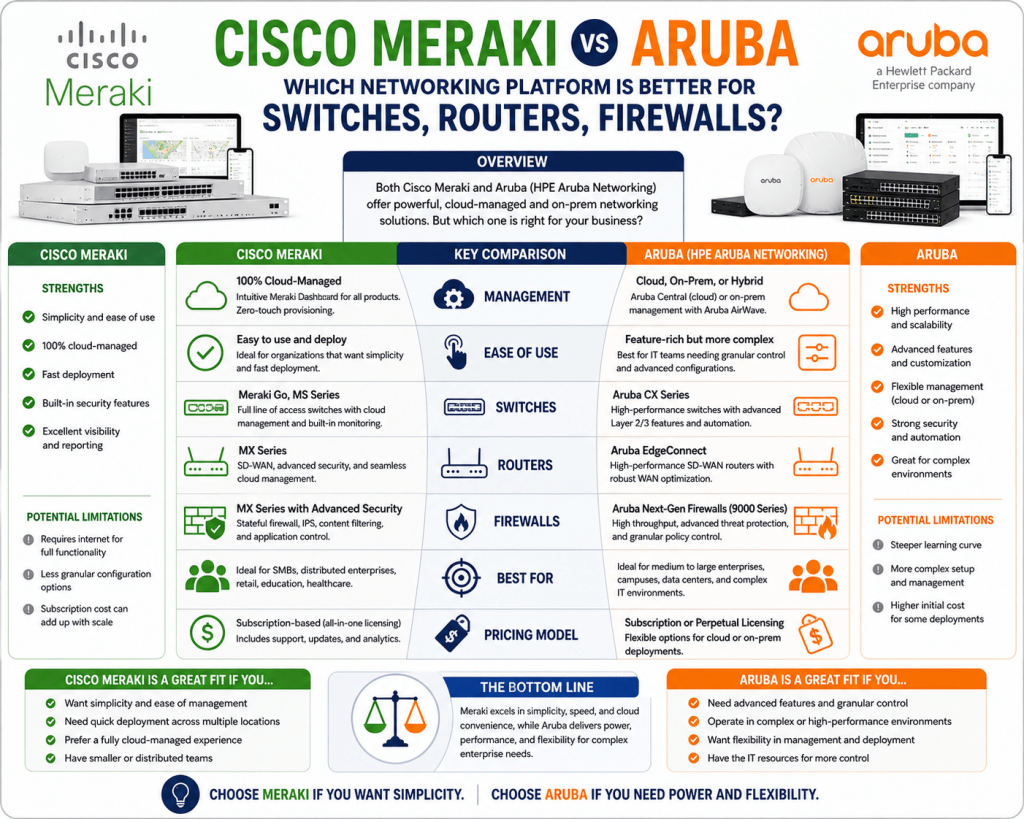
The evolution of enterprise networking has been strongly influenced by the widespread adoption of cloud computing technologies. Traditional network environments were primarily built around static infrastructure, where routers, switches, and firewalls were configured individually and managed on-site by specialized teams. This approach often resulted in operational complexity, slower deployment cycles, and limited scalability. As organizations began expanding across multiple locations and adopting remote work models, the limitations of conventional networking became more apparent.
Cloud networking introduced a shift toward centralized control and abstraction of physical infrastructure. Instead of relying entirely on localized hardware management, organizations started leveraging cloud-based platforms to oversee distributed networks. This transition enabled IT teams to manage large-scale environments without requiring physical presence at every location. It also improved consistency in configuration, reduced human error, and allowed for faster deployment of network services.
Within this transformation, cloud-managed networking platforms gained prominence by offering unified dashboards and automated configuration systems. These platforms redefined how networks are monitored, maintained, and scaled. Cisco Meraki, developed by Cisco Meraki, became one of the most widely adopted solutions in this category due to its emphasis on simplicity and centralized orchestration. It provided organizations with the ability to manage entire network ecosystems from a single interface while maintaining strong performance and reliability at the edge.
Cloud Managed Architecture and Operational Model
The architectural foundation of cloud-managed networking is built on a separation between control and data planes. In this model, the control plane is hosted in the cloud, while the data plane remains distributed across physical devices such as access points, switches, and security appliances. This separation allows centralized configuration management without compromising local performance.
In Cisco Meraki’s architecture, devices continuously communicate with a centralized cloud dashboard that stores configuration policies, analytics data, and network insights. When a device is deployed, it automatically retrieves its configuration from the cloud and applies it locally. This eliminates the need for manual setup and reduces dependency on specialized on-site expertise. Once configured, devices operate independently while still maintaining synchronization with the cloud environment.
This model also ensures resilience in connectivity. Even if a device temporarily loses connection to the cloud, it continues to function based on the last synchronized configuration. This ensures uninterrupted network services and prevents operational downtime in critical environments.
The cloud-managed architecture also enables continuous updates and improvements. Firmware upgrades, security patches, and configuration changes can be deployed across multiple devices simultaneously without requiring physical intervention. This level of automation significantly reduces maintenance overhead and ensures uniformity across distributed networks.
Centralized Management and Network Visibility
One of the most significant advantages of cloud-managed networking is centralized visibility. Traditional networks often require multiple tools and interfaces to monitor different components, making troubleshooting time-consuming and inefficient. Cloud-based systems consolidate all monitoring functions into a single dashboard, allowing administrators to view network health, device status, and traffic patterns in real time.
Centralized dashboards provide granular insights into application usage, bandwidth consumption, and user behavior. This level of visibility allows IT teams to identify performance bottlenecks and optimize network resources accordingly. For example, if a specific application is consuming excessive bandwidth, administrators can implement policies to prioritize critical traffic.
In environments with multiple branch locations, centralized management becomes even more valuable. Instead of configuring each site individually, administrators can apply global policies that automatically propagate across all connected devices. This ensures consistency in security rules, network segmentation, and performance optimization.
The ability to manage networks remotely also supports distributed workforce models. As organizations increasingly adopt hybrid and remote work structures, centralized cloud management allows IT teams to maintain full control over network resources without requiring physical presence at each site.
SD-WAN Integration and Intelligent Traffic Routing
Software-defined wide area networking plays a critical role in modern cloud-managed environments. SD-WAN technology enables dynamic routing of network traffic across multiple connection types based on performance, cost, and reliability. This approach replaces traditional static routing methods with intelligent decision-making systems that adapt in real time.
In cloud-managed platforms like Cisco Meraki, SD-WAN capabilities are integrated directly into the network architecture. This allows traffic to be automatically directed through the most efficient path, whether that involves broadband internet, MPLS circuits, or cellular connectivity. The system continuously evaluates network conditions and adjusts routing decisions to optimize performance.
This intelligent routing improves application performance, particularly for cloud-based services that require low latency and high reliability. It also enhances redundancy by providing multiple failover paths in case of network failure. If one connection becomes unstable, traffic is automatically rerouted without user intervention.
SD-WAN also contributes to cost optimization by allowing organizations to reduce reliance on expensive dedicated circuits. Instead, they can leverage more affordable internet connections while maintaining performance standards through intelligent traffic management.
Security Framework in Cloud-Managed Networks
Security is a fundamental component of modern networking architectures. Cloud-managed systems incorporate security features directly into their core design rather than treating them as separate layers. This integrated approach ensures consistent enforcement of security policies across all network devices.
Security mechanisms include firewall policies, intrusion detection systems, content filtering, and automatic threat intelligence updates. These features are centrally managed and applied uniformly across the entire network infrastructure. This eliminates inconsistencies that often arise in manually configured environments.
Cloud-based security systems also benefit from continuous updates. Threat intelligence data is constantly refreshed, allowing networks to adapt to emerging vulnerabilities and attack patterns. This proactive approach enhances overall resilience against cyber threats.
Additionally, segmentation capabilities allow networks to isolate sensitive data traffic from general user activity. This reduces the risk of lateral movement in the event of a security breach and strengthens overall network protection.
Deployment Efficiency and Automation Capabilities
One of the defining characteristics of cloud-managed networking is simplified deployment. Devices are designed to automatically connect to the cloud upon activation, retrieve configuration settings, and become operational within minutes. This plug-and-play model significantly reduces setup time and eliminates the need for complex manual configuration.
Automation extends beyond initial deployment. Routine tasks such as firmware updates, policy enforcement, and network optimization can be handled automatically through the cloud dashboard. This reduces the workload on IT teams and minimizes the risk of configuration errors.
Large-scale deployments particularly benefit from automation. Organizations with multiple locations can roll out network infrastructure simultaneously without requiring on-site technical teams at every location. This accelerates expansion and reduces operational costs.
Scalability and Distributed Network Growth
Scalability is a critical requirement for modern enterprises, especially those operating across global or regional markets. Cloud-managed networks are inherently scalable due to their centralized control structure. New devices can be added to the network without disrupting existing configurations.
As organizations grow, the same management framework can be applied across increasingly complex environments. Whether managing ten devices or ten thousand, the operational model remains consistent. This reduces the learning curve for IT teams and simplifies long-term network planning.
Scalability also extends to performance management. As network demand increases, cloud-based systems can dynamically adjust resource allocation and optimize traffic flow. This ensures that performance remains stable even under heavy usage conditions.
Impact on Enterprise IT Operations and Strategy
The adoption of cloud-managed networking has fundamentally changed the role of IT departments. Instead of focusing on manual configuration and maintenance tasks, IT teams are increasingly shifting toward strategic planning, optimization, and security management. Automation and centralized control reduce the need for repetitive operational work, allowing teams to focus on higher-value initiatives.
This shift also improves responsiveness. Network issues can be identified and resolved more quickly due to real-time monitoring and automated alerts. Predictive analytics further enhances operational efficiency by identifying potential problems before they impact users.
Cloud-managed systems also support data-driven decision-making. By analyzing network usage patterns, organizations can make informed decisions about resource allocation, application prioritization, and infrastructure expansion.
Overall, cloud-managed networking represents a significant advancement in enterprise infrastructure design. It combines automation, centralized control, and intelligent traffic management to create more efficient and scalable network environments while reducing operational complexity and improving reliability.
Aruba Networking Foundation and Enterprise Positioning
Enterprise networking has evolved in multiple directions as organizations seek alternatives to fully cloud-locked ecosystems. While some vendors emphasize tightly integrated cloud-first models, others focus on hybrid flexibility, hardware strength, and modular deployment strategies. Within this landscape, Aruba, operating under Hewlett Packard Enterprise, has established itself as a major competitor in enterprise wireless and wide area networking solutions.
Aruba’s approach to networking is built on the principle of flexibility across deployment environments. Instead of enforcing a single operational model, it supports cloud-managed, on-premise, and hybrid architectures. This adaptability makes it suitable for organizations that have existing infrastructure investments or regulatory constraints that limit full cloud adoption. Many enterprises prefer this model because it allows gradual modernization rather than complete architectural replacement.
At the core of Aruba’s ecosystem is a focus on performance-driven networking. While cloud dashboards and centralized visibility are important components, Aruba places significant emphasis on hardware optimization, radio frequency management, and enterprise-grade wireless performance. This makes it particularly strong in environments with high-density connectivity requirements such as universities, hospitals, and large corporate campuses.
Unlike purely cloud-dependent systems, Aruba provides multiple layers of control. Administrators can choose to manage networks through cloud platforms or maintain local controllers depending on operational needs. This dual approach provides a balance between centralized efficiency and localized autonomy, making it attractive to organizations with complex IT governance structures.
Aruba Wireless Architecture and Access Layer Design
Aruba wireless solutions are widely recognized for their advanced access layer engineering. Wireless access points are designed to optimize coverage, reduce interference, and maintain stable connectivity in dense environments. These devices incorporate adaptive radio management, which automatically adjusts channel selection and transmission power based on environmental conditions.
A key feature of Aruba’s architecture is its focus on client-aware networking. Instead of treating all devices equally, the system analyzes client behavior, device type, and application requirements to optimize connectivity. This improves user experience in environments where multiple device types operate simultaneously, such as laptops, smartphones, IoT sensors, and industrial equipment.
The access layer is tightly integrated with security and authentication systems. Role-based access control ensures that users are granted network permissions based on identity and policy rather than physical location. This supports secure mobility within enterprise environments and reduces the risk of unauthorized access.
Aruba also places strong emphasis on network resilience. Access points are designed to continue operating even if cloud connectivity is disrupted. Local decision-making capabilities ensure that wireless services remain available during temporary outages. This is particularly important in mission-critical environments where downtime is not acceptable.
Aruba SD-WAN and Intelligent Branch Connectivity
As organizations expand across multiple geographic locations, wide area networking becomes a critical component of enterprise infrastructure. Aruba addresses this requirement through its SD-WAN capabilities, often implemented via Aruba EdgeConnect solutions. These systems are designed to optimize branch connectivity, application performance, and network security across distributed environments.
The SD-WAN architecture focuses on application-aware routing. Instead of treating all traffic equally, the system identifies application types and assigns priority based on business importance. Critical applications such as cloud-based ERP systems or communication platforms are prioritized over less sensitive traffic.
Dynamic path selection is another key feature. The system continuously evaluates network performance metrics such as latency, jitter, and packet loss to determine the most efficient routing path. This ensures that applications maintain consistent performance even when underlying network conditions fluctuate.
Aruba’s SD-WAN also supports multi-cloud environments. As organizations adopt multiple cloud service providers, the ability to manage traffic across different cloud platforms becomes essential. The system provides secure and optimized connectivity between branch locations and cloud services without requiring complex manual configuration.
Security is deeply integrated into SD-WAN functionality. Traffic is encrypted end-to-end, and segmentation policies ensure that sensitive data is isolated from general network traffic. This reduces exposure to potential threats and improves compliance with regulatory requirements.
Aruba Centralized Management and Network Orchestration
Aruba provides centralized management through a platform commonly referred to as Aruba Central. This system offers unified visibility across wireless, wired, and WAN environments. It allows administrators to monitor network health, configure devices, and analyze performance metrics from a single interface.
Unlike fully cloud-dependent ecosystems, Aruba Central supports flexible deployment modes. Organizations can choose cloud-based management or deploy on-premise controllers depending on security policies and operational preferences. This flexibility is particularly valuable for industries with strict data governance requirements.
Centralized management includes advanced analytics capabilities. The system collects telemetry data from network devices and converts it into actionable insights. Administrators can identify congestion points, detect anomalies, and optimize resource allocation based on real-time information.
Automation is also a key component of Aruba’s management model. Configuration templates allow administrators to deploy consistent settings across multiple sites. This reduces manual effort and ensures uniform policy enforcement throughout the network.
In addition, Aruba’s system supports integration with third-party tools and enterprise platforms. This interoperability allows organizations to incorporate network data into broader IT management ecosystems, enhancing overall operational visibility.
Security Architecture and Zero Trust Principles
Security is a foundational element of Aruba’s networking philosophy. The architecture is designed around identity-driven access control and zero-trust principles. Instead of assuming trust based on network location, every device and user must be authenticated before accessing resources.
Role-based access control allows administrators to define granular policies based on user identity, device type, and contextual factors. This ensures that users only access resources necessary for their role, reducing the attack surface.
Aruba also incorporates continuous monitoring of network behavior. Machine learning algorithms analyze traffic patterns to detect anomalies that may indicate security threats. When suspicious activity is detected, automated responses can be triggered to isolate affected devices or restrict access.
Encryption is applied across all communication channels, ensuring data protection both in transit and at rest. This is particularly important in environments handling sensitive information such as healthcare, finance, and government operations.
Network segmentation further enhances security by isolating different traffic types. For example, guest networks, corporate devices, and IoT systems can be separated into distinct segments with independent security policies.
Hardware Performance and Infrastructure Reliability
Aruba differentiates itself through a strong emphasis on hardware performance. Access points, switches, and gateways are engineered for high-density environments and long-term operational stability. This makes them suitable for large-scale deployments where consistent performance is critical.
Wireless access points are designed with advanced antenna systems and adaptive radio technologies. These features help maintain strong signal quality even in environments with heavy interference or large numbers of connected devices.
Switching infrastructure is optimized for low-latency performance and high throughput. This is essential for environments that rely on real-time data processing or high-speed internal communication.
Redundancy is also a key design principle. Many Aruba systems support failover mechanisms that ensure continuity in case of hardware or network failure. This increases reliability and reduces the risk of downtime in critical operations.
Comparative Operational Philosophy with Cisco Meraki
When comparing Aruba with Cisco Meraki, the differences are rooted in architectural philosophy rather than functionality alone. Cisco Meraki, developed by Cisco Meraki, emphasizes simplicity, cloud centralization, and ease of deployment. Aruba, on the other hand, focuses on flexibility, performance tuning, and hybrid deployment models.
Meraki systems are designed for rapid deployment and minimal configuration complexity. Devices automatically connect to the cloud, retrieve settings, and become operational quickly. This makes them highly suitable for organizations seeking simplified network management without deep technical overhead.
Aruba systems require more deliberate configuration but offer greater control over the underlying infrastructure. This allows network engineers to fine-tune performance parameters, security policies, and deployment architectures based on specific organizational needs.
In terms of scalability, both systems support large-scale deployments, but they achieve it differently. Meraki relies on centralized cloud orchestration, while Aruba provides distributed management options that can be tailored to organizational structure.
Deployment Strategy Differences in Enterprise Environments
Deployment strategies vary significantly between the two ecosystems. Meraki prioritizes plug-and-play deployment, where devices are pre-configured in the cloud and activated upon installation. This reduces setup time and simplifies rollout across multiple locations.
Aruba deployments often involve more detailed planning and configuration stages. Network engineers may design customized architectures that align with specific performance, security, or compliance requirements. This makes Aruba more suitable for complex enterprise environments where customization is critical.
Despite these differences, both systems support global scalability and remote management. The key distinction lies in how much control and customization an organization requires versus how much simplicity and automation they prefer.
Operational Efficiency and Long-Term Network Strategy
From a long-term strategic perspective, the choice between Aruba and Meraki often depends on organizational priorities. Meraki aligns with environments that prioritize operational simplicity, centralized visibility, and rapid deployment. Aruba aligns with organizations that require deep customization, performance optimization, and hybrid infrastructure flexibility.
Both platforms reflect the broader shift toward cloud-enabled networking, but they interpret this shift differently. One focuses on abstraction and simplification, while the other focuses on control and adaptability.
As enterprise networks continue to evolve, these differences become increasingly important in shaping infrastructure decisions, particularly in industries where network performance, security, and scalability must be carefully balanced across distributed environments.
Deep Dive into Cisco Meraki and Aruba Operational Differences in Enterprise Environments
Modern enterprise networking decisions are rarely about a single feature or device capability. Instead, they are shaped by how an entire ecosystem behaves under real-world conditions such as multi-site expansion, remote workforce connectivity, application-heavy traffic loads, and security compliance requirements. In this context, comparing Cisco Meraki from Cisco Meraki and Aruba solutions from Hewlett Packard Enterprise requires examining not only technical specifications but also operational philosophy, scalability behavior, and long-term network sustainability.
Cisco Meraki follows a cloud-first operational model where nearly all management functions are abstracted into a centralized dashboard. This design simplifies administration but also introduces a strong dependency on cloud-based orchestration for configuration visibility and control. Aruba, in contrast, offers a more distributed model that can operate through cloud, on-premise, or hybrid controllers, giving organizations more architectural freedom.
In enterprise environments where IT teams manage hundreds or thousands of endpoints across multiple geographic regions, these differences significantly influence daily operations. A cloud-centric model reduces manual intervention, while a hybrid model increases customization but may require more specialized network engineering expertise.
Network Management Experience and Administrative Control Models
The management experience is one of the most noticeable differences between the two platforms. Cisco Meraki provides a highly simplified interface where network administrators can manage wireless access points, switches, firewalls, and endpoint devices from a single unified dashboard. Configuration changes are applied centrally and propagate automatically across all connected devices.
This centralized control model reduces the learning curve for IT staff and minimizes configuration errors. It also allows rapid deployment of new network sites, since devices automatically retrieve configurations from the cloud upon activation. This makes Meraki particularly effective for organizations that prioritize speed of deployment and operational simplicity.
Aruba, on the other hand, offers a more layered management structure. Through its centralized platform, administrators can still manage large-scale environments, but they also have the option to retain local control over specific network segments. This flexibility is useful in environments where different departments or locations have unique networking requirements.
For example, an enterprise may choose to centralize WAN management while allowing local control over wireless configurations in sensitive areas. This hybrid control structure provides more granular customization but requires stronger technical expertise to maintain consistency across the network.
Scalability in Distributed and Global Networks
Scalability is a critical factor in enterprise networking, especially for organizations expanding into global markets or managing distributed branch networks. Cisco Meraki’s architecture is inherently scalable due to its cloud-driven foundation. Adding new devices typically requires minimal configuration, as policies are automatically assigned from the central dashboard.
This model is particularly effective for retail chains, franchise operations, and educational institutions where hundreds of similar network sites must be deployed quickly. The standardized configuration model ensures consistency across all locations, reducing operational complexity.
Aruba also supports large-scale deployments but approaches scalability differently. Instead of relying solely on cloud orchestration, Aruba allows organizations to design hierarchical network architectures. This enables more complex segmentation strategies and tailored configurations for different regions or business units.
In large enterprises, this flexibility can be advantageous because it allows networks to evolve organically rather than being constrained by a single centralized model. However, it may also introduce additional management overhead compared to fully automated cloud-based systems.
Performance Optimization and Traffic Handling Behavior
Network performance is influenced by how each system handles traffic routing, congestion, and application prioritization. Cisco Meraki uses built-in SD-WAN intelligence to dynamically route traffic based on real-time network conditions. This ensures that cloud applications receive optimal routing paths and reduces latency for critical services.
The system continuously evaluates network performance metrics and adjusts routing decisions automatically. This behavior is particularly beneficial for organizations relying heavily on SaaS applications, video conferencing, and cloud-based collaboration tools.
Aruba also provides SD-WAN capabilities but places greater emphasis on application-aware routing and policy-driven traffic management. Instead of purely reactive routing decisions, Aruba allows administrators to define detailed traffic policies based on application type, user role, or business priority.
This approach provides more control over how bandwidth is allocated across the network. It is particularly useful in environments where different departments have competing performance requirements or where regulatory constraints require strict traffic separation.
Security Posture and Enterprise Risk Management
Security architecture is a defining factor in modern networking platforms. Cisco Meraki integrates security directly into its cloud-managed ecosystem. Features such as firewall policies, intrusion detection, content filtering, and threat intelligence updates are centrally managed and automatically applied across all devices.
This unified approach ensures consistent security enforcement across distributed environments. It also reduces the risk of configuration drift, where different locations may have inconsistent security policies due to manual updates.
Aruba adopts a more identity-centric security model based on zero-trust principles. Every device and user must be authenticated before accessing network resources, regardless of location. This approach minimizes implicit trust within the network and reduces the potential attack surface.
Aruba’s security framework also emphasizes segmentation. Networks can be divided into isolated zones based on user role, device type, or application category. This prevents unauthorized lateral movement in the event of a breach and strengthens overall resilience.
While both platforms provide strong security capabilities, their implementation philosophies differ. Meraki prioritizes centralized simplicity and automated enforcement, while Aruba focuses on granular control and identity-based segmentation.
Cloud Dependency and Hybrid Flexibility Considerations
One of the most important architectural distinctions between these platforms is their relationship with cloud dependency. Cisco Meraki relies heavily on cloud-based management for configuration, monitoring, and analytics. While devices continue operating locally if cloud connectivity is lost, full administrative control requires access to the cloud dashboard.
This dependency simplifies operations but may not be suitable for environments with strict data sovereignty requirements or limited internet reliability.
Aruba offers greater flexibility in this area. Organizations can deploy fully cloud-managed, fully on-premise, or hybrid architectures depending on their operational needs. This flexibility allows enterprises to meet regulatory requirements while still benefiting from centralized management capabilities.
For industries such as government, healthcare, and finance, this hybrid capability can be a decisive factor. It enables organizations to maintain sensitive data within controlled environments while still leveraging cloud-based analytics and management tools where appropriate.
Device Ecosystem and Hardware Integration Strategies
Cisco Meraki’s ecosystem is tightly integrated across its hardware portfolio. Access points, switches, security appliances, and IoT devices are designed to work seamlessly within the same cloud-managed environment. This tight integration reduces compatibility issues and simplifies troubleshooting.
The uniformity of hardware and software design ensures consistent performance across all devices. It also allows for streamlined firmware updates and feature rollouts across the entire network.
Aruba’s hardware ecosystem is more modular. While devices are designed to integrate within the Aruba environment, they also support broader interoperability with third-party systems. This flexibility allows organizations to integrate existing infrastructure without complete replacement.
Aruba’s hardware is often optimized for high-performance environments, with advanced radio frequency management and switching capabilities. This makes it particularly suitable for environments with high device density and demanding application requirements.
Operational Cost Structure and Lifecycle Management
Cost considerations in enterprise networking extend beyond initial hardware investment. They include licensing models, maintenance overhead, scalability costs, and long-term operational efficiency.
Cisco Meraki typically operates on a subscription-based licensing model. This includes access to cloud management features, security updates, and support services. While this simplifies budgeting, it also introduces recurring operational costs that scale with network size.
However, the reduced need for manual configuration and maintenance often offsets these costs in environments where IT resources are limited or distributed across multiple locations.
Aruba offers more flexible licensing and deployment options. Organizations can choose different licensing tiers based on functionality requirements. This flexibility can result in lower long-term costs for organizations with specific or static infrastructure needs.
However, Aruba deployments may require more specialized network engineering resources, which can increase operational overhead in complex environments.
Long-Term Strategic Fit in Enterprise Networking
When evaluating long-term strategic alignment, the choice between Cisco Meraki and Aruba depends heavily on organizational priorities.
Meraki aligns well with enterprises that prioritize simplicity, rapid deployment, centralized visibility, and reduced operational complexity. It is particularly effective in environments where IT teams manage distributed locations with standardized requirements.
Aruba aligns better with organizations that require architectural flexibility, deep customization, and hybrid deployment capabilities. It is often preferred in complex enterprise environments where network design must accommodate diverse operational, regulatory, and performance requirements.
Both platforms reflect the broader evolution of enterprise networking toward cloud integration, automation, and intelligent traffic management. However, they represent different interpretations of how much control should remain centralized versus distributed.
In modern enterprise infrastructure planning, these differences influence not only technical architecture but also long-term scalability strategy, workforce requirements, and digital transformation pathways across industries.
Conclusion
The comparison between Cisco Meraki and Aruba networking platforms reflects a broader shift in enterprise IT toward cloud integration, distributed management, and adaptive infrastructure design. Both ecosystems have evolved to address similar challenges, such as multi-site connectivity, remote workforce support, security enforcement, and application performance optimization, yet they approach these challenges through fundamentally different architectural philosophies. Understanding these differences is essential for organizations that are planning long-term network investments, because the decision influences not only technical operations but also staffing requirements, scalability potential, and overall digital transformation strategy.
Cisco Meraki, developed under Cisco Meraki, is built around the principle of centralized simplicity. Its cloud-first model reduces the complexity traditionally associated with enterprise networking by abstracting configuration, monitoring, and analytics into a unified dashboard. This allows IT teams to manage large and distributed environments without needing deep command-line interaction or site-specific configuration processes. The result is a highly streamlined operational model where deployment speed and ease of management become primary advantages. In environments where rapid expansion is required, such as retail chains, branch offices, or educational campuses, this approach significantly reduces time-to-deployment and operational friction.
Aruba, operating under Hewlett Packard Enterprise, follows a more flexible and modular approach. Instead of enforcing a single management model, it allows organizations to choose between cloud-based, on-premise, or hybrid deployments. This adaptability is particularly valuable in complex enterprise environments where different regions or departments may have varying compliance requirements, performance needs, or infrastructure maturity levels. By supporting multiple architectural models, Aruba enables organizations to gradually modernize their networks without requiring a complete overhaul of existing systems.
From an operational standpoint, the difference between these two platforms becomes most visible in day-to-day network management. Meraki prioritizes automation and centralized control, which reduces manual intervention and minimizes configuration errors. IT administrators can apply policies globally, monitor network performance in real time, and troubleshoot issues through a single interface. This level of abstraction reduces the need for specialized networking expertise in routine operations, allowing teams to focus more on strategic planning rather than device-level management.
Aruba, in contrast, provides deeper levels of control over network behavior. While it also offers centralized management capabilities, it allows administrators to fine-tune configurations at a more granular level. This includes detailed traffic policies, advanced wireless tuning, and customized segmentation strategies. Such flexibility is particularly useful in environments where performance optimization and precise control are more important than simplicity. However, this also means that Aruba deployments often require more experienced network engineers to fully leverage the platform’s capabilities.
Scalability is another area where both platforms excel, but in different ways. Meraki’s cloud-native architecture enables rapid scaling with minimal configuration overhead. Adding new devices or expanding to new locations is straightforward because configurations are automatically synchronized through the cloud dashboard. This makes it highly efficient for organizations with standardized network requirements across multiple sites. However, this standardized approach can sometimes limit customization in highly complex environments.
Aruba’s scalability model is more architecture-driven. It supports large-scale deployments through hierarchical network design, allowing organizations to build customized structures that align with business units, geographic regions, or operational tiers. This makes it well-suited for enterprises with diverse networking needs across different environments. While this approach offers greater flexibility, it also introduces additional planning and management complexity compared to fully centralized systems.
Security considerations further highlight the philosophical differences between the two platforms. Meraki integrates security features directly into its cloud-managed ecosystem, ensuring consistent enforcement of policies such as firewall rules, intrusion detection, and content filtering. This centralized approach reduces inconsistencies and simplifies compliance management across distributed networks. It also allows security updates and threat intelligence to be deployed automatically, enhancing overall protection without requiring manual intervention.
Aruba, on the other hand, is built around identity-based security and zero-trust principles. Instead of assuming trust based on network location, every user and device must be continuously authenticated and validated. This approach reduces the risk of unauthorized access and lateral movement within the network. Additionally, Aruba’s segmentation capabilities allow organizations to isolate sensitive workloads, further strengthening security posture in environments that handle critical data.
Performance optimization is another important differentiator. Meraki relies on automated SD-WAN intelligence to dynamically route traffic based on real-time network conditions. This ensures consistent performance for cloud applications by selecting optimal paths for data transmission. It is particularly effective in environments where application usage patterns are relatively uniform and cloud dependency is high.
Aruba’s SD-WAN approach is more policy-driven, allowing organizations to define detailed traffic rules based on application type, user role, or business priority. This enables more precise control over bandwidth allocation and performance tuning. It is especially beneficial in environments where different departments or applications have competing performance requirements.
Cost structure and long-term operational efficiency also play a significant role in decision-making. Meraki typically operates on a subscription-based licensing model, which includes access to cloud services, updates, and support. While this simplifies budgeting and reduces hidden maintenance costs, it introduces recurring expenses that scale with network size. However, the reduction in manual management often offsets these costs in organizations with limited IT staffing.
Aruba offers more flexible licensing options, allowing organizations to select specific features and deployment models based on their requirements. This can lead to more cost-efficient implementations in certain scenarios, particularly where infrastructure is stable and does not require frequent changes. However, the need for more specialized expertise may increase operational costs in complex deployments.
Another important factor is cloud dependency. Meraki’s reliance on cloud-based management provides simplicity and global accessibility but also introduces dependency on continuous internet connectivity for full administrative control. While devices continue to function locally during outages, centralized management requires cloud access.
Aruba’s hybrid flexibility reduces this dependency by allowing on-premise control options. This is particularly important for industries with strict regulatory requirements or limited internet reliability. It ensures that critical network operations can continue independently of cloud connectivity when necessary.
In the broader context of enterprise networking evolution, both platforms represent different responses to the same underlying challenge: how to manage increasingly complex, distributed, and cloud-integrated environments efficiently. Meraki emphasizes abstraction, automation, and simplicity, making networking more accessible and easier to manage at scale. Aruba emphasizes flexibility, control, and performance optimization, catering to environments where customization and precision are essential.
Ultimately, the decision between these platforms is not purely technical but strategic. It depends on how an organization defines its priorities in terms of operational efficiency, scalability, security posture, and long-term infrastructure planning. Some enterprises will prioritize the simplicity and unified management experience offered by Meraki, while others will value the architectural flexibility and granular control provided by Aruba.
As enterprise networks continue to evolve, the distinction between cloud-managed simplicity and hybrid flexibility will remain a central consideration in infrastructure design. Both approaches are likely to coexist, serving different segments of the market based on organizational maturity, industry requirements, and digital transformation goals.