
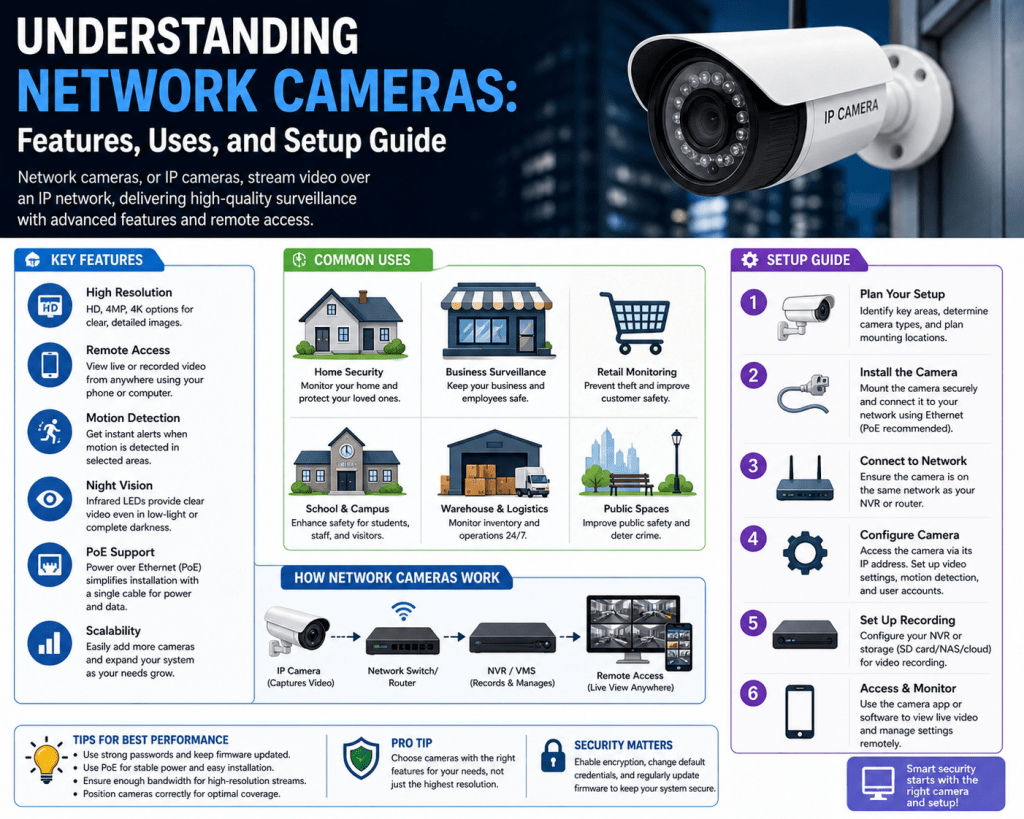
A network camera is a digital video device designed to capture, process, and transmit visual data over a network. Unlike older surveillance technologies that depended heavily on physical infrastructure and localized storage, network cameras function as independent devices capable of communicating across digital environments. These cameras are often referred to as IP cameras because they operate using Internet Protocol, allowing them to integrate seamlessly with modern networking systems. Their ability to transmit video and receive commands remotely has made them a foundational element in contemporary surveillance and monitoring solutions. As digital transformation continues to influence security practices, network cameras have become more accessible and widely adopted across different sectors, including residential, commercial, and industrial environments.
Core Working Principle of Network Cameras
The operation of a network camera begins with image capture through a lens and an image sensor. The sensor converts incoming light into electrical signals, which are then processed by an internal processor. This processor compresses the data into a digital format suitable for transmission. Once processed, the data is sent over a network to a designated storage location or viewing device. Each camera is assigned a unique IP address, enabling it to function like any other device on a network. This addressing system allows users to access the camera remotely, configure settings, and monitor live or recorded footage without requiring direct physical interaction. Depending on the configuration, data transmission can occur through wired Ethernet connections or wireless technologies, offering flexibility in deployment.
Transition from Analog to Digital Surveillance
The shift from analog to digital surveillance represents a significant milestone in the evolution of security technology. Analog cameras relied on continuous signal transmission through coaxial cables and required dedicated recording devices to store footage. These systems were often complex, costly to install, and limited in functionality. Network cameras eliminate many of these limitations by digitizing video at the source and transmitting it through existing network infrastructure. This transition has reduced the need for extensive cabling and enabled more efficient data management. Additionally, digital systems allow for higher resolution, better image quality, and advanced features that were not possible with analog technology. The move toward network-based solutions reflects the broader trend of integrating security systems with information technology.
Key Components of a Network Camera System
A network camera system consists of several essential components that work together to deliver surveillance capabilities. The camera itself includes a lens, image sensor, processor, and network interface. The lens determines the field of view and focal length, while the image sensor captures visual information. The processor handles tasks such as encoding, compression, and feature implementation. The network interface enables communication with other devices and systems. Storage solutions are another critical component, with options ranging from local memory cards to centralized storage devices and remote servers. Software platforms provide the interface for managing cameras, viewing footage, and configuring settings. Power supply options vary, including standard adapters and power over Ethernet, which simplifies installation by combining power and data transmission into a single cable.
Types of Network Cameras
Network cameras are available in a variety of forms, each designed for specific use cases and environments. Dome cameras are commonly used for indoor surveillance due to their discreet design and wide coverage area. Bullet cameras are typically installed outdoors and are known for their long-range capabilities and durability. Pan-tilt-zoom cameras offer flexible viewing angles and can be controlled remotely to focus on specific areas. Wireless cameras provide ease of installation by eliminating the need for extensive cabling, making them suitable for residential use. Specialized cameras, such as thermal and fisheye models, cater to unique requirements like temperature detection and panoramic views. The diversity in camera types allows users to select solutions that align with their specific monitoring needs.
Features That Define Modern Network Cameras
Modern network cameras are equipped with a wide range of features that enhance their functionality and usability. Motion detection allows cameras to record only when activity is detected, optimizing storage usage and simplifying event review. Night vision capabilities enable clear imaging in low-light conditions through infrared technology. High-definition and ultra-high-definition resolutions provide detailed visuals, which are essential for identifying individuals and objects. Two-way audio functionality enables communication between the user and individuals near the camera. Advanced analytics, powered by artificial intelligence, can identify patterns, detect unusual behavior, and trigger alerts. These features collectively transform network cameras from simple recording devices into intelligent monitoring systems capable of proactive security management.
Applications Across Different Environments
Network cameras are widely used across various environments due to their adaptability and effectiveness. In residential settings, they are commonly installed at entry points, driveways, and indoor spaces to monitor activity and enhance security. Homeowners use them to check on their property remotely and receive notifications of unusual events. In commercial environments, network cameras play a crucial role in loss prevention, employee monitoring, and operational efficiency. Retail stores use them to analyze customer behavior and improve store layouts, while offices rely on them for safety and compliance. Industrial applications include monitoring production lines, ensuring worker safety, and maintaining quality control. Public sector usage encompasses traffic monitoring, law enforcement, and infrastructure management, highlighting the broad scope of network camera applications.
Advantages Over Traditional Surveillance Systems
Network cameras offer several advantages over traditional surveillance systems, making them a preferred choice for modern deployments. One of the most significant benefits is remote accessibility, which allows users to monitor and control cameras from virtually anywhere. Scalability is another advantage, as additional cameras can be integrated easily without major infrastructure changes. Improved image quality and resolution provide clearer and more detailed footage. The use of existing network infrastructure reduces installation costs and complexity. Advanced features such as analytics and automation enhance the overall effectiveness of surveillance systems. These advantages contribute to the growing adoption of network cameras across different sectors and use cases.
Role in Modern Security Infrastructure
Network cameras are a central component of modern security infrastructure, providing real-time monitoring and data collection. Their integration with other systems, such as access control and alarm systems, creates a comprehensive security solution. This integration enables automated responses to specific events, improving efficiency and reducing the need for manual intervention. Real-time alerts and notifications allow users to respond quickly to potential threats. The ability to store and analyze data over time provides valuable insights that can be used to improve security strategies. As security needs continue to evolve, network cameras remain a critical tool for ensuring safety and situational awareness.
Networking and Communication Protocols
The functionality of network cameras relies on various networking and communication protocols. These protocols govern how data is transmitted, received, and interpreted across the network. Internet Protocol serves as the foundation, enabling devices to communicate using unique addresses. Additional protocols handle tasks such as video streaming, device discovery, and remote configuration. Efficient data compression techniques are used to reduce bandwidth consumption while maintaining video quality. Understanding these protocols is essential for optimizing performance and ensuring reliable operation. Proper configuration of network settings, including bandwidth allocation and latency management, plays a crucial role in maintaining smooth video transmission.
Storage Options and Data Management
Storage is a key consideration in network camera systems, as video data can accumulate rapidly. Local storage options include memory cards installed within the camera, providing a simple and cost-effective solution for small-scale deployments. Network-attached storage devices offer centralized storage for multiple cameras, enabling easier management and scalability. Remote storage solutions provide additional flexibility by allowing data to be stored off-site. These options help protect against data loss due to hardware failure or physical damage. Effective data management involves organizing recordings, setting retention policies, and ensuring that important footage is preserved for future reference. Balancing storage capacity, cost, and accessibility is essential for designing an efficient surveillance system.
Wireless Connectivity and Flexibility
Wireless connectivity has significantly expanded the possibilities for deploying network cameras. Cameras that support wireless communication can be installed in locations where running cables is impractical. This flexibility is particularly beneficial for residential users and temporary installations. Wireless systems rely on stable network connections to ensure consistent performance. Signal strength, interference, and network congestion can impact video quality and reliability. Proper placement of cameras and network devices helps maintain strong connections. Despite these challenges, wireless technology continues to improve, making it an increasingly viable option for a wide range of applications.
Security and Privacy Considerations
The use of network cameras introduces important security and privacy considerations. Unauthorized access to camera systems can compromise sensitive information and pose risks to individuals and organizations. Implementing strong authentication measures, such as secure passwords and user access controls, is essential for protecting systems. Encryption of data during transmission helps prevent interception and unauthorized viewing. Regular software updates address vulnerabilities and enhance system security. Privacy concerns also arise from the use of surveillance technology, particularly in public and shared spaces. Adhering to regulations and ethical guidelines ensures responsible use of network cameras while balancing security needs with individual privacy rights.
Scalability and System Expansion
One of the defining characteristics of network camera systems is their scalability. Users can start with a small number of cameras and expand the system as their needs grow. This flexibility makes network cameras suitable for both small-scale and large-scale deployments. Adding new cameras typically involves minimal disruption, as they can be integrated into the existing network. Scalability also extends to storage and management systems, allowing users to upgrade resources as required. This adaptability ensures that network camera systems remain effective over time, even as requirements change.
Integration with Emerging Technologies
Network cameras are increasingly being integrated with emerging technologies to enhance their capabilities. Artificial intelligence enables advanced analytics, such as facial recognition and behavior detection. Integration with smart devices allows for automated responses and remote control. Data collected by cameras can be analyzed to identify trends and improve decision-making. These integrations transform network cameras into intelligent systems that go beyond basic surveillance. As technology continues to evolve, the potential applications of network cameras will expand further, driving innovation in security and monitoring solutions.
Strategic Planning for Network Camera Deployment
Deploying a network camera system requires careful planning to ensure effective coverage, optimal performance, and long-term reliability. The process begins with identifying the purpose of the surveillance system, whether it is for home security, business monitoring, or industrial oversight. Understanding the objectives helps determine the number of cameras needed, their placement, and the features required. Environmental factors such as lighting conditions, weather exposure, and physical obstructions must also be considered during the planning phase. A well-structured deployment strategy minimizes blind spots, reduces redundancy, and ensures that critical areas are adequately monitored without unnecessary resource consumption.
Site Assessment and Coverage Optimization
A thorough site assessment is essential before installing network cameras. This involves analyzing the physical layout of the area, identifying entry and exit points, and determining high-risk zones. Cameras should be positioned to capture clear and unobstructed views of these areas. Angle and elevation play a crucial role in achieving optimal coverage, as improper positioning can result in distorted or incomplete footage. Overlapping fields of view can enhance security by ensuring that cameras can capture activity from multiple perspectives. Lighting conditions must also be evaluated, as poor illumination can affect image quality. In low-light environments, cameras with enhanced sensitivity or infrared capabilities are necessary to maintain visibility.
Indoor vs Outdoor Deployment Considerations
Network cameras designed for indoor use differ significantly from those intended for outdoor environments. Indoor cameras are typically more compact and do not require extensive protection against environmental factors. Outdoor cameras, on the other hand, must be resistant to weather conditions such as rain, dust, and extreme temperatures. These cameras often feature protective enclosures and enhanced durability. Placement of outdoor cameras should account for exposure to direct sunlight, which can cause glare and affect image clarity. Proper mounting and positioning help protect the camera from tampering and environmental damage while maintaining a clear field of view.
Power Supply and Energy Management
Powering network cameras is a critical aspect of deployment. Cameras can be powered through traditional electrical outlets, batteries, or power over Ethernet technology. Each method has its advantages and limitations. Power over Ethernet simplifies installation by combining data and power transmission into a single cable, reducing the need for additional wiring. Battery-powered cameras offer flexibility in placement but require regular maintenance to ensure continuous operation. Energy management strategies should consider the reliability of power sources and the potential impact of outages. Backup power solutions can help maintain functionality during interruptions, ensuring uninterrupted surveillance.
Network Infrastructure Requirements
A reliable network infrastructure is essential for the effective operation of network cameras. Bandwidth availability plays a significant role in determining the quality and consistency of video transmission. High-resolution cameras require more bandwidth, especially when streaming live footage or recording continuously. Network devices such as routers and switches must be capable of handling the additional traffic generated by multiple cameras. Proper configuration of network settings, including quality of service and bandwidth allocation, helps prevent congestion and ensures smooth performance. Wired connections generally provide more stability, while wireless networks offer flexibility but may be affected by interference and signal weakness.
Bandwidth Management and Performance Optimization
Managing bandwidth efficiently is crucial for maintaining the performance of a network camera system. Video compression technologies reduce the size of transmitted data without significantly compromising quality. Adjusting frame rates and resolution settings can further optimize bandwidth usage. For example, reducing the frame rate in low-activity areas can conserve resources while maintaining adequate monitoring. Network administrators must balance video quality with available bandwidth to prevent latency and buffering issues. Monitoring network performance and identifying bottlenecks helps maintain a stable and responsive system.
Storage Planning and Retention Strategies
Effective storage planning is essential for handling the large volumes of data generated by network cameras. The choice of storage solution depends on factors such as the number of cameras, recording duration, and desired retention period. Local storage options provide quick access to footage but may be limited in capacity. Centralized storage systems allow multiple cameras to store data in a single location, simplifying management and scalability. Remote storage solutions offer additional flexibility and protection against data loss due to physical damage. Retention strategies should define how long footage is stored and when it is overwritten or archived. Proper planning ensures that important recordings are preserved while optimizing storage usage.
Cloud Integration and Remote Accessibility
Cloud integration has become a significant aspect of modern network camera systems. By storing data remotely, users can access footage from anywhere without relying on local hardware. Cloud-based solutions also provide automatic backups, reducing the risk of data loss. Remote accessibility allows users to monitor live feeds, review recordings, and adjust settings using mobile devices or computers. This level of convenience has contributed to the widespread adoption of network cameras in both residential and commercial settings. However, reliance on cloud services requires stable internet connectivity and careful consideration of data security.
Security Configuration and Access Control
Securing a network camera system is a fundamental requirement to prevent unauthorized access and protect sensitive data. Default login credentials should be changed during the initial setup to eliminate common vulnerabilities. Strong authentication mechanisms, including complex passwords and multi-factor authentication, enhance system security. Access control policies should define who can view, modify, or manage camera settings. Encryption of data during transmission helps safeguard information from interception. Regular audits and updates ensure that security measures remain effective against evolving threats.
Integration with Existing Systems
Network cameras can be integrated with other systems to create a comprehensive monitoring solution. Integration with alarm systems allows cameras to trigger recordings or alerts when specific events occur. Access control systems can use camera data to verify identities and monitor entry points. Smart automation systems enable cameras to interact with other devices, such as lighting and sensors, to enhance functionality. This interconnected approach improves efficiency and provides a more complete view of the monitored environment.
Scalability and Future Expansion
Scalability is a key advantage of network camera systems, allowing them to grow alongside evolving needs. Adding new cameras or upgrading existing ones can be done with minimal disruption to the system. Planning for scalability involves selecting hardware and software that can support future expansion. This includes ensuring sufficient network capacity, storage availability, and management capabilities. A scalable system provides long-term value by accommodating changes without requiring a complete redesign.
Environmental and Lighting Challenges
Environmental conditions can significantly impact the performance of network cameras. Factors such as temperature fluctuations, humidity, and dust can affect hardware reliability. Cameras designed for harsh environments include protective features to withstand these conditions. Lighting challenges, including glare, shadows, and low-light scenarios, can affect image quality. Adjusting camera settings and using appropriate technology helps mitigate these issues. Proper planning and equipment selection ensure consistent performance across different environments.
Installation Best Practices
Proper installation is essential for maximizing the effectiveness of a network camera system. Cameras should be mounted securely to prevent movement and tampering. Cable management should be organized to avoid damage and maintain a clean setup. Testing each camera after installation ensures that it is functioning correctly and providing the desired coverage. Calibration of settings such as focus, exposure, and angle helps achieve optimal image quality. Following best practices during installation reduces the likelihood of issues and enhances overall system performance.
Maintenance Planning and System Reliability
Regular maintenance is necessary to ensure the continued reliability of network cameras. This includes cleaning lenses, checking connections, and updating software. Scheduled maintenance helps identify potential issues before they become significant problems. Monitoring system performance and reviewing footage periodically ensures that cameras are operating as expected. Maintenance plans should be tailored to the specific needs of the deployment, taking into account factors such as usage frequency and environmental conditions.
Cost Considerations and Budget Planning
Budget planning is an important aspect of deploying a network camera system. Costs include hardware, installation, storage, and ongoing maintenance. Balancing cost with functionality requires careful evaluation of requirements and priorities. Investing in high-quality equipment can reduce long-term expenses by minimizing maintenance and replacement needs. Storage costs and network infrastructure should also be considered, as they can significantly impact the overall budget. A well-planned budget ensures that the system meets operational needs without unnecessary expenditure.
Legal and Compliance Factors
The use of network cameras is subject to legal and regulatory requirements that vary by location. Compliance with these regulations ensures that surveillance practices are conducted responsibly and ethically. This includes obtaining necessary permissions, informing individuals of surveillance activities, and protecting stored data. Understanding legal obligations helps prevent potential disputes and ensures that the system operates within established guidelines. Adhering to compliance standards also enhances trust and accountability in the use of surveillance technology.
User Training and Operational Awareness
Effective use of a network camera system requires proper training and awareness among users. Operators should understand how to access footage, adjust settings, and respond to alerts. Training programs can help users become familiar with system features and functions, improving efficiency and reducing errors. Awareness of security practices, such as protecting login credentials and recognizing potential threats, is also essential. Well-trained users contribute to the overall effectiveness and security of the system.
Performance Monitoring and System Evaluation
Continuous performance monitoring ensures that the network camera system operates efficiently. This involves tracking metrics such as bandwidth usage, storage capacity, and system uptime. Regular evaluation helps identify areas for improvement and ensures that the system continues to meet operational requirements. Adjustments to settings, hardware, or network configuration may be necessary to maintain optimal performance. Ongoing monitoring and evaluation are key to sustaining a reliable and effective surveillance system.
Ongoing Maintenance of Network Camera Systems
Maintaining a network camera system is essential for ensuring long-term reliability and consistent performance. Regular maintenance involves inspecting both hardware and software components to confirm that everything is functioning as expected. Over time, dust, dirt, and environmental exposure can affect camera lenses and housing, leading to degraded image quality. Cleaning the lens periodically helps maintain clarity and prevents visual distortion. Physical inspections should also include checking mounting brackets, cables, and connectors to ensure they remain secure and undamaged.
Software maintenance is equally important. Firmware updates released by manufacturers often include performance improvements, security patches, and new features. Keeping cameras updated reduces vulnerabilities and enhances system stability. Maintenance schedules should be established based on usage and environmental conditions, ensuring that cameras continue to operate effectively without unexpected downtime.
Routine System Checks and Preventive Care
Routine system checks help identify potential issues before they escalate into major problems. These checks include verifying that cameras are online, ensuring that video feeds are accessible, and confirming that recording functions are operating correctly. Reviewing stored footage periodically helps detect anomalies such as missing recordings or corrupted files. Preventive care also involves monitoring storage capacity and ensuring that retention policies are functioning as intended.
Network connectivity should be tested regularly to ensure stable communication between cameras and other devices. Any disruptions in connectivity can lead to gaps in surveillance coverage. By performing consistent system checks, users can maintain a high level of reliability and avoid unexpected failures.
Common Technical Issues and Their Causes
Network cameras, like any digital device, can experience technical issues that affect performance. One of the most common problems is connectivity failure, which can result from network congestion, signal interference, or incorrect configuration. Cameras that rely on wireless connections may be particularly susceptible to signal instability. Another frequent issue is insufficient storage, which can prevent new recordings from being saved. This often occurs when retention policies are not properly configured or when storage capacity is exceeded.
Image quality problems can also arise due to factors such as poor lighting, incorrect camera settings, or physical obstructions. Blurred or distorted images may indicate issues with focus, lens cleanliness, or environmental conditions. Identifying the root cause of these problems is essential for effective troubleshooting and resolution.
Troubleshooting Connectivity Problems
Resolving connectivity issues requires a systematic approach. The first step is to verify that the camera is powered on and properly connected to the network. Restarting the camera and related network devices can often resolve temporary glitches. If the issue persists, checking network settings such as IP configuration and bandwidth allocation is necessary. Ensuring that the camera has a valid IP address and is not conflicting with other devices helps restore communication.
Wireless cameras may require adjustments to improve signal strength. This can involve repositioning the camera, reducing interference from other devices, or upgrading network equipment. Testing connectivity using diagnostic tools helps determine whether the issue lies with the camera or the network. A structured troubleshooting process ensures efficient resolution and minimizes downtime.
Managing Storage and Data Integrity
Effective storage management is crucial for maintaining a reliable network camera system. As video data accumulates, storage devices can become full, leading to potential data loss. Implementing retention policies that automatically overwrite older footage helps maintain available space. Users should also monitor storage usage and expand capacity when necessary.
Data integrity is another important consideration. Corrupted or incomplete recordings can compromise the usefulness of surveillance footage. Regularly checking stored data and verifying playback functionality helps ensure that recordings remain accessible and accurate. Backup strategies, such as duplicating important footage, provide additional protection against data loss.
Firmware Updates and System Upgrades
Firmware updates play a vital role in maintaining the performance and security of network cameras. These updates address vulnerabilities, improve compatibility, and introduce new features. Users should check for updates regularly and apply them as recommended. Delaying updates can expose systems to security risks and reduce overall efficiency.
System upgrades may also be necessary as technology evolves. Upgrading hardware components, such as storage devices or network equipment, can enhance performance and accommodate increased demand. Planning for upgrades ensures that the system remains capable of meeting future requirements without compromising functionality.
Enhancing Security and Preventing Unauthorized Access
Security is a critical aspect of network camera systems, as unauthorized access can lead to privacy breaches and data compromise. Implementing strong authentication measures is essential for protecting the system. This includes using complex passwords, enabling multi-factor authentication, and restricting access to authorized users only.
Encryption of data during transmission helps safeguard information from interception. Network segmentation can further enhance security by isolating camera systems from other devices. Regular security audits and monitoring for suspicious activity help detect potential threats early. By prioritizing security measures, users can protect both their systems and the data they generate.
Optimizing Performance for Long-Term Use
Optimizing performance involves adjusting system settings to achieve the best balance between quality and efficiency. This includes configuring resolution, frame rate, and compression settings according to the specific requirements of the deployment. High-resolution settings provide detailed images but require more bandwidth and storage, while lower settings conserve resources.
Monitoring system performance helps in identifying bottlenecks and areas for improvement. Adjustments to network configuration, storage allocation, and camera placement can enhance overall efficiency. Continuous optimization ensures that the system remains effective as conditions and requirements change.
Role of Artificial Intelligence in Modern Surveillance
Artificial intelligence is transforming the capabilities of network cameras by enabling advanced analytics and automation. AI-powered features such as facial recognition, object detection, and behavior analysis allow cameras to identify patterns and respond to specific events. These capabilities reduce the need for manual monitoring and improve the accuracy of threat detection.
AI integration also enables predictive analytics, which can anticipate potential issues based on historical data. This proactive approach enhances security and operational efficiency. As AI technology continues to evolve, its integration with network cameras is expected to become even more sophisticated.
Facial Recognition and Behavioral Analytics
Facial recognition technology allows network cameras to identify individuals by analyzing unique facial features. This capability is used in various applications, including access control and security monitoring. Behavioral analytics goes further by analyzing patterns of movement and activity, helping detect unusual behavior that may indicate potential risks.
These technologies rely on advanced algorithms and large datasets to achieve accuracy. While they offer significant benefits, they also raise important considerations related to privacy and ethical use. Proper implementation ensures that these technologies are used responsibly and within legal boundaries.
Integration with Smart Systems and Automation
Network cameras are increasingly integrated with smart systems to create automated environments. This integration allows cameras to interact with devices such as alarms, lighting systems, and sensors. For example, a camera can trigger lights to turn on when motion is detected or send alerts to users when specific events occur.
Automation enhances efficiency by reducing the need for manual intervention. It also enables faster responses to potential threats, improving overall security. The ability to integrate with smart systems makes network cameras a key component of modern connected environments.
Privacy Concerns and Ethical Considerations
The widespread use of network cameras has raised concerns about privacy and ethical use. Surveillance systems must balance security needs with respect for individual rights. This includes ensuring that cameras are not used in inappropriate locations and that recorded data is handled responsibly.
Transparency is important in maintaining trust. Informing individuals about the presence of cameras and the purpose of surveillance helps address concerns. Adhering to legal and ethical guidelines ensures that network camera systems are used in a manner that respects privacy while providing security benefits.
Legal Regulations and Compliance Requirements
The deployment and use of network cameras are subject to legal regulations that vary by region. These regulations govern aspects such as data collection, storage, and access. Compliance with these rules ensures that surveillance practices are conducted lawfully and responsibly.
Organizations must understand and adhere to applicable regulations to avoid legal complications. This includes implementing policies for data protection, access control, and retention. Compliance not only protects users from legal risks but also enhances the credibility of the surveillance system.
Future Trends in Network Camera Technology
The future of network camera technology is shaped by ongoing advancements in digital imaging, networking, and artificial intelligence. Cameras are becoming more intelligent, with enhanced capabilities for real-time analysis and decision-making. Improvements in resolution and sensor technology are enabling clearer and more detailed images.
Emerging trends include the use of edge computing, which allows data processing to occur directly on the camera rather than relying on external systems. This reduces latency and improves efficiency. Integration with other technologies is also expanding the potential applications of network cameras.
Edge Computing and Real-Time Processing
Edge computing represents a significant advancement in network camera technology. By processing data locally on the device, cameras can perform real-time analysis without relying on external servers. This reduces the amount of data that needs to be transmitted and improves response times.
Real-time processing enables immediate detection of events and faster action. This is particularly important in security applications where timely responses are critical. Edge computing also enhances privacy by limiting the transmission of sensitive data.
Advancements in Video Quality and Resolution
Continuous improvements in video quality are enhancing the effectiveness of network cameras. High-resolution formats provide greater detail, making it easier to identify individuals and objects. Advanced imaging technologies improve performance in challenging conditions such as low light and high contrast environments.
These advancements are driven by innovations in sensor design and image processing. As technology continues to evolve, network cameras are expected to deliver even higher levels of clarity and accuracy, further enhancing their value in surveillance and monitoring applications.
Expanding Role in Smart Cities and Infrastructure
Network cameras are playing an increasingly important role in the development of smart cities and modern infrastructure. They are used for traffic management, public safety, and environmental monitoring. By providing real-time data, cameras help improve efficiency and support informed decision-making.
Integration with other systems enables coordinated responses to various situations, such as traffic congestion or emergencies. The use of network cameras in smart cities highlights their importance as a tool for enhancing urban living and infrastructure management.
Adapting to Changing Security Needs
As security challenges evolve, network camera systems must adapt to meet new requirements. This includes addressing emerging threats, accommodating technological advancements, and responding to changing user expectations. Flexibility and scalability are key factors in ensuring that systems remain effective over time.
Continuous innovation and improvement are essential for meeting these challenges. By staying updated with the latest developments and implementing best practices, users can ensure that their network camera systems continue to provide reliable and effective surveillance solutions.
Conclusion
Network cameras have transformed the way surveillance and monitoring are approached in modern environments. Their evolution from simple recording devices to intelligent, network-enabled systems reflects the broader shift toward digital integration and smart technology. By combining video capture, data processing, and network communication into a single device, network cameras provide a level of flexibility and functionality that was not possible with earlier analog systems. This transformation has made surveillance more accessible, scalable, and efficient across a wide range of applications.
One of the most defining characteristics of network cameras is their ability to operate as independent devices within a network. This independence allows for remote access, real-time monitoring, and centralized management, which significantly enhances convenience and responsiveness. Users are no longer limited to on-site monitoring, as they can view live footage and manage camera settings from virtually anywhere. This capability has redefined expectations for security systems, shifting the focus from passive recording to active and proactive monitoring.
The adaptability of network cameras has contributed to their widespread adoption in residential, commercial, and industrial settings. Homeowners use them to monitor property and ensure personal safety, while businesses rely on them for security, operational oversight, and loss prevention. In industrial and public sectors, network cameras play a critical role in maintaining safety, managing infrastructure, and supporting decision-making processes. Their versatility ensures that they can be tailored to meet the unique requirements of different environments, making them a valuable tool in diverse scenarios.
Another important aspect of network cameras is their integration with modern networking infrastructure. By utilizing existing networks, these cameras reduce the need for extensive cabling and simplify installation. This integration also allows for seamless communication with other devices and systems, enabling the creation of comprehensive security solutions. The ability to connect with storage systems, software platforms, and smart devices enhances the overall functionality of network cameras and expands their potential applications.
Storage and data management are central to the effectiveness of network camera systems. The ability to store and retrieve large volumes of video data provides users with valuable insights and evidence when needed. Advances in storage technology have made it possible to manage this data more efficiently, whether through local devices, centralized systems, or remote solutions. Proper planning and management of storage resources ensure that important footage is preserved while optimizing system performance.
Security remains a critical consideration in the deployment and use of network cameras. As these devices are connected to networks, they are exposed to potential risks such as unauthorized access and data breaches. Implementing strong security measures, including authentication, encryption, and regular updates, is essential for protecting both the system and the data it generates. Awareness of security best practices helps users maintain the integrity of their surveillance systems and prevent potential vulnerabilities.
The role of artificial intelligence and advanced analytics in network cameras continues to expand, adding new dimensions to their capabilities. Features such as facial recognition, motion detection, and behavior analysis enable cameras to go beyond simple recording and provide meaningful insights. These technologies allow for more efficient monitoring by reducing the need for constant human observation and enabling automated responses to specific events. As these capabilities continue to develop, network cameras are becoming increasingly intelligent and capable of supporting complex security and operational needs.
Maintenance and troubleshooting are essential components of managing a network camera system. Regular inspections, updates, and performance monitoring help ensure that cameras continue to function effectively over time. Addressing issues such as connectivity problems, storage limitations, and image quality concerns requires a systematic approach and a clear understanding of the system’s components. Proactive maintenance not only prevents disruptions but also extends the lifespan of the equipment.
The integration of network cameras with other technologies further enhances their value and functionality. By connecting with smart systems, sensors, and automation platforms, network cameras can participate in coordinated responses to various situations. This level of integration supports the development of intelligent environments where devices work together to improve efficiency and security. The growing interconnectedness of technology highlights the importance of network cameras as a key component in modern digital ecosystems.
Looking ahead, the future of network cameras is shaped by ongoing advancements in technology. Improvements in video quality, processing power, and connectivity are expected to drive further innovation. The adoption of edge computing and real-time processing will enable faster and more efficient analysis of data, while continued integration with emerging technologies will expand the range of applications. These developments will likely make network cameras even more capable and versatile, reinforcing their role in modern surveillance and monitoring systems.
At the same time, the increasing use of network cameras raises important considerations related to privacy and ethics. Balancing the benefits of surveillance with respect for individual rights is essential for responsible implementation. Adhering to legal and ethical standards ensures that these systems are used appropriately and helps maintain public trust. Awareness of these considerations is crucial for anyone involved in the deployment and management of network camera systems.
In summary, network cameras represent a significant advancement in surveillance technology, offering a combination of flexibility, functionality, and intelligence that meets the demands of modern environments. Their ability to integrate with networks, provide remote access, and support advanced features has made them an indispensable tool for security and monitoring. As technology continues to evolve, network cameras will remain at the forefront of innovation, adapting to new challenges and opportunities while continuing to play a vital role in ensuring safety, efficiency, and connectivity.