
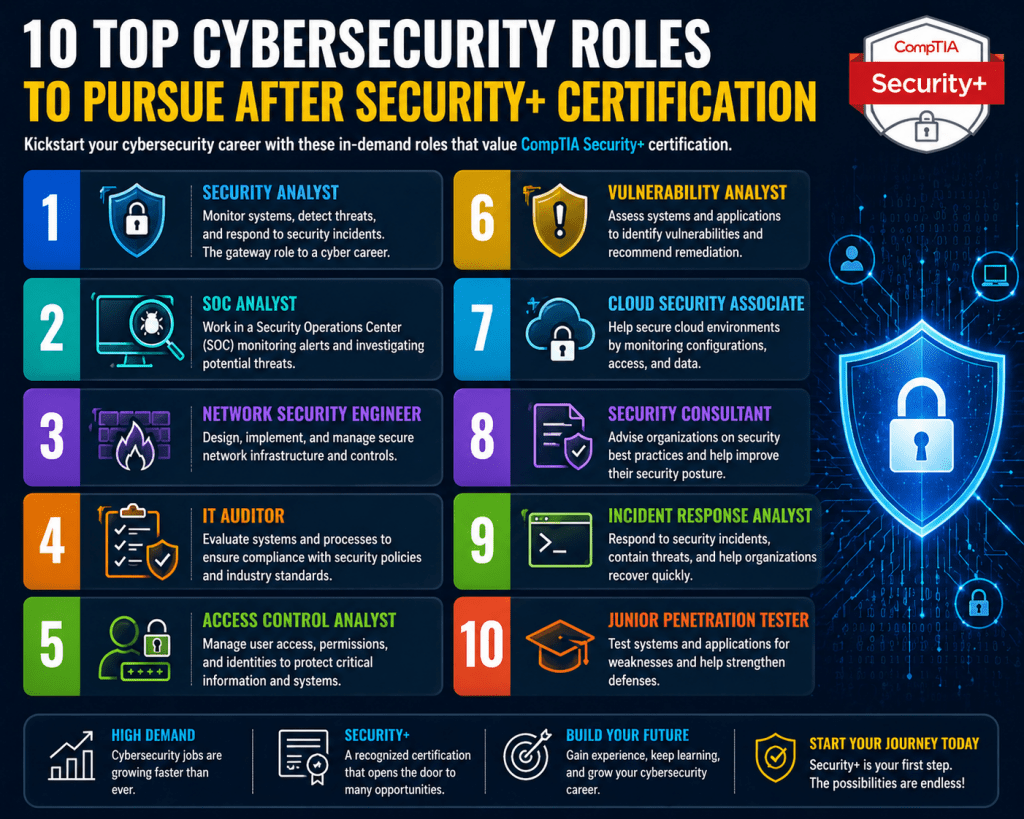
Training and education play a defining role in shaping a successful technology career, especially in the cybersecurity domain where threats, tools, and frameworks continuously evolve. A certification is more than just a credential; it acts as a measurable validation of your knowledge, technical capability, and commitment to professional growth. Among entry-level cybersecurity certifications, Security+ holds a strong reputation for establishing foundational security skills that are relevant across multiple roles and industries.
Security+ equips professionals with an understanding of essential domains such as network security, threat management, cryptography, identity management, and risk mitigation. These are not isolated skills; they are interconnected competencies that apply to real-world enterprise environments. By mastering these areas, professionals gain the ability to analyze risks, respond to incidents, and support secure infrastructure design.
The certification also aligns closely with industry expectations for entry-level security roles. Organizations often look for individuals who can demonstrate not just theoretical knowledge but also practical awareness of security operations. Security+ bridges that gap by combining conceptual understanding with applied scenarios, making it a strategic starting point for anyone entering cybersecurity.
Building a Strong Foundation Before Advancing
Before planning the next step after Security+, it is critical to fully leverage the knowledge and skills already acquired. Many professionals make the mistake of rushing toward advanced certifications without solidifying their understanding of core concepts. This often leads to gaps in practical application, which can limit career growth.
A strong foundation includes hands-on experience with systems, networks, and security tools. Entry-level roles such as help desk support, technical support specialist, or junior system administrator provide valuable exposure to real-world environments. These roles help build troubleshooting skills, system familiarity, and user interaction experience, all of which are essential in cybersecurity.
Internships and volunteer opportunities also play an important role in early career development. Working with small organizations or community projects can provide practical exposure to security challenges, such as configuring firewalls, managing access controls, or monitoring systems. These experiences enhance your ability to apply theoretical knowledge in practical situations.
Developing a lab environment is another effective way to strengthen your foundation. Simulating networks, practicing vulnerability assessments, and experimenting with security configurations can significantly improve technical confidence. This hands-on approach ensures that your skills remain relevant and adaptable.
Exploring Entry-Level Roles After Certification
Security+ opens doors to several entry-level roles that serve as stepping stones into more specialized positions. These roles allow professionals to gain practical experience while gradually building expertise in specific areas of cybersecurity.
One common path is moving into a systems administration role. In this position, professionals manage servers, user accounts, and system configurations while ensuring security policies are implemented correctly. This role provides exposure to access control mechanisms, patch management, and system hardening techniques.
Another pathway is network security. Entry-level network security roles involve monitoring traffic, identifying anomalies, and implementing security measures to protect network infrastructure. These positions help develop an understanding of how data flows within an organization and how threats can exploit vulnerabilities.
Security operations roles are also a natural progression. These positions focus on monitoring security alerts, analyzing potential threats, and responding to incidents. Working in a security operations environment builds skills in threat detection, log analysis, and incident response procedures.
Each of these roles contributes to a broader understanding of cybersecurity, allowing professionals to identify their strengths and interests before committing to a specialized career path.
Mapping a Career Path in Cybersecurity
After gaining initial experience, it becomes important to define a clear career trajectory. Cybersecurity is a vast field with multiple domains, each requiring a different skill set. Mapping a career path involves identifying your interests, evaluating your strengths, and aligning them with industry demand.
One progression path leads toward security engineering. In this role, professionals design and implement security solutions, configure firewalls, and ensure systems are protected against threats. This path requires a deep understanding of network architecture and security technologies.
Another path focuses on security analysis. Security analysts are responsible for monitoring systems, analyzing threats, and recommending improvements. This role emphasizes critical thinking, data analysis, and the ability to interpret complex security events.
For those interested in governance and compliance, a career in risk management or auditing may be suitable. These roles involve assessing organizational policies, ensuring compliance with regulations, and managing security risks. This path requires strong analytical and documentation skills.
Leadership roles represent another long-term objective. Positions such as security manager or director involve overseeing security teams, developing strategies, and ensuring organizational resilience against cyber threats. These roles require a combination of technical expertise and leadership capabilities.
The Importance of Continuous Skill Development
Cybersecurity is not a static field. New threats emerge regularly, and technologies evolve rapidly. To remain competitive, professionals must continuously update their skills and knowledge. This involves staying informed about industry trends, learning new tools, and adapting to changing environments.
Practical experience remains a key factor in skill development. Working on real-world projects, participating in simulations, and analyzing case studies help reinforce theoretical knowledge. Continuous learning also includes understanding emerging areas such as cloud security, endpoint protection, and threat intelligence.
Soft skills are equally important. Communication, problem-solving, and teamwork play a critical role in cybersecurity roles. Professionals often need to explain complex security concepts to non-technical stakeholders, making clarity and adaptability essential skills.
Time management and discipline are also crucial. Balancing work responsibilities with ongoing learning requires a structured approach. Setting clear goals and maintaining consistency can significantly improve long-term career growth.
Leveraging Professional Networking for Career Growth
Networking is one of the most effective ways to advance in the cybersecurity field. A significant portion of job opportunities is filled through professional connections rather than public listings. Building a strong network can provide access to opportunities that may not be widely advertised.
Engaging with industry professionals through events, online communities, and discussion groups helps expand your knowledge and visibility. These interactions provide insights into industry trends, hiring practices, and skill requirements.
Mentorship is another valuable aspect of networking. Learning from experienced professionals can accelerate your career growth by providing guidance, feedback, and practical advice. Mentors can help you navigate challenges, identify opportunities, and refine your career strategy.
Collaboration within professional communities also enhances learning. Sharing knowledge, discussing challenges, and participating in group activities contribute to skill development and confidence building.
Strategies for Securing Employment Opportunities
Transitioning from certification to employment requires a strategic approach. A well-structured resume that highlights your skills, certifications, and practical experience is essential. Emphasizing hands-on projects and real-world applications can make your profile stand out.
Building an online professional presence is equally important. Keeping your profile updated with relevant skills and achievements increases your visibility to potential employers. This also demonstrates your commitment to continuous learning and professional development.
Recruitment agencies can be a useful resource for finding opportunities. These agencies specialize in matching candidates with roles that align with their skills and experience. Engaging with recruiters can provide access to positions that are not publicly advertised.
Job boards remain a common method for finding opportunities, but competition can be high. Analyzing job descriptions helps identify required skills and allows you to tailor your applications accordingly. Over time, this approach improves your chances of securing interviews.
Attending career events and industry gatherings provides direct interaction with employers. These events allow you to present your skills, ask questions, and establish connections that may lead to future opportunities.
Adapting to Industry Expectations and Trends
Understanding industry expectations is critical for long-term success. Employers seek professionals who can adapt to changing environments and handle complex security challenges. This requires a proactive approach to learning and skill development.
Emerging technologies such as cloud computing, automation, and artificial intelligence are reshaping cybersecurity practices. Professionals who develop expertise in these areas gain a competitive advantage. Staying informed about these trends helps align your skills with market demand.
Practical experience with security tools and platforms is increasingly important. Organizations expect candidates to be familiar with monitoring systems, analyzing logs, and responding to incidents. Developing proficiency in these areas enhances employability.
Adaptability is another key factor. Cybersecurity professionals must be able to respond to unexpected challenges and continuously refine their strategies. This requires a mindset focused on learning, experimentation, and improvement.
Positioning Yourself for Long-Term Career Success
A successful cybersecurity career is built on a combination of technical expertise, practical experience, and strategic planning. Security+ serves as the starting point, but long-term success depends on how effectively you build upon that foundation.
Setting clear career goals helps maintain focus and direction. Whether your objective is technical specialization, leadership, or consulting, having a defined path allows you to make informed decisions about skill development and opportunities.
Consistency is essential. Regular learning, skill enhancement, and professional engagement contribute to steady progress. Avoiding complacency ensures that your knowledge remains relevant in a rapidly evolving field.
Resilience also plays a significant role. Challenges are inevitable, but the ability to learn from setbacks and continue progressing is what defines long-term success. Developing a growth-oriented mindset helps navigate obstacles and achieve career objectives.
By combining foundational knowledge, practical experience, and continuous learning, professionals can transform a Security+ certification into a dynamic and rewarding cybersecurity career path.
Expanding Your Cybersecurity Career Beyond Entry-Level Roles
After establishing a foundation with Security+ and gaining initial hands-on experience, the next phase of your cybersecurity journey involves expanding into more specialized and technically demanding roles. At this stage, the focus shifts from general understanding to deeper expertise in specific domains such as network defense, incident response, penetration testing, cloud security, and governance frameworks.
Career progression in cybersecurity is rarely linear. Instead, it branches into multiple pathways depending on technical interest, organizational needs, and long-term goals. Professionals who intentionally develop specialized skills tend to advance faster, as organizations increasingly seek experts capable of solving complex security challenges rather than general practitioners.
One important transition point is moving from support-oriented roles into dedicated security positions. This includes responsibilities such as analyzing security events, investigating incidents, managing vulnerabilities, and supporting enterprise-level defense systems. These roles require sharper analytical thinking and a stronger command of security technologies.
Developing Expertise in Security Operations and Monitoring
Security operations is one of the most critical areas in modern cybersecurity environments. Organizations rely heavily on continuous monitoring systems to detect, analyze, and respond to threats in real time. Professionals working in this domain are responsible for maintaining situational awareness across networks, endpoints, and applications.
A security operations-focused career involves working with security information and event management systems, intrusion detection tools, and threat intelligence platforms. These tools help aggregate and correlate logs from multiple sources to identify suspicious behavior patterns. The ability to interpret these signals is essential for early threat detection.
Analytical thinking is a core requirement in this field. Security professionals must differentiate between normal system behavior and potential security incidents. This involves understanding baseline activity patterns and recognizing deviations that may indicate compromise.
Incident response is another key responsibility within security operations. When a potential threat is detected, professionals must follow structured procedures to contain, investigate, and remediate the issue. This includes isolating affected systems, analyzing attack vectors, and documenting findings for future prevention.
Over time, experience in security operations builds a strong foundation for advanced roles such as threat hunting, security engineering, and incident response leadership.
Strengthening Knowledge in Network Defense and Architecture
Network security remains one of the most fundamental pillars of cybersecurity. As organizations expand their digital infrastructure, protecting network boundaries and internal communication channels becomes increasingly important.
Professionals specializing in network defense focus on securing routers, switches, firewalls, and wireless systems. They implement access control policies, configure segmentation strategies, and monitor traffic flows to prevent unauthorized access.
Understanding network architecture is essential for identifying potential vulnerabilities. This includes knowledge of protocols, routing mechanisms, and communication layers. Attackers often exploit weaknesses in network design, making architectural awareness a critical skill.
Network segmentation plays a particularly important role in limiting the spread of threats. By dividing networks into smaller zones, organizations can contain breaches and reduce overall risk exposure. Professionals working in this area must understand how to design and enforce segmentation policies effectively.
Encryption also plays a major role in network security. Securing data in transit ensures that sensitive information cannot be intercepted or modified by unauthorized parties. This requires familiarity with cryptographic principles and secure communication protocols.
Transitioning into Penetration Testing and Ethical Hacking
One of the most dynamic career paths in cybersecurity is penetration testing. This role focuses on identifying vulnerabilities in systems by simulating real-world attacks. Unlike defensive roles, penetration testing takes an offensive approach to security assessment.
Professionals in this field analyze applications, networks, and systems to uncover weaknesses that could be exploited by malicious actors. This requires a deep understanding of attack methodologies, exploit development, and system architecture.
The goal of penetration testing is not to cause damage but to strengthen security by revealing hidden vulnerabilities. Findings are documented in detailed reports that help organizations improve their defenses.
Ethical hacking also involves continuous learning, as attack techniques evolve rapidly. Professionals must stay updated on new vulnerabilities, exploit frameworks, and security bypass methods. This constant adaptation makes the role both challenging and intellectually engaging.
Practical experience is essential in this field. Simulated environments, lab setups, and controlled testing scenarios allow professionals to practice safely while developing real-world skills.
Advancing Toward Security Engineering Roles
Security engineering represents a more advanced stage in cybersecurity careers. Professionals in this domain design and implement security solutions that protect enterprise systems at scale.
Unlike operational roles that focus on monitoring and response, security engineers focus on building secure architectures from the ground up. This includes designing authentication systems, implementing encryption mechanisms, and configuring security controls across infrastructure.
A strong understanding of system architecture is essential. Security engineers must evaluate how different components interact and identify potential weaknesses in system design. This requires both technical depth and strategic thinking.
Automation is also becoming increasingly important in security engineering. Organizations use automated tools to enforce policies, detect threats, and respond to incidents more efficiently. Professionals in this field often work with scripting and orchestration tools to streamline security operations.
Security engineers play a key role in ensuring compliance with organizational and regulatory standards. They help design systems that meet security requirements while maintaining performance and usability.
Building Competence in Cloud Security Environments
As organizations continue migrating to cloud-based infrastructures, cloud security has become one of the fastest-growing areas in cybersecurity. Protecting cloud environments requires a different approach compared to traditional on-premise systems.
Cloud security professionals are responsible for securing virtual networks, storage systems, and identity management frameworks. They configure access controls, monitor cloud activity, and ensure compliance with security policies.
One of the biggest challenges in cloud environments is shared responsibility. Security responsibilities are divided between service providers and organizations, requiring professionals to clearly understand which areas they control and which are managed externally.
Identity and access management plays a critical role in cloud security. Ensuring that only authorized users can access specific resources is essential for preventing unauthorized activity. This involves managing roles, permissions, and authentication mechanisms.
Data protection is another key focus area. Encrypting data at rest and in transit helps maintain confidentiality and integrity. Professionals must also implement backup and recovery strategies to ensure resilience in case of failures or attacks.
Exploring Governance, Risk, and Compliance Careers
Not all cybersecurity roles are purely technical. Governance, risk, and compliance represent a critical area focused on policy development, regulatory adherence, and organizational risk management.
Professionals in this field ensure that security practices align with legal and industry standards. This involves assessing risks, documenting policies, and conducting audits to verify compliance.
Risk management is a core responsibility. It involves identifying potential threats, evaluating their impact, and implementing controls to reduce exposure. This requires both analytical and strategic thinking.
Compliance roles often involve working with frameworks and standards that guide security practices. Professionals must ensure that systems and processes meet required benchmarks while supporting business objectives.
Communication skills are particularly important in this area. Security professionals must translate technical risks into business terms that stakeholders can understand and act upon.
Enhancing Practical Skills Through Continuous Exposure
Cybersecurity expertise is built through continuous exposure to real-world environments. Theoretical knowledge alone is not sufficient to handle complex security challenges. Practical experience helps bridge this gap.
Working on diverse systems and technologies improves adaptability. Exposure to different operating systems, network configurations, and security tools enhances problem-solving abilities.
Incident analysis is another important learning opportunity. Reviewing past security events helps professionals understand attack patterns and improve response strategies.
Simulation environments provide a safe space for experimentation. These environments allow professionals to test configurations, analyze vulnerabilities, and practice defensive techniques without risking production systems.
Over time, consistent practice leads to deeper technical intuition. This ability to quickly assess and respond to security situations is highly valued in advanced roles.
Understanding the Role of Automation and Emerging Technologies
Automation is transforming cybersecurity operations. Tasks that once required manual intervention are increasingly being handled by automated systems. This includes threat detection, log analysis, and incident response.
Security professionals must understand how to work alongside automation tools rather than being replaced by them. This involves configuring systems, interpreting automated outputs, and improving detection accuracy.
Artificial intelligence and machine learning are also becoming more prevalent in security environments. These technologies help identify anomalies and predict potential threats based on behavioral patterns.
While automation improves efficiency, human expertise remains essential. Critical thinking is required to validate automated findings and make informed decisions in complex scenarios.
Staying updated with emerging technologies ensures long-term career relevance. Professionals who adapt to technological changes remain competitive in evolving job markets.
Developing a Long-Term Specialization Strategy
At advanced stages of a cybersecurity career, specialization becomes increasingly important. Instead of maintaining general knowledge across all domains, professionals focus on specific areas where they can develop deep expertise.
Choosing a specialization depends on interest, aptitude, and market demand. Some may prefer technical fields like penetration testing or security engineering, while others may focus on governance or cloud security.
Specialization allows professionals to become subject matter experts. This leads to higher responsibility roles, better career opportunities, and increased professional recognition.
However, even with specialization, maintaining a broad understanding of cybersecurity remains important. Cross-domain knowledge helps professionals collaborate effectively and adapt to changing environments.
Long-term success in cybersecurity depends on continuous learning, practical experience, and strategic career planning. Each stage builds upon the previous one, gradually shaping a highly skilled and adaptable professional capable of handling complex security challenges in modern digital environments.
Mastering Advanced Cybersecurity Roles After Building Core Experience
As cybersecurity professionals progress beyond foundational certifications and early career roles, the focus shifts toward advanced responsibilities that demand deeper technical expertise, strategic thinking, and cross-domain knowledge. At this stage, professionals are no longer just implementing security controls or responding to alerts; they are actively shaping security architecture, influencing organizational strategy, and anticipating emerging threats before they materialize.
Advanced cybersecurity roles require a shift in mindset from reactive operations to proactive defense design. This means understanding not only how attacks happen but why they happen, how adversaries think, and how systems can be designed to resist exploitation at multiple layers. Professionals who reach this level often specialize in high-impact areas such as threat intelligence, security architecture, digital forensics, or security leadership.
The transition into these roles is gradual and depends heavily on accumulated hands-on experience, exposure to complex environments, and continuous learning. Unlike entry-level positions, advanced roles demand decision-making under uncertainty and the ability to balance security requirements with business objectives.
Deepening Expertise in Threat Intelligence and Adversary Analysis
Threat intelligence has become a critical component of modern cybersecurity strategies. It focuses on collecting, analyzing, and interpreting data about potential or active cyber threats. Professionals working in this domain aim to understand attacker behavior, motivations, and techniques in order to predict and prevent future attacks.
This area of cybersecurity requires strong analytical skills and the ability to process large volumes of data from multiple sources. Threat intelligence analysts study indicators of compromise, attack patterns, and emerging vulnerabilities to build actionable insights for defense teams.
A key aspect of this role is understanding adversary tactics, techniques, and procedures. By analyzing how attackers operate, professionals can anticipate future moves and strengthen defensive measures accordingly. This proactive approach significantly improves organizational resilience.
Threat intelligence also involves collaboration across teams. Analysts often work closely with incident response units, security operations centers, and engineering teams to ensure that intelligence is effectively applied in real-world scenarios.
Over time, professionals in this field develop a strategic understanding of global threat landscapes, including cybercrime trends, nation-state activities, and industry-specific risks. This knowledge becomes essential for guiding security investments and policy decisions.
Evolving into Security Architecture and System Design
Security architecture represents one of the most advanced and strategic areas in cybersecurity. Professionals in this domain are responsible for designing secure systems, networks, and applications from the ground up.
Unlike operational roles that focus on maintaining security, architects focus on embedding security into system design. This includes defining security frameworks, selecting appropriate technologies, and ensuring that systems are resilient against a wide range of threats.
A strong understanding of enterprise architecture is essential. Security architects must evaluate how different systems interact, identify potential weaknesses, and design controls that mitigate risks without impacting performance or usability.
One of the key responsibilities in this role is designing layered security models. This approach ensures that even if one defense mechanism fails, additional layers continue to protect critical assets. This concept is often referred to as defense in depth.
Security architects also play a major role in cloud and hybrid environments. As organizations adopt distributed infrastructures, designing secure cloud architectures becomes increasingly important. This includes identity management, network segmentation, encryption strategies, and secure API design.
Decision-making in this role requires balancing technical constraints with business objectives. Security must support organizational goals without introducing unnecessary complexity or cost.
Specializing in Digital Forensics and Incident Investigation
Digital forensics is a specialized field focused on investigating cyber incidents and recovering digital evidence. Professionals in this area analyze compromised systems to determine how an attack occurred, what data was affected, and how future incidents can be prevented.
This role requires a high level of attention to detail and a methodical approach to investigation. Every piece of evidence must be carefully collected, preserved, and analyzed to maintain integrity.
Forensic professionals often work closely with incident response teams. While incident responders focus on containment and recovery, forensic analysts focus on understanding the root cause of the breach.
The investigation process typically involves examining system logs, memory dumps, network traffic, and storage devices. By reconstructing events, professionals can identify attacker behavior and trace the timeline of the breach.
Documentation is a critical part of digital forensics. Findings must be clearly recorded in a way that can be understood by technical teams, management, and sometimes legal authorities. Accuracy and clarity are essential.
This field also intersects with legal and compliance frameworks. In many cases, forensic evidence may be used in legal proceedings, making proper handling procedures extremely important.
Advancing into Cybersecurity Leadership and Strategy
As professionals gain experience and technical depth, many transition into leadership roles. Cybersecurity leadership focuses on managing teams, defining security strategies, and aligning security initiatives with business goals.
Leaders in cybersecurity are responsible for making high-level decisions about risk management, resource allocation, and long-term security planning. This requires both technical knowledge and strong leadership skills.
One of the primary responsibilities in leadership roles is developing security strategies that support organizational growth. This includes identifying risks, prioritizing initiatives, and ensuring that security investments align with business priorities.
Communication becomes a critical skill at this stage. Leaders must be able to translate complex technical issues into clear business language that executives and stakeholders can understand.
Team management is another key responsibility. Cybersecurity leaders oversee analysts, engineers, and specialists, ensuring that teams operate efficiently and effectively.
Strategic thinking is essential in this role. Leaders must anticipate future threats, evaluate emerging technologies, and prepare organizations for evolving risks.
Understanding Risk Management at an Enterprise Level
Risk management is a foundational element of cybersecurity strategy at advanced levels. It involves identifying potential threats, evaluating their impact, and implementing controls to reduce overall exposure.
At the enterprise level, risk management becomes more structured and formalized. Organizations use frameworks to assess risks consistently across systems, departments, and business units.
Professionals in this area must understand how to quantify risk in both technical and business terms. This includes evaluating financial impact, operational disruption, and reputational damage.
Risk prioritization is a key aspect of this process. Not all risks carry the same level of importance, so organizations must focus on mitigating the most critical threats first.
Another important aspect is continuous monitoring. Risk is not static; it evolves as systems change, new vulnerabilities emerge, and threat landscapes shift.
Effective risk management requires collaboration across multiple departments, including IT, legal, compliance, and executive leadership.
Strengthening Expertise in Cloud and Hybrid Security Ecosystems
Modern organizations increasingly rely on cloud and hybrid infrastructures, making cloud security expertise essential for advanced cybersecurity professionals.
Cloud environments introduce unique challenges such as shared responsibility models, dynamic resource allocation, and distributed access controls. Security professionals must understand how these environments operate to effectively secure them.
Identity and access management becomes even more critical in cloud systems. Ensuring that users have appropriate access levels is essential for preventing unauthorized activity.
Data protection strategies must also be adapted for cloud environments. This includes encryption, secure storage configurations, and backup strategies designed for distributed systems.
Monitoring cloud environments requires specialized tools that provide visibility into activity across multiple services and platforms. Professionals must be able to interpret this data to detect anomalies and potential threats.
Hybrid environments, which combine on-premise and cloud systems, add additional complexity. Security professionals must ensure consistent policies and controls across both environments.
Exploring Red Team and Blue Team Dynamics
Advanced cybersecurity operations often involve structured offensive and defensive teams. Red teams simulate attacks, while blue teams focus on defense and response.
Red team professionals use offensive techniques to identify vulnerabilities in systems. Their goal is to simulate real-world attacks in a controlled environment to test organizational defenses.
Blue teams, on the other hand, focus on detection, response, and prevention. They monitor systems, analyze threats, and implement defensive strategies to protect infrastructure.
The interaction between these teams creates a continuous improvement cycle. Red team findings help blue teams strengthen defenses, while blue team improvements force red teams to adapt their techniques.
This dynamic environment requires strong collaboration and communication between teams. It also helps organizations maintain a proactive security posture.
Integrating Automation and Artificial Intelligence in Security Operations
Automation and artificial intelligence are transforming advanced cybersecurity practices. These technologies help process large volumes of data, detect anomalies, and respond to threats more efficiently.
Security professionals must learn how to integrate automation tools into their workflows. This includes configuring automated detection systems, defining response rules, and validating outputs.
Artificial intelligence systems can identify patterns that may not be visible to human analysts. However, human oversight remains essential to ensure accuracy and prevent false positives.
Automation is particularly useful in areas such as log analysis, threat detection, and incident response. It allows security teams to focus on more complex tasks that require human judgment.
Professionals who understand how to work with these technologies gain a significant advantage in advanced cybersecurity roles.
Shaping a Long-Term Vision for Cybersecurity Excellence
At the highest levels of cybersecurity careers, professionals focus on long-term impact rather than short-term tasks. This involves shaping security culture, influencing organizational strategy, and contributing to industry-wide best practices.
Long-term success in cybersecurity requires adaptability, continuous learning, and strategic thinking. The field evolves rapidly, and professionals must evolve with it.
Specialization, leadership, and technical mastery all contribute to career growth, but the ability to integrate these elements is what defines true expertise.
Cybersecurity professionals at this stage are not just defenders of systems; they are architects of digital trust, responsible for protecting complex ecosystems in an increasingly interconnected world.
Conclusion
A career in cybersecurity does not develop in a single leap; it is constructed through a continuous process of learning, adaptation, and practical exposure. Starting from foundational certifications like Security+, professionals enter a structured pathway that gradually transforms basic technical awareness into advanced expertise, strategic thinking, and eventually leadership capability. What makes this journey unique is that it is not confined to a single specialization or role. Instead, it expands across multiple disciplines including network defense, threat analysis, cloud security, governance, incident response, and security architecture.
The early stages of this career are primarily about building confidence and technical grounding. Security+ serves as an important entry point because it introduces essential principles of confidentiality, integrity, and availability while also exposing learners to real-world security scenarios. However, the certification itself is only a starting milestone. The real growth begins when professionals apply these concepts in live environments where systems are unpredictable, users behave differently, and threats are constantly evolving.
Once professionals move beyond entry-level positions, the importance of experience becomes significantly more visible. Hands-on exposure in roles such as support engineering, system administration, or security operations helps bridge the gap between theoretical knowledge and practical application. It is during this phase that individuals begin to understand how systems interact, how vulnerabilities emerge, and how security controls function in dynamic environments. This practical foundation becomes the backbone for all future specialization.
As careers progress, specialization becomes a defining factor. Cybersecurity is not a single discipline but a collection of interconnected fields. Some professionals gravitate toward offensive security, where they analyze vulnerabilities and simulate attacks to strengthen defenses. Others prefer defensive roles, focusing on monitoring systems, responding to incidents, and building resilient infrastructures. There are also professionals who specialize in governance and compliance, ensuring that organizations adhere to regulatory standards and manage risks effectively. Each specialization requires a unique combination of technical skill, analytical thinking, and domain knowledge.
One of the most important realizations in an advanced cybersecurity career is that technical skills alone are not sufficient. The ability to interpret risk in business terms becomes increasingly valuable. Organizations do not invest in security solely for technical protection; they invest in it to safeguard operations, reputation, and financial stability. This means cybersecurity professionals must learn how to communicate complex technical issues in a way that decision-makers can understand and act upon. This translation between technical detail and business impact is one of the most critical skills in higher-level roles.
Another essential aspect of long-term career growth is continuous learning. Cybersecurity is one of the fastest-changing fields in technology. New vulnerabilities are discovered regularly, attack methods evolve, and defensive technologies are constantly updated. Professionals who do not actively update their knowledge risk becoming outdated within a short period of time. Continuous learning is not limited to formal certifications; it includes self-study, practical experimentation, participation in simulations, and engagement with real-world security scenarios.
Cloud computing and digital transformation have also significantly reshaped the cybersecurity landscape. Traditional perimeter-based security models are no longer sufficient in environments where data and applications are distributed across multiple platforms. As a result, cybersecurity professionals must understand cloud architectures, identity management systems, and hybrid infrastructures. Securing these environments requires a different mindset, one that focuses on access control, data protection, and visibility across distributed systems.
Leadership becomes an important milestone for professionals who progress into senior roles. At this stage, the focus shifts from individual tasks to organizational strategy. Security leaders are responsible for designing long-term defense strategies, managing teams, allocating resources, and ensuring that security initiatives align with business goals. This requires not only technical knowledge but also emotional intelligence, communication skills, and the ability to make decisions under pressure. Leadership in cybersecurity is as much about guiding people as it is about managing technology.
Risk management also becomes more structured and strategic at advanced levels. Instead of reacting to threats, organizations begin to anticipate and prioritize them based on potential impact. Cybersecurity professionals working in this area must evaluate risks across multiple dimensions, including operational disruption, financial loss, and reputational damage. This requires a holistic understanding of both technology and business processes.
Automation and artificial intelligence are further transforming the cybersecurity profession. Many repetitive tasks such as log analysis, alert monitoring, and basic incident response are now being handled by automated systems. This shift does not reduce the need for cybersecurity professionals; instead, it elevates their role. Human expertise is still essential for interpreting complex scenarios, validating automated outputs, and making strategic decisions. Professionals who understand how to integrate automation into security workflows gain a significant advantage in modern environments.
Another important dimension of long-term success is adaptability. Cybersecurity professionals must be prepared to evolve alongside technological changes. What is considered a best practice today may become outdated in a few years. Adaptability ensures that professionals remain relevant regardless of how technologies or threat landscapes change. This includes being open to learning new tools, adopting new methodologies, and understanding emerging domains such as artificial intelligence security, zero trust architecture, and advanced threat intelligence.
Networking and professional relationships also play a significant role in career advancement. Many opportunities in cybersecurity are not publicly advertised but are shared through professional connections. Building a strong network allows professionals to stay informed about industry trends, job opportunities, and evolving skill requirements. It also provides access to mentorship, which can accelerate career growth by offering guidance based on real-world experience.
Ultimately, a cybersecurity career is defined by progression rather than completion. There is no final stage where learning stops or expertise becomes absolute. Instead, professionals continuously move between learning, application, specialization, and leadership. Each stage builds upon the previous one, creating a layered and evolving skill set that becomes stronger over time.
The most successful cybersecurity professionals are those who combine technical depth with strategic awareness, practical experience with continuous learning, and individual expertise with collaborative thinking. They understand that cybersecurity is not just about protecting systems but about enabling trust in digital environments. As technology continues to expand into every aspect of modern life, the demand for skilled cybersecurity professionals will only increase, making this field both challenging and highly rewarding for those willing to continuously grow and adapt.