
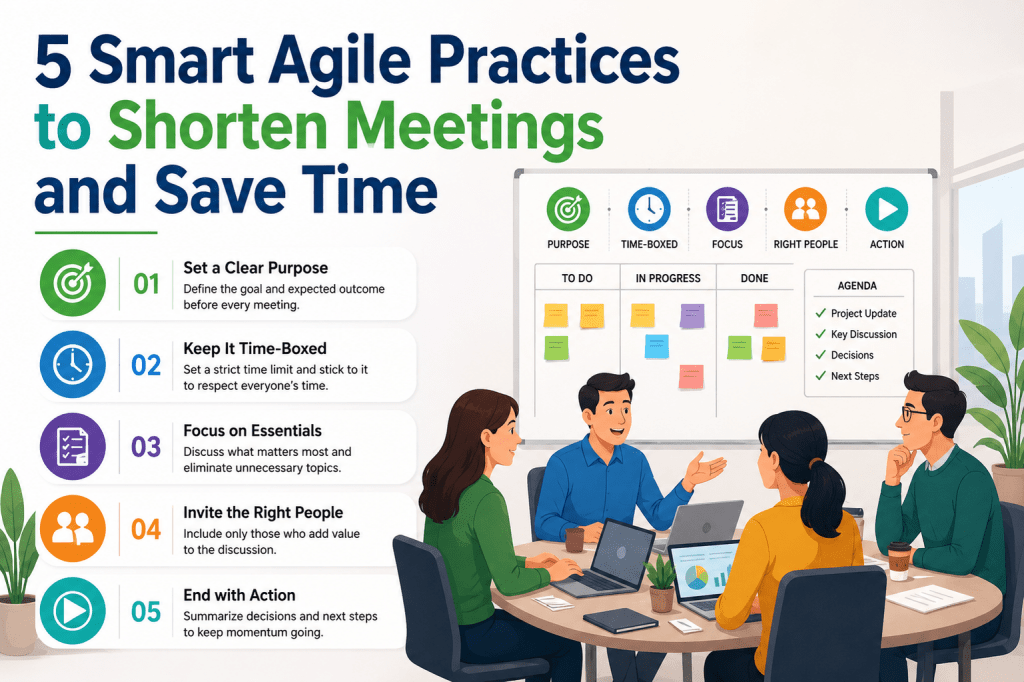
Agile has steadily transformed from a niche approach used primarily in software development into a widely adopted mindset that shapes how modern teams collaborate, solve problems, and deliver value. At its core, Agile is not just a process but a philosophy that prioritizes adaptability, clarity, and continuous improvement. It encourages teams to respond to change rather than rigidly follow plans, making it especially effective in fast-paced and uncertain environments. One of the most critical aspects of this approach is communication, as Agile depends heavily on collaboration among team members and stakeholders. However, while communication is essential, it often manifests in the form of meetings that can easily become inefficient if not properly managed.
Meetings, when poorly structured, can drain time, reduce focus, and create frustration among participants. In many organizations, they become routine obligations rather than meaningful interactions. Agile challenges this norm by promoting purposeful, concise, and outcome-driven discussions. Instead of eliminating meetings altogether, Agile refines how they are conducted, ensuring that every interaction contributes to progress. By aligning meetings with Agile principles, teams can significantly reduce wasted time while increasing engagement and clarity.
Understanding how Agile reshapes meetings begins with recognizing that the framework does not emphasize meetings for their own sake. Rather, it values direct and effective communication. This communication often takes the form of short, structured interactions that keep everyone aligned without overwhelming them. Whether through daily check-ins, planning sessions, or quick problem-solving discussions, Agile ensures that communication remains focused and relevant. When teams embrace this mindset, meetings evolve from time-consuming rituals into powerful tools for coordination and decision-making.
Rethinking the Purpose of Meetings in Agile Environments
Traditional meetings often suffer from a lack of clear purpose. Participants may join without understanding why they are there or what is expected of them. This leads to disengagement, side conversations, and extended durations that add little value. Agile introduces a different perspective by treating meetings as intentional touchpoints rather than default activities. Each meeting is designed with a specific goal, whether it is sharing updates, identifying obstacles, or planning the next steps.
This shift in purpose requires a cultural change within teams. Instead of scheduling meetings out of habit, Agile encourages teams to question their necessity. If a meeting does not contribute to progress or clarity, it should be restructured or eliminated. This approach not only saves time but also fosters respect for everyone’s schedule. When meetings are meaningful, participants are more likely to be attentive, prepared, and engaged.
Another key aspect of Agile meetings is their focus on outcomes rather than discussions. Conversations are guided toward actionable insights rather than open-ended debates. This ensures that time is spent productively and that every meeting results in clear next steps. By maintaining this focus, teams can avoid the common pitfall of meetings that drift without direction. Over time, this disciplined approach creates a culture where communication is efficient, purposeful, and aligned with team objectives.
Encouraging Brevity Through Physical Engagement
One of the simplest yet most effective strategies for reducing meeting time is changing the physical dynamics of how meetings are conducted. Agile introduces the concept of standing meetings, particularly in the form of daily check-ins. The act of standing may seem trivial, but it has a profound impact on behavior. When participants are on their feet, they are naturally inclined to keep discussions brief and to the point. This physical discomfort discourages unnecessary elaboration and helps maintain focus.
Standing meetings also create a sense of energy and urgency. Unlike बैठing sessions, which can become passive and drawn out, standing interactions feel more dynamic and engaging. Participants are more alert and less likely to lose focus. This heightened awareness contributes to more efficient communication, as individuals are encouraged to express their thoughts clearly and concisely.
In addition to reducing duration, standing meetings promote punctuality. When meetings are short and structured, there is less tolerance for delays. Participants quickly learn that arriving late means missing important information, which can affect their ability to contribute effectively. This reinforces a culture of accountability and respect for shared time. Over time, teams develop a rhythm where meetings start and end as scheduled, further enhancing efficiency.
Structuring Conversations for Maximum Clarity
Another critical element of Agile meetings is the use of structured communication. Instead of allowing discussions to flow randomly, Agile encourages participants to follow a clear format. This structure ensures that all relevant information is covered without unnecessary repetition or digression. It also helps participants prepare in advance, knowing exactly what they need to share.
A common approach involves focusing on three key areas: progress, upcoming work, and obstacles. By organizing communication around these points, meetings become more predictable and easier to manage. Participants can quickly provide updates, identify challenges, and request support without deviating from the agenda. This not only saves time but also ensures that everyone remains aligned on priorities.
Structured conversations also reduce the likelihood of misunderstandings. When information is presented consistently, it becomes easier for team members to interpret and act upon it. This clarity is especially important in collaborative environments where multiple individuals are working on interconnected tasks. By maintaining a clear and consistent communication format, teams can minimize confusion and enhance coordination.
Furthermore, this approach empowers individuals to take ownership of their contributions. Each participant knows their role in the meeting and is responsible for delivering relevant updates. This sense of responsibility fosters engagement and accountability, as everyone understands the importance of their input. As a result, meetings become more balanced and inclusive, with each voice contributing to the overall progress.
Eliminating Irrelevance to Protect Focus
One of the most common reasons meetings become inefficient is the inclusion of irrelevant discussions. When topics do not concern all participants, attention begins to drift, and valuable time is wasted. Agile addresses this issue by emphasizing the importance of relevance. Meetings are designed to include only those discussions that are applicable to the entire group. When a topic requires deeper exploration among a smaller subset of participants, it is addressed separately.
This approach ensures that group meetings remain focused and efficient. Participants are not burdened with information that does not pertain to their work, allowing them to stay engaged throughout the session. It also prevents meetings from becoming overly long, as discussions are limited to what is necessary for collective understanding.
Separating detailed discussions into smaller follow-up sessions has additional benefits. It allows for more targeted problem-solving, as only the relevant individuals are involved. This leads to more effective outcomes, as participants can dive deeper into the issue without the constraints of a larger group setting. At the same time, it preserves the efficiency of the main meeting, ensuring that it remains concise and purposeful.
By prioritizing relevance, Agile creates a more respectful and productive meeting culture. Participants feel that their time is valued, and they are more likely to contribute actively. This not only improves the quality of discussions but also strengthens team collaboration.
Creating Accountability Through Participation Techniques
Agile meetings often incorporate simple techniques to ensure that everyone remains engaged and accountable. One such method involves using a physical or symbolic object to designate the speaker. While it may seem unconventional, this approach introduces a clear structure to the conversation. Only the person holding the object speaks, which prevents interruptions and encourages active listening.
This technique also helps participants stay focused on their contributions. Knowing that they will have a turn to speak encourages them to prepare their updates in advance. It reduces the likelihood of rambling, as individuals aim to communicate their points efficiently. As a result, meetings become more organized and less prone to unnecessary delays.
In some cases, teams introduce an element of unpredictability by selecting speakers at random. This keeps everyone attentive, as they cannot anticipate when they will be called upon. It also reinforces the importance of being prepared at all times. This sense of readiness contributes to more dynamic and engaging meetings, where participants are actively involved rather than passively उपस्थित.
These participation techniques highlight the importance of intentional design in Agile meetings. By incorporating simple yet effective methods, teams can create an environment that encourages clarity, engagement, and accountability. Over time, these practices become ingrained in the team’s culture, leading to consistently efficient interactions.
Leveraging Visual Tools to Enhance Communication
Visual representation plays a significant role in Agile practices, particularly when it comes to managing tasks and tracking progress. Instead of relying solely on verbal updates or written reports, Agile teams often use visual boards to display the status of their work. These boards provide a clear and immediate overview of what has been completed, what is in progress, and what remains to be done.
Conducting meetings around these visual tools adds a new dimension to communication. Participants can reference the board directly, making discussions more concrete and focused. This eliminates the need for lengthy explanations, as the visual representation conveys information quickly and effectively. It also ensures that everyone has a shared understanding of the project’s status.
Visual tools also facilitate collaboration by highlighting dependencies and potential bottlenecks. When issues are visible to the entire team, they can be addressed more quickly and collectively. This proactive approach reduces delays and improves overall efficiency. Meetings become opportunities to align on solutions rather than simply identify problems.
In addition to improving clarity, visual tools help reduce the administrative burden associated with meetings. There is less need for extensive documentation or follow-up emails, as the board serves as a central source of truth. This streamlines communication and allows teams to focus on execution rather than record-keeping.
By integrating visual elements into meetings, Agile enhances both efficiency and effectiveness. Participants can quickly grasp the current state of work, contribute meaningful insights, and move forward with confidence. This alignment is essential for maintaining momentum and achieving desired outcomes.
Breaking Work into Manageable Intervals
Complex projects often lead to lengthy and unfocused meetings, as teams محاولة to address every detail at once. Agile addresses this challenge by breaking work into smaller, manageable segments known as iterations. These intervals provide a clear framework for planning, execution, and review, allowing teams to focus on achievable goals within a defined timeframe.
This approach has a direct impact on meetings. Instead of discussing the entire project in one جلسه, teams concentrate on the tasks مرتبط with the current iteration. This keeps conversations relevant and prevents them from becoming overwhelming. Participants can dedicate their attention to immediate priorities, leading to more productive discussions.
Timeboxing is another important aspect of this strategy. Each iteration is assigned a specific duration, which creates a sense of urgency and discipline. Meetings associated with these intervals are also time-bound, ensuring that they remain concise and focused. This structure helps teams avoid the common pitfall of overanalyzing or overplanning.
By working within defined intervals, teams can continuously evaluate their progress and adjust their approach as needed. This iterative process reduces the need for lengthy planning sessions, as decisions are made incrementally. Meetings become opportunities for alignment and adaptation rather than exhaustive planning exercises.
This method also encourages a mindset of continuous improvement. After each interval, teams reflect on what worked well and what can be improved. These insights inform future iterations, leading to more efficient processes over time. Meetings play a crucial role in this cycle, providing a platform for feedback and learning.
Building a Culture of Respect for Time
At the heart of Agile meeting strategies is a deep respect for time. Every participant’s time is considered valuable, and meetings are designed to honor that principle. This respect is reflected in the emphasis on punctuality, relevance, and brevity. When teams adopt this mindset, meetings become more than just scheduled events; they become intentional interactions that contribute to progress.
Respect for time also fosters trust within the team. When meetings are consistently efficient, participants feel confident that their حضور is worthwhile. This encourages greater engagement and collaboration, as individuals are more willing to invest their energy in meaningful discussions. Over time, this trust strengthens team dynamics and enhances overall performance.
Creating this culture requires commitment from all اعضا. It involves setting clear expectations, adhering to agreed-upon practices, and continuously refining the approach. Leaders play a key role in modeling these behaviors, ensuring that meetings remain aligned with Agile principles. By prioritizing efficiency and respect, teams can transform their meeting culture into a powerful driver of success.
Strengthening Focus Through Intentional Meeting Design
As teams continue to adopt Agile practices, one of the most noticeable improvements comes from the way meetings are intentionally designed rather than casually conducted. In many workplaces, meetings are scheduled without a clear structure, leading to scattered conversations and extended durations. Agile challenges this habit by emphasizing that every meeting should be carefully crafted to serve a specific purpose. This involves defining clear objectives, limiting the scope of discussion, and ensuring that all participants understand their roles within the interaction.
Intentional meeting design begins before the meeting even starts. Participants are expected to come prepared with relevant updates, questions, or insights. This preparation eliminates the need for on-the-spot thinking, which often slows down discussions and leads to unnecessary tangents. When everyone arrives ready to contribute, the meeting flows more smoothly and achieves its goals more efficiently.
Another important aspect of intentional design is setting expectations for behavior during the meeting. Participants are encouraged to stay focused, avoid interruptions, and respect time limits. This creates a disciplined environment where conversations remain productive and aligned with the agenda. Over time, these practices become second nature, reducing the need for constant reminders and enabling teams to operate more effectively.
By designing meetings with intention, Agile teams can transform them into streamlined interactions that deliver value without consuming excessive time. This approach not only improves efficiency but also enhances the overall experience for participants, making meetings something they actively engage in rather than endure.
Encouraging Active Participation Without Overcrowding Discussions
One of the challenges in traditional meetings is balancing participation. Some individuals dominate the conversation, while others remain silent, leading to an imbalance that affects the quality of outcomes. Agile addresses this issue by creating an environment where everyone has the opportunity to contribute without overwhelming the discussion. This balance is achieved through structured communication and clear guidelines on participation.
Encouraging active participation starts with creating a safe and inclusive environment. Team members should feel comfortable sharing their thoughts without fear of judgment or interruption. This openness fosters collaboration and ensures that diverse perspectives are considered. However, participation must also be controlled to prevent discussions from becoming chaotic or overly lengthy.
Agile meetings often incorporate time limits for individual contributions. This ensures that everyone has a chance to speak while keeping the overall meeting within its निर्धारित duration. Participants learn to communicate their ideas concisely, focusing on the most important points rather than elaborating unnecessarily. This skill not only improves meeting efficiency but also enhances overall communication within the team.
Another effective practice is rotating facilitation roles. By allowing different team members to guide the meeting, teams can maintain engagement and distribute responsibility. This approach also helps individuals develop leadership and communication skills, further strengthening the team’s capabilities.
Through balanced participation, Agile ensures that meetings remain dynamic and inclusive without becoming overwhelming. This equilibrium is essential for maintaining focus and achieving meaningful outcomes.
Reducing Cognitive Overload During Discussions
Meetings can become mentally exhausting when too much information is presented at once. Participants may struggle to process details, leading to confusion and reduced engagement. Agile addresses this challenge by simplifying communication and breaking down information into manageable segments. This approach reduces cognitive overload and allows participants to stay focused throughout the meeting.
One way to achieve this is by limiting the amount of information shared during each interaction. Instead of covering multiple complex topics in a single meeting, Agile encourages teams to focus on a few key मुद्दे. This targeted approach ensures that discussions remain clear and manageable, making it easier for participants to understand and respond.
Visual aids and structured updates also play a role in reducing cognitive strain. When information is presented in a consistent and organized manner, it becomes easier to absorb and interpret. Participants can quickly identify relevant details and contribute effectively without feeling overwhelmed.
Another important factor is pacing. Agile meetings are designed to move at a steady and controlled pace, allowing participants to process information without rushing. This balance between speed and clarity is crucial for maintaining engagement and ensuring that discussions lead to actionable outcomes.
By minimizing cognitive overload, Agile creates a more comfortable and productive meeting environment. Participants can focus on meaningful contributions rather than struggling to keep up with excessive information.
Aligning Meetings With Real-Time Progress
A key principle of Agile is maintaining alignment with the current state of work. Meetings are not isolated events but are closely tied to ongoing progress. This alignment ensures that discussions are relevant, timely, and directly connected to the team’s أهداف. By focusing on real-time updates, Agile meetings become more practical and less theoretical.
Real-time alignment requires accurate and up-to-date information. Teams rely on shared tools and systems to track progress, ensuring that everyone has access to the same data. During meetings, this information is used as a reference point for discussions, eliminating the need for lengthy explanations or clarifications.
This approach also enables quick decision-making. When participants have a clear understanding of the current स्थिति, they can identify issues and propose solutions more effectively. This reduces delays and keeps the team moving forward without unnecessary توقفات.
Another benefit of real-time alignment is improved accountability. Team members are more aware of their responsibilities and progress, which encourages them to stay on track. Meetings become opportunities to highlight achievements, address challenges, and plan next steps, all within the context of actual work being done.
By grounding meetings in real-time progress, Agile ensures that every interaction contributes directly to the team’s success. This practical focus enhances both efficiency and effectiveness.
Eliminating Redundancy in Communication
Redundancy is a common issue in meetings, حيث information is repeated multiple times without adding value. This not only wastes time but also leads to frustration among participants. Agile tackles this problem by streamlining communication and ensuring that each piece of information is shared only when necessary.
One way to reduce redundancy is by maintaining a single source of truth. Shared tools and visual boards provide a centralized location for updates, eliminating the need to repeat information خلال meetings. Participants can refer to these resources for details, allowing discussions to focus on insights and decisions rather than basic updates.
Another strategy is encouraging concise communication. Participants are trained to deliver their messages clearly and directly, avoiding unnecessary elaboration. This discipline helps keep meetings short and focused, as only relevant information is shared.
Agile also promotes asynchronous communication for non-critical updates. Instead of discussing every detail in a meeting, teams can share information through written updates or digital platforms. This reduces the need for frequent meetings and allows participants to review information at their own pace.
By eliminating redundancy, Agile creates a more efficient communication flow. Meetings become focused on value-added discussions, مما enhances productivity and reduces time wastage.
Building Momentum Through Consistent Meeting Rhythms
Consistency is a powerful عامل in improving meeting efficiency. Agile teams establish regular meeting rhythms that create predictability and structure. These rhythms help participants prepare in advance and develop a sense of routine, which reduces the time needed to organize and conduct meetings.
Regularly scheduled meetings, such as daily check-ins or periodic planning sessions, provide a steady cadence for communication. This consistency ensures that issues are addressed promptly and that progress is continuously monitored. Participants know when to expect these interactions, allowing them to plan their work accordingly.
Consistent rhythms also reduce the need for ad-hoc meetings. When teams have reliable opportunities to communicate, they are less likely to schedule additional جلسات to address minor issues. This helps prevent meeting overload and keeps the schedule manageable.
Another advantage of consistent rhythms is improved efficiency over time. As teams become familiar with the structure and expectations of each meeting, they can conduct them more quickly and effectively. This learning curve leads to continuous improvement, as teams refine their approach based on experience.
By establishing consistent meeting rhythms, Agile creates a stable framework for communication. This stability enhances efficiency and ensures that meetings remain aligned with the team’s workflow.
Fostering Transparency Across Teams
Transparency is a cornerstone of Agile practices, and it plays a crucial role in improving meeting efficiency. When information is openly shared, participants have a clear understanding of the team’s progress, challenges, and priorities. This openness reduces the need for lengthy explanations and allows meetings to focus on meaningful discussions.
Transparent communication starts with making information accessible to all team members. Shared tools, visual boards, and regular updates ensure that everyone is informed about the current state of work. This accessibility eliminates confusion and enables participants to contribute effectively during meetings.
Transparency also encourages accountability. When progress and challenges are visible, team members are more likely to take responsibility for their work. This sense of ownership leads to more proactive participation and reduces the need for constant supervision.
In meetings, transparency fosters trust and collaboration. Participants feel confident sharing their ideas and concerns, knowing that they are part of an open and supportive environment. This trust enhances the quality of discussions and leads to better تصمیمات.
By fostering transparency, Agile creates a culture where communication is clear, honest, and efficient. Meetings become opportunities for alignment and collaboration rather than مجرد information exchange.
Adapting Meeting Practices to Team Needs
Agile is inherently flexible, allowing teams to adapt their practices based on their unique requirements. This adaptability extends to meetings, which can be customized to suit the team’s size, structure, and goals. Instead of following a rigid format, teams are encouraged to experiment and refine their approach to achieve the best results.
Adapting meeting practices involves नियमित evaluation and feedback. Teams reflect on their meeting effectiveness and identify areas for improvement. This continuous refinement ensures that meetings remain relevant and efficient as the team evolves.
Customization can take many forms, such as adjusting the frequency, duration, or format of meetings. For example, a team may decide to shorten their daily check-ins or combine certain جلسات to reduce redundancy. These adjustments are based on practical experience and are aimed at optimizing efficiency.
Another important aspect of adaptation is considering the needs of remote or distributed teams. Agile practices can be modified to accommodate virtual communication, ensuring that meetings remain effective regardless of location. This flexibility is essential in modern work environments, where teams are often geographically dispersed.
By adapting meeting practices, Agile ensures that communication remains aligned with the team’s needs. This responsiveness enhances efficiency and allows teams to continuously improve their approach to meetings.
Driving Efficiency Through Clear Decision-Making Frameworks
One of the most significant contributors to prolonged meetings is unclear decision-making. When teams enter discussions without a defined process for reaching conclusions, conversations tend to circle around the same points without resolution. Agile addresses this issue by encouraging structured decision-making frameworks that guide discussions toward actionable outcomes. Instead of debating endlessly, teams focus on identifying options, evaluating them quickly, and agreeing on the next step.
Clarity in decision-making begins with defining who is responsible for making the final call. Not every decision requires consensus from the entire group. In many cases, assigning ownership to a specific individual or a small subset of the team can dramatically reduce the time spent in discussion. This approach ensures that meetings remain focused and that decisions are made efficiently without unnecessary delays.
Agile also promotes the idea of making decisions based on current knowledge rather than waiting for perfect information. This mindset encourages progress over hesitation. Teams understand that decisions can be revisited and refined as new information becomes available. This reduces the pressure to get everything right in one meeting and prevents discussions from becoming overly detailed or time-consuming.
By implementing clear decision-making frameworks, meetings become more purposeful and outcome-driven. Participants leave with a clear understanding of what has been decided and what actions need to be taken, eliminating ambiguity and reducing the need for follow-up meetings.
Minimizing Interruptions to Maintain Flow
Interruptions are a common challenge in meetings, often disrupting the flow of conversation and extending the duration unnecessarily. Agile emphasizes the importance of maintaining a smooth and uninterrupted flow of communication. This is achieved by establishing simple rules that encourage participants to listen actively and wait for their turn to speak.
When interruptions are minimized, conversations become more coherent and easier to follow. Participants can fully express their thoughts without being cut off, leading to clearer communication and fewer misunderstandings. This also reduces the need for repetition, as ideas are conveyed more effectively the first time.
Agile meetings often incorporate facilitation techniques to manage interruptions. A designated facilitator or team member ensures that discussions stay on track and that everyone has an opportunity to contribute. This role is not about controlling the conversation but about guiding it in a way that maintains focus and efficiency.
Another important aspect is encouraging participants to capture their thoughts without तुरंत voicing them. This can be done through note-taking or using shared tools. By holding onto ideas until the appropriate moment, participants can avoid derailing the conversation while still ensuring that their input is considered.
Maintaining flow is essential for keeping meetings concise and productive. When interruptions are controlled, discussions progress naturally, and meetings are more likely to stay within their intended timeframe.
Encouraging Outcome-Oriented Conversations
Many meetings fail to deliver value because they focus on discussion rather than outcomes. Agile shifts this perspective by emphasizing that every conversation should lead to a tangible result. Whether it is a decision, an action item, or a clarified understanding, meetings should always produce something meaningful.
Outcome-oriented conversations require a clear understanding of the meeting’s objective. Participants should know what they are trying to achieve and tailor their contributions accordingly. This focus prevents discussions from drifting into unrelated topics and ensures that time is spent productively.
Agile also encourages teams to define success criteria for their meetings. This involves identifying what a successful meeting looks like and working toward that लक्ष्य. By keeping this الهدف in mind, participants can stay aligned and avoid unnecessary detours.
Another key element is documenting outcomes in a concise manner. Instead of lengthy meeting notes, Agile promotes capturing only the essential points, such as decisions made and actions assigned. This streamlined documentation reduces administrative effort and makes it easier for participants to follow up on their responsibilities.
By prioritizing outcomes over discussions, Agile transforms meetings into effective tools for progress. Participants leave with a sense of accomplishment and clarity, which reinforces the value of the meeting and encourages continued engagement.
Improving Time Awareness Among Participants
Time awareness is a critical factor in reducing meeting duration. In many cases, participants lose track of time, leading to extended discussions and delayed schedules. Agile addresses this issue by fostering a strong sense of time consciousness among team members.
One way to improve time awareness is by setting clear time limits for each meeting and its individual segments. These limits act as boundaries that guide the pace of discussion. Participants become more mindful of how much time they have and adjust their communication accordingly.
Agile teams often use visible timers or cues to reinforce time constraints. This creates a shared understanding of the meeting’s progress and helps participants stay on track. When time is visibly managed, it becomes easier to identify when discussions need to be wrapped up or postponed.
Another important aspect is encouraging participants to respect time boundaries. This involves starting meetings on time, ending them as scheduled, and avoiding unnecessary extensions. When teams consistently adhere to these practices, they develop a culture of punctuality and efficiency.
Improved time awareness also extends to preparation. Participants who are conscious of time are more likely to come prepared, reducing the need for lengthy explanations during the meeting. This preparation contributes to smoother and more efficient interactions.
By cultivating time awareness, Agile ensures that meetings remain concise and focused. This discipline not only saves time but also enhances the overall productivity of the team.
Enhancing Collaboration Through Focused Interactions
Collaboration is at the heart of Agile, but it must be managed carefully to avoid inefficiency. Meetings that involve too many voices or unstructured collaboration can quickly become overwhelming. Agile addresses this challenge by promoting focused interactions that balance collaboration with efficiency.
Focused interactions involve limiting discussions to relevant participants and topics. Instead of involving the entire team in every conversation, Agile encourages smaller समूह to handle specific issues. This targeted approach ensures that discussions remain relevant and productive.
Within meetings, collaboration is guided by clear objectives and structured communication. Participants are encouraged to build on each other’s ideas without deviating from the main topic. This creates a sense of shared purpose and keeps discussions aligned with the meeting’s goals.
Agile also emphasizes the importance of listening as a key component of collaboration. Effective collaboration is not just about sharing ideas but also about understanding others’ perspectives. By fostering active listening, teams can reduce misunderstandings and arrive at better solutions अधिक quickly.
Another important factor is maintaining a balance between collaboration and निर्णय-making. While input from multiple participants is valuable, it should not delay progress. Agile ensures that collaboration supports decision-making rather than hindering it.
Through focused interactions, Agile enhances collaboration while maintaining efficiency. Meetings become spaces where ideas are exchanged productively, leading to better outcomes without unnecessary delays.
Reducing Dependency on Lengthy Explanations
Lengthy explanations are a common السبب behind extended meetings. When participants spend too much time detailing information, discussions lose momentum and become less engaging. Agile addresses this issue by encouraging concise and clear communication.
Participants are trained to convey their ideas in a structured and straightforward manner. This involves focusing on key points and avoiding unnecessary التفاصيل. By doing so, they can communicate effectively without consuming excessive time.
Agile also promotes the use of shared context to reduce the need for explanations. When team members have access to the same information and understand the project’s goals, they can communicate more efficiently. This shared understanding eliminates the need to repeatedly explain basic concepts.
Another strategy is using pre-meeting preparation to handle complex explanations. Instead of presenting detailed information during the meeting, participants can share it in advance. This allows others to review the material at their own pace, freeing up meeting time for discussion and decision-making.
By reducing dependency on lengthy explanations, Agile ensures that meetings remain focused and engaging. Participants can quickly exchange information and move forward with their work, improving overall efficiency.
Strengthening Accountability for Action Items
A meeting’s effectiveness is often determined by what happens after it ends. Without clear accountability, discussions may not translate into action, leading to repeated meetings on the same topics. Agile addresses this challenge by emphasizing accountability for action items.
Each meeting should result in clearly defined tasks assigned to specific individuals. These assignments should include a description of the task, the responsible person, and the expected timeline. This clarity ensures that everyone understands their responsibilities and can take appropriate action.
Agile also encourages tracking progress on action items. This can be done through shared tools or visual boards that provide visibility into ongoing work. By monitoring progress, teams can ensure that tasks are completed and that meetings lead to tangible results.
Accountability is further reinforced through regular follow-ups. In subsequent meetings, participants provide updates on their assigned tasks, creating a sense of responsibility and continuity. This practice ensures that work progresses consistently and that issues are addressed promptly.
By strengthening accountability, Agile transforms meetings into catalysts for action. Discussions are not مجرد exchanges of ideas but are directly linked to measurable outcomes, enhancing the overall effectiveness of the team.
Creating a Sustainable Meeting Culture
Sustainability in meeting practices is essential for long-term efficiency. Agile recognizes that improving meetings is not a one-time effort but an ongoing process. Teams must continuously evaluate and refine their approach to ensure that meetings remain effective and aligned with their needs.
Creating a sustainable meeting culture involves नियमित reflection and adaptation. Teams should periodically assess their meeting practices, identifying what works well and what can be improved. This feedback loop allows for continuous enhancement and prevents stagnation.
Another important aspect is maintaining consistency in applying Agile principles. Practices such as structured communication, timeboxing, and focused discussions should be consistently followed to achieve lasting results. Inconsistency can lead to confusion and reduce the effectiveness of meetings.
Leadership also plays a crucial role in sustaining meeting culture. Leaders should model efficient meeting behavior and دعم team members in adopting Agile practices. By setting the right example, they can influence the entire team and ensure that improvements are maintained over time.
Finally, sustainability requires a balance between discipline and flexibility. While it is important to adhere to established practices, teams should also be open to change. As projects and environments evolve, meeting practices should be adjusted accordingly to remain effective.
By creating a sustainable meeting culture, Agile ensures that improvements in efficiency are not temporary but become an integral part of the team’s workflow. This long-term perspective is key to maximizing the benefits of Agile practices.
Maintaining Momentum With Continuous Improvement
Agile practices are built on the idea that improvement never truly stops, and this principle applies directly to how meetings are conducted. Even when teams begin to see positive results from shorter and more focused meetings, there is always room to refine and enhance the process. Continuous improvement ensures that meetings evolve alongside the team’s needs, preventing them from slipping back into inefficiency.
One of the most effective ways to sustain improvement is through regular reflection. Teams can take a few moments to evaluate how their meetings are performing, identifying what is working well and what could be adjusted. This reflection does not need to be lengthy or formal; even brief discussions can uncover valuable insights. By consistently reviewing their approach, teams can make small, incremental changes that lead to significant long-term gains.
Feedback from participants plays a crucial role in this process. Each team member experiences meetings differently, and their perspectives can highlight areas that might otherwise go unnoticed. Encouraging open and honest feedback creates a culture where improvement is الجميع’s responsibility. When individuals feel heard, they are more likely to stay engaged and contribute to refining the process.
Another important aspect of continuous improvement is experimentation. Agile encourages teams to try new approaches, whether it is adjusting the meeting format, changing the frequency, or introducing new facilitation techniques. Not every experiment will succeed, but each one provides valuable learning. Over time, these experiments help teams discover the methods that work best for their unique environment.
By embracing continuous improvement, teams can ensure that their meetings remain efficient, relevant, and aligned with their goals. This adaptability is essential for maintaining momentum and achieving consistent progress.
Balancing Structure With Flexibility
While structure is essential for keeping meetings efficient, too much rigidity can limit creativity and responsiveness. Agile strikes a balance by providing a framework that guides meetings while allowing flexibility for adaptation. This balance ensures that meetings remain both productive and responsive to changing circumstances.
Structure provides the foundation for efficiency. Clear agendas, defined roles, and time limits create a predictable environment where participants know what to expect. This predictability reduces confusion and helps meetings run smoothly. However, Agile recognizes that not every situation can be anticipated, and flexibility is necessary to address unexpected challenges.
Flexibility allows teams to adjust their approach when needed. For example, if a critical issue arises, a meeting may need to deviate slightly from its original plan to address it effectively. Agile encourages teams to make these adjustments without losing sight of their overall objectives. The key is to remain focused on outcomes while adapting the process as required.
This balance also extends to the level of detail discussed in meetings. While structure helps keep conversations concise, flexibility يسمح teams to explore important topics in greater depth when necessary. By finding the right balance, teams can ensure that meetings are both efficient and meaningful.
Ultimately, combining structure with flexibility enables teams to handle a wide range of situations without compromising efficiency. This adaptability is a defining characteristic of Agile and a key factor in reducing unnecessary meeting time.
Conclusion
Agile strategies offer a powerful approach to transforming meetings from time-consuming obligations into focused, value-driven interactions. By emphasizing clarity, relevance, and efficiency, these practices help teams communicate more effectively while respecting everyone’s time. Techniques such as structured communication, standing meetings, visual tools, and iterative planning all contribute to creating shorter and more productive discussions.
At the heart of these strategies is a shift in mindset. Meetings are no longer seen as routine events but as purposeful opportunities to align, decide, and move forward. This perspective encourages teams to be intentional in how they communicate, ensuring that every interaction has a clear goal and delivers meaningful outcomes.
As teams continue to apply Agile principles, they develop a culture of accountability, transparency, and continuous improvement. Meetings become more engaging, collaboration becomes more focused, and progress becomes more consistent. Over time, this transformation leads to a more efficient and productive work environment where time is used wisely and effectively.
By adopting these Agile strategies, any team can significantly reduce meeting time while enhancing the quality of their communication. The result is not just fewer meetings, but better meetings that truly support success and growth.