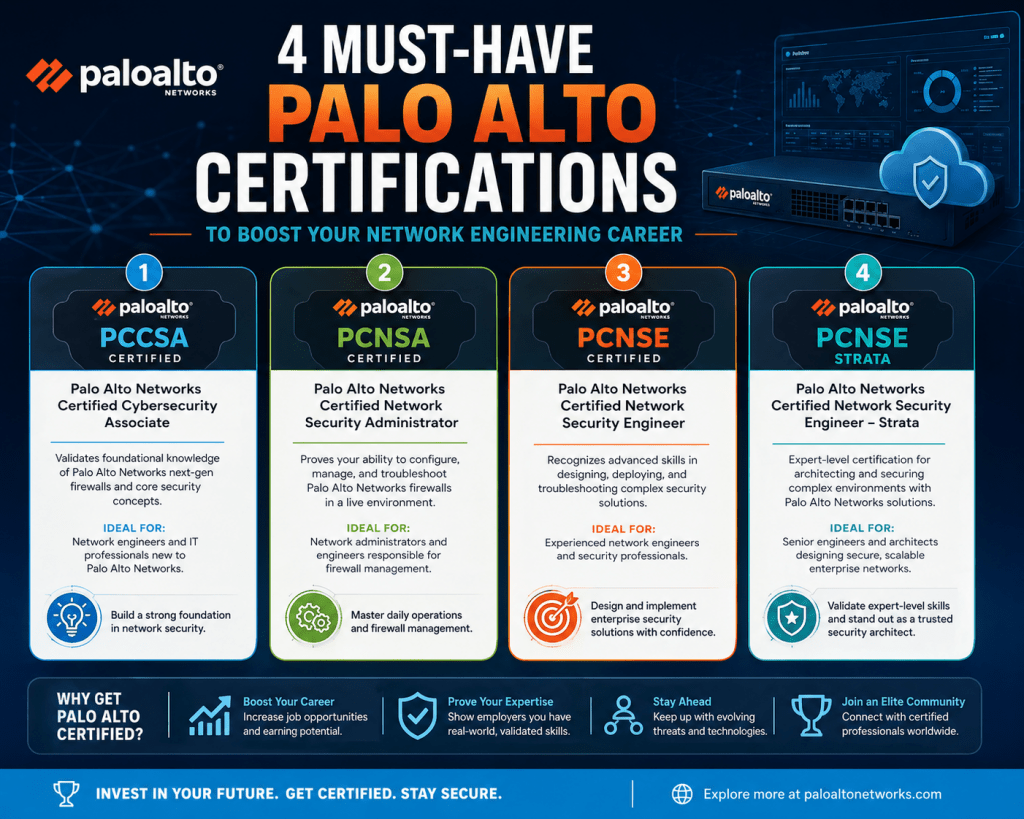
The evolution of enterprise networking has been closely tied to the advancement of cybersecurity solutions. As organizations expand their digital footprint, the need for robust, scalable, and intelligent security systems has intensified. Traditional perimeter-based defenses are no longer sufficient in a world dominated by cloud computing, hybrid infrastructures, and distributed workforces. This shift has created a fertile ground for next-generation security vendors to redefine how networks are protected.
Palo Alto Technologies has emerged as a dominant force in this transformation. Unlike legacy vendors that initially built their reputation on routing and switching, Palo Alto positioned itself as a security-first organization. This strategic focus allowed it to innovate rapidly in areas such as application-aware firewalls, threat intelligence, and cloud-native security platforms. As a result, it has become a critical component in enterprise security architectures.
Modern enterprise environments rarely rely on a single vendor. Instead, they operate within complex ecosystems where multiple technologies coexist. In such environments, Palo Alto solutions often integrate with infrastructures powered by other major networking vendors. This interoperability has further strengthened its position, making it a preferred choice for organizations seeking layered and adaptive security frameworks.
The increasing reliance on virtualization and cloud services has also influenced how security is implemented. Firewalls are no longer limited to physical appliances deployed at network edges. They now exist as virtual instances, container-based solutions, and cloud-delivered services. Palo Alto has effectively adapted to this paradigm by offering a comprehensive portfolio that spans hardware, software, and cloud environments. This adaptability ensures that organizations can maintain consistent security policies across diverse platforms.
As enterprises continue to prioritize cybersecurity, the demand for professionals skilled in advanced security technologies has grown significantly. Network engineers are no longer expected to focus solely on connectivity and performance. They must also understand threat detection, policy enforcement, and secure architecture design. This shift in expectations has made vendor-specific certifications increasingly valuable, particularly those aligned with leading security platforms.
Understanding the Structure of Palo Alto Certification Pathways
Certification programs play a crucial role in validating technical expertise and aligning professional skills with industry requirements. Palo Alto’s certification framework is designed to reflect real-world roles within cybersecurity operations. Rather than enforcing strict prerequisites, the program allows individuals to pursue certifications based on their current knowledge and career objectives.
The certification hierarchy begins with foundational knowledge and progresses toward specialized and advanced competencies. Each certification is mapped to a specific role, ensuring that candidates develop skills relevant to their responsibilities. This role-based approach distinguishes the program from traditional certification tracks that often emphasize linear progression.
At the entry level, the focus is on building a broad understanding of cybersecurity concepts. This includes familiarity with network fundamentals, threat landscapes, and basic security principles. As candidates move to higher levels, the emphasis shifts toward hands-on skills such as configuring firewalls, managing policies, and analyzing security events. Advanced certifications require a deeper understanding of system design, troubleshooting, and integration across multiple environments.
The absence of mandatory prerequisites provides flexibility, but it also places responsibility on candidates to assess their readiness. While it is technically possible to attempt advanced certifications without prior experience, practical exposure significantly enhances the likelihood of success. Employers also tend to value certifications more when they are supported by real-world experience.
Certification exams are designed to evaluate both theoretical knowledge and practical application. Candidates are tested on their ability to interpret scenarios, implement solutions, and troubleshoot issues. This ensures that certified professionals are not only knowledgeable but also capable of performing effectively in operational environments.
For network engineers, this certification structure offers a pathway to expand their expertise into cybersecurity. By aligning their existing networking knowledge with advanced security concepts, they can position themselves as versatile professionals capable of addressing modern enterprise challenges.
Why Network Engineers Are Transitioning Toward Security Certifications
The traditional role of a network engineer has undergone a significant transformation. In the past, responsibilities were primarily centered on ensuring connectivity, optimizing performance, and maintaining network infrastructure. However, the increasing frequency and sophistication of cyber threats have blurred the boundaries between networking and security.
Organizations now expect network engineers to play an active role in securing the infrastructure they manage. This includes implementing security policies, monitoring traffic for anomalies, and responding to potential threats. As a result, professionals who possess both networking and security expertise are highly sought after.
Palo Alto certifications provide a structured way for network engineers to acquire these additional skills. By focusing on real-world applications and practical scenarios, these certifications enable professionals to bridge the gap between networking and cybersecurity. This dual expertise is particularly valuable in environments where security solutions must be seamlessly integrated into existing network architectures.
Another factor driving this transition is the rise of cloud computing. As organizations migrate workloads to cloud platforms, the traditional network perimeter becomes less defined. Security must be enforced at multiple levels, including applications, users, and data. Network engineers who understand cloud security concepts are better equipped to design and manage these complex environments.
The integration of automation and orchestration tools has further expanded the scope of network engineering roles. Security operations now rely heavily on automated processes to detect and respond to threats. Professionals who can configure and manage these systems gain a competitive advantage in the job market.
From a career perspective, acquiring security certifications can lead to increased opportunities and higher earning potential. Employers value professionals who can contribute to multiple aspects of IT operations, and certifications serve as a tangible demonstration of expertise. For network engineers, investing in security certifications is not just a career enhancement strategy but a necessity in an evolving industry.
Entry-Level Certification and Its Role in Building Security Foundations
The entry-level certification within the Palo Alto framework is designed to introduce candidates to the fundamentals of cybersecurity. It serves as a starting point for individuals who may have limited experience in the field but are eager to develop their skills. For network engineers, this certification provides a structured introduction to security concepts that complement their existing knowledge.
At this level, candidates are exposed to the core principles of cybersecurity, including threat types, attack vectors, and defensive strategies. Understanding these concepts is essential for building a strong foundation in security. It also helps professionals develop a security-oriented mindset, which is critical for identifying and mitigating risks.
Networking fundamentals remain a key component of this certification. Candidates are expected to understand how different network devices function and how data flows within a network. This knowledge is essential for implementing effective security measures, as it allows professionals to identify potential vulnerabilities and points of compromise.
Cloud security is another important area covered at this level. As organizations increasingly adopt cloud-based solutions, understanding the associated risks and security challenges becomes essential. Candidates learn about different cloud service models and the unique considerations involved in securing each one.
Security operations concepts are also introduced, including monitoring, logging, and incident response. These elements form the backbone of any effective security strategy. By understanding how security operations function, candidates gain insight into how threats are detected and managed in real-world environments.
For network engineers, this entry-level certification acts as a bridge between traditional networking and advanced security roles. It provides the foundational knowledge needed to pursue more specialized certifications and take on greater responsibilities within an organization.
The Expanding Role of Security in Hybrid and Cloud Environments
The shift toward hybrid and cloud-based infrastructures has fundamentally changed how organizations approach network security. Traditional models that relied on clearly defined perimeters are no longer effective in environments where resources are distributed across multiple platforms. Security must now be integrated into every layer of the infrastructure.
Palo Alto Technologies has adapted to this shift by offering solutions that provide consistent security across on-premises and cloud environments. This includes the ability to enforce policies, monitor traffic, and detect threats regardless of where resources are located. For network engineers, understanding these capabilities is essential for managing modern infrastructures.
Hybrid environments present unique challenges, as they combine elements of both traditional and cloud-based systems. Ensuring seamless integration and consistent security across these environments requires a deep understanding of both networking and security principles. Certifications that focus on these areas provide valuable insights into how to address these challenges effectively.
Cloud environments introduce additional complexities, such as dynamic scaling and shared responsibility models. Security configurations must be adaptable and capable of responding to changing conditions. Network engineers who are familiar with cloud security practices are better equipped to manage these environments and ensure compliance with organizational policies.
The increasing use of automation in security operations has also influenced how networks are managed. Automated tools can analyze vast amounts of data and respond to threats in real time. Understanding how to configure and integrate these tools is an important skill for modern network engineers.
As the industry continues to evolve, the importance of security will only increase. Professionals who invest in developing their skills in this area will be better positioned to adapt to changing requirements and take on more advanced roles within their organizations.
Palo Alto Network Security Administrator Certification and Its Operational Scope
The network security administrator role represents a critical layer in enterprise cybersecurity operations, sitting between foundational awareness and advanced engineering responsibilities. In most organizations, this function is responsible for day-to-day enforcement of security policies, configuration of firewall systems, and ensuring that traffic flows align with organizational security standards. Within the Palo Alto ecosystem, this role is formalized through a certification that validates practical competency in managing next-generation firewall environments.
The certification is designed to reflect real operational tasks rather than abstract theoretical knowledge. It focuses heavily on how security policies are created, applied, and maintained within live network environments. A network security administrator is expected to understand how traffic inspection works, how application-level visibility is achieved, and how security rules influence packet flow across complex infrastructures.
In enterprise environments, firewalls are no longer simple packet filters. They function as intelligent systems capable of identifying applications, users, and content in real time. This shift requires administrators to understand how policy decisions are evaluated at multiple layers. The certification emphasizes this operational logic, ensuring that professionals can accurately predict how changes in configuration will impact network behavior.
A major component of this role involves managing firewall objects and configurations. This includes defining address objects, service objects, and application-based rules that control how traffic is permitted or denied. These elements form the building blocks of security policy design, and incorrect configuration can lead to significant security gaps or operational disruptions.
Another important area is centralized management. In modern enterprise networks, it is common to manage multiple firewalls across distributed environments. Centralized management systems allow administrators to maintain consistency in policy enforcement while reducing operational complexity. Understanding how to implement and maintain these systems is essential for ensuring scalability and compliance.
Security logging and monitoring also play a key role in administrative responsibilities. Administrators must be able to interpret logs generated by firewall systems to identify anomalies, detect potential threats, and support incident response activities. This requires not only technical knowledge but also analytical thinking, as raw log data must be translated into actionable insights.
Firewall Architecture and Policy Enforcement in Enterprise Networks
Modern next-generation firewalls operate on advanced processing architectures that differ significantly from traditional network security devices. Instead of evaluating traffic solely based on IP addresses and ports, these systems analyze applications, users, and content in real time. This enables more granular control and improves overall security posture.
The policy enforcement process is central to firewall operation. When traffic enters the system, it is evaluated against a predefined set of rules that determine whether it should be allowed, blocked, or inspected further. These rules are not static; they are dynamically applied based on context such as application type, user identity, and security posture.
Understanding how policies are evaluated is essential for network security administrators. Each rule must be carefully constructed to ensure that legitimate traffic is not disrupted while malicious activity is effectively blocked. This requires a deep understanding of traffic patterns and organizational requirements.
Network Address Translation plays an important role in policy enforcement as well. NAT rules determine how internal addresses are translated when communicating with external networks. Incorrect NAT configuration can lead to connectivity issues or exposure of internal resources. Administrators must ensure that NAT policies align with security requirements and network design principles.
Security profiles add another layer of protection by enabling inspection of traffic for malware, vulnerabilities, and data leaks. These profiles can be applied to security rules to ensure that all permitted traffic is inspected for potential threats. This layered approach enhances visibility and reduces the risk of undetected attacks.
The integration of application-based policies represents a significant advancement in firewall technology. Instead of relying solely on port-based rules, administrators can define policies based on specific applications. This allows for more precise control and reduces the risk of shadow IT or unauthorized application usage within the network.
Operational Responsibilities of Network Security Administrators
The daily responsibilities of a network security administrator extend beyond configuration tasks. These professionals are actively involved in maintaining the health and security of enterprise networks. This includes monitoring system performance, responding to security alerts, and ensuring that policies remain aligned with organizational objectives.
One of the key operational tasks is maintaining firewall configurations. This involves regularly reviewing and updating policies to reflect changes in business requirements or threat landscapes. As organizations evolve, their security needs also change, requiring continuous adjustments to firewall rules and configurations.
Troubleshooting is another critical responsibility. Network issues can arise from a variety of sources, including misconfigured policies, hardware failures, or external threats. Administrators must be able to quickly identify the root cause of issues and implement effective solutions to restore normal operations.
Security event analysis is also a major part of the role. Administrators must review logs and alerts generated by firewall systems to identify potential security incidents. This requires familiarity with common attack patterns, as well as the ability to distinguish between false positives and genuine threats.
In many environments, administrators also support compliance efforts. Organizations are often required to adhere to regulatory standards that mandate specific security controls and reporting practices. Firewall configurations and logs play a key role in demonstrating compliance with these requirements.
Collaboration is another important aspect of the role. Network security administrators often work closely with network engineers, system administrators, and security analysts to ensure that security policies are properly integrated into broader IT operations. This cross-functional collaboration is essential for maintaining a cohesive security strategy.
Advanced Firewall Management and Centralized Control Systems
As enterprise networks scale, managing individual firewalls becomes impractical. Centralized management systems provide a solution by allowing administrators to control multiple devices from a single interface. This approach improves efficiency and ensures consistent policy enforcement across the entire network infrastructure.
Centralized management enables administrators to deploy configuration changes simultaneously across multiple devices. This reduces the risk of inconsistencies and ensures that security policies are uniformly applied. It also simplifies auditing and reporting, as all configuration data is stored in a centralized location.
Another advantage of centralized systems is improved visibility. Administrators can monitor traffic and security events across the entire network from a single dashboard. This holistic view allows for faster detection of anomalies and more effective incident response.
High availability configurations are also an important consideration in enterprise environments. Firewalls must be designed to ensure continuous operation even in the event of hardware or software failures. Administrators must understand how to configure redundancy mechanisms that maintain service availability without compromising security.
Load balancing and failover mechanisms are often integrated into firewall architectures to ensure resilience. These systems automatically redirect traffic in the event of a failure, minimizing downtime and maintaining network performance.
Advanced management also includes integration with external security systems. Firewalls often work in conjunction with intrusion detection systems, security information and event management platforms, and threat intelligence services. Administrators must understand how these systems interact to create a unified security ecosystem.
Transitioning from Administration to Engineering-Level Expertise
While the network security administrator role focuses on operational management, it also serves as a stepping stone toward more advanced engineering positions. Professionals who gain experience in this role develop a strong understanding of firewall behavior, policy design, and network security principles.
This foundational knowledge is essential for transitioning into engineering-level responsibilities, where the focus shifts from configuration to design and architecture. Engineers are expected to build scalable, resilient, and secure network infrastructures that support organizational objectives.
Experience with firewall administration provides valuable insight into how security policies function in real-world environments. This knowledge is critical when designing new systems or optimizing existing architectures. Engineers must anticipate how configurations will behave under different conditions and ensure that security controls remain effective at scale.
The transition from administration to engineering also involves a shift in mindset. Administrators focus on maintaining and supporting existing systems, while engineers focus on innovation and design. This requires a broader understanding of network architecture, security frameworks, and emerging technologies.
Professionals who successfully make this transition often find themselves working on more complex projects involving cloud integration, automation, and advanced threat detection. These roles require a combination of technical expertise and strategic thinking, making them highly valued in the industry.
Palo Alto Network Security Engineer Certification and Advanced Firewall Expertise
The network security engineer role represents the most technically demanding tier within enterprise firewall operations. It is centered on designing, deploying, optimizing, and troubleshooting complex security infrastructures rather than simply administering existing configurations. Within the Palo Alto ecosystem, this capability is validated through an advanced certification that reflects deep operational and architectural understanding of next-generation firewall environments.
At this level, professionals are expected to move beyond routine configuration tasks and instead focus on system behavior under real-world enterprise conditions. This includes understanding how traffic flows through multiple inspection engines, how security services interact with routing decisions, and how policy design influences overall network performance. The emphasis is on precision engineering rather than basic administration.
A core component of this expertise is firewall architecture. Next-generation firewalls are built on multi-stage processing pipelines that inspect traffic based on application, user identity, and content. Engineers must understand how these processing stages interact, as inefficiencies or misconfigurations can lead to latency, dropped sessions, or security blind spots.
Deployment strategies are also critical. In enterprise environments, firewalls are rarely deployed in isolation. They are typically integrated into multi-tier architectures that include branch offices, data centers, cloud platforms, and remote users. Engineers must design deployment models that ensure consistent security enforcement across all environments while maintaining scalability and resilience.
High availability design is another essential responsibility. Engineers must implement redundancy mechanisms that ensure uninterrupted service during hardware failures or software disruptions. This includes active-passive and active-active configurations, session synchronization, and failover optimization. Proper design in this area directly impacts business continuity and service reliability.
Deep Dive into Policy Design, Threat Prevention, and Traffic Analysis
At the engineering level, security policy design becomes significantly more complex. Policies must account for application behavior, user roles, network segmentation, and business requirements. Unlike administrative roles, where policies are applied and maintained, engineers are responsible for designing policy frameworks that scale across entire enterprise ecosystems.
Application-based control is a defining feature of modern firewall systems. Engineers must understand how applications are identified, classified, and controlled at runtime. This requires knowledge of deep packet inspection techniques and how encrypted traffic is handled through decryption policies. Misconfiguration in this area can result in either security exposure or operational disruption.
Threat prevention mechanisms form another critical layer of responsibility. Engineers must configure systems to detect and block malware, exploits, and advanced persistent threats. This involves tuning security profiles to balance detection sensitivity with performance efficiency. Overly aggressive settings can generate false positives, while overly permissive configurations can allow threats to bypass defenses.
Traffic analysis is essential for both design and troubleshooting. Engineers must interpret detailed logs to understand how traffic moves through the network and how security policies are applied in real time. This includes analyzing session data, application behavior, and anomaly patterns. The ability to correlate events across multiple logs is a key engineering skill.
Network Address Translation design also becomes more advanced at this level. Engineers must ensure that NAT policies align with routing architecture and security segmentation. In large environments, improper NAT design can lead to asymmetric routing, connectivity failures, or security bypass conditions.
Decryption strategies are another advanced topic. With increasing adoption of encrypted traffic, engineers must decide when and how to decrypt traffic for inspection. This requires careful consideration of privacy requirements, performance impact, and regulatory constraints. Proper implementation ensures visibility without compromising system efficiency.
Prisma Cloud and Cloud Security Engineering in Modern Enterprises
As organizations continue migrating workloads to cloud environments, security engineering has expanded beyond traditional network boundaries. Cloud-native architectures require a fundamentally different approach to security, where resources are dynamic, distributed, and often ephemeral. This shift has elevated the importance of cloud security engineering roles.
Cloud security platforms are designed to provide unified visibility and protection across multi-cloud environments. These platforms integrate with infrastructure services to monitor workloads, enforce compliance, and detect misconfigurations. Engineers working in this domain must understand both cloud architecture and security principles.
A key responsibility in cloud security engineering is workload protection. This involves securing virtual machines, containers, and serverless functions against vulnerabilities and misconfigurations. Engineers must implement policies that continuously monitor workloads and enforce compliance with organizational standards.
Container security is particularly important in modern DevOps-driven environments. Applications are increasingly deployed using container orchestration systems, which introduce new security challenges. Engineers must ensure that container images are scanned for vulnerabilities and that runtime environments are protected from unauthorized access or malicious behavior.
Infrastructure as code has also transformed how cloud environments are managed. Security policies are now embedded directly into deployment pipelines. Engineers must configure automated scanning systems that evaluate infrastructure templates before deployment. This ensures that security issues are identified early in the development lifecycle.
Application security in cloud environments extends to web applications and APIs. Engineers must define policies that protect applications from common attack vectors such as injection attacks, cross-site scripting, and API abuse. This requires da eep understanding of application behavior and traffic patterns.
Identity and access management is another critical component of cloud security engineering. Engineers must ensure that access to cloud resources is properly controlled through role-based access policies. This reduces the risk of unauthorized access and ensures compliance with organizational governance requirements.
Security Automation, DevSecOps Integration, and Orchestration Models
Modern enterprise security environments increasingly rely on automation to manage scale and complexity. Manual configuration and monitoring are no longer sufficient in environments where thousands of events occur every second. Security engineers must therefore understand how to design and implement automated security workflows.
Security orchestration involves integrating multiple security tools into a unified response system. This allows organizations to respond to threats more efficiently by automating detection, analysis, and remediation processes. Engineers must configure these workflows to ensure accurate and timely responses to security incidents.
DevSecOps integration represents another major evolution in security engineering. Instead of treating security as a separate function, it is embedded directly into development and deployment pipelines. Engineers must ensure that security checks are automatically executed during code development, testing, and deployment phases.
Continuous integration and continuous deployment pipelines are now standard in many organizations. Security engineers must configure these pipelines to include vulnerability scanning, configuration validation, and compliance checks. This ensures that security is maintained throughout the software lifecycle.
Policy automation is also used to enforce consistency across environments. Instead of manually configuring security rules, engineers define policies that are automatically applied based on predefined conditions. This reduces human error and improves operational efficiency.
Threat intelligence integration enhances automation capabilities by providing real-time data on emerging threats. Engineers must ensure that security systems are updated dynamically based on this intelligence. This allows organizations to respond proactively to evolving attack patterns.
Enterprise Impact and Career Progression Through Advanced Certification Paths
Advanced security engineering certifications represent a significant milestone in professional development. They validate the ability to design and manage complex security infrastructures and are highly regarded in enterprise environments. Professionals who achieve this level of expertise are often entrusted with critical responsibilities that directly impact organizational security posture.
Career progression at this level typically involves movement into senior engineering, architecture, or consulting roles. These positions require a combination of technical depth and strategic thinking. Engineers are expected to design long-term security strategies that align with business objectives and regulatory requirements.
Enterprise adoption of advanced firewall and cloud security technologies continues to grow, increasing demand for professionals with specialized skills. Organizations are increasingly prioritizing candidates who can demonstrate hands-on experience with next-generation security platforms and cloud-native security tools.
The integration of networking and security expertise is becoming a standard requirement in many job roles. Professionals who understand both domains are better equipped to design resilient infrastructures that can withstand modern cyber threats. This convergence of skills significantly enhances career mobility and earning potential.
Advanced certification paths also provide opportunities for specialization. Professionals may choose to focus on areas such as cloud security, automation, or threat intelligence. Each specialization offers unique career pathways and contributes to the overall maturity of enterprise security operations.
The continued evolution of enterprise security ensures that demand for skilled professionals will remain strong. As threats become more sophisticated and infrastructures more complex, organizations will continue to rely on engineers who can design, implement, and manage advanced security systems at scale.
Conclusion
The evolution of enterprise networking has fundamentally reshaped how organizations approach cybersecurity, and this shift has elevated the importance of vendor-specific expertise in professional career development. Palo Alto Technologies has established itself as a central force in this transformation by building a security-focused ecosystem that spans next-generation firewalls, cloud-native protection platforms, and automation-driven security operations. As enterprise environments become more complex and distributed, the demand for professionals who can design, operate, and secure these environments continues to grow at a rapid pace.
One of the most significant changes in the industry is the convergence of networking and security disciplines. Traditionally, network engineers focused on connectivity, routing efficiency, and infrastructure reliability, while security teams handled threat protection and policy enforcement as separate domains. That separation is no longer practical. Modern infrastructures require integrated expertise where networking decisions directly influence security posture and vice versa. Palo Alto certifications reflect this convergence by embedding security deeply into network engineering responsibilities.
At the foundational level, certifications that introduce cybersecurity concepts help professionals transition from traditional networking roles into security-aware positions. These credentials are particularly valuable for individuals who already have experience with routing, switching, and enterprise network design but need structured exposure to threat landscapes, firewall behavior, and security operations principles. This foundation is essential because modern security systems are not static appliances; they are intelligent platforms that continuously analyze traffic, enforce policies dynamically, and respond to evolving threats in real time.
As professionals progress into administrative-level expertise, the focus shifts toward operational control and policy management. In enterprise environments, firewall systems are not isolated devices but core enforcement points that determine how applications, users, and data interact across the network. Administrators must ensure that policies are not only correctly configured but also aligned with business requirements and security frameworks. This requires a strong understanding of how traffic is evaluated, how rules are prioritized, and how changes in configuration can impact both security and performance.
The engineering level introduces a more advanced dimension where professionals are expected to design scalable architectures rather than simply manage existing systems. At this stage, expertise extends into high availability design, centralized management, advanced threat prevention, and deep traffic analysis. Engineers must anticipate failure scenarios, optimize performance under load, and ensure that security controls remain effective across complex and distributed environments. This requires a mindset that blends systems thinking with detailed technical execution.
The integration of cloud computing has further expanded the scope of security engineering. Organizations are no longer confined to on-premises infrastructure; instead, they operate across hybrid and multi-cloud environments where workloads are distributed across multiple platforms. This introduces new security challenges related to visibility, compliance, and dynamic scaling. Cloud security engineering addresses these challenges by extending security controls into virtualized environments, containerized applications, and serverless architectures. Professionals working in this domain must understand both cloud infrastructure and security principles to ensure consistent protection across all layers.
Automation has also become a defining factor in modern cybersecurity operations. The scale of enterprise environments makes manual monitoring and response impractical. As a result, security orchestration, automated response systems, and DevSecOps practices have become essential components of enterprise security strategies. Engineers are now expected to design systems that not only detect threats but also respond to them automatically based on predefined policies and real-time intelligence. This shift reduces response times and improves overall resilience against advanced attacks.
Another important aspect of certification-driven career development is industry recognition. Vendor certifications serve as standardized validation of skills that are directly applicable to real-world environments. In hiring processes, they provide employers with measurable proof of competency in specific technologies and operational scenarios. This is particularly important in cybersecurity, where practical expertise is often more valuable than theoretical knowledge alone. Certifications demonstrate that a professional can operate effectively within complex, high-stakes environments where security failures can have a significant organizational impact.
The long-term career value of Palo Alto certifications lies in their alignment with industry demand. As enterprises continue to adopt next-generation firewalls, cloud-native security platforms, and automated defense systems, professionals with hands-on experience in these technologies are increasingly sought after. This demand spans multiple roles, including network security administration, security engineering, cloud security architecture, and security operations management. Each of these roles requires a different level of expertise, but all benefit from a strong foundation in integrated network and security principles.
From a strategic perspective, professionals who invest in these certifications position themselves for sustained relevance in a rapidly evolving industry. Cybersecurity is not a static field; it is continuously shaped by new threats, technologies, and architectural paradigms. As a result, ongoing skill development is essential. Certification pathways provide a structured method for acquiring and validating these skills over time, ensuring that professionals remain competitive as industry requirements evolve.
Ultimately, the value of Palo Alto certifications is not limited to technical knowledge alone. They represent a broader shift in how enterprise security is conceptualized and implemented. By bridging networking, security, and cloud technologies, these certifications prepare professionals for roles that require both depth and adaptability. In an environment where cyber threats are increasingly sophisticated and infrastructures are becoming more distributed, this combination of skills is no longer optional but essential for long-term career growth and organizational success.