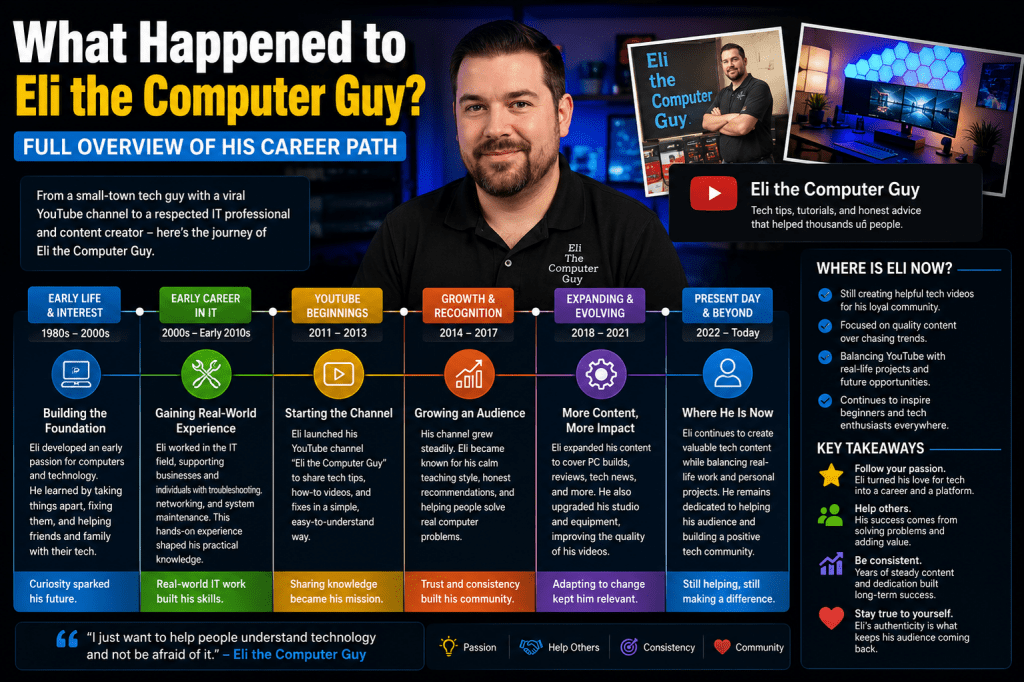
Eli the Computer Guy built his reputation during a period when online video content and independent tech education were expanding rapidly. He initially gained attention through straightforward explanations of computing concepts, business practices, and practical IT skills. His early material focused on breaking down technical ideas into understandable language without relying on overly academic explanations. This approach helped him connect with viewers who were either entering the IT field or looking to improve their understanding of everyday technology systems. Over time, his presence expanded beyond a single platform, as his content began circulating across multiple social channels where audiences were actively discussing technology. His consistency in publishing material and his direct communication style contributed to steady audience growth. Rather than relying on highly polished production, his work emphasized clarity, practicality, and direct engagement with viewers interested in real-world technology use.
Expansion Across Social Platforms
As his audience grew, Eli extended his activity across several major social networks, each serving a slightly different purpose in his overall communication strategy. Video content remained central, but additional platforms allowed him to share updates, short commentary, and engage in broader discussions with followers. This multi-platform presence helped reinforce his visibility, as audiences could interact with his ideas in different formats depending on their preferences. He also used these platforms to announce upcoming content and discuss ongoing developments in technology and business. The ability to maintain presence across multiple channels allowed his audience to remain connected even when not actively watching long-form content. Over time, this approach contributed to a more dynamic digital identity, where content was not limited to scheduled releases but extended into continuous interaction with viewers across various online spaces.
Building a Dedicated Community Forum
With increasing interest from his audience, Eli introduced a dedicated community forum designed to centralize discussions and provide a structured environment for engagement. This forum was created in response to demand from viewers who wanted a more organized space to ask questions, share experiences, and participate in ongoing conversations about technology and business topics. The platform quickly gained traction as users began creating topic-specific discussions that covered a wide range of IT subjects, including system administration, entrepreneurship, and general troubleshooting. Features such as organized discussion boards and user interaction tools made it easier for members to navigate content and find relevant conversations. The forum also introduced additional interactive elements, allowing users to participate more actively rather than passively consuming content. As participation increased, the community became a space where both beginners and experienced professionals could exchange insights and practical advice.
Transition to a New Discussion Platform
As the community expanded further, the original forum began to experience limitations due to high traffic and increasing user activity. The growing number of participants created challenges related to performance, structure, and scalability. In response, a transition to a new platform was initiated to better accommodate the expanding user base. This shift allowed for improved organization of discussion categories, enhanced stability, and additional features designed to support long-term growth. The migration process reflected the evolving needs of the community, which had grown beyond the capacity of the initial setup. The new platform introduced improved navigation and expanded tools for interaction, including social-style features that encouraged users to connect more directly with one another. The decision to upgrade the system demonstrated a focus on maintaining usability and ensuring that the community remained accessible despite its increasing size and activity levels.
Daily Blob Show Concept and Format
Alongside community development, Eli introduced a recurring video series known as the Daily Blob. This show focused on a wide range of topics related to technology, business, and general industry developments. Each episode typically featured commentary on current events, product discussions, and observations about trends in the tech world. The format was informal and conversational, allowing for flexibility in topics depending on what was relevant at the time. Episodes were broadcast live and later made available for replay, enabling audiences to engage either in real time or at their convenience. The structure of the show emphasized spontaneity and responsiveness, with content often shaped by recent developments or audience input. This format helped differentiate the series from more scripted or highly produced content, offering a more immediate and adaptable approach to information sharing.
Audience Interaction and Live Participation
A defining feature of the Daily Blob was its emphasis on real-time interaction with viewers. During live sessions, audience members could submit comments and questions that were addressed within the show. This interactive structure created a sense of participation, where viewers were not just passive recipients of information but active contributors to the discussion. Some audience members engaged regularly, forming a familiar presence within live broadcasts and occasionally assisting other participants by responding to questions in real time. This collaborative environment helped strengthen the sense of community around the show. The interactive nature of the format also influenced the direction of episodes, as discussions often shifted based on viewer input. This level of engagement contributed to a dynamic viewing experience that evolved with each broadcast rather than following a rigid script.
Community Culture and Knowledge Sharing
The combination of forum discussions and live interactive content contributed to the development of a broader community culture centered on knowledge sharing and practical problem-solving. Members of the community often exchanged advice on technical issues, discussed industry trends, and shared personal experiences related to technology careers. Over time, this created a collaborative environment where information flowed in multiple directions rather than from a single source. Participants ranged from newcomers seeking guidance to experienced professionals offering insights based on real-world experience. This diversity of perspectives helped enrich discussions and made the community a resource for a wide variety of topics. The emphasis on open communication and peer-to-peer support played an important role in sustaining engagement and encouraging ongoing participation across different platforms.
Ongoing Content Evolution and Influence
As time progressed, Eli’s content strategy continued to evolve in response to changes in technology, audience expectations, and online communication trends. The integration of live shows, recorded content, and community forums reflected a broader shift toward more interactive and participatory media experiences. His approach demonstrated how independent creators could build ecosystems that combined education, discussion, and real-time engagement. The adaptability of his content formats allowed him to remain relevant as platforms and audience behaviors changed. While the tools and platforms used for distribution may have shifted over time, the underlying focus on clear communication and practical insights remained consistent. This ongoing evolution illustrated how digital content creators could maintain long-term engagement by continuously adjusting to the needs and interests of their audience while preserving a recognizable style of communication.
Conclusion
The development of Eli’s online presence reflects a progression from individual content creation to a more complex ecosystem of communication and community engagement. Through multiple platforms, a dedicated forum, and interactive live shows, he established a structured yet flexible environment for discussion and learning. The transition between platforms and formats highlights the importance of scalability and adaptability in sustaining active online communities. His approach to combining educational content with real-time interaction contributed to a model where audiences could both consume and contribute information. Over time, this created a layered digital presence that extended beyond traditional content delivery into ongoing participation and shared learning experiences.