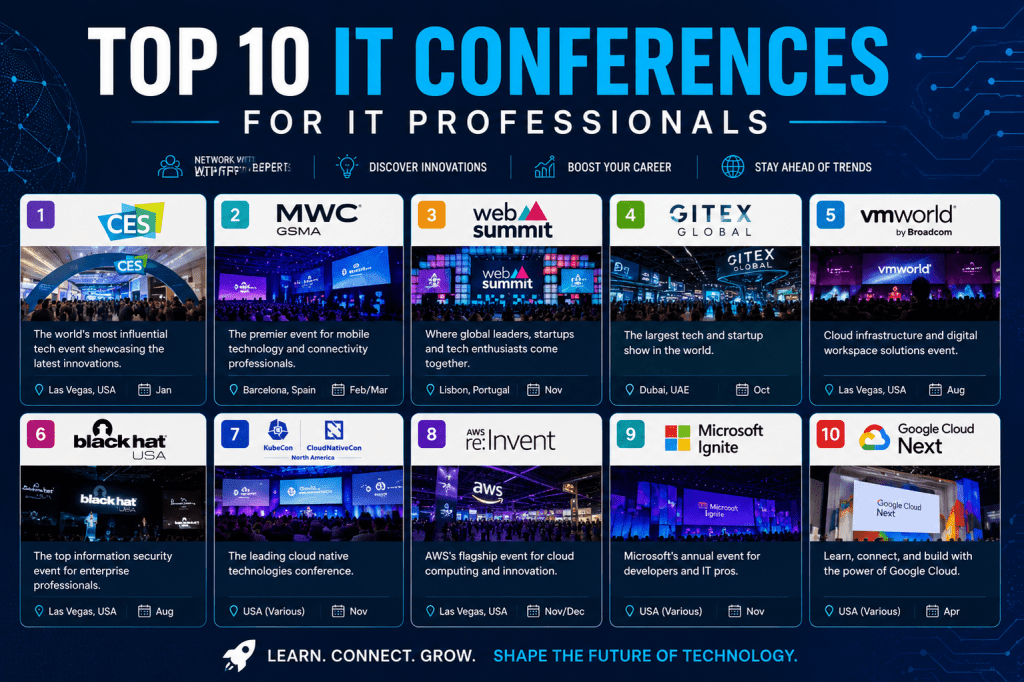
Technical conferences in the information technology field serve as powerful platforms where professionals gather to explore emerging innovations, evolving methodologies, and real-world solutions shaping the digital world. These events are designed to bring together engineers, architects, administrators, and technology leaders under one environment where knowledge exchange happens naturally. In today’s rapidly changing tech landscape, staying updated is not optional but essential for maintaining relevance and competitiveness. Conferences provide structured learning experiences that go beyond traditional training by offering direct exposure to practical implementations, case studies, and live demonstrations. They also help professionals understand how large organizations are solving complex challenges in areas such as cloud computing, cybersecurity, automation, and enterprise networking. By participating in such environments, IT professionals gain clarity about future technology directions while strengthening their current skill sets in meaningful ways.
Importance of Industry Conferences in IT Career Growth
Industry conferences play a critical role in shaping long-term career development for IT professionals. Unlike routine workplace learning, these events provide access to a wide range of specialized knowledge delivered by experts who actively work on large-scale systems. The exposure gained from such gatherings helps individuals understand how different technologies interact in real enterprise environments. This includes everything from network architecture and cloud deployment to data security and application management. Another major advantage is the opportunity to observe how organizations adopt new tools and strategies to improve efficiency and performance. Professionals also gain insight into industry expectations, which helps them align their skills with market demands. Over time, attending such conferences builds both technical depth and strategic awareness, allowing individuals to contribute more effectively to organizational growth and innovation.
How to Select the Right IT Conference for Maximum Value
Choosing the right IT conference requires careful thought and alignment with professional goals. Every event has a different focus, and selecting one that matches your career path ensures maximum benefit. Some conferences are designed for deep technical learning in areas such as infrastructure, networking, or cybersecurity, while others emphasize leadership, innovation, and digital transformation. It is important to evaluate your current role and identify the technologies you work with daily. This helps in selecting conferences that provide immediately applicable knowledge. Another important factor is the level of content, as some events cater to beginners while others are highly advanced and specialized. Budget, time availability, and learning objectives also play a significant role in the decision-making process. A well-chosen conference not only enhances technical skills but also opens doors to networking opportunities and future career advancement.
Large-Scale Vendor Technology Conferences and Their Impact
Vendor-driven technology conferences are among the most influential events in the IT industry. These gatherings are organized by major technology providers and focus on showcasing the latest advancements in their ecosystems. They typically include detailed technical sessions, live demonstrations, and hands-on labs that allow participants to interact directly with new technologies. Such conferences are especially valuable for professionals working in enterprise environments where these tools are widely used. They provide deep insights into system architecture, performance optimization, and integration strategies. Additionally, these events often highlight upcoming innovations, giving attendees a preview of future developments. The collaborative environment also allows professionals to engage with peers facing similar technical challenges, leading to valuable knowledge exchange. Overall, vendor conferences serve as a bridge between product development teams and real-world users, ensuring better understanding and more effective implementation of technologies.
Enterprise Networking and Infrastructure Innovation Events
Large networking-focused conferences offer a comprehensive view of how modern communication systems are designed and maintained. These events explore topics such as enterprise networking, cloud connectivity, data center architecture, and system automation. They are particularly beneficial for professionals working in infrastructure roles where reliability, scalability, and performance are key priorities. Attendees gain exposure to advanced networking concepts that go beyond basic configurations, including software-defined networking and automated infrastructure management. Practical sessions often demonstrate real-world scenarios where complex systems are optimized for efficiency and security. These conferences also highlight how organizations are transitioning toward hybrid environments that combine on-premise systems with cloud-based solutions. By understanding these evolving architectures, IT professionals can better support enterprise needs and contribute to the development of resilient and high-performing systems.
Cisco-Focused Networking and Infrastructure Learning Environment
Networking technology events associated with Cisco environments are widely recognized for their depth and technical focus. These conferences provide a detailed look into how enterprise networks are built, secured, and optimized for large-scale operations. Participants are introduced to advanced networking strategies that support modern business requirements, including automation, virtualization, and integrated communication systems. The learning experience is highly practical, often involving real-time demonstrations and interactive problem-solving scenarios. This helps professionals understand how theoretical concepts are applied in real enterprise environments. Another key aspect is the focus on scalability, where attendees learn how networks are designed to support growing organizational demands. Security is also a major topic, as protecting network infrastructure has become increasingly important in today’s digital landscape. These conferences help professionals strengthen their ability to manage complex networking environments efficiently.
Practical Enterprise IT Learning Through Microsoft Ecosystem Events
Enterprise-focused technology conferences centered around Microsoft environments are designed for professionals who manage business-critical systems. These events focus heavily on real-world IT operations such as identity management, collaboration platforms, and system security. Attendees gain practical insights into managing cloud-based services and hybrid infrastructures that support modern workplace environments. The sessions are structured to address everyday challenges faced by IT teams, including troubleshooting, system integration, and performance optimization. A strong emphasis is placed on security and compliance, helping organizations protect sensitive data while maintaining productivity. These conferences also highlight automation techniques that reduce manual workload and improve operational efficiency. The hands-on nature of the sessions allows professionals to directly apply what they learn, making the experience highly relevant to their day-to-day responsibilities in enterprise IT environments.
Key Areas Covered in Enterprise Productivity and Cloud Management
Conferences focused on enterprise productivity platforms and cloud services typically cover a wide range of essential IT topics. These include identity and access management, endpoint security, collaboration tools, and data governance strategies. Professionals also learn about integrating multiple systems to create unified and efficient workflows across organizations. Cloud adoption remains a major theme, with discussions centered on migrating workloads, optimizing performance, and managing hybrid environments. Another important area is automation, where IT teams explore ways to streamline repetitive tasks and improve system reliability. Security remains a consistent priority, especially in managing user access and protecting organizational data. These events also emphasize the importance of monitoring and analytics, enabling IT professionals to make informed decisions based on system performance and usage patterns. Overall, these conferences provide a comprehensive understanding of enterprise IT operations.
Cloud Computing Transformation and Modern IT Architecture Events
Cloud-focused technology conferences are essential for understanding how digital infrastructure is evolving in modern enterprises. These events explore how cloud platforms support scalable, flexible, and cost-efficient IT operations. Professionals attending these sessions gain insights into cloud architecture, application modernization, and distributed system design. A major focus is placed on how organizations are transitioning from traditional infrastructure models to cloud-native environments. This includes the use of microservices, containerization, and DevOps practices that enhance software development and deployment efficiency. Security and compliance are also key themes, as organizations must ensure data protection in distributed environments. Additionally, these conferences highlight how cloud technologies enable advanced analytics and intelligent decision-making through data-driven systems. For IT professionals, this knowledge is crucial for supporting digital transformation initiatives within their organizations.
Importance of Cloud Knowledge in Modern IT Roles
Understanding cloud technologies has become a fundamental requirement for many IT roles today. As organizations increasingly rely on cloud-based systems, professionals must develop skills that support deployment, management, and optimization of these environments. Conferences dedicated to cloud computing provide valuable insights into how large-scale systems operate efficiently across distributed infrastructures. They also highlight best practices for ensuring performance, scalability, and security in dynamic environments. Another important aspect is cost management, where professionals learn how to optimize resource usage without compromising performance. These events also emphasize collaboration between development and operations teams, ensuring faster and more reliable software delivery. By attending such conferences, IT professionals gain a broader perspective on how cloud technologies influence business strategy and operational efficiency across industries.
Cybersecurity Research and Defensive Technology Conferences
Cybersecurity-focused conferences are among the most important events for professionals responsible for protecting digital systems. These gatherings provide deep insights into evolving threats, attack methods, and defensive strategies used in modern security operations. Attendees explore topics such as vulnerability assessment, penetration testing, incident response, and network defense. A key feature of these events is the presentation of real-world research findings that highlight newly discovered security risks. This information helps organizations strengthen their defenses and improve their overall security posture. Professionals also learn about securing complex environments that include cloud systems, hybrid infrastructures, and connected devices. The sessions encourage a proactive approach to security, focusing on prevention rather than reaction. By understanding attacker behavior and system vulnerabilities, IT professionals can design more resilient and secure infrastructures capable of withstanding modern cyber threats.
Evolving Role of Security-Focused IT Conferences in Digital Protection
Security-oriented conferences continue to grow in importance as cyber threats become more advanced and frequent. These events emphasize the need for continuous learning and adaptation in the field of cybersecurity. IT professionals gain exposure to advanced tools and techniques used to detect, analyze, and respond to security incidents. Collaboration is another key theme, as effective cybersecurity often requires coordination between multiple teams and systems. Attendees also explore strategies for building secure architectures that minimize risk while maintaining performance and usability. These conferences highlight the importance of integrating security into every stage of system design and operation. By participating in these events, professionals strengthen their ability to protect critical infrastructure and ensure the stability of digital ecosystems across organizations.
Deep Dive into Cloud Ecosystem Conferences and Their Strategic Value
Cloud ecosystem conferences represent some of the most influential learning environments for modern IT professionals. These events focus on how organizations design, deploy, and optimize large-scale cloud infrastructures that support global digital services. The sessions typically explore advanced concepts such as distributed computing, serverless architecture, container orchestration, and hybrid cloud integration. Professionals attending these gatherings gain a deeper understanding of how cloud platforms enable agility, scalability, and resilience in enterprise systems. One of the most valuable aspects is exposure to real-world case studies that demonstrate how companies solve complex infrastructure challenges using cloud-native approaches. These insights help IT teams improve system design, reduce operational complexity, and enhance performance. Additionally, cloud conferences often highlight the importance of automation in managing infrastructure, allowing organizations to achieve faster deployment cycles and improved reliability across environments.
Modern Application Development and Cloud-Native Transformation
A significant focus of cloud-centered IT events is modern application development. These conferences explore how software design is evolving from traditional monolithic structures to modular, scalable architectures. Developers and engineers learn how microservices, APIs, and container-based environments enable faster development cycles and easier maintenance. Another key area of discussion is DevOps integration, which connects development and operations teams to improve collaboration and efficiency. These practices help organizations deliver software updates more frequently while maintaining system stability. Attendees also gain insights into performance optimization techniques that ensure applications remain responsive under heavy workloads. Cloud-native transformation is not only about technology but also about cultural change within organizations. These conferences emphasize how teams must adapt their workflows, communication, and development strategies to fully leverage modern cloud capabilities.
Artificial Intelligence and Data-Driven Cloud Innovations
Artificial intelligence and data analytics have become central themes in cloud technology conferences. These events showcase how organizations are using machine learning models and advanced analytics to extract insights from large datasets. IT professionals gain exposure to tools that enable predictive analysis, automation, and intelligent decision-making. Cloud platforms play a crucial role in supporting these technologies by providing scalable computing power and storage solutions. Sessions often highlight how businesses use AI to improve customer experiences, optimize operations, and detect anomalies in real time. Another important aspect is data governance, where organizations learn how to manage data securely while ensuring compliance with regulations. These conferences also demonstrate how AI-driven systems are integrated into cloud environments to enhance efficiency and reduce manual intervention in complex processes.
AWS-Focused Infrastructure and Global Cloud Operations
Large-scale cloud infrastructure events associated with AWS environments are widely recognized for their depth and scale. These conferences provide extensive insights into global cloud operations, covering topics such as compute services, storage optimization, networking, and security architecture. Professionals attending these sessions gain a clear understanding of how large organizations build highly available and fault-tolerant systems. The learning experience includes practical demonstrations of cloud deployment strategies and infrastructure management techniques. Another important focus is cost optimization, where IT teams learn how to balance performance with efficient resource usage. These conferences also highlight innovation in areas such as serverless computing and event-driven architecture. By exploring real-world use cases, attendees gain a better understanding of how cloud services support mission-critical applications across industries.
Security Architecture and Cloud Protection Strategies
Security remains a foundational component of modern cloud conferences, especially as organizations migrate sensitive workloads to distributed environments. These events explore how security is integrated into every layer of cloud architecture, from identity management to network protection. IT professionals learn about advanced encryption techniques, access control systems, and threat detection mechanisms designed to safeguard digital assets. A major focus is on building secure-by-design systems that minimize vulnerabilities from the start. Attendees also explore how automated security tools help identify risks in real time and respond to potential threats quickly. These sessions emphasize the importance of continuous monitoring and proactive defense strategies. As cyber threats become more sophisticated, understanding cloud security architecture becomes essential for maintaining trust and stability in enterprise environments.
Cybersecurity Intelligence and Threat Response Conferences
Cybersecurity-focused gatherings provide deep insights into how modern threats are identified, analyzed, and mitigated. These events bring together security researchers, analysts, and IT professionals to discuss evolving attack patterns and defense strategies. Sessions often include detailed breakdowns of vulnerabilities found in enterprise systems and how they can be exploited or prevented. Participants gain exposure to advanced techniques in penetration testing, malware analysis, and incident response. One of the most valuable aspects of these conferences is the emphasis on real-world threat intelligence, which helps organizations stay ahead of potential risks. Professionals also learn how to design layered security systems that protect critical infrastructure from multiple attack vectors. The knowledge gained from these events significantly enhances an organization’s ability to detect and respond to cyber incidents effectively.
Incident Response and Ethical Security Practices in IT Environments
Incident response is a critical area covered in cybersecurity conferences, focusing on how organizations react to security breaches and system compromises. These sessions teach structured approaches for identifying, containing, and recovering from cyber incidents. IT professionals learn how to develop response plans that minimize damage and restore operations quickly. Ethical security practices are also emphasized, ensuring that defensive strategies align with legal and organizational standards. Another key topic is forensic analysis, where professionals study attack patterns to understand how breaches occurred. This information is crucial for strengthening future defenses and preventing similar incidents. These conferences also encourage collaboration between security teams, helping organizations build unified strategies for managing risk and protecting digital assets.
Leadership and Strategic IT Management Conferences
Beyond technical expertise, IT leadership conferences focus on strategic decision-making and long-term planning. These events are designed for professionals responsible for shaping technology direction within organizations. Sessions explore topics such as digital transformation, infrastructure modernization, and IT governance. Attendees gain insights into aligning technology investments with business objectives to maximize value. Another important focus is risk management, where leaders learn how to evaluate and mitigate potential challenges in IT operations. These conferences also highlight the importance of communication between technical teams and executive leadership. By understanding both technical and business perspectives, IT leaders can make more informed decisions that support organizational growth and innovation.
Digital Transformation and Enterprise Technology Strategy
Digital transformation is a central theme in leadership-focused IT events. These conferences examine how organizations are leveraging technology to improve efficiency, customer experience, and operational agility. Topics often include automation, artificial intelligence integration, and data-driven decision-making. IT professionals learn how to design scalable systems that support business expansion and evolving market demands. Another key area is change management, where organizations adapt their processes and workforce to new technologies. These sessions also emphasize the importance of innovation in maintaining competitive advantage. By adopting modern IT strategies, businesses can streamline operations and respond more effectively to industry changes. These conferences provide a roadmap for aligning technology initiatives with long-term business goals.
Enterprise Risk Management and IT Governance Practices
Risk management and governance are essential components of IT leadership conferences. These sessions focus on ensuring that technology systems are secure, compliant, and aligned with organizational policies. Professionals learn how to assess risks associated with infrastructure, applications, and data management. Governance frameworks help organizations establish clear guidelines for technology usage and decision-making processes. Another important topic is compliance management, where IT teams ensure adherence to industry standards and regulations. These conferences also highlight the importance of auditing and monitoring systems to maintain operational integrity. By implementing strong governance practices, organizations can reduce vulnerabilities and improve overall system reliability.
Women in Technology and Inclusive IT Development Events
Inclusive technology conferences play a vital role in promoting diversity and innovation within the IT industry. These events focus on empowering professionals from different backgrounds and encouraging equal opportunities in technology careers. Sessions often include skill development workshops, career guidance discussions, and networking opportunities. Attendees gain exposure to various technical domains, including software development, cybersecurity, and data science. These conferences also highlight the importance of mentorship and community support in professional growth. By fostering inclusive environments, the IT industry benefits from a broader range of perspectives and ideas, which leads to more innovative solutions and stronger technological advancement.
Career Development and Professional Growth in IT Fields
Career-focused IT conferences provide valuable guidance for professionals at different stages of their careers. These events help individuals understand how to progress in specialized technical roles or transition into leadership positions. Sessions often cover topics such as skill development, certification pathways, and industry expectations. Attendees also gain insights into emerging job roles and future technology trends. Networking plays a significant role in these conferences, allowing professionals to connect with peers, mentors, and industry experts. This helps in building long-term career relationships and exploring new opportunities. The knowledge gained from these events supports continuous professional development and helps individuals stay competitive in a rapidly evolving industry.
Networking and Collaboration Opportunities in IT Conferences
One of the most valuable aspects of IT conferences is the opportunity to network with other professionals. These events create environments where individuals can share experiences, challenges, and solutions. Collaboration often leads to innovative ideas and improved problem-solving approaches. Attendees benefit from discussions with experts who have worked on large-scale systems and complex technical environments. Networking also helps professionals stay informed about industry trends and job opportunities. Many long-term professional relationships are formed during these events, contributing to career growth and knowledge sharing. The collaborative nature of IT conferences makes them essential for building strong professional communities within the technology industry.
Emerging Technology Conferences and Future IT Innovations
Emerging technology conferences are designed to explore the next generation of digital transformation across industries. These events focus on innovations that are still evolving but are expected to shape the future of information technology. Topics often include artificial intelligence, quantum computing, edge computing, advanced automation, and intelligent systems. IT professionals attending these conferences gain early exposure to experimental technologies that may soon become mainstream in enterprise environments. This early awareness allows organizations to prepare strategically for upcoming changes in infrastructure, software development, and operational processes. These events also emphasize how innovation is not limited to tools alone but extends to new ways of thinking about problem-solving, system design, and digital ecosystems. By understanding these future-oriented technologies, professionals can position themselves ahead of industry shifts and contribute more effectively to innovation-driven projects.
Artificial Intelligence and Intelligent System Development
Artificial intelligence has become one of the most dominant themes in modern IT conferences, especially those focused on future technologies. These sessions explore how intelligent systems are transforming industries by enabling automation, prediction, and decision-making at scale. IT professionals learn how machine learning models are trained, deployed, and integrated into enterprise systems. The discussions often cover real-world applications such as predictive maintenance, fraud detection, customer behavior analysis, and process optimization. Another important focus is ethical AI development, which ensures that intelligent systems are designed responsibly and transparently. Attendees also gain insights into how AI is combined with cloud platforms to create scalable and adaptive solutions. These conferences help professionals understand not only how AI works but also how it can be applied effectively to solve complex business problems.
Edge Computing and Distributed System Architecture
Edge computing has emerged as a critical topic in modern IT infrastructure discussions. Conferences focused on this area explore how computing is moving closer to data sources to improve speed, efficiency, and responsiveness. IT professionals learn how distributed systems are designed to process data locally rather than relying solely on centralized cloud environments. This approach is especially important for applications that require real-time processing, such as autonomous systems, industrial automation, and smart devices. These sessions also highlight the challenges of managing distributed architectures, including data synchronization, security, and system reliability. By understanding edge computing principles, professionals can design systems that reduce latency and improve performance in geographically distributed environments. This knowledge is increasingly important as organizations adopt more connected and data-intensive technologies.
DevOps, Automation, and Continuous Delivery Practices
Modern IT conferences frequently emphasize DevOps practices and automation as key drivers of efficient software development. These sessions focus on improving collaboration between development and operations teams to deliver software faster and more reliably. IT professionals learn how continuous integration and continuous delivery pipelines streamline the process of building, testing, and deploying applications. Automation plays a major role in reducing manual tasks, improving consistency, and minimizing human error in system operations. Another important aspect is infrastructure as code, which allows teams to manage infrastructure using automated scripts rather than manual configuration. These conferences also explore monitoring and feedback systems that help teams identify issues early and improve system performance. By adopting DevOps principles, organizations can significantly increase agility and responsiveness in their software development lifecycle.
Containerization and Microservices Architecture in Modern IT Systems
Containerization and microservices architecture are key topics in advanced IT conferences focused on application modernization. These technologies enable organizations to build scalable and flexible systems by breaking applications into smaller, independent components. IT professionals learn how containers provide consistent environments for deploying applications across different infrastructures. Microservices architecture allows teams to develop, deploy, and scale individual services independently, improving system efficiency and reducing complexity. These sessions often include practical demonstrations of how container orchestration platforms manage workloads across distributed systems. Another important focus is resilience, ensuring that applications remain operational even when individual components fail. By understanding these architectural principles, professionals can design modern applications that are both scalable and highly maintainable.
Data Engineering and Advanced Analytics Conferences
Data-focused IT conferences are essential for professionals working with large-scale information systems. These events explore how data is collected, processed, stored, and analyzed to generate meaningful insights. IT professionals gain exposure to data engineering techniques that support efficient data pipelines and real-time analytics systems. A major focus is on transforming raw data into actionable intelligence that supports business decision-making. These conferences also cover data warehousing, big data processing, and distributed storage systems. Another key area is data quality management, ensuring that information used for analysis is accurate and reliable. With the increasing importance of data-driven strategies, these events help professionals understand how to build systems that support advanced analytics and business intelligence platforms.
Machine Learning Operations and Scalable AI Deployment
Machine learning operations has become an important area of focus in AI-driven IT conferences. These sessions explore how machine learning models are managed throughout their lifecycle, from development to deployment and monitoring. IT professionals learn how to ensure that models remain accurate and effective over time by continuously updating and evaluating them. Scalability is another major theme, as organizations need to deploy AI systems across large and distributed environments. These conferences also highlight the importance of automation in managing machine learning workflows, reducing manual effort and improving consistency. Another key topic is model governance, which ensures that AI systems operate transparently and ethically. By understanding machine learning operations, professionals can build more reliable and scalable intelligent systems.
Networking Infrastructure Evolution and Software-Defined Systems
Networking conferences continue to evolve as modern IT environments become more dynamic and software-driven. These events focus on software-defined networking, which allows administrators to manage network behavior through software rather than hardware configurations. IT professionals gain insights into how network virtualization improves flexibility and resource utilization. These sessions also explore automation in network management, enabling faster configuration and reduced operational complexity. Another important area is network security, which ensures that communication systems remain protected against threats. With increasing reliance on cloud and hybrid infrastructures, networking professionals must adapt to more dynamic and programmable environments. These conferences provide the knowledge required to manage modern network systems effectively and efficiently.
Cybersecurity Evolution in Advanced Threat Environments
Cybersecurity conferences focused on advanced threats explore how security challenges are evolving in increasingly complex digital ecosystems. These events highlight sophisticated attack techniques used by cybercriminals and how organizations can defend against them. IT professionals learn about advanced threat detection systems that use artificial intelligence and behavioral analysis to identify suspicious activities. These sessions also emphasize the importance of zero-trust security models, where every access request is verified regardless of its origin. Another key focus is securing cloud environments and distributed systems, which are more vulnerable due to their complexity. These conferences help professionals develop strategies for building resilient security frameworks that adapt to constantly changing threat landscapes.
Incident Detection, Response Automation, and Security Intelligence
Incident detection and response automation are critical topics in cybersecurity-focused IT events. These sessions explore how organizations can quickly identify and respond to security breaches using automated systems. IT professionals learn how security information and event management tools collect and analyze data from multiple sources to detect anomalies. Automation plays a key role in reducing response time and minimizing the impact of security incidents. These conferences also emphasize the importance of security intelligence, which involves analyzing threat data to predict and prevent future attacks. Another important aspect is collaboration between security teams, ensuring coordinated responses to complex incidents. By understanding these practices, professionals can significantly improve an organization’s ability to defend against cyber threats.
Digital Workplace Transformation and Collaboration Technologies
Digital workplace transformation is a growing focus in modern IT conferences as organizations shift toward remote and hybrid work environments. These events explore how collaboration tools, communication platforms, and cloud-based systems are reshaping workplace productivity. IT professionals learn how to implement and manage technologies that support seamless communication across distributed teams. Another important focus is user experience optimization, ensuring that employees can access tools and systems efficiently. These sessions also highlight security considerations in remote work environments, including identity management and secure access controls. By understanding digital workplace technologies, IT professionals can help organizations improve productivity while maintaining security and operational efficiency.
Enterprise Architecture and Large-Scale System Design
Enterprise architecture conferences focus on designing complex IT systems that support large organizations. These events explore how different technologies are integrated to create unified and scalable infrastructures. IT professionals learn how to design systems that balance performance, cost, and flexibility. A key focus is alignment between business goals and technology strategy, ensuring that IT investments deliver maximum value. These conferences also cover system integration techniques that allow different platforms to work together efficiently. Another important area is scalability planning, where systems are designed to handle future growth and increased demand. By understanding enterprise architecture principles, professionals can build robust systems that support long-term organizational success.
IT Governance, Compliance, and Strategic Technology Planning
Governance and compliance are essential components of IT conferences focused on enterprise management. These sessions explore how organizations ensure that their technology systems comply with industry regulations and internal policies. IT professionals learn how to implement governance frameworks that guide decision-making and system usage. Compliance management is another key area, especially in industries with strict regulatory requirements. These conferences also emphasize strategic technology planning, helping organizations align IT initiatives with business objectives. Another important focus is risk assessment, where potential threats and vulnerabilities are evaluated and mitigated. By understanding governance principles, professionals can ensure that IT systems remain secure, efficient, and aligned with organizational goals.
Advanced IT Leadership and Strategic Technology Decision Making
IT leadership conferences focus on the strategic side of technology management, where professionals move beyond daily operations and concentrate on long-term planning and organizational direction. These events are designed for individuals responsible for shaping how technology supports business growth, efficiency, and innovation. Sessions typically explore how IT leaders evaluate emerging technologies, allocate resources, and prioritize digital transformation initiatives. A major focus is on aligning technology investments with business objectives so that every system upgrade or infrastructure change contributes measurable value. Attendees also gain insights into managing large IT teams, improving cross-department collaboration, and building technology roadmaps that remain adaptable in rapidly changing environments. These conferences help professionals understand how leadership decisions influence system architecture, operational efficiency, and overall business performance.
Digital Transformation Strategy and Organizational Change Management
Digital transformation is a central theme in advanced IT conferences, especially those focused on enterprise leadership. These sessions explore how organizations shift from traditional systems to modern, technology-driven environments. IT professionals learn how to evaluate legacy systems and transition them into scalable, cloud-based, and automated solutions. Change management is another key focus, as successful transformation depends not only on technology but also on people and processes. These conferences highlight how organizations manage resistance to change, train employees on new systems, and ensure smooth adoption of digital tools. Another important area is innovation strategy, where leaders explore how to introduce new technologies without disrupting existing operations. These discussions help professionals understand the balance between innovation and stability in enterprise environments.
IT Risk Management and Business Continuity Planning
Risk management is an essential topic in enterprise-level IT conferences, focusing on identifying, assessing, and reducing potential threats to technology systems. These sessions explore how organizations prepare for unexpected disruptions such as system failures, cyber incidents, or infrastructure outages. IT professionals learn how to develop business continuity plans that ensure critical operations remain functional under adverse conditions. Disaster recovery strategies are also discussed, emphasizing the importance of data backup, redundancy, and system resilience. Another key focus is risk assessment frameworks that help organizations evaluate vulnerabilities across different layers of their IT environment. These conferences also highlight how proactive risk management contributes to long-term stability and operational reliability in complex digital ecosystems.
Enterprise Security Governance and Regulatory Compliance Practices
Security governance and compliance are critical components of IT leadership and enterprise-focused conferences. These sessions explore how organizations establish structured policies to protect data, systems, and digital assets. IT professionals learn how governance frameworks define roles, responsibilities, and security standards across the organization. Compliance discussions focus on meeting legal, regulatory, and industry-specific requirements that ensure safe and ethical technology usage. Another important aspect is audit readiness, where organizations maintain proper documentation and monitoring systems to demonstrate compliance at any time. These conferences also highlight the growing importance of privacy protection and data management practices. By understanding governance principles, professionals can ensure that security is embedded into every level of IT operations.
Future of Cloud Infrastructure and Hybrid Environments
Cloud infrastructure continues to evolve, and advanced IT conferences focus heavily on the future of hybrid and multi-cloud environments. These sessions explore how organizations combine on-premise systems with multiple cloud platforms to create flexible and resilient infrastructures. IT professionals learn how to manage workload distribution across different environments while maintaining performance and security. Another key focus is cloud optimization, where organizations improve cost efficiency without compromising system reliability. These conferences also highlight automation in cloud management, enabling faster deployment and easier scaling of resources. As cloud ecosystems become more complex, professionals gain insights into managing interoperability between different platforms. This knowledge is essential for building modern IT environments that support global operations and digital expansion.
Advanced Networking Evolution and Intelligent Connectivity Systems
Networking conferences focused on advanced systems explore how connectivity is evolving to support modern digital demands. These events highlight intelligent networking solutions that use automation and software-based control to manage traffic efficiently. IT professionals learn how adaptive networks respond dynamically to changing workloads and user demands. Another important focus is high-performance networking, which ensures low latency and high reliability for critical applications. These conferences also explore how networks are integrated with cloud platforms and edge computing systems to improve data flow and processing speed. Security in networking is another major topic, especially in protecting communication channels from unauthorized access and cyber threats. These discussions help professionals design networks that are both efficient and secure in complex environments.
Enterprise Data Strategy and Intelligent Information Management
Data strategy conferences focus on how organizations manage, analyze, and utilize data to drive decision-making. These sessions explore how data is collected from multiple sources and transformed into meaningful insights. IT professionals learn about building scalable data architectures that support real-time processing and analytics. Another key focus is data integration, where different systems are connected to create unified information environments. These conferences also emphasize the importance of data quality, ensuring accuracy and consistency across datasets. Information governance is another important topic, helping organizations maintain control over how data is stored, accessed, and used. With the increasing importance of data-driven decision-making, these events provide essential knowledge for building intelligent enterprise systems.
AI Integration in Enterprise Systems and Automation Frameworks
Artificial intelligence integration is a major focus in modern IT conferences, especially those centered around enterprise transformation. These sessions explore how AI is embedded into business systems to automate processes, improve decision-making, and enhance operational efficiency. IT professionals learn how AI models are deployed within cloud and hybrid environments to support real-time applications. Another key area is workflow automation, where repetitive tasks are replaced with intelligent systems that reduce manual effort. These conferences also highlight the role of AI in predictive analytics, helping organizations forecast trends and optimize performance. Ethical considerations and responsible AI usage are also discussed, ensuring that intelligent systems operate transparently and fairly within enterprise environments.
Software Development Lifecycle Optimization and Engineering Practices
Software development conferences focus on improving the entire lifecycle of application creation, from planning to deployment and maintenance. These events explore how modern engineering practices improve code quality, system reliability, and development speed. IT professionals learn about agile methodologies, continuous integration, and continuous delivery practices that streamline workflows. Another important focus is testing automation, which ensures that applications are validated efficiently before release. These conferences also highlight collaboration between development and operations teams to ensure smooth deployment processes. Performance optimization is another key area, helping organizations build applications that are fast, scalable, and reliable. These discussions support the creation of high-quality software systems that meet evolving user demands.
Human-Centered Design and User Experience in Technology Systems
User experience and design-focused IT conferences explore how technology systems are built with the end user in mind. These events emphasize the importance of designing intuitive, accessible, and efficient interfaces for software applications. IT professionals learn how user behavior influences system design and functionality. Another key focus is accessibility, ensuring that technology can be used by individuals with diverse needs and abilities. These conferences also explore how user feedback is collected and used to improve system performance and usability. Interaction design and usability testing are important components of these discussions, helping organizations create systems that are both functional and user-friendly. By prioritizing human-centered design, IT professionals contribute to building technology that is more effective and widely adopted.
IT Operations Management and System Reliability Engineering
IT operations conferences focus on maintaining system stability, performance, and reliability in enterprise environments. These sessions explore how organizations monitor and manage complex infrastructure to ensure continuous availability. IT professionals learn about performance monitoring tools that track system health and identify potential issues before they escalate. Another key focus is incident management, where structured processes are used to resolve technical problems efficiently. These conferences also highlight the importance of automation in operations, reducing manual intervention and improving response times. System reliability engineering is another major topic, emphasizing the design of resilient systems that can recover quickly from failures. These discussions help professionals ensure that IT systems remain stable and efficient under varying workloads.
Technology Ecosystem Integration and Cross-Platform Connectivity
Modern IT environments rely heavily on integrated systems that work seamlessly across different platforms and technologies. These conferences explore how organizations connect various applications, services, and infrastructures into unified ecosystems. IT professionals learn how APIs, middleware, and integration frameworks enable communication between different systems. Another important focus is interoperability, ensuring that technologies from different vendors work together efficiently. These sessions also highlight challenges in managing complex ecosystems, including data consistency and system compatibility. Cross-platform connectivity is essential for modern enterprises that rely on multiple tools and services. These conferences provide the knowledge needed to design and manage integrated technology environments effectively.
Conclusion
IT conferences bring together the most important elements of modern technology learning, combining practical experience, strategic insight, and exposure to emerging innovations. Across different domains such as cloud computing, cybersecurity, networking, data engineering, artificial intelligence, and enterprise architecture, these events provide structured opportunities for professionals to deepen their understanding of complex systems. They also help bridge the gap between theoretical knowledge and real-world application by showcasing how technologies are implemented at scale in global organizations.
Beyond technical learning, these conferences play a crucial role in shaping professional growth. They support career development by improving problem-solving abilities, expanding technical awareness, and strengthening decision-making skills. The networking environment allows professionals to connect with peers, share experiences, and discover new approaches to common challenges. This exchange of ideas often leads to improved practices within organizations and encourages innovation across teams.
In a rapidly evolving IT landscape, continuous learning is essential, and conferences remain one of the most effective ways to stay aligned with industry progress. Whether focused on leadership, security, infrastructure, or development, each event contributes to building a stronger and more adaptive technology workforce.