Every time someone opens an app, shops online, signs up for a service, or navigates through a website, they interact with the work of a UX designer. User experience design focuses on making digital products simple, efficient, and enjoyable to use. While many users never stop to think about why an app feels smooth or why a website is easy to navigate, UX designers spend countless hours planning every detail behind those experiences.
The demand for UX designers has grown rapidly because businesses now understand that user experience directly affects customer satisfaction and revenue. A confusing website can push users away in seconds, while a seamless experience can increase engagement, trust, and conversions. Because of this, companies are investing heavily in skilled UX professionals who know how to solve user problems.
As the demand for talented designers continues to increase, salaries have become more competitive across many industries and cities. Companies are willing to pay higher salaries to designers who can improve digital products and create experiences users genuinely enjoy.
What UX Designers Actually Do
UX designers combine creativity, psychology, problem-solving, and technology. Their work goes far beyond making screens look attractive. Instead, they focus on understanding how people think and behave while using digital products.
One major responsibility involves user research. UX designers interview users, conduct surveys, and study behavior patterns to identify pain points. They analyze how users interact with products and uncover frustrations that businesses may not notice internally.
After collecting insights, designers create wireframes, user flows, and prototypes. These early designs help teams visualize how a product should function before development begins. Wireframes map out layouts, while prototypes simulate interactions and navigation.
UX designers also collaborate with developers, product managers, marketers, and stakeholders. Communication becomes essential because designers must explain their decisions and advocate for user needs throughout the product development process.
Testing is another important part of the job. UX professionals constantly evaluate whether their designs actually solve user problems. They monitor usability tests, collect feedback, and improve products based on real-world behavior.
The Difference Between UX and UI Design
Many people confuse UX design with UI design, but the two roles focus on different areas. UX design centers on usability, structure, and the overall user journey. UI design focuses more on visual appearance, including typography, colors, spacing, animations, and interface elements.
A UX designer asks questions like:
“How can we make this process easier?”
“Where are users getting confused?”
“How can we reduce frustration?”
A UI designer asks:
“What colors should we use?”
“How should the buttons look?”
“What visual style fits the brand?”
Some companies combine both responsibilities into one UX/UI role, especially in smaller teams. Larger organizations often separate them into specialized positions.
Why UX Design Salaries Continue to Rise
Businesses now recognize that user experience affects customer retention, sales, and brand reputation. Poor design can lead to abandoned shopping carts, low engagement, and lost revenue. Strong UX design improves customer satisfaction and increases business growth.
As digital products become more central to everyday life, skilled UX designers have become essential. Companies compete aggressively to hire professionals who can improve their platforms and deliver exceptional experiences.
The rise of remote work has also changed salary trends. Designers are no longer limited to local opportunities. Many professionals now work remotely for companies located in high-paying cities while living in more affordable areas. This has increased salary competition nationwide.
Specialized UX skills have become even more valuable. Designers who understand accessibility, mobile experiences, enterprise software, or AI-driven interfaces often command significantly higher salaries than generalists.
National UX Designer Salary Trends
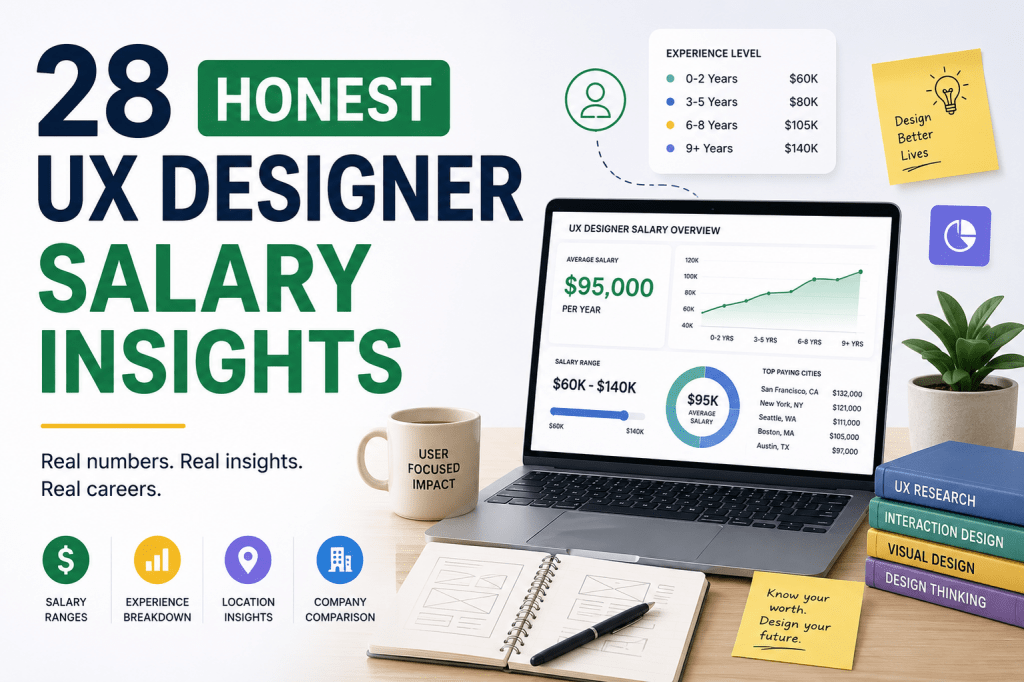
Across the country, UX designer salaries vary depending on experience, industry, specialization, and location. Entry-level professionals often start with competitive salaries compared to many other creative careers, while experienced designers can earn exceptionally high compensation packages.
Lower-end salary ranges for UX designers commonly begin around the low six-figure mark in major markets, while mid-level professionals often reach comfortable salaries with strong growth potential. Senior designers, especially those leading teams or managing strategy, frequently earn well above national averages.
The salary gap between beginner and senior UX designers can be massive. Experience, portfolio quality, and business impact play major roles in determining compensation.
San Francisco UX Designer Salaries
San Francisco remains one of the highest-paying markets for UX designers. The city’s strong concentration of technology companies creates constant demand for experienced design talent.
Designers working in San Francisco often earn some of the largest salaries in the industry because competition for skilled professionals is extremely intense. Companies in the area invest heavily in user experience because digital products sit at the center of their business models.
High living costs partly explain these larger salaries, but the complexity of projects also contributes significantly. Designers frequently work on large-scale products with millions of users, requiring advanced research, testing, and collaboration skills.
Senior UX professionals in San Francisco can earn exceptionally high compensation packages, especially when bonuses, equity, and benefits are included.
New York UX Designer Salaries
New York offers another strong market for UX professionals. The city combines opportunities across finance, media, healthcare, advertising, and technology industries, giving designers access to a wide range of projects.
UX designers in New York often work on products that serve diverse audiences and large customer bases. Financial technology companies, media platforms, and digital agencies frequently compete for experienced talent.
Salaries in New York remain highly competitive, especially for designers with strong portfolios and proven experience. Designers who understand both user experience and business strategy often stand out in this market.
The fast-paced nature of New York companies also rewards professionals who can adapt quickly, collaborate across departments, and handle complex projects under pressure.
Seattle UX Designer Salaries
Seattle has become one of the strongest cities for UX careers thanks to its thriving technology sector. Large companies and startups alike continue investing heavily in digital products, increasing demand for skilled UX professionals.
Many Seattle-based organizations focus heavily on research-driven design. UX designers in the city are often expected to work closely with data, analytics, and usability testing.
Salaries remain strong because companies value designers who can improve customer experiences across apps, cloud platforms, e-commerce systems, and enterprise software.
Remote work opportunities have also expanded Seattle’s influence in the UX market, allowing companies to recruit talent from across the country while still maintaining competitive pay structures.
Boston UX Designer Salaries
Boston combines technology, education, healthcare, and research industries, creating unique opportunities for UX designers. Professionals in this market often work on highly specialized products involving healthcare systems, educational platforms, and advanced software tools.
Because many Boston companies operate in complex industries, UX designers who understand research and information architecture are especially valuable.
The city offers strong salary potential for designers who can balance usability with technical accuracy. Healthcare and biotech companies in particular often pay premium salaries for professionals capable of simplifying difficult workflows.
UX designers in Boston also benefit from the city’s strong startup ecosystem, which creates additional opportunities for career growth and innovation.
Washington DC UX Designer Salaries
Washington DC presents a unique UX market because government agencies, consulting firms, and enterprise organizations all require digital transformation.
UX designers in DC frequently work on platforms involving public services, cybersecurity, finance, and large-scale internal systems. These projects often require balancing accessibility, compliance, and usability simultaneously.
Because many systems in government and enterprise environments are complex, designers who can simplify workflows and improve efficiency become extremely valuable.
Security clearances and specialized knowledge can also increase earning potential significantly in this region.
Los Angeles UX Designer Salaries
Los Angeles offers strong UX opportunities across entertainment, media, gaming, and technology sectors. Designers working in LA often focus on highly visual and interactive experiences that emphasize creativity alongside usability.
Streaming platforms, gaming companies, and digital media businesses continue hiring UX professionals to improve customer engagement and retention.
The city rewards designers who combine research skills with visual storytelling and interactive design. Mobile app experience is particularly valuable in this market.
As entertainment increasingly shifts toward digital platforms, UX design continues playing a larger role in shaping how audiences consume content.
San Diego UX Designer Salaries
San Diego has quietly become a solid market for UX professionals, especially in healthcare technology, biotech, and software development.
Many companies in San Diego focus on specialized products requiring careful attention to usability and functionality. Designers working in these environments often collaborate closely with engineers and researchers.
The city provides a balance between strong salary potential and a somewhat lower cost of living compared to larger California tech hubs.
UX professionals in San Diego who specialize in research-heavy projects or enterprise systems can earn particularly competitive salaries.
Denver UX Designer Salaries
Denver has emerged as a growing technology hub with increasing demand for UX designers. Startups, software companies, and remote-friendly organizations continue expanding throughout the region.
Designers in Denver often enjoy strong salaries while benefiting from a more affordable lifestyle compared to coastal cities. This balance has made the city increasingly attractive to UX professionals.
The local tech ecosystem values versatility. Designers who can handle research, prototyping, collaboration, and testing tend to thrive in Denver’s startup-driven environment.
Remote work has also strengthened Denver’s UX market by allowing professionals to work for larger companies while remaining based locally.
Austin UX Designer Salaries
Austin continues attracting technology companies, startups, and creative professionals, creating strong opportunities for UX designers.
The city’s growing tech scene has increased competition for experienced talent, leading to rising salaries across the industry. UX designers in Austin often work in software, fintech, e-commerce, and AI-focused environments.
Companies in Austin value innovation and collaboration, making the city especially appealing for designers who enjoy fast-moving teams and creative problem-solving.
As more businesses relocate or expand operations in Austin, demand for UX professionals is expected to remain strong.
Chicago UX Designer Salaries
Chicago offers a diverse UX market spanning finance, healthcare, logistics, consulting, and technology sectors. Designers in the city often work on enterprise systems and customer-facing platforms simultaneously.
UX professionals in Chicago benefit from exposure to large-scale business operations and complex workflows. Companies frequently seek designers who can improve both internal tools and external customer experiences.
The city also provides opportunities for freelancers and consultants working with large corporations undergoing digital transformation.
Strong communication skills and strategic thinking are especially valuable in Chicago’s business-focused environment.
Portland UX Designer Salaries
Portland’s growing creative and technology industries have expanded opportunities for UX designers. The city attracts professionals interested in balancing design innovation with lifestyle flexibility.
Many Portland companies emphasize user-centered design philosophies and collaborative team cultures. Designers often work closely with developers and researchers throughout the product lifecycle.
Salaries in Portland remain competitive, particularly for professionals with strong portfolios and experience in mobile or web applications.
The city’s startup ecosystem also gives UX designers opportunities to take on broader responsibilities and shape products from early stages.
Dallas UX Designer Salaries
Dallas has become one of the fastest-growing technology and business hubs for UX professionals. Companies across finance, healthcare, retail, and enterprise software continue investing heavily in digital transformation, creating strong demand for skilled designers.
UX designers in Dallas often work on large-scale systems that serve massive customer bases. Businesses in the region value designers who can simplify complicated workflows and improve customer satisfaction without sacrificing business goals.
One major advantage of Dallas is the balance between salary potential and living costs. Many UX professionals find they can earn competitive salaries while maintaining a more affordable lifestyle compared to coastal tech cities.
Enterprise experience is especially valuable in Dallas. Designers who understand complex dashboards, internal software systems, and large-scale digital products often command higher salaries because many corporations rely heavily on these tools.
Atlanta UX Designer Salaries
Atlanta has steadily grown into a strong market for UX designers thanks to expanding technology, logistics, media, and financial industries. The city’s startup ecosystem has also contributed to rising demand for design talent.
UX professionals in Atlanta frequently work on customer experience improvements for large businesses. Many organizations are modernizing older systems and investing in better digital products, which creates consistent opportunities for designers.
Designers with strong research and communication skills often stand out in this market. Companies want professionals who can gather insights from users and translate those findings into measurable business improvements.
Atlanta also provides opportunities for UX designers interested in agency work. Creative agencies in the region work with brands across multiple industries, giving designers exposure to diverse projects and user challenges.
Phoenix UX Designer Salaries
Phoenix continues gaining attention as a growing technology destination. Businesses moving operations into Arizona have increased hiring for digital roles, including UX design positions.
The city’s lower cost of living compared to major tech hubs makes it attractive for both employers and employees. Designers can often maintain a comfortable lifestyle while still earning competitive salaries.
UX designers in Phoenix frequently work with healthcare organizations, software companies, and customer service platforms. Mobile experience design is especially important because many businesses focus heavily on digital accessibility and convenience.
Professionals with strong collaboration skills tend to perform well in Phoenix’s team-oriented business culture. Companies value designers who can work effectively with developers, marketers, and executives.
Raleigh UX Designer Salaries
Raleigh has become an increasingly important technology center thanks to its strong educational institutions and growing startup ecosystem. UX designers in the area benefit from expanding opportunities across software, healthcare, and research-driven companies.
The city attracts businesses looking for highly educated talent, which has strengthened salary growth for UX professionals. Designers with technical understanding and research capabilities are especially valuable in this environment.
Raleigh companies often prioritize usability and long-term product development over rapid short-term launches. This creates opportunities for designers who enjoy deep research, testing, and iterative design processes.
Because the market continues expanding, experienced UX professionals in Raleigh often have access to multiple job opportunities and competitive offers.
Minneapolis UX Designer Salaries
Minneapolis offers a surprisingly strong UX job market supported by healthcare, retail, finance, and enterprise technology companies. Many large organizations headquartered in the region continue investing in digital customer experiences.
UX designers in Minneapolis frequently work on practical, functionality-focused products rather than purely visual experiences. Businesses value efficiency, accessibility, and user-friendly systems.
Research-heavy design roles are common in the city. Companies often seek designers capable of conducting usability testing, analyzing customer behavior, and improving conversion rates through data-backed decisions.
The region also provides stable career growth opportunities for UX professionals interested in long-term advancement within large organizations.
Houston UX Designer Salaries
Houston’s UX market is heavily influenced by healthcare, energy, engineering, and enterprise technology industries. Designers working in these sectors often handle highly specialized systems requiring strong problem-solving abilities.
UX professionals in Houston frequently collaborate with technical experts and stakeholders from complex industries. Because many platforms involve detailed workflows, companies value designers who can simplify complicated user journeys.
The city offers strong salary potential for designers willing to work in enterprise-focused environments. UX professionals who understand data visualization, operational systems, and industrial software can earn particularly competitive compensation.
Healthcare technology remains one of the strongest sectors for UX growth in Houston, especially as digital patient experiences continue improving.
Nashville UX Designer Salaries
Nashville’s technology scene has expanded rapidly, creating new opportunities for UX professionals across healthcare, entertainment, and startup industries.
UX designers in Nashville often work on products focused on customer engagement and digital accessibility. Healthcare organizations in particular continue hiring designers to improve patient-facing systems and online experiences.
The city’s creative culture also supports UX professionals interested in branding, storytelling, and interactive design. Designers who combine usability knowledge with creative thinking frequently perform well in Nashville’s evolving market.
As more businesses invest in digital transformation, UX salaries in the region continue trending upward.
Salt Lake City UX Designer Salaries
Salt Lake City has quietly developed into a strong technology hub with growing demand for UX designers. Software companies and startups continue expanding operations in the area, creating consistent hiring opportunities.
The city’s technology community values adaptability and cross-functional collaboration. UX designers who can handle research, prototyping, and communication across teams often advance quickly.
Salaries remain competitive relative to local living costs, making Salt Lake City appealing for professionals seeking career growth without relocating to extremely expensive markets.
Many companies in the region focus on SaaS platforms, which creates opportunities for UX professionals experienced in subscription-based products and customer retention strategies.
Columbus UX Designer Salaries
Columbus offers a stable and growing UX market supported by finance, insurance, retail, and education sectors. Companies in the area increasingly recognize the importance of strong digital experiences for customer satisfaction.
UX designers in Columbus often work on practical applications designed to improve usability and efficiency. Businesses value designers who can identify pain points and streamline user journeys.
The city also provides opportunities for professionals transitioning into UX from related fields like graphic design, development, or marketing.
Collaboration skills remain highly important because many organizations rely on cross-functional teamwork during product development.
Kansas City UX Designer Salaries
Kansas City has seen steady growth in technology and startup activity, creating more opportunities for UX designers across multiple industries.
Designers in Kansas City frequently work in smaller or mid-sized teams, which often means broader responsibilities. UX professionals may handle research, wireframing, testing, and even some visual design work within the same role.
This flexibility can help designers build diverse portfolios and develop stronger overall skill sets. Employers often reward adaptable professionals who can contribute across multiple stages of product development.
The city’s relatively affordable cost of living also makes UX salaries more impactful compared to larger metropolitan areas.
Boise UX Designer Salaries
Boise has become increasingly attractive for remote workers and technology companies, contributing to rising demand for UX designers.
Many professionals moving to Boise bring experience from larger tech markets, which has helped strengthen the local design community. Companies in the area continue investing in digital products and customer experience improvements.
UX designers in Boise often enjoy a balance between career growth and lifestyle flexibility. Salaries may not match coastal tech hubs, but lower living costs can create strong overall financial value.
Remote work opportunities have also expanded earning potential for designers living in the region.
Madison UX Designer Salaries
Madison’s technology and healthcare sectors continue driving demand for UX professionals. The city’s strong educational environment also contributes to a highly skilled workforce.
UX designers in Madison frequently work on research-focused projects involving healthcare systems, educational platforms, and enterprise tools. Companies value designers who can simplify complex information and improve usability.
The market rewards professionals with strong analytical thinking and communication skills. UX designers who understand accessibility and inclusive design principles are especially valuable.
Madison also provides opportunities for long-term career growth within stable organizations focused on continuous product improvement.
Des Moines UX Designer Salaries
Des Moines has developed a growing need for UX professionals as businesses modernize their digital systems and customer experiences.
Finance, insurance, and healthcare industries dominate much of the local market. UX designers working in these sectors often focus on simplifying complicated workflows and improving customer trust.
Because many organizations are still expanding their design departments, professionals with versatile skill sets can advance quickly. Companies often look for designers who can handle both strategy and execution.
The city’s affordability also allows many UX professionals to enjoy strong purchasing power relative to their salaries.
Tulsa UX Designer Salaries
Tulsa’s growing startup ecosystem has created fresh opportunities for UX designers interested in innovation and entrepreneurship.
Many local companies focus on digital products, customer engagement, and business modernization. Designers in Tulsa often work closely with leadership teams, giving them greater influence over product direction.
Smaller teams frequently allow UX professionals to gain experience across multiple disciplines, including research, prototyping, testing, and branding.
As remote work continues expanding, Tulsa has also become attractive for designers working with companies located in higher-paying markets.
Albuquerque UX Designer Salaries
Albuquerque offers a smaller but steadily growing UX market supported by healthcare, education, government, and technology sectors.
UX professionals in the city often work on community-focused and accessibility-driven projects. Designers who prioritize usability and clear communication tend to perform well in these environments.
Government and public service projects can provide stable opportunities for UX designers interested in improving digital access and simplifying essential services.
Although salaries may be lower than major tech hubs, the region’s lower living costs can still provide solid overall financial comfort for experienced professionals.
Greenville UX Designer Salaries
Greenville has seen increased investment in technology and digital business operations, creating more opportunities for UX designers in the region.
Companies in Greenville often seek designers capable of improving both customer-facing products and internal systems. UX professionals who can balance business goals with usability needs tend to stand out.
The city’s expanding business environment continues increasing awareness around customer experience design. More organizations now understand that user-friendly digital products directly impact growth and customer loyalty.
Designers with strong portfolios and practical experience can find steady career opportunities as the local market continues evolving.
Tallahassee UX Designer Salaries
Tallahassee has emerged as a surprisingly competitive market for UX professionals, especially as remote work expands nationwide.
Government agencies, educational organizations, and digital service providers all contribute to demand for user experience expertise. Designers in the city often focus on usability, accessibility, and efficient information delivery.
Remote-friendly companies have also helped raise salary expectations in the region. Many professionals now work with organizations located outside Florida while enjoying Tallahassee’s lower living costs.
UX designers who specialize in research, accessibility, or enterprise systems can find particularly strong opportunities in this growing market.
How Tool Proficiency Impacts UX Designer Salaries
One of the biggest factors affecting UX designer salaries is technical tool proficiency. Companies want designers who can immediately contribute without requiring extensive training. The more tools you understand, the more valuable you become to employers.
Figma has become one of the most important tools in modern UX workflows. Its collaborative features allow teams to design, comment, prototype, and iterate together in real time. Designers who know how to build scalable systems in Figma often stand out during hiring processes because many organizations rely heavily on the platform for daily operations.
Sketch remains popular in some established workflows, especially within companies that built their systems around older design ecosystems. Even though newer tools continue growing, experience with Sketch still adds value to a designer’s resume.
Adobe XD also appears frequently in UX job listings. While some organizations have transitioned fully to Figma, others continue using Adobe’s ecosystem for design consistency and integration with creative workflows.
InVision, Zeplin, and similar collaboration platforms can also influence salary potential. Employers appreciate designers who understand developer handoff processes and can communicate design specifications clearly.
The broader your technical toolkit becomes, the easier it is to move between companies, industries, and project types. Designers with flexible workflows often secure better offers because they adapt quickly to different environments.
Why Research Skills Increase UX Salary Potential
Research separates average UX designers from highly valuable professionals. Many businesses no longer want designers who simply create attractive layouts. They want experts who can explain why certain decisions improve user behavior and business outcomes.
UX researchers and research-focused designers often command higher salaries because their work directly influences product strategy. Companies rely on research insights to reduce risks before launching expensive features or redesigns.
Professionals who conduct interviews, usability tests, and behavioral analysis help organizations understand what users truly need. This information becomes extremely valuable during product planning.
Data-driven designers also contribute measurable business impact. When a designer can demonstrate improvements in conversion rates, retention, or engagement, salary negotiations become much stronger.
Research skills also improve leadership opportunities. Senior designers and UX strategists frequently guide decision-making based on customer insights and usability findings.
Employers particularly value designers who combine qualitative research with quantitative analysis. Understanding analytics platforms, heatmaps, and behavioral metrics allows UX professionals to support their ideas with evidence instead of assumptions.
Specializations That Lead to Higher UX Salaries
General UX skills can open the door to strong career opportunities, but specialization often pushes salaries much higher. Businesses are willing to pay premium compensation for professionals with expertise in difficult or high-demand areas.
Accessibility design has become one of the most valuable specialties in UX. Companies increasingly prioritize inclusive experiences that support users with disabilities. Designers who understand accessibility standards and compliance requirements often earn significantly higher salaries because these skills remain relatively rare.
Mobile UX design also continues commanding strong compensation. As mobile usage dominates digital interactions, businesses need professionals capable of creating seamless smartphone experiences.
Enterprise UX is another high-paying specialization. Enterprise systems are often extremely complicated, requiring designers who can simplify workflows for employees and business users. These roles typically involve larger budgets and complex stakeholder collaboration.
Voice interface design has grown alongside smart devices and AI assistants. Designers working in conversational interfaces and voice experiences operate within a rapidly expanding niche.
Artificial intelligence and machine learning interfaces represent another emerging specialty. Companies need UX professionals who can simplify advanced technologies and make AI-powered tools feel intuitive for everyday users.
Design system specialists also enjoy strong salary potential. Organizations increasingly rely on scalable design systems to maintain consistency across products, making experienced system designers highly valuable.
Cross-Functional Collaboration and Salary Growth
Strong collaboration skills can dramatically increase a UX designer’s earning potential. Modern product development depends on teamwork, and designers who communicate effectively across departments often advance more quickly.
UX professionals regularly work with developers, marketers, executives, researchers, and product managers. Designers who understand the priorities of these teams become more influential during decision-making.
Technical understanding can also improve salary opportunities. Designers who know basic front-end development concepts often collaborate more effectively with engineers. Even limited knowledge of HTML, CSS, or React can make communication smoother during implementation.
Business awareness matters equally. Designers who understand product goals, revenue models, and customer acquisition strategies often move into leadership positions faster.
Companies value professionals who solve problems collaboratively rather than focusing only on visual output. The ability to present ideas clearly, negotiate compromises, and defend user needs professionally becomes increasingly important at senior levels.
Leadership skills also emerge naturally from cross-functional collaboration. Designers who guide workshops, facilitate brainstorming sessions, and align teams around user goals often become strong candidates for management roles.
The Importance of UX Portfolios
A portfolio remains one of the most important tools for increasing salary potential in UX design. Employers care less about flashy visuals and more about problem-solving ability.
Strong portfolios demonstrate how designers approach challenges, gather research, make decisions, and measure results. Hiring managers want to understand the thinking process behind each project.
Case studies should explain the problem, research process, design decisions, testing results, and business outcomes. Designers who present measurable improvements usually create stronger impressions during interviews.
A weak portfolio filled only with polished screens may actually hurt opportunities because it fails to demonstrate strategic thinking. Companies want evidence of real impact, not just aesthetic skill.
Storytelling also plays a major role. The ability to explain projects clearly shows communication strength, which directly influences leadership potential and salary growth.
Many senior designers update portfolios regularly to reflect evolving skills and achievements. Continuous improvement helps maintain competitiveness in a rapidly changing industry.
Industries That Pay UX Designers More
Not all industries pay UX designers equally. Certain sectors consistently offer higher salaries because usability directly affects revenue, security, or operational efficiency.
Financial technology companies often provide premium compensation packages. Banking apps, payment systems, and investment platforms require highly intuitive experiences because even minor confusion can damage customer trust.
Healthcare technology also pays strong salaries. UX professionals working in healthcare must simplify complex systems while maintaining accuracy and compliance standards.
Artificial intelligence companies increasingly hire UX specialists capable of making advanced technology understandable for ordinary users. Because AI products are still evolving, experienced designers remain highly valuable.
Cybersecurity organizations also rely on skilled UX professionals. Security tools are often extremely technical, so designers who improve usability without weakening protection become essential contributors.
Enterprise software companies frequently offer high compensation because their products involve complicated workflows and large-scale user systems.
E-commerce businesses also invest heavily in UX because customer experience directly impacts sales and retention rates.
Gaming and entertainment industries can provide strong salaries as well, especially for professionals focused on immersive user experiences and engagement optimization.
Entry-Level UX Designer Salaries
Entry-level UX designers typically begin their careers handling smaller tasks under the guidance of senior professionals. These designers often assist with wireframes, user research, testing, and prototype creation.
At this stage, employers mainly look for foundational skills, strong communication, and learning potential. Many junior designers transition into UX from graphic design, psychology, marketing, or development backgrounds.
Entry-level salaries remain attractive compared to many other creative industries. Even beginners often earn competitive compensation because businesses recognize the importance of digital experiences.
However, portfolio quality heavily influences starting salary offers. A strong portfolio demonstrating thoughtful problem-solving can significantly improve early-career opportunities.
Junior designers who actively seek mentorship, learn quickly, and contribute effectively often advance rapidly within their first few years.
Continuous learning becomes especially important at this stage. Technology, design trends, and user expectations evolve constantly, so adaptability plays a major role in long-term success.
Mid-Level UX Designer Salaries
Mid-level UX designers usually manage larger responsibilities independently. At this stage, professionals often lead projects, conduct research, collaborate directly with stakeholders, and mentor junior teammates.
Employers expect mid-level designers to solve problems with minimal supervision. Communication skills, strategic thinking, and project ownership become increasingly important.
Salary growth during this phase can accelerate quickly because designers begin demonstrating measurable business impact. Companies reward professionals who improve usability, increase engagement, or streamline customer journeys.
Many mid-level UX professionals also start specializing during this period. Some focus on research, while others move toward product strategy, accessibility, mobile design, or design systems.
The transition from mid-level to senior roles often depends on leadership qualities rather than technical ability alone. Designers who influence teams and guide product decisions usually advance faster.
Senior UX Designer Salaries
Senior UX designers operate at a strategic level within organizations. These professionals guide product direction, mentor teams, present ideas to executives, and influence long-term design processes.
At this stage, companies expect designers to balance user needs with business priorities. Senior professionals often manage complex projects involving multiple teams and stakeholders.
Leadership responsibilities become a major factor in salary growth. Designers who build systems, improve workflows, and strengthen company-wide design practices frequently earn higher compensation.
Senior UX professionals may also move into specialized leadership roles such as UX strategist, design manager, principal designer, or director of user experience.
These positions often involve broader responsibilities beyond individual projects. Strategic planning, hiring, mentorship, and organizational alignment all become important parts of the role.
The highest-paid senior designers typically combine deep technical expertise with strong business understanding and communication abilities.
The Growing Importance of Mobile UX Design
Mobile experience design has become one of the most valuable skills in the UX industry. Most digital interactions now happen on smartphones, making mobile usability a major business priority.
Designing for mobile requires unique thinking. Smaller screens, touch interactions, loading speed, accessibility, and navigation simplicity all affect user satisfaction.
Businesses increasingly prioritize designers who understand responsive layouts, mobile-first strategies, and app usability patterns. Mobile UX specialists often command higher salaries because poor mobile experiences directly impact customer retention.
E-commerce platforms, banking apps, healthcare tools, and entertainment services all depend heavily on strong mobile experiences.
As wearable devices and mobile ecosystems continue evolving, demand for experienced mobile UX designers will likely continue increasing.
Accessibility Design and Career Growth
Accessibility has become a critical focus in modern UX design. Companies now recognize that digital products must serve users with diverse abilities and needs.
Designers who understand accessibility guidelines help organizations avoid legal risks while improving customer inclusivity. These professionals create experiences that support screen readers, keyboard navigation, visual clarity, and cognitive accessibility.
Accessibility expertise also strengthens overall product quality because inclusive design often improves usability for all users.
Businesses increasingly seek designers capable of integrating accessibility from the beginning of product development rather than treating it as an afterthought.
Because accessibility specialists remain relatively limited in number, salaries for these professionals often exceed general UX averages.
How Remote Work Changed UX Salaries
Remote work has transformed the UX job market dramatically. Designers are no longer restricted to opportunities within commuting distance, which has increased competition nationwide.
Many companies now hire remote UX professionals from across the country while maintaining salary structures based on larger technology markets.
This shift has benefited designers living in smaller cities because they can access higher-paying opportunities without relocating.
Remote work has also increased salary transparency. Designers can compare compensation more easily across companies and regions, strengthening negotiation power.
However, competition has intensified as well. Employers now evaluate candidates from much larger talent pools, making strong portfolios and specialized skills even more important.
Essential Design and Prototyping Tools for UX Designers
Modern UX designers rely on a wide range of tools to transform ideas into usable digital experiences. Mastering these platforms not only improves workflow efficiency but also increases salary potential because companies want professionals who can contribute immediately.
Figma has become one of the most widely used UX design platforms in the industry. Its real-time collaboration features allow teams to design, comment, and prototype together seamlessly. Many organizations now build entire design systems inside Figma, making it one of the most valuable skills for modern UX professionals.
Sketch continues to hold value in many established design teams. Although newer tools dominate some workflows, companies with existing systems still rely on Sketch for interface design and prototyping.
Adobe XD remains another important platform, especially within organizations already integrated into Adobe’s ecosystem. Designers familiar with Creative Cloud tools often transition smoothly into XD-based workflows.
Prototyping tools help UX designers demonstrate interactions and user journeys before development begins. Interactive prototypes allow stakeholders and users to experience how products will function in real-world scenarios.
Companies value designers who can move quickly from concept to prototype because faster iteration reduces development costs and improves product quality.
User Research Tools That Strengthen UX Careers
Research tools play a massive role in modern UX workflows. Businesses increasingly expect designers to support decisions with evidence instead of assumptions.
Platforms for usability testing allow designers to observe how users interact with products. Watching real users navigate interfaces often reveals frustrations that internal teams overlook completely.
Heatmapping tools provide valuable behavioral insights by showing where users click, scroll, or hesitate during interactions. These findings help designers identify friction points and improve usability.
Survey platforms help gather feedback from larger groups of users, giving teams deeper understanding of customer expectations and pain points.
Analytics platforms also contribute heavily to UX strategy. Designers who understand behavioral metrics can identify where users abandon tasks, struggle with navigation, or disengage from products.
Combining qualitative and quantitative research creates stronger design recommendations. Employers highly value professionals who can connect user feedback with measurable business outcomes.
Collaboration Tools Every UX Designer Should Know
UX design rarely happens in isolation. Collaboration tools help teams stay aligned throughout product development.
Project management platforms help designers organize tasks, track deadlines, and coordinate with developers and product managers. Understanding structured workflows improves communication and efficiency across teams.
Documentation tools allow UX professionals to centralize research findings, design guidelines, meeting notes, and testing results. Organized documentation becomes especially important in large organizations where multiple teams contribute to the same products.
Communication platforms also play a major role in daily UX operations. Designers constantly discuss revisions, feedback, and technical constraints with other departments.
Whiteboarding and brainstorming tools have become increasingly popular, especially in remote work environments. These platforms help teams map user journeys, organize ideas, and collaborate visually during workshops.
Designers who communicate effectively across teams often gain greater influence within organizations, which can directly support career advancement and salary growth.
Presentation Skills and UX Career Advancement
Strong presentation abilities can significantly increase a UX designer’s value. Great ideas lose impact if they are not communicated clearly.
UX professionals regularly present research findings, design concepts, and usability recommendations to stakeholders. The ability to explain design decisions confidently helps build trust and support for projects.
Storytelling is especially important during presentations. Designers who explain user problems in relatable ways often gain stronger executive buy-in for their recommendations.
Visual communication also matters. Clear slides, organized case studies, and compelling prototypes help stakeholders understand product decisions more effectively.
Presentation skills become even more valuable at senior levels. Design leaders frequently present strategy updates, product visions, and research outcomes to executives and cross-functional teams.
Employers often reward strong communicators with leadership opportunities because these professionals help align organizations around customer needs.
Certifications That Help UX Designers Stand Out
While certifications alone do not guarantee high salaries, they can strengthen credibility and improve visibility during hiring processes.
The Google UX Design Certificate has become popular among beginners entering the field. It introduces foundational UX concepts including research, wireframing, prototyping, and usability testing.
Nielsen Norman Group certifications carry strong industry recognition because they focus heavily on research-driven design principles and usability best practices.
Human Factors International certifications also remain respected, particularly in enterprise and research-heavy environments. These programs emphasize structured UX methodologies and human-centered problem-solving.
Interaction Design Foundation courses provide flexible learning opportunities across various UX topics. Many professionals use these programs to strengthen specialized skills while continuing full-time work.
Bootcamp-style UX programs also attract career changers looking for hands-on portfolio development and mentorship opportunities.
Although employers usually prioritize portfolios and experience over certifications, credentials can still improve competitiveness, especially for junior professionals entering the field.
How Networking Impacts UX Salaries
Networking continues playing a major role in career growth for UX professionals. Many high-paying opportunities emerge through referrals and professional relationships rather than public job postings.
Design communities provide valuable learning and collaboration opportunities. UX meetups, conferences, workshops, and online groups allow professionals to exchange ideas and discuss industry trends.
LinkedIn has become especially important for UX visibility. Designers who share case studies, research insights, and professional experiences often attract recruiters and hiring managers.
Online communities also help professionals stay informed about salary trends, hiring practices, and emerging technologies.
Mentorship relationships can accelerate career growth significantly. Experienced designers often provide guidance on portfolios, negotiation strategies, leadership skills, and specialization paths.
Networking also improves confidence during salary discussions because professionals gain better understanding of industry standards and compensation expectations.
Negotiation Strategies for Higher UX Salaries
Salary negotiation remains one of the most important career skills for UX designers. Many professionals leave substantial money on the table simply because they avoid negotiation conversations.
Preparation is critical before entering salary discussions. Designers should research local market trends, industry averages, and compensation ranges for similar roles.
Portfolio evidence strengthens negotiation power significantly. Employers respond more positively when candidates demonstrate measurable business impact through previous work.
Timing also matters. Negotiations become easier after receiving strong interview feedback or competing offers from other organizations.
Confidence plays a major role during these conversations. Designers who clearly communicate their value often secure better compensation packages.
Negotiation should also include more than base salary. Bonuses, remote flexibility, stock options, education budgets, and additional vacation time can dramatically improve overall compensation.
Experienced UX professionals frequently negotiate successfully because their work directly influences revenue, customer retention, and product success.
Why Continuous Learning Matters in UX Design
The UX industry evolves constantly. New technologies, design trends, and user expectations emerge rapidly, making continuous learning essential for long-term career success.
Designers who stop learning often struggle to remain competitive. Employers increasingly seek professionals who stay informed about industry changes and evolving tools.
Artificial intelligence is already reshaping UX workflows. Designers who understand AI-assisted design systems, conversational interfaces, and automation tools may gain major advantages in future hiring markets.
Accessibility standards also continue evolving. Professionals who keep improving their understanding of inclusive design will likely remain highly valuable.
Behavioral psychology, data analytics, and front-end development knowledge can further strengthen UX careers.
Many successful designers dedicate time each week to studying trends, experimenting with new tools, and improving their portfolios.
Continuous improvement not only increases technical skills but also strengthens confidence during interviews and salary negotiations.
The Future of UX Designer Salaries
UX design continues expanding as businesses prioritize customer experience more heavily than ever before. Nearly every industry now relies on digital products, increasing the need for professionals who can simplify technology and improve usability.
Artificial intelligence, virtual reality, wearable devices, and voice interfaces are opening entirely new opportunities for UX specialists. Designers who adapt early to these emerging technologies may see substantial salary growth.
Remote work will likely continue influencing compensation structures. Designers living outside major technology hubs now have greater access to competitive opportunities across the country.
Specialization will also become increasingly important. Employers are already seeking experts in accessibility, enterprise systems, AI experiences, mobile design, and research strategy.
Leadership skills may become one of the biggest differentiators in future salary growth. Companies increasingly need professionals capable of aligning design decisions with business goals and customer expectations simultaneously.
The demand for experienced UX professionals shows little sign of slowing down as organizations continue investing in digital transformation and customer-focused experiences.
Building a Long-Term UX Career
Long-term success in UX design depends on more than technical ability alone. The most successful professionals combine research, communication, empathy, strategy, and collaboration into a complete skill set.
Career growth usually happens gradually through consistent improvement, stronger portfolios, and broader responsibilities. Designers who actively seek feedback and remain adaptable often advance more quickly.
Building strong relationships across teams also contributes heavily to career progression. Organizations value professionals who improve collaboration and help products succeed beyond individual design contributions.
Specialization can further strengthen long-term earning potential. Designers who become known for expertise in specific areas often attract better opportunities and leadership roles.
Personal branding also matters increasingly in competitive markets. Sharing case studies, speaking at events, or contributing to design communities can improve visibility and professional reputation.
Ultimately, UX design remains one of the most flexible and rewarding digital careers because it combines creativity, technology, psychology, and business strategy into one constantly evolving field.
Conclusion
UX designers play a critical role in shaping how people interact with digital products every day. From simplifying complicated workflows to creating seamless customer experiences, their work directly influences user satisfaction and business success.
Salary potential in UX design continues growing because companies recognize the financial value of great user experiences. Businesses are willing to invest heavily in professionals who can improve engagement, reduce frustration, and create products users genuinely enjoy.
Location, specialization, research ability, technical proficiency, and communication skills all influence earning potential. Designers who continuously improve their skills and adapt to industry changes often see the strongest long-term salary growth.
Whether working in major technology hubs or smaller remote-friendly markets, UX professionals now have more opportunities than ever before. As digital products continue evolving, the demand for talented UX designers will likely remain strong for years to come.