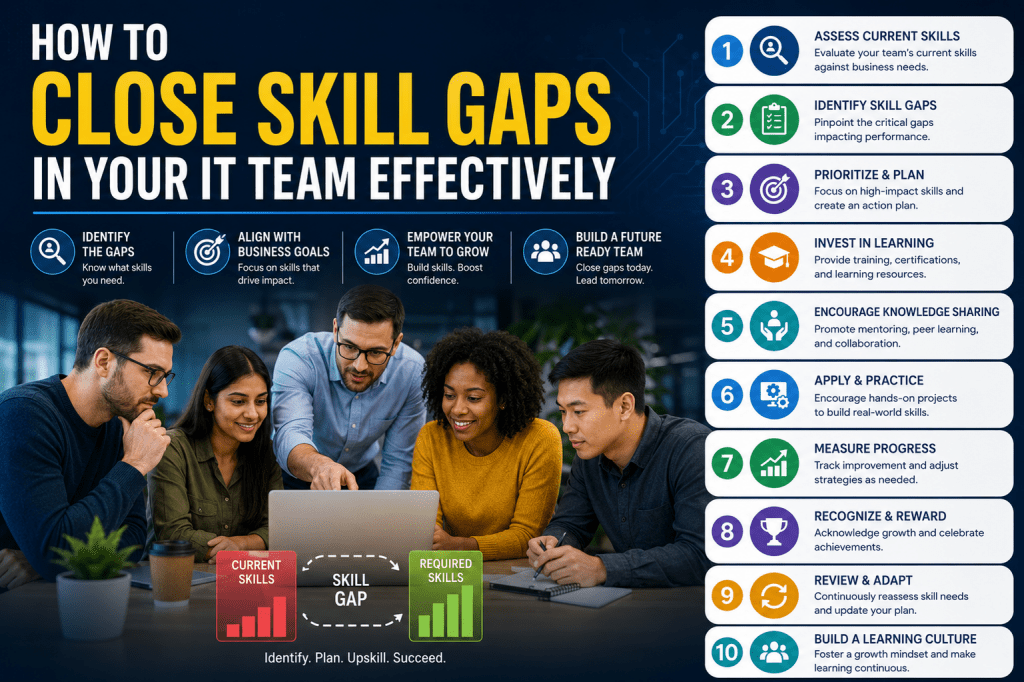
Skill gaps in IT teams can create serious problems for businesses. Projects may slow down, security risks can increase, and employees may struggle to keep up with changing technologies. Even a small gap in technical knowledge can affect productivity and lead to costly mistakes.
Technology evolves quickly, and IT professionals are expected to manage multiple responsibilities at once. From cloud computing to cybersecurity and automation, teams need updated skills to handle modern systems efficiently. Without proper training, businesses often fall behind competitors and face operational challenges.
Skill gaps also increase pressure on experienced employees. When only a few people understand critical systems, they become overloaded with tasks and troubleshooting responsibilities. This can lead to stress, burnout, and higher employee turnover.
Organizations that focus on continuous learning create stronger and more adaptable teams. Investing in employee development helps businesses improve performance, reduce risks, and stay competitive in a fast-changing industry.
Why IT Skill Gaps Continue to Grow
One major reason skill gaps continue to grow is the rapid pace of technological change. New tools, platforms, and security threats appear constantly, making it difficult for employees to stay updated.
Modern IT roles also require broader knowledge than before. Employees are now expected to understand multiple technologies instead of focusing on a single specialty. For example, a system administrator may also need cloud management and cybersecurity skills.
Digital transformation has increased the demand for advanced technical expertise. Many companies adopted remote work systems, cloud infrastructure, and automation tools quickly, often without providing enough training for employees.
Limited learning opportunities can also worsen the problem. Some organizations expect employees to learn independently while handling full workloads. Without proper support, skill development becomes difficult and inconsistent.
How Skill Gaps Affect Business Performance
Skill gaps can reduce efficiency across an entire organization. Employees may take longer to complete tasks, causing delays in projects and operations. Small technical issues can turn into major problems when teams lack the expertise to solve them quickly.
Cybersecurity is another area heavily affected by skill shortages. Employees without updated security knowledge may overlook threats or fail to follow best practices. This increases the risk of data breaches and system vulnerabilities.
Customer satisfaction may also decline when IT systems perform poorly. Downtime, slow response times, and technical failures can damage trust and impact business reputation.
In some cases, companies lose opportunities for growth because teams lack the skills needed to implement new technologies. Businesses that cannot adapt quickly often struggle to compete in modern markets.
Recognizing Early Signs of Skill Gaps
Many organizations fail to notice skill gaps until major problems appear. However, there are several warning signs that indicate a team may need additional training or support.
Frequent project delays are one common indicator. If tasks regularly take longer than expected, employees may lack the technical skills needed to complete them efficiently.
Another sign is dependency on a small number of experts. When only one or two employees can handle critical systems or solve specific problems, the organization becomes vulnerable.
Repeated mistakes or troubleshooting issues may also reveal knowledge gaps. Employees who struggle with routine tasks often need additional guidance or hands-on training.
Low confidence when adopting new technologies is another warning sign. Teams that resist change or avoid learning new systems may require stronger development programs.
The Importance of Proactive Skill Development
Waiting until problems appear can make skill gaps harder to fix. Businesses benefit more when they take a proactive approach to employee development.
Continuous learning helps employees stay updated with industry changes. It also improves confidence and encourages innovation within teams.
Proactive development reduces the risk of operational disruptions. Teams with updated skills can adapt faster to new technologies and changing business needs.
Investing in learning opportunities also improves employee satisfaction. Workers are more likely to stay with organizations that support career growth and professional development.
Strong development strategies create long-term business advantages. Companies with highly skilled IT teams are often more productive, secure, and competitive.
Creating a Learning-Focused Work Environment
A positive learning culture encourages employees to improve their skills regularly. Organizations should make learning part of everyday work instead of treating it as an occasional activity.
Managers play an important role in supporting growth. Encouraging employees to ask questions, explore new technologies, and share knowledge creates a more collaborative environment.
Businesses should also provide access to practical learning opportunities. Hands-on experience often helps employees learn faster than theory alone.
Recognizing employee progress can increase motivation. Simple appreciation for completed certifications, successful projects, or improved performance can encourage continuous learning.
A supportive work environment makes employees more willing to adapt to change and develop new technical skills.
Using Skills Assessments to Identify Weak Areas
Before solving skill gaps, organizations must understand where weaknesses exist. Skills assessments help businesses evaluate employee knowledge and identify areas that need improvement.
Self-assessment surveys can provide useful insights into employee confidence levels and technical understanding. While not always completely accurate, they offer a starting point for evaluation.
Performance reviews also help identify recurring issues. Managers can analyze patterns related to productivity, troubleshooting, and technical challenges.
Project analysis is another effective method. If certain tasks consistently create delays or confusion, there may be a lack of expertise in those areas.
Comparing team capabilities with industry standards can also highlight missing skills. This helps organizations prepare for future technological demands more effectively.
Building Effective Training Programs for IT Teams
Training programs are one of the most effective ways to close skill gaps in IT departments. However, training should focus on practical knowledge instead of overwhelming employees with unnecessary information. The goal is to help teams improve their abilities while continuing their daily responsibilities efficiently.
Many organizations make the mistake of offering generic training sessions that do not match actual business needs. Effective programs should focus on the technologies, systems, and tools employees use regularly. When training is directly connected to real work challenges, employees learn faster and apply their knowledge more confidently.
Hands-on learning is especially valuable in IT environments. Employees often understand technical concepts better when they can practice them in real situations. Simulated environments, test projects, and live troubleshooting exercises can improve learning outcomes significantly.
Training should also be flexible. Different employees learn in different ways, so organizations should combine video lessons, workshops, documentation, and practical assignments. A flexible approach increases engagement and helps employees retain information more effectively.
Regular learning opportunities are more beneficial than one-time sessions. Small and consistent training activities help employees stay updated without interrupting productivity. Continuous learning keeps teams prepared for changing technologies and business requirements.
The Value of On-the-Job Learning
On-the-job learning allows employees to improve their skills while handling real tasks and responsibilities. This approach is highly effective because employees gain practical experience instead of relying only on theoretical knowledge.
Shadowing experienced team members is one simple way to support learning. Junior employees can observe how senior professionals troubleshoot systems, manage projects, and solve technical problems. This helps them understand workflows and best practices more quickly.
Stretch assignments can also improve technical growth. Giving employees slightly challenging tasks encourages them to learn new skills and build confidence. Managers should provide guidance while allowing employees enough independence to develop problem-solving abilities.
Collaborative projects create additional learning opportunities. Team members can share knowledge naturally while working together on system upgrades, software deployments, or infrastructure improvements.
Practical experience often improves learning speed and retention more than classroom-style training alone. Employees become more confident when they successfully apply new knowledge in real situations.
Encouraging Employees to Earn Certifications
Professional certifications can help employees strengthen their expertise and validate their technical skills. Certifications are especially useful in areas such as cybersecurity, networking, cloud computing, and system administration.
Many employees feel more motivated when they have clear learning goals. Certification programs provide structured learning paths that guide employees through important concepts and practical skills.
Organizations that support certification programs often build stronger technical teams. Certified employees usually gain better understanding of industry standards, security practices, and modern technologies.
Employers can encourage participation by covering training costs, providing study materials, or offering dedicated learning time during work hours. This support demonstrates that the organization values employee development.
Certifications also improve employee confidence. Workers who complete professional programs often feel more capable when handling technical challenges or working with advanced systems.
Businesses benefit as well because certified professionals can improve service quality, system reliability, and operational efficiency.
Using Workshops and Interactive Sessions
Interactive workshops provide employees with opportunities to learn directly from real discussions and technical demonstrations. Unlike passive learning methods, workshops encourage participation and active problem-solving.
Live sessions allow employees to ask questions, share experiences, and clarify difficult concepts immediately. This improves understanding and reduces confusion about technical processes.
Workshops can focus on specific topics such as cloud security, automation tools, network troubleshooting, or software deployment practices. Short and focused sessions are often more effective than long presentations filled with too much information.
Practical exercises during workshops can improve engagement. Employees learn more effectively when they participate in troubleshooting activities, configuration tasks, or real-world scenarios.
Interactive learning also encourages teamwork. Employees can exchange ideas, discuss challenges, and develop stronger collaboration skills while learning together.
Organizations that regularly organize workshops create environments where continuous improvement becomes part of company culture.
Creating a Strong Mentorship Program
Mentorship programs help employees learn faster by connecting them with experienced professionals. This approach improves both technical knowledge and workplace collaboration.
New employees often adapt more quickly when they receive guidance from senior team members. Mentors can explain systems, share troubleshooting techniques, and help junior staff avoid common mistakes.
A successful mentorship program should include clear goals and regular communication. Both mentors and learners should understand what skills need improvement and how progress will be measured.
Mentorship also helps preserve valuable organizational knowledge. Experienced employees often possess practical insights that may not exist in documentation or training manuals.
Informal mentoring can be just as effective as structured programs. Encouraging open communication between team members creates a supportive learning environment.
Strong mentorship relationships improve employee confidence and strengthen teamwork across departments.
Improving Knowledge Sharing Within Teams
Knowledge sharing is essential for reducing dependency on individual employees. When information stays with only a few experts, businesses face risks if those employees become unavailable.
Encouraging employees to document processes and solutions can improve operational stability. Well-organized documentation helps teams solve problems faster and maintain consistency.
Internal presentations and technical discussions also support knowledge sharing. Employees can explain recent projects, troubleshooting methods, or new technologies to the rest of the team.
Creating an internal knowledge base allows employees to access guides, procedures, and best practices whenever needed. This reduces repeated mistakes and improves efficiency.
Open communication is important for successful collaboration. Employees should feel comfortable asking questions and sharing ideas without fear of criticism.
Organizations with strong knowledge-sharing cultures often develop more adaptable and resilient IT teams.
Cross-Training Employees for Better Flexibility
Cross-training helps employees learn responsibilities outside their primary roles. This improves team flexibility and reduces operational risks.
When employees understand multiple systems and processes, businesses can continue operating smoothly even if key staff members are unavailable. Cross-training prevents critical knowledge from being limited to one person.
Rotational programs are an effective cross-training method. Employees can spend time working with different departments or technologies to expand their experience.
Cross-training also improves collaboration because employees gain better understanding of how different roles contribute to projects and operations.
Teams with broader skill sets can respond more effectively to unexpected challenges. Employees become more adaptable and capable of supporting each other during high-pressure situations.
This approach also creates additional career growth opportunities for employees who want to explore new technical areas.
Hiring Strategies to Fill Critical Skill Gaps
In some situations, training existing employees may not be enough to address major skill shortages. Businesses may need to hire professionals with specialized expertise.
Before starting recruitment, organizations should identify exactly which skills are missing and how those skills support long-term business goals.
Hiring based only on technical qualifications can sometimes create problems. Companies should also evaluate communication abilities, adaptability, and willingness to learn.
Technology changes constantly, so employees who can adapt quickly often provide greater long-term value than candidates with limited flexibility.
A detailed hiring strategy helps businesses avoid rushed decisions and expensive recruitment mistakes.
Combining strategic hiring with internal development creates balanced and capable IT teams.
Supporting Continuous Learning in the Workplace
Continuous learning should become part of everyday work culture. Employees need regular opportunities to improve their knowledge and explore new technologies.
Managers can support learning by encouraging curiosity and allowing employees time for skill development. Even small learning sessions each week can produce significant improvements over time.
Providing access to learning platforms, technical resources, and practice environments helps employees stay engaged and motivated.
Organizations should also recognize employee achievements. Celebrating completed training, certifications, or successful projects encourages further development.
Learning should not feel like an extra burden. Businesses that integrate development into normal workflows often achieve better participation and stronger results.
A culture of continuous improvement helps organizations remain competitive while preparing employees for future technological changes.
Measuring the Success of Skill Development Efforts
Training programs and learning initiatives are only effective when organizations track their results properly. Without measuring progress, businesses cannot determine whether employees are actually improving their skills or if additional support is needed.
Clear goals help employees understand expectations and give managers a way to evaluate improvement. Instead of setting broad objectives, organizations should create measurable targets linked to business needs.
For example, a company improving cybersecurity skills may track how quickly employees respond to threats or how effectively they follow security procedures. Practical results often provide better insight than theory-based assessments alone.
Regular monitoring also helps organizations identify which training methods work best. Some employees may perform better with hands-on learning, while others may benefit more from guided workshops or collaborative projects.
Tracking progress encourages accountability and helps businesses make smarter decisions about future training investments.
Using Performance Reviews to Identify Progress
Performance reviews can provide valuable insights into employee development. Managers should focus not only on productivity but also on technical growth, adaptability, and problem-solving abilities.
Regular feedback sessions help employees understand their strengths and areas needing improvement. Constructive discussions create opportunities for employees to ask questions and request additional support when necessary.
Reviews should focus on real work performance instead of only theoretical knowledge. Employees who successfully apply new skills in projects demonstrate meaningful progress.
Managers should also recognize improvements openly. Positive feedback increases confidence and motivates employees to continue learning.
Frequent evaluations help organizations identify remaining skill gaps before they become larger operational problems.
The Importance of Employee Feedback
Employees often have valuable insights into training effectiveness. Asking team members for feedback helps organizations improve learning programs and identify challenges that may not be immediately visible.
Some employees may feel training materials are too advanced, while others may need more practical exercises or additional support. Listening to feedback allows organizations to adjust learning methods accordingly.
Open communication also helps employees feel involved in their own development process. Workers are more motivated when they know their opinions are valued.
Surveys, team discussions, and one-on-one meetings can all provide useful information about learning experiences.
Organizations that actively gather employee feedback often build more effective and engaging training environments.
Creating Personalized Learning Paths
Not every employee has the same experience level or career goals. Personalized learning paths allow organizations to support individual growth more effectively.
Some employees may need foundational technical training, while others require advanced expertise in specialized areas such as cybersecurity, cloud computing, or automation.
Customized learning plans help employees focus on skills most relevant to their responsibilities and career development.
Managers should work closely with employees to identify learning priorities and realistic goals. This approach improves engagement and makes development efforts more meaningful.
Personalized learning also prevents employees from feeling overwhelmed by unnecessary training content.
Organizations that support individual growth often achieve stronger long-term performance and higher employee satisfaction.
Addressing Resistance to Learning and Change
Some employees may resist training programs or new technologies. This resistance can slow progress and create challenges during digital transformation efforts.
Fear of failure is one common reason employees avoid learning new systems. Some workers worry they may struggle to adapt or appear less capable than others.
Organizations can reduce resistance by creating supportive learning environments where mistakes are treated as part of growth.
Clear communication is also important. Employees should understand why new skills are necessary and how development benefits both the business and their careers.
Providing practical support, mentorship, and encouragement can help employees feel more confident during periods of change.
Building a positive learning culture reduces fear and increases willingness to adopt new technologies and processes.
The Role of Leadership in Closing Skill Gaps
Strong leadership plays a major role in successful employee development. Managers and team leaders influence how employees view learning and professional growth.
Leaders who actively support training programs encourage greater participation across teams. Employees are more likely to engage when management demonstrates commitment to development.
Managers should lead by example by continuing to learn and adapt themselves. This creates a workplace culture where improvement is seen as a normal and valuable process.
Leadership teams should also ensure employees have enough time and resources for learning. Overloading employees with responsibilities while expecting constant training can reduce motivation.
Supportive leadership improves morale, strengthens collaboration, and helps organizations achieve long-term development goals.
Balancing Productivity With Learning
Many organizations struggle to balance daily operations with employee training. Heavy workloads can make it difficult for employees to focus on skill development.
Businesses should avoid treating learning as an extra task added on top of existing responsibilities. Instead, development should become part of regular workflows.
Short training sessions, flexible schedules, and practical learning activities can help employees improve skills without disrupting productivity.
Managers should also prioritize realistic expectations. Employees need enough time to absorb and apply new knowledge effectively.
Balancing productivity with learning creates sustainable development strategies that benefit both employees and business operations.
Organizations that support continuous learning without overwhelming staff often achieve stronger long-term results.
Strengthening Team Collaboration Through Skill Development
Skill development does more than improve technical knowledge. It also strengthens teamwork and communication within IT departments.
Employees who learn together often collaborate more effectively on projects and troubleshooting tasks. Shared learning experiences build stronger relationships and improve trust between team members.
Cross-functional training can also improve understanding between departments. Employees gain better awareness of how different systems and roles contribute to overall business operations.
Collaborative learning environments encourage employees to share ideas, solve problems together, and support each other during challenges.
Improved teamwork often leads to faster project completion, better decision-making, and stronger operational performance.
Organizations with collaborative cultures are usually more adaptable during periods of technological change.
Preparing IT Teams for Future Technologies
Technology will continue evolving, and businesses must prepare employees for future demands instead of focusing only on current needs.
Emerging technologies such as artificial intelligence, machine learning, automation, and advanced cybersecurity systems are already changing the IT industry.
Organizations should monitor industry trends and identify which skills may become important in the future. Early preparation allows businesses to adapt more smoothly to technological changes.
Future-focused learning strategies help employees remain competitive and confident in evolving work environments.
Businesses that invest in long-term skill development are often more innovative and better prepared for industry changes.
Preparing teams for future technologies also reduces the risk of sudden skill shortages that can disrupt operations later.
Building Long-Term Employee Retention Through Development
Employees are more likely to remain with organizations that support their professional growth. Learning opportunities improve job satisfaction and create stronger loyalty.
Workers who feel valued and supported often become more engaged and motivated in their roles. Development programs show employees that the organization is invested in their future.
Career growth opportunities can also reduce turnover rates. Employees are less likely to seek other positions when they see clear paths for advancement within the company.
Retaining experienced employees helps businesses maintain valuable knowledge and reduce recruitment costs.
Strong development strategies benefit both organizations and employees by creating stable, skilled, and motivated teams.
Companies that prioritize employee growth often build stronger reputations and attract high-quality talent more easily.
Using Technology to Support Employee Learning
Technology can make skill development faster, easier, and more effective for IT teams. Modern learning platforms allow employees to access training materials anytime, making learning more flexible and convenient.
Online learning systems help employees study at their own pace without interrupting daily responsibilities. Video tutorials, virtual labs, quizzes, and interactive exercises improve engagement and make technical concepts easier to understand.
Cloud-based learning environments are especially useful for IT professionals. Employees can practice working with servers, networks, security systems, and automation tools in simulated environments without affecting live business operations.
Artificial intelligence is also improving workplace learning. Some platforms can recommend personalized training based on employee performance, interests, and skill gaps.
Technology-driven learning helps organizations train employees consistently while reducing costs associated with traditional classroom programs.
Developing Strong Cybersecurity Awareness
Cybersecurity is one of the most important areas where skill gaps can create serious business risks. Employees without proper security knowledge may accidentally expose systems to threats, phishing attacks, or data breaches.
Organizations should provide regular cybersecurity awareness training for both technical and non-technical employees. Even simple mistakes, such as weak passwords or suspicious email clicks, can create major security problems.
Practical exercises improve cybersecurity learning. Simulated phishing tests and security drills help employees recognize threats and respond correctly in real situations.
IT teams should also stay updated on modern security practices, compliance requirements, and emerging attack methods. Cyber threats constantly evolve, so continuous learning is essential.
Strong cybersecurity awareness reduces risks and helps businesses maintain trust with customers and clients.
Improving Communication Skills in IT Teams
Technical knowledge alone is not enough for successful IT operations. Communication skills are equally important because IT professionals often work with different departments, clients, and management teams.
Employees who can explain technical issues clearly help organizations solve problems faster and reduce misunderstandings.
Strong communication improves teamwork during projects and troubleshooting activities. Team members can collaborate more effectively when they share ideas openly and clearly.
Presentation and documentation skills are also valuable. IT employees often need to create reports, explain processes, or train other staff members.
Organizations should encourage employees to improve both technical and interpersonal abilities. Balanced skill development creates more effective and professional teams.
Better communication also improves customer experiences when IT teams provide support or manage technical issues.
The Benefits of Building Multi-Skilled IT Teams
Multi-skilled employees provide greater flexibility and stability for organizations. Instead of depending on specialists for every issue, businesses can rely on team members who understand multiple systems and technologies.
Employees with broader knowledge can support different departments, adapt to changing workloads, and solve problems more efficiently.
This flexibility becomes especially important during emergencies or unexpected staff shortages. Cross-functional knowledge helps businesses continue operating smoothly under pressure.
Multi-skilled teams also encourage innovation. Employees with experience across different technologies often identify better solutions and process improvements.
Organizations that invest in broad skill development usually respond faster to industry changes and customer demands.
Balanced teams with diverse technical abilities create stronger long-term business performance.
Reducing Skill Gaps Through Internal Promotions
Promoting employees internally can help organizations address skill gaps while improving employee motivation and retention.
Existing employees already understand company systems, workflows, and business goals. With proper training, they can often transition into advanced technical roles more effectively than external hires.
Internal promotions also encourage employees to focus on long-term growth. Workers are more motivated when they see clear opportunities for career advancement.
Organizations should identify high-potential employees early and provide them with leadership training, technical development, and mentorship opportunities.
Succession planning is another important strategy. Preparing employees for future responsibilities reduces disruption when senior staff leave or retire.
Supporting internal career growth creates stronger loyalty and preserves valuable organizational knowledge.
Creating Realistic Skill Development Goals
Many training programs fail because organizations set unrealistic expectations. Employees need achievable goals that match their current experience and workload.
Large learning objectives should be divided into smaller milestones. Step-by-step progress feels more manageable and keeps employees motivated.
Managers should focus on practical improvements instead of expecting employees to master complex technologies immediately.
Regular progress reviews help employees stay focused and understand how their development connects to business needs.
Organizations should also remain flexible. Learning speeds vary between individuals, and some employees may require additional support or practice.
Realistic development plans create better long-term results and reduce frustration during training programs.
Encouraging Self-Learning and Initiative
Employees who take initiative in learning often develop stronger technical abilities over time. Organizations should encourage curiosity and independent problem-solving.
Providing access to learning resources such as online libraries, technical forums, and practice environments supports self-development.
Managers can also encourage employees to explore new tools, experiment with technologies, and participate in technical discussions.
Self-learning helps employees become more adaptable and confident when facing unfamiliar challenges.
However, organizations should still provide guidance and support. Independent learning works best when employees know they can ask questions and receive assistance when needed.
A workplace culture that values curiosity and improvement encourages continuous professional growth.
Handling Budget Challenges in Employee Training
Some organizations avoid training investments because of budget limitations. However, ignoring skill gaps often creates larger financial problems later.
System failures, security breaches, project delays, and employee turnover can become far more expensive than development programs.
Businesses can manage training costs by using flexible learning options such as online courses, internal workshops, and peer-to-peer learning sessions.
Free learning resources and open-source platforms can also support technical development without major expenses.
Organizations should treat employee learning as a long-term investment instead of a short-term cost.
Even smaller training initiatives can create noticeable improvements in productivity, efficiency, and operational stability.
Building a Future-Ready IT Workforce
Future-ready IT teams are adaptable, knowledgeable, and prepared for constant technological change. Organizations that focus on long-term learning create stronger foundations for growth and innovation.
Businesses should continuously evaluate emerging technologies and prepare employees for future industry demands.
Adaptability is becoming one of the most valuable skills in modern IT environments. Employees who learn quickly and embrace change help organizations remain competitive.
Future-ready teams also focus on collaboration, communication, and problem-solving alongside technical expertise.
Continuous improvement should become part of company culture rather than a temporary initiative.
Organizations that prioritize learning and development position themselves for stronger long-term success in evolving digital environments.
Strengthening Business Growth Through Skilled IT Teams
Highly skilled IT teams contribute directly to business growth and operational success. Employees with updated knowledge can implement technologies more efficiently, solve problems faster, and support innovation across departments.
Strong technical teams improve system reliability, cybersecurity, and customer experiences. Businesses can launch projects more smoothly and respond to market changes with greater confidence.
Skilled employees also help organizations identify opportunities for automation, efficiency improvements, and digital transformation.
When businesses invest in employee development, they build stronger internal capabilities and reduce dependency on external support.
Long-term growth becomes more sustainable when organizations maintain adaptable and knowledgeable IT teams.
Continuous skill development ensures businesses remain competitive, productive, and prepared for future challenges.
The Importance of Adaptability in IT Teams
Adaptability has become one of the most valuable qualities in modern IT environments. Technology changes rapidly, and employees must be willing to learn new systems, tools, and processes regularly.
Teams that adapt quickly can handle business changes more efficiently. Whether an organization introduces cloud platforms, automation systems, or new cybersecurity measures, adaptable employees help reduce disruption during transitions.
Adaptability also improves problem-solving abilities. Employees who are comfortable learning new technologies often respond better to unexpected technical challenges.
Organizations should encourage flexible thinking by exposing employees to different projects and responsibilities. Learning outside of a single specialty helps employees become more confident and versatile.
A culture that supports adaptability prepares businesses for long-term success in competitive industries.
Improving Problem-Solving Skills in IT Departments
Strong problem-solving skills are essential for IT professionals because technical issues can appear at any time. Employees must be able to analyze situations, identify root causes, and apply effective solutions quickly.
Practical experience is one of the best ways to improve troubleshooting abilities. Hands-on tasks, simulations, and real-world scenarios help employees build confidence.
Encouraging employees to participate in technical discussions can also improve analytical thinking. Sharing different perspectives often leads to better solutions.
Managers should avoid creating environments where employees fear mistakes. Learning from errors is an important part of technical growth.
Organizations that focus on problem-solving development often experience faster issue resolution and stronger operational stability.
Encouraging Innovation Through Continuous Learning
Continuous learning does more than close skill gaps. It also encourages innovation across the organization.
Employees who regularly explore new technologies are more likely to identify creative solutions and process improvements. Learning introduces fresh ideas that can improve productivity and efficiency.
Innovation often grows in workplaces where employees feel comfortable experimenting with new approaches. Organizations should encourage curiosity and allow employees to test ideas in controlled environments.
Collaboration also supports innovation. Teams that share knowledge and work together often discover better ways to solve technical challenges.
Businesses that invest in learning create environments where innovation becomes part of everyday operations.
Strong innovation helps organizations remain competitive and responsive to changing market demands.
Managing Remote IT Teams Effectively
Remote work has changed how many IT teams operate. While remote environments offer flexibility, they also create challenges related to communication, collaboration, and skill development.
Organizations should provide remote employees with access to learning resources and virtual training opportunities. Online workshops and digital collaboration tools help maintain continuous development.
Clear communication is especially important for remote teams. Managers should schedule regular meetings, provide feedback, and encourage open discussions.
Virtual mentorship programs can also support remote employees. Experienced professionals can guide team members through technical challenges even when working from different locations.
Businesses that manage remote learning effectively can maintain productivity while supporting employee growth.
Strengthening Employee Confidence Through Training
Employees perform better when they feel confident in their abilities. Skill development programs help workers gain confidence by improving their technical knowledge and practical experience.
Confident employees are more willing to take initiative, solve problems independently, and contribute ideas during projects.
Training also reduces fear when organizations adopt new technologies. Employees who understand systems properly feel more comfortable handling changes and responsibilities.
Managers should recognize employee achievements regularly. Positive feedback after successful training or project completion helps build motivation.
A confident IT workforce improves productivity, teamwork, and overall workplace morale.
Organizations that support employee confidence often develop stronger and more engaged teams.
Using Data to Improve Training Strategies
Data analysis can help organizations make smarter decisions about employee development programs.
Tracking metrics such as project completion times, system performance, certification progress, and troubleshooting efficiency provides insights into skill improvement.
Businesses can use this information to identify areas where employees continue struggling and adjust training methods accordingly.
Employee feedback combined with performance data creates a clearer picture of training effectiveness.
Organizations should review learning strategies regularly instead of relying on outdated programs that may no longer meet business needs.
Data-driven development plans help businesses invest resources more effectively and achieve stronger learning outcomes.
Creating Leadership Opportunities Within IT Teams
Leadership development is important for long-term business stability. Organizations should prepare employees for future management and senior technical roles before vacancies appear.
Leadership opportunities can include project management responsibilities, mentoring junior employees, or leading technical discussions.
Developing leadership skills improves communication, decision-making, and team coordination.
Employees who receive leadership training often become more confident and motivated in their careers.
Succession planning also reduces operational risks when senior staff leave the organization.
Strong internal leadership creates more stable and resilient IT departments capable of handling growth and change effectively.
The Connection Between Employee Growth and Business Success
Employee development directly affects overall business performance. Skilled IT professionals improve operational efficiency, reduce downtime, and strengthen cybersecurity practices.
Well-trained teams can implement new technologies more successfully and support digital transformation efforts with fewer disruptions.
Businesses also benefit financially from strong development programs. Reduced turnover, improved productivity, and faster problem resolution help lower long-term operational costs.
Employees who feel supported are more likely to stay loyal to the organization and contribute positively to workplace culture.
Organizations that invest in people often build stronger reputations and attract better talent in competitive industries.
Long-term business growth becomes easier when employees continue improving their knowledge and abilities.
Overcoming Common Challenges in Skill Development
Many organizations face challenges while improving employee skills. Limited budgets, lack of time, and employee resistance can slow progress.
To overcome these issues, businesses should create realistic and flexible learning plans. Short and focused training sessions are often easier to manage than large programs.
Managers should communicate the benefits of development clearly so employees understand how learning supports career growth.
Organizations can also reduce costs by combining internal training, mentorship, and online learning resources.
Patience is important because skill development takes time. Continuous improvement produces better long-term results than rushed training efforts.
Businesses that remain committed to learning strategies often achieve stronger workforce performance over time.
Preparing IT Teams for Long-Term Success
Long-term success requires ongoing investment in employee growth and adaptability. Technology will continue evolving, and businesses must prepare teams for future changes.
Organizations should focus on building learning cultures where employees regularly update their skills and share knowledge with others.
Future-ready teams combine technical expertise with communication, leadership, and problem-solving abilities.
Continuous development improves operational stability, encourages innovation, and strengthens business competitiveness.
Employees who feel supported in their careers are more motivated, productive, and prepared for new challenges.
Strong IT teams are built through consistent learning, collaboration, and long-term planning that aligns employee growth with business goals.
Final Thoughts
Addressing skill gaps in an IT team is not something businesses can ignore. Technology continues to evolve, and organizations that fail to develop employee skills often struggle with productivity issues, security risks, and slower growth.
The most successful companies focus on continuous improvement instead of temporary fixes. Training programs, mentorship, cross-training, and knowledge sharing all play an important role in building stronger and more adaptable teams.
Investing in employee development benefits both businesses and workers. Employees gain confidence, improve their technical abilities, and become better prepared for future challenges. At the same time, organizations achieve better efficiency, stronger security, smoother operations, and improved innovation.
Creating a learning-focused culture helps teams stay competitive in fast-changing industries. Businesses that encourage curiosity, collaboration, and ongoing skill development are more prepared to handle new technologies and market demands.
Strong IT teams are built through consistent support, practical learning opportunities, and long-term planning. Organizations that prioritize employee growth create more productive, motivated, and future-ready workforces capable of driving long-term success.