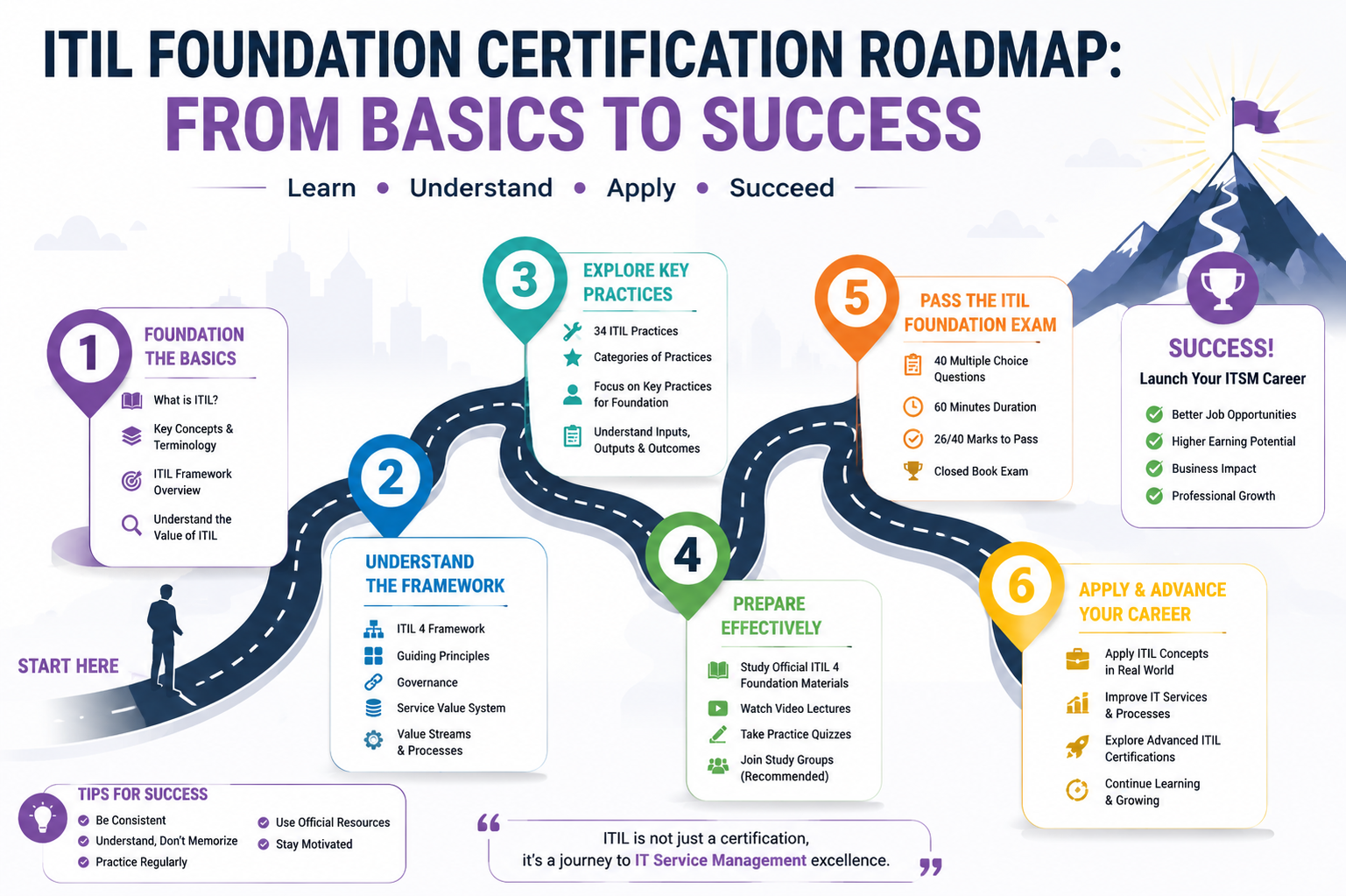
The journey toward mastering IT service management begins with understanding structured frameworks that guide how technology supports business goals. One of the most recognized and widely adopted frameworks in the IT industry is ITIL, which provides a comprehensive approach to managing IT services efficiently and effectively. For individuals aiming to build a strong foundation in IT service management, the ITIL Foundation certification serves as a crucial starting point. It introduces learners to essential concepts, terminology, and practices that are widely used across organizations globally. This roadmap is designed to help learners navigate the early stages of this journey, understand what ITIL represents, and recognize how it can shape their career path in the technology sector.
Understanding the Importance of ITIL in Modern IT Environments
In today’s technology-driven world, organizations rely heavily on IT services to deliver value to customers and maintain operational efficiency. ITIL plays a significant role in ensuring that these services are aligned with business needs. It is not just a set of rules but a flexible framework that enables organizations to adopt best practices tailored to their specific requirements. By focusing on service quality, customer satisfaction, and continuous improvement, ITIL helps businesses maintain consistency and reliability in their IT operations. For learners, gaining knowledge of ITIL means acquiring a universal language that is recognized across industries, making it easier to collaborate with teams and contribute to organizational success.
Core Purpose of the ITIL Foundation Certification
The ITIL Foundation certification is designed to provide a broad overview of how IT services are managed throughout their lifecycle. It introduces learners to key concepts such as service strategy, service design, service transition, service operation, and continual service improvement. These stages form the backbone of ITIL and demonstrate how services evolve from initial planning to ongoing optimization. At this level, the focus is not on deep technical expertise but on building a clear understanding of how different processes and functions interact to deliver value. This makes it an ideal starting point for beginners as well as professionals looking to formalize their existing knowledge.
Building Awareness of the Service Lifecycle
One of the most important aspects of ITIL Foundation is understanding the service lifecycle. Each stage of the lifecycle represents a critical phase in delivering IT services. Service strategy focuses on defining the direction and objectives of IT services, ensuring alignment with business goals. Service design translates these strategies into actionable plans, including architecture, processes, and policies. Service transition ensures that new or modified services are deployed smoothly without disrupting existing operations. Service operation deals with the day-to-day management of services, ensuring reliability and performance. Finally, continual service improvement emphasizes the need for ongoing evaluation and enhancement of services to meet changing demands. Together, these stages create a cohesive approach to managing IT services effectively.
Why ITIL Foundation is an Ideal Starting Point
For individuals entering the IT field, the ITIL Foundation certification offers a structured introduction to service management principles. It does not require prior experience, making it accessible to a wide range of learners. Whether someone is a recent graduate, an IT support professional, or a manager seeking to improve service delivery, this certification provides valuable insights. It helps learners understand how their roles fit into the larger organizational framework and how their contributions impact overall service quality. By establishing a strong conceptual base, the ITIL Foundation prepares learners for more advanced certifications and specialized roles in the future.
Developing a Common Language in IT Organizations
One of the key benefits of ITIL is the establishment of a common language across teams and departments. In many organizations, communication gaps can lead to inefficiencies and misunderstandings. ITIL addresses this challenge by standardizing terminology and processes, enabling teams to collaborate more effectively. For learners, this means gaining the ability to communicate ideas clearly and align their work with organizational objectives. This shared understanding is particularly valuable in large enterprises where multiple teams are involved in delivering complex IT services.
Exploring the Structure of ITIL Qualification Levels
The ITIL certification pathway is structured to support continuous learning and professional growth. It begins with the Foundation level and progresses through more advanced stages, each building on the knowledge gained in the previous level. This structured approach ensures that learners develop a comprehensive understanding of IT service management over time. Each level introduces new concepts and skills, allowing individuals to specialize in areas that align with their career goals. By following this pathway, learners can gradually enhance their expertise and take on more complex responsibilities within their organizations.
Foundation Level as the First Step in Professional Growth
The Foundation level serves as the entry point into the ITIL framework. It focuses on creating awareness and understanding rather than technical specialization. This level is essential because it lays the groundwork for all subsequent certifications. Without a clear grasp of foundational concepts, it becomes difficult to progress to more advanced topics. The knowledge gained at this stage is applicable across various roles, making it a valuable asset for professionals in different areas of IT. It also provides a solid base for those who wish to pursue leadership positions in service management.
Key Concepts Introduced at the Foundation Level
At the Foundation level, learners are introduced to several important concepts that form the basis of ITIL. These include the definition of a service, the role of value creation, and the importance of customer satisfaction. Understanding these concepts helps learners see the bigger picture of how IT services contribute to business success. Additionally, learners explore the roles and responsibilities within service management, gaining insight into how different functions work together. This holistic perspective is crucial for developing effective strategies and making informed decisions in real-world scenarios.
The Role of Processes in ITIL
Processes play a central role in the ITIL framework. They provide a structured approach to managing activities and ensuring consistency in service delivery. At the Foundation level, learners are introduced to various processes associated with each stage of the service lifecycle. These processes help organizations achieve specific objectives, such as incident management, change management, and problem resolution. By understanding how these processes work, learners can contribute to improving efficiency and reducing disruptions in IT services. This knowledge is particularly valuable for those involved in operational roles where timely and effective responses are critical.
Understanding Functions and Their Importance
In addition to processes, ITIL also defines functions that support service management activities. Functions are specialized units within an organization that perform specific tasks, such as service desk operations or technical support. At the Foundation level, learners gain an overview of these functions and their roles in delivering services. This understanding helps individuals identify how different teams collaborate to achieve common goals. It also highlights the importance of coordination and communication in maintaining service quality and meeting customer expectations.
Continual Service Improvement as a Core Principle
A key principle of ITIL is the focus on continual service improvement. This concept emphasizes the need for ongoing evaluation and enhancement of services to adapt to changing business needs. At the Foundation level, learners are introduced to methods and approaches for identifying areas of improvement and implementing changes effectively. This mindset encourages a proactive approach to service management, where organizations constantly seek ways to enhance performance and deliver greater value. For learners, adopting this principle early in their careers can lead to more innovative and effective solutions.
Practical Relevance of ITIL Knowledge
One of the reasons ITIL remains highly valued in the industry is its practical applicability. The concepts and practices introduced at the Foundation level can be applied directly to real-world scenarios. Whether it is improving customer support processes or managing service disruptions, ITIL provides a framework for addressing common challenges. This practical relevance makes the certification beneficial not only for theoretical knowledge but also for day-to-day operations. Learners can immediately see the impact of their understanding in their work environments.
Expanding Career Opportunities with ITIL Foundation
Obtaining the ITIL Foundation certification can open doors to a wide range of career opportunities. Many organizations prefer candidates who have a basic understanding of service management principles, as it indicates their ability to contribute to structured and efficient operations. Roles such as IT support specialist, service desk analyst, and project coordinator often require familiarity with ITIL concepts. As learners gain experience and pursue higher-level certifications, they can move into more advanced positions, including management and leadership roles. This progression highlights the long-term value of starting with the Foundation level.
Integrating ITIL with Other Professional Skills
While ITIL focuses on service management, it can be effectively combined with other skill sets to enhance professional capabilities. For example, knowledge of project management methodologies can complement ITIL practices, enabling individuals to manage both services and projects efficiently. Similarly, familiarity with agile and DevOps approaches can enhance the ability to deliver services بسرعة and adapt to changing requirements. By integrating ITIL with these skills, learners can create a well-rounded profile that is highly attractive to employers.
Adapting ITIL Practices to Organizational Needs
One of the strengths of ITIL is its flexibility. It is not a rigid framework but rather a set of guidelines that can be adapted to suit different organizational contexts. At the Foundation level, learners begin to understand how these practices can be customized based on specific requirements. This adaptability ensures that ITIL remains relevant across various industries and business models. For professionals, this means having the ability to apply their knowledge in diverse environments and contribute to unique organizational goals.
The Value of Continuous Learning in ITIL
The ITIL journey does not end with the Foundation certification. It is the beginning of a continuous learning process that allows individuals to deepen their expertise and stay updated with industry trends. As technology evolves, so do the practices and methodologies associated with service management. By committing to ongoing education, learners can remain competitive and relevant in their careers. The Foundation level provides the motivation and direction needed to pursue further advancements and achieve long-term success.
Building Confidence Through Structured Knowledge
For many learners, entering the field of IT service management can feel overwhelming due to the complexity of systems and processes involved. The ITIL Foundation certification helps build confidence by providing a clear and structured understanding of key concepts. It breaks down complex ideas into manageable components, making it easier to grasp the overall framework. This confidence enables learners to take on new challenges and contribute more effectively to their organizations.
Establishing a Strong Professional Identity
Achieving the ITIL Foundation certification is not just about gaining knowledge; it is also about establishing a professional identity. It demonstrates a commitment to best practices and a willingness to invest in personal development. This recognition can enhance credibility and create opportunities for career advancement. For learners, it marks the beginning of a journey toward becoming a skilled and knowledgeable professional in the field of IT service management.
Preparing for Advanced Levels in the ITIL Pathway
As learners complete the Foundation level, they are well-positioned to explore more advanced certifications within the ITIL framework. These levels delve deeper into specific areas of service management, allowing individuals to specialize and develop expertise. The knowledge gained at the Foundation level serves as a critical foundation for understanding more complex concepts and practices. By building on this base, learners can continue to grow and achieve higher levels of proficiency in their careers.
The Role of ITIL in Shaping Future IT Leaders
ITIL is not just about managing services; it is also about developing leadership skills. By understanding how services are designed, delivered, and improved, learners gain insights into strategic decision-making and organizational management. These skills are essential for those who aspire to leadership roles in the IT industry. The Foundation level introduces these concepts, setting the stage for future growth and development as a leader in service management.
Progressing Beyond the Foundation Level
After establishing a solid understanding of IT service management principles at the Foundation level, learners naturally begin to explore the next steps in their professional journey. Progressing beyond this stage involves deepening knowledge, applying concepts in real-world scenarios, and developing the ability to align IT services with broader organizational strategies. This transition is important because it moves learners from theoretical understanding to practical application, enabling them to contribute more effectively within their roles. As individuals gain confidence in their foundational knowledge, they become better equipped to handle complex service management challenges and take on greater responsibilities.
Introduction to the Practitioner Level Mindset
The next stage in the ITIL pathway emphasizes a shift in perspective. Instead of focusing solely on understanding concepts, learners begin to explore how to apply them in dynamic environments. This mindset is crucial because modern organizations require professionals who can adapt frameworks to suit evolving business needs. The emphasis is placed on flexibility, problem-solving, and the ability to integrate ITIL practices into everyday operations. By developing this mindset, learners move closer to becoming valuable contributors who can drive meaningful improvements in service delivery.
Applying ITIL Concepts in Real-World Scenarios
One of the most significant advancements at this stage is the ability to apply ITIL concepts practically. While the Foundation level introduces processes and terminology, the next phase encourages learners to use this knowledge to solve real problems. This includes managing incidents efficiently, improving service availability, and ensuring that changes are implemented smoothly. By working through real-world scenarios, learners gain hands-on experience that strengthens their understanding and prepares them for more advanced responsibilities. This practical approach also helps bridge the gap between theory and execution, making the learning process more impactful.
Understanding the Importance of Continual Service Improvement
Continual Service Improvement remains a central theme as learners progress in their ITIL journey. At this stage, the focus shifts toward actively identifying opportunities for enhancement and implementing strategies to achieve better outcomes. This involves analyzing performance metrics, gathering feedback, and making informed decisions to optimize services. By embracing a culture of continuous improvement, organizations can remain competitive and responsive to changing demands. For learners, mastering this concept means developing the ability to think critically and proactively, which is essential for long-term success in the IT industry.
Enhancing Problem-Solving and Analytical Skills
As learners advance, they are expected to develop stronger problem-solving and analytical skills. IT service management often involves dealing with complex issues that require careful evaluation and strategic thinking. By applying ITIL practices, individuals learn how to identify root causes, assess risks, and implement effective solutions. These skills are highly valuable in any professional setting, as they enable individuals to address challenges efficiently and contribute to organizational growth. Over time, this analytical approach becomes second nature, allowing learners to handle increasingly complex situations with confidence.
Integrating ITIL with Modern Methodologies
In today’s rapidly evolving technology landscape, ITIL does not exist in isolation. It is often integrated with other methodologies and frameworks to create a more comprehensive approach to service management. Learners at this stage are introduced to concepts such as Agile, DevOps, and Lean practices, which complement ITIL principles. By understanding how these methodologies work together, individuals can create more efficient and adaptable processes. This integration allows organizations to deliver services بسرعة while maintaining quality and consistency. For learners, it provides an opportunity to expand their skill set and remain relevant in a competitive job market.
Building Collaboration Across Teams
Effective collaboration is a key component of successful IT service management. As learners progress, they begin to understand the importance of working closely with different teams and departments. IT services often involve multiple stakeholders, each with their own responsibilities and perspectives. By fostering collaboration, organizations can ensure that services are delivered seamlessly and meet customer expectations. Learners who develop strong communication and teamwork skills are better equipped to navigate complex environments and contribute to shared goals. This ability to collaborate effectively is a valuable asset in any professional setting.
Adapting to Organizational Change
Change is a constant factor in the IT industry, and professionals must be prepared to adapt to new technologies, processes, and business requirements. At this stage, learners gain a deeper understanding of change management and its role in maintaining service stability. They learn how to assess the impact of changes, plan implementations carefully, and minimize disruptions. This knowledge is essential for ensuring that organizations can evolve without compromising service quality. By mastering change management practices, learners become more resilient and capable of handling transitions effectively.
Exploring Intermediate-Level Knowledge Areas
As learners continue their journey, they may choose to explore intermediate-level knowledge areas that provide more specialized insights into IT service management. These areas focus on specific aspects of the service lifecycle, such as design, transition, and operation. By diving deeper into these topics, individuals can develop expertise in areas that align with their career goals. This specialization allows them to take on more advanced roles and contribute to strategic initiatives within their organizations. The intermediate stage represents a significant step forward in building a comprehensive understanding of ITIL practices.
Developing Leadership and Decision-Making Skills
With increased knowledge and experience comes the opportunity to develop leadership and decision-making skills. ITIL encourages professionals to think strategically and consider the broader impact of their actions. At this stage, learners begin to take on responsibilities that involve guiding teams, making critical decisions, and influencing organizational outcomes. These skills are essential for those who aspire to move into management or leadership roles. By developing a strong foundation in decision-making, learners can contribute to the success of their organizations and advance their careers.
Understanding the Value of Service Delivery Excellence
Delivering high-quality services is at the core of ITIL practices. As learners progress, they gain a deeper appreciation for what it means to achieve service delivery excellence. This involves not only meeting customer expectations but also exceeding them by providing reliable, efficient, and innovative solutions. By focusing on service quality, organizations can build strong relationships with their customers and maintain a competitive edge. Learners who understand this value are better equipped to contribute to their organization’s success and enhance their professional reputation.
Expanding Career Pathways with Advanced Knowledge
Advancing beyond the Foundation level opens up a wider range of career opportunities. Professionals with deeper knowledge of ITIL practices are often considered for roles that involve greater responsibility and influence. These roles may include service managers, process owners, and consultants who specialize in IT service management. By continuing to build their expertise, learners can position themselves for long-term career growth and success. This progression highlights the importance of ongoing learning and development in achieving professional goals.
Balancing Technical and Managerial Responsibilities
As learners move forward, they often find themselves balancing technical and managerial responsibilities. ITIL provides a framework that supports both aspects, enabling professionals to understand the technical details of service delivery while also managing processes and teams. This balance is crucial for ensuring that services are delivered արդյունավետly and aligned with business objectives. By developing skills in both areas, learners can become versatile professionals who are capable of handling diverse challenges.
Strengthening Organizational Impact Through ITIL Practices
The application of ITIL practices can have a significant impact on organizational performance. By improving processes, reducing inefficiencies, and enhancing service quality, organizations can achieve better outcomes and greater customer satisfaction. Learners who understand how to implement these practices effectively can contribute to meaningful improvements within their organizations. This ability to create positive change is highly valued and can lead to increased recognition and career advancement.
Embracing a Culture of Continuous Learning
The IT industry is constantly evolving, and professionals must be committed to continuous learning to stay ahead. As learners progress in their ITIL journey, they are encouraged to seek out new knowledge, explore emerging trends, and refine their skills. This commitment to learning ensures that they remain adaptable and capable of meeting the demands of a dynamic environment. By embracing this culture, individuals can continue to grow and achieve long-term success in their careers.
Preparing for Expert-Level Understanding
The journey through ITIL does not end at the intermediate stage. For those who are dedicated to mastering the framework, the next step involves preparing for expert-level understanding. This stage requires a comprehensive grasp of all aspects of IT service management, as well as the ability to apply this knowledge strategically. Learners who reach this level are often recognized as leaders in their field, capable of driving innovation and guiding organizational transformation. The preparation for this stage begins with a strong commitment to learning and a desire to excel.
Recognizing the Strategic Role of ITIL in Organizations
As learners gain experience, they begin to see ITIL not just as a set of practices but as a strategic tool for achieving business objectives. IT services play a critical role in supporting organizational goals, and effective service management can drive growth and innovation. By understanding this strategic role, learners can contribute to decision-making processes and help shape the direction of their organizations. This perspective is essential for those who aspire to leadership positions and want to make a lasting impact.
Building Confidence Through Practical Experience
Practical experience is one of the most valuable aspects of progressing in the ITIL pathway. By applying their knowledge in real-world situations, learners gain confidence in their abilities and develop a deeper understanding of service management principles. This hands-on experience is essential for mastering the framework and achieving long-term success. As learners continue to build their expertise, they become more capable of handling complex challenges and contributing to organizational success.
Advancing Toward Expert-Level Mastery
As learners continue progressing through the ITIL pathway, their focus gradually shifts from operational understanding to strategic mastery. At this stage, individuals are no longer just participants in service management processes but are becoming key contributors to organizational direction and innovation. Advancing toward expert-level mastery requires a deep understanding of how all elements of IT service management integrate and support business outcomes. This includes the ability to evaluate complex systems, design efficient processes, and ensure that services consistently deliver value. Learners who reach this stage begin to think beyond tasks and start shaping strategies that influence long-term success.
Developing a Holistic View of Service Management
A defining characteristic of advanced ITIL learners is their ability to view service management as a complete ecosystem rather than a collection of isolated processes. This holistic perspective allows professionals to understand how different components interact and affect each other. For example, decisions made during service design can significantly impact service operation and improvement efforts. By recognizing these connections, learners can make more informed decisions that benefit the organization as a whole. This broader understanding is essential for ensuring that services are not only efficient but also aligned with business objectives and customer expectations.
Strengthening Strategic Thinking Capabilities
At this level, strategic thinking becomes a critical skill. Learners are expected to analyze organizational needs, anticipate challenges, and develop long-term plans that enhance service delivery. This involves evaluating current practices, identifying areas for improvement, and implementing solutions that drive efficiency and innovation. Strategic thinking also requires an understanding of market trends and emerging technologies, as these factors can influence how services are designed and delivered. By cultivating this skill, learners position themselves as valuable assets who can contribute to the growth and success of their organizations.
Enhancing Governance and Control Mechanisms
Effective governance is a key component of advanced IT service management. It ensures that processes are followed consistently, risks are managed appropriately, and organizational goals are achieved. At this stage, learners gain a deeper understanding of governance frameworks and how they can be applied within the context of ITIL. This includes establishing policies, monitoring performance, and ensuring compliance with standards. Strong governance practices help organizations maintain stability and reliability while adapting to change. For learners, mastering these concepts is essential for taking on leadership roles and managing complex environments.
Optimizing Service Lifecycle Integration
As expertise grows, learners focus on optimizing the integration of the service lifecycle stages. Rather than treating each stage as a separate entity, they work to create seamless transitions and ensure that all phases operate cohesively. This integration improves efficiency, reduces redundancies, and enhances the overall quality of services. For example, aligning service transition with service operation can minimize disruptions and ensure smoother deployments. By optimizing these interactions, professionals can create a more streamlined and effective service management framework.
Driving Organizational Change Through ITIL Practices
One of the most impactful aspects of advanced ITIL knowledge is the ability to drive organizational change. ITIL provides the tools and methodologies needed to implement improvements that can transform how services are delivered. Learners at this stage are often involved in initiatives that require significant changes to processes, technologies, or organizational structures. Successfully managing these changes requires strong leadership, communication, and problem-solving skills. By leveraging ITIL practices, professionals can guide their organizations through transitions while maintaining stability and achieving desired outcomes.
Leveraging Metrics and Performance Indicators
Data-driven decision-making becomes increasingly important as learners advance in their ITIL journey. Metrics and performance indicators provide valuable insights into how services are performing and where improvements are needed. At this stage, learners develop the ability to analyze data, interpret trends, and use this information to make informed decisions. This includes setting key performance indicators, monitoring progress, and evaluating the effectiveness of implemented changes. By leveraging these tools, professionals can ensure that services continue to meet organizational goals and deliver value to customers.
Building Expertise in Service Design and Architecture
Advanced learners often focus on developing expertise in service design and architecture. This involves creating robust frameworks that support the delivery of high-quality services. Service design includes defining processes, selecting appropriate technologies, and ensuring that all components work together effectively. A strong emphasis is placed on scalability, reliability, and security. By mastering these aspects, learners can design services that not only meet current requirements but also adapt to future demands. This forward-thinking approach is essential for maintaining competitiveness in a rapidly evolving industry.
Strengthening Risk Management and Resilience
Risk management is a critical component of expert-level IT service management. Organizations must be prepared to handle unexpected challenges and minimize the impact of disruptions. At this stage, learners gain a deeper understanding of how to identify risks, assess their potential impact, and implement strategies to mitigate them. This includes developing contingency plans, ensuring system resilience, and maintaining business continuity. By strengthening these capabilities, professionals can help their organizations navigate uncertainties and maintain consistent service delivery.
Expanding Influence Across the Organization
As learners advance, their influence extends beyond their immediate roles. They become key stakeholders in decision-making processes and contribute to shaping organizational strategies. This expanded influence requires strong communication skills and the ability to collaborate with various departments. By effectively conveying ideas and aligning objectives, professionals can ensure that IT services support broader business goals. This ability to influence outcomes is a hallmark of advanced ITIL practitioners and is essential for achieving leadership positions.
Mentoring and Supporting Emerging Professionals
Experienced ITIL practitioners often take on the role of mentors, guiding less experienced colleagues and helping them develop their skills. Mentorship is an important aspect of professional growth, as it fosters knowledge sharing and strengthens team capabilities. By supporting others, advanced learners contribute to the overall success of their organizations and help build a culture of continuous improvement. This collaborative approach not only benefits individuals but also enhances the effectiveness of service management practices.
Aligning IT Services with Business Strategy
A key focus at this stage is ensuring that IT services are fully aligned with business strategy. This involves understanding organizational goals and designing services that support these objectives. By aligning IT and business priorities, organizations can achieve greater efficiency and deliver more value to their customers. Learners who master this alignment are able to bridge the gap between technical and business perspectives, making them invaluable contributors to organizational success.
Exploring Advanced Roles and Responsibilities
With increased expertise comes the opportunity to take on more advanced roles within the organization. These roles often involve managing teams, overseeing service delivery, and driving strategic initiatives. Professionals at this level are responsible for ensuring that services meet performance standards and contribute to business objectives. By taking on these responsibilities, learners can further develop their skills and gain valuable experience that prepares them for even higher levels of leadership.
Fostering Innovation in Service Management
Innovation is a key driver of success in the IT industry, and advanced ITIL practitioners play a crucial role in fostering it. By exploring new technologies, methodologies, and approaches, they can identify opportunities to improve service delivery and create value. This innovative mindset encourages organizations to stay ahead of the competition and adapt to changing market conditions. Learners who embrace innovation are better equipped to develop creative solutions and drive continuous improvement.
Balancing Efficiency and Flexibility
One of the challenges of advanced service management is balancing efficiency with flexibility. While standardized processes are essential for consistency, organizations must also be able to adapt to changing requirements. ITIL provides the framework needed to achieve this balance, allowing professionals to maintain control while remaining agile. By mastering this balance, learners can ensure that services are both reliable and responsive to evolving needs.
Preparing for the Highest Level of Certification
For those who aspire to reach the pinnacle of ITIL expertise, preparation for the highest level of certification becomes a key focus. This stage requires a comprehensive understanding of all aspects of service management, as well as the ability to apply this knowledge in complex scenarios. Learners must demonstrate not only technical proficiency but also strategic insight and leadership capabilities. Achieving this level of expertise is a significant accomplishment and represents the culmination of years of learning and experience.
Demonstrating Value Through Measurable Outcomes
At the expert level, the emphasis is on delivering measurable outcomes that demonstrate the value of IT services. This includes improving efficiency, reducing costs, and enhancing customer satisfaction. By focusing on results, professionals can showcase the impact of their efforts and justify investments in service management initiatives. This results-oriented approach is essential for gaining support from stakeholders and driving organizational success.
Continuing the Journey of Professional Excellence
Even at advanced stages, the journey of learning and growth continues. The IT industry is constantly evolving, and professionals must remain committed to staying updated with new developments. By pursuing ongoing education and refining their skills, learners can maintain their expertise and continue to contribute to their organizations. This commitment to excellence ensures that they remain valuable assets and achieve long-term success in their careers.
Reaching the Mastery Stage in ITIL
As learners approach the highest level of expertise within the ITIL framework, their role evolves into one of mastery and influence. At this stage, individuals are expected to demonstrate a comprehensive understanding of IT service management and apply their knowledge in complex, real-world environments. Mastery is not defined solely by theoretical knowledge but by the ability to lead initiatives, solve critical challenges, and deliver measurable value to organizations. Professionals operating at this level are often recognized as trusted advisors who guide strategic decisions and shape the direction of IT services.
Demonstrating Real-World Application of Knowledge
At the mastery stage, the emphasis is placed heavily on practical application. Learners are expected to demonstrate how ITIL principles can be used to address real organizational challenges. This involves analyzing existing systems, identifying inefficiencies, and implementing solutions that improve performance and reliability. The ability to apply knowledge in real-world scenarios distinguishes true experts from those with only theoretical understanding. By showcasing practical achievements, professionals can validate their expertise and build credibility within their organizations and the broader industry.
Leading Organizational Transformation
One of the defining characteristics of ITIL mastery is the ability to lead transformation initiatives. Organizations often undergo significant changes to remain competitive, and IT services play a critical role in this process. Professionals at this level are responsible for guiding these transformations, ensuring that changes are implemented effectively and aligned with business objectives. This requires a combination of technical knowledge, leadership skills, and strategic vision. By leading transformation efforts, ITIL experts can drive innovation and help organizations achieve long-term success.
Establishing Best Practices Across the Enterprise
At this stage, professionals take on the responsibility of establishing and maintaining best practices across the organization. This includes defining standards, creating policies, and ensuring that all teams adhere to consistent processes. By standardizing practices, organizations can achieve greater efficiency, reduce errors, and improve service quality. ITIL experts play a key role in promoting these standards and ensuring that they are integrated into daily operations. Their influence extends across departments, helping to create a unified approach to service management.
Driving Business Value Through IT Services
A critical aspect of ITIL mastery is the ability to demonstrate how IT services contribute to business value. This involves aligning service management practices with organizational goals and ensuring that services support key objectives. Professionals at this level understand that IT is not just a support function but a strategic enabler of business success. By focusing on value creation, they can help organizations achieve better outcomes and enhance customer satisfaction. This perspective is essential for bridging the gap between technical and business teams.
Developing Advanced Leadership Skills
Leadership becomes a central focus at the highest level of ITIL expertise. Professionals are expected to inspire teams, guide decision-making, and foster a culture of continuous improvement. This requires strong communication skills, emotional intelligence, and the ability to manage diverse teams. Effective leaders are able to motivate others, resolve conflicts, and create an environment where innovation can thrive. By developing these skills, ITIL experts can lead their organizations toward sustained success.
Mentoring the Next Generation of Professionals
An important responsibility of ITIL masters is to mentor and support emerging professionals. By sharing their knowledge and experience, they help others develop their skills and advance in their careers. Mentorship not only benefits individuals but also strengthens the overall capabilities of the organization. It creates a culture of learning and collaboration, where knowledge is shared and continuous improvement is encouraged. Through mentorship, experienced professionals can leave a lasting impact on the industry.
Integrating ITIL with Enterprise Strategies
At the mastery stage, ITIL is fully integrated into the broader enterprise strategy. Professionals understand how service management practices align with organizational goals and contribute to overall success. This integration ensures that IT services are not developed in isolation but are closely connected to business needs. By aligning ITIL with enterprise strategies, organizations can achieve greater efficiency, improve decision-making, and deliver more value to customers. This strategic alignment is a key factor in achieving long-term success.
Managing Complex Environments with Confidence
Modern IT environments are often complex and dynamic, requiring advanced skills to manage effectively. ITIL masters are equipped to handle these challenges with confidence, using their knowledge to navigate uncertainties and maintain service stability. They are able to manage multiple projects, coordinate teams, and ensure that services are delivered consistently. This ability to operate in complex environments is a testament to their expertise and experience.
Evaluating and Adapting to Emerging Trends
The technology landscape is constantly evolving, and professionals must be able to adapt to new trends and innovations. At this stage, learners develop the ability to evaluate emerging technologies and determine how they can be integrated into existing frameworks. This includes understanding advancements in automation, artificial intelligence, and cloud computing. By staying informed and adaptable, ITIL experts can ensure that their organizations remain competitive and continue to deliver high-quality services.
Strengthening Decision-Making at the Executive Level
ITIL masters often participate in executive-level decision-making processes. Their expertise allows them to provide valuable insights into how IT services can support business objectives. This includes evaluating risks, assessing opportunities, and recommending strategies that drive growth. By contributing to high-level decisions, professionals can influence the direction of their organizations and ensure that IT remains a key driver of success.
Ensuring Long-Term Sustainability of Services
Sustainability is an important consideration in modern service management. ITIL experts focus on creating services that are not only efficient but also sustainable over the long term. This involves optimizing resource usage, reducing waste, and ensuring that services can adapt to future demands. By prioritizing sustainability, organizations can achieve lasting success and minimize their environmental impact. Professionals who understand this concept are better equipped to design services that meet both current and future needs.
Maximizing Return on Investment in IT
Organizations invest significant resources in IT services, and it is essential to maximize the return on these investments. ITIL masters play a key role in ensuring that resources are used effectively and that services deliver tangible benefits. This includes optimizing processes, reducing costs, and improving performance. By focusing on return on investment, professionals can demonstrate the value of ITIL practices and justify continued investment in service management initiatives.
Building a Legacy of Excellence in Service Management
Reaching the highest level of ITIL expertise is not just about personal achievement; it is about building a legacy of excellence. Professionals at this stage have the opportunity to shape the future of service management by setting standards, driving innovation, and mentoring others. Their contributions can have a lasting impact on their organizations and the industry as a whole. By striving for excellence, they can leave a meaningful legacy that inspires future generations.
Exploring Diverse Career Opportunities
At the mastery level, career opportunities become more diverse and expansive. Professionals may take on roles such as consultants, advisors, or senior executives, where they can apply their expertise to a wide range of challenges. These roles often involve working with different organizations, providing guidance, and implementing best practices. The skills and knowledge gained through the ITIL journey open doors to a variety of career paths, allowing individuals to pursue opportunities that align with their interests and goals.
Maintaining Relevance in a Dynamic Industry
The IT industry is constantly changing, and maintaining relevance requires a commitment to continuous learning and adaptation. Even at the highest level, professionals must stay updated with new developments and refine their skills. This includes participating in training programs, attending industry events, and engaging with professional communities. By staying active and informed, ITIL experts can continue to provide value and remain leaders in their field.
Achieving Professional Recognition and Growth
Reaching the pinnacle of ITIL expertise brings significant professional recognition. It demonstrates a high level of competence, dedication, and achievement. This recognition can lead to new opportunities, increased responsibilities, and greater influence within organizations. For many professionals, it represents the culmination of years of hard work and commitment to excellence. By achieving this level, individuals can take pride in their accomplishments and continue to grow in their careers.
Continuing the Journey Beyond Certification
Even after reaching the highest level of certification, the journey does not truly end. ITIL is a framework that evolves alongside the industry, and professionals must continue to adapt and grow. By embracing lifelong learning and staying engaged with new developments, individuals can maintain their expertise and continue to contribute to the success of their organizations. This ongoing journey ensures that they remain at the forefront of IT service management and continue to make a meaningful impact.
Conclusion
The ITIL journey provides a clear and structured path for developing expertise in IT service management, guiding learners from foundational knowledge to advanced strategic capabilities. By understanding and applying its principles, professionals can improve service quality, align technology with business goals, and create meaningful impact within their organizations. This pathway not only strengthens technical and managerial skills but also opens doors to long-term career growth, making ITIL a valuable investment for anyone seeking success and stability in the evolving IT industry.