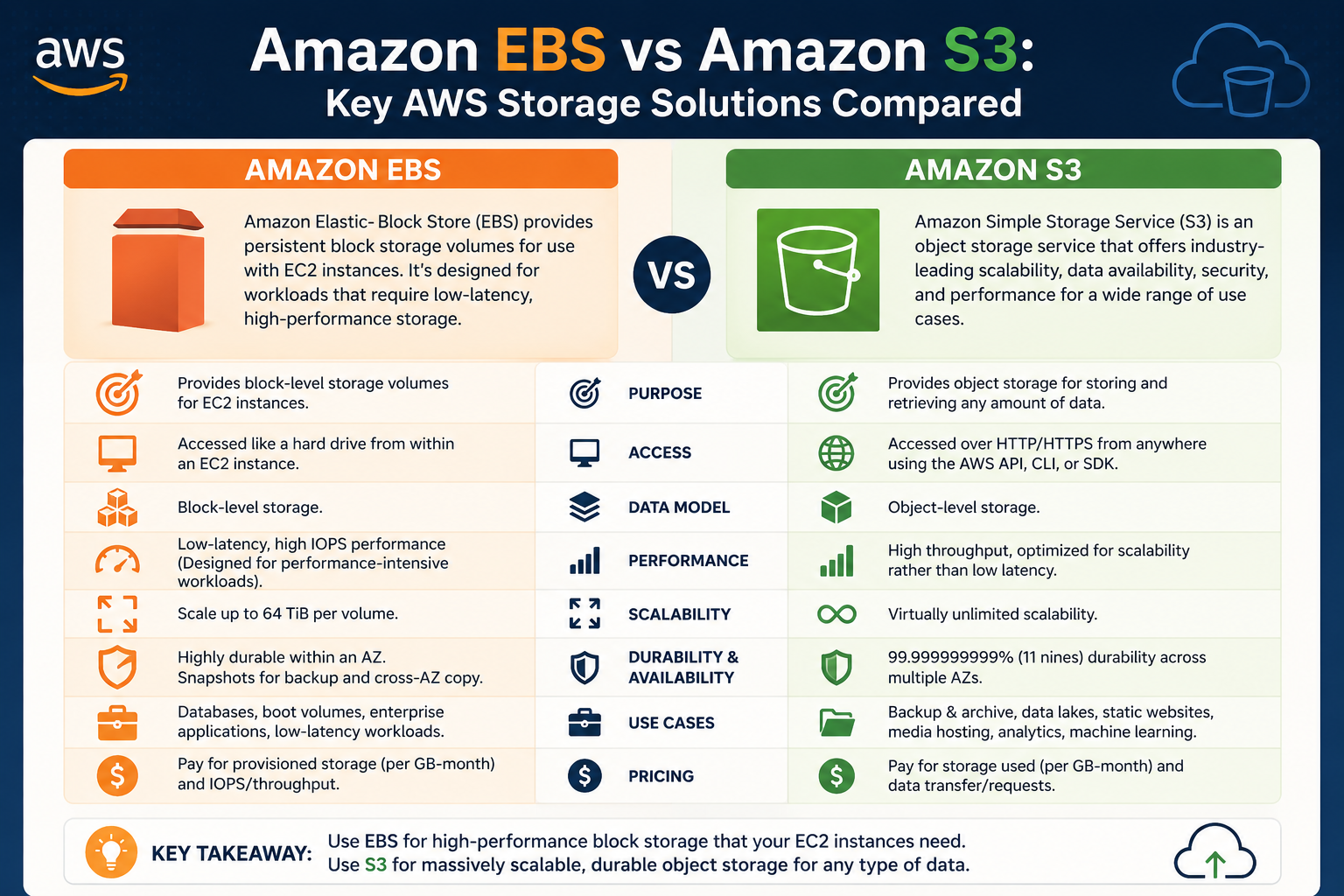
The modern digital world is producing data at an unprecedented pace, driven by social media, mobile applications, IoT devices, business analytics, and artificial intelligence systems. Organizations across industries are no longer dealing with small, manageable datasets but with massive, continuously expanding streams of structured and unstructured information. This explosion of data has fundamentally changed how companies think about storage, access, and long-term data management. Traditional systems that once worked for small-scale operations are no longer sufficient to handle the speed, scale, and complexity of today’s requirements. As a result, cloud-based storage solutions have become essential for businesses aiming to remain competitive, efficient, and resilient in a data-driven environment.
Challenges of Traditional Data Storage Systems
Before cloud computing became widely adopted, businesses relied heavily on physical data centers and on-premises infrastructure to store and manage their information. These setups required significant investment in hardware, cooling systems, maintenance teams, and security measures. As data volumes increased, organizations faced mounting difficulties in scaling their infrastructure efficiently. Expanding storage capacity often meant purchasing additional servers, upgrading hardware, and managing complex physical environments. This not only increased costs but also introduced risks related to hardware failure, natural disasters, and operational downtime. Additionally, ensuring data availability across multiple locations required complex replication systems, which further added to maintenance burdens and technical complexity.
Emergence of Cloud Storage and AWS Ecosystem
Cloud computing introduced a transformative shift by removing the dependency on physical infrastructure and enabling on-demand access to scalable resources over the internet. Among the leading providers of cloud services, AWS built a comprehensive ecosystem designed to address diverse storage and computing needs. Within this ecosystem, different services were developed to handle specific use cases, ensuring flexibility and efficiency for developers and enterprises. Two of the most widely used storage services in this ecosystem are object-based storage and block-level storage, each designed with distinct purposes in mind. These services allow users to choose the most suitable storage type depending on whether they prioritize accessibility, performance, or integration with computing resources.
Understanding the Role of S3 in Cloud Storage
One of the core storage services in AWS is designed for highly scalable and durable object storage. This service allows users to store vast amounts of data without worrying about underlying infrastructure management. It is particularly suited for storing files that need to be accessed frequently across different locations, such as images, videos, documents, backups, and web assets. The system is designed to provide high availability and redundancy, ensuring that data remains accessible even in the event of hardware failures. Its architecture is built around simplicity and efficiency, enabling users to upload and retrieve data without dealing with complex file systems or server configurations.
Why Object Storage Solves Modern Data Problems
The primary reason this type of storage became essential is its ability to eliminate the operational burden of managing physical storage systems. Instead of relying on local servers or dedicated storage devices, businesses can store their data in a distributed environment that automatically handles replication, scaling, and durability. This significantly reduces the complexity of data management while improving accessibility and reliability. Organizations no longer need to invest heavily in infrastructure maintenance or worry about capacity limitations. Instead, they can focus on building applications and analyzing data while the storage system handles the underlying technical challenges.
Data Organization Through Key-Value Structure
A defining characteristic of this storage approach is its use of a key-value architecture. Unlike traditional file systems that rely on hierarchical folder structures, data is stored as individual objects associated with unique identifiers. This structure allows for extremely fast retrieval because each object can be directly accessed using its key without navigating through multiple directory levels. This approach is particularly effective for applications that require quick access to large volumes of unstructured data. It also simplifies scalability, as new objects can be added without affecting existing storage structures or performance efficiency.
Common Use Cases for Object-Based Storage Systems
This type of storage is widely used in scenarios where data needs to be accessible from multiple locations and devices. It is ideal for hosting static website content, storing media files such as images and videos, maintaining backups, and managing large datasets used in analytics workflows. Businesses often rely on it for content distribution because it ensures fast and reliable delivery of assets to users around the world. Its durability and scalability make it especially valuable for applications that experience fluctuating traffic patterns or require long-term data retention without frequent modifications.
Introduction to Block-Level Storage for Compute Instances
Alongside object storage, another essential storage model exists that is designed specifically for use with virtual computing environments. This storage type operates at the block level and is directly attached to computing instances, allowing it to function similarly to a physical hard drive. It is primarily used when applications require high-performance storage with low latency and consistent input/output operations. Unlike object storage, this system is tightly integrated with computing resources, making it suitable for workloads that demand fast read and write capabilities.
Relationship Between Block Storage and Virtual Machines
This storage model is designed to work closely with virtual servers, where it acts as the primary storage volume attached to a computing instance. Once connected, it behaves like a traditional disk drive, allowing users to install operating systems, applications, and databases directly onto it. This tight integration ensures low-latency access because data does not need to be retrieved from an external system over the internet. Instead, it is available locally to the computing instance, resulting in faster performance and improved responsiveness for demanding applications.
Practical Applications of Instance-Attached Storage
Block-level storage is commonly used in environments where consistent performance and reliability are critical. Software development environments, enterprise applications, and database systems often rely on this type of storage because of its ability to provide stable and fast access to data. It is also useful for creating standardized computing environments, where multiple instances can be configured with identical setups for development or testing purposes. This makes it easier for organizations to scale their infrastructure while maintaining consistency across different systems.
Transition Toward Choosing Between Storage Types
As cloud computing continues to evolve, the need to understand different storage models becomes increasingly important for developers and businesses. Each storage type serves a specific purpose and is optimized for particular workloads. While object-based storage focuses on scalability and accessibility for unstructured data, block-level storage prioritizes performance and tight integration with computing resources. Understanding these foundational differences is essential before evaluating how each system performs under different scenarios, especially when building scalable and efficient cloud architectures.
Performance Characteristics of Cloud Storage Systems
Performance plays a crucial role when selecting a storage solution in cloud environments, especially when applications depend on speed, consistency, and reliability. Different storage architectures are optimized for different performance goals, and understanding these differences helps in designing efficient systems. In general, storage systems that are tightly coupled with computing resources tend to offer lower latency and faster input/output operations, while distributed storage systems prioritize scalability and accessibility over raw speed. This distinction becomes important when designing applications that require either high-speed transactional processing or large-scale data distribution across multiple regions.
Latency Differences Between Storage Models
Latency refers to the time it takes for a system to respond to a data request, and it is one of the most important performance metrics in cloud storage. In block-based storage systems, data is stored close to the computing instance, which significantly reduces the time required to read or write information. This makes it ideal for workloads that demand real-time processing, such as databases or enterprise applications. On the other hand, object-based storage systems may introduce slightly higher latency because data is retrieved through a distributed network architecture. However, this trade-off is acceptable in scenarios where scalability and durability are more important than immediate response time.
Scalability in Modern Storage Architectures
Scalability is one of the strongest advantages of cloud-based storage systems, allowing organizations to grow their data capacity without worrying about physical limitations. Object storage systems are designed to scale almost infinitely by distributing data across multiple servers and regions. This architecture allows businesses to store massive volumes of data without performance degradation. Block storage systems also support scaling, but typically within the constraints of the computing instance they are attached to. While they can be expanded or replicated, they are not inherently designed for global-scale distribution in the same way object storage is.
Data Accessibility and Global Distribution
One of the key differences between storage types is how easily data can be accessed from different locations. Object-based storage is designed for global accessibility, meaning data can be retrieved from anywhere with an internet connection. This makes it ideal for applications that serve users across multiple regions, such as content delivery systems or media platforms. In contrast, block storage is tied to a specific computing instance, which limits its accessibility to that environment. While this improves performance, it reduces flexibility when compared to globally distributed storage systems.
Durability and Data Protection Mechanisms
Data durability is a critical factor in cloud storage design, ensuring that information remains safe even in the event of hardware failures or system disruptions. Object storage systems achieve high durability by automatically replicating data across multiple devices and availability zones. This redundancy ensures that even if one component fails, the data remains intact and accessible. Block storage systems also offer durability features, but they are typically dependent on the underlying infrastructure of the computing instance. As a result, they may require additional backup strategies to achieve the same level of resilience.
Security Considerations in Storage Selection
Security is a major concern when storing sensitive or business-critical data in the cloud. Both storage types provide strong security mechanisms, including encryption, access control, and authentication systems. Object storage allows fine-grained access policies, making it possible to control who can view or modify specific data sets. Block storage, being attached to computing instances, relies heavily on instance-level security configurations. Properly managing permissions and encryption is essential in both cases to ensure that data remains protected from unauthorized access or potential breaches.
Cost Implications of Different Storage Models
Cost efficiency is another important factor when choosing between storage options. Object storage is generally more cost-effective for storing large volumes of data that do not require constant modification. Its pricing model is based on usage and storage capacity, making it suitable for long-term data retention. Block storage, however, tends to be more expensive because it provides higher performance and is closely integrated with computing resources. Organizations often use a combination of both storage types to balance performance requirements with budget constraints.
Data Structure and Organization Differences
The way data is organized within each storage system significantly impacts how it is accessed and managed. Object storage uses a flat structure where each piece of data is stored as an independent object with a unique identifier. This eliminates the need for traditional file hierarchies and makes it easier to scale. Block storage, on the other hand, organizes data in fixed-size blocks that are managed like a traditional file system. This structure allows for efficient modification and retrieval of specific data segments, making it suitable for applications that require frequent updates.
Integration with Cloud Computing Services
Both storage types are designed to integrate seamlessly with other cloud computing services, enabling developers to build complex and scalable applications. Object storage integrates well with content delivery networks, analytics tools, and backup systems. It is often used as a central repository for large datasets that need to be processed or distributed. Block storage integrates closely with virtual machines and is commonly used for running operating systems, databases, and enterprise applications. This tight integration ensures that applications can operate efficiently within cloud environments.
Real-World Usage Scenarios for Block Storage
Block storage is widely used in environments where performance and reliability are critical. It is commonly deployed in database systems that require fast transaction processing and consistent data access. Software development environments also rely on block storage to maintain consistent configurations across multiple instances. Additionally, it is used in enterprise applications that require stable and predictable storage performance. These use cases highlight its importance in scenarios where speed and reliability are more important than global accessibility.
Real-World Usage Scenarios for Object Storage
Object storage is typically used in applications that involve large-scale data distribution and long-term storage. It is ideal for storing multimedia content such as images, videos, and audio files that need to be delivered to users across different regions. It is also widely used for data backups, archival storage, and big data analytics. Its ability to handle massive amounts of unstructured data makes it a preferred choice for modern applications that generate large volumes of information.
Hybrid Storage Strategies in Cloud Architecture
Many organizations adopt a hybrid approach that combines both storage types to take advantage of their respective strengths. Object storage is used for scalable and long-term data storage, while block storage is used for high-performance computing tasks. This combination allows businesses to optimize both cost and performance while maintaining flexibility. By leveraging multiple storage solutions, organizations can design architectures that meet diverse workload requirements without compromising efficiency or reliability.
Understanding Workload Requirements in Cloud Storage Selection
Choosing between different cloud storage systems depends heavily on understanding the nature of the workload being handled. Every application has unique requirements related to speed, data structure, scalability, and accessibility. Some workloads prioritize rapid transaction processing and low latency, while others focus on storing large volumes of unstructured data that must be accessible globally. Identifying these needs early is essential for designing an efficient cloud architecture. Without this clarity, organizations risk using storage systems that are either over-engineered or underperforming for their specific use cases.
High-Performance Computing and Block Storage Usage
In environments where performance is the top priority, block-level storage becomes a natural fit. Applications that involve heavy computational tasks, frequent database operations, or real-time processing rely on fast and consistent data access. Block storage is designed to meet these requirements by minimizing latency and providing direct access to data at the disk level. This makes it suitable for mission-critical systems where even minor delays can impact performance. Industries such as finance, healthcare, and enterprise software development often depend on this storage model to ensure operational stability.
Data Consistency and Transactional Integrity
One of the key advantages of block storage systems is their ability to maintain strong data consistency. In transactional systems, where multiple operations occur simultaneously, maintaining accurate and synchronized data is essential. Block storage ensures that read and write operations are handled in a controlled and predictable manner, reducing the risk of data corruption or inconsistency. This is particularly important for relational databases and systems that handle sensitive business operations. The structured nature of block storage supports these requirements effectively.
Role of Object Storage in Data Lakes and Analytics
Object-based storage plays a critical role in modern data analytics and big data environments. Organizations generate vast amounts of unstructured data from multiple sources, including social media, sensors, applications, and user interactions. Storing and analyzing this data requires a system that can handle massive scale without performance bottlenecks. Object storage provides this capability by allowing data to be stored in its native format and accessed when needed. It is commonly used as the foundation for data lakes, where raw data is collected and processed for analytical insights.
Flexibility in Handling Unstructured Data
Unlike traditional file systems, object storage is not constrained by hierarchical directory structures. This flexibility makes it highly effective for managing unstructured data, which does not fit neatly into predefined categories. Images, videos, logs, and backups can all be stored without requiring complex organization schemes. Each piece of data is treated as an independent object, which simplifies management and improves scalability. This approach is especially useful for applications that deal with unpredictable or rapidly growing datasets.
Backup and Disaster Recovery Strategies
Data protection is a critical aspect of any storage strategy, and both object and block storage contribute differently to backup and recovery processes. Object storage is widely used for long-term backups because of its durability and ability to replicate data across multiple locations automatically. This ensures that data remains safe even in the event of system failures or regional outages. Block storage is also used in backup strategies, but it typically requires additional configuration to achieve similar levels of redundancy. Organizations often combine both systems to build robust disaster recovery solutions.
Performance Trade-Offs in Storage Design
Every storage system involves trade-offs between performance, scalability, and cost. Block storage prioritizes performance and low latency, making it ideal for applications that require fast data access. However, this comes at the cost of scalability limitations and higher resource consumption. Object storage, on the other hand, sacrifices some level of latency to achieve massive scalability and cost efficiency. Understanding these trade-offs is essential for designing systems that align with business priorities and technical requirements.
Impact of Network Architecture on Storage Performance
Network design plays an important role in determining how efficiently data can be accessed in cloud environments. Object storage relies on distributed networks to deliver data across different regions, which can introduce slight delays depending on network conditions. Block storage benefits from being directly attached to computing instances, reducing dependency on external network communication. This structural difference significantly influences performance outcomes, especially in applications that require real-time responsiveness or high-frequency data operations.
Data Lifecycle Management in Cloud Storage
Managing data throughout its lifecycle is another important consideration when selecting storage systems. Data typically goes through different stages, including creation, active use, archival, and deletion. Object storage is particularly effective for long-term data retention because it allows automated lifecycle policies that transition data between different storage tiers. This helps reduce costs while maintaining accessibility. Block storage is more commonly used during the active phase of data usage, where performance and responsiveness are critical.
Application Deployment and Environment Replication
Block storage plays a key role in deploying and replicating application environments. Developers often need consistent setups across multiple computing instances for testing and production purposes. By attaching pre-configured block storage volumes to virtual machines, organizations can quickly replicate entire environments without manual setup. This simplifies development workflows and ensures consistency across different stages of the software lifecycle. It also reduces setup time and improves operational efficiency.
Content Delivery and Global Accessibility Needs
Applications that serve global audiences require storage systems capable of delivering content quickly and reliably across different geographic regions. Object storage is well-suited for this purpose because it integrates effectively with content delivery networks. This ensures that users can access data from the nearest location, reducing latency and improving user experience. Websites, mobile applications, and streaming platforms frequently rely on this architecture to ensure consistent performance worldwide.
Balancing Cost Efficiency with Performance Requirements
Cost management is a critical factor in cloud storage decision-making. Organizations must balance the need for high performance with budget constraints. Object storage provides a cost-effective solution for large-scale data retention, making it suitable for archival and backup purposes. Block storage, while more expensive, delivers superior performance for critical applications. By strategically combining both storage types, businesses can optimize their infrastructure spending while maintaining operational efficiency.
Evolving Storage Needs in Modern Cloud Architectures
As cloud technologies continue to evolve, storage requirements are becoming increasingly complex. Applications are no longer limited to a single type of workload but often involve multiple data processing needs simultaneously. This has led to the adoption of hybrid storage architectures that combine object and block storage systems. These hybrid models allow organizations to take advantage of the strengths of each system while minimizing their weaknesses. This flexibility is essential for building scalable, efficient, and future-ready cloud infrastructures.
Evolving Role of Cloud Storage in Modern Digital Infrastructure
Cloud storage has become a foundational element of modern digital systems, supporting everything from small applications to global enterprise platforms. As data continues to grow in volume and complexity, storage systems must evolve to meet changing demands. Organizations are no longer simply storing files; they are managing dynamic ecosystems of data that require high availability, strong security, and seamless accessibility. This evolution has made it essential for businesses to understand how different storage models fit into larger cloud architectures and how they contribute to overall system performance and scalability.
Optimizing Application Architecture with Storage Design
Designing efficient cloud applications requires careful alignment between storage systems and application architecture. Developers must consider how data flows through an application, how frequently it is accessed, and how it is processed. Storage selection directly impacts application responsiveness and scalability. For instance, applications that rely heavily on real-time data processing benefit from storage systems optimized for speed and low latency, while applications focused on content distribution or analytics require storage that can handle large-scale data efficiently. Proper alignment between storage and application design ensures better performance and resource utilization.
Data Accessibility and User Experience Enhancement
User experience is heavily influenced by how quickly and reliably data can be accessed. In modern digital applications, even minor delays can affect user satisfaction and engagement. Storage systems that provide fast and consistent data delivery help ensure smooth application performance. Global accessibility is especially important for applications with users spread across multiple regions. Efficient storage design allows data to be delivered from the nearest location, reducing delays and improving responsiveness. This plays a critical role in industries such as e-commerce, media streaming, and online services where performance directly impacts user retention.
Scalability Challenges in Large-Scale Systems
As organizations grow, their data storage needs increase exponentially. Managing this growth efficiently is one of the biggest challenges in cloud architecture. Storage systems must be able to expand seamlessly without disrupting application performance. Object-based storage systems are designed to handle this type of growth by distributing data across multiple locations and scaling automatically as demand increases. Block storage systems also support scaling but typically within more controlled environments tied to computing instances. Understanding these scalability characteristics is essential for long-term infrastructure planning.
Security and Compliance in Cloud Storage Systems
Security is a major concern in any cloud environment, especially when dealing with sensitive or regulated data. Organizations must ensure that their storage systems comply with industry standards and regulatory requirements. This includes implementing encryption, access control policies, and monitoring systems to protect data from unauthorized access. Object storage systems often provide granular access controls, allowing detailed permission settings for different users and applications. Block storage systems rely more heavily on instance-level security configurations. In both cases, proper security implementation is essential to maintain data integrity and compliance.
Data Redundancy and Fault Tolerance Mechanisms
Ensuring data availability even in the event of hardware failures is a core requirement of cloud storage systems. Redundancy mechanisms are used to replicate data across multiple devices and locations, ensuring that information remains accessible even if part of the system fails. Object storage systems typically implement automatic replication across different regions, providing high levels of fault tolerance. Block storage systems also support redundancy, but often require additional configuration or backup strategies. These mechanisms are critical for maintaining business continuity and preventing data loss.
Cost Optimization Strategies for Cloud Storage
Efficient cost management is a key consideration for organizations operating in cloud environments. Storage costs can vary significantly depending on usage patterns, performance requirements, and data volume. Object storage is generally more cost-efficient for long-term data retention and infrequently accessed information. Block storage tends to be more expensive due to its performance-oriented design. Businesses often adopt tiered storage strategies, where frequently used data is stored in high-performance systems, while archival data is moved to lower-cost storage solutions. This approach helps optimize overall spending without compromising functionality.
Hybrid Cloud Storage Architectures
Many modern applications rely on hybrid storage architectures that combine multiple storage models to achieve optimal performance and flexibility. By integrating object storage with block storage, organizations can leverage the strengths of both systems. Object storage handles large-scale data distribution and long-term storage needs, while block storage supports high-performance computing tasks. This hybrid approach allows businesses to build more adaptable and efficient systems that can respond to a wide range of workload requirements. It also improves scalability and operational efficiency across different application layers.
Future Trends in Cloud Storage Technology
Cloud storage technology continues to evolve rapidly, driven by increasing data demands and advancements in computing. Emerging trends include greater automation in storage management, improved integration with artificial intelligence and machine learning systems, and enhanced performance optimization techniques. Storage systems are also becoming more intelligent, with built-in analytics that help organizations manage data more effectively. As these technologies advance, cloud storage will become even more seamless, scalable, and integrated into broader digital ecosystems.
Strategic Importance of Storage Selection in Cloud Design
Selecting the right storage system is a strategic decision that directly impacts application performance, cost efficiency, and scalability. Businesses must carefully evaluate their requirements before choosing between different storage models. Factors such as data type, access frequency, performance needs, and budget constraints all play a role in this decision. A well-planned storage strategy ensures that applications remain efficient, scalable, and resilient in the long term, supporting both current operations and future growth.
Advanced Real-World Architecture Patterns Using S3 and EBS
Modern cloud architectures rarely rely on a single storage system. Instead, they combine multiple services to build layered, resilient, and scalable systems. In many real-world deployments, object storage and block storage work together as complementary components. Applications are typically designed so that high-performance operations occur close to compute resources, while long-term or shared data is stored in scalable object storage. This separation allows systems to maintain both speed and scalability without compromising either requirement. Architects often design workflows where data is processed on compute instances using block storage and then archived or distributed through object storage for broader access and durability.
Data Flow Design Between Compute and Storage Layers
Efficient data flow between computing resources and storage systems is essential for performance optimization. In typical workflows, data is first processed within a compute environment where block storage provides fast access for temporary files, application binaries, and database operations. Once processing is complete, important outputs are transferred to object storage for long-term retention or distribution. This layered flow ensures that high-speed operations remain efficient while also enabling durable storage of final results. Poorly designed data flow can lead to bottlenecks, increased latency, and unnecessary costs, making architecture planning a critical step in system design.
Snapshot Mechanisms and Data Recovery Strategies
Data recovery plays a vital role in maintaining system reliability, and snapshot mechanisms are widely used for this purpose. In block storage systems, snapshots capture the state of a storage volume at a specific point in time, allowing users to restore data in case of failure or corruption. These snapshots are incremental, meaning only changes since the last snapshot are stored, improving efficiency. Object storage systems achieve durability through built-in replication and versioning mechanisms, which allow previous versions of objects to be restored if needed. Together, these recovery strategies ensure strong resilience against data loss across different storage models.
Consistency Models and Data Reliability Differences
Consistency behavior differs significantly between storage types, which can impact application design. Object storage systems often operate with eventual consistency in certain scenarios, meaning updates may take a short time to propagate across all systems. This model is acceptable for many use cases such as media storage or backups. Block storage, however, typically provides strong consistency, ensuring that read and write operations reflect the most recent changes immediately. This makes it more suitable for transactional systems where accuracy and real-time data integrity are critical. Understanding these consistency models is essential for preventing unexpected application behavior.
Performance Optimization Techniques for Storage Systems
Optimizing performance in cloud storage environments involves both architectural design and operational tuning. For block storage, performance can be improved by selecting appropriate volume types, optimizing input/output operations, and reducing unnecessary read/write cycles. Applications should be designed to minimize random disk access when possible. For object storage, performance optimization focuses on efficient data organization, caching strategies, and reducing redundant data transfers. Using parallel processing and distributed access patterns can significantly improve throughput in large-scale systems. Proper optimization ensures that applications remain responsive even under heavy workloads.
Cost Management Through Intelligent Storage Tiering
Cost optimization is a major concern in cloud environments where data volumes can grow rapidly. Intelligent storage tiering helps organizations manage expenses by automatically moving data between different storage classes based on usage patterns. Frequently accessed data is kept in high-performance storage, while infrequently accessed data is moved to lower-cost archival storage. Object storage systems are particularly effective for implementing such tiering strategies due to their flexible architecture. Block storage, being performance-focused, is generally used for active workloads where cost is justified by operational requirements.
Security Architecture Across Storage Layers
Security in cloud storage involves multiple layers, including encryption, access control, and monitoring. Object storage systems allow fine-grained access policies that control permissions at the object level, making them suitable for multi-user environments. Block storage security is typically managed at the instance level, requiring careful configuration of compute permissions and encryption settings. Encryption plays a central role in both systems, ensuring that data remains protected both at rest and during transmission. Proper security architecture also includes logging and auditing mechanisms to track data access and detect unauthorized activity.
Data Migration Strategies Between Storage Systems
Migrating data between different storage systems is a common requirement during application modernization or scaling efforts. Moving data from block storage to object storage often involves restructuring how data is accessed and organized, since the underlying architectures are fundamentally different. Migration strategies must account for data integrity, minimal downtime, and performance impact. Automated tools and replication mechanisms are often used to streamline this process. Careful planning ensures that applications continue functioning smoothly during migration without data loss or service disruption.
High Availability and Fault Tolerance Design Principles
Ensuring high availability is a key objective in cloud system design. Object storage achieves this through distributed replication across multiple geographic regions, ensuring that data remains accessible even during regional outages. Block storage achieves availability through redundancy at the infrastructure level and integration with compute failover systems. Fault tolerance mechanisms are designed to automatically recover from hardware or network failures without affecting application performance. Combining both storage types enhances overall system resilience and ensures continuous service availability.
Use Case Specialization in Enterprise Environments
Enterprise applications often rely on specialized storage configurations based on workload requirements. Databases, enterprise resource planning systems, and transactional applications typically use block storage due to its low latency and high performance. Meanwhile, content management systems, backup solutions, and analytics platforms rely heavily on object storage for scalability and cost efficiency. This specialization allows enterprises to optimize infrastructure usage while meeting diverse operational demands. Selecting the right storage model for each workload is a key factor in enterprise architecture design.
Monitoring and Performance Analytics for Storage Systems
Continuous monitoring is essential for maintaining optimal storage performance. Cloud environments provide detailed metrics on storage usage, latency, throughput, and error rates. These metrics help identify performance bottlenecks and optimize resource allocation. For block storage, monitoring focuses on input/output performance and latency trends. For object storage, analytics often focus on access patterns, request frequency, and data distribution. By analyzing these metrics, organizations can make informed decisions about scaling, optimization, and cost control.
Hybrid Deployment Strategies in Modern Cloud Systems
Many organizations adopt hybrid deployment models that combine on-premises infrastructure with cloud-based storage systems. In such environments, block storage may be used for local high-performance workloads, while object storage handles large-scale data archiving and distribution. This hybrid approach provides flexibility and allows organizations to gradually transition to full cloud adoption. It also supports regulatory compliance requirements where certain data must remain on-premises while other data can be stored in the cloud.
Strategic Decision-Making for Storage Architecture
Choosing the right storage architecture requires a deep understanding of application requirements, performance goals, and long-term scalability needs. Decision-making involves evaluating trade-offs between speed, cost, durability, and accessibility. Block storage is typically chosen for performance-critical applications, while object storage is selected for scalable and distributed data needs. In many cases, a combination of both provides the most balanced and efficient solution. Strategic planning ensures that storage infrastructure aligns with business objectives and supports future growth without requiring major redesigns.
Evolving Demands of Data-Driven Applications
Modern applications are increasingly driven by data-intensive operations, where storage systems are not just passive repositories but active components of application performance. From real-time analytics dashboards to machine learning pipelines, the demand for fast, reliable, and scalable storage continues to grow. This evolution has pushed cloud storage systems to adapt by offering more flexible architectures that can support both transactional workloads and large-scale data processing. As applications become more complex, storage decisions directly influence responsiveness, user experience, and system reliability.
Role of Storage in Machine Learning and AI Workflows
Machine learning and artificial intelligence systems rely heavily on large datasets that must be stored, accessed, and processed efficiently. Object storage is commonly used to store training datasets due to its ability to handle massive volumes of unstructured data. These datasets may include images, videos, logs, and sensor outputs. During model training, compute instances use high-performance block storage to process data quickly and efficiently. Once training is complete, models and results are often stored back in object storage for long-term retention and deployment. This workflow highlights how different storage systems complement each other in advanced computing environments.
Real-Time Processing and Low-Latency Requirements
Certain applications require near-instant data processing, where even small delays can impact functionality. Examples include financial trading systems, online gaming platforms, and real-time monitoring tools. In such cases, block storage is preferred because it provides low-latency access to data directly attached to compute instances. This ensures that transactions and computations are executed without delay. Object storage, while highly scalable, is not typically used for real-time processing due to its distributed nature and slightly higher access latency. Understanding these performance differences is essential for designing responsive systems.
Scalability Challenges in Distributed Systems
As systems scale globally, managing data consistency, performance, and availability becomes more complex. Object storage helps address these challenges by distributing data across multiple regions and automatically handling replication. This allows applications to scale without manual intervention. However, scaling block storage requires more careful planning because it is tied to specific compute instances. Engineers must ensure that storage capacity and performance scale in alignment with application growth. Proper architectural planning ensures that scalability does not introduce performance bottlenecks or operational inefficiencies.
Data Archiving and Long-Term Retention Strategies
Long-term data storage is an important requirement for many organizations, especially those operating in regulated industries or data-heavy environments. Object storage is widely used for archiving because it offers low-cost, durable storage that can retain data for extended periods. Archived data may include historical records, logs, compliance data, and backups. Block storage is generally not used for long-term archiving because it is optimized for active workloads. Instead, it serves as temporary or working storage. Effective archiving strategies help organizations reduce costs while ensuring data remains accessible when needed.
Performance Trade-Offs in Multi-Tier Storage Systems
Multi-tier storage architectures introduce a balance between performance and cost by categorizing data based on usage patterns. Frequently accessed data is stored in high-performance block storage, while less frequently accessed data is moved to object storage or archival tiers. This approach ensures that systems remain efficient without incurring unnecessary expenses. The trade-off between speed and cost is a key consideration in designing scalable storage solutions. Proper tiering ensures that applications maintain performance while optimizing resource utilization.
Integration with Modern DevOps Practices
Storage systems are increasingly integrated into DevOps workflows to support continuous integration and continuous deployment processes. Block storage is often used in development environments where applications are built, tested, and deployed rapidly. It allows developers to replicate environments consistently across multiple stages. Object storage is used for storing build artifacts, logs, and deployment packages. This integration ensures smooth automation and reduces manual intervention in application lifecycle management. As DevOps practices evolve, storage systems continue to play a critical role in enabling automation and scalability.
Impact of Global Infrastructure on Storage Performance
The global distribution of cloud infrastructure significantly impacts storage performance and accessibility. Object storage benefits from this distribution by allowing data to be accessed from multiple geographic regions with minimal latency. This is particularly useful for global applications with users spread across different continents. Block storage, being instance-specific, is more localized in nature and delivers high performance within a defined region. Understanding the impact of infrastructure distribution helps organizations design systems that meet both performance and accessibility requirements.
Data Governance and Compliance Requirements
Organizations must comply with various data governance policies and regulatory standards depending on their industry and location. Storage systems play a critical role in meeting these requirements by providing features such as encryption, access control, and audit logging. Object storage is often used for compliance-related data because it supports versioning and long-term retention. Block storage is used for operational data that requires strict performance control and secure access. Proper governance ensures that data is managed responsibly and in accordance with legal and regulatory frameworks.
Automation in Storage Management
Automation has become a key component of modern cloud storage management. Automated policies help manage data lifecycle, backup schedules, scaling operations, and security configurations. Object storage systems often include built-in automation features that handle data movement between different storage tiers. Block storage automation focuses more on performance tuning, backup creation, and volume management. Automation reduces operational overhead and ensures consistent system behavior across large-scale environments.
Disaster Recovery Planning and Business Continuity
Disaster recovery is essential for ensuring business continuity in the event of system failures or unexpected outages. Object storage plays a major role in disaster recovery strategies due to its replication capabilities and geographic redundancy. It allows organizations to restore data quickly from alternative locations. Block storage supports disaster recovery through snapshots and backups, enabling fast restoration of computing environments. A well-designed disaster recovery plan often combines both storage types to ensure comprehensive protection against data loss.
Ecosystem Integration and Cloud Service Synergy
Cloud storage systems do not operate in isolation; they are part of a broader ecosystem of computing, networking, and analytics services. Object storage integrates seamlessly with data processing tools, content delivery systems, and machine learning platforms. Block storage integrates closely with virtual machines, databases, and application servers. This synergy allows organizations to build end-to-end solutions that are highly scalable and efficient. The integration of multiple services enhances the overall functionality of cloud environments.
Future Outlook of Cloud Storage Technologies
The future of cloud storage is expected to focus on greater intelligence, automation, and efficiency. Emerging technologies will enable storage systems to optimize themselves based on usage patterns, predict performance requirements, and automatically adjust resources. Hybrid and multi-cloud strategies will become more common, allowing organizations to distribute workloads across multiple providers. Storage systems will also become more tightly integrated with artificial intelligence, enabling smarter data management and analytics capabilities.
Final Conclusion
Cloud storage has evolved from simple data repositories into highly advanced systems that support complex global applications. The distinction between object storage and block storage highlights the importance of choosing the right tool for the right job. Object storage provides scalability, durability, and global accessibility, while block storage delivers performance, low latency, and tight integration with compute resources. Together, they form the foundation of modern cloud infrastructure, enabling organizations to build flexible, resilient, and high-performing digital systems that meet the demands of today’s data-driven world.