
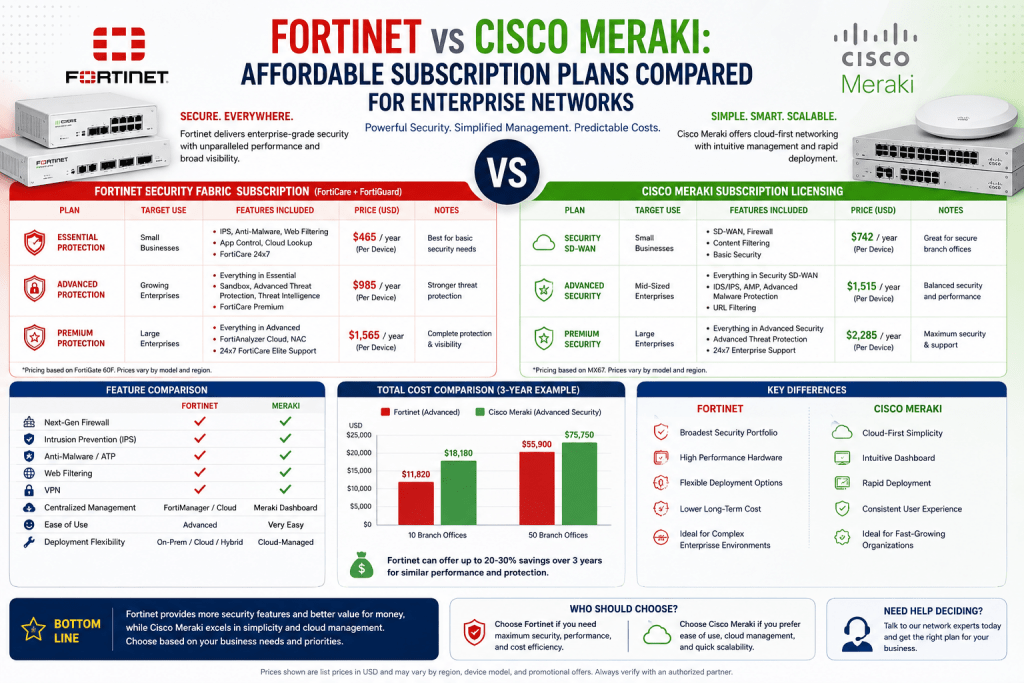
The global cybersecurity and networking environment is undergoing continuous transformation driven by digital acceleration, cloud adoption, and the expansion of connected infrastructure. Organizations today operate across hybrid environments that include on-premises data centers, distributed branch locations, remote endpoints, and multi-cloud architectures. This structural complexity has significantly increased the number of potential attack surfaces that malicious actors can exploit. As a result, enterprise networking is no longer limited to simple connectivity functions; it now requires deep integration with security enforcement, identity control, and real-time threat intelligence. The increasing sophistication of cyber threats has pushed organizations to adopt platforms capable of providing unified visibility, automated response mechanisms, and scalable management frameworks that extend across geographically dispersed environments. In this context, enterprise-grade networking vendors such as Cisco Meraki and Fortinet have emerged as dominant players, each offering distinct architectural philosophies and operational models designed to address modern infrastructure demands.
Evolution of Enterprise Network Architecture and Security Convergence
Traditional network architectures were primarily built around perimeter-based security models where protection was focused on securing the boundary between internal networks and external internet traffic. However, this model has become insufficient due to the decentralization of IT resources and the widespread adoption of cloud services. Modern enterprises now require security frameworks that operate beyond static perimeters and extend into endpoints, applications, and cloud workloads. This shift has led to the convergence of networking and security functions into unified platforms capable of enforcing policies across all layers of infrastructure. Within this evolving paradigm, Cisco Meraki and Fortinet represent two distinct approaches to convergence. One emphasizes centralized cloud management and operational simplicity, while the other emphasizes deep security integration and advanced threat prevention capabilities embedded directly into network traffic flows. These differences reflect broader industry trends where organizations must balance ease of management with security depth and performance optimization.
Cisco Meraki Cloud-Managed Network Architecture and Operational Design
Cisco Meraki operates on a cloud-first architectural model designed to simplify network deployment, configuration, and monitoring across distributed environments. At its core, Meraki relies on centralized cloud orchestration where network devices continuously communicate with cloud-based management systems to receive configuration updates, security policies, and performance analytics. This architecture eliminates the need for complex on-premises controllers and reduces dependency on manual configuration processes. The result is a highly streamlined operational model that allows administrators to manage large-scale networks from a unified dashboard interface. Meraki’s ecosystem includes wireless access points, switching infrastructure, security appliances, endpoint management tools, and IoT-enabled devices, all of which are integrated into a single management plane. This integration enables consistent policy enforcement across all connected devices, regardless of physical location. The platform is particularly effective in environments where rapid deployment, centralized visibility, and simplified management are prioritized over highly granular security customization. Its design philosophy emphasizes reducing operational overhead while maintaining sufficient security controls to protect enterprise environments from common threats.
Meraki Network Functionality and Software-Defined Operational Principles
A defining characteristic of Cisco Meraki’s architecture is its reliance on software-defined networking principles. Instead of relying on static hardware-based configurations, network behavior is controlled through software-defined policies that can be dynamically updated through the cloud management interface. This allows administrators to modify routing rules, access controls, and traffic prioritization without physically interacting with individual devices. The abstraction of network functions into software layers enhances scalability and operational flexibility, particularly in environments with multiple branch locations or remote workforce deployments. Additionally, Meraki integrates analytics capabilities that provide real-time visibility into network performance, application usage, and security events. This data-driven approach enables organizations to make informed decisions regarding bandwidth allocation, policy adjustments, and infrastructure scaling. The platform’s simplicity makes it particularly suitable for organizations seeking to reduce dependency on specialized networking expertise while maintaining centralized control over distributed systems.
Fortinet Security-Driven Network Architecture and Integrated Defense Model
Fortinet adopts a fundamentally different architectural philosophy centered on security-driven networking. Rather than treating security as an overlay to networking functions, Fortinet integrates security mechanisms directly into the core of network infrastructure. This approach is built around the Fortinet Security Fabric, a unified architecture that connects multiple security domains, including firewalls, endpoint protection, intrusion prevention systems, cloud security services, and threat intelligence engines. The objective of this model is to create a cohesive defense system capable of detecting, analyzing, and responding to threats across all layers of the network. Fortinet’s flagship security appliances are designed to perform deep packet inspection at high throughput levels, enabling detailed analysis of network traffic without significantly degrading performance. This capability is critical in environments where large volumes of data must be processed securely and efficiently. The platform also incorporates advanced machine learning and behavioral analytics to identify anomalies and potential threats that may not be detectable through traditional signature-based detection methods.
Fortinet Security Fabric and Deep Packet Inspection Capabilities
The Fortinet Security Fabric represents an integrated approach to cybersecurity that connects multiple security components into a unified system. This architecture enables seamless communication between different security tools, allowing threat intelligence to be shared across endpoints, network devices, and cloud environments in real time. One of the key strengths of Fortinet’s approach is its ability to perform deep packet inspection, which involves analyzing the content of data packets beyond basic header information. This allows the system to detect malicious payloads, unauthorized data transfers, and suspicious application behavior with a high degree of accuracy. Additionally, Fortinet incorporates sandboxing technologies that isolate and analyze potentially malicious files in a controlled environment before they are allowed to enter the network. This layered security approach enhances protection against advanced persistent threats and zero-day vulnerabilities that may bypass traditional security mechanisms. The platform’s emphasis on security depth makes it particularly suitable for organizations with strict regulatory requirements or high-value data assets.
Comparative Architectural Philosophies in Enterprise Networking
The differences between Cisco Meraki and Fortinet become most apparent when examining their underlying architectural philosophies. Cisco Meraki prioritizes operational simplicity, centralized management, and rapid deployment capabilities. Its cloud-centric design minimizes the complexity associated with network configuration and allows organizations to scale infrastructure with minimal administrative effort. In contrast, Fortinet prioritizes security depth, granular control, and integrated threat defense mechanisms. Its architecture is designed to provide comprehensive visibility into network traffic while enabling precise control over security policies and threat mitigation strategies. These contrasting approaches reflect different organizational priorities. Enterprises that value ease of management and standardized deployments often gravitate toward Meraki, while those requiring advanced security enforcement and detailed traffic inspection capabilities often prefer Fortinet. The selection between these platforms is therefore not based solely on performance metrics but on alignment with organizational risk tolerance, operational structure, and long-term infrastructure strategy.
Cloud Integration Models and Network Management Approaches
Cloud integration plays a critical role in defining how modern networking platforms operate and scale. Cisco Meraki is inherently dependent on cloud infrastructure for device management, configuration updates, and monitoring. This ensures that all connected devices remain synchronized with centralized policies, enabling consistent behavior across distributed environments. The cloud-based model also facilitates real-time analytics and remote troubleshooting, reducing the need for on-site intervention. However, this dependency on cloud connectivity introduces considerations related to network resilience and external service availability. Fortinet also incorporates cloud-based services, particularly in areas such as threat intelligence and security analytics, but maintains a more hybrid operational model. Its core security functions can operate independently of continuous cloud connectivity, allowing for localized enforcement of security policies even in isolated environments. This hybrid approach provides greater flexibility in scenarios where uninterrupted local processing is required or where regulatory constraints limit external data dependencies.
Enterprise Network Requirements in Modern Digital Infrastructure
Modern enterprise environments demand networking solutions that can support high levels of scalability, security, and operational efficiency simultaneously. The rise of remote work, cloud-native applications, and distributed data processing has significantly increased the complexity of enterprise networks. Organizations now require systems capable of enforcing identity-based access controls, monitoring application behavior, detecting anomalies in real time, and supporting seamless connectivity across hybrid infrastructures. Cisco Meraki addresses these requirements by simplifying network management and providing centralized visibility across distributed environments. Its architecture reduces administrative complexity while enabling consistent policy enforcement. Fortinet addresses these requirements by providing deep security integration and advanced threat detection capabilities that operate across all layers of the network. Its architecture is designed to handle complex security challenges while maintaining high levels of performance under heavy network loads. These differing approaches allow organizations to select platforms based on their specific operational priorities and security requirements.
Advanced Security Architecture and Multi-Layer Defense Models in Enterprise Networks
Modern enterprise networks operate under constant exposure to evolving cyber threats that are increasingly sophisticated, automated, and targeted. Attackers now leverage advanced techniques such as polymorphic malware, zero-day exploits, credential stuffing, and lateral movement within internal environments. As a result, enterprise security architecture has evolved from simple perimeter defense systems into multi-layered, intelligence-driven defense frameworks that operate across endpoints, network traffic, cloud workloads, and application layers. Within this context, Cisco Meraki and Fortinet implement fundamentally different approaches to securing enterprise infrastructure. Cisco Meraki integrates security functions directly into its cloud-managed networking ecosystem, providing baseline protection mechanisms such as firewall rules, content filtering, intrusion detection capabilities, and traffic segmentation. These features are designed to offer simplified yet effective protection for distributed networks without requiring extensive manual configuration. Fortinet, in contrast, constructs its security architecture around a deeply integrated security fabric that connects multiple specialized security engines. This includes advanced intrusion prevention systems, sandbox analysis environments, behavioral anomaly detection, and real-time threat intelligence correlation. The objective of this architecture is not only to block known threats but also to identify unknown or emerging attack patterns through continuous analysis of network behavior. This distinction highlights a fundamental difference in philosophy: one prioritizes operational simplicity while the other prioritizes security depth and analytical precision.
Intrusion Detection, Prevention Systems, and Threat Intelligence Integration
Intrusion detection and prevention systems play a central role in enterprise cybersecurity by monitoring network traffic for malicious activity and enforcing automated response actions. Cisco Meraki incorporates intrusion detection capabilities that are designed to identify common attack signatures and suspicious traffic patterns. These systems are integrated into the cloud-managed dashboard, allowing administrators to monitor alerts and enforce policies across multiple network segments. The focus is on providing accessible security visibility rather than highly granular threat analysis. Fortinet, on the other hand, implements advanced intrusion prevention systems that operate at a deeper level of packet inspection. These systems analyze traffic at multiple layers, including application, transport, and network layers, enabling more precise identification of malicious behavior. Fortinet also integrates global threat intelligence feeds into its security fabric, allowing devices to automatically update their detection capabilities based on emerging global threats. This real-time intelligence integration significantly enhances the platform’s ability to respond to zero-day vulnerabilities and rapidly evolving attack vectors. The combination of deep packet inspection and continuous intelligence updates enables Fortinet to deliver a more proactive security posture compared to traditional signature-based detection systems.
Application Visibility, Traffic Analysis, and Network Behavior Monitoring
Application visibility has become a critical requirement in modern enterprise networks due to the increasing reliance on cloud applications, SaaS platforms, and distributed services. Understanding how applications consume bandwidth and interact within the network enables organizations to optimize performance, enforce usage policies, and detect abnormal behavior. Cisco Meraki provides application visibility through its centralized cloud dashboard, which categorizes traffic by application type and usage patterns. This allows administrators to identify high-bandwidth applications, enforce quality-of-service policies, and ensure that critical business applications receive priority access to network resources. The system is designed to present this information in a simplified format that is accessible to network administrators without requiring deep technical expertise. Fortinet extends application visibility through more advanced mechanisms that involve deep packet inspection and application-layer identification. This allows the platform to not only identify applications but also analyze specific functions within those applications. For example, Fortinet can distinguish between different types of activity within a single SaaS application and apply granular policies accordingly. This level of control is particularly useful in environments where strict regulatory compliance or data governance policies must be enforced at a detailed level.
Cloud Security Integration and SaaS Ecosystem Protection
The widespread adoption of cloud computing and SaaS platforms has significantly expanded the enterprise attack surface. Sensitive data is now routinely stored, processed, and transmitted through third-party cloud services, making cloud security integration a critical component of modern network architecture. Cisco Meraki integrates cloud management capabilities that allow administrators to enforce access controls, monitor device behavior, and manage endpoint security across cloud-connected environments. Its approach emphasizes centralized visibility and simplified control over distributed cloud resources. Fortinet extends cloud security integration further by providing specialized tools that monitor and secure SaaS applications at a deeper level. These tools analyze user behavior, data movement patterns, and access permissions across multiple cloud platforms. This enables detection of unusual activities such as unauthorized file sharing, abnormal login patterns, or data exfiltration attempts. Fortinet’s cloud security model is designed to enforce consistent security policies across both on-premises and cloud environments, creating a unified security posture that spans the entire enterprise infrastructure.
Performance Optimization, Throughput Management, and Network Efficiency
Network performance is a critical factor in enterprise environments where latency, throughput, and reliability directly impact operational efficiency. Cisco Meraki optimizes performance through simplified routing mechanisms and cloud-based traffic management systems. Its architecture is designed to reduce configuration complexity while ensuring consistent performance across distributed environments. By leveraging centralized control, Meraki can dynamically adjust traffic routing and prioritize critical applications based on predefined policies. This helps maintain stable network performance even in environments with fluctuating traffic loads. Fortinet approaches performance optimization through hardware-accelerated security processing. Its appliances are designed to handle high volumes of traffic while performing deep packet inspection and advanced security analysis simultaneously. This is achieved through specialized processors that offload security tasks from general-purpose CPUs, enabling high throughput without compromising security effectiveness. This makes Fortinet particularly suitable for high-density environments such as data centers, large enterprises, and organizations with heavy transactional workloads.
Scalability Architecture and Distributed Network Expansion
Scalability is a fundamental requirement for modern enterprise networks that must support growth across multiple locations, users, and applications. Cisco Meraki achieves scalability through its cloud-based management architecture, which allows new devices and locations to be added to the network with minimal configuration effort. Once connected, devices automatically receive configuration policies from the central cloud controller, ensuring consistent behavior across all endpoints. This model significantly reduces the complexity associated with scaling large distributed networks. Fortinet supports scalability through a modular security fabric that allows organizations to expand security capabilities incrementally as their infrastructure grows. Each component of the Fortinet ecosystem can be deployed independently while still integrating into the broader security architecture. This enables organizations to scale security controls alongside network expansion without sacrificing visibility or control. The scalability models of both platforms reflect their underlying design philosophies, with Meraki focusing on ease of expansion and Fortinet focusing on controlled, security-driven scalability.
Network Visibility, Analytics, and Operational Intelligence
Operational intelligence is a key component of modern network management, enabling organizations to make data-driven decisions regarding performance optimization, security enforcement, and infrastructure planning. Cisco Meraki provides network visibility through centralized dashboards that display real-time analytics related to traffic usage, device health, application performance, and security events. This information is presented in a simplified format that allows administrators to quickly identify network issues and make configuration adjustments. The emphasis is on accessibility and ease of interpretation. Fortinet provides more advanced analytics capabilities that include detailed forensic analysis, behavioral modeling, and security event correlation. This enables organizations to conduct deep investigations into security incidents and identify root causes of network anomalies. Fortinet’s analytics systems are designed for environments where detailed security intelligence is required to support compliance reporting, incident response, and threat hunting activities.
Operational Complexity and Administrative Control Models
Operational complexity varies significantly between Cisco Meraki and Fortinet due to differences in design philosophy and system architecture. Cisco Meraki is designed to minimize administrative complexity through automation and centralized management. Network configuration, policy enforcement, and device monitoring are all handled through a unified cloud interface, reducing the need for specialized networking expertise. This makes it particularly suitable for organizations with limited IT resources or distributed operational environments. Fortinet, in contrast, provides a higher degree of administrative control through detailed configuration options and advanced security settings. While this increases operational complexity, it also allows for greater customization and precision in security policy enforcement. Organizations with dedicated cybersecurity teams often prefer this level of control, as it enables them to fine-tune security mechanisms to meet specific regulatory or operational requirements.
Real-Time Security Response and Automated Threat Mitigation
Real-time threat response is a critical capability in modern cybersecurity architectures where delays in detection or response can result in significant data breaches or operational disruption. Cisco Meraki provides automated response mechanisms that can block malicious traffic, isolate compromised devices, and enforce security policies based on predefined rules. These responses are typically designed to be simple and effective, allowing for rapid mitigation of common threats. Fortinet provides more advanced automated response capabilities through its security fabric, which enables coordinated responses across multiple security layers. For example, if a threat is detected at the network level, corresponding actions can be triggered at the endpoint, cloud, and application levels simultaneously. This coordinated response model enhances the effectiveness of threat mitigation and reduces the time required to contain security incidents.
Enterprise Decision-Making in Modern Network and Security Platform Selection
Enterprise selection of networking and security platforms has evolved into a strategic decision that extends far beyond basic cost or feature comparison. Organizations now evaluate platforms based on long-term scalability, security maturity, operational efficiency, compliance alignment, and integration capability within hybrid IT ecosystems. In this context, Cisco Meraki and Fortinet represent two distinct strategic directions. Cisco Meraki aligns with organizations prioritizing simplified operations, centralized cloud control, and rapid deployment across distributed environments. Fortinet aligns with organizations prioritizing advanced cybersecurity enforcement, deep infrastructure visibility, and granular control over network traffic and threat response mechanisms. The decision-making process is no longer centered on isolated technical features but instead on how each platform aligns with organizational risk tolerance, workforce structure, and digital transformation objectives. As enterprises continue to adopt multi-cloud strategies and hybrid work environments, the ability of a platform to adapt to dynamic infrastructure demands becomes a key determinant of long-term viability.
Long-Term Network Architecture Planning and Infrastructure Evolution
Modern enterprise infrastructure is no longer static; it is continuously evolving in response to changing business needs, technological advancements, and emerging security threats. Long-term network architecture planning requires organizations to consider not only current operational requirements but also future scalability, integration complexity, and security evolution. Cisco Meraki’s cloud-centric architecture supports long-term planning by enabling seamless expansion of network infrastructure without significant reconfiguration overhead. New devices, locations, and users can be integrated into the existing environment through centralized policy management, ensuring consistent operational behavior across all network segments. This model supports organizations undergoing rapid geographic expansion or digital transformation initiatives that require agile infrastructure deployment. Fortinet’s architecture supports long-term planning through a modular and extensible security framework that allows organizations to incrementally enhance security capabilities as their infrastructure matures. This modular approach ensures that security systems can evolve alongside network expansion, enabling organizations to maintain consistent protection levels even as complexity increases. Both models reflect different approaches to infrastructure evolution, with one emphasizing agility and the other emphasizing structured security scalability.
Security Posture Alignment and Organizational Risk Management Strategy
Security posture represents the overall effectiveness of an organization’s cybersecurity defenses and is a critical factor in platform selection. Organizations operating in high-risk environments or industries with strict regulatory requirements require platforms capable of delivering advanced threat detection, continuous monitoring, and detailed forensic analysis. Cisco Meraki provides a foundational security posture that includes essential protections such as firewall policies, intrusion detection, content filtering, and endpoint management integration. This level of protection is suitable for organizations that prioritize operational simplicity while maintaining baseline security standards. Fortinet, however, provides a significantly more advanced security posture built around deep packet inspection, behavioral analysis, threat intelligence integration, and automated response mechanisms. This enables organizations to defend against sophisticated attack vectors, including zero-day exploits, advanced persistent threats, and multi-stage intrusion attempts. The difference in security posture reflects the underlying design philosophies of each platform, with Meraki focusing on accessibility and Fortinet focusing on security depth and analytical precision.
Operational Efficiency and IT Resource Optimization in Enterprise Environments
Operational efficiency has become a key consideration in enterprise IT strategy due to increasing infrastructure complexity and limited availability of specialized technical resources. Cisco Meraki is designed to optimize operational efficiency by reducing administrative overhead through centralized cloud management. Network configuration, monitoring, and troubleshooting can be performed through a unified interface, reducing the need for extensive manual intervention. This allows organizations with limited IT staff to manage large-scale distributed networks effectively. Fortinet requires a higher level of technical expertise due to its advanced configuration capabilities and granular security controls. However, this complexity provides greater flexibility and control, allowing organizations with dedicated cybersecurity teams to implement highly customized security policies. The trade-off between simplicity and control is a central factor in platform selection, particularly for organizations balancing operational efficiency with security precision.
Scalability Models for Distributed and Multi-Site Enterprise Networks
Scalability is a critical requirement for modern enterprises operating across multiple geographic locations and digital environments. Cisco Meraki achieves scalability through its cloud-based architecture, which allows for rapid deployment of new network devices and locations without complex configuration processes. Once connected, devices automatically synchronize with centralized policies, ensuring consistent network behavior across all endpoints. This model is particularly effective for organizations with distributed branch networks or rapidly expanding operational footprints. Fortinet achieves scalability through a modular security fabric that enables incremental expansion of security capabilities across the enterprise infrastructure. Each component of the Fortinet ecosystem can be deployed independently while maintaining integration with the broader security architecture. This approach allows organizations to scale security controls in alignment with infrastructure growth while maintaining centralized visibility and control over network traffic and security events.
Compliance Requirements and Regulatory Alignment in Enterprise Security
Regulatory compliance is a critical factor in enterprise network design, particularly for organizations operating in industries such as finance, healthcare, government, and critical infrastructure. Compliance frameworks often require strict controls over data access, encryption, monitoring, and incident reporting. Cisco Meraki provides compliance support through centralized logging, access control enforcement, and network segmentation capabilities that help organizations meet baseline regulatory requirements. Its simplified management model allows organizations to maintain compliance without extensive configuration complexity. Fortinet provides more advanced compliance support through detailed audit logging, deep traffic inspection, and granular policy enforcement mechanisms. This enables organizations to implement highly specific compliance controls aligned with industry standards and regulatory frameworks. The ability to generate detailed security reports and conduct forensic analysis further enhances Fortinet’s suitability for compliance-driven environments.
Hybrid and Multi-Cloud Integration in Modern Enterprise Architecture
The adoption of hybrid and multi-cloud environments has significantly transformed enterprise networking requirements. Organizations now operate across multiple cloud providers, on-premises infrastructure, and edge computing environments. Cisco Meraki integrates seamlessly into hybrid environments through its cloud-based management system, enabling centralized control over distributed network components. This simplifies management of hybrid infrastructure by providing a unified interface for monitoring and configuration. Fortinet extends hybrid and multi-cloud integration through its security fabric, which provides consistent security enforcement across on-premises systems, cloud platforms, and remote endpoints. This ensures that security policies remain consistent regardless of infrastructure location, enabling organizations to maintain a unified security posture across diverse environments. The ability to integrate with multiple cloud ecosystems is increasingly important as enterprises adopt complex digital transformation strategies.
Cost Structures, Licensing Models, and Long-Term Financial Considerations
Cost structure is an important factor in enterprise platform selection, particularly when evaluating long-term total cost of ownership. Cisco Meraki operates on a subscription-based licensing model that includes hardware licensing, cloud management fees, and support services. This model provides predictable recurring costs but may result in higher long-term expenses depending on scale and deployment size. Fortinet also operates on a subscription-based model but offers more flexible licensing options depending on required security services and support levels. In some cases, Fortinet hardware can operate with limited functionality without full licensing, although advanced features require active subscriptions. Organizations must evaluate not only initial deployment costs but also long-term operational expenses, including maintenance, support, upgrades, and scalability costs. Financial considerations often influence platform selection in conjunction with technical and operational requirements.
Network Visibility, Analytics, and Strategic IT Intelligence
Network visibility plays a critical role in enterprise decision-making by providing insights into system performance, application behavior, and security events. Cisco Meraki delivers network visibility through cloud-based dashboards that present real-time analytics in an accessible format. This enables IT teams to quickly identify performance issues, monitor application usage, and respond to network anomalies. Fortinet provides more advanced analytics capabilities that include deep forensic analysis, behavioral modeling, and threat correlation across multiple network layers. This level of visibility supports advanced security operations such as threat hunting, incident investigation, and compliance auditing. The difference in analytics depth reflects the broader design philosophies of each platform, with Meraki focusing on operational clarity and Fortinet focusing on security intelligence depth.
Future Trends in Enterprise Networking and Security Convergence
The future of enterprise networking is expected to be shaped by continued convergence of networking and security functions, increased adoption of zero-trust architectures, and deeper integration of artificial intelligence in threat detection systems. Cisco Meraki is likely to continue evolving toward greater automation, enhanced cloud integration, and improved user experience simplicity. Fortinet is expected to continue expanding its security fabric, enhancing AI-driven threat detection, and increasing integration across hybrid and multi-cloud environments. Both platforms are positioned to adapt to evolving enterprise requirements, but their strategic directions remain distinct. Organizations will increasingly evaluate these platforms based on their ability to support automation, scalability, and intelligent security enforcement across complex digital ecosystems.
Conclusion
The comparison between Cisco Meraki and Fortinet ultimately reflects a broader shift in enterprise networking, where the traditional boundaries between connectivity, management, and cybersecurity are increasingly blurred. Modern organizations are no longer selecting network infrastructure solely for routing efficiency or hardware performance; instead, they are investing in ecosystems that define how securely, efficiently, and intelligently their entire digital environment operates. Both Cisco Meraki and Fortinet address this requirement, but they do so through fundamentally different design philosophies that influence every aspect of deployment, management, scalability, and long-term operational strategy.
Cisco Meraki is best understood as a platform built around operational simplicity and centralized cloud orchestration. Its primary value lies in reducing the complexity of network management across distributed environments. Organizations with multiple branch offices, remote users, or rapidly expanding infrastructure often find Meraki’s model particularly effective because it abstracts much of the underlying network complexity into a unified cloud dashboard. This allows IT teams to deploy, monitor, and manage large-scale networks without requiring deep manual configuration at each endpoint. The result is a system that prioritizes accessibility, consistency, and ease of use. For many organizations, especially those with limited networking expertise or lean IT teams, this operational simplicity becomes a significant strategic advantage.
However, this simplicity comes with trade-offs. While Meraki provides strong baseline security features such as firewall policies, intrusion detection, and content filtering, its security depth is intentionally streamlined to align with its ease-of-use philosophy. It is designed to protect against common threats and ensure consistent policy enforcement rather than provide highly granular forensic-level security control. In environments where advanced threat analysis, deep packet inspection, or highly customized security policies are required, Meraki may feel limited. Its strength lies not in maximum configurability but in delivering reliable, centrally managed security that integrates seamlessly into a broader Cisco ecosystem.
Fortinet, in contrast, represents a security-first approach to networking. Its architecture is built around the concept of a tightly integrated security fabric that connects multiple layers of defense into a unified system. Rather than treating networking and security as separate domains, Fortinet embeds advanced security functions directly into the network infrastructure. This includes deep packet inspection, intrusion prevention, sandboxing, behavioral analytics, and real-time threat intelligence correlation. The result is a platform capable of analyzing and responding to sophisticated cyber threats at a level of granularity that exceeds most simplified networking solutions.
This security depth makes Fortinet particularly well-suited for organizations operating in high-risk or highly regulated industries. Environments such as financial institutions, healthcare systems, government agencies, and large-scale enterprises with sensitive data requirements often prioritize Fortinet’s advanced capabilities. The ability to detect subtle anomalies, analyze encrypted traffic behavior, and coordinate responses across endpoints, networks, and cloud environments provides a level of security assurance that is essential in threat-intensive landscapes. Fortinet’s design philosophy emphasizes control, precision, and resilience under complex attack scenarios.
At the same time, this level of sophistication introduces increased operational complexity. Fortinet deployments typically require more specialized expertise to configure and maintain effectively. Security policies can be highly granular, and the breadth of available features demands a deeper understanding of network behavior and cybersecurity principles. While this complexity can be a challenge for smaller IT teams, it is often viewed as a necessary trade-off for organizations that require maximum control over their security environment.
When evaluating both platforms from a strategic perspective, it becomes clear that the decision is less about which solution is universally superior and more about which aligns more closely with organizational priorities. Cisco Meraki excels in environments where rapid deployment, centralized control, and simplified management are critical. It supports organizations that prioritize operational efficiency and standardized network behavior across distributed locations. Fortinet excels in environments where security depth, threat intelligence, and detailed control over network activity are essential. It supports organizations that prioritize risk mitigation, regulatory compliance, and advanced cybersecurity operations.
Cost considerations also play a role in this decision-making process, although they are often secondary to functional requirements. Meraki’s subscription-based licensing model provides predictable operational expenses but can accumulate significantly over time depending on scale. Fortinet’s licensing structure is more modular and security-feature dependent, allowing organizations to tailor investments based on required capabilities. However, the total cost of ownership for both platforms must be evaluated in the context of long-term operational efficiency, security risk reduction, and administrative overhead.
Scalability is another important differentiator. Meraki’s cloud-native architecture enables rapid scaling across multiple sites with minimal configuration effort, making it highly effective for organizations undergoing geographic expansion or digital transformation. Fortinet’s modular security fabric allows for scalable security enhancement alongside infrastructure growth, ensuring that security capabilities evolve in parallel with network complexity. Both approaches support enterprise growth, but they do so through different mechanisms—one prioritizing ease of expansion, the other prioritizing controlled security scaling.
In the broader context of modern enterprise architecture, both platforms reflect the ongoing convergence of networking and cybersecurity. The industry is moving toward unified systems where connectivity, visibility, and threat protection are no longer separate functions but integrated components of a single operational framework. Cisco Meraki represents the cloud-driven, simplified side of this convergence, while Fortinet represents the deeply analytical, security-intensive side. Neither approach is inherently flawed; rather, each serves a distinct category of enterprise need.
Ultimately, organizations must evaluate their internal capabilities, regulatory obligations, risk exposure, and long-term infrastructure goals when selecting between these platforms. Those prioritizing simplicity, speed of deployment, and centralized management may find Meraki more aligned with their operational model. Those requiring advanced cybersecurity defenses, detailed traffic analysis, and strict compliance enforcement may find Fortinet more suitable. The most effective choice is the one that aligns technical capability with strategic business objectives, ensuring that network infrastructure not only supports current operations but also adapts to future demands in an increasingly complex digital landscape.