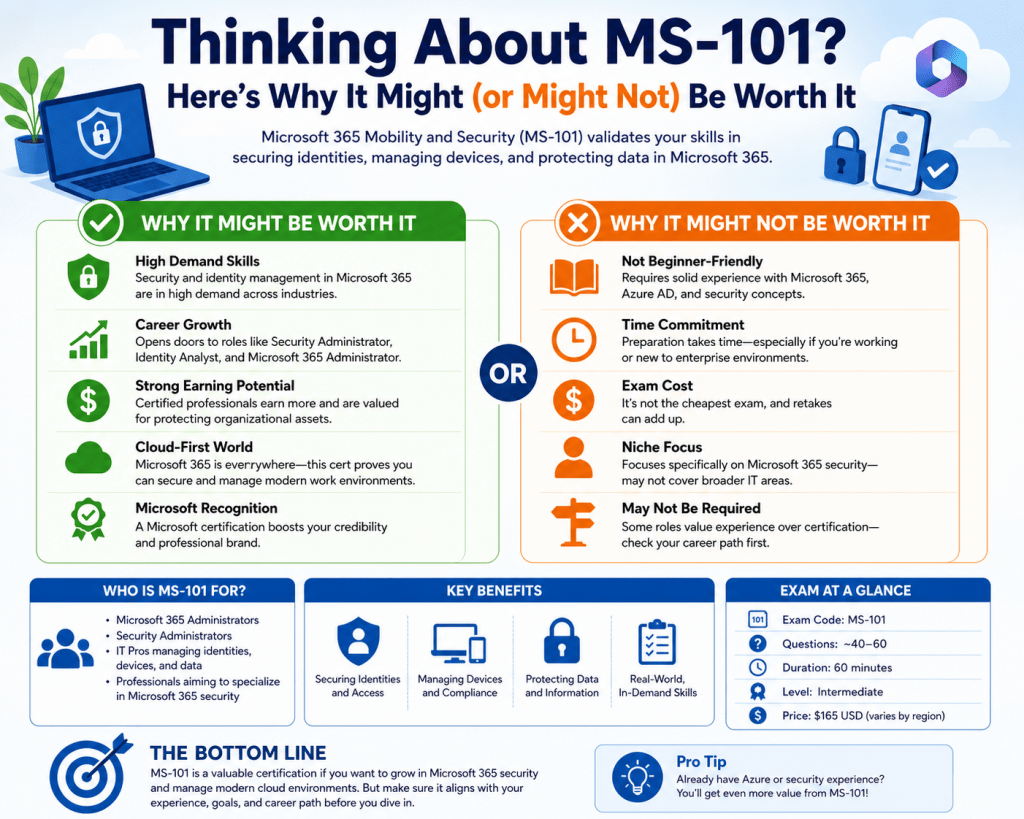
The shift toward cloud-first business environments has fundamentally changed how organizations manage communication, identity, security, and collaboration. Microsoft 365 has become one of the most widely adopted enterprise ecosystems because it integrates these functions into a unified platform that supports both operational efficiency and secure digital transformation. As companies expand their reliance on cloud services, the need for skilled professionals who can administer, secure, and optimize these environments continues to grow. This has led to the development of a structured certification path designed to validate technical and administrative expertise across different levels, culminating in an advanced enterprise administration credential that represents high-level proficiency in managing Microsoft 365 environments.
The enterprise administration certification path is built on the idea that modern IT systems are interconnected rather than isolated. Microsoft 365 services include identity management systems, email and messaging platforms, collaboration tools, endpoint management solutions, and compliance frameworks. These components work together to support organizational productivity, and changes in one area often affect multiple others. Because of this interconnected structure, administrators must understand not only individual services but also how they interact within a larger ecosystem.
Foundation of Microsoft 365 Administration and Core Service Areas
The journey toward enterprise-level administration begins with foundational knowledge of Microsoft 365 services and their operational roles within an organization. At this stage, professionals typically focus on understanding how cloud-based productivity systems function and how users interact with them in day-to-day operations. These foundational skills include managing user identities, configuring basic security settings, and supporting communication and collaboration tools.
Identity management serves as the core foundation of Microsoft 365 administration. Every service within the platform depends on identity authentication to determine access and permissions. Administrators must understand how user accounts are created, how authentication processes are handled, and how identity synchronization works between on-premises systems and cloud environments. This includes managing password policies, enabling secure sign-in methods, and ensuring that user access is properly controlled across all services.
Messaging and communication systems are another essential component of Microsoft 365 environments. Organizations rely heavily on digital communication platforms for email, scheduling, and information sharing. Administrators working in this area must understand how to configure mailbox settings, manage email routing, and ensure that communication systems remain secure and reliable. In addition, they must handle migration processes when organizations transition from legacy systems to cloud-based email infrastructure.
Collaboration tools also play a significant role in modern workplace environments. These tools enable teams to work together on documents, share resources, and communicate in real time. Administrators are responsible for managing access to shared workspaces, ensuring data integrity, and configuring collaboration policies that align with organizational requirements. As collaboration becomes more integrated into daily workflows, the importance of properly configured and secure collaboration environments continues to increase.
Security Fundamentals in Microsoft 365 Environments
Security is one of the most critical aspects of Microsoft 365 administration. As organizations move sensitive data into cloud environments, protecting that data becomes a top priority. Security administration within Microsoft 365 involves managing threats, protecting identities, and enforcing policies that prevent unauthorized access to organizational resources.
A key element of cloud security is identity protection. Since identity is the primary access point for all Microsoft 365 services, securing user accounts is essential. Administrators must implement multi-factor authentication, monitor sign-in activity, and configure conditional access policies that determine how and when users can access systems. These measures help reduce the risk of unauthorized access and account compromise.
Threat detection and response are also essential components of security administration. Microsoft 365 environments include built-in security tools that monitor activity for suspicious behavior, such as unusual login attempts or data access patterns. Administrators must be able to interpret security alerts, investigate potential threats, and take corrective actions to mitigate risks. This requires a strong understanding of both system behavior and common attack methods used by cybercriminals.
Data protection is another important responsibility in security administration. Organizations must ensure that sensitive information is properly classified, protected, and monitored throughout its lifecycle. This includes applying encryption, configuring data loss prevention policies, and controlling how information is shared both internally and externally. Proper data protection ensures that organizations maintain compliance with industry regulations and reduce the risk of data breaches.
Device and Endpoint Management in Cloud Environments
Modern organizations operate in highly mobile environments where employees use multiple devices to access corporate resources. This has made endpoint management a critical aspect of Microsoft 365 administration. Administrators must ensure that all devices connecting to organizational systems meet security and compliance standards.
Device management involves configuring policies that control how devices are used within an organization. This includes enforcing security settings, managing software updates, and ensuring that devices comply with organizational requirements. Administrators must also be able to deploy applications remotely and monitor device health across large-scale environments.
Endpoint security is closely tied to device management. As devices become potential entry points for cyber threats, securing them is essential for maintaining overall system integrity. Administrators must implement security policies that protect devices from malware, unauthorized access, and data leakage. This includes configuring antivirus solutions, enabling encryption, and monitoring device activity for suspicious behavior.
In hybrid and remote work environments, device management becomes even more complex. Employees may access corporate systems from personal devices or from multiple locations, requiring administrators to enforce consistent security policies across all endpoints. This ensures that organizational data remains protected regardless of where or how it is accessed.
Governance, Compliance, and Data Lifecycle Management
Governance and compliance are essential components of enterprise-level Microsoft 365 administration. Organizations must adhere to a wide range of regulatory requirements related to data protection, privacy, and information management. Administrators are responsible for implementing policies that ensure compliance with these regulations while maintaining operational efficiency.
Data governance involves defining how information is created, stored, accessed, and shared within an organization. This includes establishing rules for data retention, classification, and deletion. Administrators must ensure that data is managed throughout its lifecycle, from creation to eventual disposal, in accordance with organizational and regulatory requirements.
Compliance management focuses on ensuring that organizational practices align with legal and industry standards. This includes monitoring system activity, generating audit reports, and enforcing policies that support regulatory compliance. Administrators must be able to track data usage and demonstrate that proper controls are in place to protect sensitive information.
Information protection is another key aspect of governance. Organizations must ensure that sensitive data is properly labeled and protected based on its classification level. This may include restricting access to certain types of information, applying encryption, or monitoring how data is shared externally. Proper information protection helps reduce the risk of data exposure and supports compliance with regulatory frameworks.
Integration of Services in Enterprise Environments
One of the most important aspects of Microsoft 365 enterprise administration is the integration of multiple services into a unified operational framework. In real-world environments, identity, security, device management, and collaboration tools do not function independently. Instead, they are interconnected and must be managed as part of a cohesive system.
For example, identity policies directly influence security configurations, while device compliance affects access to collaboration tools. Changes in messaging systems can impact data retention policies, and modifications in security settings can affect user access across multiple services. Administrators must understand these interdependencies to ensure that changes are implemented safely and effectively.
Hybrid environments add another layer of complexity to this integration. Many organizations operate both on-premises infrastructure and cloud-based systems simultaneously. This requires seamless synchronization between different environments, ensuring that user identities, policies, and data remain consistent across all platforms. Administrators must manage synchronization tools, troubleshoot integration issues, and maintain system stability across hybrid architectures.
Operational Responsibilities and Real-World Application
Microsoft 365 enterprise administration is highly practical in nature, focusing on real-world operational responsibilities rather than purely theoretical concepts. Administrators are expected to manage live systems that support critical business operations, requiring strong problem-solving skills and the ability to respond quickly to technical issues.
Common responsibilities include managing user access, configuring system settings, troubleshooting service disruptions, and responding to security incidents. Administrators must also monitor system performance and ensure that services remain available and responsive. This requires familiarity with diagnostic tools and system monitoring dashboards that provide real-time insights into system health.
Automation plays a significant role in managing large-scale environments. As organizations grow, manual administration becomes inefficient and error-prone. Administrators must use automated tools to deploy configurations, enforce policies, and manage updates across large numbers of users and devices. This improves consistency and reduces operational overhead.
Strategic Importance of Enterprise Administration in Modern IT
Beyond technical responsibilities, Microsoft 365 enterprise administrators play a strategic role in shaping how technology supports business objectives. They are involved in planning system migrations, designing secure architectures, and optimizing workflows to improve productivity. Their decisions have a direct impact on organizational efficiency, security posture, and digital transformation success.
As cloud technologies continue to evolve, enterprise administrators must continuously update their skills and adapt to new features and capabilities. The role requires ongoing learning and a deep understanding of how emerging technologies can be applied to improve business operations.
Microsoft 365 Enterprise Administration Certification Structure, Exam Focus Areas, and Skill Development Path
The Microsoft 365 enterprise administration certification journey is structured to reflect the increasing complexity of managing modern cloud-based environments. Rather than focusing on a single skill set, it is designed as a layered progression that builds expertise across identity management, security, compliance, device management, and enterprise governance. Each stage of the certification path contributes to a deeper understanding of how Microsoft 365 services operate within real-world business ecosystems. This structured approach ensures that professionals are not only technically proficient but also capable of managing integrated systems at scale.
At its core, the certification structure is built around the concept of progressive specialization followed by system-wide integration. Early stages focus on individual service areas, while later stages emphasize the coordination of multiple services within enterprise environments. This mirrors real-world IT responsibilities, where administrators must manage interconnected systems rather than isolated tools.
Progression from Specialized Roles to Enterprise-Level Administration
The certification pathway begins with role-specific specialization. These roles are designed to develop expertise in targeted areas of Microsoft 365 administration. Each specialization focuses on a distinct operational domain, allowing professionals to build deep knowledge in a particular segment of the platform before expanding into broader enterprise responsibilities.
One specialization focuses on modern device administration, where professionals learn how to deploy, configure, and manage endpoints across an organization. This includes understanding how devices enroll into management systems, how policies are applied, and how compliance is enforced. Device administration is especially important in environments where employees use multiple devices and work remotely, as it ensures consistent security and configuration standards across all endpoints.
Another specialization focuses on security administration. This area emphasizes the protection of identities, data, and applications within Microsoft 365 environments. Professionals in this domain learn how to configure security policies, monitor threats, and respond to incidents. Identity protection plays a central role in this specialization, as most security breaches originate from compromised credentials. Administrators must understand how authentication systems work and how to strengthen access controls through advanced security configurations.
Messaging administration is another key specialization. This area focuses on managing enterprise email systems and communication platforms. Professionals learn how to configure mail flow, manage user mailboxes, and ensure secure communication across organizational boundaries. Messaging systems are often one of the most critical services in any organization, making their reliability and security a top priority.
Collaboration-focused specialization centers on tools that enable teamwork and productivity. This includes managing shared workspaces, document collaboration systems, and communication platforms. Administrators must ensure that users can collaborate effectively while maintaining control over data access and security policies. Collaboration systems often integrate deeply with identity and security frameworks, requiring administrators to understand cross-service interactions.
Each of these specializations builds a foundation of technical expertise that is later integrated into enterprise-level administration. The progression ensures that professionals develop both depth and breadth of knowledge before advancing to more complex responsibilities.
Integration of Microsoft 365 Services in Enterprise Environments
As professionals progress beyond specialization, they encounter the challenge of integrating multiple Microsoft 365 services into a unified administrative framework. Enterprise environments do not operate in isolated silos; instead, identity, security, compliance, and device management all interact continuously.
Identity integration is one of the most important aspects of this stage. In enterprise environments, identity systems serve as the central control mechanism for accessing all services. Administrators must ensure that user identities are synchronized across cloud and on-premises systems. This involves managing directory synchronization, authentication methods, and access policies. Any inconsistency in identity management can lead to access failures or security vulnerabilities.
Security integration is equally critical. Security policies must be applied consistently across all services to ensure comprehensive protection. This includes aligning threat detection systems, enforcing uniform access controls, and ensuring that data protection policies are applied across messaging, collaboration, and storage systems. Security integration also involves coordinating responses to incidents across multiple services, ensuring that threats are addressed holistically rather than in isolation.
Device integration plays a significant role in maintaining consistency across endpoints. Devices must comply with organizational policies regardless of where they are used. This requires centralized management systems that enforce configuration standards and security requirements across all devices. Administrators must ensure that device compliance aligns with identity and security policies to prevent unauthorized access.
Compliance integration ensures that data governance policies are applied uniformly across all Microsoft 365 services. This includes managing data retention rules, enforcing classification standards, and monitoring data usage across systems. Compliance requirements often span multiple services, making integration essential for maintaining regulatory adherence.
Advanced Identity Management and Authentication Systems
Identity management is one of the most critical areas of Microsoft 365 enterprise administration. It serves as the foundation for all access control and security mechanisms within the platform. As organizations scale, identity systems become more complex, requiring advanced configuration and management techniques.
Administrators must manage user lifecycle processes, including account creation, modification, and deletion. This involves ensuring that user identities are properly provisioned across all services and that access rights are updated as roles change within the organization. Identity lifecycle management also includes handling external users and guest accounts, which are common in collaborative environments.
Authentication systems are another key component of identity management. Modern enterprise environments rely on multiple authentication methods, including password-based authentication, multi-factor authentication, and passwordless sign-in options. Administrators must configure and manage these authentication methods to balance security and usability.
Conditional access policies add another layer of complexity to identity management. These policies determine how and when users can access organizational resources based on conditions such as location, device compliance, and risk level. Administrators must design and implement these policies carefully to ensure that legitimate users can access systems while preventing unauthorized access.
Identity synchronization between on-premises and cloud environments is also a critical responsibility. Many organizations operate hybrid identity systems, where user identities are maintained in both local directories and cloud services. Synchronization ensures consistency across environments but requires careful configuration to avoid conflicts and data inconsistencies.
Security Architecture and Threat Protection Strategies
Security architecture within Microsoft 365 environments is designed to protect identities, data, and applications from a wide range of threats. Enterprise administrators must understand how different security components work together to provide layered protection.
Threat protection systems monitor activity across Microsoft 365 services to detect suspicious behavior. These systems use advanced analytics to identify potential security risks such as phishing attempts, malware infections, and unauthorized access. Administrators must be able to interpret security alerts and take appropriate action to mitigate risks.
Data protection strategies involve securing sensitive information throughout its lifecycle. This includes applying encryption, restricting access based on classification levels, and monitoring data usage. Administrators must ensure that data remains protected both at rest and in transit.
Security posture management involves continuously evaluating the overall security health of the organization. This includes identifying vulnerabilities, implementing remediation actions, and ensuring that security configurations align with best practices. Administrators must regularly assess system configurations to maintain a strong security posture.
Incident response is another critical aspect of security administration. When security incidents occur, administrators must quickly identify the source of the issue, contain the threat, and restore normal operations. This requires a structured approach to incident handling and strong coordination across different system components.
Device Lifecycle and Endpoint Security Management
Device lifecycle management is a fundamental responsibility in Microsoft 365 enterprise environments. It involves managing devices from initial enrollment through ongoing maintenance and eventual retirement.
Device enrollment ensures that all organizational devices are registered within management systems. This allows administrators to apply policies, monitor compliance, and manage configurations centrally. Enrollment processes must be streamlined to support large-scale deployments.
Configuration management ensures that devices are set up according to organizational standards. This includes applying security settings, installing required applications, and enforcing compliance policies. Configuration management helps maintain consistency across all endpoints.
Patch management is another important responsibility. Devices must remain up to date with security patches and software updates to protect against vulnerabilities. Administrators must ensure that updates are deployed efficiently without disrupting business operations.
Endpoint security focuses on protecting devices from malware, unauthorized access, and data breaches. This includes configuring antivirus solutions, enabling encryption, and monitoring device activity. Endpoint security is closely linked to identity and access management systems.
Compliance Frameworks and Regulatory Alignment
Compliance management ensures that organizations adhere to legal, regulatory, and industry standards. Microsoft 365 provides tools that help administrators implement compliance policies across services.
Data retention policies define how long information is stored and when it should be deleted. These policies help organizations manage data lifecycle requirements and reduce storage risks. Administrators must configure retention rules based on organizational and regulatory needs.
Information classification allows organizations to categorize data based on sensitivity. This helps determine how data should be handled, shared, and protected. Classification systems often work in conjunction with encryption and access control mechanisms.
Audit logging provides visibility into system activity. Administrators can use audit logs to track user actions, investigate incidents, and demonstrate compliance with regulatory requirements. Audit data must be managed carefully to ensure accuracy and availability.
Regulatory reporting involves generating documentation that demonstrates compliance with industry standards. This requires administrators to collect and analyze data from multiple systems to provide a comprehensive view of organizational compliance status.
Advanced Microsoft 365 Enterprise Administration, Real-World Scenarios, and Career Impact
Microsoft 365 enterprise administration reaches its most advanced stage when professionals move beyond configuration and operational management into strategic control of complex, interconnected cloud ecosystems. At this level, the focus is not only on maintaining systems but also on designing scalable architectures, optimizing enterprise workflows, enforcing security governance, and ensuring long-term compliance across rapidly evolving digital environments. Organizations rely heavily on administrators who can interpret business requirements and translate them into secure, efficient, and sustainable Microsoft 365 configurations.
This final stage of the certification pathway represents a shift from tactical IT support to enterprise-level decision-making. Administrators are expected to manage large-scale environments, support hybrid infrastructures, and respond to evolving cybersecurity threats while maintaining seamless user experiences. The complexity of modern IT systems demands a deep understanding of how identity, security, compliance, and collaboration services interact across the entire digital workplace.
Enterprise Architecture and System Design Principles
Enterprise administration requires a strong understanding of system architecture within Microsoft 365 environments. Unlike small-scale deployments, enterprise systems involve thousands of users, multiple geographic locations, and a combination of cloud and on-premises resources. Designing such environments requires careful planning to ensure scalability, reliability, and security.
One of the most important architectural considerations is identity infrastructure design. Identity systems must be structured in a way that supports large user populations while maintaining high availability and security. This includes designing directory synchronization models, configuring authentication pathways, and ensuring redundancy in identity services. A well-designed identity architecture ensures that users can access resources consistently, even during system disruptions.
Security architecture is another essential component of enterprise design. Security must be embedded into every layer of the system, from identity and device management to data storage and communication platforms. Administrators must design layered defense strategies that combine threat detection, access control, and data protection mechanisms. This approach ensures that even if one layer is compromised, additional protections remain in place to safeguard organizational assets.
Collaboration architecture focuses on how users interact with Microsoft 365 tools such as document sharing, team communication platforms, and virtual meeting systems. Administrators must ensure that collaboration systems are designed to support both internal and external communication while maintaining strict control over sensitive data. Proper architecture ensures that collaboration remains efficient without compromising security or compliance.
Hybrid Cloud Management and Integration Complexity
Many organizations operate hybrid environments that combine on-premises infrastructure with Microsoft 365 cloud services. Managing these environments requires advanced knowledge of integration techniques, synchronization processes, and interoperability challenges.
Hybrid identity management is a central component of these environments. Organizations often maintain user identities in on-premises directories while synchronizing them with cloud-based systems. Administrators must ensure that identity synchronization is accurate, consistent, and secure. Any discrepancies between environments can lead to authentication failures or access issues.
Data synchronization is another critical challenge in hybrid environments. Files, emails, and application data must remain consistent across both cloud and on-premises systems. Administrators must configure synchronization tools and resolve conflicts that may arise during data replication. This ensures that users have seamless access to information regardless of where it is stored.
Hybrid security management involves enforcing consistent security policies across both environments. Administrators must ensure that on-premises systems adhere to the same security standards as cloud-based services. This includes aligning identity policies, access controls, and threat detection mechanisms.
Network integration also plays an important role in hybrid environments. Connectivity between on-premises infrastructure and cloud services must be reliable, secure, and optimized for performance. Administrators must monitor network traffic, configure secure communication channels, and troubleshoot connectivity issues when they arise.
Advanced Security Operations and Threat Intelligence
At the enterprise level, security operations become highly dynamic and data-driven. Microsoft 365 environments generate large volumes of security data that must be analyzed to detect threats and respond effectively. Administrators must develop expertise in interpreting this data and implementing proactive security measures.
Threat intelligence systems provide real-time insights into potential security risks. These systems analyze patterns of activity across the organization to identify anomalies that may indicate malicious behavior. Administrators must be able to interpret threat intelligence data and take appropriate action to mitigate risks before they escalate.
Incident response operations require a structured and coordinated approach. When a security incident occurs, administrators must quickly identify the scope of the issue, contain the threat, and restore normal operations. This involves collaboration across multiple systems and teams to ensure that incidents are resolved efficiently.
Security automation plays an increasingly important role in enterprise environments. Automated systems can detect threats, apply security policies, and respond to incidents without manual intervention. Administrators must configure and manage these automation tools to improve response times and reduce operational workload.
Risk management is another key aspect of advanced security operations. Administrators must continuously evaluate potential risks to the organization and implement measures to reduce exposure. This includes assessing vulnerabilities, applying security patches, and updating configurations to align with evolving threats.
Data Governance and Lifecycle Management at Scale
Data governance becomes significantly more complex in large enterprise environments. Organizations generate vast amounts of data across multiple platforms, and administrators must ensure that this data is managed effectively throughout its lifecycle.
Data classification systems help organizations categorize information based on sensitivity and business value. Administrators must implement classification policies that ensure data is properly labeled and handled according to its importance. This allows organizations to apply appropriate security controls and access restrictions.
Data retention management involves defining how long information should be stored and when it should be deleted. This is particularly important for regulatory compliance, as many industries require organizations to retain data for specific periods. Administrators must configure retention policies that balance compliance requirements with storage efficiency.
Data deletion and archival processes ensure that outdated or unnecessary information is securely removed from systems. This helps reduce storage costs and minimizes security risks associated with retaining unnecessary data. Administrators must ensure that deletion processes comply with regulatory requirements and organizational policies.
Audit and monitoring systems provide visibility into how data is accessed and used across the organization. Administrators must analyze audit logs to detect unusual activity, investigate incidents, and demonstrate compliance with regulatory standards. Effective monitoring ensures accountability and transparency in data management.
Automation, Optimization, and Operational Efficiency
Automation is a critical component of enterprise Microsoft 365 administration. As organizations scale, manual management becomes inefficient and prone to errors. Automation tools help streamline administrative tasks, enforce consistency, and improve operational efficiency.
Policy automation allows administrators to enforce security, compliance, and configuration standards across large user populations. Automated policies ensure that all users and devices adhere to organizational requirements without manual intervention.
Workflow automation helps streamline repetitive administrative tasks such as user provisioning, access management, and reporting. By automating these processes, administrators can reduce workload and focus on higher-level strategic responsibilities.
System optimization involves continuously improving the performance and efficiency of Microsoft 365 environments. Administrators must monitor system performance, identify bottlenecks, and implement improvements to ensure smooth operation. Optimization also includes refining configurations to reduce resource consumption and improve user experience.
Monitoring and analytics tools provide real-time insights into system performance and user activity. Administrators use these tools to identify trends, detect issues, and make data-driven decisions that improve system reliability and efficiency.
Real-World Administrative Scenarios in Enterprise Environments
Enterprise administrators frequently encounter complex scenarios that require a combination of technical knowledge and problem-solving skills. These scenarios often involve multiple systems and require coordinated responses.
Large-scale user migrations are a common scenario in enterprise environments. Organizations may transition from legacy systems to Microsoft 365 cloud services, requiring careful planning and execution. Administrators must ensure that data is migrated accurately, user access is maintained, and system downtime is minimized.
Security breach response scenarios require immediate action to contain threats and protect organizational assets. Administrators must analyze security alerts, identify compromised systems, and implement remediation steps quickly to minimize damage.
System integration scenarios involve connecting Microsoft 365 services with third-party applications or legacy systems. Administrators must ensure that integrations are secure, reliable, and compatible with existing configurations.
Performance degradation scenarios require administrators to identify and resolve system bottlenecks. This may involve analyzing network traffic, optimizing configurations, or scaling resources to meet demand.
Career Impact and Professional Growth in Enterprise Administration
Microsoft 365 enterprise administration represents a significant milestone in IT career development. Professionals who achieve this level of expertise are positioned for advanced roles in cloud architecture, security engineering, and IT leadership.
Enterprise administrators are often responsible for shaping organizational IT strategies. Their decisions influence how technology is used across the organization, making their role both technical and strategic. This level of responsibility requires strong analytical skills, deep technical knowledge, and the ability to align IT systems with business objectives.
The demand for skilled Microsoft 365 professionals continues to grow as more organizations adopt cloud-first strategies. This creates opportunities for career advancement in areas such as cloud infrastructure management, cybersecurity, and enterprise architecture.
Continuous learning is essential in this field, as Microsoft 365 technologies evolve rapidly. Administrators must stay updated with new features, security updates, and best practices to remain effective in their roles.
Conclusion
Microsoft 365 enterprise administration represents far more than a technical certification pathway. It reflects a structured approach to understanding how modern organizations operate in cloud-driven environments where identity, security, compliance, and collaboration are deeply interconnected. As businesses continue shifting toward digital-first operations, the ability to manage these systems at scale has become a critical requirement rather than a supplementary IT skill. The certification journey associated with enterprise administration is therefore best understood as a progressive development model that transforms foundational IT knowledge into advanced, system-wide expertise capable of supporting complex organizational needs.
At its core, enterprise administration is about control and coordination across multiple layers of a digital ecosystem. These layers include user identity systems, endpoint devices, communication platforms, data governance structures, and security frameworks. Each layer functions independently, but their true value emerges when they operate together in a unified and secure environment. The role of an enterprise administrator is to ensure that this integration remains stable, efficient, and aligned with organizational objectives. This requires not only technical proficiency but also the ability to understand how decisions in one area influence outcomes in another.
One of the most defining aspects of Microsoft 365 administration is the central importance of identity. Identity systems serve as the foundation for all access and authorization processes within an organization. Every user interaction, whether accessing email, collaborating on documents, or connecting to internal applications, depends on identity verification. This makes identity management one of the most sensitive and impactful responsibilities in enterprise environments. Proper configuration of authentication methods, access policies, and synchronization systems ensures that users can work securely without unnecessary friction while preventing unauthorized access to critical resources.
Security within Microsoft 365 environments extends beyond traditional perimeter-based protection. Instead, it is built around a layered model that integrates identity protection, device compliance, data governance, and threat detection into a continuous security framework. This approach reflects the reality of modern cyber threats, which are increasingly sophisticated and capable of bypassing single-layer defenses. Enterprise administrators must therefore adopt a proactive mindset, continuously monitoring system behavior, responding to alerts, and adjusting security configurations to address emerging risks. The ability to interpret security signals and act decisively is a key differentiator at the enterprise level.
Device management further expands the complexity of administrative responsibilities. In modern workplaces, employees use a diverse range of devices to access organizational resources from multiple locations. This mobility introduces challenges in maintaining consistent security and configuration standards. Enterprise administrators must ensure that every device interacting with organizational systems complies with established policies. This includes enforcing security baselines, managing software updates, and monitoring compliance status across large device populations. The goal is to maintain a secure and predictable environment regardless of where users operate.
Compliance and governance add another layer of responsibility that reflects the increasing importance of regulatory standards in digital operations. Organizations are required to manage data responsibly throughout its lifecycle, ensuring that information is stored, accessed, and deleted in accordance with legal and industry requirements. This involves defining retention policies, implementing data classification systems, and maintaining audit trails that provide visibility into system activity. Enterprise administrators play a central role in ensuring that these governance structures are consistently applied across all services and data types.
Collaboration systems within Microsoft 365 environments also require careful administration. These platforms enable teams to communicate, share information, and work together in real time, often across different geographic regions. While collaboration tools improve productivity, they also introduce potential risks related to data exposure and access control. Administrators must balance usability with security by configuring permissions, managing external sharing settings, and ensuring that collaborative spaces remain aligned with organizational policies. This balance is essential for maintaining both efficiency and control.
As organizations grow, scalability becomes a defining challenge in enterprise administration. Systems that work efficiently for small user groups must be capable of supporting thousands or even tens of thousands of users without performance degradation. This requires careful planning of infrastructure, automation of administrative tasks, and continuous monitoring of system performance. Automation, in particular, plays a crucial role in reducing manual workload and ensuring consistency across large environments. By automating routine tasks such as user provisioning, policy enforcement, and reporting, administrators can focus on higher-level strategic responsibilities.
Hybrid environments add another dimension of complexity that reflects the transitional nature of modern IT infrastructure. Many organizations continue to rely on a combination of on-premises systems and cloud-based services. Managing these hybrid environments requires seamless integration between different identity systems, data storage locations, and security frameworks. Enterprise administrators must ensure that both environments operate in harmony, with consistent policies and reliable synchronization. This integration is often one of the most technically challenging aspects of enterprise administration, requiring a deep understanding of both legacy and cloud technologies.
Beyond technical responsibilities, enterprise administration also plays a strategic role in organizational development. Technology decisions increasingly influence business outcomes, and administrators are often involved in planning how digital systems support operational goals. This includes designing scalable architectures, improving workflow efficiency, and ensuring that technology investments align with long-term business strategies. The role has evolved from reactive system management to proactive system design and optimization.
Another important aspect of enterprise administration is adaptability. The Microsoft 365 ecosystem is continuously evolving, with new features, security updates, and service enhancements being introduced regularly. Administrators must remain adaptable and committed to ongoing learning to keep pace with these changes. This adaptability ensures that organizations can take advantage of new capabilities while maintaining system stability and security.
The broader impact of enterprise administration expertise extends into career development and professional opportunities. Individuals who develop advanced skills in this area are positioned for roles that involve cloud architecture, cybersecurity leadership, and enterprise IT strategy. These roles require a combination of technical depth and strategic thinking, reflecting the multifaceted nature of modern IT environments.
Ultimately, Microsoft 365 enterprise administration represents a comprehensive discipline that integrates technical knowledge, operational management, and strategic planning. It reflects the reality of modern digital infrastructure, where systems are interconnected, security is continuous, and scalability is essential. The expertise developed through this pathway enables professionals to manage complex environments with confidence, ensuring that organizations can operate securely and efficiently in an increasingly cloud-dependent world.