
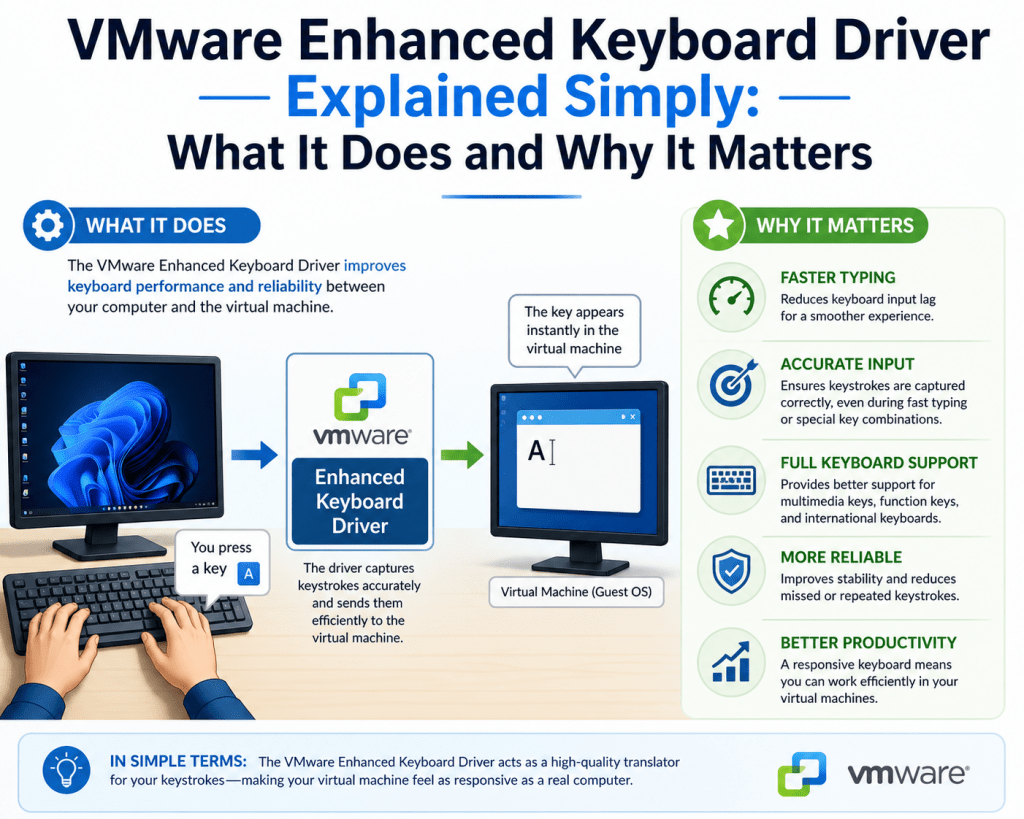
ESXi is a bare-metal hypervisor designed to run directly on physical server hardware without requiring a traditional operating system layer underneath. In enterprise virtualization environments, this design is fundamental because it allows the hypervisor to control hardware resources with minimal overhead while supporting multiple isolated virtual machines simultaneously. Each virtual machine behaves like a fully independent system, even though it shares the same underlying physical infrastructure with other workloads. The hypervisor is responsible for abstracting CPU scheduling, memory allocation, storage access, and network interfaces so that each guest operating system believes it has dedicated hardware resources.
This abstraction is powerful, but it also introduces a separation between physical devices and the virtual machine’s perception of those devices. Unlike a physical computer, where peripherals such as keyboards, mice, and storage devices are directly attached to the operating system, virtual machines rely on emulated or paravirtualized hardware representations. These representations are created and managed by the hypervisor, which translates physical hardware events into virtual device signals. This architecture is what enables portability, isolation, and efficient resource utilization in large-scale data center environments.
Within this framework, input devices like keyboards are no longer simple hardware endpoints. Instead, they become part of a virtual input pipeline that must be interpreted, translated, and delivered through multiple abstraction layers. This is where complexity begins to appear, especially when advanced keyboard features or specialized input behaviors are required inside guest operating systems.
Why Keyboard Input Becomes Complex in Virtual Machines
In a physical computing environment, a keyboard communicates directly with the operating system through a standardized driver stack. Each key press generates a scan code that is interpreted by the operating system kernel, which then translates it into characters or control commands. This process is highly optimized and relatively straightforward because the operating system has direct awareness of the hardware generating the input.
In a virtualized ESXi environment, this direct relationship no longer exists. The keyboard is physically attached to the host machine or client device, but the virtual machine does not see it as a physical device. Instead, the hypervisor intercepts input events and forwards them through a virtual input channel. This means the guest operating system receives keyboard data that has already been processed, encapsulated, and sometimes modified by the virtualization layer.
This additional layer introduces potential differences in how keys are interpreted. Standard keys such as letters, numbers, and basic modifiers are usually handled without issue because they conform to widely accepted input standards. However, extended keys, multimedia controls, language-specific characters, and vendor-specific keyboard functions may not translate cleanly through generic virtual device drivers. As a result, certain inputs may be lost, remapped, or behave inconsistently depending on the guest operating system configuration and the virtualization stack version.
Virtual Input Pipelines and Device Emulation Layers
The process of handling keyboard input in ESXi is based on virtual device emulation. When a user interacts with a keyboard connected to a physical system or remote console session, the input is first captured by the host operating system or client interface. It is then passed to the hypervisor, which converts the physical input event into a virtual representation of a keyboard device.
This virtual keyboard is presented to the guest operating system as if it were a standard HID-compliant device. The guest OS loads its built-in keyboard drivers and processes input events accordingly. This abstraction allows virtual machines to remain hardware-independent, which is essential for migration, snapshotting, and dynamic resource allocation.
However, this abstraction also strips away certain low-level details that exist in physical keyboard communication. For example, some keyboards generate extended scan codes for additional keys, while others include vendor-specific signals for multimedia or shortcut functions. In a virtualized pipeline, these signals may be simplified or mapped into generic equivalents. While this ensures compatibility, it can reduce functionality in environments where full keyboard feature support is required.
Standard HID Drivers Versus Enhanced Input Handling
Most guest operating systems rely on standard Human Interface Device drivers to process keyboard input. These drivers are designed to be universal and support a wide range of keyboard hardware without requiring device-specific customization. In typical server workloads running inside ESXi, this level of support is sufficient because user interaction is minimal or non-interactive.
However, in scenarios where virtual machines are used as remote workstations or interactive environments, the limitations of standard HID drivers become more noticeable. Issues may arise with complex keyboard layouts, input method editors, or specialized key mappings. Certain key combinations may not register correctly, and extended keys may not behave as expected.
Enhanced input handling mechanisms were introduced to address these gaps. Instead of relying solely on generic HID translation, enhanced keyboard support operates at a deeper level within the virtualization stack. It attempts to preserve more detailed information about each key event, including extended metadata that may be relevant for advanced input scenarios. This allows the guest operating system to interpret keyboard input more accurately, particularly in environments where precision and full feature support are required.
The Role of VMware Enhanced Keyboard Driver in Input Translation
The VMware Enhanced Keyboard Driver is a specialized component designed to improve keyboard input handling for Windows-based virtual machines running on ESXi environments. Its primary function is to refine the translation of keyboard events between the physical or remote input source and the guest operating system.
Instead of relying exclusively on standard virtual HID emulation, this driver introduces an enhanced interpretation layer that captures additional details from keyboard input events. These details may include extended key codes, modifier states, and special function signals that are not always preserved in generic input pipelines. By doing so, it ensures that more complex keyboard functionality is accurately represented inside the virtual machine.
This becomes particularly relevant in environments where users interact heavily with the virtual machine through a graphical interface or remote desktop session. In such cases, keyboard responsiveness and accuracy are critical for productivity, especially when dealing with administrative tools, development environments, or multilingual input requirements.
Scenarios Where Enhanced Keyboard Handling Becomes Relevant
Although most virtual machines do not require enhanced keyboard functionality, there are specific scenarios where it becomes useful. One such scenario involves remote workstation environments where users rely on full desktop interaction inside a virtual machine. In these cases, keyboard shortcuts, function keys, and specialized input methods play an important role in daily operations.
Another scenario involves internationalized environments where multiple keyboard layouts are used. Different languages require different input mappings, and some rely heavily on extended character sets that may not be fully supported by standard virtual HID translation. Enhanced keyboard handling helps maintain consistency across these input variations.
There are also cases where specialized hardware keyboards are used, such as those with programmable macro keys or integrated multimedia controls. Without enhanced input support, these additional keys may not be recognized correctly inside the virtual machine, limiting functionality or requiring manual remapping.
Interaction Between Remote Console Systems and Keyboard Processing
In ESXi environments, keyboard input is often transmitted through remote console interfaces rather than direct physical attachment. These interfaces are responsible for capturing input events from a client device and transmitting them over a network connection to the virtual machine.
This introduces another layer of processing where keyboard events must be encoded, transmitted, decoded, and then reinterpreted by the guest operating system. Each stage of this pipeline must preserve the integrity of the original input to ensure accurate behavior inside the virtual machine.
Any mismatch between encoding formats or timing expectations can result in delayed input, missing keystrokes, or incorrect key mapping. Enhanced keyboard integration helps reduce these inconsistencies by improving how input events are processed before they reach the guest OS. It ensures that extended key information is not lost during transmission and that input behavior remains consistent across different access methods.
Driver-Level Integration and System Kernel Interaction
The VMware Enhanced Keyboard Driver operates at a relatively low level within the Windows operating system kernel. This allows it to intercept and interpret keyboard events before they are fully processed by higher-level application layers. By integrating closely with the input subsystem, it can modify or enhance key event data as needed to ensure accurate representation inside the virtual machine.
However, this deep integration also introduces complexity. Kernel-level drivers must remain compatible with operating system updates and security changes. Any modification to the input subsystem by the operating system can potentially affect driver behavior, leading to inconsistencies or reduced functionality. This is one reason why such drivers are typically used only in environments where their benefits outweigh maintenance overhead.
In most standard ESXi deployments, administrators prefer to rely on default input mechanisms because they offer greater stability and require less ongoing management. Enhanced keyboard drivers are typically reserved for specific use cases where advanced input fidelity is required.
Behavioral Differences Between Standard and Enhanced Input Modes
When comparing standard virtual keyboard input with enhanced keyboard handling, the differences are primarily related to fidelity and feature preservation. Standard input modes focus on compatibility and simplicity, ensuring that basic keyboard functionality works across all guest operating systems without additional configuration.
Enhanced input modes focus on accuracy and completeness of input representation. This means preserving extended key data, improving layout consistency, and reducing discrepancies between physical keyboard behavior and virtual machine interpretation.
In environments where both modes are available, the choice between them depends on workload requirements. Server-centric workloads generally do not require enhanced input, while interactive desktop workloads may benefit from it depending on user expectations and input complexity.
Limitations of Standard Keyboard Input in Virtualized ESXi Environments
Standard keyboard input handling in ESXi environments is primarily designed around compatibility and universality rather than feature completeness. The hypervisor relies on generic virtual device models, which are sufficient for most server workloads but begin to show limitations in interactive or workstation-style virtual machines.
At the core of these limitations is abstraction. The virtualization layer converts physical keyboard signals into simplified input events that can be understood by any guest operating system, regardless of hardware configuration. While this approach ensures broad compatibility, it also removes certain low-level details that may be important for advanced input behavior.
One of the most common limitations is the loss of extended key semantics. Many modern keyboards include additional keys beyond the standard alphanumeric set. These may include media controls, programmable macro keys, or region-specific input toggles. In a standard virtual HID environment, these keys are often mapped to generic or unsupported codes, resulting in inconsistent behavior inside the guest operating system.
Another limitation appears in multilingual input scenarios. Operating systems that rely on complex input method editors or language-specific character mappings may experience inconsistencies when keyboard input is simplified during virtualization. Characters that require multi-step composition can sometimes behave unpredictably if intermediate key states are not properly preserved.
Input Event Translation and Loss of Contextual Data
Keyboard input is not just a simple binary event of a key pressed or a key released. In modern computing systems, each input event carries contextual metadata such as scan codes, modifier states, timing sequences, and sometimes device-specific flags.
In ESXi virtualized environments, much of this contextual information is normalized during the translation process. The hypervisor must convert hardware-specific signals into a universal format that can be understood by the guest operating system. During this conversion, certain details may be discarded if they are not part of the standard input model.
This loss of contextual data becomes noticeable in edge cases where applications rely on precise input behavior. For example, some software interprets rapid key sequences differently depending on the timing intervals between events. If the virtualization layer modifies or batches input events, this timing sensitivity may be disrupted.
Additionally, some keyboard features rely on persistent state tracking at the hardware level. If this state is not accurately reflected in the virtual input model, it can lead to desynchronization between physical key behavior and virtual machine response.
Role of HID Emulation in Input Standardization
Human Interface Device emulation is the foundation of keyboard support in most virtualized environments. The HID standard provides a universal communication protocol that allows keyboards to function across different operating systems without requiring specialized drivers.
In ESXi, HID emulation is used to represent a physical keyboard as a virtual device inside each guest operating system. This ensures that basic input functionality is always available regardless of underlying hardware differences.
However, HID emulation is intentionally designed to be minimalistic. It focuses on ensuring that core keyboard functionality works consistently rather than supporting every advanced hardware feature. This design choice is intentional because it prioritizes stability and portability across diverse environments.
The limitation of this approach is that it cannot fully represent extended or vendor-specific keyboard functionality. As a result, features such as programmable keys, custom macros, or specialized input layers may not be properly exposed to the guest operating system.
Enhanced Input Handling as an Extension Layer
Enhanced keyboard input handling functions as an additional translation layer built on top of standard HID emulation. Instead of replacing the existing input pipeline, it extends it by capturing additional details from keyboard events and preserving them during transmission to the guest operating system.
This extension layer is particularly useful in environments where input accuracy is critical. Rather than reducing input data to a minimal format, enhanced handling attempts to preserve as much original information as possible while still maintaining compatibility with the virtual machine architecture.
This includes preserving extended key codes, improving modifier key tracking, and ensuring that complex input sequences are delivered accurately. In some cases, it may also improve synchronization between physical key actions and virtual machine response timing.
However, this added precision comes at the cost of increased complexity. The system must manage additional input metadata, maintain compatibility with different Windows versions, and ensure that updates to the operating system do not break input behavior.
Kernel-Level Integration and System Dependency Factors
The VMware Enhanced Keyboard Driver integrates deeply into the Windows kernel input subsystem. This level of integration allows it to intercept keyboard events before they are fully processed by higher-level application layers.
By operating at this level, the driver can modify or enhance input events in real time. This includes adjusting scan codes, preserving extended key states, and ensuring consistent behavior across different virtualization configurations.
However, kernel-level integration also introduces dependency risks. Any change in the operating system’s input architecture can potentially affect driver behavior. Updates to Windows input handling, security policies, or driver signing requirements may impact compatibility.
Because of this, enhanced keyboard drivers must be carefully maintained and tested across different system versions. In environments with strict stability requirements, administrators may prefer to avoid kernel-level enhancements to reduce operational risk.
Behavior of Multimedia and Extended Function Keys
Modern keyboards often include multimedia keys such as volume control, playback management, brightness adjustment, and application shortcuts. These keys do not always conform to standard alphanumeric input models.
In virtualized ESXi environments using standard HID emulation, these keys may not always be recognized or may be mapped inconsistently depending on the guest operating system configuration. In some cases, they may require additional driver support or manual remapping inside the operating system.
Enhanced keyboard handling improves the interpretation of these keys by preserving their extended scan codes and ensuring they are passed more accurately to the guest operating system. This allows multimedia functionality to behave more consistently across different virtual machine setups.
However, compatibility is still dependent on the guest operating system’s ability to interpret these extended signals. If the operating system does not include native support for certain key types, enhanced input handling alone may not fully resolve functionality gaps.
Impact of Remote Desktop and Console Sessions on Input Behavior
Keyboard input in ESXi environments is often transmitted through remote console or remote desktop interfaces. These interfaces are responsible for capturing input events from a client device and transmitting them to the virtual machine over a network connection.
This introduces additional processing layers between the physical keyboard and the guest operating system. Each layer must correctly encode, transmit, and decode input events without altering their intended meaning.
Network latency, packet loss, or session synchronization issues can all affect keyboard responsiveness. While these issues are not directly caused by the keyboard driver itself, they interact with input handling mechanisms and can amplify inconsistencies in virtual environments.
Enhanced keyboard handling helps reduce some of these issues by improving the structure and fidelity of input event encoding. However, it cannot eliminate network-related delays or transmission instability inherent in remote access architectures.
Differences Between Workstation and Server-Oriented Virtual Machines
The relevance of enhanced keyboard input varies significantly depending on how virtual machines are used. In server-oriented workloads, keyboard input is typically minimal or absent after initial configuration. These systems are often managed through automated scripts, remote command execution, or centralized management tools.
In such environments, standard HID emulation is more than sufficient because there is little reliance on interactive input. The primary focus is system stability, resource efficiency, and predictable behavior under automated workloads.
In contrast, workstation-style virtual machines require frequent user interaction. These environments may involve software development, administrative configuration, or end-user desktop usage. In these cases, keyboard input accuracy and responsiveness become significantly more important.
Enhanced keyboard handling becomes more relevant in these scenarios because it improves the consistency of user interaction. However, even in workstation environments, its necessity depends on the complexity of input requirements and the types of applications being used.
Driver Maintenance and Operational Overhead Considerations
One of the major factors influencing the use of enhanced keyboard drivers is operational overhead. Kernel-level drivers require maintenance, compatibility testing, and ongoing monitoring to ensure they remain functional across system updates.
In large-scale virtualization environments, introducing additional drivers increases the complexity of system management. Each driver becomes a potential point of failure or incompatibility, especially when operating system updates are deployed across multiple virtual machines.
Administrators must weigh the benefits of improved input handling against the potential risks of increased maintenance requirements. In many cases, the default virtual input stack is preferred because it minimizes long-term operational complexity.
Enhanced keyboard drivers are typically reserved for environments where input fidelity is critical enough to justify additional maintenance effort. This includes specialized workstation deployments or environments with strict input requirements.
Consistency Challenges Across Different Client Devices
Virtual machine input behavior is also influenced by the type of client device used to access the ESXi environment. Different operating systems, keyboard layouts, and hardware configurations can all affect how input is captured and transmitted.
For example, a Windows-based client may interpret certain key combinations differently from a Linux-based client. Similarly, laptops with compact keyboards may map function keys differently compared to full-size desktop keyboards.
These inconsistencies are introduced before input even reaches the hypervisor layer. As a result, virtualization systems must normalize input behavior to maintain consistency inside the guest operating system.
Enhanced keyboard handling can help reduce some of these inconsistencies by providing a more detailed translation layer. However, it cannot fully eliminate variability introduced at the client device level.
Input Synchronization and Timing Sensitivity Issues
Some applications rely heavily on the precise timing of keyboard input events. This includes software that interprets rapid key sequences, gaming applications, or specialized data entry systems.
In virtualized environments, input events may be subject to buffering or batching as they are transmitted through the virtualization stack. This can introduce small delays or alter the perceived timing between key presses.
Enhanced input handling attempts to reduce these discrepancies by improving event transmission fidelity. However, timing sensitivity is still influenced by system load, network performance, and virtualization overhead.
As a result, while enhanced keyboard drivers improve accuracy, they do not fully eliminate timing-related challenges inherent in virtualized input systems.
Security Considerations in Virtualized Keyboard Input Handling
Keyboard input inside ESXi environments is not only a usability concern but also a security-relevant data path. Every keystroke that travels from a physical device to a virtual machine passes through multiple layers of software abstraction, including the host operating system, the hypervisor input stack, and remote console or client interfaces. Each of these layers represents a potential point where input can be intercepted, modified, or misrouted if not properly secured.
In standard virtual HID-based input handling, the focus is primarily on functional delivery rather than deep input integrity validation. This means that while input is reliably transmitted under normal conditions, there is limited visibility into how individual keystrokes are processed beyond the virtualization boundary. In highly controlled enterprise environments, this abstraction is usually acceptable because access to the hypervisor and management interfaces is already restricted through authentication and network segmentation.
However, when enhanced keyboard drivers are introduced, the input processing pipeline becomes more complex. Kernel-level interaction with input events increases the surface area where system-level changes could impact behavior. Although this does not inherently weaken security, it does require careful alignment with operating system hardening practices. Any driver that interacts with keyboard input at a low level must maintain strict compatibility with security policies governing input injection, device emulation, and remote session handling.
Remote console systems further add to this security model by transmitting input over network channels. If these channels are not properly encrypted or authenticated, there is a theoretical risk of input interception. In properly configured ESXi deployments, secure communication protocols mitigate this risk by ensuring that keyboard events cannot be easily captured or altered during transmission.
Input Isolation and Virtual Machine Boundaries
One of the core principles of virtualization is isolation. Each virtual machine operates as an independent entity, separated from other workloads running on the same physical host. This isolation extends to input devices as well. A keyboard connected to a physical system does not directly interact with the virtual machine; instead, input is mediated through the hypervisor.
This mediation ensures that no single virtual machine can directly access hardware-level input streams belonging to the host or other virtual machines. Instead, each VM receives a filtered and virtualized representation of keyboard activity. This prevents cross-VM input leakage and maintains strict separation between workloads.
Enhanced keyboard handling does not break this isolation model. Instead, it operates within the existing boundaries of the virtual input system. Its purpose is to improve fidelity of input translation, not to bypass or modify isolation mechanisms. However, because it operates at a deeper system level, it must still respect strict separation rules enforced by the hypervisor and guest operating system security layers.
In environments where multiple tenants or sensitive workloads coexist on the same ESXi infrastructure, maintaining strict input isolation is critical. Even subtle changes in input processing behavior must be carefully evaluated to ensure they do not introduce unintended interaction between virtual machines.
Driver Stability and Operating System Compatibility Dynamics
The VMware Enhanced Keyboard Driver operates within the Windows kernel environment, which means its stability is directly influenced by changes in operating system architecture. Modern Windows systems frequently evolve their input subsystems, security models, and driver enforcement mechanisms. These changes can affect how kernel-level drivers interact with input events.
Standard virtual HID drivers are generally more stable in this regard because they rely on widely adopted and long-standing input standards. These drivers rarely require modification across operating system updates. Enhanced keyboard drivers, on the other hand, must remain aligned with deeper system internals, which can change over time.
This creates a dependency relationship between the virtualization platform and the operating system’s input architecture. When changes occur in how the operating system handles keyboard input at the kernel level, enhanced drivers must be updated to remain compatible. Failure to do so can result in reduced functionality or partial loss of extended input features.
This dependency is one of the reasons why enhanced keyboard functionality is often selectively deployed. In environments where stability and minimal maintenance overhead are prioritized, administrators may choose to rely solely on standard input mechanisms even if advanced features are technically available.
Performance Impact of Enhanced Input Processing Layers
Although keyboard input is generally a low-bandwidth operation, the way it is processed in a virtualized environment can still influence system performance. Each input event must be captured, translated, transmitted, and reconstructed across multiple layers of the ESXi stack.
Standard HID-based input processing is highly optimized for minimal overhead. It prioritizes efficiency by reducing input events to their simplest form before transmission to the guest operating system. This results in predictable and lightweight performance characteristics even under heavy system load.
Enhanced keyboard processing introduces additional computational steps. Input events must be analyzed more deeply, extended metadata must be preserved, and additional validation logic may be applied before delivery to the guest OS. While these operations are not typically resource-intensive on their own, they do add incremental overhead to the input pipeline.
In most environments, this overhead is negligible. However, in large-scale deployments with high-density virtual machine usage or heavy remote interaction, even small inefficiencies can accumulate. As a result, system architects must consider whether the additional input fidelity provided by enhanced drivers justifies the extra processing complexity.
Multilingual Input and Character Encoding Challenges
One of the more complex areas of keyboard input handling in virtualized environments is multilingual support. Different languages rely on different input methods, character encoding systems, and keyboard layouts. Some languages require multi-stage input sequences where a single character is composed from multiple keystrokes.
In standard virtual HID environments, these input sequences may not always be preserved accurately. Simplified input translation can disrupt the sequence of events required for correct character composition. This can result in missing characters, incorrect output, or inconsistent behavior in applications that rely on precise text input.
Enhanced keyboard handling improves this situation by preserving more detailed input event data, including extended scan codes and modifier states. This allows the guest operating system to reconstruct input sequences more accurately, particularly in languages that rely heavily on input method editors.
However, even with enhanced handling, full multilingual accuracy still depends on the guest operating system’s own language processing capabilities. The virtualization layer can only preserve and transmit input data; it cannot correct limitations in how the operating system interprets that data.
Hardware Keyboard Diversity and Input Normalization
Modern computing environments include a wide range of keyboard hardware types, from standard desktop keyboards to compact laptop keyboards and specialized ergonomic or programmable devices. Each of these devices may generate slightly different input signals for similar key actions.
In physical systems, operating systems often include device-specific drivers or firmware-level mappings that account for these differences. In virtualized environments, this diversity must be normalized into a consistent format before being delivered to the guest operating system.
The virtualization layer performs this normalization by converting hardware-specific signals into standardized virtual input events. While this ensures compatibility, it can also remove device-specific nuances. For example, programmable macro keys may be reduced to generic input events or ignored entirely if no mapping exists in the virtual device model.
Enhanced keyboard handling attempts to reduce this loss of specificity by preserving more detailed information about input sources. This allows the guest operating system to better distinguish between different types of input events, although full hardware-specific functionality still depends on operating system support.
Remote Administration and Keyboard Responsiveness Factors
In ESXi environments, administrators frequently rely on remote management tools to interact with virtual machines. These tools provide graphical console access, command-line interfaces, and system configuration utilities. Keyboard responsiveness is a critical component of this interaction model.
Any delay between key press and system response can significantly impact administrative efficiency, especially during troubleshooting or time-sensitive operations. While network latency plays a major role in responsiveness, input processing efficiency within the virtualization stack also contributes to perceived performance.
Standard input handling typically provides consistent responsiveness under normal conditions, but it may simplify event processing in ways that affect complex input sequences. Enhanced input handling improves fidelity but introduces additional processing steps that must be executed before input is delivered to the guest operating system.
This creates a balance between accuracy and responsiveness. In most cases, the difference is not noticeable to users, but in high-interaction scenarios, subtle variations in input behavior can become more apparent.
Driver Lifecycle Management in Enterprise Virtualization Environments
Managing drivers in a virtualized infrastructure involves more than just installation and configuration. It includes lifecycle considerations such as updates, compatibility testing, rollback planning, and performance monitoring.
Enhanced keyboard drivers, due to their kernel-level integration, must be carefully managed throughout their lifecycle. Each update to the operating system or virtualization platform may require validation to ensure continued compatibility. This is particularly important in environments where stability is critical and downtime must be minimized.
Standard virtual input drivers require significantly less lifecycle management because they are part of the core virtualization stack and are designed to remain stable across updates. This difference in maintenance overhead is a key factor in deployment decisions.
In large-scale ESXi infrastructures, minimizing the number of additional kernel-level components is often a priority. This reduces the complexity of system management and lowers the risk of unexpected behavior following updates.
Input Consistency Across Distributed Virtual Environments
In distributed virtualization environments, virtual machines may be accessed from multiple geographic locations and client devices. This introduces variability in how keyboard input is captured and transmitted. Different network conditions, client operating systems, and input hardware can all affect input consistency.
Virtualization systems must normalize these differences to ensure that virtual machines behave consistently regardless of where the input originates. Standard HID-based input models are generally effective at achieving this consistency, but they may simplify input data in ways that reduce precision.
Enhanced keyboard handling improves consistency by preserving more detailed input information across different client environments. This reduces variability in how input is interpreted inside the virtual machine, especially when dealing with complex or extended keyboard functionality.
However, full consistency is still influenced by external factors such as network stability and client-side input processing behavior. Virtualization layers can standardize interpretation, but they cannot fully control upstream variability.
Long-Term Relevance of Enhanced Keyboard Functionality in Virtualization
As virtualization platforms continue to evolve, the role of enhanced input handling remains tied to specific use cases rather than being universally required. The majority of virtual machines in modern enterprise environments operate in automated or server-focused roles where advanced keyboard functionality is unnecessary.
However, as remote desktop usage, virtual workstations, and cloud-based development environments become more common, demand for accurate and responsive input handling continues to grow. In these scenarios, enhanced keyboard functionality provides value by improving input fidelity and user experience.
Despite this, the long-term direction of virtualization technology tends to favor simplification and standardization. This means that while enhanced input features remain relevant, they are likely to remain optional components rather than default requirements in most deployments.
Conclusion
The role of keyboard input in ESXi-based virtualization environments is often underestimated because it appears, on the surface, to be a simple and fully standardized function. In reality, it sits within a layered and highly abstracted input pipeline that involves hardware interpretation, host-level processing, hypervisor translation, and guest operating system reconstruction. Each of these stages introduces both flexibility and complexity, shaping how keyboard events are ultimately perceived inside a virtual machine. The VMware Enhanced Keyboard Driver exists specifically to refine this process in scenarios where default input handling is no longer sufficient to meet functional expectations.
At a fundamental level, standard virtual keyboard handling in ESXi is designed around broad compatibility. It ensures that virtually any keyboard connected to a host system or remote client can be used inside a guest operating system without requiring specialized configuration. This universality is achieved through HID emulation and simplified input translation models. These models intentionally strip away device-specific details in favor of consistency and stability. For server workloads, background services, and automated environments, this design is highly effective because it minimizes overhead while maintaining reliable input functionality.
However, as virtualization use cases expand beyond traditional server roles into interactive desktop environments, development systems, and remote workstations, the limitations of simplified input models become more noticeable. Advanced keyboard features such as multimedia controls, extended function keys, multilingual input sequences, and vendor-specific shortcuts do not always translate cleanly through standard HID pathways. In these scenarios, users may encounter inconsistent behavior, missing key functionality, or unexpected input mapping differences depending on the client device or operating system configuration.
The VMware Enhanced Keyboard Driver addresses these limitations by introducing a deeper level of input awareness within the Windows guest operating system. Instead of relying solely on generalized HID translation, it captures additional metadata associated with keyboard events and preserves extended input characteristics throughout the virtualization pipeline. This allows a more accurate representation of physical keyboard behavior inside the virtual machine, particularly in cases where precision and completeness of input data are important.
Despite its advantages, enhanced keyboard handling is not universally required, and its deployment must be evaluated in context. One of the primary considerations is complexity. Any component that operates at the kernel level within an operating system introduces additional dependencies that must remain compatible with both the guest OS and the underlying virtualization platform. As operating systems evolve, changes in input handling architecture, security enforcement, and driver signing policies can influence how such components behave. This creates an ongoing maintenance requirement that may not be justified in environments where basic input functionality is sufficient.
Performance considerations also play a role in deployment decisions. While keyboard input is generally lightweight compared to other system operations, enhanced processing introduces additional interpretation and translation steps. In most environments, this overhead is minimal and not noticeable. However, in large-scale deployments or high-density virtual infrastructures, even small increases in processing complexity can accumulate across multiple virtual machines. For this reason, many infrastructure designs prioritize simplicity and rely on standard input mechanisms unless there is a clear requirement for enhanced functionality.
Security and isolation principles further influence how keyboard input is managed in ESXi environments. Virtual machines are designed to remain isolated from each other and from the underlying host system. Input data must therefore be carefully mediated to ensure that no unintended cross-communication occurs between workloads. Enhanced keyboard drivers operate within these boundaries rather than bypassing them, but their deeper integration into the operating system kernel requires careful adherence to security policies and system hardening standards. In properly configured environments, this does not introduce risk, but it does require disciplined system management practices.
Another important dimension is consistency across diverse client environments. ESXi systems are often accessed from a wide variety of devices, operating systems, and network conditions. Each client environment may interpret or generate keyboard input slightly differently before it reaches the virtualization layer. Standard input models attempt to normalize these differences, but some variability is unavoidable. Enhanced input handling can reduce certain inconsistencies by preserving more detailed event information, but it cannot eliminate all variability introduced upstream from the client device or network path.
Multilingual input support further illustrates the balance between simplicity and complexity in virtual keyboard design. Languages that rely on advanced input method editors or multi-stage character composition require precise handling of input sequences. Standard virtualization input pipelines may simplify or alter these sequences, leading to inconsistencies in text entry behavior. Enhanced keyboard processing improves fidelity in these scenarios by maintaining more granular input state information, allowing the guest operating system to reconstruct complex input sequences more accurately. Even so, ultimate correctness still depends on the operating system’s own language processing capabilities.
From an operational standpoint, the decision to use enhanced keyboard functionality is not purely technical but also strategic. Infrastructure administrators must consider long-term maintainability, update cycles, compatibility risks, and support overhead. In environments where stability and minimal intervention are priorities, reducing the number of kernel-level components is often preferred. Standard virtual input systems align well with this philosophy because they are tightly integrated into the core virtualization stack and require minimal additional management.
Conversely, in environments where user interaction is central to workload execution, such as virtual desktop infrastructure or specialized development platforms, the benefits of enhanced keyboard handling may outweigh the added complexity. In these cases, improved input accuracy, better support for extended keyboard features, and more consistent behavior across diverse hardware configurations can significantly enhance usability and productivity.
Ultimately, keyboard input in ESXi environments represents a microcosm of virtualization design trade-offs. The system must balance abstraction with fidelity, simplicity with functionality, and stability with feature richness. The VMware Enhanced Keyboard Driver is one expression of this balance, providing a solution for scenarios where default abstraction layers are insufficient while still operating within the constraints of a virtualized architecture.