
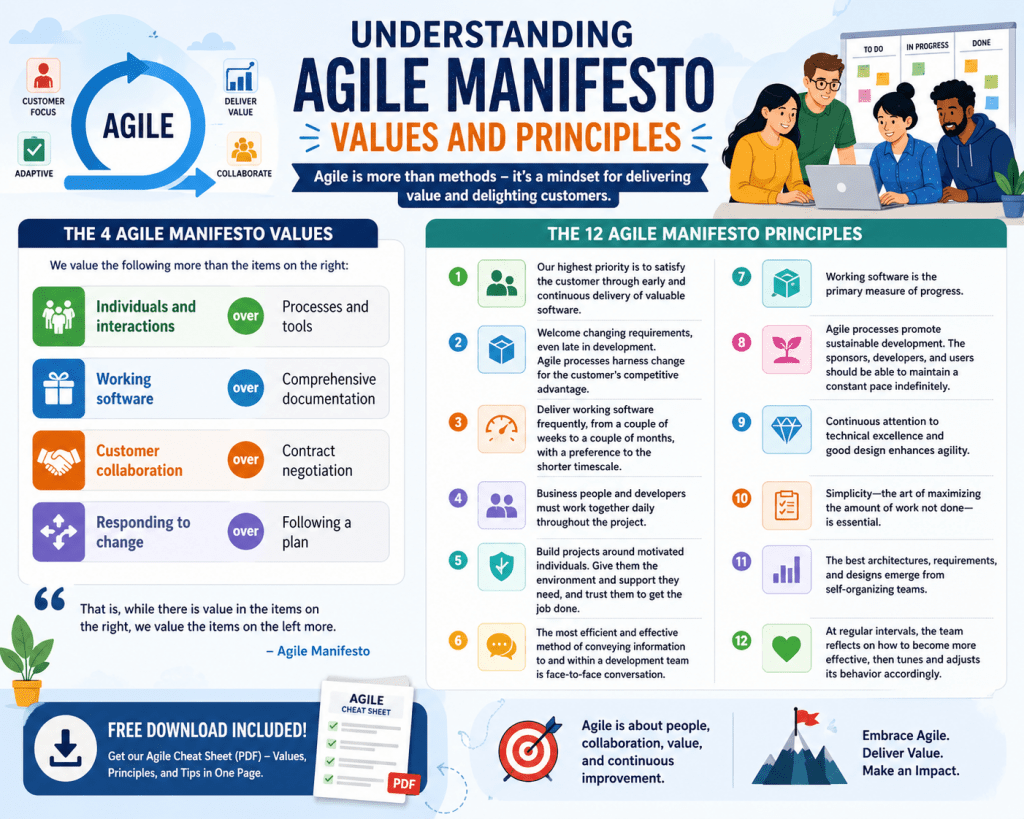
The Agile methodology represents a significant transformation in how software systems are designed, built, and maintained in modern digital environments. It emerged as a structured response to the inefficiencies of traditional development approaches that struggled to accommodate rapid technological change and evolving user expectations. Instead of relying on rigid planning and sequential execution, Agile introduces a flexible and iterative framework where development is treated as a continuous process of refinement rather than a fixed path from start to finish. This shift fundamentally changes how teams think about progress, delivery, and collaboration.
In earlier development environments, software projects were typically executed using a linear approach where each phase had to be completed before the next could begin. Requirements were gathered at the start, followed by design, implementation, testing, and deployment in a strict sequence. While this model provided structure, it assumed that requirements would remain stable throughout the entire project lifecycle. In reality, this assumption often failed, leading to costly revisions and delayed delivery when changes inevitably arose.
Limitations of Traditional Sequential Development Models
Sequential development approaches create a system where change is inherently difficult to manage. Once a project moves beyond the requirement or design phase, modifying earlier decisions becomes complex and expensive. This rigidity results in a lack of responsiveness, especially in environments where user expectations and market conditions evolve quickly.
Another limitation lies in the delayed visibility of working software. In a traditional model, stakeholders often do not interact with a functional version of the product until late in the development cycle. This delay increases the risk of misalignment between what is being built and what is actually needed. If the final product does not meet expectations, significant rework may be required, consuming additional time and resources.
Documentation-heavy processes are another characteristic of sequential development. While documentation plays an important role in ensuring clarity and maintainability, excessive reliance on it can slow down development progress. Teams may spend considerable time updating documents instead of focusing on delivering usable functionality. This creates inefficiencies, particularly in fast-moving industries where adaptability is essential.
Additionally, sequential models tend to isolate development stages from one another. Design, development, and testing teams often work in separate phases with limited interaction. This separation reduces collaboration and can lead to communication gaps, which further contribute to errors and misunderstandings later in the process.
Emergence of Adaptive and Iterative Thinking in Software Engineering
As software systems became more complex, development teams began experimenting with alternative approaches that could better handle uncertainty and change. Iterative development emerged as a solution that breaks large projects into smaller cycles, each producing a functional portion of the system. Instead of waiting until the end of a project to deliver value, teams began releasing incremental versions that could be tested and improved continuously.
This iterative mindset introduced a significant improvement in how feedback was incorporated into development. Each cycle allowed stakeholders to evaluate progress and provide input, which directly influenced subsequent development efforts. This reduced the gap between expectation and implementation, making it easier to align software outcomes with real user needs.
Risk management also improved under iterative approaches. By delivering smaller increments, teams could identify technical challenges earlier in the process. Issues that would previously remain hidden until late stages became visible much sooner, allowing for timely adjustments. This reduced the likelihood of large-scale failures and improved overall project stability.
The growing success of iterative methods highlighted the need for a more structured framework that could formalize these practices. This eventually led to the development of Agile principles, which combined iterative development with a strong emphasis on collaboration, adaptability, and continuous improvement.
Foundational Philosophy Behind Agile Thinking
Agile thinking is based on the idea that software development is not a predictable manufacturing process but a dynamic and evolving activity. It recognizes that requirements change, technologies evolve, and user expectations shift over time. As a result, development processes must be designed to accommodate uncertainty rather than resist it.
A key element of Agile philosophy is the prioritization of working software. Instead of focusing heavily on documentation or long-term planning, Agile emphasizes delivering functional systems that can be evaluated and improved continuously. This ensures that progress is measured through tangible outputs rather than theoretical completion of tasks.
Collaboration is another essential aspect of Agile thinking. Development is treated as a shared responsibility involving developers, stakeholders, and end users. Continuous communication helps ensure that all parties maintain a shared understanding of goals and expectations. This reduces misunderstandings and improves decision-making throughout the development lifecycle.
Agile also emphasizes adaptability in planning. Rather than committing to fixed long-term plans, Agile encourages ongoing planning that evolves based on feedback and changing conditions. This allows teams to adjust priorities dynamically, ensuring that development efforts remain aligned with current needs rather than outdated assumptions.
Core Values That Shape Agile Development Practices
The Agile framework is guided by a set of core values that influence how teams approach software development. These values do not eliminate traditional practices but instead prioritize certain principles to improve flexibility and responsiveness.
One central value focuses on individuals and interactions over rigid processes and tools. This highlights the importance of communication and teamwork in achieving successful outcomes. While tools and processes support development, they are most effective when they enhance collaboration rather than restrict it.
Another value emphasizes working software over extensive documentation. The primary measure of progress is the delivery of functional systems rather than the production of detailed documents. This does not eliminate documentation but ensures it serves a practical purpose rather than becoming a bottleneck.
Customer collaboration is also prioritized over strict contract negotiation. Instead of relying solely on predefined agreements, Agile encourages ongoing engagement with stakeholders. This allows requirements to evolve based on real-world feedback, improving the relevance of the final product.
Finally, responding to change is valued more than following a fixed plan. This reflects the understanding that change is inevitable in software projects. Agile frameworks are designed to accommodate this change rather than resist it, enabling teams to remain flexible and responsive throughout development.
Role of Feedback Loops in Continuous Development
Feedback loops are a fundamental component of Agile-based development systems. They ensure that information flows continuously between developers and stakeholders, enabling ongoing refinement of the product. Instead of treating feedback as a final checkpoint, Agile integrates it into every stage of development.
These feedback cycles help reduce uncertainty by validating assumptions early. When stakeholders interact with working software at regular intervals, they can confirm whether the product is meeting expectations. If adjustments are needed, they can be made immediately rather than after full completion.
Feedback also improves prioritization. As new information emerges, teams can reassess which features provide the most value. This ensures that development efforts remain focused on delivering meaningful outcomes rather than unnecessary functionality.
Over time, continuous feedback creates a self-correcting system where each iteration improves upon the previous one. This leads to more stable, user-aligned, and efficient development processes that adapt naturally to changing requirements.
Iterative Delivery and Incremental Value Creation
Iterative delivery is a defining characteristic of Agile systems. Instead of delivering a complete product at once, work is divided into smaller increments that can be developed and released independently. Each increment adds measurable value to the system, allowing progress to be tracked more effectively.
This approach reduces risk by ensuring that functional components are available early in the development cycle. Even if the full system is not yet complete, stakeholders can begin using and evaluating parts of it. This early exposure helps identify issues that might otherwise remain hidden until later stages.
Incremental delivery also supports better resource allocation. Teams can focus on completing high-priority features first, ensuring that the most valuable functionality is delivered early. This improves return on investment and allows organizations to benefit from partial system usage even before full completion.
The iterative nature of development also encourages continuous refinement. Each cycle builds upon previous work, incorporating feedback and improvements. This leads to a progressively evolving system that becomes more refined over time.
Changing Role of Planning in Agile Environments
Planning in Agile environments is treated as an ongoing activity rather than a one-time event. Instead of attempting to predict all requirements at the beginning of a project, Agile planning evolves continuously based on new information.
This adaptive planning approach allows teams to remain flexible in the face of uncertainty. As development progresses, priorities can shift to reflect changing business needs or user feedback. This ensures that resources are always focused on the most relevant tasks.
Short planning cycles also improve accuracy. Since plans are based on more recent information, they are more likely to reflect actual conditions. This reduces the risk of long-term planning errors that can occur in static development models.
By integrating planning into each development cycle, Agile ensures that direction and execution remain closely aligned. This creates a more responsive and efficient workflow that can adapt quickly to change without disrupting overall progress.
Agile Principles as the Operational Foundation of Adaptive Development
Agile principles serve as the operational backbone of adaptive software development environments, translating high-level values into actionable guidance for teams. While Agile values describe what is important, the principles explain how those values are applied in real-world workflows. These principles collectively define a system where flexibility, continuous delivery, and customer involvement are embedded into every stage of development rather than treated as separate activities.
One of the most significant aspects of Agile principles is their focus on delivering value early and continuously. Instead of postponing delivery until a product is fully complete, Agile encourages the release of usable increments at regular intervals. This ensures that stakeholders can evaluate progress in real time and provide feedback that directly influences subsequent development cycles. The result is a more dynamic development environment where direction is continuously refined based on actual usage and feedback rather than assumptions made at the beginning.
Another core aspect of Agile principles is the acceptance of changing requirements. Unlike rigid development methodologies that treat requirements as fixed once defined, Agile recognizes that requirements evolve as projects progress. Market conditions shift, user expectations change, and technological capabilities advance. Agile systems are designed to incorporate these changes without disrupting the overall development process, ensuring that the final product remains relevant and aligned with current needs.
Continuous Delivery and the Importance of Incremental Progress
Continuous delivery is a central concept in Agile-based systems, focusing on the ability to produce functional software in small, frequent increments. This approach fundamentally changes how progress is measured. Instead of evaluating progress based on completed documentation or partially finished phases, Agile measures success through working software that can be used, tested, and improved.
Incremental progress reduces the risk associated with large-scale development efforts. When software is built in smaller components, each piece can be validated independently. This allows teams to detect issues early, before they accumulate into larger system-wide problems. It also provides a more stable foundation for future development, as each increment is built upon a tested and validated structure.
Continuous delivery also improves stakeholder engagement. By providing regular access to functional versions of the product, stakeholders can interact with the system throughout its development lifecycle. This creates a feedback-rich environment where decisions are informed by real-world usage rather than theoretical expectations. As a result, the final product is more likely to meet actual user needs and deliver meaningful value.
Adaptive Planning and Dynamic Prioritization Models
In Agile environments, planning is not a static activity but a dynamic process that evolves throughout the development lifecycle. Adaptive planning allows teams to adjust priorities based on new information, feedback, and changing business conditions. This ensures that development efforts remain aligned with the most important objectives at any given time.
Dynamic prioritization plays a critical role in this process. Tasks are continuously evaluated based on their value, complexity, and urgency. High-value features are prioritized for early development, while lower-priority tasks are scheduled for later cycles or adjusted as needed. This ensures efficient use of resources and maximizes the impact of development efforts.
Adaptive planning also improves resilience in uncertain environments. Since long-term predictions are often unreliable in fast-changing industries, Agile systems rely on short planning cycles that are frequently reviewed and adjusted. This reduces the risk of large-scale planning failures and allows teams to respond quickly to new opportunities or challenges.
Role of Collaboration in High-Performance Development Teams
Collaboration is a defining characteristic of Agile-based development environments. Unlike traditional models where teams operate in isolated phases, Agile encourages continuous interaction between developers, testers, business stakeholders, and end users. This collaborative structure improves communication, reduces misunderstandings, and ensures that all parties share a common understanding of project goals.
Effective collaboration requires transparency in communication. Teams regularly share progress updates, challenges, and insights to ensure that everyone remains aligned. This reduces the likelihood of misaligned expectations and allows issues to be addressed early in the development process.
Collaboration also enhances problem-solving capabilities. When diverse perspectives are involved in decision-making, teams are better equipped to identify innovative solutions and address complex challenges. This collective intelligence improves the overall quality of the final product and increases development efficiency.
Scrum Framework as a Structured Agile Implementation Model
Scrum is one of the most widely used frameworks for implementing Agile principles in structured environments. It introduces a clear workflow system that organizes development into fixed-length iterations known as cycles. Each cycle focuses on delivering a potentially usable product increment.
Scrum structures work through defined roles and recurring activities that ensure consistent progress. The development team is responsible for building the product increment, while product ownership focuses on prioritizing work based on value and stakeholder input. Facilitation roles ensure that processes remain efficient and that communication flows smoothly within the team.
Work within Scrum is divided into short cycles, allowing teams to focus on specific objectives within a limited timeframe. At the end of each cycle, the team delivers a functional increment that can be evaluated by stakeholders. This creates a rhythm of continuous delivery and feedback that drives ongoing improvement.
Scrum also emphasizes regular inspection and adaptation. At the end of each cycle, teams review their performance, identify challenges, and adjust their processes accordingly. This continuous reflection ensures that development practices evolve alongside the product itself.
Structured Communication Cycles and Team Synchronization
Communication in Agile frameworks is organized around structured cycles that ensure consistent alignment among team members. These communication cycles include planning discussions, progress synchronization, review sessions, and reflection meetings. Each serves a specific purpose in maintaining transparency and coordination.
Regular synchronization ensures that all team members are aware of ongoing progress and potential obstacles. This reduces dependency issues and allows teams to coordinate effectively across different tasks. It also helps identify bottlenecks early, preventing delays in delivery.
Review sessions provide an opportunity for stakeholders to evaluate completed work. This ensures that feedback is integrated continuously rather than delayed until the end of development. Reflection sessions focus on improving team processes, identifying inefficiencies, and implementing changes that enhance productivity in future cycles.
Kanban as a Visual Workflow Management System
Kanban is another widely used Agile framework that focuses on visualizing workflow and managing task progression. Unlike time-boxed systems, Kanban operates as a continuous flow model where tasks move through different stages based on capacity and priority.
A key feature of Kanban is its visual representation of work. Tasks are displayed on a board that is divided into columns representing different stages of completion. This provides immediate visibility into workflow status and helps teams understand where work is concentrated at any given time.
Kanban also introduces limits on work in progress. These limits prevent teams from overloading specific stages of the workflow, ensuring that tasks are completed efficiently rather than accumulating in unfinished states. This improves flow consistency and reduces delays caused by task congestion.
Because Kanban does not rely on fixed cycles, it is particularly effective in environments where priorities change frequently. Teams can adjust workflow dynamically without waiting for cycle completion, making it highly suitable for operational or support-based development environments.
Work Breakdown and Task Structuring in Agile Systems
Agile systems rely on structured breakdowns of work into manageable units. Large features are divided into smaller tasks that can be completed independently within short timeframes. This improves clarity and makes it easier to estimate effort and track progress.
Task structuring also supports better resource allocation. By breaking down complex work into smaller components, teams can distribute tasks more effectively based on skill sets and availability. This improves efficiency and reduces delays caused by task dependencies.
Each task typically represents a specific piece of functionality that contributes to a larger feature. This modular approach ensures that development remains organized and manageable, even in large-scale systems with multiple components.
Role of Continuous Improvement in Development Maturity
Continuous improvement is a core principle that drives long-term development maturity in Agile environments. Instead of treating processes as fixed, teams regularly evaluate their performance and identify opportunities for enhancement.
This improvement cycle is supported by structured reflection activities that occur at the end of development iterations. During these sessions, teams analyze what worked well, what did not, and what can be improved in future cycles.
Over time, continuous improvement leads to increased efficiency, better communication, and higher-quality outputs. Teams become more skilled at identifying inefficiencies and implementing solutions that streamline development processes.
Integration of Feedback into Product Evolution
Feedback integration is essential for ensuring that products evolve in alignment with user expectations. In Agile systems, feedback is collected continuously rather than at a single point in time. This allows teams to make incremental adjustments that gradually shape the final product.
User feedback plays a particularly important role in guiding feature development and prioritization. By understanding how users interact with the system, teams can identify areas for improvement and adjust their development focus accordingly.
Feedback also helps validate assumptions made during planning. When real-world usage data contradicts initial expectations, teams can revise their approach to ensure that the product remains relevant and effective.
This continuous integration of feedback creates a responsive development environment where products evolve naturally based on real usage rather than static planning documents.
Scaling Agile Beyond Single Teams in Complex Environments
As organizations grow and software systems become more interconnected, Agile implementation extends beyond individual teams into large-scale coordination models. Scaling Agile introduces structured approaches that allow multiple teams to work simultaneously on different components of a shared system while maintaining alignment with overall objectives. The primary challenge in scaling is preserving the core principles of flexibility, collaboration, and continuous delivery while managing increased organizational complexity.
In large environments, coordination becomes a critical factor. Multiple teams may work on interdependent features, shared infrastructure, or overlapping product areas. Without a structured scaling approach, this can lead to misalignment, duplicated effort, and integration issues. Scaled Agile systems introduce synchronization mechanisms that ensure all teams remain aligned with shared goals while still maintaining autonomy in execution.
A key element of scaling is the introduction of program-level planning structures. These structures allow organizations to coordinate priorities across teams and ensure that high-value initiatives receive appropriate attention. Instead of centralizing all decision-making, scaling frameworks distribute responsibility while maintaining visibility across the entire system. This balance between autonomy and coordination is essential for maintaining agility at scale.
Dependency Management Across Multi-Team Development Structures
In large Agile environments, dependency management becomes a central concern. When multiple teams work on interconnected systems, delays or changes in one area can affect progress in another. Effective dependency management ensures that these relationships are identified early and handled proactively.
One approach to managing dependencies is through structured planning cycles where teams communicate upcoming work and identify potential overlaps. This allows dependencies to be visualized and addressed before they become blockers. Coordination meetings and shared planning sessions help maintain alignment and reduce unexpected disruptions during development cycles.
Another important aspect of dependency management is architectural alignment. Systems must be designed in a way that minimizes unnecessary coupling between components. Modular design principles support this by ensuring that different parts of the system can evolve independently without causing widespread disruption. This architectural independence enhances scalability and reduces coordination overhead.
Enterprise-Level Agile Governance and Structural Alignment
At the enterprise level, Agile governance ensures that development practices remain consistent across multiple teams and departments. Governance does not impose rigid control but instead provides guiding structures that support alignment, transparency, and strategic prioritization.
One of the key roles of governance is maintaining visibility into ongoing development efforts. Leadership teams need access to accurate information about progress, risks, and resource allocation. This enables informed decision-making and ensures that organizational priorities are reflected in development activities.
Governance frameworks also help define standards for communication, reporting, and workflow consistency. While teams retain flexibility in execution, shared standards ensure that collaboration across teams remains efficient and predictable. This balance between structure and flexibility is essential for maintaining agility at scale.
Strategic alignment is another critical function of enterprise governance. Development efforts must be aligned with broader business objectives, ensuring that technical work contributes directly to organizational goals. This requires continuous coordination between technical teams and business leadership to maintain shared direction.
Agile Maturity Models and Organizational Evolution
Agile maturity refers to the level of effectiveness with which an organization applies Agile principles across its development processes. Early-stage adoption often focuses on individual teams implementing basic iterative practices, while mature organizations integrate Agile across multiple levels of planning, execution, and governance.
As maturity increases, organizations move from isolated Agile practices toward fully integrated systems where collaboration, continuous delivery, and adaptive planning are embedded into the organizational structure. This evolution typically involves improvements in communication, automation, and process standardization.
Mature Agile environments demonstrate strong alignment between strategy and execution. Teams are able to respond quickly to changing requirements while maintaining consistency with long-term objectives. This requires not only technical capability but also cultural alignment, where flexibility and continuous improvement are embedded into organizational behavior.
Measurement of maturity often includes factors such as delivery speed, quality consistency, responsiveness to change, and the effectiveness of cross-team collaboration. These indicators help organizations identify areas for improvement and guide future development of Agile practices.
Workflow Optimization Through Continuous Refinement Cycles
Workflow optimization in Agile systems is achieved through continuous refinement of processes based on real-world performance data. Instead of relying on static process definitions, teams regularly evaluate how work flows through the system and identify opportunities for improvement.
One important aspect of optimization is identifying bottlenecks in the workflow. These bottlenecks may occur when tasks accumulate in specific stages or when dependencies slow down progress. By analyzing workflow patterns, teams can adjust processes to improve flow efficiency and reduce delays.
Automation also plays a significant role in optimizing workflows. Repetitive tasks such as testing, integration, and deployment can be automated to reduce manual effort and improve consistency. This allows teams to focus more on development and problem-solving activities rather than operational overhead.
Continuous refinement ensures that workflows evolve alongside the system being developed. As complexity increases, processes are adjusted to maintain efficiency and scalability. This dynamic approach prevents stagnation and ensures that development practices remain effective over time.
Risk Reduction Through Incremental Validation Systems
Risk management in Agile environments is achieved primarily through incremental validation. Instead of waiting until a system is fully developed to assess risk, Agile approaches introduce validation at every stage of development.
Each increment of functionality is tested and reviewed before additional complexity is added. This allows potential issues to be identified early, reducing the likelihood of large-scale failures. Incremental validation also ensures that assumptions made during planning are continuously tested against real-world conditions.
Another aspect of risk reduction is early stakeholder involvement. By engaging users and stakeholders throughout the development process, teams can validate requirements continuously. This reduces the risk of building features that do not align with actual needs or expectations.
Technical risk is also reduced through continuous integration practices. By regularly combining code changes and testing system stability, teams can detect integration issues early. This prevents the accumulation of technical debt and ensures that the system remains stable throughout development.
Agile in High-Change Environments and Fast-Paced Industries
Agile methodologies are particularly effective in environments where change is frequent and unpredictable. Industries such as software-as-a-service, digital platforms, and emerging technology sectors benefit significantly from adaptive development approaches.
In these environments, requirements often evolve rapidly due to market competition, user feedback, or technological advancements. Agile systems are designed to accommodate this volatility by enabling continuous reprioritization and adjustment of development efforts.
Fast-paced industries require rapid decision-making and short feedback cycles. Agile supports this by reducing the time between idea generation and implementation. Teams can test concepts quickly, gather feedback, and refine solutions without waiting for long development cycles to complete.
This responsiveness provides a competitive advantage, allowing organizations to adapt quickly to changing conditions and deliver value more efficiently than traditional development approaches.
Communication Structures in Distributed Development Environments
Modern Agile systems often operate across distributed teams located in different regions or time zones. This introduces additional complexity in communication and coordination. Structured communication systems are essential for maintaining alignment in such environments.
Asynchronous communication tools allow teams to share updates, progress, and feedback without requiring real-time interaction. This ensures that work continues smoothly despite geographical separation. However, structured synchronization points are still necessary to maintain alignment on priorities and objectives.
Documentation in distributed Agile environments serves a different role compared to traditional systems. Instead of being static and exhaustive, documentation is concise, evolving, and focused on supporting collaboration rather than replacing communication.
Clear communication protocols ensure that information flows efficiently across teams. This reduces misunderstandings and helps maintain consistency in execution despite physical separation.
Long-Term System Evolution Through Agile-Driven Development Cycles
Over time, Agile-driven systems evolve continuously through repeated cycles of development, feedback, and refinement. This long-term evolution allows systems to remain relevant even as external conditions change.
Each cycle contributes incremental improvements, gradually enhancing system functionality, performance, and usability. This evolutionary approach contrasts with static development models, where systems are delivered once and updated infrequently.
Sustained evolution requires disciplined execution of Agile practices, including regular feedback integration, continuous testing, and adaptive planning. These practices ensure that the system does not degrade over time and continues to meet user expectations.
Long-term success in Agile environments depends on maintaining a balance between stability and adaptability. While systems must remain reliable, they must also be flexible enough to accommodate ongoing change. This balance is achieved through consistent application of iterative development principles and continuous improvement cycles.
Conclusion
The evolution of Agile methodologies has fundamentally reshaped how software systems are conceived, built, and delivered in contemporary technology environments. What began as a response to the limitations of rigid, sequential development models has matured into a widely adopted set of principles and practices that influence not only software engineering but also broader organizational behavior, project management structures, and digital product strategy. Agile is not simply a methodology in the narrow sense; it is a development philosophy centered on adaptability, collaboration, and continuous value delivery.
One of the most significant contributions of Agile lies in its redefinition of progress. Traditional approaches measured success through the completion of predefined phases and extensive documentation, often delaying real validation until late in the lifecycle. Agile shifts this perspective by treating working software as the primary indicator of progress. This change ensures that value is delivered continuously rather than accumulated at the end of a project. It also reduces uncertainty by allowing stakeholders to engage with functional systems early and frequently, enabling better-informed decisions throughout development.
Another important outcome of Agile adoption is the normalization of change within development environments. In earlier methodologies, change was often treated as a disruption, requiring formal approvals and extensive rework. Agile reframes change as a natural and expected part of the development process. By embedding flexibility into planning cycles, Agile systems allow teams to adjust priorities, refine requirements, and respond to evolving user needs without destabilizing the overall project structure. This adaptability is particularly critical in modern industries where market conditions, user expectations, and technological capabilities evolve rapidly.
The emphasis on collaboration is another defining strength of Agile systems. Rather than isolating roles into rigid silos, Agile encourages continuous interaction between developers, stakeholders, and end users. This collaborative environment improves communication, reduces misunderstandings, and ensures that all parties maintain a shared understanding of project goals. As a result, the likelihood of misaligned expectations decreases significantly, and the final product is more likely to reflect real user requirements rather than assumptions made at the beginning of development.
Agile also introduces a more human-centered approach to software development. By prioritizing individuals and interactions over strict processes and tools, it recognizes that effective software creation depends not only on technical expertise but also on communication, teamwork, and shared problem-solving. This shift has led to more dynamic and responsive development teams that are better equipped to handle complexity and uncertainty. It also fosters a culture of accountability and ownership, where team members are actively engaged in the success of the product rather than simply executing predefined tasks.
The iterative nature of Agile development further enhances its effectiveness. By breaking work into smaller, manageable increments, teams can deliver value continuously while maintaining control over complexity. Each iteration serves as an opportunity to validate assumptions, gather feedback, and refine direction. This cyclical approach reduces the risk of large-scale failure and ensures that problems are identified early, when they are easier and less costly to address. Over time, this leads to more stable systems and higher-quality outcomes.
In addition, Agile methodologies have proven highly effective in improving responsiveness to user feedback. Continuous engagement with stakeholders allows development teams to align product evolution with actual user needs rather than theoretical requirements. This feedback-driven approach ensures that features remain relevant and useful, reducing wasted effort on functionality that does not deliver meaningful value. It also strengthens the relationship between development teams and end users, fostering a sense of shared ownership in the product’s success.
From an organizational perspective, Agile has introduced new ways of structuring work and managing complexity. Scaled Agile practices enable large organizations to coordinate multiple teams working on interconnected systems while maintaining flexibility at the individual team level. This balance between autonomy and alignment is critical in modern enterprise environments, where systems are often distributed across multiple platforms, technologies, and geographical locations. Agile governance structures support this complexity by providing visibility, consistency, and strategic direction without imposing unnecessary rigidity.
Another long-term impact of Agile is its contribution to a continuous improvement culture. Agile frameworks encourage regular reflection on processes, outcomes, and team performance. These reflection cycles allow teams to identify inefficiencies, experiment with improvements, and gradually refine their workflows. Over time, this leads to increased productivity, better communication, and more effective delivery systems. Continuous improvement becomes not just a practice but a mindset embedded within the organizational culture.
Agile’s influence also extends into risk management. By emphasizing incremental delivery and early validation, Agile significantly reduces the likelihood of large-scale project failure. Risks are identified and addressed continuously rather than accumulating until the end of a development cycle. This proactive approach improves system stability and ensures that development efforts remain aligned with both technical feasibility and business objectives.
Ultimately, Agile represents a shift from predictive to adaptive thinking in software development. Instead of attempting to predict all requirements and outcomes upfront, Agile acknowledges uncertainty and builds systems capable of evolving. This adaptability is what makes Agile particularly well-suited for modern digital environments, where change is constant, and unpredictability is the norm.
In essence, Agile is not merely a set of practices but a structural transformation in how software development is understood and executed. It integrates flexibility, collaboration, iterative delivery, and continuous learning into a unified approach that aligns closely with the realities of modern technology ecosystems. Its lasting impact lies in its ability to bridge the gap between planning and execution, enabling organizations to build systems that are not only functional but also resilient, responsive, and continuously evolving.