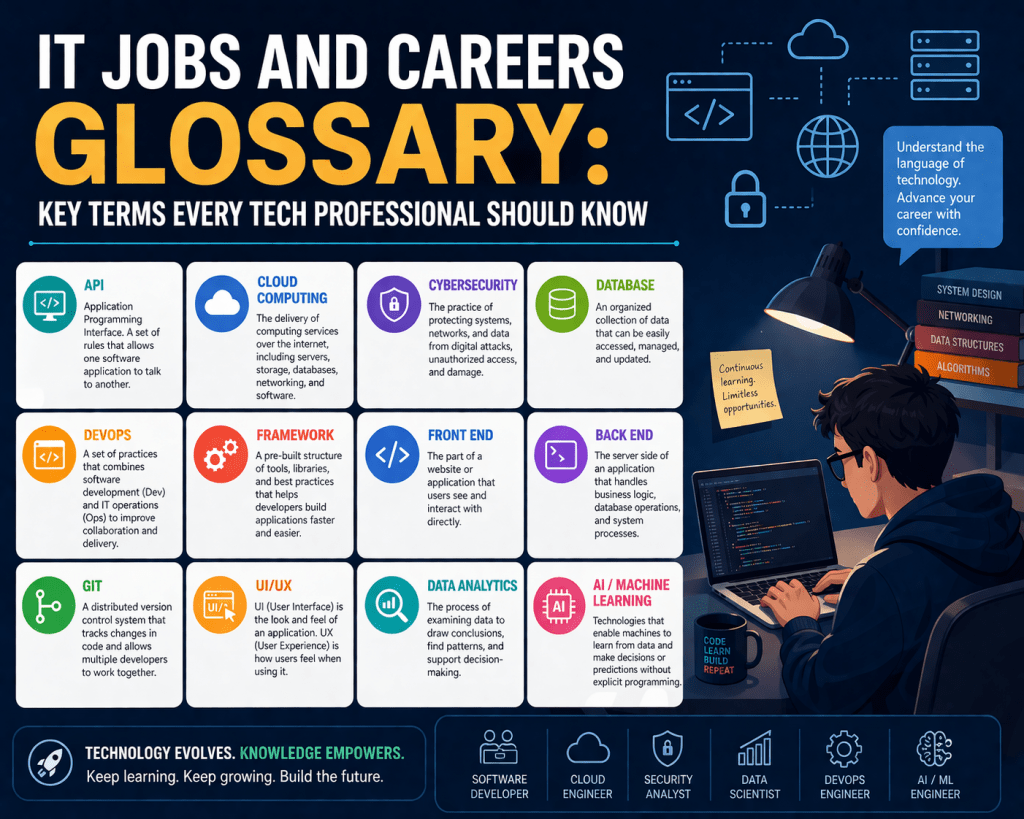
The field of information technology has become one of the most essential pillars of the modern world. Nearly every digital interaction, from sending a message to processing financial transactions or running global business systems, depends on IT professionals working behind the scenes. Despite its importance, the structure of IT careers can often feel complex to someone entering the field or trying to understand how different roles interact. The terminology alone can be overwhelming, especially when each role appears to require a distinct set of skills, tools, and responsibilities.
At a structural level, IT careers are built around maintaining, designing, securing, and optimizing digital systems. These systems are not limited to computers alone but extend to networks, cloud platforms, applications, databases, and entire enterprise infrastructures. Each specialized role contributes to a specific layer of this ecosystem, ensuring that information flows efficiently, securely, and without interruption.
The IT workforce is often divided into functional categories such as networking, systems management, cloud computing, development operations, cybersecurity, data management, and strategic architecture. While each category has its own focus, they are deeply interconnected. A failure in one area can directly impact the others, which is why collaboration and technical alignment are essential in this field.
Understanding these roles is not only important for individuals planning a career in IT but also for managers, recruiters, and organizations that rely on technical teams. A clear understanding of responsibilities helps improve decision-making, workforce planning, and operational efficiency. The following sections break down foundational IT roles that form the backbone of most technology environments.
Network Administrator: Managing Connectivity and Communication Systems
Network administration is one of the most fundamental responsibilities in IT infrastructure management. A network administrator ensures that all devices within an organization can communicate effectively through stable and secure connections. This includes managing internal networks, external connections, and communication pathways that allow data to flow between systems.
Their work revolves around maintaining operational continuity. When employees access shared files, use internal applications, or connect to cloud-based systems, it is the network administrator who ensures that these connections function without disruption. They configure network devices, monitor traffic, and resolve connectivity issues when they arise.
Beyond maintaining connectivity, network administrators also play a crucial role in implementing security practices at the network level. They establish rules that control access, monitor for unusual activity, and apply updates to protect against vulnerabilities. In many organizations, they are the first line of defense against unauthorized access attempts or network-based threats.
This role requires a strong understanding of how data moves across networks. Concepts such as routing, switching, IP addressing, and network protocols are central to their daily responsibilities. They must also understand both wired and wireless communication systems, as modern workplaces often rely on hybrid connectivity environments.
Network administrators are essential because they ensure that digital communication remains uninterrupted. Without them, even basic business operations such as email, file sharing, and application usage would become unreliable or completely unavailable. Their work forms the operational foundation of modern IT environments.
Network Engineer: Designing Scalable and High-Performance Infrastructure
While network administrators focus on maintaining existing systems, network engineers are responsible for designing and building the underlying architecture that supports those systems. Their role is more strategic and forward-looking, focusing on performance, scalability, and long-term infrastructure planning.
Network engineers analyze organizational requirements and design systems that can handle increasing workloads and evolving technological demands. They create network structures that optimize data flow, reduce latency, and ensure redundancy in case of failures. Their designs must support both current operations and future expansion without requiring complete system overhauls.
A key responsibility of network engineers is ensuring that infrastructure is both efficient and resilient. They select appropriate technologies, configure advanced networking protocols, and design systems that can recover quickly from disruptions. This includes building failover systems and optimizing bandwidth usage across different network segments.
As organizations grow, their networking environments become more complex. Network engineers are responsible for ensuring that this complexity does not reduce performance or security. They often work closely with systems teams and security specialists to integrate networking solutions into broader IT architectures.
This role requires a deeper technical understanding compared to network administration. Engineers must be familiar with advanced routing techniques, network segmentation strategies, and performance optimization methods. Their decisions directly influence how efficiently an organization operates at a technical level.
Systems Administrator: Maintaining Core IT Infrastructure and Services
Systems administration focuses on the internal IT environment of an organization. Systems administrators manage servers, operating systems, applications, and user access across the entire infrastructure. Their primary objective is to ensure that all systems remain operational, secure, and up to date.
They handle tasks such as installing and configuring software, managing system updates, performing regular backups, and monitoring system performance. When issues arise, systems administrators are responsible for diagnosing and resolving them quickly to minimize downtime and operational disruption.
A significant part of their role involves maintaining system reliability. Organizations depend on servers and applications to run critical operations, and any failure can lead to productivity loss. Systems administrators ensure that these components function consistently and efficiently.
They also play an important role in access management. By controlling user permissions and ensuring proper authentication mechanisms, they help maintain internal security and prevent unauthorized access to sensitive resources.
To perform effectively, systems administrators need a broad understanding of operating systems, virtualization environments, and basic automation techniques. They often work across multiple platforms, managing both physical and virtual infrastructure components.
Systems Engineer: Integrating Technology for Operational Efficiency
Systems engineering expands beyond administration by focusing on the design and integration of complex IT environments. Systems engineers are responsible for ensuring that various components of an IT ecosystem work together as a unified and efficient system.
They analyze organizational needs and design solutions that combine hardware, software, and networking elements into cohesive structures. Their work involves ensuring compatibility between different systems and optimizing performance across the entire infrastructure.
One of their key responsibilities is system integration. This involves connecting different technologies so that they can communicate and function together seamlessly. Systems engineers also evaluate existing infrastructure and recommend improvements to enhance efficiency and scalability.
They often work on designing architectures that support business operations at scale. This includes ensuring that systems can handle increased workloads, adapt to new technologies, and maintain stability under pressure.
The role requires strong analytical skills and a comprehensive understanding of IT systems. Systems engineers often collaborate with multiple teams, translating business requirements into technical solutions that can be implemented effectively.
DevOps Engineer: Enhancing Collaboration Between Development and Operations
DevOps engineering focuses on bridging the gap between software development and IT operations. The goal of this role is to improve the speed, efficiency, and reliability of software delivery processes through automation and collaboration.
DevOps engineers work on creating streamlined workflows that allow development teams to build, test, and deploy applications more efficiently. They implement automation tools that reduce manual effort and minimize the risk of errors during deployment processes.
A key aspect of this role is continuous integration and continuous delivery. By automating testing and deployment pipelines, DevOps engineers enable organizations to release updates more frequently and with greater stability. This improves responsiveness to user needs and market changes.
They also monitor system performance and ensure that applications remain stable after deployment. This involves analyzing logs, tracking system behavior, and making adjustments to improve reliability.
DevOps engineering requires a combination of technical and collaborative skills. Professionals in this field must understand both software development processes and infrastructure management. Their ability to bridge these two areas makes them essential in modern IT environments.
Cloud Administrator: Managing Distributed Digital Infrastructure
Cloud administration focuses on managing resources hosted in cloud environments. Unlike traditional systems that rely entirely on physical hardware, cloud infrastructure operates through virtualized resources delivered over the internet.
Cloud administrators are responsible for configuring, monitoring, and maintaining these resources. This includes managing virtual servers, storage systems, and network configurations within cloud platforms. Their role ensures that cloud-based systems remain secure, scalable, and cost-efficient.
One of the primary advantages of cloud computing is flexibility. Organizations can scale resources up or down based on demand. Cloud administrators manage this scalability by allocating resources efficiently and ensuring optimal performance.
They also handle security configurations within cloud environments. This includes managing access controls, monitoring usage, and ensuring compliance with organizational policies. Since cloud systems often store sensitive data, maintaining security is a critical responsibility.
Cloud administration requires knowledge of cloud architecture and virtualization concepts. Professionals in this field must also understand how cloud systems integrate with existing on-premises infrastructure, especially in hybrid environments.
As businesses continue transitioning toward cloud-based solutions, the role of cloud administrators becomes increasingly important in maintaining operational efficiency and digital transformation initiatives.
Solutions Architect: Designing Technology Around Business Needs
A solutions architect plays one of the most strategic roles in the IT ecosystem, acting as the bridge between business requirements and technical execution. Unlike roles that focus on maintaining or operating systems, solutions architects focus on designing entire systems that solve specific organizational problems. Their work begins with understanding what a business needs to achieve and ends with defining how technology can make that possible in the most efficient and scalable way.
At the core of this role is systems design thinking. A solutions architect evaluates existing infrastructure, identifies gaps, and proposes new architectures that integrate multiple technologies into a unified system. These designs may include cloud services, on-premises infrastructure, networking layers, databases, and application components working together as a single ecosystem.
One of their most critical responsibilities is ensuring alignment between technology decisions and business objectives. This means that every design choice must support performance, cost efficiency, scalability, and long-term sustainability. A technically perfect solution that does not meet business requirements is considered ineffective in this context.
Solutions architects also act as decision-makers when selecting technologies. They assess different platforms, tools, and services to determine which combination best fits the organization’s needs. This often involves evaluating trade-offs between cost, performance, flexibility, and security.
Collaboration is a key part of this role. Solutions architects work closely with developers, engineers, administrators, and business stakeholders. They translate complex technical concepts into understandable language for decision-makers while ensuring that technical teams have clear architectural guidance.
This role requires broad and deep technical knowledge. A solutions architect must understand networking, cloud computing, application development, databases, and security principles. Equally important is the ability to think at a high level, considering how different systems interact within a larger environment.
Security Administrator: Protecting Systems and Managing Cyber Risks
Security administration is one of the most critical domains in IT due to the increasing frequency and sophistication of cyber threats. Security administrators are responsible for protecting systems, networks, and data from unauthorized access, attacks, and breaches. Their role is central to maintaining trust and operational integrity in any digital environment.
Their responsibilities begin with monitoring systems for unusual or suspicious activity. This includes tracking network traffic, analyzing logs, and identifying potential vulnerabilities. When threats are detected, security administrators respond quickly to contain and mitigate risks before they escalate.
Another key responsibility is implementing security controls. This includes configuring firewalls, managing encryption systems, setting access permissions, and enforcing authentication mechanisms. These controls ensure that only authorized users can access sensitive data and systems.
Security administrators also play a proactive role by conducting risk assessments. They evaluate systems for weaknesses and implement measures to strengthen defenses. This may involve patch management, system updates, and vulnerability testing.
Compliance is another important aspect of this role. Many organizations must adhere to industry regulations and security standards. Security administrators ensure that systems meet these requirements and maintain proper documentation for audits and assessments.
The importance of this role continues to grow as cyber threats evolve. Attacks such as ransomware, phishing, and data breaches can have severe financial and reputational consequences. Security administrators act as the frontline defense against these risks.
To succeed in this field, professionals need a strong understanding of cybersecurity principles, threat detection techniques, and security tools. Analytical thinking and attention to detail are essential, as threats often appear in subtle and unexpected ways.
Database Administrator: Managing and Protecting Organizational Data
Database administrators are responsible for managing the systems that store and organize critical data. In modern organizations, data is one of the most valuable assets, and DBAs ensure that it remains accessible, secure, and properly structured.
Their work involves designing, implementing, and maintaining database systems. They ensure that data is stored efficiently and can be retrieved quickly when needed. This includes optimizing database performance and managing storage systems to handle increasing data volumes.
One of the primary responsibilities of a database administrator is data integrity. They ensure that information remains accurate, consistent, and free from corruption. This is essential for decision-making processes that rely on reliable data.
Backup and recovery management is another critical function. DBAs implement systems that regularly back up data and ensure that it can be restored in case of failure or data loss. This protects organizations from catastrophic data breaches or system crashes.
They also manage database security by controlling access permissions and protecting sensitive information. Unauthorized access to databases can lead to significant risks, making security a central part of their responsibilities.
Database administrators work with various database systems, each designed for different types of data storage and retrieval. Their expertise allows organizations to choose the right system for their needs and optimize it for performance.
This role requires strong technical skills in database management systems, query languages, and performance tuning. Attention to detail is essential, as even small errors can impact large volumes of data.
Software Developer: Building the Applications That Power Technology
Software development is one of the most visible and impactful areas in IT. Software developers are responsible for creating applications, systems, and tools that users interact with daily. Their work transforms ideas into functional software solutions.
The development process involves writing code, testing functionality, debugging errors, and continuously improving applications. Developers work across a wide range of platforms, from mobile apps to enterprise systems and web applications.
A key aspect of this role is problem-solving. Developers must translate requirements into logical structures that computers can execute. This requires both creativity and technical precision.
Software developers also maintain and update existing systems. Technology evolves rapidly, and applications must be updated to remain secure, efficient, and compatible with new environments.
Collaboration is a major part of the development process. Developers often work in teams, coordinating with designers, testers, and project managers. This ensures that software meets both technical and user requirements.
Programming languages and frameworks form the foundation of this role. Developers may specialize in specific technologies, but adaptability is essential due to the constantly changing nature of the field.
Software development is also closely tied to innovation. Many technological advancements begin with software solutions that solve new or complex problems.
Project Manager: Coordinating IT Execution and Delivery
Project managers play a vital role in ensuring that IT initiatives are completed successfully. They are responsible for planning, organizing, and overseeing projects from start to finish. Their focus is on coordination, communication, and delivery.
An IT project often involves multiple teams working on different components simultaneously. Project managers ensure that all these efforts are aligned and moving toward the same goal. They create timelines, assign responsibilities, and track progress.
Risk management is a key responsibility. Project managers identify potential obstacles that could delay or disrupt progress and develop strategies to mitigate them. This ensures that projects remain on schedule and within budget.
Communication is central to this role. Project managers act as the link between technical teams and stakeholders. They ensure that expectations are clear and that updates are communicated effectively throughout the project lifecycle.
They also manage resources, including personnel, tools, and budgets. Efficient resource allocation is essential for delivering successful outcomes.
This role requires strong organizational and leadership skills. While technical knowledge is helpful, the ability to manage people and processes is more critical.
Data Analyst: Transforming Information into Insights
Data analysts focus on interpreting data to support decision-making processes. In today’s digital environment, organizations generate vast amounts of data, and analysts help convert this raw information into meaningful insights.
Their work involves collecting data from various sources, cleaning and organizing it, and analyzing it for patterns and trends. These insights help organizations understand performance, customer behavior, and operational efficiency.
Data analysts also create visual representations of data, such as charts and dashboards. These visual tools make complex information easier to understand for decision-makers.
One of the key roles of a data analyst is identifying trends that may not be immediately visible. This can help organizations make informed decisions about strategy, marketing, operations, and product development.
They also support predictive analysis, which involves using historical data to forecast future outcomes. This helps organizations prepare for changes and make proactive decisions.
Data analysts require strong analytical thinking skills and familiarity with data tools and techniques. Attention to detail is essential, as accurate interpretation of data is critical for reliable insights.
DevOps Engineer: Automating and Streamlining Development Processes
DevOps engineering focuses on improving collaboration between software development and IT operations. The goal is to create efficient workflows that allow faster and more reliable software delivery.
DevOps engineers implement automation tools that reduce manual processes in development, testing, and deployment. This increases efficiency and reduces the risk of errors.
They are also responsible for managing continuous integration and continuous deployment pipelines. These systems ensure that code changes are automatically tested and deployed, allowing for faster updates.
Monitoring system performance is another key responsibility. DevOps engineers ensure that applications remain stable after deployment and quickly address any issues that arise.
This role requires a combination of development and infrastructure knowledge. Professionals must understand both software creation and system management.
DevOps engineering plays a crucial role in modern IT environments by enabling faster innovation and improving system reliability.
Cloud Administrator: Managing Virtualized Infrastructure at Scale
Cloud administrators manage computing resources that are hosted in virtual environments rather than physical servers. These environments allow organizations to scale resources dynamically based on demand.
Their responsibilities include configuring cloud services, monitoring usage, and ensuring system availability. They also manage storage, virtual machines, and network configurations within cloud platforms.
Security is a major concern in cloud environments. Cloud administrators implement access controls, monitor activity, and ensure compliance with organizational policies.
They also manage cost optimization by ensuring that cloud resources are used efficiently. Unused or underutilized resources can lead to unnecessary expenses, so careful monitoring is required.
Cloud administration requires an understanding of cloud architecture, virtualization, and hybrid environments that combine cloud and on-premises systems.
As more organizations move toward cloud-based infrastructure, the demand for cloud administrators continues to grow significantly.
IT Infrastructure and Enterprise Systems: The Backbone of Digital Operations
Enterprise IT environments rely on a complex mix of systems, applications, and services that must work together without interruption. The professionals responsible for managing these environments ensure that organizations can operate at scale, maintain continuity, and support thousands or even millions of users simultaneously. In this final section, the focus shifts toward advanced roles and the broader ecosystem that connects all IT functions together.
Modern IT infrastructure is no longer limited to physical servers or isolated systems. Instead, it spans cloud environments, hybrid architectures, distributed applications, and interconnected services. This complexity requires specialized roles that focus on integration, optimization, governance, and long-term sustainability.
Enterprise systems must be designed to handle growth, adapt to technological change, and maintain resilience under pressure. This is why advanced IT roles often overlap across multiple disciplines such as networking, systems engineering, security, cloud computing, and data management. Each role contributes to ensuring that the entire infrastructure remains stable and efficient.
Understanding these advanced functions is essential for anyone aiming to move beyond foundational IT roles into architecture, leadership, or specialized engineering positions. These roles are not just technical; they also involve strategic decision-making that influences entire organizations.
Enterprise Architecture and Strategic IT Design
Enterprise architecture represents the highest level of IT system planning within an organization. Professionals in this domain focus on aligning technology infrastructure with long-term business strategy. Rather than working on individual systems, they design frameworks that define how all technology components should interact.
Their role involves evaluating existing IT environments and identifying opportunities for optimization, consolidation, and modernization. They ensure that systems are not only functional but also aligned with organizational goals such as scalability, cost efficiency, and innovation.
Enterprise architects define standards and guidelines that govern how systems are built and integrated. These standards ensure consistency across departments and prevent fragmentation of technology environments. Without this level of planning, organizations often face inefficiencies caused by incompatible systems or redundant technologies.
A key responsibility is long-term planning. Enterprise architects anticipate future needs and design systems that can evolve. This includes considering emerging technologies, business expansion, and shifting operational requirements.
They work closely with leadership teams to ensure that technology investments support strategic objectives. Their decisions influence budgeting, infrastructure development, and digital transformation initiatives.
Advanced Systems Integration and Hybrid Environments
As organizations adopt multiple technologies, systems integration becomes increasingly complex. Integration specialists ensure that different platforms, applications, and services communicate effectively with each other.
Modern environments often include a mix of cloud services, on-premises systems, third-party applications, and legacy infrastructure. Integrating these components requires careful planning and technical expertise to ensure seamless data flow and functionality.
Hybrid environments are particularly challenging because they combine traditional infrastructure with cloud-based systems. Integration professionals must ensure that both environments operate cohesively without performance degradation or security risks.
They design middleware solutions, APIs, and communication protocols that allow systems to exchange information efficiently. These integrations are essential for maintaining operational continuity across diverse platforms.
Another important aspect of integration work is data consistency. Information must remain accurate and synchronized across all systems. Any discrepancies can lead to operational errors or decision-making issues.
Advanced Cybersecurity Operations and Threat Intelligence
Cybersecurity has evolved into a highly specialized domain that goes beyond basic system protection. Advanced security operations involve proactive threat detection, incident response, and intelligence analysis.
Security operations teams continuously monitor networks for suspicious activity. They use advanced tools to analyze patterns, detect anomalies, and identify potential threats before they escalate into major incidents.
Threat intelligence plays a key role in this process. It involves gathering and analyzing information about potential cyber threats, including attack methods, vulnerabilities, and threat actors. This intelligence is used to strengthen defenses and anticipate future attacks.
Incident response is another critical function. When a security breach occurs, specialized teams act quickly to contain the threat, assess damage, and restore systems. This requires coordination across multiple IT domains.
Security professionals also conduct penetration testing and vulnerability assessments to identify weaknesses before attackers can exploit them. These proactive measures are essential for maintaining strong defenses.
As cyber threats become more sophisticated, security operations continue to evolve into a highly strategic function within IT organizations.
Advanced Database Engineering and Data Architecture
Beyond basic database administration, advanced database engineering focuses on designing scalable and high-performance data systems. These professionals work with large-scale data environments that support analytics, applications, and enterprise operations.
Data architecture involves structuring how data is stored, accessed, and processed across systems. This includes designing relational and non-relational databases, optimizing queries, and ensuring efficient data flow.
Large organizations often deal with massive volumes of structured and unstructured data. Database engineers ensure that these systems can handle high-performance demands while maintaining reliability.
They also focus on data modeling, which defines how data is organized and related within a system. Proper modeling ensures that information is easy to retrieve, analyze, and maintain.
Performance optimization is a critical aspect of this role. Engineers continuously refine database structures to reduce latency and improve query efficiency.
Data governance is also important. This involves ensuring that data remains accurate, secure, and compliant with regulations. Proper governance helps organizations maintain trust and operational integrity.
Cloud Architecture and Scalable Distributed Systems
Cloud architecture represents the design of scalable computing environments that operate across distributed infrastructure. Cloud architects are responsible for building systems that can handle dynamic workloads and global access requirements.
Unlike traditional systems, cloud environments allow resources to be allocated on demand. This flexibility requires careful architectural planning to ensure efficiency and cost control.
Cloud architects design systems that distribute workloads across multiple servers and regions. This improves performance, reduces latency, and increases reliability.
They also implement redundancy and disaster recovery strategies. These systems ensure that operations continue even in the event of failures or outages.
Security is deeply integrated into cloud architecture. Professionals in this field design access controls, encryption systems, and monitoring frameworks to protect sensitive data.
Cloud architecture also involves optimizing resource usage. This ensures that organizations only use what they need while maintaining performance standards.
As cloud adoption continues to grow, these roles have become central to modern IT infrastructure design.
Software Engineering at Scale: Complex Application Development
Software engineering at an advanced level involves building large-scale applications that serve thousands or millions of users. These systems must be highly reliable, scalable, and secure.
Engineers in this domain focus on system design, modular architecture, and performance optimization. They build applications that can handle complex workflows and integrate with multiple external systems.
Code quality and maintainability are critical in large systems. Engineers must ensure that applications are structured in a way that allows continuous development and improvement.
Testing and validation are essential parts of the process. Advanced software systems require extensive testing to ensure stability under different conditions.
Collaboration is also key. Large-scale development projects involve multiple teams working on different components of the same system. Coordination ensures consistency and efficiency.
Software engineering at this level often overlaps with DevOps practices, cloud integration, and security considerations.
IT Governance and Risk Management
IT governance focuses on ensuring that technology systems are used effectively and responsibly within organizations. It involves establishing policies, standards, and procedures that guide IT operations.
Risk management is a major component of governance. It involves identifying potential risks to IT systems and implementing strategies to mitigate them. These risks can include security threats, system failures, and compliance violations.
Governance professionals ensure that IT investments align with business goals and regulatory requirements. This includes monitoring system performance and ensuring accountability across teams.
They also oversee compliance with industry standards and legal regulations. This helps organizations avoid penalties and maintain operational integrity.
Effective governance ensures that IT systems are not only functional but also controlled, secure, and aligned with organizational strategy.
IT Leadership and Strategic Technology Management
At the highest level of IT careers are leadership roles that focus on strategic decision-making. These professionals guide the direction of technology within organizations and ensure alignment with long-term goals.
IT leaders are responsible for managing teams, budgets, and infrastructure strategies. They evaluate emerging technologies and decide how they should be integrated into the organization.
Their role involves balancing innovation with risk management. They must ensure that new technologies provide value without compromising stability or security.
Communication is a critical skill in leadership roles. IT leaders must translate technical concepts into business language for executives and stakeholders.
They also play a key role in digital transformation initiatives. These initiatives involve modernizing infrastructure, adopting new technologies, and improving operational efficiency.
Data Engineering and Large-Scale Data Processing Systems
Data engineering focuses on building systems that process and manage large volumes of data. These systems support analytics, machine learning, and business intelligence applications.
Data engineers design pipelines that collect, transform, and store data efficiently. These pipelines ensure that data is available in the right format for analysis.
They work with distributed systems that handle real-time and batch processing. This allows organizations to process large datasets quickly and accurately.
Scalability is a key concern in data engineering. Systems must be able to handle increasing data volumes without performance degradation.
Data engineers also ensure data quality and consistency. Clean and reliable data is essential for accurate analysis and decision-making.
Emerging IT Roles and Future Career Directions
The IT industry continues to evolve, creating new roles and expanding existing ones. Emerging fields include artificial intelligence, machine learning, automation, and edge computing.
These new domains require hybrid skills that combine traditional IT knowledge with advanced analytical and programming capabilities. Professionals entering these fields must be adaptable and willing to continuously learn.
Automation is transforming many traditional IT tasks, allowing professionals to focus more on strategic and complex responsibilities. This shift is changing how IT teams are structured and operated.
As technology continues to advance, the boundaries between different IT roles are becoming more fluid. Professionals often work across multiple domains, combining skills from networking, development, security, and data management.
This evolution ensures that IT remains one of the most dynamic and future-focused career fields in the modern economy.
Conclusion
The field of information technology is no longer confined to a narrow set of technical tasks or isolated system maintenance functions. It has evolved into a deeply interconnected ecosystem that supports nearly every aspect of modern life. From communication networks and cloud platforms to enterprise applications and global data systems, IT professionals form the invisible infrastructure that enables the digital world to function continuously and efficiently.
Across all the roles discussed, a clear pattern emerges: specialization combined with interdependence. Each IT career path focuses on a distinct layer of technology, yet none of them operate in isolation. Network professionals ensure connectivity, systems administrators maintain stability, developers build applications, security specialists protect assets, and architects design the frameworks that tie everything together. This layered structure is what allows modern organizations to operate at scale without collapsing under complexity.
One of the most important realizations about IT careers is that they are not static. Unlike many traditional professions, IT roles continuously evolve as technology changes. Tools, platforms, and methodologies that are standard today may become outdated in just a few years. This constant evolution means that adaptability is not optional; it is a core requirement for long-term success in the field.
At the same time, this rapid change creates opportunity. New technologies consistently generate new career paths, responsibilities, and specializations. Cloud computing, automation, artificial intelligence, and cybersecurity advancements have already reshaped the IT landscape, and this transformation is still ongoing. Professionals who are willing to learn and adjust can move across different domains or progress into more advanced roles over time.
Another key insight is the increasing strategic importance of IT within organizations. Technology is no longer just a support function; it is a central driver of business performance, innovation, and competitiveness. Decisions about infrastructure, software, data management, and security directly influence how companies operate and grow. As a result, IT professionals are no longer working in the background alone; they are actively shaping business outcomes.
This shift has also elevated the importance of communication and collaboration skills. While technical expertise remains essential, the ability to explain complex systems, align technology with business goals, and work across teams is equally important. Many advanced IT roles require professionals to translate technical concepts into actionable strategies that non-technical stakeholders can understand. This combination of technical depth and communication ability is what distinguishes senior-level professionals from entry-level roles.
Security has also become a defining concern across all IT domains. As systems become more interconnected and data becomes more valuable, the risk of cyber threats continues to increase. This has transformed security from a specialized function into a shared responsibility across nearly every IT role. Whether designing systems, managing networks, or developing applications, security considerations are now integrated into every stage of the process.
Similarly, the rise of cloud computing has fundamentally changed how infrastructure is designed and managed. Traditional on-premises systems are increasingly being replaced or supplemented by distributed cloud environments. This shift has created new opportunities while also introducing new challenges, particularly in areas such as scalability, cost optimization, and data protection. IT professionals must now understand both traditional systems and modern cloud architectures to remain effective.
Data has also become one of the most critical assets in the digital economy. Organizations rely on data-driven decision-making to improve performance, understand customer behavior, and identify new opportunities. This has elevated the importance of roles focused on data management, analysis, and engineering. The ability to collect, process, and interpret large volumes of information is now a core business requirement rather than a specialized function.
Another defining characteristic of IT careers is their scalability in terms of progression. Many roles offer clear pathways from entry-level positions to advanced technical or leadership roles. For example, an individual may begin in support or administration, move into engineering or specialized technical roles, and eventually transition into architecture or management positions. This flexibility allows professionals to grow based on experience, skills, and interests rather than rigid career structures.
Despite the technical nature of the field, problem-solving remains the underlying foundation of all IT work. Whether troubleshooting a network issue, designing a scalable system, or analyzing complex datasets, IT professionals are fundamentally engaged in solving structured and unstructured problems. This requires logical thinking, attention to detail, and the ability to break down complex systems into manageable components.
It is also important to recognize that IT careers are globally relevant. The demand for skilled professionals exists across industries, regions, and organizational sizes. From small businesses to multinational corporations, every organization relies on technology to operate efficiently. This universality makes IT one of the most flexible and resilient career fields available today.
As technology continues to advance, the distinction between different IT roles may become even more fluid. Professionals are increasingly expected to understand multiple domains rather than specializing in only one area. For example, a systems engineer may need to understand cloud architecture, security principles, and automation tools simultaneously. This convergence of skills reflects the integrated nature of modern IT environments.
Looking ahead, emerging technologies will continue to redefine what IT careers look like. Artificial intelligence, machine learning, edge computing, and advanced automation are already influencing how systems are designed and managed. These technologies will likely create new roles that do not yet exist, further expanding the scope of the industry.
At the same time, foundational IT principles will remain relevant. Concepts such as networking, systems architecture, data management, and security will continue to form the backbone of the field, even as tools and platforms evolve. This balance between stability and change is what makes IT both challenging and sustainable as a long-term career path.
Ultimately, IT careers represent more than just technical jobs. They are integral components of how modern society functions. Every digital interaction, business operation, and technological innovation depends on the expertise of IT professionals working across multiple disciplines. Understanding these roles provides not only clarity about career opportunities but also insight into how deeply technology is embedded in everyday life.
The IT landscape will continue to grow in complexity, but it will also continue to offer opportunity, innovation, and advancement for those willing to engage with it.